

P0118 on 2008-2013 Toyota Highlander 3.5L V6: Engine Coolant Temp Sensor Fixes
This code almost always means the Engine Coolant Temperature (ECT) sensor has failed or its wiring is damaged. The engine's computer sees an impossibly cold temperature, causing poor fuel economy, hard starts, and constant fan operation. Replacing the ECT sensor is the most common fix. The correct OEM part is 89422-33030, costing around $70-$100, with aftermarket options available for $20-$50.
- P0118 on your Highlander means the computer thinks the engine is extremely cold due to an electrical fault.
- The most likely cause is a failed Engine Coolant Temperature (ECT) sensor, which is a relatively inexpensive and accessible part to replace. The correct OEM part number is 89422-33030.
- Before buying parts, use a scanner to check live data. A reading of -40°F strongly points to a bad sensor or broken wire.
- Also check the sensor's connector and wiring for obvious damage, as this is the second most common cause.
- Driving with this code will cause poor fuel mileage and may lead to other issues, so it's best to address it promptly.
What's Unique About the 2008-2013 Toyota Highlander
On the 2GR-FE V6 engine in the second-generation Highlander, this code is a straightforward electrical fault. There are no widespread design flaws that cause it, but like any vehicle, sensors and wiring can fail over time. When this code appears, the ECM will typically enter a fail-safe mode, substituting a pre-set temperature value (e.g., 176°F or 80°C) to keep the engine running, though performance and efficiency will be poor. Owners often report that the VSC and TRAC warning lights also illuminate alongside the Check Engine Light, which is a common Toyota response to many engine-related faults, 🎬 Watch: Why the VSC and TRAC lights also turn on. even on different models and years.
Symptoms You May Notice
- Check Engine Light illuminated
- Vehicle Stability Control (VSC) and/or TRAC lights may turn on
- Engine cooling fans running constantly, even when the engine is cold
- Hard starting, especially when the engine is cold
- Reduced fuel economy
- Rough or unstable idle
- Black smoke from the exhaust due to a rich fuel mixture
- Temperature gauge on the dashboard may not move or may show an incorrect reading
- Replacing the thermostat. A thermostat issue will typically cause overheating or a slow-to-warm-up engine and may set a different code (like P0128), but it will not cause a P0118 circuit high fault.
Most Likely Causes
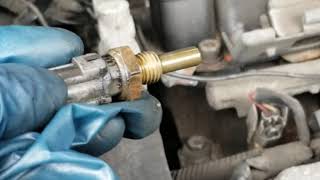
- Failed Engine Coolant Temperature (ECT) Sensor 🔴 High Probability → Shop Engine Coolant Temperature Sensor Sensors are wear-and-tear items that can fail by developing an internal open circuit after many heat cycles. Corrosion can also develop where the sensor is threaded into the coolant passages, especially if coolant maintenance is neglected.
How to confirm: With the engine cold, check the ECT reading in your scanner's live data. If it shows -40°F or another impossibly low number, the circuit is open. Disconnect the sensor and test its resistance with a multimeter. At ~68°F (20°C), it should read 2-3 kΩ. If it reads open (infinite resistance), it's bad. A faulty sensor is the most common culprit for this code.
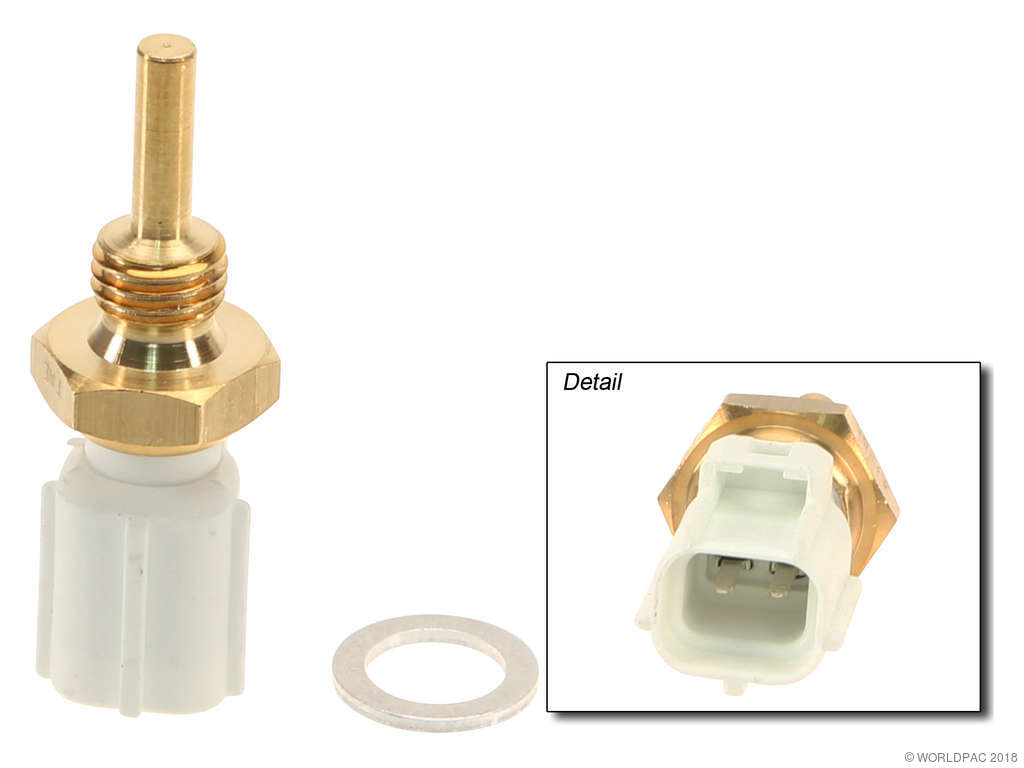
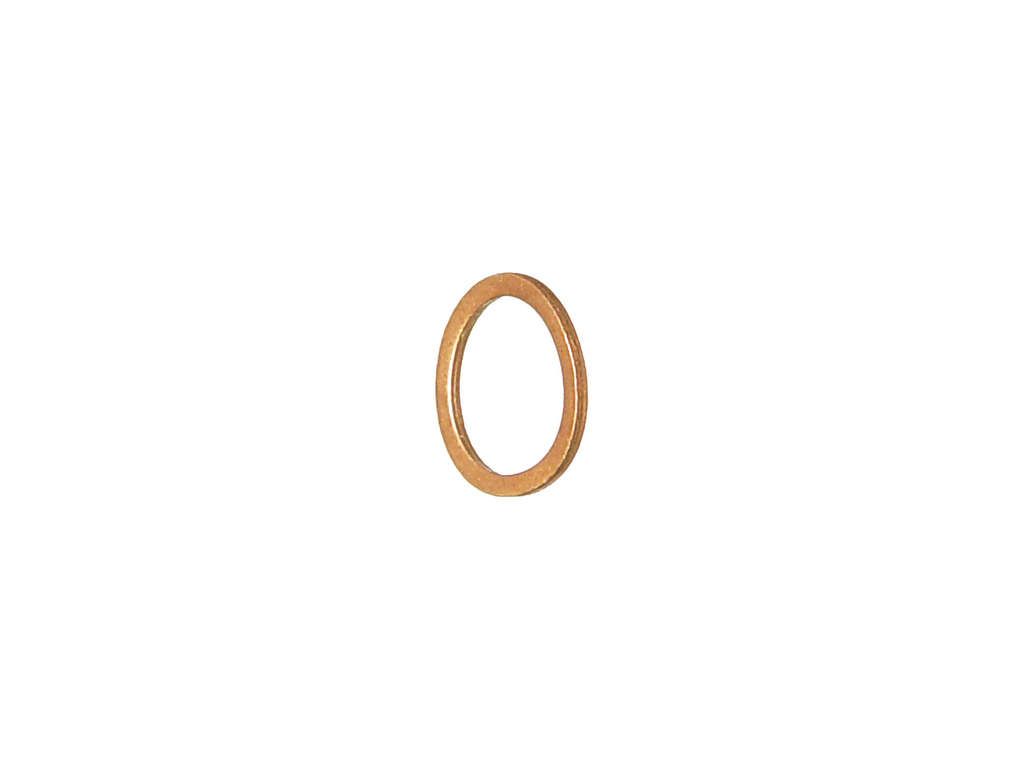
Typical fix: Replace the Engine Coolant Temperature sensor. The new sensor should come with a new washer or gasket.
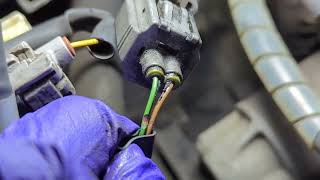
Est. part cost: $20-$100 - Damaged Wiring or Connector 🟡 Medium Probability The wiring harness is exposed to heat and vibration, which can cause wires to break or insulation to chafe over time. The connector's locking tab can become brittle and break, or pins can corrode from moisture. Rodent damage is also a possibility.
How to confirm: Visually inspect the wiring going to the ECT sensor for any signs of damage, melting, or breaks. Check that the connector is securely plugged in and that the pins inside are clean and not corroded or bent. Wiggle the harness while watching live data on a scan tool to see if the reading changes. A frayed wire, even a small one, can cause an intermittent short that triggers the code.
Typical fix: Repair the broken wire(s) or replace the connector pigtail.
Est. part cost: $10-$30
Rare But Worth Checking
- Faulty Engine Control Module (ECM): This is extremely rare. The ECM's internal circuit for reading the ECT sensor can fail, but all other possibilities (sensor, wiring) must be definitively ruled out first before considering ECM replacement.
Diagnosis Steps
- Connect an OBD-II scanner and verify the P0118 code is present.
- View live data on the scanner. Check the Engine Coolant Temperature (ECT) reading. With a cold engine, it should be very close to the Intake Air Temperature (IAT) and ambient temperature. If it reads an extremely low value (e.g., -40°F), the circuit is open.
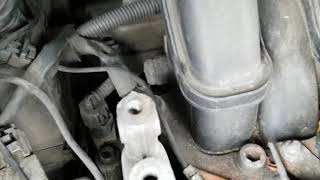
- Turn the vehicle off. Locate the ECT sensor on the 2GR-FE engine. It is a two-wire sensor located on the coolant crossover pipe between the cylinder heads, underneath the air intake snorkel and plastic engine cover. 🎬 Watch: Part 1 of this Highlander sensor replacement walkthrough.
- Inspect the sensor's electrical connector for a secure fit, corrosion, or any damage. Inspect the visible wiring for breaks, chafing, or melting. Pay close attention to the area right at the back of the connector where wires can fray.
- If the visual inspection passes, disconnect the sensor. Turn the ignition to 'ON' (engine off). Use a multimeter to check for a 5-volt reference on one of the connector pins and a good ground on the other. If voltage and ground are present, the wiring to the sensor is likely okay.
- If the voltage and ground are correct, the issue is almost certainly the sensor itself. Test the sensor's resistance with a multimeter. At room temperature (around 68°F/20°C), it should be between 2,000 and 3,000 ohms. If the reading is infinite (Open Line), the sensor is faulty and must be replaced.
- If the sensor tests good but the code persists, you likely have an intermittent open in the wiring harness that needs to be carefully traced back to the ECM.
- When replacing the sensor, be prepared for some coolant to spill. Have the new sensor and its gasket ready to install quickly to minimize coolant loss. It's best to do this on a cold engine to avoid burns and reduce pressure in the cooling system.
Parts You'll Likely Need
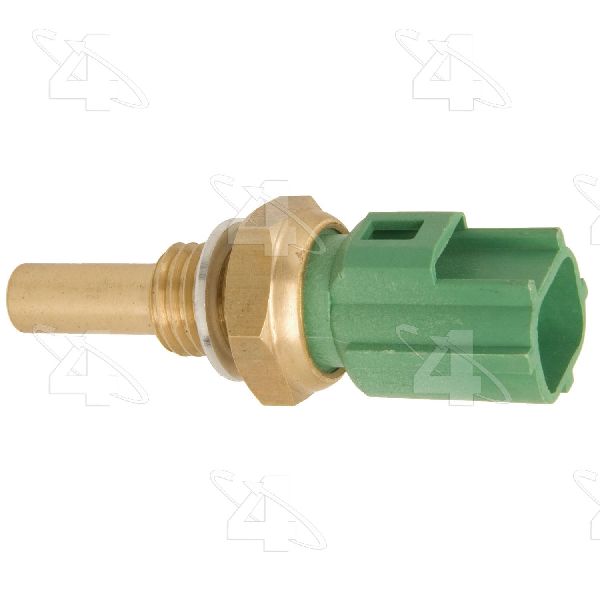
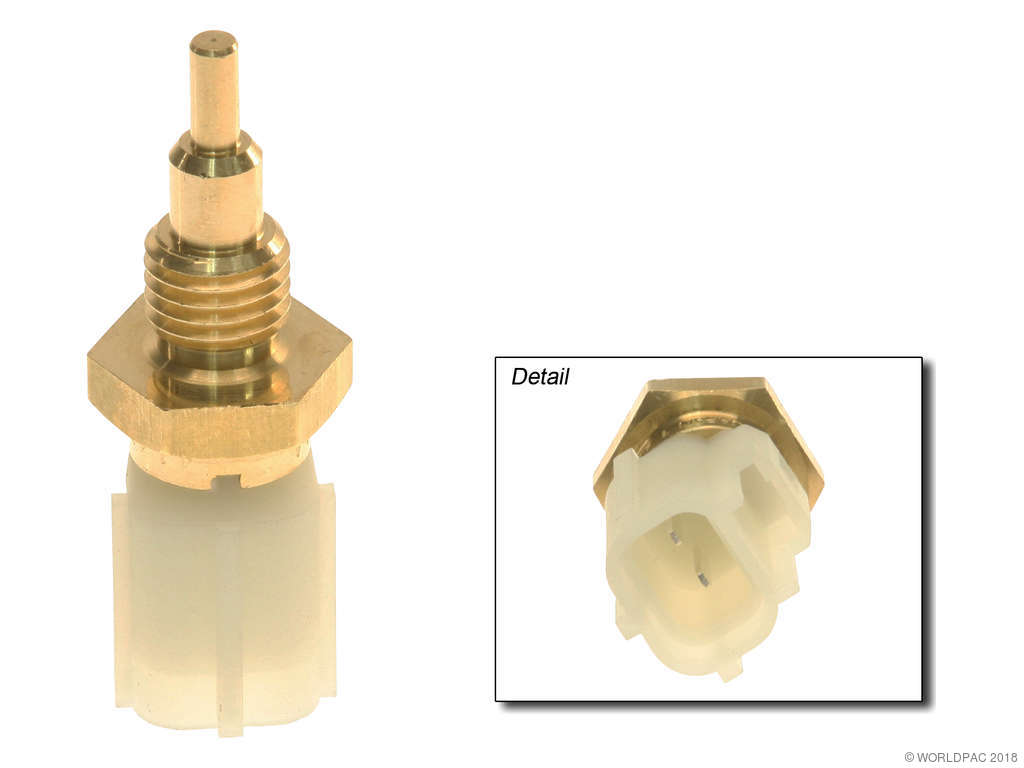
- Engine Coolant Temperature Sensor
(OEM #89422-33030)— This sensor is the most common point of failure for a P0118 code. Part number 89422-33030 is the correct, widely used OEM part for this application and many other Toyota vehicles. The older number 89422-35010 may also be referenced but 89422-33030 is the modern replacement.
Trusted brands: Denso (OEM supplier), Beck/Arnley, Duralast
OEM price range: $70-$100
Aftermarket price range: $20-$50
Platform-Specific Known Issues
- ECT Sensor Location: → Shop Engine Coolant Temperature Sensor On the 2GR-FE V6, the ECT sensor is located on the water crossover pipe that runs between the two cylinder heads, under the air intake assembly. It can be accessed by removing the plastic engine cover and the air intake snorkel. While not difficult, it is more buried than on some 4-cylinder engines.
Mechanic-Grade Diagnostic Values
- ECT Sensor Resistance vs. Temperature — expected: At 20°C (68°F): ~2,200 - 3,000 Ω. At 80°C (176°F): ~250 - 350 Ω. At 100°C (212°F): ~180 - 250 Ω.. Failure: An infinite resistance reading (Open Line) at any temperature indicates a failed sensor.
- ECT Sensor Circuit Voltage at ECM — expected: The ECM expects a voltage between 0.14V and 4.91V.. Failure: A sustained voltage reading above 4.91V for more than 0.5 seconds will trigger DTC P0118.
- ECT Connector Voltage (Key On, Engine Off, Connector Unplugged) — expected: One pin should show a ~5V reference from the ECM, and the other pin should show a good ground (near 0V).. Failure: Absence of the 5V reference or a high voltage reading on the ground pin indicates a wiring problem between the connector and the ECM.
Scan Tool Commands That Help
- Toyota Techstream: Data List > Coolant Temp — This is the primary live data parameter to monitor. A reading of -40°C (-40°F) confirms the open circuit condition seen by the ECM. A technician can then jump the two pins of the sensor connector; if the wiring is good, the scan tool reading should jump to 140°C (284°F) or higher, confirming the fault is in the sensor itself.
Wiring & Ground Locations
- ECT Sensor Connector (B4) — On the coolant crossover pipe between the cylinder heads, under the air intake snorkel.. This is the primary connection point. Corrosion or damage here is a common cause of P0118. The two pins are the sensor ground and the signal wire back to the ECM.
- ECM Terminals (THW and E2) — Within the main ECM connectors. Specific pin numbers can vary slightly by year and specific vehicle options, but THW is the coolant temperature signal and E2 is the sensor ground.. These are the final termination points for the ECT circuit. A continuity test from the sensor connector to these pins can definitively rule out a wiring break. For example, on some 2GR-FE diagrams, the signal wire (THW) is pin 85 and the ground (E2) is pin 84 on a specific ECM connector.
- Engine Harness Ground Points — The 2GR-FE has several critical ground points, including one on the side of the cylinder head under the throttle body and straps from the valve covers to the chassis/strut tower.. While the ECT sensor has a dedicated ground wire (E2) returning to the ECM, a poor main engine-to-chassis ground can introduce electrical noise and voltage offsets, potentially causing intermittent sensor issues. Ensuring these main grounds are clean and tight is a best practice.
Real Owner Repair Stories
- YouTube Repair Video (Similar Toyota Platform) — Check Engine Light, VSC/TRAC lights on, P0118 code present.
❌ Tried (didn't work) Replacing the ECT sensor did not fix the problem.
✅ What actually fixed it A continuity test revealed a broken wire within the harness, a few inches back from the sensor connector. The wire was repaired, which resolved the code and all symptoms.
OEM Part Supersession History
89422-35010→89422-33030— Standard part number consolidation and potential minor internal revisions by the manufacturer over time.
Heads up: The parts are functionally interchangeable for this application. 89422-33030 is the current and correct part to order.
Model Year Variations Within This Range
- 2011-2013: For the 2011 model year, the Highlander received a mid-cycle refresh that included a revised front fascia, hood, fenders, and new headlights. While the 2GR-FE engine and the location of the ECT sensor remained the same, be aware of these cosmetic differences when ordering body-related parts. No significant changes affecting the P0118 diagnosis were made.
Diagnostic Flowchart
Other Known Issues on This Vehicle
Issues unrelated to this code that are worth knowing about as an owner of this generation:
- VVT-i Oil Line Rupture 🔴 High — Common on earlier 2GR-FE engines (approx. 2008-2010 model years). A rubber section of the rear VVT-i oil line can degrade and burst, causing rapid and catastrophic oil loss, potentially leading to engine seizure. (Ref: A Limited Service Campaign (LSC) was issued by Toyota to replace the rubber hose with an all-metal line (Part # 15772-31030). Many vehicles may still have the original rubber line.)
- Sticky / Melting Dashboard 🟡 Low — Widespread issue in high-heat, high-humidity climates affecting many Toyota models of this era, including the Highlander. The dashboard surface becomes sticky, shiny, and can crack. (Ref: Toyota initiated a Warranty Enhancement Program (ZE6) to replace affected dashboards, but the primary coverage period has expired.)
- Intermediate Steering Shaft Clunk 🟠 Medium — A very common issue where a clunking or popping noise is heard and felt through the steering wheel when turning at low speeds. Caused by wear in the intermediate shaft splines. (Ref: T-SB-0034-13 was issued, detailing the replacement with an improved part (originally 45220-48170, updated to 45220-48171).)
- Water Pump Leak/Failure 🟠 Medium — The water pump is a common failure point, often starting as a slow coolant leak (visible as pink/red crust) before 100,000 miles. If the bearing fails, it can cause a rattling or grinding noise.
- Door Lock Actuator Failure 🟡 Low — Common for one or more door lock actuators to fail, preventing the door from locking or unlocking electronically with the fob or door switch.
Used vs. New Parts: Buying Guide for This Vehicle
When a used part is the smart pick: A used ECT sensor is generally not recommended. The part is a low-cost wear item, and the labor to access it makes installing a new part with a warranty a much smarter choice. A used connector pigtail from a junkyard is a viable option if only the connector is broken and the yard provides enough wire to splice it in.
Donor-vehicle mileage cap: roughly under 80000 miles for the part to have meaningful remaining life.
What to inspect on the donor part:
- For a connector pigtail, inspect for a non-brittle locking tab.
- Ensure the wires are flexible and not cracked or heat-damaged.
- Check that the internal pins are clean, straight, and free of corrosion.
OEM-only on this vehicle (don't cheap out):
- While not strictly 'OEM-only', using the OEM supplier (Denso) for the ECT sensor is highly recommended. Critical engine management sensors from unknown aftermarket brands can have incorrect resistance curves, leading to persistent running issues even if they don't set a code.
Aftermarket brands forum-validated for this vehicle:
- Denso (OEM supplier)
Brands owners have reported issues with on this vehicle:
- Unbranded, 'white-box' sensors from online marketplaces should be avoided, as their quality control and adherence to Toyota's specific resistance curve are unverified.
Real Owner Stories
Aggregated from forums and TSBs cited above. Mileages and costs reflect what owners reported in those sources.
2005 Toyota Highlander 3.5L V6
Symptoms: VSC and TRAC OFF lights illuminated along with the Check Engine Light.
What fixed it: Repairing a frayed wire located right at the ECT sensor connector.
Source hint: YouTube - '2005 Toyota Highlander VSC+TRAC OFF P0117 P0118 ECT... Fix'
2008-2013 Toyota Highlander 3.5L V6
Symptoms: The PCM shows a -40°F reading on the scan tool, causing the engine to run rich.
What fixed it: Replacement of the Engine Coolant Temperature (ECT) sensor due to an internal open circuit.
Source hint: Reddit r/mechanic thread discussing P0118
Related OBD-II Codes
Frequently Asked Questions
Where is the ECT sensor located on my 2008-2013 Highlander 3.5L V6?
Why did my VSC and TRAC OFF lights come on at the same time as the P0118 Check Engine Light?
What resistance should I see when testing the ECT sensor on my Highlander?
Is there a TSB for the clunking noise I hear in my steering while diagnosing this code?
My Highlander is leaking pink crusty fluid; could this be related to the P0118 code?
Is there a recall for the oil line leak mentioned in the known issues?
Helpful Videos
![How to Fix P0118 Engine Code in 3 Minutes [2 DIY Methods / Only $7.33]](https://img.youtube.com/vi/ZP0EHZOET0Q/mqdefault.jpg)
We Have This Part in Stock


The information in this article is provided for general reference and educational purposes only. Vehicle specifications, procedures, and part compatibility can vary by production date, trim level, and region. Always consult your vehicle's factory service manual and verify part numbers before purchasing or performing repairs. Safety-critical components such as airbags, seat belts, and braking systems should be installed by a qualified professional.
- Toyota Highlander:
- 🧭 Diagnostic Flowchart
- 🎬 Helpful Videos
- 🛍️ Shop This Part
- What's Unique About the 2008-2013 Toyota Highlander
- Symptoms You May Notice
- Most Likely Causes
- Rare But Worth Checking
- Diagnosis Steps
- Parts You'll Likely Need
- Platform-Specific Known Issues
- Mechanic-Grade Diagnostic Values
- Scan Tool Commands That Help
- Wiring & Ground Locations
- Real Owner Repair Stories
- OEM Part Supersession History
- Model Year Variations Within This Range
- Other Known Issues on This Vehicle
- Used vs. New Parts: Buying Guide for This Vehicle
- Real Owner Stories
- 2005 Toyota Highlander 3.5L V6
- 2008-2013 Toyota Highlander 3.5L V6
- Related OBD-II Codes
- Frequently Asked Questions
- 🎟️ Get 5% Off