

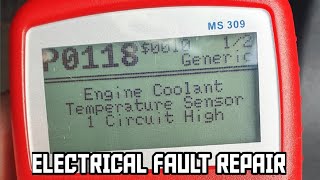
P0118 on 2010-2015 Toyota Prius: Engine Coolant Temp Sensor Causes and Fixes
On a 2010-2015 Prius, P0118 almost always means the main engine coolant temperature (ECT) sensor has failed or its wiring is damaged. This will cause poor fuel economy by preventing EV mode. A new OEM Denso sensor costs around $25-$50 and is a straightforward DIY replacement for many owners.
- P0118 on a Gen 3 Prius means the computer thinks the engine is extremely cold, usually due to a bad Engine Coolant Temperature (ECT) sensor or its wiring.
- The most significant impact on a Prius is that it will prevent the car from using its fuel-saving EV mode, causing a noticeable drop in MPG.
- Before buying parts, check the sensor's connection. It's located under the EGR cooler and is often left unplugged after service.
- The correct replacement part is the main engine ECT sensor, OEM part number 89422-35010. Denso is the original manufacturer.
- This is a DIY-friendly repair for most, with the main challenge being access to the sensor.
What's Unique About the 2010-2015 Toyota Prius
The 2010-2015 (Gen 3) Prius is highly dependent on accurate temperature readings to manage its complex hybrid system. A P0118 code will typically prevent the vehicle from entering its fuel-saving EV (electric vehicle) mode, as the system believes the engine is too cold to shut off. 🎬 Watch: EricTheCarGuy explains how the P0118 code affects your engine. It's also important to note this Prius has two coolant temperature sensors; the one that triggers P0118 is the main sensor (ECT Sensor No. 1) in the cylinder head, not the one for the exhaust heat recovery system located on a hose at the back of the engine. This code is frequently reported on owner forums like PriusChat after major engine work, such as a head gasket replacement or JDM engine swap, often due to a forgotten or damaged connector.
Symptoms You May Notice
- Check Engine Light is on
- Significantly reduced fuel economy (MPG)
- Vehicle will not enter EV (electric only) mode
- Engine may be difficult to start, especially when cold
- Rough or unstable idle, particularly when the engine warms up.
- Cooling fans may run continuously, even when the engine is cold.
- In some cases, the dashboard temperature gauge may not work or may show a false overheating warning.
- Black smoke from the tailpipe due to a rich fuel condition.
- Replacing the thermostat. While a thermostat can cause other cooling system codes (like P0128), it will not cause a P0118 'circuit high' fault.
- Replacing the wrong temperature sensor. The Gen 3 Prius has a second temperature sensor for the exhaust heat recovery system. Ensure you are diagnosing the main engine ECT sensor located in the cylinder head.
Most Likely Causes
- Failed Engine Coolant Temperature (ECT) Sensor 🔴 High Probability → Shop Engine Coolant Temperature Sensor The sensor is a thermistor that can fail with an internal open circuit over time, creating the high resistance that triggers the code. This is the most common point of failure for this code.
How to confirm: Using a scan tool, check live data for Engine Coolant Temperature. If it reads -40°F or another impossibly low number, the sensor circuit is open. Test the sensor's resistance with a multimeter; it should be 2,000-3,000 Ohms at room temperature (68°F/20°C). If the resistance is infinite (open circuit), the sensor is bad.
Typical fix: Replace the Engine Coolant Temperature sensor. The OEM part is Denso.
Est. part cost: $20-$75 - Damaged Wiring or Unplugged Connector 🟡 Medium Probability This is very common after the engine has been serviced (e.g., head gasket, EGR cooler cleaning, engine swap). The connector is located on the cylinder head under the EGR cooler assembly and can be easily forgotten or damaged during reassembly.
How to confirm: Visually inspect the ECT sensor and its connector. Ensure it is securely plugged in and check for any visible damage to the wires (often pink and brown) leading to it. Test for a 5V reference signal and ground at the connector with the key on. Wiggling the harness while watching live data on a scan tool can reveal an intermittent open.
Typical fix: Reconnect the connector or repair the damaged section of the wiring harness. A replacement connector pigtail may be needed if the lock tab is broken or pins are corroded.
Est. part cost: $15-$40
Rare But Worth Checking
- Faulty Engine Control Module (ECM): This is very rare. Before condemning the ECM, all other possibilities, including the sensor and the entire wiring harness between the sensor and the ECM, must be exhaustively tested and ruled out.
- Critically Low Engine Coolant: If the coolant level is so low that the sensor tip is exposed to air instead of coolant, it can cause an inaccurate reading. This would typically be accompanied by other overheating symptoms and codes, and is less likely to cause a 'circuit high' fault than a 'circuit low' or performance code.
Diagnosis Steps
- Connect an OBD-II scanner and verify P0118 is the primary code. Note any other codes like P3191.
- View the live data stream for the 'Engine Coolant Temperature' parameter. A reading of -40°F or -40°C confirms the ECM is seeing an open circuit.
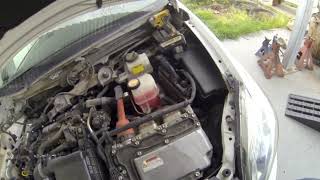
- Turn the vehicle off. Locate the main ECT sensor on the cylinder head, underneath the EGR cooler assembly.
- Inspect the sensor's electrical connector for damage, corrosion, or a loose connection. This is a very common failure point after recent engine service.
- If the connection is good, disconnect the sensor. Inspect the pins in both the sensor and the connector for corrosion or damage.
- With the connector unplugged and the ignition ON (engine OFF), use a multimeter to check for a 5-volt reference on one wire and a good ground on the other. The wires are typically pink and brown.
- If 5V and ground are present, the wiring to the ECM is likely okay. The fault is almost certainly the sensor itself. Test the sensor's resistance by probing its two pins. At ~68°F (20°C), it should read approximately 2.0-3.0 kOhms. If it reads open (infinite resistance), it's bad.
- If the sensor tests good but you did not have a proper 5V reference or ground at the connector, there is a wiring issue (open circuit) between the ECM and the sensor that must be traced and repaired.
- As a final wiring check, you can jump the two pins on the harness-side connector with a paperclip. This should cause the code to change from P0118 (open circuit) to P0117 (short circuit). If it does, the wiring is confirmed good and the sensor is bad.
- After replacing the faulty component (usually the sensor), clear the codes and drive the vehicle. Confirm that the check engine light stays off and the vehicle can now enter EV mode.
Parts You'll Likely Need
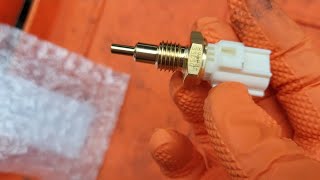
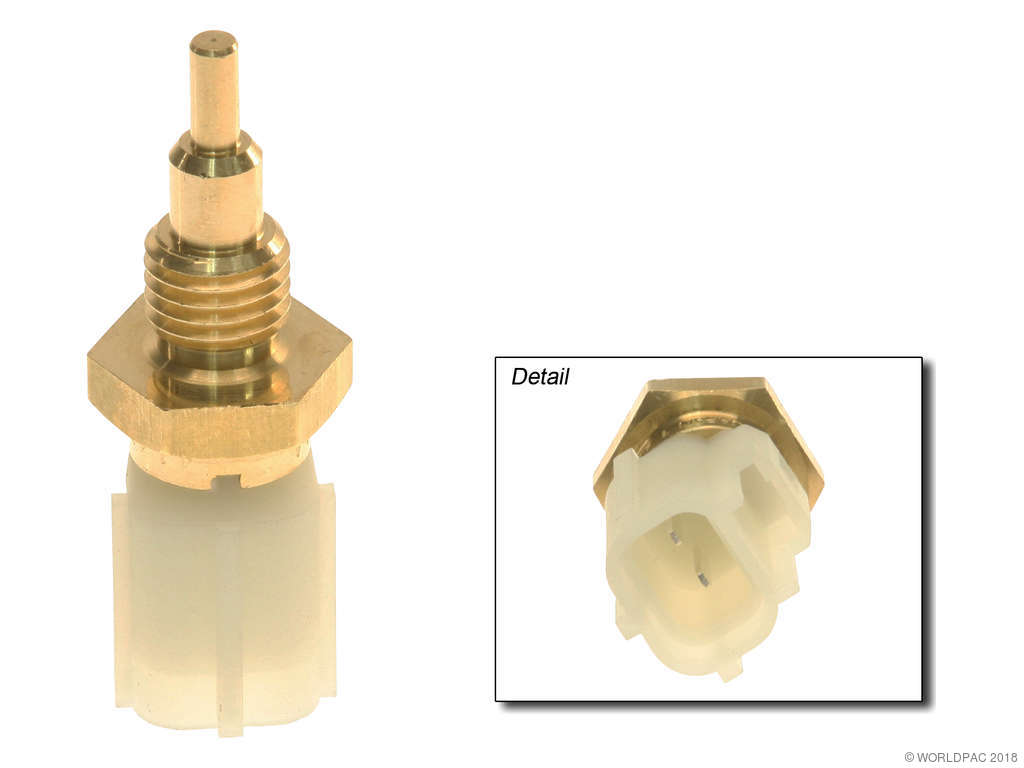
- Engine Coolant Temperature Sensor
(OEM #89422-35010)— This sensor is the most common failure point for the P0118 code.
Trusted brands: Denso (OEM), NTK, Bosch
OEM price range: $65-$100
Aftermarket price range: $25-$50
Related Codes That Often Appear With This One
- P0117 — P0117 is 'ECT Circuit Low Input'. If there is an intermittent short or wiring issue, you might see both codes logged at different times. Attempting to diagnose P0118 by shorting the connector pins should theoretically trigger P0117.
- P3191 — This code means 'Engine Does Not Start'. It can be triggered along with P0118 because the incorrect temperature reading causes the ECM to use the wrong fuel mixture for starting.
- P0A0F — 'Engine Failed to Start'. Similar to P3191, this can be a consequence of the incorrect fueling strategy caused by the P0118 fault.
Platform-Specific Known Issues
- A common real-world scenario for P0118 is immediately after major engine service, like a head gasket replacement or engine swap. Owners on PriusChat frequently report finding the ECT sensor connector was simply not plugged back in during reassembly.
Mechanic-Grade Diagnostic Values
- ECT Sensor Resistance — expected: Approx. 2.0-3.0 kΩ at 20°C (68°F), Approx. 0.2-0.4 kΩ at 80°C (176°F). Failure: Infinite resistance (Open circuit) or near zero resistance (Short circuit) at any temperature.
- ECT Sensor Voltage at ECM — expected: 0.14V to 4.91V. Voltage decreases as temperature increases.. Failure: Voltage reading > 4.91V for 0.5 seconds triggers P0118.
- Scan Tool Live Data (Techstream) — expected: Matches actual coolant temperature.. Failure: Displays -40°C (-40°F) for an open circuit (P0118) or 140°C (284°F) for a short circuit (P0117).
Scan Tool Commands That Help
- Toyota Techstream: Data List -> Coolant Temp — To view the live temperature reading the ECM is receiving. A reading of -40°C (-40°F) immediately points to an open circuit fault consistent with P0118.
- Toyota Techstream: Utility -> All Readiness — After a repair, this function can be used to check the DTC judgment result without extensive driving to confirm the fix and ensure the monitor runs and passes.
Wiring & Ground Locations
- ECT Sensor Connector — On the cylinder head, passenger side of the engine, below the EGR cooler assembly.. This is the primary connection point that is often left unplugged or damaged after service, directly causing a P0118.
- ECM Connector D6, Pin 2 (THW) — At the Engine Control Module (ECM) in the engine bay.. This is the signal wire from the ECT sensor. Checking for continuity between this pin and the sensor connector helps diagnose a wiring break.
- ECM Connector D6, Pin 1 (E2) — At the Engine Control Module (ECM) in the engine bay.. This is the dedicated sensor ground wire. A break in this wire will cause an open circuit and a P0118 code.
- Engine Ground Points (EE, EF) — Bolted to the engine block and cylinder head on the left (driver's) side of the engine bay, near the main harness.. While the ECT sensor has a dedicated ground wire (E2) back to the ECM, a poor main engine ground can cause a variety of sensor issues. These points should be clean and tight, especially after an engine swap or major work.
Real Owner Repair Stories
- PriusChat user 'Rrrolfff' (2010 Toyota Prius) — Not specified, but performing ECT sensor replacement.
❌ Tried (didn't work) A standard 19mm deep socket did not fit over the electrical connector part of the sensor.
✅ What actually fixed it Used the next size up standard (non-metric) deep socket which fit over the sensor body. During removal, the plastic top of the old sensor broke off, but the metal base was then easily removed with the socket. The repair took about 40 minutes due to tight access.
OEM Part Supersession History
89422-35010→89422-35010 (current)— This part number has been stable for a long time but has been used across a vast range of Toyota, Lexus, and Scion vehicles since the early 1990s.
Heads up: Part number 89422-33030 is sometimes listed but is for a different application; 89422-35010 is the correct primary part for this Prius. Also, do not confuse with the coolant heat storage tank sensor (89429-47010) on some models, which is a different part.
Diagnostic Flowchart
Other Known Issues on This Vehicle
Issues unrelated to this code that are worth knowing about as an owner of this generation:
- Excessive Oil Consumption 🔴 High — Common in higher-mileage (100k+ miles) engines due to issues with piston and piston ring design. (Ref: T-SB-0168-16 (Inspection) and T-SB-0169-16 (Repair) detail the diagnosis and replacement of updated pistons/rings.)
- Clogged EGR System (Cooler, Valve, and Intake Manifold Passages) 🔴 High — Very common, typically requiring cleaning every 80,000-120,000 miles to prevent rough idle, engine knocking, and potential head gasket failure. (Ref: T-SB-0027-16 addresses rough idle and EGR valve issues.)
- Brake Actuator / Booster Pump Assembly Failure 🔴 High — A well-known issue causing inconsistent or weak braking. Affects safety and is an expensive repair if out of warranty. (Ref: Multiple recalls and warranty extensions have been issued, including for 2010 models for nitrogen leaks and ABS software updates.)
- Hybrid Inverter Failure 🔴 High — Can cause the hybrid system to shut down, leading to a stall while driving. Less frequent than EGR or oil issues, but a major safety concern. (Ref: Multiple recalls (e.g., 18V-684, 20TA10) were issued to update software and, if necessary, replace the inverter's Intelligent Power Module (IPM).)
- Blown Head Gasket 🔴 High — Often a consequence of a clogged EGR system, which leads to engine overheating and knocking, eventually causing head gasket failure.
Used vs. New Parts: Buying Guide for This Vehicle
When a used part is the smart pick: For the wiring harness connector pigtail if the original is broken or corroded. A used sensor is not recommended as it is an inexpensive wear item and its remaining lifespan is unknown.
Donor-vehicle mileage cap: roughly under 80000 miles for the part to have meaningful remaining life.
What to inspect on the donor part:
- For a connector pigtail, ensure the locking tab is intact and not brittle.
- Check for at least 6 inches of clean, uncorroded wire attached.
- Avoid connectors from vehicles with signs of major engine fires or coolant leaks in that area.
OEM-only on this vehicle (don't cheap out):
- Engine Coolant Temperature Sensor - While some aftermarket brands are reliable, the OEM Denso sensor is relatively inexpensive and guarantees correct resistance values for the Prius's sensitive hybrid system.
Aftermarket brands forum-validated for this vehicle:
- Denso (OEM supplier)
- NTK
Brands owners have reported issues with on this vehicle:
- Unknown, no-name brands from online marketplaces should be avoided as their resistance curves may not match OEM specifications, leading to incorrect temperature readings even if they don't set a fault code.
Real Owner Stories
Aggregated from forums and TSBs cited above. Mileages and costs reflect what owners reported in those sources.
2010-2015 Toyota Prius 1.8L
Symptoms: Check engine light appeared immediately after a head gasket job and coolant change; scan tool showed a -40 degree reading.
What fixed it: Confirmed the issue was a connection or wiring problem post-repair by shorting the pins to trigger a P0117 code, verifying the wiring was intact to the sensor.
Source hint: PriusChat.com: Thread 'P0118 after head gasket replacement and full engine coolant change' (Nov 19, 2019)
2010-2015 Toyota Prius 1.8L
Symptoms: Experienced P0118 and P3191 codes following an engine swap.
What fixed it: Identified and reconnected the main ECT sensor located under the EGR cooler, which is distinct from the exhaust heat recirculation sensor.
Source hint: PriusChat.com: Thread 'Post Engine Swap - P0118: Engine Coolant Temperature Circuit High Input' (Apr 28, 2023)
2010-2015 Toyota Prius 1.8L
Symptoms: P0118 code present along with coolant loss; confusion over which sensor was faulty.
What fixed it: Used a diagram to locate the correct sensor on the cylinder head rather than the exhaust heat recirculation sensor to avoid misdiagnosis.
Source hint: PriusChat.com: Thread 'p118' (Oct 28, 2023)
Related OBD-II Codes
Frequently Asked Questions
Why did my 2010 Prius trigger P0118 immediately after a head gasket replacement?
My Prius won't enter EV mode and has a P0118 code; are these related?
Is there a specific TSB for the rough idle I'm experiencing alongside this code?
Which replacement sensor should I use for my 1.8L 2ZR-FXE engine?
I see two sensors near the engine; which one causes P0118?
Can a P0118 code cause my Prius to have a 'no start' condition?
Helpful Videos

We Have This Part in Stock


The information in this article is provided for general reference and educational purposes only. Vehicle specifications, procedures, and part compatibility can vary by production date, trim level, and region. Always consult your vehicle's factory service manual and verify part numbers before purchasing or performing repairs. Safety-critical components such as airbags, seat belts, and braking systems should be installed by a qualified professional.
- Toyota Prius:
- 🧭 Diagnostic Flowchart
- 🎬 Helpful Videos
- 🛍️ Shop This Part
- What's Unique About the 2010-2015 Toyota Prius
- Symptoms You May Notice
- Most Likely Causes
- Rare But Worth Checking
- Diagnosis Steps
- Parts You'll Likely Need
- Related Codes That Often Appear With This One
- Platform-Specific Known Issues
- Mechanic-Grade Diagnostic Values
- Scan Tool Commands That Help
- Wiring & Ground Locations
- Real Owner Repair Stories
- OEM Part Supersession History
- Other Known Issues on This Vehicle
- Used vs. New Parts: Buying Guide for This Vehicle
- Real Owner Stories
- 2010-2015 Toyota Prius 1.8L
- 2010-2015 Toyota Prius 1.8L
- 2010-2015 Toyota Prius 1.8L
- Related OBD-II Codes
- Frequently Asked Questions
- 🎟️ Get 5% Off