

P0118 on 2009-2012 Toyota RAV4 2.5L: Engine Coolant Temperature Sensor Circuit High Causes and Fixes
On a 2009-2012 Toyota RAV4 with the 2.5L engine, code P0118 almost always means the Engine Coolant Temperature (ECT) sensor has failed. It's a simple and affordable DIY fix, with an aftermarket sensor costing around $20-$45. Before replacing, check that the connector is securely plugged in, as a loose plug is a common cause.
- P0118 on your RAV4 means the computer thinks the engine is -40° because of an open circuit, most often a failed sensor or loose plug.
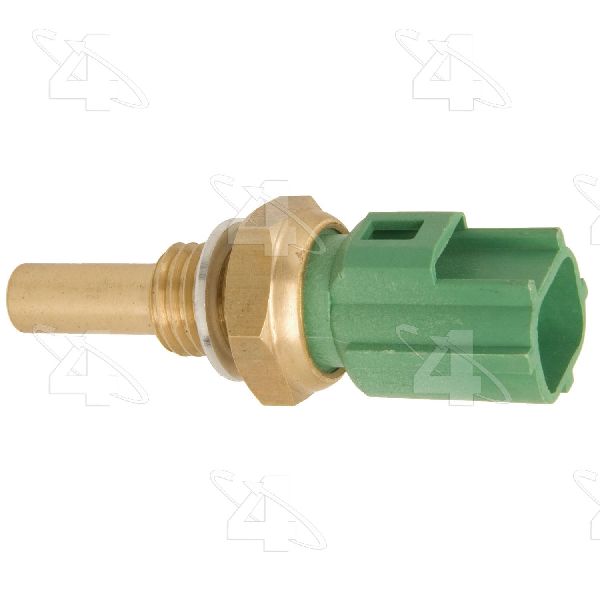
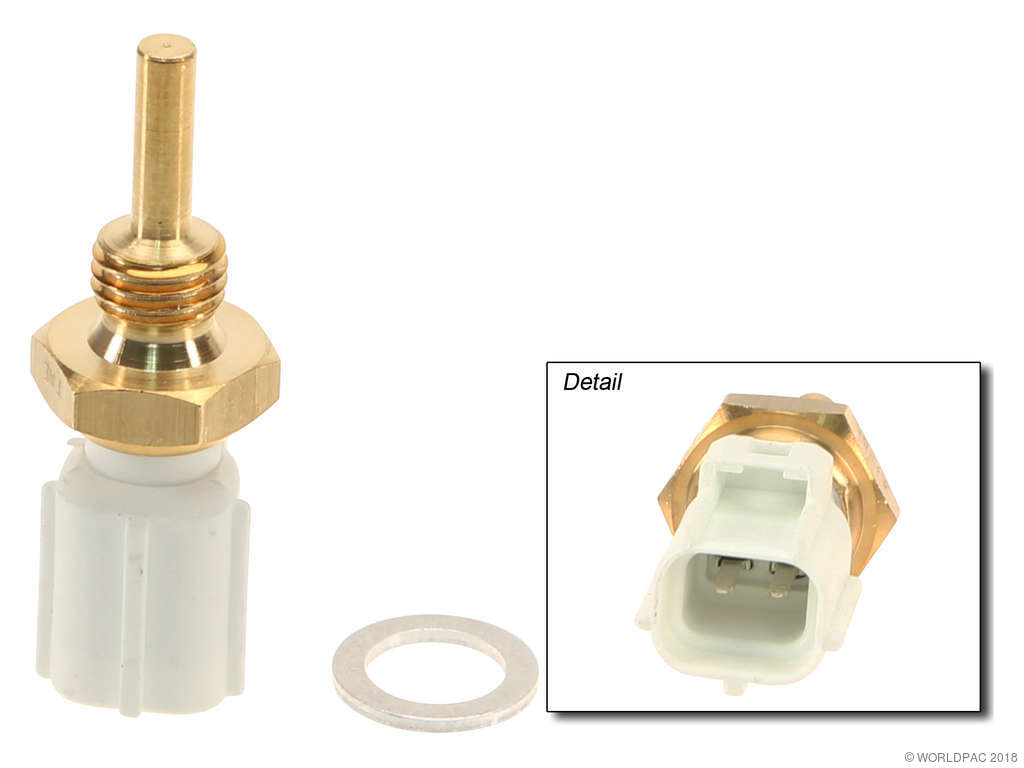
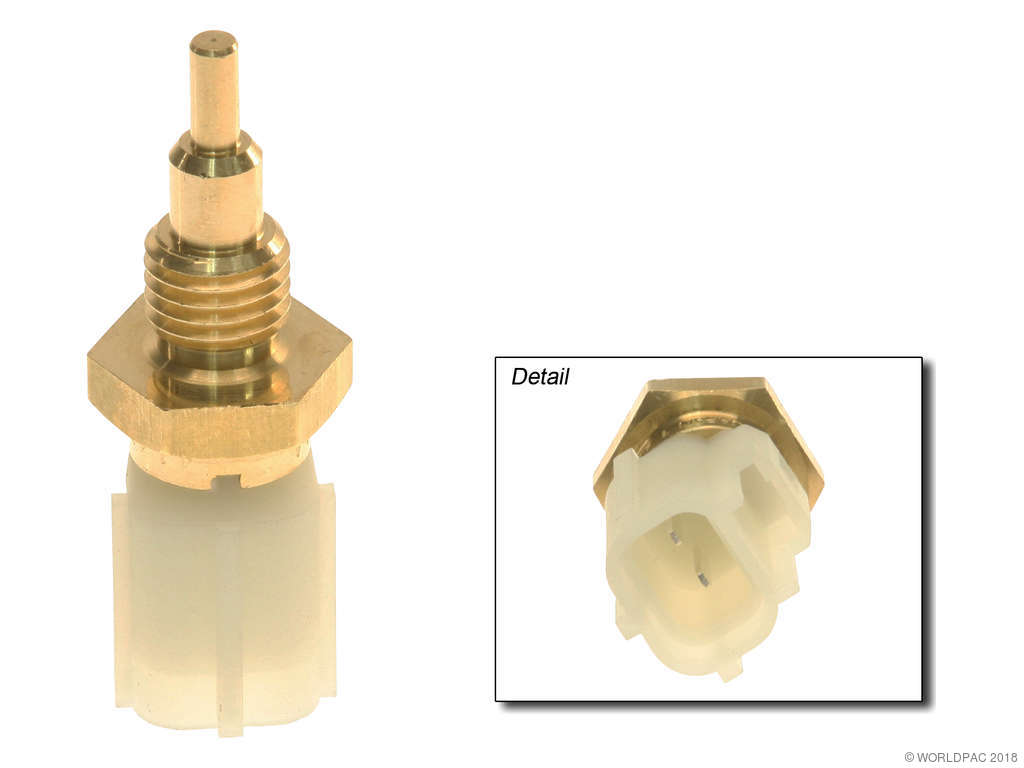
- The most likely culprit is a failed Engine Coolant Temperature (ECT) sensor, which is an inexpensive part (Toyota P/N 89422-06010).
- Before buying parts, check that the sensor's electrical connector is plugged in securely and the wires aren't visibly damaged.
- You can confirm a bad sensor with a multimeter; it should read 2-3 kΩ at room temperature, not infinite resistance (OL).
- This is a DIY-friendly repair that can be done in under an hour with basic tools.
What's Unique About the 2006-2012 Toyota RAV4
On the RAV4 with the 2AR-FE engine, this code is a straightforward electrical fault. Unlike performance-related coolant codes, P0118 points directly to a circuit problem. The ECT sensor used in this engine is a common part across many Toyota models from this era, including the Camry, Sienna, and Highlander, and has a known failure rate due to age and heat cycles, making it the primary suspect every time.
Generation note: The 2006-2012 Toyota RAV4 is a single generation (XA30), but it featured two different 4-cylinder engines. This guide specifically covers the 2.5L 2AR-FE engine used in 2009-2012 models. The 2006-2008 models used a 2.4L 2AZ-FE engine; while the P0118 code has the same meaning, the sensor location and part number may differ slightly.
Symptoms You May Notice
- Check Engine Light is on
- Engine is difficult to start, especially when cold
- Rough idle or hesitation, particularly before the engine warms up
- Black smoke from the exhaust on startup
- Decreased fuel economy
- Temperature gauge on the dashboard may show an impossibly low reading (like -40°) or not move at all
- Radiator fans may run continuously at full speed or not turn on when needed because the ECM has conflicting information
- Replacing the thermostat. A bad thermostat typically causes a P0128 code (Coolant Temperature Below Thermostat Regulating Temperature), not a P0118 circuit code.
Most Likely Causes
- Failed Engine Coolant Temperature (ECT) Sensor 🔴 High Probability → Shop Engine Coolant Temperature Sensor The internal thermistor of the sensor fails over time from constant heat cycles, creating an open circuit. This is the most common failure point for this code.
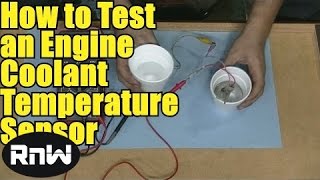
How to confirm: Use a scan tool to view live data; a reading of -40°F or -40°C confirms an open circuit. You can also test the unplugged sensor with a multimeter 🎬 Watch: How to test your sensor using a basic multimeter. set to Ohms. An infinite resistance reading (OL) means the sensor is bad. At room temperature (~68°F/20°C), it should read between 2.2-3.0 kΩ.
Typical fix: Replace the Engine Coolant Temperature sensor.
Est. part cost: $20-$75 - Damaged Wiring or Connector 🟡 Medium Probability Wires can become brittle and break near the connector from engine vibration and heat. A loose or disconnected plug is also very common. Rodent damage to the harness is another known possibility.
How to confirm: Visually inspect the wiring harness leading to the ECT sensor for breaks, corrosion, or a loose plug. To test the circuit, jump the two pins on the harness-side connector with a paperclip; the scan tool's temperature reading should go from -40°F to a very high number (e.g., 284°F), confirming the wiring to the ECM is intact.
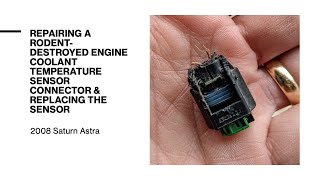
Typical fix: Repair the broken wire or replace the connector pigtail. 🎬 See this guide on how to repair a damaged sensor connector. Ensure the connector is fully seated with a click.
Est. part cost: $10-$25 - Low Engine Coolant Level ⚪ Low Probability While more likely to cause a performance code (like P0128), it's possible for the sensor to send erratic signals if a very low coolant level exposes it to an air pocket instead of coolant. This is less likely to cause a 'high circuit' fault and more likely to cause overheating codes.
How to confirm: Check the coolant level in the radiator (when the engine is cold) and the overflow reservoir. If it is low, there is a leak that needs to be addressed.
Typical fix: Top off the cooling system and bleed any air. Find and repair the source of the coolant leak.
Est. part cost: $15-$30 for coolant
Rare But Worth Checking
- Failed Engine Control Module (ECM): This is extremely rare. The ECM should only be considered as the cause after the sensor and wiring have been definitively proven to be good. An internal fault in the ECM's analog-to-digital converter could cause a misreading.
Diagnosis Steps
- Connect an OBD-II scanner and confirm P0118 is the active code.
- View the live data stream for 'Engine Coolant Temperature'. If it reads -40°F or -40°C, this strongly indicates an open circuit.
- Turn the vehicle off. Locate the ECT sensor on the cylinder head. Visually inspect the connector for damage, corrosion, or looseness. Check the nearby wiring for any obvious breaks, fraying, or signs of rodent damage.
- If the connector is loose, plug it in securely, clear the code, and see if it returns. A loose plug is a very common cause.
- If the visual inspection shows no issues, disconnect the sensor. Use a multimeter to measure the resistance across the two pins on the sensor itself. At room temperature (around 70°F/20°C), you should see a reading between 2,000 and 3,000 Ohms. If you see infinite resistance (OL), the sensor has failed and must be replaced.
- To verify the wiring is good, take a paperclip or jumper wire and carefully connect the two terminals inside the harness-side connector. Turn the ignition to 'ON' (engine off) and check the live data on your scanner. The temperature should now read an extremely high value (e.g., 248°F or higher). If it does, the wiring and ECM are good, confirming the original sensor was the fault. If the reading remains at -40°F, there is a break in the wire between the connector and the ECM.
Parts You'll Likely Need
- Engine Coolant Temperature Sensor
(OEM #89422-06010)— This sensor is the most frequent cause of a P0118 code due to internal failure, which creates an open circuit. This part is used across a wide range of Toyota vehicles from 2003-2011 and beyond.
Trusted brands: Denso (OEM supplier), NTK, Standard Motor Products
OEM price range: $60-$95
Aftermarket price range: $20-$45
Related Codes That Often Appear With This One
- P0117 — This code for 'ECT Circuit Low Input' can appear with P0118 if there is an intermittent wiring problem causing the signal to fluctuate between an open circuit and a short circuit.
- P1603, P1604, P1605 — These codes, related to 'Stall History' and 'Startability Malfunction', often appear as secondary codes. The primary P0118 fault causes poor running conditions that the ECM logs as starting or stalling problems. Fixing the P0118 issue will typically resolve these as well.
Technical Service Bulletins (TSBs) & Recalls
- T-SB-0318-08: Steering intermediate shaft noise for 2006-2008 models.
- T-SB-0243-09: Steering intermediate shaft knocking noise for 2009-2010 models.
- Warranty Enhancement Program ZG1 / T-SB-0034-14: Addresses torque converter shudder.
- Limited Service Campaign (LSC) for VVT-i Oil Line (V6 Models): Replaces a failure-prone rubber oil line with an all-metal part.
Platform-Specific Known Issues
- Real-World Example: Loose Connector: A 2017 RAV4 owner experienced a P0118 code along with poor idling and overheating symptoms. A technician found the ECT sensor connector was simply not plugged in all the way. After securely connecting it and clearing the codes, the vehicle ran normally. This highlights the importance of checking the physical connection before replacing parts.
Mechanic-Grade Diagnostic Values
- ECT Sensor Resistance (unplugged) — expected: At 20°C (68°F): 2.2 kΩ to 3.0 kΩ. At 80°C (176°F): 250 Ω to 350 Ω.. Failure: Infinite resistance (OL) indicates an open circuit (bad sensor). A value far outside the expected range for a given temperature also indicates failure.
- ECT Sensor Signal Voltage (THW Pin at ECM) — expected: Key On, Engine Off (cold engine at ~20°C/68°F): 3.0V - 3.5V. Engine at operating temperature (~80°C/176°F): ~1.0V - 1.3V.. Failure: A reading of ~5V or matching the reference voltage indicates an open circuit (P0118). A reading near 0V indicates a short circuit (P0117).
- ECT Sensor Reference Voltage (at harness connector) — expected: Approximately 5V with the key on, engine off (measured between the two pins).. Failure: No voltage suggests a problem with the ECM or the wiring from the ECM.
Hidden / Shadow Codes Worth Checking
- Freeze Frame Data: While not a hidden code, Freeze Frame Data is critical. When P0118 is set, the ECM stores a snapshot of all major sensor readings at that moment. For P0118, the 'COOLANT TEMP' value will almost certainly be -40°C or -40°F. This confirms the ECM's perspective and is a key piece of data for diagnosis. (see via Any professional scan tool, including Toyota's Techstream software, can access Freeze Frame Data.)
Scan Tool Commands That Help
- Toyota Techstream: Data List > Coolant Temp — This is the primary function used to diagnose P0118. It allows you to see the exact temperature value the ECM is receiving from the ECT sensor in real-time. A reading of -40°F/-40°C with the key on immediately points to an open circuit, which is the cause of P0118.
- Toyota Techstream: Data List > All Readiness — After a repair, you can use the 'All Readiness' utility to check the status of the 'Comprehensive Component' monitor, which includes the ECT circuit. This helps confirm if the fix was successful without having to perform a full drive cycle.
Wiring & Ground Locations
- ECT Sensor Connector (C4) — On the cylinder head, typically near the thermostat housing.. This is the primary connection point. Corrosion, damage, or a loose connection here is a common cause of P0118.
- ECM Pin THW (Terminal 64 on Connector B) — This is the Engine Coolant Temperature Signal pin at the Engine Control Module (ECM).. This pin receives the voltage signal from the ECT sensor. Technicians test for continuity and voltage here to isolate a wiring problem from an ECM problem.
- ECM Pin E2 (Terminal 65 on Connector B) — This is the Sensor Ground pin at the Engine Control Module (ECM).. This pin provides the ground reference for the ECT sensor. A break in the wire to this pin will cause an open circuit and trigger P0118.
- Ground Point EA — On the left side of the cylinder head.. This is a major engine ground point. While the ECT sensor grounds through the ECM (E2 pin), a poor main engine ground can cause erratic electrical behavior in multiple sensor circuits. Checking that this ground is clean and tight is good practice when diagnosing any electrical fault.
OEM Part Supersession History
89422-33030→89422-06010— Part consolidation and potential minor internal revisions by the manufacturer.
Heads up: Both part numbers are generally interchangeable for this application, but it is always best practice to use the latest superseded part number (89422-06010) when ordering.
Model Year Variations Within This Range
- 2009-2012: The 2AR-FE 2.5L engine was introduced in 2009, replacing the previous 2AZ-FE 2.4L from 2006-2008. While the P0118 code is the same, the sensor location, part number, and ECM pinouts are specific to the 2AR-FE engine for these years.
Diagnostic Flowchart
Other Known Issues on This Vehicle
Issues unrelated to this code that are worth knowing about as an owner of this generation:
- Excessive Oil Consumption 🔴 High — Common in early 2AR-FE engines (2009-2012), often noticeable after 60,000-100,000 miles. Caused by low-tension piston rings getting stuck. Can lead to catalytic converter damage if ignored. (Ref: While the preceding 2AZ-FE engine had a formal Warranty Enhancement Program (ZE7), the 2AR-FE did not, making it a known issue to monitor. The primary fix is more frequent oil changes (every 5,000 miles) or, in severe cases, an engine rebuild/short block replacement.)
- Intermediate Steering Shaft Clunk/Noise 🟠 Medium — A common complaint where a clunking or popping noise is heard and felt in the steering wheel when turning. It is caused by the intermediate steering shaft wearing prematurely. (Ref: Toyota issued TSB T-SB-0318-08 for 2006-2008 models and T-SB-0243-09 for 2009-2010 models, which involved replacing the shaft with an improved part.)
- Torque Converter Shudder 🟠 Medium — Some vehicles may exhibit a shudder or vibration under light throttle between 25-50 mph. This is often due to issues with the torque converter lock-up clutch. (Ref: Toyota addressed this with Warranty Enhancement Program ZG1 (and T-SB-0034-14) for some models, which involved replacing the torque converter and updating the ECM software.)
- Water Pump Failure 🟠 Medium — The water pump can fail, typically after 100,000 miles, leading to coolant leaks and potential overheating. It's considered a common wear-and-tear item for this platform.
- VVT-i Oil Line Rupture (V6 Models) 🔴 High — This applies to the V6 (2GR-FE) engine option in this RAV4 generation, not the 2AR-FE. A rubber section of the VVT-i oil line can degrade and rupture, causing catastrophic oil loss and engine failure. (Ref: Toyota issued a Limited Service Campaign (LSC) to replace the rubber hose with an all-metal line (Part No. 15772-31030). It is critical for V6 owners to verify this has been done.)
Used vs. New Parts: Buying Guide for This Vehicle
When a used part is the smart pick: For this specific repair, buying a used ECT sensor is NOT recommended. The part is inexpensive new, is a known failure item due to age/heat cycles, and the labor to replace it is the same. A used sensor carries a high risk of being near the end of its own service life.
What to inspect on the donor part:
- Not applicable as used purchase is not advised.
OEM-only on this vehicle (don't cheap out):
- While not strictly 'OEM-only', using a sensor from the original equipment manufacturer (Denso) or a reputable OE equivalent (NTK) is highly recommended over generic, no-name brands to ensure accurate temperature readings and longevity.
Aftermarket brands forum-validated for this vehicle:
- Denso (OEM)
- NTK
Brands owners have reported issues with on this vehicle:
- Unbranded, 'white-box' parts from online marketplaces which may have poor quality control and inaccurate thermistor curves, leading to incorrect fuel trims and performance issues even if they clear the code initially.
Real Owner Stories
Aggregated from forums and TSBs cited above. Mileages and costs reflect what owners reported in those sources.
2017 Toyota RAV4
Symptoms: Check engine light (P0118), poor idling, and symptoms of overheating.
What fixed it: Technician found the ECT sensor connector was not plugged in all the way; securely connecting it resolved the issue.
Source hint: vehicle_specific_issues: Real-World Example: Loose Connector
2010 Toyota RAV4 2.5L
Symptoms: Owner experienced what they described as a torque converter shutter.
What fixed it: The community suggested a transmission fluid service using genuine Toyota fluid as a first step.
Source hint: Reddit r/Cartalk - 2010 Rav4 Torque Converter Shutter
Toyota (General 2AR-FE Platform)
Symptoms: P0118 code appeared immediately after a thermostat housing replacement.
What fixed it: Checking the connector pins for damage or bending and verifying the 5V reference and ground signals at the connector.
Source hint: Reddit r/MechanicAdvice - P0118 after thermostat change
Related OBD-II Codes
Frequently Asked Questions
My 2010 RAV4 has a shuddering sensation while driving; is this related to the P0118 code?
I just replaced my thermostat and now I have a P0118 code. Did I break something?
My 2009 RAV4 is burning a lot of oil; could this cause the P0118 code?
Is there a TSB for the P0118 code on my 2007 RAV4?
The temperature gauge on my dashboard is reading -40°. Does this mean I need a new engine?
Can I use a paperclip to test if my RAV4's ECM is bad?
Helpful Videos
We Have This Part in Stock


The information in this article is provided for general reference and educational purposes only. Vehicle specifications, procedures, and part compatibility can vary by production date, trim level, and region. Always consult your vehicle's factory service manual and verify part numbers before purchasing or performing repairs. Safety-critical components such as airbags, seat belts, and braking systems should be installed by a qualified professional.
- Toyota RAV4:
- 🧭 Diagnostic Flowchart
- 🎬 Helpful Videos
- 🛍️ Shop This Part
- What's Unique About the 2006-2012 Toyota RAV4
- Symptoms You May Notice
- Most Likely Causes
- Rare But Worth Checking
- Diagnosis Steps
- Parts You'll Likely Need
- Related Codes That Often Appear With This One
- Technical Service Bulletins (TSBs) & Recalls
- Platform-Specific Known Issues
- Mechanic-Grade Diagnostic Values
- Hidden / Shadow Codes Worth Checking
- Scan Tool Commands That Help
- Wiring & Ground Locations
- OEM Part Supersession History
- Model Year Variations Within This Range
- Other Known Issues on This Vehicle
- Used vs. New Parts: Buying Guide for This Vehicle
- Real Owner Stories
- 2017 Toyota RAV4
- 2010 Toyota RAV4 2.5L
- Toyota (General 2AR-FE Platform)
- Related OBD-II Codes
- Frequently Asked Questions
- 🎟️ Get 5% Off