

P0121 on 2008-2016 Audi A4 2.0T: Throttle Position Sensor Fault Causes and Fixes
On a 2008-2016 Audi A4 2.0T, P0121 is most often caused by a dirty throttle body due to carbon buildup. A thorough cleaning and a throttle body adaptation with a scan tool usually fixes it. If not, the issue is likely the wiring connector or the throttle body itself, which contains the integrated sensor. A wiring repair kit costs ~$50, while a new throttle body is ~$200-$400. This is a very common issue on this platform.
- For code P0121 on a B8 Audi A4, always start by cleaning the throttle body and performing a throttle body adaptation.
- If the problem persists, carefully inspect and test the wiring and connector at the throttle body, as this is a known failure point documented by Audi.
- Only replace the entire throttle body assembly after you have ruled out carbon buildup and wiring issues.
- A VAG-compatible scan tool (like VCDS) is essential for proper diagnosis (reading live data) and for the mandatory throttle body adaptation after any service.
What's Unique About the 2008-2016 Audi A4
The B8 generation A4 with the 2.0T engine is particularly susceptible to two main issues that trigger P0121. First, as a direct-injection engine, the EA888 is prone to significant carbon buildup on the intake valves and throttle plate, which physically restricts the plate's movement and causes implausible sensor readings. Second, and more specific to this platform, is a known weakness in the throttle body's electrical connector. Heat and vibration can cause high resistance in the connector pins, leading to intermittent signal faults that are often misdiagnosed as a failed throttle body. Audi released Technical Service Bulletin (TSB) 2018260 (also listed as 97-08-25) detailing a specific wiring repair for this exact problem.
Generation note: The 2008-2016 year range covers the entire 'B8' generation of the Audi A4, which includes the 2013-2016 facelift often referred to as the 'B8.5'. The causes and fixes for P0121 are consistent across this entire generation for the 2.0T engine.
Symptoms You May Notice
- Check Engine Light is on
- EPC (Electronic Power Control) light is on
- Vehicle enters 'limp mode' with reduced engine power and acceleration
- Hesitation or stumbling during acceleration
- Rough or unstable idle
- Engine may stall at low speeds or when coming to a stop
- Poor throttle response
- Sudden surges in speed or unpredictable throttle behavior
- Replacing the throttle body when the actual problem is a poor electrical connection at the harness connector.
- Replacing the accelerator pedal position sensor (APPS), which is a separate component and has its own set of diagnostic trouble codes (e.g., P0226-P0228).
Most Likely Causes
- Dirty Throttle Body 🔴 High Probability → Shop Fuel Injection Throttle Body The EA888 engine uses direct injection, which can lead to carbon and oil vapor buildup in the intake tract and on the throttle plate over time. This buildup can restrict the movement of the throttle blade, causing the position sensor's signal to be out of range. This is the most common cause of P0121 on this engine.
How to confirm: Visually inspect the throttle body bore and plate for a thick layer of black carbon buildup after removing the intake hose. The throttle plate may feel sticky or difficult to move by hand.
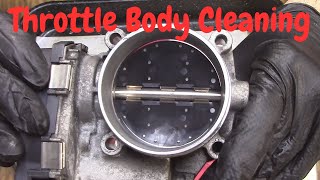
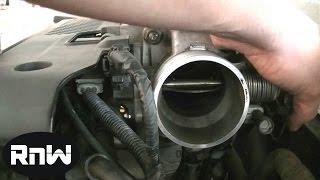
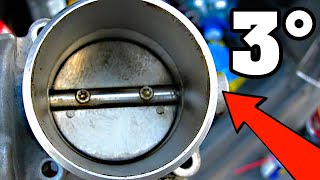
Typical fix: Remove the throttle body, clean it thoroughly with a dedicated throttle body cleaner and a soft brush, and reinstall it with a new gasket. 🎬 Watch: Step-by-step throttle body cleaning guide A throttle body adaptation must be performed using a VAG-compatible scan tool (like VCDS) afterward.
Est. part cost: $10-$20 for cleaner and a new gasket. - Damaged Wiring or Connector at Throttle Body 🟡 Medium Probability → Shop Fuel Injection Throttle Body The 6-pin wiring harness connector at the throttle body is a known weak point. Engine heat and vibration can cause the pin contacts to develop high resistance or the wires to chafe. This is documented in Audi TSB 2018260 / 97-08-25.
How to confirm: With the ignition on, wiggle the connector and wiring harness at the throttle body while monitoring live data for the throttle position sensor with a scan tool. If the signal drops out or becomes erratic, the wiring is faulty. Also, visually inspect the pins for corrosion, fretting, or being backed out of the connector.
Typical fix: Install a wiring harness repair kit, which involves cutting the old connector off and splicing a new pigtail in its place using crimp connectors. The TSB provides a specific procedure for this repair and warns against using solder.
Est. part cost: $30-$60 for an OEM repair kit. - Failed Throttle Body Assembly ⚪ Low Probability → Shop Fuel Injection Throttle Body The internal electronic components of the throttle position sensors can fail over time, though it's less common than a dirty throttle body or wiring issues. The sensors are integrated into the assembly and cannot be replaced separately.
How to confirm: If cleaning the throttle body and confirming the wiring is good does not resolve the code, the throttle body assembly itself is the likely culprit. Testing with a multimeter can confirm if the sensor's voltage sweep is erratic or out of spec as the throttle plate is manually opened.
Typical fix: Replace the entire throttle body assembly. A throttle body adaptation must be performed with a scan tool (VCDS Basic Settings, Group 060) immediately after installation.
Est. part cost: $200-$500
Rare But Worth Checking
- Faulty Engine Control Module (ECM): This is extremely rare. The ECM should only be considered after all other possibilities, including the throttle body, wiring, and other related sensors, have been exhaustively tested and ruled out. A bad ground connection to the ECM is a more likely, though still rare, possibility.
Diagnosis Steps
- Scan the ECM for any other stored fault codes to see if P0121 is appearing with others.
- Using a scan tool (like VCDS), observe the live data for Throttle Position Sensor 1 (G69) and Sensor 2 (G188) in Measuring Value Block 062. The readings should be smooth and correlate with each other as you slowly press the accelerator pedal (with the engine off, ignition on).
- Remove the intake pipe from the throttle body and visually inspect the throttle plate and bore for heavy carbon buildup.
- If carbon is present, remove the throttle body and clean it thoroughly with a dedicated throttle body cleaner and a soft brush. Do not spray cleaner directly into the electronic components.
- While the throttle body is accessible, inspect the wiring harness and 6-pin connector for any signs of damage, corrosion, or loose pins. Pay close attention to the area where the harness may rub or is exposed to high heat.
- Gently wiggle the connector while observing live data on the scan tool to check for intermittent connections. This is a key step in diagnosing the TSB-related wiring issue.
- If cleaning does not resolve the issue, and the wiring appears sound, test the sensor circuit with a multimeter. Check for a stable 5V reference and good ground from the ECM at the connector.
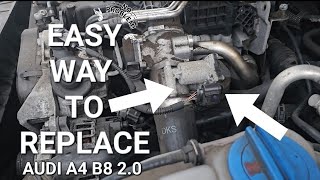
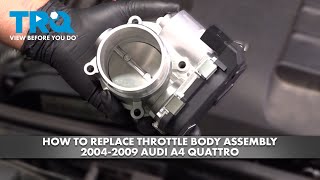
- If wiring and cleaning fail to fix the problem, the throttle body assembly is likely faulty and requires replacement. 🎬 See this Audi A4 throttle body replacement walkthrough
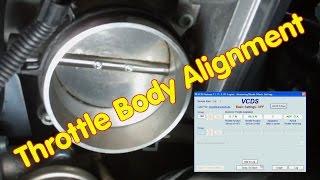
- After any cleaning or replacement, perform a Throttle Body Adaptation (TBA) using a VAG-compatible scan tool. This step is mandatory to teach the ECM the new closed and open positions of the throttle plate. In VCDS, this is done in Engine -> Basic Settings -> Group 060. 🎬 Watch: How to perform a VCDS throttle body alignment
Parts You'll Likely Need
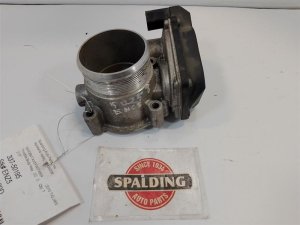
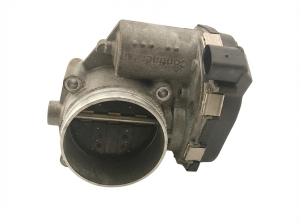
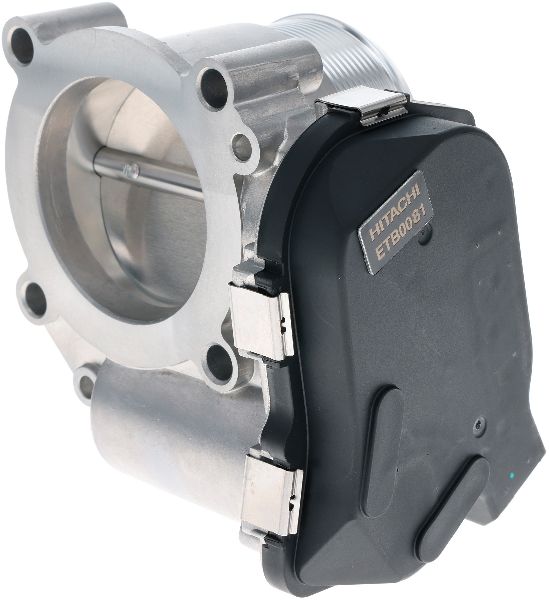
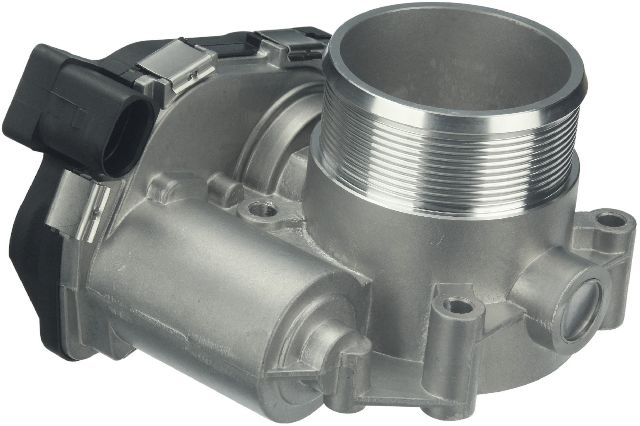
- Throttle Body Assembly
(OEM #06F133062T)— This is the complete unit that fails if cleaning and wiring repairs do not solve the P0121 code. The position sensors are integrated into this part.
Trusted brands: Bosch, VDO, Hitachi, Continental
OEM price range: $350-$500
Aftermarket price range: $150-$300 - Throttle Body Gasket
(OEM #06F133073D)— This should be replaced anytime the throttle body is removed for cleaning or replacement to prevent vacuum leaks.
Trusted brands: Victor Reinz, Elring, Mahle
OEM price range: $10-$20
Aftermarket price range: $5-$15 - Throttle Body Connector Repair Kit
(OEM #000979025E)— Used to repair the common wiring fault at the throttle body connector, as outlined in TSB 2018260. This kit includes a new connector housing and wire leads.
Trusted brands: Genuine Audi/VW
OEM price range: $30-$60
Related Codes That Often Appear With This One
- P0221 — This code is for the secondary throttle position sensor ('B' circuit). Since the throttle body has two redundant sensors for safety, a fault in one often triggers an implausibility fault in the other.
- P0222 — This code indicates a low input signal from the secondary throttle position sensor ('B' circuit), often appearing alongside P0121 due to a shared electrical issue or internal throttle body failure.
- P1545 — This is an Audi-specific code for 'Throttle Valve Control System Malfunction,' which is a general fault indicating the ECM cannot properly control the throttle, often triggered by the sensor range issue of P0121.
- P0068 — This code indicates a MAP/MAF - Throttle Position Correlation error. The ECM sees a discrepancy between the amount of air it measures entering the engine and the reported angle of the throttle plate.
Technical Service Bulletins (TSBs) & Recalls
- 2018260 / 97-08-25 — MIL ON, DTCs P1545, P0121, P0123, P0221, P0222 Stored in ECM — This TSB addresses sporadic throttle valve faults caused by high contact resistance in the wiring harness connector to the throttle body. It provides a procedure for repairing the wiring harness with a specific repair kit and explicitly states not to use solder for the repair.
Platform-Specific Known Issues
- A known issue, documented in TSB 2018260, involves high contact resistance in the throttle body wiring connector, which can cause intermittent P0121 codes even on a perfectly clean and functional throttle body.
Mechanic-Grade Diagnostic Values
- VCDS Measuring Block 062, Field 1 (Sensor 1 / G187) — expected: Low percentage at rest (approx. 5-15%) with ignition on, engine off. Should increase smoothly toward 80-95% as accelerator is pressed.. Failure: Values are erratic, jump, freeze, or do not change when the pedal is pressed.
- VCDS Measuring Block 062, Field 2 (Sensor 2 / G188) — expected: High percentage at rest (approx. 80-95%) with ignition on, engine off. Should decrease smoothly toward 5-15% as accelerator is pressed.. Failure: Values are erratic, jump, freeze, or do not change. The two sensor values should move in a smooth, inverse relationship.
- Sensor Signal Voltage (at connector) — expected: Approximately 0.5V - 0.7V at closed throttle, smoothly increasing to around 4.5V at wide-open throttle.. Failure: Voltage is outside the expected range, does not sweep smoothly, or has dropouts when the throttle plate is moved.
- 5V Reference Voltage at Throttle Body Connector (Pin 6 to Pin 2) — expected: A steady ~5.0V with key on, engine off.. Failure: Voltage is significantly lower or higher than 5.0V, or is unstable, indicating a problem with the ECM or wiring.
Scan Tool Commands That Help
- VCDS (VAG-COM): Graphing of Measuring Value Block 062 — This is a primary diagnostic step to visually confirm the performance of both throttle position sensors simultaneously. With the key on and engine off, pressing the accelerator should show two smooth, inversely-related lines on the graph. Any spikes, flat spots, or erratic behavior indicates a sensor or wiring fault.
- VCDS (VAG-COM): Basic Settings - Group 060 (Throttle Body Adaptation) — This command is mandatory after cleaning or replacing the throttle body. It calibrates the ECM to the new fully closed and fully open positions of the throttle plate. Failure to perform this step will almost certainly cause the P0121 code to return.
Wiring & Ground Locations
- T6f Connector (at Throttle Body) — The 6-pin electrical connector on the throttle body assembly.. This is the location of the wiring fault described in TSB 2018260. High resistance or poor contact at these pins is a primary cause of P0121. Pinout: Pin 1=G188 Signal, Pin 2=Sensor Ground, Pin 3=Motor(-), Pin 4=Motor(+), Pin 5=G187 Signal, Pin 6=5V Reference.
- Main Engine Ground Strap — Runs from the right side engine mount to a stud on the frame rail.. A corroded or loose main engine ground can cause a variety of intermittent electrical issues and floating voltages, which can affect sensor readings and trigger implausible signal codes like P0121.
- Secondary Engine Ground — Runs from the left cylinder head (near the front coolant pipe bolt) to the ABS module bracket.. This is another critical ground path. On high-mileage vehicles, this strap can become highly corroded and cause difficult-to-diagnose electrical gremlins.
- Ground Point 12 — In the engine compartment on the left side, in the water drainage box (plenum chamber).. This is a key chassis ground point for various engine compartment components. Corrosion here due to water ingress can affect sensor ground references.
Real Owner Repair Stories
- Ross-Tech Forums user (2006 Audi A4 3.2L (B7 chassis, but issue is identical to B8)) — Randomly throws P0121 and enters limp mode. Can happen multiple times on a short trip.
❌ Tried (didn't work) Replaced the throttle body assembly., Performed the TSB wiring repair to replace the throttle body connector., Professional shop checked wiring to the ECU and found no obvious faults.
✅ What actually fixed it The issue was unresolved in the thread, but the strong consensus from senior forum members was a persistent, intermittent electrical issue, most likely a bad ground connection elsewhere on the chassis or engine harness that was being missed by standard diagnostics. - GolfMKV Forums user (2010 VW GTI (EA888 engine family)) — Recurring throttle position sensor faults and EPC light.
❌ Tried (didn't work) Initial diagnosis pointed towards the throttle body itself.
✅ What actually fixed it The root cause was the factory wiring harness to the throttle body being physically too short. Engine movement would stress the wires and weaken the solder joints over time. The fix was a redesigned harness from VW with longer wires. - AndrewFixes on YouTube (2012 VW Tiguan 2.0 TDI (83,000 miles)) — P0121 code stored in VCDS, poor throttle response.
❌ Tried (didn't work) The first step was diagnosis, not failed repairs.
✅ What actually fixed it The throttle plate and bore were thoroughly clogged with thick carbon deposits, preventing the valve from closing properly. A comprehensive cleaning of the throttle body and installation of a new gasket resolved the code and noticeably improved drivability.
When the Usual Fixes Don't Work
- In some cases, owners have performed all the common fixes—thoroughly cleaning the throttle body, replacing the throttle body assembly with a new OEM part, and even installing the TSB wiring repair kit—only to have the intermittent P0121 fault return. These situations strongly suggest the problem lies further up the chain in the electrical system, with the most likely culprits being a poor engine-to-chassis ground or a break/high resistance elsewhere in the engine wiring harness that is not addressed by the pigtail repair kit. Diagnosing these faults requires moving beyond component replacement and performing systematic voltage drop and continuity tests on the related circuits and grounds.
OEM Part Supersession History
06F133062J, 06F133062Q→06F133062T (also appears as 06F133062AG)— Standard component revisions for improved reliability or manufacturing changes.
Heads up: All listed part numbers are generally interchangeable for the EA888 Gen 2 engine.
Model Year Variations Within This Range
- 2008-2016: There are no significant variations within this year range for the 2.0T engine that affect the diagnosis or common causes of code P0121. The throttle body design, wiring connector weakness, and propensity for carbon buildup are consistent across both the B8 (pre-facelift) and B8.5 (facelift) models.
Diagnostic Flowchart
Other Known Issues on This Vehicle
Issues unrelated to this code that are worth knowing about as an owner of this generation:
- Excessive Oil Consumption 🔴 High — Very common, especially in 2009-2011 models. Caused by faulty piston ring design. Often requires piston and ring replacement if oil consumption is severe. (Ref: Subject of a class-action lawsuit which resulted in an extended warranty and reimbursement program for affected owners.)
- Timing Chain Tensioner Failure 🔴 High — A critical issue on early (pre-2013) EA888 Gen 2 engines. The original tensioner design can fail without warning, allowing the timing chain to jump, causing catastrophic engine damage. (Ref: An updated tensioner was released. Visual inspection through a small port on the lower timing cover is recommended to check which version is installed.)
- Water Pump / Thermostat Housing Failure 🟠 Medium — The plastic water pump and thermostat housing assembly is prone to cracking and leaking coolant. Failure can occur as early as 30,000 miles but is common around 60,000-80,000 miles. (Ref: A class-action settlement led to an extended warranty for this component on some models. All-aluminum replacement units are a popular aftermarket upgrade.)
- PCV Valve Failure 🟠 Medium — The PCV (Positive Crankcase Ventilation) valve diaphragm can tear, leading to a large vacuum leak. Symptoms include a rough idle, a whistling or honking noise from the engine bay, and lean fault codes (e.g., P0171).
- Intake Manifold Runner Flap Failure 🟡 Low — The plastic intake manifold can fail, either due to the runner flap motor malfunctioning or the flap linkage breaking. This typically results in a check engine light with codes related to 'Intake Manifold Runner Control' and a slight loss of low-end torque.
Used vs. New Parts: Buying Guide for This Vehicle
When a used part is the smart pick: A used throttle body from a reputable auto recycler can be a viable option if your original unit has a confirmed internal electronic failure and you're on a tight budget. It is not recommended if your only issue is carbon buildup, as cleaning is far cheaper. It's a gamble, as the used part could have similar wear.
Donor-vehicle mileage cap: roughly under 60000 miles for the part to have meaningful remaining life.
What to inspect on the donor part:
- Ask for the VIN or mileage of the donor car to verify age/use.
- Inspect the electrical connector pins for any signs of corrosion, bending, or damage.
- Check the throttle plate for smooth, unrestricted movement by hand.
- Look for any external cracks or damage to the plastic housing.
OEM-only on this vehicle (don't cheap out):
- Throttle Body Connector Repair Kit - To ensure proper wire gauge, pin material, and weather sealing as intended by the TSB, using the Genuine Audi/VW kit is highly recommended over generic alternatives.
Aftermarket brands forum-validated for this vehicle:
- Bosch (often the original OEM supplier)
- VDO (Continental)
- Hitachi
Brands owners have reported issues with on this vehicle:
- Unbranded, 'white-box' parts from major online marketplaces should be avoided. While tempting due to low cost, they have a high failure rate due to subpar internal electronics and potentiometers that do not meet OEM specifications for durability and accuracy.
Real Owner Stories
Aggregated from forums and TSBs cited above. Mileages and costs reflect what owners reported in those sources.
2010 Audi A4 2.0T
Symptoms: The owner experienced a persistent P0121 code. They replaced the throttle body assembly, but the problem remained unresolved.
What fixed it: The issue was identified as high contact resistance in the wiring connector, which required the TSB-specified wiring harness repair.
Source hint: AudiWorld Forums: DTC P0121 - Throttle Body Connector TSB
2012 Audi A4 2.0T
Symptoms: The vehicle's EPC light came on and it entered 'limp mode' with reduced power.
What fixed it: A thorough throttle body cleaning followed by a throttle body adaptation resolved the fault.
Source hint: Audizine: P0121 Throttle Pedal Position Sensor Switch A Circuit Range Performance
Related OBD-II Codes
Frequently Asked Questions
My 2010 Audi A4 is throwing P0121; does TSB 2018260 apply to my vehicle?
Can I just spray cleaner into the throttle body while it's still on my EA888 engine?
I replaced the throttle body on my A4 B8, but the P0121 code is still there. What did I miss?
Is there a specific way I should repair the throttle body wiring on my Audi?
Why is the throttle body on the Audi A4 2.0T so prone to carbon buildup?
What tool do I need to perform the throttle body adaptation on my A4?
Helpful Videos

Used OEM Parts in Stock
New Aftermarket Parts Available




The information in this article is provided for general reference and educational purposes only. Vehicle specifications, procedures, and part compatibility can vary by production date, trim level, and region. Always consult your vehicle's factory service manual and verify part numbers before purchasing or performing repairs. Safety-critical components such as airbags, seat belts, and braking systems should be installed by a qualified professional.
- Audi A4:
- 🧭 Diagnostic Flowchart
- 🎬 Helpful Videos
- 🛍️ Shop This Part
- What's Unique About the 2008-2016 Audi A4
- Symptoms You May Notice
- Most Likely Causes
- Rare But Worth Checking
- Diagnosis Steps
- Parts You'll Likely Need
- Related Codes That Often Appear With This One
- Technical Service Bulletins (TSBs) & Recalls
- Platform-Specific Known Issues
- Mechanic-Grade Diagnostic Values
- Scan Tool Commands That Help
- Wiring & Ground Locations
- Real Owner Repair Stories
- When the Usual Fixes Don't Work
- OEM Part Supersession History
- Model Year Variations Within This Range
- Other Known Issues on This Vehicle
- Used vs. New Parts: Buying Guide for This Vehicle
- Real Owner Stories
- 2010 Audi A4 2.0T
- 2012 Audi A4 2.0T
- Related OBD-II Codes
- Frequently Asked Questions
- 🎟️ Get 5% Off