

P0121 on 2006-2015 Audi Q7: Throttle Position Sensor 'A' Circuit Fixes
On a 2006-2015 Audi Q7, code P0121 is most often caused by a dirty throttle body creating a mismatch between the expected and actual throttle plate position. A thorough cleaning and electronic reset (adaptation) using a VAG-COM/VCDS tool usually resolves the issue. If not, the entire throttle body assembly, which contains the non-serviceable sensors, may need replacement.
- P0121 on your Q7 strongly points to a problem with the throttle body.
- The most common fix is a thorough cleaning of the throttle body followed by a mandatory electronic reset (adaptation) with a VAG-specific scan tool.
- If cleaning fails, the entire throttle body assembly needs replacement, as the sensors are integrated.
- Always use a new gasket when reinstalling the throttle body.
- The EPC light indicates a serious fault; driving in limp mode is a safety risk.
What's Unique About the 2006-2015 Audi Q7
The first-generation Audi Q7 with the 3.2L V6 FSI (direct injection) engine uses an electronic throttle body where the position sensors (G187 and G188) are integrated and not individually replaceable. This design is highly susceptible to carbon and oil buildup inside the throttle body bore, a common trait of early direct injection engines where fuel doesn't wash the intake path. This buildup can physically restrict the throttle plate's movement, causing the sensor to correctly report a position that the ECM deems incorrect for its commanded state, leading to a 'Range/Performance' fault and often illuminating the EPC light.
🎬 Watch: How to diagnose and reset the Audi EPC lightSymptoms You May Notice
- Check Engine Light (CEL) is on
- Electronic Power Control (EPC) light is on
- Vehicle enters 'limp mode' with severely reduced engine power
- Poor, hesitant, or delayed acceleration
- Rough or unstable idle
- Engine stalling, especially at low speeds or when coming to a stop
- Intermittent surging or stumbling while driving
- Transmission may not shift correctly
- Replacing the accelerator pedal position sensor (APPS). While the code definition includes 'Pedal Position Sensor,' on this vehicle, P0121 almost always points to the throttle body on the engine, not the pedal assembly inside the car. Pedal-related faults would typically set different codes like P2138.
Most Likely Causes
- Dirty or Carbon-Fouled Throttle Body 🔴 High Probability → Shop Fuel Injection Throttle Body The PCV (Positive Crankcase Ventilation) system routes oil vapors and combustion byproducts back into the intake. On FSI direct-injection engines, these deposits bake onto the throttle plate and bore over time without being washed off by fuel, restricting movement.
How to confirm: Remove the intake boot from the throttle body and visually inspect for a thick black ring of carbon buildup around the throttle plate and where it seats in the bore. The plate may feel sticky or difficult to move by hand (with ignition off).
Typical fix: Carefully clean the throttle body bore and plate with a dedicated throttle body cleaner and a soft cloth or brush. After cleaning and reinstallation with a new gasket, a throttle body adaptation (reset) MUST be performed with a VAG-specific scan tool like VCDS (VAG-COM) to relearn the closed position.
Est. part cost: $10-$25 for cleaner and a new gasket - Failed Throttle Body Assembly 🟡 Medium Probability → Shop Fuel Injection Throttle Body The internal electronic sensors (G187/G188) or the motor that controls the throttle plate can fail with age and heat cycles. Since the sensors are integrated, the entire assembly must be replaced.
How to confirm: If a thorough cleaning and adaptation does not resolve the code, and the wiring is confirmed to be good, the throttle body itself is the likely culprit. A scan tool can be used to monitor the requested vs. actual throttle position in measuring block 062; a significant deviation or erratic readings point to a faulty unit.
Typical fix: Replace the entire throttle body assembly. A throttle body adaptation is required after installation.
Est. part cost: $250-$600 - Wiring or Connector Issues ⚪ Low Probability The engine bay environment involves heat and vibration, which can degrade wiring insulation or cause connector pins to lose tension over time. There is a known TSB for wiring repairs at the throttle body connector for this platform.
How to confirm: Visually inspect the wiring harness leading to the throttle body for any signs of chafing, melting, or corrosion. Unplug the connector and check for bent or corroded pins. Use a multimeter to check for continuity and proper 5V reference voltage at the connector.
Typical fix: Repair the damaged section of the wiring harness or replace the connector pigtail using approved crimp connectors and heat shrink, as soldering is not recommended by the manufacturer.
Est. part cost: $20-$75 for repair kits
Rare But Worth Checking
- Faulty Engine Control Module (ECM): This is extremely rare. Before condemning the ECM, all other possibilities, including the throttle body, its wiring, and grounds must be exhaustively ruled out.
- Vacuum Leak: A significant vacuum leak can sometimes cause the ECM to receive conflicting information between the MAF/MAP sensors and the throttle position, potentially triggering a P0121 code. This is often accompanied by other codes like P0507 (Idle Air Control System RPM Higher Than Expected).
Diagnosis Steps
- Connect a VAG-specific scanner (like VCDS) and confirm P0121 is the primary code. Note any other codes present, especially P0221.
- With the engine off and key on, navigate to Engine (01) -> Measuring Blocks (08) -> Group 062. Monitor the live data for Throttle Position Sensor 1 (G187) and 2 (G188). Observe the percentage readings as you slowly press and release the accelerator pedal. The values should sweep smoothly in opposite directions without any dropouts or glitches.
- Remove the intake air duct from the throttle body.
- Visually inspect the throttle bore and plate for heavy carbon buildup. Check for stickiness or resistance when moving the plate by hand (ignition must be off).
- If dirty, remove the throttle body. Clean it thoroughly using a dedicated cleaner and a soft brush/rag. Do not spray cleaner directly into the electronic components.
- Reinstall the throttle body with a new gasket to prevent vacuum leaks.
- Perform a throttle body adaptation. Using VCDS, go to Engine (01) -> Basic Settings (04) -> Group 060 and activate. You will hear the throttle motor cycle. Wait for the status to read 'ADP OK'.
- Clear the codes and perform a test drive. If the code returns, proceed to check the wiring.
- Inspect the throttle body electrical connector and wiring harness for any visible damage, corrosion, or loose connections. Check for 5V reference and good ground at the connector.
- If wiring appears intact and the code persists after cleaning and adaptation, the throttle body assembly is the most likely cause and should be replaced.
Parts You'll Likely Need
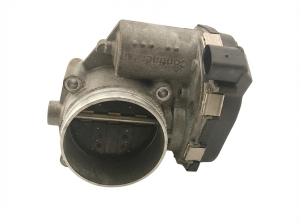
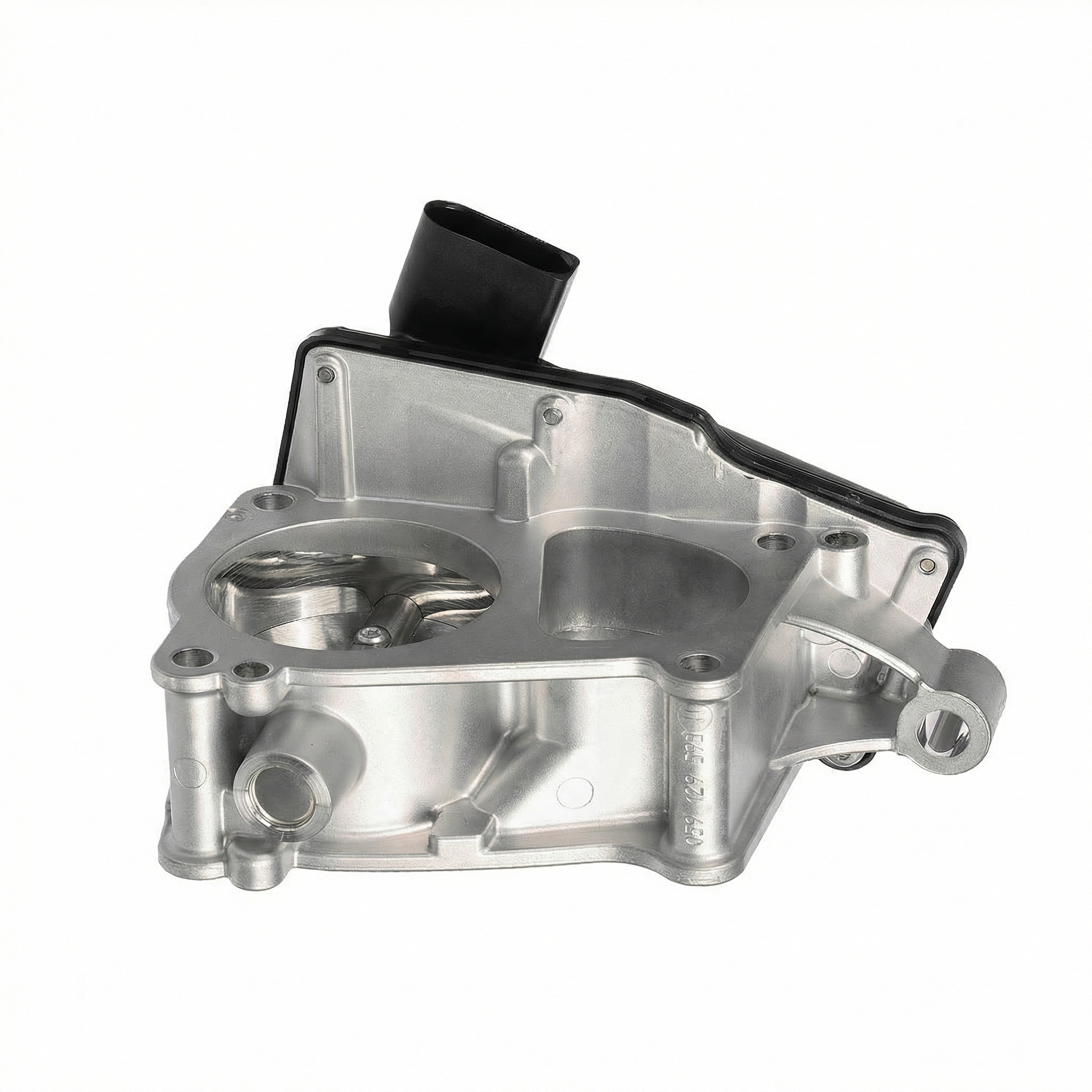
- Throttle Body Assembly
(OEM #06E133062C, 06E133062G, 06E133062H)— The throttle position sensors are integrated into the assembly. If cleaning does not fix the issue, the entire unit must be replaced as the sensors are not available separately.
Trusted brands: Bosch, VDO, Continental
OEM price range: $400-$600
Aftermarket price range: $250-$450 - Throttle Body Gasket
(OEM #022133237D)— The gasket should always be replaced when the throttle body is removed for cleaning or replacement to prevent vacuum leaks.
Trusted brands: Victor Reinz, Elring
OEM price range: $10-$20
Aftermarket price range: $5-$15
Related Codes That Often Appear With This One
- P0221 — This code is for the secondary throttle position sensor ('B' circuit / G188). The throttle body uses two sensors for redundancy. A fault in one can trigger an implausibility fault in the other.
- P0638 — This code relates to the throttle actuator control. If the ECM receives incorrect position data from the sensor, it will also flag a fault for its inability to properly control the throttle plate.
- P0068 — Indicates a correlation problem between the MAP/MAF sensor and the throttle position sensor. The ECM expects to see a certain amount of airflow for a given throttle opening; a mismatch can trigger both codes.
Technical Service Bulletins (TSBs) & Recalls
- Audi TSB 97-08-25 (also listed as 2018260): Addresses wiring repairs at the throttle body connector due to contact resistance, which can cause implausible signals and trigger codes like P0121.
Platform-Specific Known Issues
- Throttle Body Adaptation is Mandatory: → Shop Fuel Injection Throttle Body Unlike some vehicles, simply cleaning the throttle body or disconnecting the battery is not enough. The ECM must be told the new 'zero' position of the clean throttle plate via a specific procedure using a diagnostic tool like VCDS. Failure to perform this step will almost certainly result in the code returning and a poor idle.
- Wiring Harness TSB: Audi has issued Technical Service Bulletins (TSB 97-08-25 / 2018260) regarding wiring repairs at the throttle body connector for various FSI engines, including those in the Q7. This suggests that contact resistance from fretting or corrosion at the connector pins is a recognized failure mode.
Mechanic-Grade Diagnostic Values
- VCDS Engine Measuring Block 062, Field 1 (G187) — expected: Should sweep smoothly up from ~3% to ~93% as accelerator is pressed (Key On, Engine Off).. Failure: Values jump, freeze, or do not change smoothly. The range may not be fully utilized.
- VCDS Engine Measuring Block 062, Field 2 (G188) — expected: Should sweep smoothly down from ~97% to ~3% as accelerator is pressed (Key On, Engine Off).. Failure: Values jump, freeze, or do not change smoothly. These values should move in the opposite direction of Field 1.
- Throttle Body Connector - 5V Reference Voltage — expected: Approximately 5.0V between pin 2 and ground, and between pin 2 and pin 6 with the key on, engine off.. Failure: Voltage is significantly lower than 4.8V or is absent, indicating a wiring or ECM issue.
Scan Tool Commands That Help
- VCDS (VAG-COM): Engine (01) -> Basic Settings (04) -> Group 060 — This is the mandatory Throttle Body Adaptation (TBA) procedure. It must be performed after cleaning the throttle body, replacing it, or clearing fault codes to allow the ECM to relearn the throttle plate's positions.
Wiring & Ground Locations
- Throttle Body Connector — 6-pin connector directly on the electronic throttle body assembly, located at the front of the intake manifold.. This is the primary connection point for the integrated sensors (G187/G188) and actuator motor. The TSB for this code specifically targets contact resistance and fretting corrosion within this connector and its wiring pigtail.
- Engine-to-Chassis Ground Strap — A primary ground strap is located near the starter motor, connecting the engine block to the chassis frame rail. It may be necessary to remove the airbox for access.. A corroded or loose main engine ground can cause floating voltages and unstable sensor readings throughout the engine management system, potentially leading to implausible signal faults like P0121.
- Plenum Chamber Grounds — There are ground connection points in the plenum chamber (the area below the windshield wipers), which can be susceptible to moisture.. These ground points serve various engine bay components. Corrosion here can create intermittent electrical issues that are difficult to trace.
Real Owner Repair Stories
- Reddit user on r/GolfGTI (similar VAG engine) (VW GTI with similar drive-by-wire system) — Intermittent EPC and CEL, with power cut and poor throttle response. Codes P0121 and P0221 present.
❌ Tried (didn't work) The dealer initially suggested replacing the entire throttle body for $900.
✅ What actually fixed it The issue was resolved by performing the wiring harness repair outlined in the TSB (Transaction No.: 2018652/2). The dealer noted the TSB had supposedly been done before, but re-doing the wiring repair was the final fix, indicating the problem was high resistance in the connector/wiring, not the throttle body itself.
OEM Part Supersession History
06E133062C→06E133062G, then 06E133062H— Revisions to improve reliability of the internal electronics and sensor contacts.
Heads up: The newer part numbers (G and H) are generally backwards compatible with vehicles that originally used the C version. When replacing, it is always best to use the latest available revision.
Model Year Variations Within This Range
- 2006-2010: The 3.2L V6 FSI engine was primarily available in the Audi Q7 from its launch in 2006 through the 2010 model year. After 2010, the Q7 engine lineup shifted to the 3.0T supercharged V6 and TDI diesel options. While the P0121 diagnosis is similar on the 3.0T, the specific part numbers and engine characteristics are different.
Diagnostic Flowchart
Other Known Issues on This Vehicle
Issues unrelated to this code that are worth knowing about as an owner of this generation:
- Intake Valve Carbon Buildup 🔴 High — Common on all FSI engines. Typically requires cleaning every 40,000-60,000 miles to prevent misfires, rough idle, and power loss.
- Timing Chain Tensioner Failure 🔴 High — The timing chain guides and tensioners can wear, often noted by a rattling sound on cold starts. Failure is costly as it's an engine-out service. Issues can appear between 90k-120k miles.
- Air Suspension Leaks/Compressor Failure 🟠 Medium — The air springs (especially front) can develop leaks with age, causing the vehicle to sag and the compressor to overwork and eventually fail. This is a common issue on higher-mileage vehicles.
- Water Pump/Thermostat Housing Leaks 🟠 Medium — The plastic components of the cooling system, particularly the water pump and thermostat housing, can become brittle and crack over time, leading to coolant leaks. This is a common failure point across many VAG models.
Used vs. New Parts: Buying Guide for This Vehicle
When a used part is the smart pick: A used throttle body can be a cost-effective option if the wiring and cleaning/adaptation have been ruled out as the cause. Given the high cost of a new OEM unit, a used part from a reputable dismantler with a warranty is a reasonable gamble.
Donor-vehicle mileage cap: roughly under 80000 miles for the part to have meaningful remaining life.
What to inspect on the donor part:
- Check for a clean throttle plate and bore; excessive carbon may indicate a high-mileage or poorly maintained donor.
- Ensure the electrical connector pins are straight, clean, and free of any corrosion or green residue.
- Verify the part number is the latest possible revision (e.g., 'H' suffix over a 'C' suffix) to get the most updated design.
- Ask the seller if the part comes from a vehicle that was running and driving without EPC or throttle-related fault codes.
OEM-only on this vehicle (don't cheap out):
- While the throttle body itself can be sourced used or from a quality aftermarket supplier, the connector repair kit mentioned in the TSB should be a genuine OEM part to ensure proper fit and wire quality.
Aftermarket brands forum-validated for this vehicle:
- Bosch
- VDO
- Continental
Brands owners have reported issues with on this vehicle:
- Unbranded, no-name parts from online marketplaces should be avoided, as the calibration and longevity of the internal sensors are critical and often poor on cheap copies.
Real Owner Stories
Aggregated from forums and TSBs cited above. Mileages and costs reflect what owners reported in those sources.
2006-2015 Audi Q7 3.2L V6
Symptoms: Implausible signals from the throttle body causing the Check Engine Light and EPC light to illuminate.
What fixed it: Wiring repairs at the throttle body connector to address contact resistance from fretting or corrosion.
Source hint: Audi TSB 97-08-25 (also listed as 2018260)
2006 Audi Q7 3.2L V6
Symptoms: Fault code P0121/000289 present; issues with the throttle body or associated wiring.
What fixed it: Followed the diagnostic path for wiring harness repair at the throttle body or replacement of the throttle body unit.
Source hint: Ross-Tech Wiki
Related OBD-II Codes
Frequently Asked Questions
Is there a Technical Service Bulletin for the throttle body wiring on my Audi Q7?
Can I just clean the throttle body on my 3.2L V6 to fix the P0121 code?
Why does my Q7 enter 'limp mode' when this code appears?
What specific diagnostic tool do I need for the throttle adaptation on this Audi?
My Q7 has a rough idle and P0121; could this be related to the FSI engine design?
Should I solder the wires if I find damage at the throttle body connector?
Helpful Videos
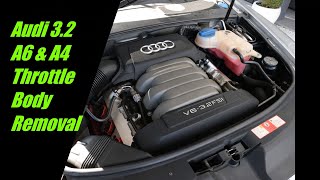

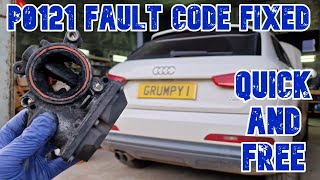
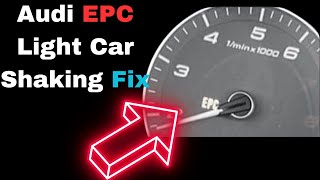
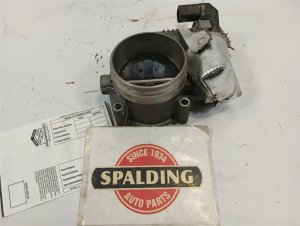
We Have This Part in Stock

The information in this article is provided for general reference and educational purposes only. Vehicle specifications, procedures, and part compatibility can vary by production date, trim level, and region. Always consult your vehicle's factory service manual and verify part numbers before purchasing or performing repairs. Safety-critical components such as airbags, seat belts, and braking systems should be installed by a qualified professional.
- Audi Q7:
- 🧭 Diagnostic Flowchart
- 🎬 Helpful Videos
- 🛍️ Shop This Part
- What's Unique About the 2006-2015 Audi Q7
- Symptoms You May Notice
- Most Likely Causes
- Rare But Worth Checking
- Diagnosis Steps
- Parts You'll Likely Need
- Related Codes That Often Appear With This One
- Technical Service Bulletins (TSBs) & Recalls
- Platform-Specific Known Issues
- Mechanic-Grade Diagnostic Values
- Scan Tool Commands That Help
- Wiring & Ground Locations
- Real Owner Repair Stories
- OEM Part Supersession History
- Model Year Variations Within This Range
- Other Known Issues on This Vehicle
- Used vs. New Parts: Buying Guide for This Vehicle
- Real Owner Stories
- 2006-2015 Audi Q7 3.2L V6
- 2006 Audi Q7 3.2L V6
- Related OBD-II Codes
- Frequently Asked Questions
- 🎟️ Get 5% Off