

P0121 on 2011-2012 Buick Regal: Throttle Position Sensor Causes and Fixes
On a 2011-2012 Buick Regal, code P0121 is almost always caused by a dirty throttle body or a failing throttle position sensor. Start by cleaning the throttle body. If that doesn't work, the entire throttle body assembly needs to be replaced, as the sensor is integrated. A GM Special Coverage bulletin exists for this exact issue, confirming it's a very common problem.
- P0121 on a 2011-2012 Regal is a well-known issue, officially recognized by a GM Special Coverage bulletin.
- Always start by thoroughly cleaning the throttle body and performing an idle relearn; this often resolves the issue.
- If cleaning fails, the entire throttle body assembly must be replaced, as the sensor is built-in.
- Ensure you purchase the correct throttle body for your engine (2.4L or 2.0L Turbo), as they are different parts.
- This is a very manageable DIY repair that can save hundreds in labor costs.
What's Unique About the 2011-2012 Buick Regal
This issue is so common on this platform that General Motors issued a Special Coverage Adjustment (#14510) for 2010-2012 Regals. The bulletin specifically addresses P0121 caused by the throttle position sensor, leading to reduced engine power. Unlike many vehicles where the TPS is a separate, replaceable part, on the Regal (and many other GM vehicles of this era), the sensor is integrated into the throttle body assembly. This means if the sensor fails, the entire throttle body must be replaced. This design choice is a key reason for the repair strategy on this vehicle.
Symptoms You May Notice
- Check Engine Light illuminated
- "Reduced Engine Power" message displayed
- "Service Stabilitrak" message may appear
- Vehicle enters 'limp mode' with limited acceleration
- Rough or unstable idle
- Engine hesitation or stumbling during acceleration
- Engine stalling at low speeds
- Delayed throttle response
- Replacing the accelerator pedal position (APP) sensor. While the APP sensor also relates to throttle control, P0121 specifically points to the sensor on the throttle body, not the one connected to the gas pedal.
Most Likely Causes
- Dirty Throttle Body 🔴 High Probability → Shop Fuel Injection Throttle Body The PCV (Positive Crankcase Ventilation) system can allow oil and carbon deposits to build up on the throttle plate and bore over time. This buildup restricts the plate's movement, causing it to stick or lag, which makes the sensor report an incorrect position that conflicts with expected values.
How to confirm: Visually inspect the throttle body inlet and the throttle plate for a thick, black layer of carbon buildup. The back of the throttle plate is often dirtier than the front.
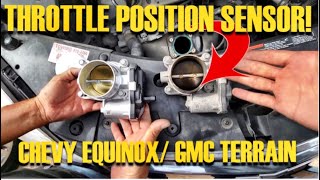
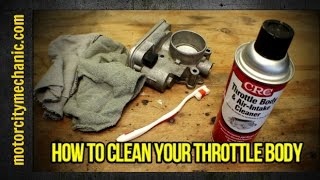
Typical fix: Remove the air intake duct and thoroughly clean the throttle body bore and plate with a dedicated throttle body cleaner and a soft cloth or brush. 🎬 Watch: How to clean your throttle body An idle relearn procedure is required after cleaning.
Est. part cost: $5-$15 - Failing Throttle Body Assembly (Integrated Sensor) 🟡 Medium Probability → Shop Fuel Injection Throttle Body The internal electronic components of the throttle position sensor wear out over time. This was a known issue acknowledged by GM's Special Coverage bulletin #14510. For 2011+ models, GM stopped selling the sensor separately, requiring the replacement of the entire assembly.
How to confirm: If a thorough cleaning of the throttle body does not resolve the symptoms and code, the sensor itself is the next likely failure. A scan tool can monitor the TPS voltage; erratic or non-linear readings when opening the throttle confirm a bad sensor. This is the most common repair when cleaning fails.
Typical fix: Replace the entire throttle body assembly. The sensor is not sold separately for this model year. 🎬 See this step-by-step throttle body replacement walkthrough An idle relearn procedure must be performed after installation.
Est. part cost: $150-$250 - Damaged Wiring or Connector ⚪ Low Probability The wiring harness connector at the throttle body is subject to engine heat and vibration, which can cause wires to fray or pins to lose connection over time. This is a known issue on some GM vehicles.
How to confirm: With the engine off, inspect the wiring harness leading to the throttle body for any signs of fraying, melting, or corrosion. Wiggle the connector while monitoring TPS voltage on a scan tool to see if the reading fluctuates.
Typical fix: Repair the damaged section of wire or replace the pigtail connector. Aftermarket pigtails are available for this repair.
Est. part cost: $15-$40
Rare But Worth Checking
- Powertrain Control Module (PCM) Fault: This is extremely rare. All other possibilities, especially the throttle body and its wiring, should be exhaustively ruled out before considering the PCM as the cause.
Diagnosis Steps
- Connect an OBD-II scanner and confirm that P0121 is present. Check for other related codes like P2135, which strongly indicates a throttle body fault.
- Visually inspect the wiring harness and connector at the throttle body for any obvious damage, corrosion, or loose connections.
- Remove the air intake hose from the throttle body.
- Inspect the throttle body bore and plate for carbon buildup. If significant buildup is present, this is the most likely cause.
- Thoroughly clean the throttle body using a dedicated throttle body cleaner and a lint-free rag or soft brush. Manually open the plate to clean the edges and bore completely.
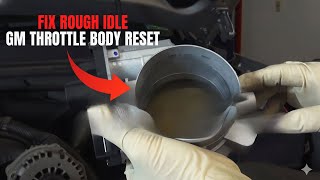
- Reassemble the intake, clear the codes, and perform an idle relearn procedure. A common GM procedure is to start the engine, let it idle for 3 minutes, turn it off for 1 minute, then restart and idle for another 3 minutes. The idle should stabilize. 🎬 Watch: How to manually relearn your GM throttle body
- If the code returns after cleaning, the throttle body assembly itself has likely failed and requires replacement.
- After replacing the throttle body, perform the idle relearn procedure again to sync the new part with the ECU.
Parts You'll Likely Need
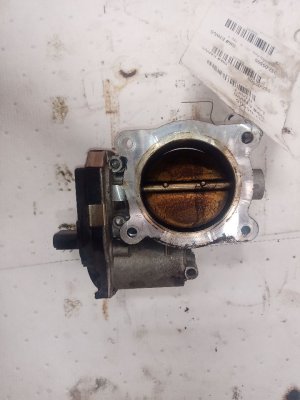
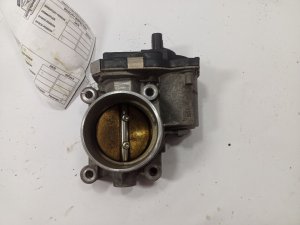
- Throttle Body Assembly (2.4L Engine)
(OEM #12631186)— This is the most common fix if cleaning the original part doesn't work. The throttle position sensor is integrated and cannot be replaced separately. This part number has been superseded by 12694871.
Trusted brands: ACDelco (GM Original Equipment), Bosch, Dorman
OEM price range: $170-$220
Aftermarket price range: $120-$180 - Throttle Body Assembly (2.0L Turbo Engine)
(OEM #12631187)— This is the correct part for the turbocharged models if cleaning fails. The sensor is integrated, requiring full assembly replacement.
Trusted brands: ACDelco (GM Original Equipment)
OEM price range: $180-$250
Aftermarket price range: $150-$200 - Throttle Body Cleaner — Required for the first and most common diagnostic/repair step.
Trusted brands: CRC, Gumout, ACDelco
OEM price range: $5-$15
Aftermarket price range: $5-$15
Related Codes That Often Appear With This One
- P2135 — This code ('Throttle/Pedal Position Sensor/Switch 'A'/'B' Voltage Correlation') is often set alongside P0121. The ECU uses two sensors for redundancy; this code means their readings don't agree, strongly pointing to a faulty throttle body assembly. On many GM vehicles, this code combination almost guarantees the throttle body is the culprit.
- P0221, P0222, P0223 — These codes relate to the secondary throttle position sensor ('B' circuit). Their appearance with P0121 reinforces that the throttle body assembly is failing.
Technical Service Bulletins (TSBs) & Recalls
- GM Special Coverage Adjustment #14510: Covers 2010-2012 Buick Regal for throttle position sensor issues causing reduced power mode and setting codes P0121, P2135, or P0221. The repair involves replacing the throttle body assembly.
Platform-Specific Known Issues
- GM issued Special Coverage Adjustment #14510 which extended the warranty on the throttle body to 10 years or 120,000 miles for this exact issue. While this coverage has likely expired for most vehicles due to age, it confirms this is a widespread, recognized problem on the 2011-2012 Regal.
Mechanic-Grade Diagnostic Values
- TPS Reference Voltage (at sensor connector) — expected: 4.8V - 5.2V. Failure: Voltage outside this range points to a wiring or PCM issue, not necessarily the sensor itself.
- TPS Ground Circuit (at sensor connector) — expected: < 0.1V. Failure: Higher voltage indicates a poor ground connection, which can cause incorrect signal readings.
- TPS Signal 'A' Voltage (Key On, Engine Off) — expected: Approx. 0.5V at closed throttle, sweeping smoothly to approx. 4.5V at wide-open throttle.. Failure: Voltage that is stuck, jumps, or has dead spots during the sweep indicates a worn or failed sensor.
- Throttle Actuator Motor Resistance — expected: 2 - 15 Ohms. Failure: A reading over the limit (OL) indicates an open circuit, while a reading under 1 Ohm indicates a short circuit within the motor.
Scan Tool Commands That Help
- GDS2 / Tech2 / Professional Scan Tool: Idle Learn Reset / Throttle Learn — This function, typically found in the 'Special Functions' or 'Module Setup' menu, should be used after cleaning or replacing the throttle body to force the ECM to learn the new baseline idle position.
- No Tool (Manual Procedure): Manual Idle Relearn Procedure — If a scan tool is not available. After re-connecting the battery and throttle body, start the engine and let it idle in Park for 3 minutes. Turn the engine off for 1 minute. Restart the engine and let it idle for another 3 minutes. The idle should stabilize. A drive cycle above 45 mph may be needed if the idle is still incorrect.
Wiring & Ground Locations
- G103 — Located on the cowl in the engine compartment, typically above the brake booster.. This is a major chassis ground point for the Body Control Module (BCM), Instrument Panel Cluster (IPC), and the Data Link Connector (DLC). A corroded or loose G103 can create system-wide electrical noise and voltage offsets, potentially causing the ECM to misinterpret the TPS signal.
- G101 / G107 — Primary engine block or chassis grounds, often on the cylinder head or frame near the engine.. The ECM and its sensors, including the throttle body, rely on a clean engine ground path. A loose or corroded main engine ground strap can cause a voltage differential between the sensor and the ECM, leading to P0121.
- Throttle Body Connector — The 6-pin or 7-pin electrical connector on the throttle body assembly itself.. This is the most direct point of failure for wiring. Check for pin corrosion (fretting), backed-out pins, or wire damage right at the connector due to engine vibration and heat. A wiggle test on this connector while monitoring TPS data is a key diagnostic step.
Real Owner Repair Stories
- Chevrolet Message Forum user 'Steve H.' (GM Truck with similar electronic throttle body, ~150,000 miles) — Vehicle displayed 'reduced engine power' message on the dash and would not exceed 13 mph.
❌ Tried (didn't work) Cleaning the throttle body. This provided a temporary fix, but the problem returned three weeks later.
✅ What actually fixed it Replacing the entire throttle body assembly permanently resolved the issue. The user also noted improved gas mileage and reduced oil burning after the replacement.
OEM Part Supersession History
12631186→12694871— Standard part revision and consolidation by the manufacturer.
Diagnostic Flowchart
Other Known Issues on This Vehicle
Issues unrelated to this code that are worth knowing about as an owner of this generation:
- Excessive Oil Consumption (2.4L Ecotec) 🔴 High — Very common, particularly on 2010-2013 models. Consumption can exceed 1 quart per 2,000 miles. (Ref: TSB 13-06-01-003J outlines an oil consumption test and piston/ring replacement as the fix.)
- Clogged PCV Orifice in Intake Manifold (2.4L Ecotec) 🔴 High — Common issue, especially in cold weather, often linked to high oil consumption. Can cause rear main seal failure. (Ref: Special Coverage 14882 extended warranty coverage for this issue to 10 years/120,000 miles.)
- Worn Timing Chains (2.4L Ecotec) 🟠 Medium — Often occurs after 100,000 miles. Symptoms include a rattling noise on cold starts.
- High-Pressure Fuel Pump (HPFP) Failure (2.0L Turbo) 🔴 High — A known failure point on the 2.0L turbo engine. The pump can leak fuel directly into the engine oil, causing oil dilution and potential engine damage. (Ref: While no specific TSB is cited for the Regal, this is a well-documented problem across GM vehicles with this engine.)
Used vs. New Parts: Buying Guide for This Vehicle
When a used part is the smart pick: A used throttle body is a high-risk, short-term option best reserved for immediate budget constraints. Since the primary failure mode is internal electronic wear, a used part may have limited life remaining or could be faulty from the start.
Donor-vehicle mileage cap: roughly under 50000 miles for the part to have meaningful remaining life.
What to inspect on the donor part:
- Ask for the mileage of the donor vehicle; lower is significantly better.
- Inspect the electrical connector pins for any signs of green or white corrosion.
- Check the throttle bore; excessive carbon buildup may suggest a high-mileage or poorly maintained engine.
- Ensure there is no physical damage to the housing or connector.
- Confirm the part number matches your required OEM number (or its supersession).
OEM-only on this vehicle (don't cheap out):
- Throttle Body Assembly - Given its criticality for engine management and safety (preventing unintended acceleration), the OEM ACDelco part is strongly recommended for reliability and proper function.
Aftermarket brands forum-validated for this vehicle:
- ACDelco (GM Original Equipment) - This is the OEM part and the most recommended for a direct, reliable replacement.
Brands owners have reported issues with on this vehicle:
- Dorman - While Dorman offers an OE FIX version with a non-contact sensor, general forum consensus on their standard replacement parts is mixed, with some users reporting premature failures while others have success. It is considered a budget-conscious but potentially less reliable option than OEM.
Real Owner Stories
Aggregated from forums and TSBs cited above. Mileages and costs reflect what owners reported in those sources.
2011 Buick Regal 2.4L
Symptoms: The vehicle experienced hesitation and stumbling during acceleration.
What fixed it: Replacing the throttle body assembly resolved the code and resulted in significantly faster and smoother throttle response.
Source hint: gmforum.com: A user with a Buick experienced hesitation and stumbling, which was resolved by replacing the throttle body after getting a P0121 code.
2011 Chevrolet Malibu 2.4L
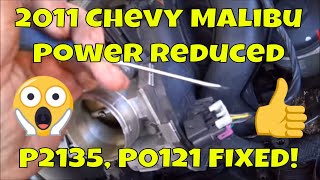
Symptoms: The car displayed codes P2135 and P0121 together, which are indicators of a failed throttle body.
What fixed it: Immediate replacement of the throttle body assembly as recommended by GM service information.
Source hint: YouTube: A video by 'Fix it' on a 2011 Chevy Malibu with the same engine platform
2010-2013 GM Vehicle 2.4L Ecotec — ~100000 miles
Symptoms: Rattling noise on cold starts.
What fixed it: This symptom is associated with worn timing chains, a known issue for this engine platform after 100,000 miles.
Source hint: Known Issues: Worn Timing Chains (2.4L Ecotec)
Related OBD-II Codes
Frequently Asked Questions
Is there a warranty extension for the throttle body on my 2011 Buick Regal?
Can I just replace the sensor on my 2012 Regal's throttle body to fix P0121?
Why does my Regal show 'Service Stabilitrak' along with the P0121 code?
What is the recommended fix for P0121 before I buy expensive parts?
Does the 2.4L Ecotec engine have other issues that could be related to intake codes?
Helpful Videos
Used OEM Parts in Stock
New Aftermarket Parts Available


The information in this article is provided for general reference and educational purposes only. Vehicle specifications, procedures, and part compatibility can vary by production date, trim level, and region. Always consult your vehicle's factory service manual and verify part numbers before purchasing or performing repairs. Safety-critical components such as airbags, seat belts, and braking systems should be installed by a qualified professional.
- Buick Regal:
- 🧭 Diagnostic Flowchart
- 🎬 Helpful Videos
- 🛍️ Shop This Part
- What's Unique About the 2011-2012 Buick Regal
- Symptoms You May Notice
- Most Likely Causes
- Rare But Worth Checking
- Diagnosis Steps
- Parts You'll Likely Need
- Related Codes That Often Appear With This One
- Technical Service Bulletins (TSBs) & Recalls
- Platform-Specific Known Issues
- Mechanic-Grade Diagnostic Values
- Scan Tool Commands That Help
- Wiring & Ground Locations
- Real Owner Repair Stories
- OEM Part Supersession History
- Other Known Issues on This Vehicle
- Used vs. New Parts: Buying Guide for This Vehicle
- Real Owner Stories
- 2011 Buick Regal 2.4L
- 2011 Chevrolet Malibu 2.4L
- 2010-2013 GM Vehicle 2.4L Ecotec — ~100000 miles
- Related OBD-II Codes
- Frequently Asked Questions
- 🎟️ Get 5% Off