

P0121 on 2007-2014 Cadillac CTS: Throttle Position Sensor Causes and Fixes
P0121 on a 2007-2014 Cadillac CTS almost always points to a problem with the throttle body, most often a dirty throttle plate or a failing integrated throttle position sensor (TPS). Cleaning the throttle body is a common first step, but replacement of the entire assembly is the most frequent permanent fix, a fact supported by GM's own special coverage programs for this known issue.
- P0121 on your CTS is a serious code that will cause significant drivability problems, including a dangerous loss of power.
- The most likely cause is a problem with the electronic throttle body assembly.
- Start your diagnosis by thoroughly cleaning the throttle body bore and plate.
- If cleaning doesn't provide a lasting fix, replacing the entire throttle body assembly is the standard and most reliable repair.
- This is a known issue on these vehicles, covered by GM service bulletins and a special warranty extension.
What's Unique About the 2007-2014 Cadillac CTS
For this generation of Cadillac CTS and other GM vehicles from the era, throttle body issues are a well-documented weak point. GM issued multiple Technical Service Bulletins (TSBs) and even a special coverage program for failing throttle position sensors, which are often the root cause of P0121. The issue is so common that for many high-mileage vehicles, experiencing symptoms like 'Reduced Engine Power' alongside a P0121 code almost directly points to a coked-up or failing throttle body assembly, as noted in TSB #PIP4578B. The sensors are not typically sold separately, requiring the replacement of the entire throttle body assembly.
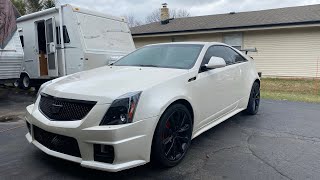
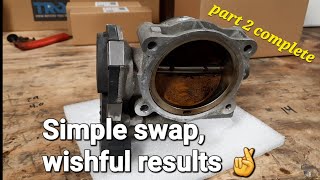
🎬 See this walkthrough on how to install a new assembly.Diagnostic Flowchart
Tap your situation to follow the diagnostic path that matches what you're seeing on this vehicle.
Generation note: The 2007-2014 range covers the end of the first-generation CTS (2007) and the entire second generation (2008-2014). Both generations, particularly those with the 3.6L V6 engine (LLT and LFX variants), are known to experience this issue. The diagnostic and repair procedures are very similar across these model years.
Symptoms You May Notice
- Check Engine Light is on
- "Reduced Engine Power" message displayed
- Vehicle enters 'limp mode' with limited speed and acceleration
- Unstable, surging, or rough idle
- Hesitation or stumbling during acceleration
- Engine may stall at low speeds or when stopping
- Engine revs high unexpectedly on startup before cutting off
- Black smoke from exhaust during acceleration
- Replacing the accelerator pedal position (APP) sensor. While the code definition can include 'Pedal Position Sensor,' on the CTS, P0121 is almost always related to the throttle body at the engine, not the pedal assembly inside the car. The APP sensor has its own set of codes (e.g., P0223).
Most Likely Causes
- Dirty or Carbon-Clogged Throttle Body 🔴 High Probability → Shop Fuel Injection Throttle Body As mentioned in TSB #PIP4578B, high-mileage vehicles are particularly susceptible. Carbon buildup restricts the movement of the throttle plate, causing the sensor's reported position to mismatch the ECM's expected position. This is a very common first point of failure.
How to confirm: Visually inspect the throttle body bore and plate for black, sticky carbon deposits after removing the intake tube. The plate may feel sticky or not move smoothly by hand (with the engine off and throttle body disconnected).
Typical fix: Remove the throttle body and clean it thoroughly with a dedicated throttle body cleaner and a soft brush or cloth. 🎬 Watch: A step-by-step guide to cleaning your CTS throttle body. An idle relearn procedure must be performed afterward.
Est. part cost: $10-$20 for cleaner - Failing Throttle Body Assembly 🔴 High Probability → Shop Fuel Injection Throttle Body The throttle position sensors are integrated into the throttle body and are not sold separately for most models. Wear and tear on the internal electronic components or the throttle motor can cause failure. GM Special Coverage #14582A specifically addressed this common failure, extending the warranty to 10 years/120,000 miles.
How to confirm: After cleaning the throttle body, if the code returns, the assembly itself is the likely culprit. A scan tool can monitor the TPS 1 and TPS 2 voltage; erratic readings or jumps during slow throttle operation indicate a failing sensor. Often, cleaning provides only a temporary fix before replacement is needed.
Typical fix: Replace the entire throttle body assembly. This is the most common and permanent repair according to owner forums and mechanic reports.
Est. part cost: $150-$400 - Wiring Harness or Connector Issue ⚪ Low Probability Engine vibration and heat can cause wires to fray or pins in the connector to become loose or corroded over time, especially right at the connector.
How to confirm: Visually inspect the wiring harness and connector going to the throttle body for any signs of damage, corrosion, or loose pins. Gently pull back the harness wrap near the connector to check for broken wires inside the insulation. Wiggling the connector with the engine running may affect the idle, indicating a poor connection.
Typical fix: Repair the damaged section of wiring or replace the connector pigtail. In some cases, applying dielectric grease can improve the connection.
Est. part cost: $20-$50
Rare But Worth Checking
- Faulty Engine Control Module (ECM): This is very rare. The ECM should only be considered after all other possibilities, including the throttle body and wiring, have been definitively ruled out.
- Loose Floor Mat: A floor mat sliding forward and physically obstructing the accelerator pedal's movement can, in some cases, trigger a P0121 code because the pedal's position doesn't correlate with the engine's response. This is a rare but simple-to-check possibility mentioned by owners.
Diagnosis Steps
- Read the codes with an OBD-II scanner to confirm P0121 and check for any other related codes like P2135 or P2176.
- Visually inspect the air intake tube for obstructions and the throttle body wiring connector for damage or corrosion. Pay close attention to the wires right at the back of the connector, as they can break internally.
- Remove the air intake tube from the throttle body. Inspect the throttle bore and plate for heavy carbon buildup.
- If dirty, remove the throttle body (typically four bolts) and clean it thoroughly off the vehicle using a dedicated cleaner and a soft cloth or brush. Do not spray cleaner directly into the electronics.
- Reinstall the throttle body with a new gasket if required. Perform a throttle idle relearn procedure (see 'Idle Relearn Procedure' section below).
- If the code persists after cleaning, use a scan tool to monitor the live data for TP Sensor 1 and TP Sensor 2 voltages while slowly pressing the accelerator pedal (engine off, key on). The voltages should change smoothly and in opposite directions. Jumps, dropouts, or non-responsive behavior indicate a faulty sensor.
- If the sensor data is erratic, the throttle body assembly needs to be replaced.
- If the sensor data is smooth, the problem may be in the wiring. Check for continuity and voltage at the throttle body connector according to the service manual.
- After any repair, clear the codes and perform a test drive to ensure the problem is resolved.
Parts You'll Likely Need
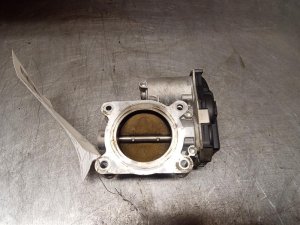
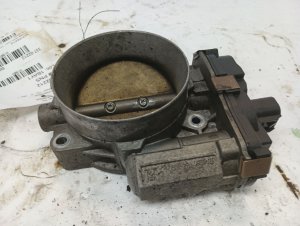
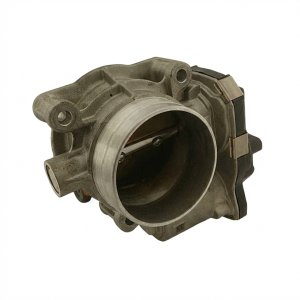
- Throttle Body Assembly
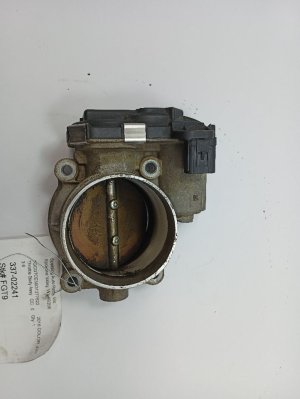
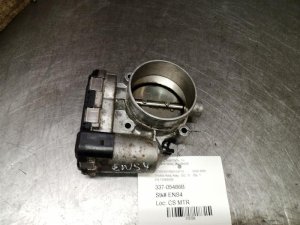
(OEM #12631186, 12616668)— This is the most common fix because the throttle position sensors are integrated into the assembly and fail frequently. Cleaning is often a temporary solution, with many owners reporting the issue returning until the unit is replaced.
Trusted brands: ACDelco (OEM), Delphi, Hitachi, Bosch
OEM price range: $250-$400
Aftermarket price range: $150-$250 - Throttle Body Cleaner — This is the first and least expensive diagnostic and repair step. Heavy carbon buildup is a very common cause of this code.
Trusted brands: CRC, Berryman, ACDelco Top Engine Cleaner
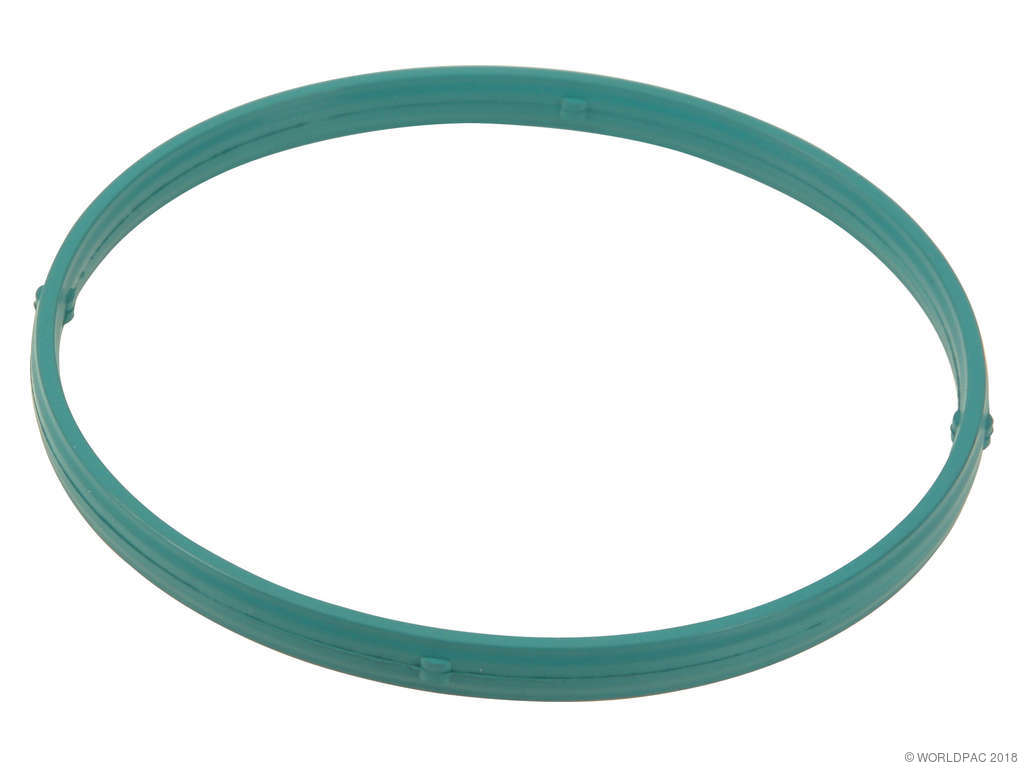
Aftermarket price range: $10-$20 - Throttle Body Gasket
(OEM #Varies by specific engine/year)— It is highly recommended to replace the gasket when the throttle body is removed for cleaning or replacement to prevent vacuum leaks.
Trusted brands: ACDelco, Fel-Pro
OEM price range: $10-$25
Aftermarket price range: $5-$15
Related Codes That Often Appear With This One
- P2135 — This code specifically indicates a 'Throttle/Pedal Position Sensor/Switch A/B Voltage Correlation' error. It is a very strong indicator that the two sensors within the throttle body are not agreeing, pointing directly to a failing throttle body assembly.
- P0068 — Indicates a mismatch between the MAP sensor, MAF sensor, and throttle position. A sticking throttle plate from carbon buildup can cause this, as noted in TSB PIP4578B.
- P2176 — This code relates to 'Throttle Actuator Control System - Idle Position Not Learned.' It often appears after a throttle body has been cleaned or replaced and requires an idle relearn procedure. TSB PIP4578B also lists this as a related code. 🎬 Watch: How to diagnose common Cadillac 3.6L throttle codes.
Technical Service Bulletins (TSBs) & Recalls
- PIP4578B: Addresses idle surge, reduced engine power, and DTCs including P0121 on high mileage vehicles, suggesting throttle body issues and the necessity of an idle learn reset.
- 14582A: A Special Coverage Adjustment (similar to a recall) extending warranty coverage for throttle position sensor failures causing P0121 and other codes. This applied to 2008-2011 CTS models among many other GM vehicles.
Platform-Specific Known Issues
- GM issued Special Coverage Adjustment #14582A which extended the warranty on the throttle position sensor/throttle body for 10 years or 120,000 miles on many vehicles, including the 2008-2011 CTS, due to high failure rates. While this coverage has likely expired for most vehicles, it serves as official acknowledgment of the defect.
Mechanic-Grade Diagnostic Values
- TP Sensor 1 Voltage — expected: Approx. 0.4V - 0.8V at closed throttle, increasing smoothly to ~4.5V at wide-open throttle (WOT).. Failure: Voltage is erratic, jumps, has dropouts, or does not change smoothly when the throttle is opened slowly.
- TP Sensor 2 Voltage — expected: Approx. 4.5V at closed throttle, decreasing smoothly to ~0.4V - 0.8V at wide-open throttle (WOT).. Failure: Voltage is erratic, jumps, has dropouts, or does not decrease smoothly as the throttle opens.
- Sum of TP Sensor 1 and TP Sensor 2 Voltages — expected: Should remain relatively constant at approximately 5.0V throughout the throttle range.. Failure: The sum deviates significantly from 5.0V, indicating a problem with one of the sensors or the reference voltage.
- 5-Volt Reference at Throttle Body Connector — expected: 4.8V to 5.2V with key-on, engine-off.. Failure: Voltage is significantly lower or higher, or is absent, pointing to a wiring or ECM issue.
- Low Reference (Ground) at Throttle Body Connector — expected: Less than 0.1V or less than 100 ohms of resistance to a known good ground.. Failure: High resistance or voltage on the ground circuit indicates a poor ground connection.
Scan Tool Commands That Help
- GDS2 / Tech2 (or compatible high-end scanner): Idle Learn Reset / Throttle Learn — This function is required after cleaning or replacing the throttle body to reset the learned idle and throttle position values in the ECM. Failure to do this often results in a high idle and code P2176.
- Manual Procedure (No Scan Tool): Idle Relearn Procedure — Can be attempted after cleaning/replacement if a suitable scan tool is unavailable. Start the engine and let it idle in Park for 3 minutes. Turn the engine off for 60 seconds. Start the engine again and let it idle for another 3 minutes. After this, a drive cycle with varied speeds may be needed.
Wiring & Ground Locations
- Throttle Body Connector (X87) — Directly on the electronic throttle body assembly at the front of the engine.. This 6-pin connector is the single interface for both throttle position sensors and the throttle actuator motor. Wires can fray or break right at the connector due to engine vibration and heat. Pinout: Pin A (Motor Control), Pin B (Low Reference/Ground), Pin C (5V Reference), Pin D (TPS 2 Signal), Pin E (TPS 1 Signal), Pin F (Motor Control).
- G103 / G104 — Typically located on the rear of the cylinder heads. On some 3.6L applications, they may be on the top or side of the engine block near the intake manifold.. These are primary engine and ECM ground points. A loose or corroded connection at these locations can cause erratic voltage readings for multiple sensors, including the throttle position sensors, leading to a false P0121 code even with a good throttle body.
- G102 — Located in the right front of the engine compartment.. This ground point serves the Ignition Control Module and other components. While less direct, poor grounding in the engine bay can create electrical noise that may interfere with sensitive sensor signals.
Real Owner Repair Stories
- GMTNation forum user (GM vehicle with similar electronic throttle control system) — Reduced Engine Power light, P0121 code, vehicle barely drivable, stalling.
❌ Tried (didn't work) Cleaning the throttle body (provided only temporary, minimal improvement)., Wiggling connectors at throttle body and gas pedal did not replicate the issue.
✅ What actually fixed it The final fix was identified as a wiring issue. The advice given was to pull back the harness wrap near the throttle body connector and inspect each wire individually for internal breaks or damage, as this is a common failure point. - Car Talk Community user (GM vehicle) — P0121 error, high idle after throttle body cleaning.
❌ Tried (didn't work) Initial attempts to let the car idle did not resolve the high idle speed.
✅ What actually fixed it A specific manual idle relearn procedure fixed the issue. The procedure involved idling for 3 minutes, shutting off for 60 seconds, idling for another 3 minutes, and then performing a drive cycle at speeds over 44 mph with acceleration/deceleration.
OEM Part Supersession History
12616668→12631186, then 12694871— GM has updated the throttle body assembly multiple times, likely to improve the reliability of the internal electronics and sensor components that were prone to failure.
Heads up: While these part numbers are often associated with the 3.6L engine, the specific correct part can vary between the LLT and LFX engine versions. Always verify the part number with the vehicle's VIN.
Model Year Variations Within This Range
- 2008-2011: These years primarily use the 3.6L LLT V6 engine, which has its own specific throttle body, intake manifold, and uses a Bosch ECM.
- 2012-2014: These years use the updated 3.6L LFX V6 engine. The LFX features a different, composite intake manifold and integrated exhaust manifolds, weighs less, and uses a Delphi ECM. The throttle body part number is different from the LLT's.
Helpful Videos


Used OEM Parts in Stock
New Aftermarket Parts Available




The information in this article is provided for general reference and educational purposes only. Vehicle specifications, procedures, and part compatibility can vary by production date, trim level, and region. Always consult your vehicle's factory service manual and verify part numbers before purchasing or performing repairs. Safety-critical components such as airbags, seat belts, and braking systems should be installed by a qualified professional.
- Cadillac CTS:
- 🧭 Diagnostic Flowchart
- 🎬 Helpful Videos
- 🛍️ Shop This Part
- What's Unique About the 2007-2014 Cadillac CTS
- Symptoms You May Notice
- Most Likely Causes
- Rare But Worth Checking
- Diagnosis Steps
- Parts You'll Likely Need
- Related Codes That Often Appear With This One
- Technical Service Bulletins (TSBs) & Recalls
- Platform-Specific Known Issues
- Mechanic-Grade Diagnostic Values
- Scan Tool Commands That Help
- Wiring & Ground Locations
- Real Owner Repair Stories
- OEM Part Supersession History
- Model Year Variations Within This Range
- 🎟️ Get 5% Off