

P0121 on 2015-2018 Cadillac CTS: Causes, Fixes, and Air Filter Issues
On a 2015-2018 Cadillac CTS, code P0121 is frequently caused by an incorrect or deformed air filter or a damaged air intake duct, not a faulty throttle body. Before replacing parts, inspect the air filter and intake tube as specified in GM Technical Service Bulletins.
- Before buying any parts for a P0121 code on a 2015-2018 CTS, inspect the air filter and air intake duct first.
- The most common causes are an incorrect/deformed air filter or a torn intake hose, as confirmed by GM service bulletins.
- Symptoms include stalling, reduced engine power, and a rough idle.
- This code is often accompanied by P2101 and P2119, which all point to a problem within the electronic throttle control system.
- Do not replace the accelerator pedal sensor; it is rarely the cause for this specific code on this car.
What's Unique About the 2015-2018 Cadillac CTS
For the third-generation Cadillac CTS, General Motors issued multiple Technical Service Bulletins (TSBs) that connect P0121 to problems in the air intake system. Unlike many other vehicles where P0121 immediately suggests a bad throttle body, on the 2015-2018 CTS, an incorrect or collapsed air filter or a cut in the air intake duct can cause air turbulence. This turbulence leads to an unexpected throttle response, which the ECM interprets as a throttle position sensor performance issue, setting the code. TSB PIP5424A specifically notes that on the 6.2L LT4 engine, aggressive driving can cause an incorrect filter to collapse, leading to engine cutoff and setting P0121.
Diagnostic Flowchart
Tap your situation to follow the diagnostic path that matches what you're seeing on this vehicle.
Symptoms You May Notice
- Check Engine Light is on
- "Reduced Engine Power" message displayed on the dash
- Engine may stall or shut off, especially after wide-open throttle maneuvers or at low speeds
- Unstable, surging, or rough idle
- Hesitation or stumbling during acceleration
- Vehicle enters 'limp mode' with limited speed
- Sudden, unexpected surges in speed
- Replacing the throttle body assembly without first checking the air filter and air intake duct for damage, as specified in the TSBs.
- Replacing the accelerator pedal position (APP) sensor. The APP sensor has its own distinct set of trouble codes (e.g., P2138) and is rarely the cause of a P0121 code on this vehicle.
Most Likely Causes
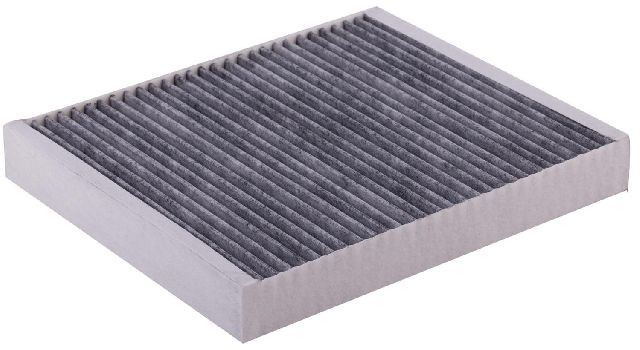
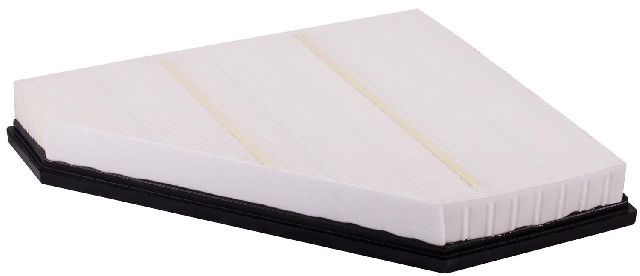
- Incorrect or Deformed Air Filter 🔴 High Probability → Shop Air Cleaner Assembly Documented in GM TSB #PIP5424A. An incorrect or poorly fitting air filter can deform and allow unmetered or turbulent air, causing the throttle system to behave erratically. The TSB specifically calls out filters without reinforcing glue lines, which can collapse under high airflow conditions, such as on the supercharged LT4 engine.
How to confirm: Visually inspect the air filter. Ensure it is the correct OEM part number and has reinforcing glue lines as shown in TSB images. Check that it is not collapsed, deformed, or damaged.
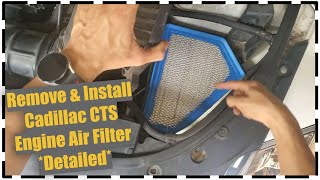
Typical fix: Replace the air filter with a high-quality, OEM-spec part like the ACDelco A3221C. Ensure it is 🎬 Watch: Step-by-step guide to replacing your Cadillac CTS air filter seated correctly in the airbox.
Est. part cost: $25-$70 - Damaged or Cut Air Intake Duct 🔴 High Probability → Shop Engine Air Intake Resonator Documented in GM TSB #GCUS-3-885. The air duct between the air filter box and the throttle body can be cut or torn, allowing unmetered air to enter the engine. TSB PIP5424A also notes that when the air filter collapses, the duct itself can be sucked into contact with the supercharger idler pulley, causing damage.
How to confirm: Carefully inspect the entire length of the flexible air duct for cracks, tears, or loose connections. This may require removing the duct for a full 360-degree inspection.
Typical fix: Replace the damaged air duct. The OEM part number is specific to the engine, for example, GM Part #23137987 is a common replacement for some affected models.
Est. part cost: $80-$200 - Dirty or Carbon-Clogged Throttle Body 🟡 Medium Probability → Shop Fuel Injection Throttle Body Common on all modern direct-injection engines. Carbon and oil vapor from the PCV system can build up on the throttle plate, restricting its movement and causing the actual position to deviate from the commanded position. This can trigger a performance code if the throttle can't achieve the commanded idle position.
How to confirm: Remove the air intake duct from the throttle body and visually inspect the throttle plate and bore for black carbon buildup. The plate may feel sticky or slow to move by hand (with the engine off).
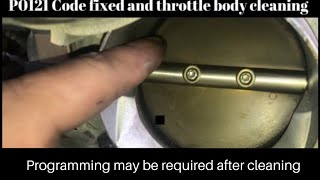
Typical fix: Remove the throttle body and clean it thoroughly with a dedicated throttle body cleaner and a soft cloth or brush. An idle 🎬 See how to properly clean a GM throttle body for P0121 relearn procedure may be required after cleaning to prevent a high idle.
Est. part cost: $10-$20 (for cleaner) - Failing Throttle Body Assembly ⚪ Low Probability → Shop Fuel Injection Throttle Body While less common than the intake issues on this model, the internal electronic sensors or motor can still fail over time. This should be the last resort after all intake and cleaning steps are performed.
How to confirm: If all intake-related issues and cleaning have been ruled out, the issue is likely the throttle body itself. A scan tool can monitor TPS sensor voltage for erratic readings. On many GM vehicles, this is a common failure point, though less so for this specific code on the CTS.
Typical fix: Replace the entire throttle body assembly. The sensors are integrated and not sold separately. A common OEM part number is GM 12670839, though fitment should be verified with the VIN as it does not fit all engines. A relearn procedure is required after replacement.
Est. part cost: $150-$400
Rare But Worth Checking
- Wiring Harness Issue: The wiring leading to the throttle body can become damaged or corroded, causing an intermittent signal. A user on GMTNation noted that 90% of the time, P0121 on similar GM platforms is a wiring issue at the throttle body connector, not the part itself. Inspect the wires for internal breaks by gently pulling on them at the back of the connector.
- Faulty Engine Control Module (ECM): This is extremely rare. The ECM should only be considered as the cause after all other possibilities, including wiring, have been exhaustively tested and ruled out.
- Oiled Aftermarket Air Filter: → Shop Air Cleaner Assembly GM TSB #04-07-30-013E warns that excessively oiled aftermarket air filters can contaminate the MAF sensor, causing skewed readings that could potentially lead to a P0121 correlation fault. This is not a warrantable repair.
Diagnosis Steps
- Scan the vehicle for P0121 and any other stored codes. Note any codes that appear alongside P0121, such as P2101 and P2119.
- Open the air filter housing and carefully inspect the air filter. Check if it is the correct part for the vehicle (e.g., ACDelco A3221C), if it is seated properly, and if it shows any signs of collapse, tearing, or deformation. Per TSB PIP5424A, the correct filter should have visible glue lines for reinforcement. Replace if there is any doubt.
- Remove the air intake duct that connects the air filter housing to the throttle body. Inspect it thoroughly for any cracks, cuts, or holes. Pay close attention to the flexible, ribbed sections, as this is a common failure point.
- While the duct is off, inspect the throttle body bore and plate for heavy carbon buildup. If significant buildup is present, clean the throttle body.
- Inspect the wiring harness and connector at the throttle body for any signs of damage, corrosion, or loose pins. Gently tug on each wire at the back of the connector to check 🎬 Watch this walkthrough on diagnosing and repairing GM P0121 codes for internal breaks.
- If the above steps do not resolve the issue, the problem may be the throttle body assembly itself. Monitor the TPS sensor voltages with a scan tool to check for erratic readings or dropouts.
- If the throttle body is cleaned or replaced, perform the idle relearn procedure to prevent high idle or a P2176 code. This may require a capable scan tool.
Parts You'll Likely Need
- Engine Air Filter
(OEM #ACDelco A3221C)— An incorrect or deformed air filter is a primary cause of P0121 on this vehicle, as documented in TSB PIP5424A.
Trusted brands: ACDelco, Wix, Fram
OEM price range: $40-$70
Aftermarket price range: $25-$50 - Air Intake Duct/Hose
(OEM #GM 23137987 (Verify with VIN))— A cut or damaged air duct is another primary cause cited by GM in TSB GCUS-3-885.
Trusted brands: ACDelco, Dorman
OEM price range: $150-$200
Aftermarket price range: $80-$120 - Throttle Body Assembly
(OEM #GM 12670839 (Verify with VIN))— If intake system issues are ruled out, the throttle body itself may have failed. Note that this part number is for the 2.5L engine and other engines use different parts.
Trusted brands: ACDelco, Standard Motor Products
OEM price range: $150-$400
Aftermarket price range: $100-$250
Related Codes That Often Appear With This One
- P2101 — This code relates to Throttle Actuator Control Motor Circuit Range/Performance. It often appears with P0121 because the underlying airflow issue causes the throttle motor to work outside its expected parameters. (Cited in TSBs GCUS-3-885, PIP5424A, PIP4578B)
- P2119 — This code indicates an issue with Throttle Actuator Control Throttle Body Range/Performance. It is also frequently set alongside P0121 for the same reasons as P2101. (Cited in TSBs GCUS-3-885, PIP5424A, PIP4578B)
- P0068 — MAP/MAF - Throttle Position Correlation. This code directly points to a mismatch between airflow sensor readings and throttle position, which aligns with the TSBs' findings. (Cited in TSB PIP4578B)
- P2176 — Throttle Actuator Control System - Idle Position Not Learned. This can appear after a throttle body is cleaned or replaced without performing the idle relearn procedure, or if the system is struggling to find a stable idle due to other faults. (Cited in TSB PIP4578B)
Technical Service Bulletins (TSBs) & Recalls
- GCUS-3-885: Mentions P0121 caused by a cut air duct.
- PIP5424A: Cites an incorrect air filter as the cause for P0121.
- PIP4578B: Discusses P0121 in the context of idle surge and reduced power on high-mileage vehicles.
Platform-Specific Known Issues
- TSB #GCUS-3-885 notes that a cut air duct can cause the engine to stall and illuminate the malfunction indicator lamp with P0121.
- TSB #PIP5424A is very specific to the 2016-2017 CTS-V (LT4 engine), stating that aggressive driving can cause an incorrect (non-reinforced) air filter to collapse, setting P0121, P2101, and P2119, and potentially damaging the air duct.
- TSB #PIP4578B covers high-mileage vehicles and links P0121 with several other codes to idle surge and reduced power, often pointing towards throttle body cleaning or replacement.
Mechanic-Grade Diagnostic Values
- 5V Reference Circuit Voltage at Throttle Body Connector — expected: 4.8 - 5.2 Volts (Key On, Engine Off). Failure: Voltage below 4.8V or above 5.2V indicates a problem with the ECM or wiring.
- Low Reference Circuit Resistance — expected: Less than 5.0 Ohms. Failure: Resistance higher than 5.0 Ohms between the throttle body connector's ground pin and chassis ground points to a bad ground connection.
- TPS 1 Signal Voltage — expected: Rises smoothly from ~0.5V at idle to ~4.5V at WOT.. Failure: A signal voltage less than 0.32V or greater than 4.7V for more than a second will set a fault. Any jumps, dropouts, or non-smooth readings during a slow pedal sweep indicate a failing sensor.
- TPS 2 Signal Voltage — expected: Typically inverse of TPS 1; decreases smoothly as throttle opens.. Failure: A signal voltage less than 0.25V or greater than 4.6V for more than a second will set a fault. The ECM compares TPS 1 and TPS 2; if they do not correlate, it will set a performance code.
Scan Tool Commands That Help
- GM GDS2 (Global Diagnostic System 2): Module Diagnostics > ECM > Configuration/Reset Functions > Idle Learn Reset (or Throttle/Idle Learn) — This function is required after replacing the throttle body assembly, and may be needed after cleaning it, to reset learned idle values and prevent high idle or code P2176.
Wiring & Ground Locations
- Throttle Body Connector (Q38) — The electrical connector on the electronic throttle body assembly.. This is the primary connection point for all throttle control signals. Testing for voltage and ground here is a key diagnostic step. According to service data for similar GM engines, Pin 5 is the 5V reference, Pin 4 is the low reference (ground), and Pin 3 is the TPS 1 signal wire. Wiggling this connector while monitoring live data can reveal intermittent internal breaks.
- Engine Harness Chafe Points — Behind the driver's side front wheel well liner, where the main engine harness routes near the ECM/TCM bracket, the upper control arm, and the shock tower.. Vibration can cause the harness to rub through in these hidden areas, shorting out the 5V reference or signal wires for the throttle body. This is a known issue on other GM platforms and can cause intermittent, hard-to-diagnose P0121 codes that are not resolved by replacing parts in the engine bay.
- ECM/Engine Ground Points (e.g., G102, G105) — Key grounds are typically located on the engine block itself (often near the generator or starter) and on the inner fender wall in the engine compartment, near the battery.. A poor engine ground can cause a floating reference for sensors, leading to erratic voltage readings. While not a primary cause, verifying the main engine-to-chassis ground strap is clean and tight is a fundamental step if electrical issues are suspected.
Real Owner Repair Stories
- Car Talk Community User (General GM Vehicle) — P0121 code and a persistent high idle after cleaning the throttle body.
❌ Tried (didn't work) Simply letting the car idle to relearn on its own.
✅ What actually fixed it A specific manual idle relearn procedure was required. The process involved starting the engine to idle for 3 minutes, turning it off for 60 seconds, idling again for 3 minutes, and then performing a drive cycle with speeds over 44 mph. This successfully reset the idle position. - ScannerDanner Forum User (General GM Vehicle) — Recurring TPS codes (P0121 family).
❌ Tried (didn't work) Initial component testing seemed to indicate the throttle body was okay.
✅ What actually fixed it The problem was an internal open circuit within the wiring connector for the throttle body. The fault would only appear intermittently. The final diagnosis was made by pressing on the back of the harness connector while observing live data, which caused the signal to stabilize. Replacing the connector pigtail resolved the issue.
"I Checked Everything" — The Actual Cause
- A smoke test for vacuum leaks may come back clean because the root cause is often pre-throttle body (a torn intake duct or collapsed filter) or electrical. In cases where the intake system is confirmed to be intact, an intermittent P0121 can be caused by an internal break in the throttle body's electrical connector, which would not be found by a smoke test.
OEM Part Supersession History
12627217, 12669073→GM 12670839— Standard part evolution and design updates by the manufacturer.
Heads up: This part number (12670839) is specified for the 2.5L LCV engine found in some base model CTS and ATS vehicles. It is NOT compatible with the 3.6L V6 (LGX) or 6.2L V8 (LT4) engines, which use a different throttle body. Always verify the part number with the vehicle's VIN.
Model Year Variations Within This Range
- 2015-2018: The root cause and required parts can differ based on the engine. The TSB regarding air filter collapse under high airflow is most critical for the supercharged 6.2L LT4 engine in the CTS-V. Furthermore, the throttle body assembly is different between the 4-cylinder, V6, and V8 engines, requiring VIN verification for the correct part number.
Helpful Videos

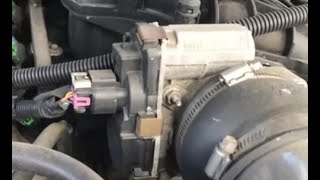
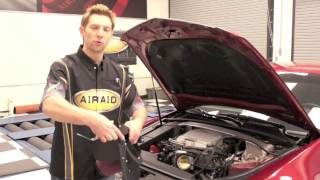
Used OEM Parts in Stock
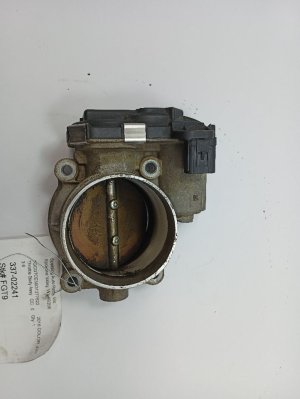
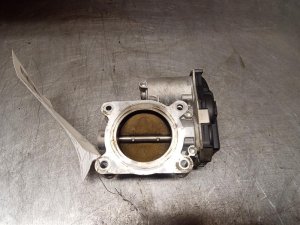
New Aftermarket Parts Available


The information in this article is provided for general reference and educational purposes only. Vehicle specifications, procedures, and part compatibility can vary by production date, trim level, and region. Always consult your vehicle's factory service manual and verify part numbers before purchasing or performing repairs. Safety-critical components such as airbags, seat belts, and braking systems should be installed by a qualified professional.
- Cadillac CTS:
- 🧭 Diagnostic Flowchart
- 🎬 Helpful Videos
- 🛍️ Shop This Part
- What's Unique About the 2015-2018 Cadillac CTS
- Symptoms You May Notice
- Most Likely Causes
- Rare But Worth Checking
- Diagnosis Steps
- Parts You'll Likely Need
- Related Codes That Often Appear With This One
- Technical Service Bulletins (TSBs) & Recalls
- Platform-Specific Known Issues
- Mechanic-Grade Diagnostic Values
- Scan Tool Commands That Help
- Wiring & Ground Locations
- Real Owner Repair Stories
- "I Checked Everything" — The Actual Cause
- OEM Part Supersession History
- Model Year Variations Within This Range
- 🎟️ Get 5% Off