

P0121 on 2006-2010 Chevrolet Express: Causes and Fixes for Throttle Performance Issues
On a 2006-2010 Chevy Express, code P0121 is most often caused by a dirty or failing throttle body. Carbon buildup can cause the throttle plate to stick, leading to erratic performance and triggering a 'Reduced Engine Power' mode. Cleaning the throttle body and performing an idle relearn procedure is the first and most common fix; if that fails, the entire throttle body assembly usually needs to be replaced.
- P0121 on a 2006-2010 Chevy Express almost always relates to the throttle body.
- Before buying parts, the first step should always be to remove and thoroughly clean the throttle body.
- The vehicle is likely to enter 'Reduced Engine Power' mode, making it difficult and potentially unsafe to drive.
- The throttle position sensor (TPS) is usually integrated into the throttle body; if the sensor is bad, the whole assembly must be replaced.
- Do not confuse the throttle position sensor (on the engine) with the accelerator pedal position sensor (at your foot).
What's Unique About the 2006-2010 Chevrolet EXPRESS
For the 2006-2010 Chevrolet Express and its platform mates (like the GMC Savana and Chevrolet Silverado), which use an electronic throttle control (ETC) system, this code is frequently linked to issues with the throttle body itself rather than just the sensor. As noted in GM Technical Service Bulletin (TSB) PIP4578B, high-mileage vehicles are particularly susceptible to carbon buildup in the throttle body, which can cause the throttle plate to stick or move irregularly. Because the dual throttle position sensors (TPS) are integrated into the throttle body assembly on these vans, the entire unit is often replaced as a single part when cleaning doesn't resolve the issue.
Diagnostic Flowchart
Tap your situation to follow the diagnostic path that matches what you're seeing on this vehicle.
Symptoms You May Notice
- Check Engine Light is on
- "Reduced Engine Power" message on the instrument cluster
- Poor or hesitant acceleration
- Unstable, surging, or high idle
- Engine stalling at low speeds or when returning to idle
- Sudden surges in vehicle speed
- Vehicle won't accelerate past a certain low speed
- Difficulty starting, may require giving it gas to start
- Replacing the accelerator pedal assembly (gas pedal) when the problem is at the throttle body. The P0121 code specifically points to a performance issue at the throttle body sensor, not the pedal sensor.
- Replacing the throttle body without performing the idle relearn procedure. This can lead to a persistent high idle and the return of fault codes because the ECM is still using the learned values from the old, dirty throttle body.
Most Likely Causes
- Dirty or Carbon-Clogged Throttle Body 🔴 High Probability → Shop Fuel Injection Throttle Body As detailed in TSB PIP4578B, high-mileage GM trucks and vans are prone to carbon deposits that cause the throttle plate to stick. The ECM learns to compensate for this buildup over time, but eventually, the sticking becomes too severe, triggering the P0121 code.
How to confirm: Visually inspect the throttle body bore and plate for black, sticky carbon buildup. The plate should move smoothly without sticking when pushed open manually (with the key off).
Typical fix: Remove the air intake duct and thoroughly clean the throttle body bore and both sides of the plate with a dedicated throttle body cleaner and a soft brush or microfiber cloth. A throttle relearn procedure must be performed afterward.
Est. part cost: $5-$15 for cleaner - Failing Throttle Body Assembly 🔴 High Probability → Shop Fuel Injection Throttle Body The integrated throttle position sensors (TPS) are electronic and can fail internally, causing erratic voltage signals. Since they are not typically sold separately for this platform, the entire assembly must be replaced.
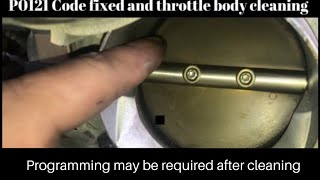
How to confirm: After cleaning the throttle body and performing a relearn, if the code returns, use a scan tool to monitor TPS1 and TPS2 voltages. The voltage should sweep smoothly from approximately 0.5V to 4.5V as the throttle is manually opened. Jumps, dropouts, or erratic signals confirm a faulty sensor. 🎬 Watch: A step-by-step guide to diagnosing and repairing the P0121 code.
Typical fix: Replace the entire throttle body assembly and the gasket. A throttle relearn procedure is required after installation.
Est. part cost: $150-$400 - Wiring or Connector Issue 🟡 Medium Probability The wiring harness near the throttle body is exposed to engine heat and vibration, which can lead to chafing, internal wire breaks, or corrosion within the connector pins over time. This is a known issue on many GM trucks of this era.
How to confirm: Inspect the wiring harness and connector at the throttle body for any signs of damage, corrosion, or loose pins. Wiggle the harness with the engine running (use caution) to see if it triggers the fault or causes a change in idle.
Typical fix: Repair the damaged section of wire or replace the connector pigtail. Applying dielectric grease to the connector can help prevent future corrosion.
Est. part cost: $10-$50
Rare But Worth Checking
- Faulty Accelerator Pedal Position (APP) Sensor: → Shop Accelerator Pedal Assembly The ECM compares the APP sensor signal to the TPS signal. While less common for a P0121 code, a fault in the pedal sensor can sometimes trigger it. This would typically be accompanied by other APP-specific codes (like P2138).
- Failing Engine Control Module (ECM): This is extremely rare, but the ECM can fail internally. This should only be considered after all other possibilities, including wiring and grounds, have been exhaustively ruled out by a professional.
Diagnosis Steps
- Read all stored fault codes with an OBD-II scanner. Note any other codes that appear with P0121, especially P2135.
- Visually inspect the air intake tube for cracks or loose connections.
- Inspect the throttle body electrical connector and nearby harness for corrosion, damage, or loose pins. Wiggle the harness to check for intermittent faults.
- Remove the air intake hose from the throttle body and inspect the throttle bore and plate for heavy carbon buildup.
- If dirty, remove and thoroughly clean the throttle body. Reinstall with a new gasket if necessary.
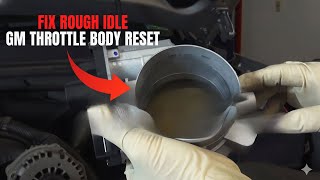
- Perform a Throttle/Idle Relearn Procedure. A common manual method is: Start the engine and let it idle in Park for 3 minutes. Turn the engine off for 60 seconds. Start the engine again and let it idle in Park for another 3 minutes. The idle should now be stable. 🎬 Watch: How to manually reset and relearn your GM electronic throttle body. If not, a drive cycle may be required.
- If the code returns after cleaning, use a scan tool to monitor the live data for TPS1 and TPS2 voltages while slowly opening and closing the throttle plate by hand (with the engine off, key on). The voltage should change smoothly without any spikes or dropouts.
- If the voltage is erratic or does not sweep smoothly, the throttle body assembly is faulty and needs to be replaced.
Parts You'll Likely Need
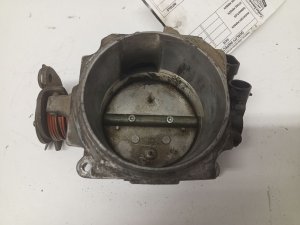
- Throttle Body Assembly
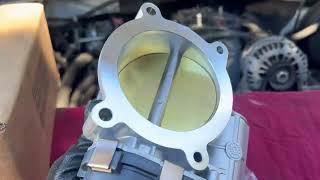
(OEM #12679524 (supersedes 12580760, 12572658))— This is the most common fix when cleaning fails, as the sensors are integrated into the housing. The entire unit fails more often than individual components.
Trusted brands: ACDelco (GM Genuine), Hitachi, Dorman, TRQ
OEM price range: $250-$400
Aftermarket price range: $150-$250 - Throttle Body Cleaner — Often, a thorough cleaning is all that is needed to resolve the sticking throttle plate that causes this code.
Trusted brands: CRC, Berryman, Gumout
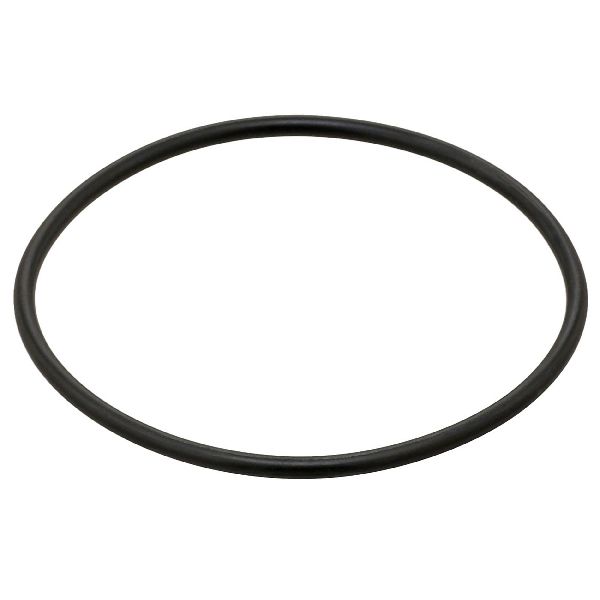
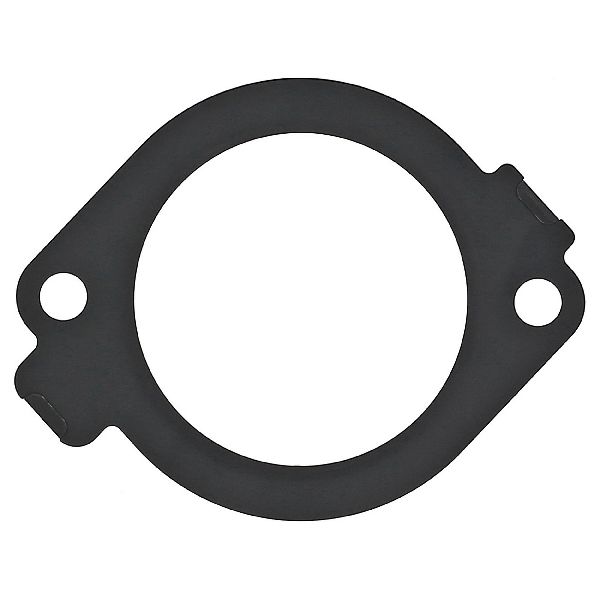
Aftermarket price range: $5-$15 - Throttle Body Gasket
(OEM #12589235)— It is best practice to replace the gasket any time the throttle body is removed to prevent vacuum leaks.
Trusted brands: ACDelco, Fel-Pro
OEM price range: $10-$20
Aftermarket price range: $5-$10
Related Codes That Often Appear With This One
- P2135 — This code indicates a voltage correlation issue between the two throttle position sensors (TPS 'A' and 'B') within the throttle body. It very strongly points to a failing throttle body assembly and often appears with P0121.
- P0068 — Indicates a discrepancy between the MAP sensor, MAF sensor, and throttle position. This code is listed in TSB PIP4578B alongside P0121 as a potential result of a carboned-up throttle body.
- P1516, P2101 — These are Throttle Actuator Control (TAC) module performance codes, indicating the ECM has commanded the throttle to a certain position, but the feedback from the TPS does not match. They are also mentioned in TSB PIP4578B.
- P0506, P0507 — These codes for 'Idle Air Control System RPM Lower/Higher Than Expected' can be set after cleaning a throttle body or reprogramming an ECM without performing an idle learn reset, as noted in TSB PIP4578B.
Technical Service Bulletins (TSBs) & Recalls
- PIP4578B: Notes that DTCs including P0121, P0068, P1516, P2101, P2119, and P2176 may be experienced on high mileage vehicles in conjunction with idle surge or reduced engine power mode. It instructs technicians to inspect for and clean carbon from the throttle body, and then perform an 'idle learn reset' with a scan tool.
Platform-Specific Known Issues
- A known issue, documented in GM TSB #PIP4578B, points to this code appearing on high-mileage vehicles due to carbon buildup causing conditions like idle surge or triggering Reduced Engine Power mode. The bulletin explicitly states that cleaning the throttle body and performing an idle learn reset is the correct procedure.
- Failure to perform the idle relearn procedure after cleaning or replacement is a common source of continued problems. The ECM will command the new/clean throttle as if it were still the old/dirty one, leading to high idle and new codes like P0507.
Mechanic-Grade Diagnostic Values
- Throttle Position Sensor (TPS) Voltage — expected: Approximately 0.5V at idle, sweeping smoothly up to 4.5V at Wide Open Throttle (WOT).. Failure: Voltage is stuck, jumps, has dropouts, or does not correspond to the throttle plate's movement.
- TPS 'A' Circuit 5V Reference — expected: 4.8V to 5.2V with key on, engine off.. Failure: Voltage significantly higher or lower than 5V indicates a problem with the ECM or wiring.
- TPS 'A' Circuit Ground — expected: Less than 0.1V (100mV).. Failure: Voltage significantly above 0.1V indicates a poor ground connection, which can cause erratic sensor readings.
- Scan Tool Throttle Angle Percentage at Idle — expected: Typically below 15% on a clean throttle body.. Failure: A reading above 20% at idle often indicates significant carbon buildup, causing the throttle plate to be held open further than normal to maintain idle speed.
Scan Tool Commands That Help
- Tech2 / GDS2 (or equivalent professional scan tool): Idle Learn Reset / Reset Idle Learn — This function must be used after cleaning or replacing the throttle body to erase the old learned idle values from the ECM. Failure to do so will result in a high or unstable idle and may set new fault codes like P0507. The function is typically found under 'Module Set Up' or 'Special Functions/TAC System'.
Wiring & Ground Locations
- G102 — On the left rear of the engine.. This is a key engine ground point. A poor connection here due to corrosion or looseness can cause erratic voltage signals for multiple sensors, including the throttle body, leading to a P0121 code that could be misdiagnosed as a faulty throttle body.
- Throttle Body Harness — The wiring within 1 to 4 inches of the throttle body connector.. This section of the harness is prone to internal wire breaks from heat and vibration, even if the outer insulation looks undamaged. Wiggling this part of the harness while monitoring TPS data can help identify an intermittent connection.
Real Owner Repair Stories
- YouTube channel 'Oz Mechanics' (2007 Chevrolet Silverado (similar platform/engine)) — P0121 code, high throttle angle percentage at idle (26%).
✅ What actually fixed it The mechanic diagnosed the high throttle angle (26%) as a sign of a dirty throttle body. A thorough cleaning of the throttle plate and bore, followed by a scan tool 'Idle Learn Reset', brought the angle down to 7% and resolved the code. - YouTube channel 'B's Automotive' (2008 Chevrolet Express Van) — Van dying, 'Reduced Engine Power' mode, throttle body codes.
❌ Tried (didn't work) Initial diagnosis pointed towards a bad throttle body.
✅ What actually fixed it The actual cause was widespread corrosion on electrical grounds and connectors. Cleaning the corroded grounds and connectors restored proper electrical function and resolved the throttle-related issues without replacing the throttle body. - Car Talk Community user (Chevrolet Impala with 'drive-by-wire' (similar system)) — Intermittent 'Reduced Engine Power' light and limp mode, with a pedal sensor code stored.
❌ Tried (didn't work) Visual inspection of the accelerator pedal position (APP) sensor connector showed no visible corrosion.
✅ What actually fixed it The owner disconnected the APP sensor connector, applied dielectric grease to the pins to combat potential invisible 'fretting corrosion', and reconnected it. The problem did not return.
When the Usual Fixes Don't Work
- While the most common fixes are cleaning or replacing the throttle body, multiple owner and technician reports confirm that the root cause can be electrical issues external to the throttle body itself. In one case, cleaning corroded engine grounds resolved all throttle-related codes. In another similar case, cleaning and applying dielectric grease to the accelerator pedal connector fixed an intermittent 'Reduced Power' mode, suggesting the issue was a poor connection, not a failed component. These cases highlight the importance of verifying the integrity of the entire circuit, including grounds and related sensor connectors, before replacing the expensive throttle body assembly.
OEM Part Supersession History
12572658, 12580760→12679524— Standard part revision and consolidation by the manufacturer.
Helpful Videos
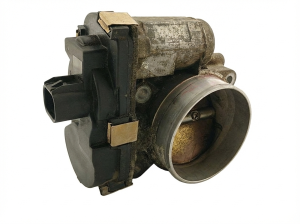
Used OEM Parts in Stock
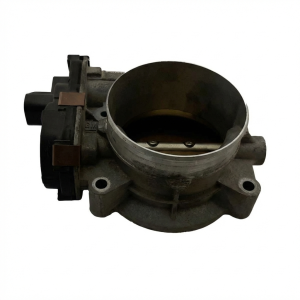
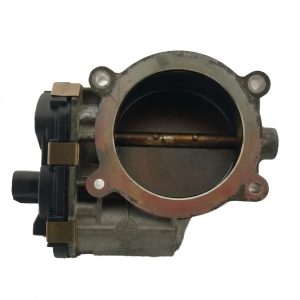
New Aftermarket Parts Available


The information in this article is provided for general reference and educational purposes only. Vehicle specifications, procedures, and part compatibility can vary by production date, trim level, and region. Always consult your vehicle's factory service manual and verify part numbers before purchasing or performing repairs. Safety-critical components such as airbags, seat belts, and braking systems should be installed by a qualified professional.
- Chevrolet EXPRESS:
- 🧭 Diagnostic Flowchart
- 🎬 Helpful Videos
- 🛍️ Shop This Part
- What's Unique About the 2006-2010 Chevrolet EXPRESS
- Symptoms You May Notice
- Most Likely Causes
- Rare But Worth Checking
- Diagnosis Steps
- Parts You'll Likely Need
- Related Codes That Often Appear With This One
- Technical Service Bulletins (TSBs) & Recalls
- Platform-Specific Known Issues
- Mechanic-Grade Diagnostic Values
- Scan Tool Commands That Help
- Wiring & Ground Locations
- Real Owner Repair Stories
- When the Usual Fixes Don't Work
- OEM Part Supersession History
- 🎟️ Get 5% Off