

P0121 on 2011-2015 Chevrolet Express: Throttle Position Sensor Causes and Fixes
On a 2011-2015 Chevrolet Express, code P0121 is most often caused by a dirty throttle body restricting the throttle plate's movement, a well-documented issue in GM TSB PIP4578B. Cleaning the throttle body and performing an idle relearn procedure is the most common and effective first step. If that fails, the entire throttle body assembly, which includes the non-serviceable sensor, may need replacement.
- P0121 on a 2011-2015 Express almost always points to a problem at the throttle body, not somewhere else.
- Always start by thoroughly cleaning the throttle body. This is a cheap, easy first step that solves the problem in many cases.
- The vehicle can enter a 'Reduced Engine Power' mode, making it slow and potentially unsafe to drive in traffic. Address this code promptly.
- The Throttle Position Sensor (TPS) is part of the throttle body assembly and cannot be replaced separately. If cleaning doesn't work, the entire assembly is the next step.
- After cleaning or replacing the throttle body, a relearn procedure is recommended to ensure a stable idle.
What's Unique About the 2011-2015 Chevrolet EXPRESS
For the Chevrolet Express and its platform mate, the GMC Savana, this code is frequently linked to a specific TSB (PIP4578B). The issue is often not the sensor itself failing electronically, but rather heavy carbon and oil buildup inside the throttle body from the PCV system. This gunk physically restricts the throttle plate, causing the sensor's readings to be out of the expected range. As these are often high-mileage work vehicles, this carbon accumulation is very common. While many vehicles can get this code from a bad sensor, on the Express/Savana, a thorough cleaning is the critical first step before considering parts replacement.
Diagnostic Flowchart
Tap your situation to follow the diagnostic path that matches what you're seeing on this vehicle.
Symptoms You May Notice
- Check Engine Light is on
- "Reduced Engine Power" message on the dash
- Vehicle has limited acceleration or speed (limp mode)
- Hesitation or stumbling during acceleration
- Rough, surging, or unstable idle
- Engine may stall, especially at low speeds or idle.
- Delayed throttle response
- Replacing the Accelerator Pedal Position (APP) sensor. While the APP sensor also relates to throttle control, P0121 specifically points to a performance issue at the throttle body itself, not the pedal. A pedal issue would more commonly set a code like P2138.
Most Likely Causes
- Dirty Throttle Body 🔴 High Probability → Shop Fuel Injection Throttle Body As noted in TSB PIP4578B, high-mileage Express vans are prone to carbon and oil vapor buildup in the intake, which coats the throttle body and plate, causing it to stick. This prevents the throttle blade from moving smoothly, leading to a mismatch between the commanded and actual position.
How to confirm: Remove the air intake hose from the throttle body and visually inspect the throttle bore and plate for a thick, black, sticky layer of carbon. A scan tool may show a high throttle angle percentage at idle (e.g., over 20%) before cleaning.
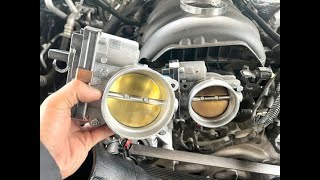
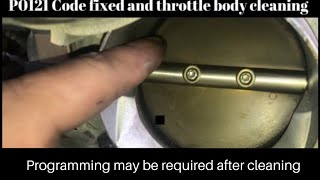
Typical fix: Thoroughly clean the throttle body bore and plate with a dedicated throttle body cleaner and a soft brush or microfiber rag. Manually move the plate to clean all surfaces. A throttle relearn procedure is mandatory afterward 🎬 See this walkthrough for throttle body replacement and idle relearn. to reset the learned idle values.
Est. part cost: $5-$15 for cleaner - Failing Throttle Body Assembly 🟡 Medium Probability → Shop Fuel Injection Throttle Body The Throttle Position Sensor (TPS) is integrated into the throttle body assembly on these models and is not sold separately. If cleaning doesn't resolve the issue, the entire unit, including the sensor and motor, must be replaced. Wear and tear on the internal electronic components can cause erratic signals.
How to confirm: After a thorough cleaning and idle relearn, if the code returns and a scan tool shows erratic or jumpy TPS voltage readings when the throttle is moved, the sensor is likely faulty. The voltage should sweep smoothly from about 0.5V at idle to around 4.5V at wide-open throttle.
Typical fix: Replace the entire throttle body assembly. The GM Genuine part number is 12629992, which corresponds to ACDelco part 217-3151.
Est. part cost: $150-$300 - Wiring or Connector Issue ⚪ Low Probability Engine bay heat and vibrations can, over time, cause wires in the harness leading to the throttle body to fray or connector pins to develop corrosion, leading to an intermittent signal.
How to confirm: Visually inspect the wiring harness and connector at the throttle body for any signs of damage, chafing, or corrosion. A common failure point is right at the connector. Wiggle the connector with the engine running to see if it affects the idle or triggers the code.
Typical fix: Repair the damaged section of wiring or clean/replace the connector pigtail. Apply dielectric grease to the connector to prevent future moisture intrusion.
Est. part cost: $10-$40
Rare But Worth Checking
- Faulty Powertrain Control Module (PCM): This is extremely rare. All other possibilities, especially the throttle body and wiring, should be exhaustively ruled out before considering the PCM as the cause.
- Obstructed Floor Mat: A floor mat that has slid forward and is physically obstructing the accelerator pedal's movement can sometimes trigger this code. Always check for this simple issue.
Diagnosis Steps
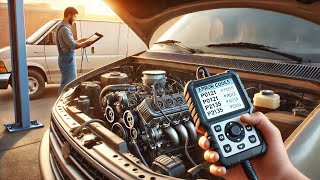
- Scan the ECM for P0121 and any other stored codes. Note any related throttle codes like P2135, P0068, or P1516.
- Visually inspect the wiring and connector going to the throttle body. Look for any signs of damage, corrosion, or loose pins. Pay close attention to the harness right at the connector.
- Remove the air intake duct from the throttle body.
- Inspect the throttle bore and plate for heavy carbon buildup. This is the most likely cause.
- If dirty, clean the throttle body thoroughly using a dedicated throttle body cleaner and a soft cloth or brush. Manually move the plate to clean all surfaces. Be gentle and do not let the plate snap shut.
- After cleaning, reconnect everything and perform a throttle relearn procedure. A scan tool is the most reliable method ('Idle Learn Reset'). A manual procedure may also work: Start and let the engine idle in PARK for 3 minutes. Turn the engine OFF for 60 seconds. Start and idle the engine again in PARK for 3 minutes. The idle should normalize.
- If the code returns, use a scan tool to monitor the TPS1 and TPS2 voltage. They should change smoothly and in opposite directions as the throttle is opened. Jumps, dropouts, or dead spots indicate a faulty sensor.
- If the sensor readings are erratic after cleaning, the throttle body assembly needs to be replaced.
Parts You'll Likely Need
- Throttle Body Assembly
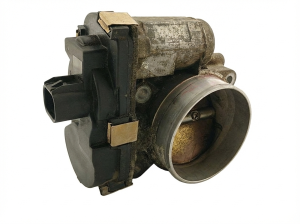
(OEM #12629992)— The most common fix when cleaning fails. The TPS is integrated into the assembly, so the entire unit must be replaced if the sensor is bad. The ACDelco equivalent part number is 217-3151.
Trusted brands: ACDelco (GM Genuine), Dorman, SKP
OEM price range: $200-$280
Aftermarket price range: $90-$180 - Throttle Body Cleaner — This is the first and most crucial step for fixing a P0121 code on this vehicle, as carbon buildup is the primary cause.
Trusted brands: CRC, Gumout, Permatex
Aftermarket price range: $5-$15
Related Codes That Often Appear With This One
- P2135 — This code indicates a correlation error between the two throttle position sensors 🎬 Watch: Diagnosing P0121 and P2135 sensor voltage correlation errors. ('A' and 'B') within the throttle body, often triggered by the same underlying cause as P0121, such as a sticking plate or failing sensor.
- P0068 — Indicates a conflict between the MAP sensor, MAF sensor, and throttle position. A sticking throttle plate can cause this disagreement between airflow sensors and throttle angle.
- P1516, P2101 — These are Throttle Actuator Control (TAC) module or motor performance codes. If the throttle plate can't move as commanded due to carbon buildup or a faulty motor, these codes can appear alongside P0121.
Technical Service Bulletins (TSBs) & Recalls
- PIP4578B: Addresses idle surge, reduced engine power mode, and DTCs P0068, P0121, P1516, P2101, P2119, and/or P2176 that may be experienced on high mileage vehicles. It explicitly states that carbon buildup is the cause and cleaning followed by an idle learn reset is the corrective action.
Platform-Specific Known Issues
- As documented in TSB #PIP4578B, high-mileage Express vans are known to experience idle surges, enter reduced power mode, and set throttle-related DTCs like P0121 due to carbon buildup in the throttle body.
- A user on GMTNation with a similar GM platform experienced recurring P0121 and 'Reduced Engine Power' mode. Cleaning the throttle body provided a temporary improvement, but the issue returned, highlighting that severe cases may require full replacement even after cleaning.
Mechanic-Grade Diagnostic Values
- Throttle Position Sensor 1 (TPS1) Voltage — expected: Approx. 0.5V at closed throttle, sweeping smoothly to approx. 4.5V at wide-open throttle.. Failure: Voltage is outside the 0.5V-4.5V range, or the signal is erratic, jumpy, or has dropouts when the throttle is slowly opened.
- Throttle Position Sensor 2 (TPS2) Voltage — expected: Operates inversely to TPS1. Approx. 5.0V at closed throttle, sweeping smoothly down to a low voltage at wide-open throttle.. Failure: The ECM flags a fault if the difference between TPS1 and TPS2 signals exceeds 8%.
- TPS 5-Volt Reference — expected: 4.8V - 5.2V with key on, engine off.. Failure: Voltage significantly lower or higher than 5V indicates a problem with the ECM or wiring, not necessarily the sensor.
- Scan Tool Throttle Angle Percentage at Idle — expected: Should be a low single-digit percentage after cleaning (e.g., 7%).. Failure: A reading above 20% at idle often indicates excessive carbon buildup preventing the throttle plate from closing properly, triggering a P0121 performance code.
Scan Tool Commands That Help
- GDS2 / Tech2 (or equivalent professional scanner): Idle Learn Reset / Module Setup — This function must be used after cleaning or replacing the throttle body to force the ECM to relearn the new closed-throttle position. Failure to do so will result in a high or unstable idle.
- Professional Bidirectional Scanner: Throttle Body Actuation Test — Allows the technician to command the throttle plate to specific percentages (e.g., 10%, 25%, 50%) while observing TPS voltage on the scan tool. This is used to confirm if the sensor responds correctly and smoothly, or if the throttle plate is sticking mechanically.
Wiring & Ground Locations
- G102 — On the left (driver's side) rear of the engine.. This is a primary engine ground. A poor connection here can cause a variety of sensor and module issues, including erratic signals from the throttle body sensors.
- G103 — On the right (passenger's side) rear of the engine for 2008+ models, but may be on the left front of the engine block on earlier models.. This is another critical engine ground often associated with the ECM. Intermittent ground connection here is a known cause for difficult-to-diagnose electronic issues.
- Throttle Body Connector — The 6-pin electrical connector on the throttle body assembly.. The pins and wires right at the connector are a common failure point due to heat and vibration. The TPS 'A' signal wire is typically a dark green wire. Damage here directly causes the P0121 code.
Real Owner Repair Stories
- Summit Racing Customer Review (2011 Chevrolet Silverado 2500 HD) — P2135 code (related to P0121), engine went into 'limp mode' with no power.
✅ What actually fixed it Replacing the entire throttle body assembly with an original AC Delco unit. The repair took less than 30 minutes and the truck ran great afterward. - Summit Racing Customer Review (2010 Chevrolet Silverado 1500) — Recurring P2135 code and intermittent 'Reduced Power' limp mode.
❌ Tried (didn't work) A Chevrolet dealer replaced the throttle body 3 times and the wiring pigtail 1-2 times, but the intermittent failures continued.
✅ What actually fixed it The owner replaced the throttle body, the throttle body wire harness (pigtail), and the electronic accelerator pedal assembly all at once to finally eliminate the problem. - GMTNation Forum User (GM Truck (similar platform)) — Recurring P0121 code, 'Reduced Engine Power' light, barely drivable, sometimes won't shift out of 2nd gear.
❌ Tried (didn't work) Cleaning the throttle body only provided a temporary fix. Wiggling wires at the throttle body and pedal did not replicate the fault.
✅ What actually fixed it The final fix was not posted by the original user, but an expert user pointed out that it's a 90% chance of being a wiring issue, specifically with the dark green signal wire or chafing from the fan clutch harness, rather than the throttle body itself.
OEM Part Supersession History
12601387→12629992— Standard part revision and improvement by the manufacturer.
Model Year Variations Within This Range
- 2011-2015: The physical location of key engine grounds like G103 may vary slightly. On some diagrams for similar platforms, it is on the right rear of the engine, while on others it is located on the left front of the engine block. Always verify the location for the specific vehicle being worked on.
Helpful Videos

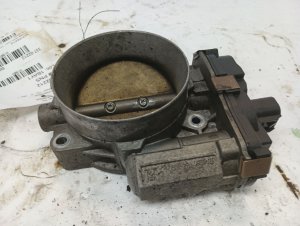
Used OEM Parts in Stock
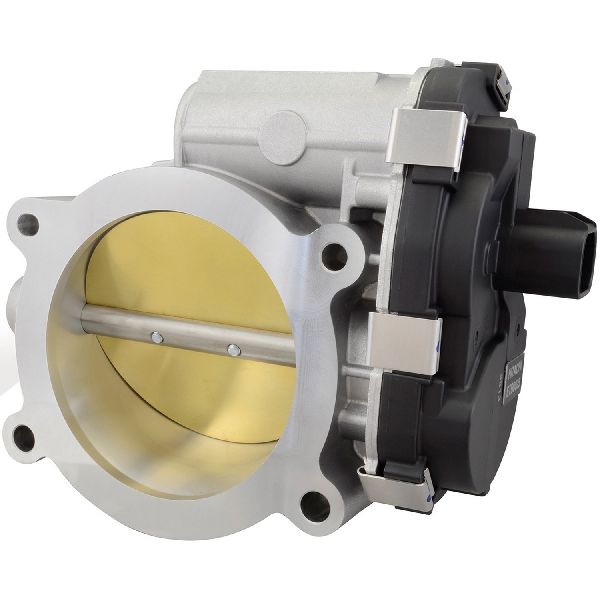
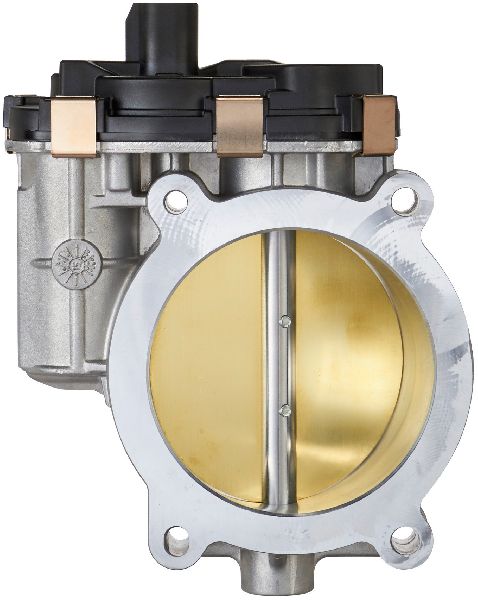
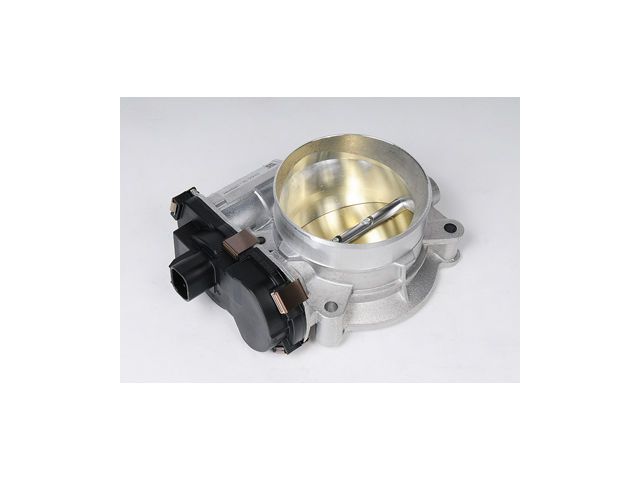
New Aftermarket Parts Available



The information in this article is provided for general reference and educational purposes only. Vehicle specifications, procedures, and part compatibility can vary by production date, trim level, and region. Always consult your vehicle's factory service manual and verify part numbers before purchasing or performing repairs. Safety-critical components such as airbags, seat belts, and braking systems should be installed by a qualified professional.
- Chevrolet EXPRESS:
- 🧭 Diagnostic Flowchart
- 🎬 Helpful Videos
- 🛍️ Shop This Part
- What's Unique About the 2011-2015 Chevrolet EXPRESS
- Symptoms You May Notice
- Most Likely Causes
- Rare But Worth Checking
- Diagnosis Steps
- Parts You'll Likely Need
- Related Codes That Often Appear With This One
- Technical Service Bulletins (TSBs) & Recalls
- Platform-Specific Known Issues
- Mechanic-Grade Diagnostic Values
- Scan Tool Commands That Help
- Wiring & Ground Locations
- Real Owner Repair Stories
- OEM Part Supersession History
- Model Year Variations Within This Range
- 🎟️ Get 5% Off