

P0121 on 2008-2014 Dodge Challenger 5.7L: Throttle Body Causes and Fixes
On a 2008-2014 Challenger with the 5.7L Hemi, code P0121 is almost always caused by a failing electronic throttle body. The internal sensor is not replaceable, so the entire assembly must be changed. Expect to pay $200-$350 for an OEM part. DIY difficulty is 2/5.
- P0121 on a 5.7L Hemi Challenger almost always points to a problem with the electronic throttle body.
- The most common symptom is the 'red lightning bolt' on the dash, often accompanied by the vehicle going into a low-power 'limp mode'.
- You cannot replace just the sensor; the entire throttle body assembly must be replaced.
- Before replacing the expensive throttle body, always inspect the wiring connector for damage and clean the throttle plate of any carbon buildup.
- Driving with this code is unsafe due to the risk of sudden power loss or unexpected stalling.
What's Unique About the 2008-2014 Dodge Challenger
The most critical detail for the 5.7L Hemi engine in this Challenger generation is that the Throttle Position Sensor (TPS) is integrated directly into the electronic throttle body assembly. Unlike some other engines where the TPS is a small, inexpensive, bolt-on sensor, Hemi owners cannot replace just the sensor. This design means that a failure of the internal TPS requires the replacement of the entire throttle body unit, making the repair more costly. This is a common failure mode across many Chrysler/Dodge/Jeep vehicles with the 5.7L Hemi.
Symptoms You May Notice
- Check Engine Light is on
- Electronic Throttle Control (ETC) or 'red lightning bolt' light is on
- Vehicle enters 'limp mode' with drastically reduced engine power
- Hesitation or stumbling during acceleration
- Engine stalls, especially at idle or low speeds
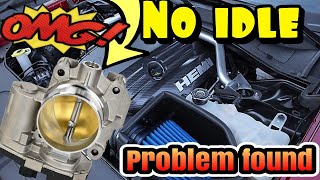
- Rough or unstable idle
- Sudden, unintended surges in engine speed
- Bucking and jerking while driving
- Replacing only the Accelerator Pedal Position (APP) sensor. While the APP sensor works with the throttle body, P0121 is almost always related to the throttle body itself on this platform.
- Replacing the MAP sensor. While the PCM uses the MAP sensor to cross-check the TPS signal, a P0121 code points to a fault in the TPS circuit, not the MAP sensor.
- Assuming cleaning the throttle body will fix an internal electronic failure. While cleaning is a good first step, many owners find the code returns until the entire unit is replaced due to the worn internal sensor.
Most Likely Causes
- Faulty Electronic Throttle Body Assembly 🔴 High Probability → Shop Fuel Injection Throttle Body The non-serviceable Throttle Position Sensor (TPS) is integrated into the assembly and is a common failure point. Wear and tear on the internal electronic components or a crack in the plastic housing leads to erratic signals.
How to confirm: After ruling out wiring and carbon buildup, the most definitive test is replacing the throttle body. An advanced diagnostic check involves using a scan tool to monitor TPS voltage for erratic readings as the throttle is applied. A visual inspection may reveal nothing, as the failure is often internal.
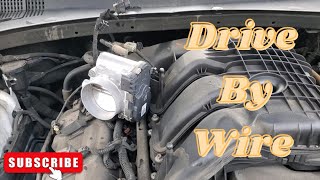
Typical fix: Replace the entire electronic throttle body assembly. 🎬 Watch this step-by-step guide to replacing the throttle body unit. A throttle relearn procedure is required after installation.
Est. part cost: $200-$450 - Dirty or Sticking Throttle Body 🟡 Medium Probability → Shop Fuel Injection Throttle Body Carbon and oil vapor from the PCV system can accumulate in the throttle body bore and on the throttle plate, restricting its movement and causing the plate's actual position to differ from what the PCM expects.
How to confirm: Remove the air intake hose from the throttle body and visually inspect for a thick black ring of carbon buildup. Check if the throttle plate moves smoothly by hand (with the engine off).
Typical fix: Clean the throttle body bore and plate thoroughly with a dedicated throttle body cleaner and a soft cloth or brush. Do not spray cleaner directly into the electronic components. Many owners attempt this first before replacing the unit. 🎬 See how to properly clean and reset your Hemi throttle body.
Est. part cost: $5-$15 - Wiring or Connector Issue ⚪ Low Probability The wiring harness connector at the throttle body is exposed to engine heat and vibration, which can lead to corrosion or loose pins over time. Water intrusion from engine washing can also cause this issue.
How to confirm: Visually inspect the connector for corrosion, pushed-out pins, or discoloration. Wiggle the connector with the engine running to see if it affects the idle. Inspect the harness for any signs of chafing or melting. A mechanic can perform a voltage drop test on the signal, power, and ground circuits to find high resistance.
Typical fix: Clean the connector terminals with an electrical contact cleaner. If the connector or wiring is damaged, it will need to be repaired or replaced.
Est. part cost: $10-$100
Rare But Worth Checking
- Failing Powertrain Control Module (PCM): This is very rare, but if multiple throttle bodies have been replaced and the problem persists, the PCM's driver circuit for the TPS may be at fault. This was noted by owners who had persistent issues. A deep diagnostic dive would be required to confirm this.
- Poor Electrical Ground: A corroded or loose engine or PCM ground strap can cause strange electrical issues and fluctuating sensor voltages, potentially triggering a P0121 code. Some owners have reported improved throttle response by adding a supplemental ground wire from the throttle body to the chassis.
- Weak or Failing Battery/Alternator: Low system voltage from a weak battery or failing alternator can sometimes cause the Electronic Throttle Control system to act erratically and trigger fault codes. Before expensive part replacement, it's wise to ensure the battery and charging system are healthy.
Diagnosis Steps
- Read the trouble codes with an OBD-II scanner. Note if any other codes, like P2135 or P0221, are present, as this strongly suggests a throttle body failure.
- Check battery voltage and charging system health. Ensure the battery reads ~12.6V with the engine off and 13.7-14.7V while running to rule out low voltage issues.
- Turn the ignition off. Disconnect the electrical connector from the throttle body. Inspect the pins on both the connector and the throttle body for corrosion, moisture, or damage.
- Inspect the wiring harness leading to the throttle body for any signs of damage, such as chafing against other components or melting from heat.
- Remove the air intake duct from the throttle body. Visually inspect the throttle bore and plate for heavy carbon buildup. If dirty, clean it thoroughly with throttle body cleaner and a soft cloth.
- If the wiring is good and the throttle body is clean (or cleaning didn't solve the issue), the throttle body assembly itself is the most likely culprit and should be replaced.
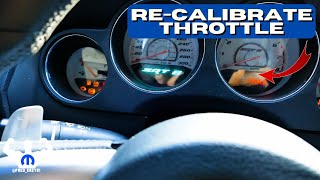
- After replacing the throttle body, perform a throttle relearn procedure. A common method is the 'Battery Disconnect Reset': disconnect the negative battery terminal for 5-10 minutes, reconnect it, turn the key to 'ON' (not start) for 10-15 seconds, then turn off. Finally, start the engine and let it idle for several minutes to allow the PCM to relearn. Some scan tools also have a specific 'ETC RELEARN' function.
Parts You'll Likely Need
- Electronic Throttle Body Assembly
(OEM #68060354AA (superseded by 4591847AC))— This is the primary fix for P0121 on the 5.7L Hemi, as the internal, non-serviceable Throttle Position Sensor (TPS) is the component that fails.
Trusted brands: Mopar, Continental, Dorman
OEM price range: $250-$450
Aftermarket price range: $180-$300
Related Codes That Often Appear With This One
- P2135 — This code indicates a 'Throttle/Pedal Position Sensor/Switch A/B Voltage Correlation' error. Since the electronic throttle body has two internal TPS sensors for redundancy, if their signals don't agree, both P2135 and P0121 can be set, strongly pointing to a faulty throttle body.
- P0221 — This code is for 'Throttle/Pedal Position Sensor/Switch 'B' Circuit Range/Performance'. It is the companion to P0121 ('A' Circuit) and often appears at the same time, again pointing to a failure within the dual-sensor throttle body assembly.
Technical Service Bulletins (TSBs) & Recalls
- TSB 09-003-20 REV. A: While this TSB is for newer (2019-2020) Ram and Dodge models with code P2100, it demonstrates a known history of manufacturing defects in throttle bodies for Hemi engines, instructing technicians to replace units from a specific date range. This supports the idea that the throttle body itself is a known weak point in the design.
Platform-Specific Known Issues
- Real-World Repair Story: On a Ram 1500 forum, a user with a 2012 5.7L Hemi experiencing code P0121 was advised by his mechanic to replace both the throttle body and the accelerator pedal. The community advised him to first try cleaning the throttle body and performing a battery disconnect reset. This highlights the common debate between cleaning, which is cheap, and replacing, which is often the ultimate fix.
- Internal Mechanical Failure: An analysis of a 2012 Charger with a 5.7L Hemi and a persistent P0121 code found that even though the throttle body looked clean, the plastic housing around the sensor arm had a hairline crack, causing the inconsistent voltage signals. This confirms that cleaning cannot fix an underlying mechanical or electronic failure within the sealed unit.
Mechanic-Grade Diagnostic Values
- TPS 5-Volt Reference at Throttle Body Connector — expected: 4.8 to 5.2 Volts with key on, engine off.. Failure: Voltage is significantly lower than 4.8V, indicating a wiring or PCM issue.
- TPS Sensor Ground Circuit Resistance — expected: Less than 1.0 ohm between the ground pin at the connector and the battery negative terminal.. Failure: Resistance is higher than 1.0 ohm, indicating a poor ground connection.
- TPS #1 Signal Voltage (Scan Tool) — expected: Starts at approximately 0.7V at idle and increases smoothly to approximately 4.3V at wide-open throttle.. Failure: Voltage is erratic, jumps, or does not follow the expected sweep.
- TPS #2 Signal Voltage (Scan Tool) — expected: Starts at approximately 4.3V at idle and decreases smoothly to approximately 0.7V at wide-open throttle.. Failure: Voltage is erratic, jumps, or does not follow the expected sweep. The two TPS signals should be inverses of each other.
- Voltage Drop on Signal Circuit (e.g., K22) — expected: Less than 0.5 Volts between the throttle body connector and the PCM connector with the engine running.. Failure: Voltage is above 0.5V, indicating excessive resistance in the wire.
Scan Tool Commands That Help
- Professional Scan Tool (e.g., wiTECH): ETC Throttle Follower Test — To actively monitor the voltage sweep of both internal TPS sensors as the accelerator pedal is pressed. This can reveal glitches or dropouts that are not visible with a simple multimeter check.
- Professional Scan Tool (e.g., wiTECH): ETC RELEARN — This function must be performed after replacing the throttle body assembly to calibrate the new part with the PCM.
Wiring & Ground Locations
- Throttle Body Connector — 6-pin connector on the electronic throttle body at the front of the intake manifold.. This is the primary point for testing voltage and ground signals. Pin 5 is the TPS #1 signal (K22 circuit), Pin 3 is the 5V supply, and Pin 6 is the sensor ground (K922 circuit).
- PCM Connector C2 (Tan) — The forward-most large connector on the Powertrain Control Module (PCM), located on the passenger side firewall.. This is the termination point for the throttle body wiring. It should be inspected for corrosion or pushed-out pins if wiring issues are suspected.
- Supplemental Throttle Body Ground — This is a user-added ground wire, typically run from one of the throttle body mounting bolts to a solid chassis ground or the negative battery terminal.. Forum users report that an insufficient factory ground can cause erratic throttle behavior. Adding a dedicated ground wire can stabilize the sensor signals and improve throttle response, potentially resolving intermittent issues.
Real Owner Repair Stories
- Reddit user on r/AskMechanics (2012 Dodge Challenger 5.7L) — Frequent Check Engine Light and ETC 'lightning bolt' light, with codes P0121 and P2135.
❌ Tried (didn't work) Taken to a Chrysler dealership multiple times., Replaced the Powertrain Control Module (PCM)., Replaced the throttle body assembly at least twice.
✅ What actually fixed it The original poster did not provide the final resolution, but a highly-rated comment from a mechanic suggested the persistent issue, despite replacing the main components, was almost certainly a difficult-to-find electrical fault. The likely cause was identified as a bad ground or a problem with the 5V supply circuit to the PCM, causing the two sensors to report conflicting values. This highlights a critical diagnostic path when standard parts replacement fails.
When the Usual Fixes Don't Work
- While replacing the throttle body assembly is the most common fix, it is not a guaranteed solution. A Reddit user with a 2012 5.7L Challenger reported that the P0121 and P2135 codes persisted even after a dealership replaced the throttle body and the PCM multiple times. This strongly suggests that in a minority of cases, the root cause is not the component itself but a more elusive electrical fault in the wiring harness, connectors, or a critical PCM ground. Technicians should rule out these possibilities before performing repeat replacements of expensive components.
OEM Part Supersession History
68060354AA→4591847AC— Part revision and update by manufacturer.
Heads up: The parts are interchangeable for this application.
Model Year Variations Within This Range
- 2009-2014: The stock throttle body for the 5.7L Hemi is a consistent 80mm size across this model year range, indicating no significant part changes that would affect the diagnosis of P0121.
Diagnostic Flowchart
Other Known Issues on This Vehicle
Issues unrelated to this code that are worth knowing about as an owner of this generation:
- MDS Lifter Failure ('Hemi Tick') 🔴 High — Common on engines with the Multi-Displacement System (MDS), particularly if oil changes are neglected or incorrect oil is used. Can occur at various mileages, often starting as a light ticking sound.
- Alternator Failure 🟠 Medium — A recall was issued for alternators on 2011-2014 models. Symptoms include dimming lights, whining noises, or a battery warning light. (Ref: NHTSA Recall 14V-634)
- TIPM (Totally Integrated Power Module) Failure 🔴 High — Can cause a wide range of bizarre electrical problems, including no-start conditions, fuel pump issues, and random accessory activation. Less common than lifter or throttle body issues but very difficult to diagnose.
- Takata Airbag Inflator Recall 🔴 High — Affects a massive number of vehicles, including 2008-2014 Challengers. The inflators can rupture, causing serious injury or death. A 'Do Not Drive' warning has been issued for unrepaired vehicles. (Ref: Multiple NHTSA Recalls (e.g., 16V352, 18V021, 19V018))
- Premature Water Pump Failure 🟠 Medium — The water pump bearings can fail prematurely, leading to coolant leaks and overheating. It's a known issue to check for when purchasing.
Used vs. New Parts: Buying Guide for This Vehicle
When a used part is the smart pick: Buying a used throttle body is NOT recommended for this repair. The primary failure mode is the wear and tear of the internal, non-serviceable electronic sensors. A used part has unknown remaining life and carries a high risk of failing shortly after installation, repeating the original problem.
What to inspect on the donor part:
- Not applicable, as buying used is not advised.
OEM-only on this vehicle (don't cheap out):
- While not strictly 'OEM-only', using a genuine Mopar throttle body is the safest and most reliable option to ensure compatibility and longevity. The cost difference is often justified by avoiding a repeat failure.
Aftermarket brands forum-validated for this vehicle:
- Dorman: Offers direct replacement units, including some 'OE FIX' versions that may use an upgraded non-contact Hall Effect sensor for improved durability.
- Continental: Often the original equipment manufacturer for Mopar, providing OEM quality.
Brands owners have reported issues with on this vehicle:
- Unbranded, low-cost units from online marketplaces should be avoided. Forum discussions frequently mention these parts failing prematurely, causing the P0121 code and limp mode to return quickly.
Real Owner Stories
Aggregated from forums and TSBs cited above. Mileages and costs reflect what owners reported in those sources.
2012 Ram 1500 5.7L Hemi
Symptoms: Experiencing code P0121; debating between cleaning the unit or replacing both the throttle body and the accelerator pedal.
What fixed it: Cleaning the throttle body and performing a battery disconnect reset (attempted as a first step before replacement).
Source hint: Real-World Repair Story
2012 Dodge Charger 5.7L Hemi
Symptoms: Persistent P0121 code; throttle body appeared clean visually but provided inconsistent voltage signals.
What fixed it: Replacement of the throttle body assembly because the plastic housing around the sensor arm had a hairline crack.
Source hint: Internal Mechanical Failure
2008-2014 Dodge Challenger 5.7L Hemi
Symptoms: P0121 appearing alongside P2135; complex electrical issues persisting even after replacing the throttle body and PCM.
What fixed it: Not specified, but identified as a complex electrical issue involving signal circuits.
Source hint: r/AskMechanics
Related OBD-II Codes
Frequently Asked Questions
Does TSB 09-003-20 REV. A apply to my 2008-2014 Dodge Challenger?
What part number is used for the throttle body in my Challenger and its platform mates?
Can I just replace the Throttle Position Sensor (TPS) on my 5.7L Hemi?
Is there a specific recall I should be aware of for my 2011-2014 Challenger that might cause electrical issues?
How do I perform a throttle relearn on my Challenger after replacing the unit?
Could my P0121 code be related to the 'Hemi Tick'?
Helpful Videos
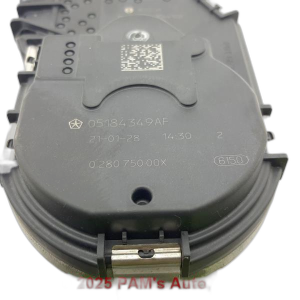
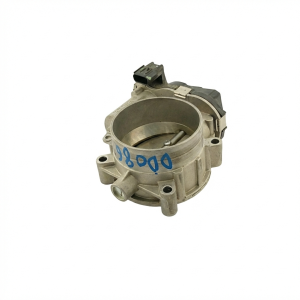
Used OEM Parts in Stock
New Aftermarket Parts Available

The information in this article is provided for general reference and educational purposes only. Vehicle specifications, procedures, and part compatibility can vary by production date, trim level, and region. Always consult your vehicle's factory service manual and verify part numbers before purchasing or performing repairs. Safety-critical components such as airbags, seat belts, and braking systems should be installed by a qualified professional.
- Dodge Challenger:
- 🧭 Diagnostic Flowchart
- 🎬 Helpful Videos
- 🛍️ Shop This Part
- What's Unique About the 2008-2014 Dodge Challenger
- Symptoms You May Notice
- Most Likely Causes
- Rare But Worth Checking
- Diagnosis Steps
- Parts You'll Likely Need
- Related Codes That Often Appear With This One
- Technical Service Bulletins (TSBs) & Recalls
- Platform-Specific Known Issues
- Mechanic-Grade Diagnostic Values
- Scan Tool Commands That Help
- Wiring & Ground Locations
- Real Owner Repair Stories
- When the Usual Fixes Don't Work
- OEM Part Supersession History
- Model Year Variations Within This Range
- Other Known Issues on This Vehicle
- Used vs. New Parts: Buying Guide for This Vehicle
- Real Owner Stories
- 2012 Ram 1500 5.7L Hemi
- 2012 Dodge Charger 5.7L Hemi
- 2008-2014 Dodge Challenger 5.7L Hemi
- Related OBD-II Codes
- Frequently Asked Questions
- 🎟️ Get 5% Off