

P0121 on 2009-2012 Ford Escape: Throttle Position Sensor Causes and Fixes
On a 2009-2012 Ford Escape, code P0121 is almost always caused by a failing electronic throttle body assembly. The sensor is integrated and cannot be replaced separately. Cleaning the throttle body may help temporarily, but replacement of the entire unit is the common fix. This issue was so widespread it led to an NHTSA investigation and a Ford customer satisfaction program (13N03).
- P0121 on a 2009-2012 Escape points to a problem with the throttle position sensor's performance.
- The most important thing to know is that the sensor is built into the electronic throttle body and cannot be replaced by itself.
- The most likely fix is replacing the entire throttle body assembly, after first attempting to clean it.
- Symptoms can be severe, including stalling and entering a reduced-power 'limp mode', so it is not safe to ignore this code.
- Hard or erratic shifting can be a symptom, which may be misdiagnosed as a transmission problem.
- This is a widely known issue that led to a Ford customer satisfaction program (13N03), so check if your vehicle is covered before paying for repairs.
What's Unique About the 2009-2012 Ford Escape
The key issue for the 2009-2012 Ford Escape is that the Throttle Position Sensor (TPS) is not a separate, replaceable part. Unlike earlier models, these Escapes use an Electronic Throttle Body (ETB) where the sensor is integrated into the main assembly. This means that if the sensor component fails due to internal wear or electrical faults, the entire throttle body must be replaced, making the repair more involved and costly. This design and its high failure rate prompted an NHTSA investigation and a Ford customer satisfaction program (13N03) for these vehicles.
Symptoms You May Notice
- Check Engine Light is on
- Wrench light on the dashboard may illuminate
- Hesitation or stumbling when accelerating
- Rough or unstable idle speed, RPMs may surge up and down
- Engine stalling, sometimes unexpectedly at idle or while driving
- Vehicle enters 'limp mode' with reduced power 🎬 See how to fix no throttle response and wrench lights.
- Poor or sluggish acceleration
- Hard, erratic, or delayed transmission shifting
- Sudden surges in speed without driver input
- Replacing only the accelerator pedal position (APP) sensor. While the APP sensor can cause similar symptoms, P0121 specifically points to the sensor on the throttle body.
- Assuming the transmission is failing due to hard shifting, when the root cause is the incorrect throttle position data being sent to the PCM.
- Replacing the Mass Airflow (MAF) sensor. While airflow issues can be related, P0121 is more specific to the throttle's position circuit.
Most Likely Causes
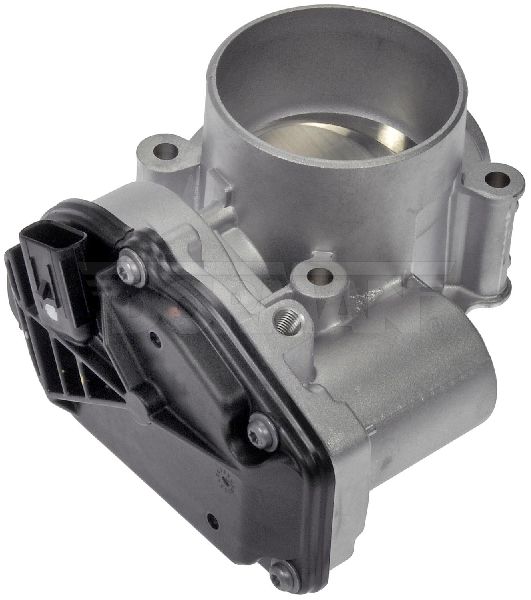
- Failing Electronic Throttle Body Assembly 🔴 High Probability → Shop Fuel Injection Throttle Body The throttle position sensor (TPS) is integrated into the electronic throttle body and is not sold as a separate part for this model year. Internal wear of the sensor's resistive tracks or the motor controlling the throttle plate requires replacement of the entire assembly. This is a very common failure point on this platform.
How to confirm: After confirming the throttle body is clean and wiring is intact, the persistence of P0121 and related drivability symptoms points to a failed internal sensor. A multimeter can be used to test voltage at the sensor; it should read around 0.5V at idle and up to 4.5V at wide-open throttle. Any dropouts or erratic readings during a slow sweep of the throttle plate (with engine off) indicate a bad sensor.
Typical fix: Replace the entire throttle body assembly. 🎬 Watch: Step-by-step guide to replacing the electronic throttle body. It is highly recommended to use an OEM Motorcraft part for reliability. Aftermarket parts are available but have mixed reviews.
Est. part cost: $150-$300 - Dirty or Carbon-Clogged Throttle Body 🟡 Medium Probability → Shop Fuel Injection Throttle Body Carbon and grime can build up around the throttle plate over time, restricting its movement. This can cause the physical position of the plate to stick or differ from what the sensor reports, triggering the code. In some Ford models, technicians have pinpointed the electronic throttle body as "physically sticking closed" (NHTSA ODI #10255038).
How to confirm: Visually inspect the throttle body bore and plate for black, sticky buildup. The plate may not move smoothly when actuated by hand (with the engine off).
Typical fix: Clean the throttle body thoroughly with a dedicated throttle body cleaner and a soft brush or rag. 🎬 Watch: The right way to clean your throttle body. Do not spray directly on the electrical connector. A throttle body relearn procedure is required afterward, which typically involves letting the engine idle for several minutes after reconnecting the battery.
Est. part cost: $5-$15 - Damaged Wiring or Poor Connection ⚪ Low Probability
How to confirm: Inspect the wiring harness and connector going to the throttle body for any signs of fraying, corrosion, or loose pins. Pay close attention to the harness right at the connector, as repeated vibration can cause internal wire breaks that are not externally visible.
Typical fix: Repair the damaged section of wire or clean/replace the connector. Applying dielectric grease to the connector pins can help prevent future corrosion.
Est. part cost: $10-$50
Rare But Worth Checking
- Faulty Powertrain Control Module (PCM): This is extremely rare and should only be considered after all other possibilities, including the throttle body and wiring, have been completely ruled out. A manufacturer service bulletin for related Ford vehicles notes that a PCM reflash and retest may be performed alongside throttle body replacement (NHTSA ODI #10286213).
- Floor Mat Obstruction: In some cases, an improperly placed or bunched-up floor mat can prevent the accelerator pedal from returning to its true idle position, causing a discrepancy that could trigger a P0121 code.
Diagnosis Steps
- Read the codes with an OBD-II scanner to confirm P0121 and check for any other related codes.
- Inspect the air intake hose between the air filter and throttle body for any cracks or leaks.
- Inspect the electrical connector at the throttle body. Ensure it is clean, dry, and securely connected. Check for any corroded or backed-out pins.
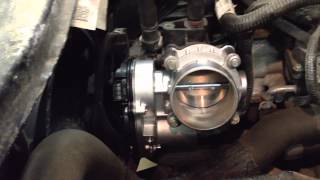
- With the engine off, remove the intake tube from the throttle body. Visually inspect the throttle plate and bore for heavy carbon buildup.
- If dirty, clean the throttle body thoroughly using throttle body cleaner and a soft cloth or brush. Do not spray cleaner directly into electrical components.
- After cleaning, perform a throttle body relearn procedure. This often involves disconnecting the battery for 15 minutes, reconnecting it, turning the key to the 'ON' position for one minute, then starting the engine and letting it idle for several minutes to recalibrate.
- If the code returns, test the wiring harness for proper voltage (5V reference) and ground.
- If wiring is good and the problem persists after cleaning, replacement of the entire electronic throttle body assembly is the most likely fix.
- After replacing the throttle body, clear the codes and perform the throttle body relearn procedure again.
Parts You'll Likely Need
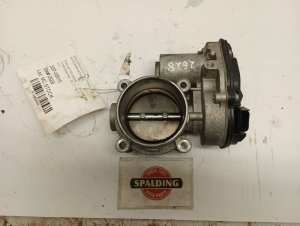
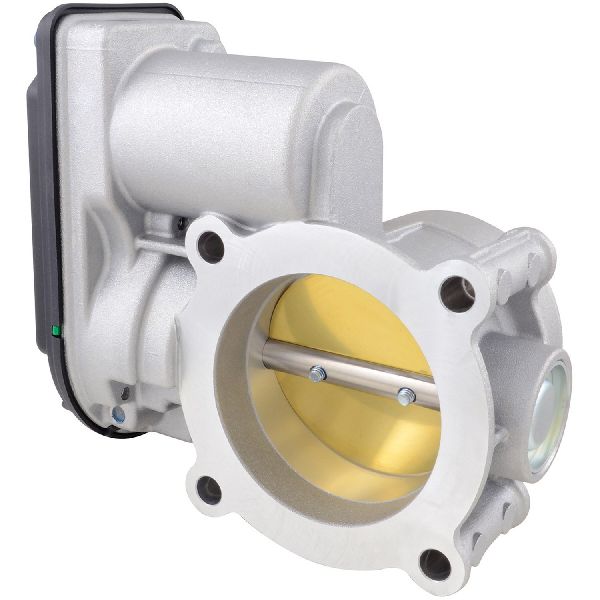
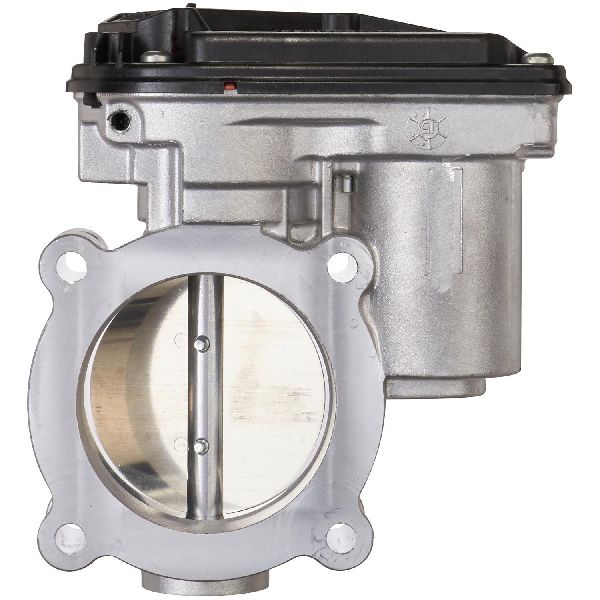
- Electronic Throttle Body Assembly
(OEM #DS7Z-9E926-D (Supersedes older versions like 9L8Z9E926A))— This is the most common fix because the throttle position sensor (TPS) is integrated into the assembly for this vehicle and cannot be replaced separately. The original parts are known to fail.
Trusted brands: Motorcraft, Bosch, Delphi
OEM price range: $250-$350
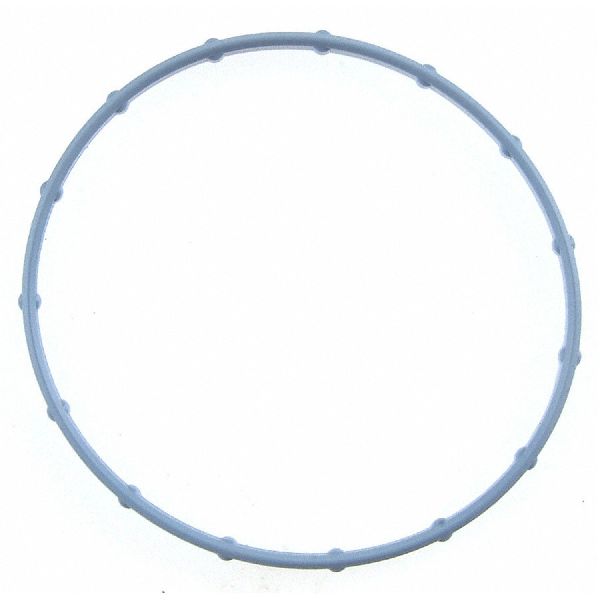
Aftermarket price range: $150-$250 - Throttle Body Gasket — Should be replaced whenever the throttle body is removed for cleaning or replacement to prevent vacuum leaks. Fel-Pro part numbers like 61736 are common aftermarket options.
Trusted brands: Fel-Pro, Mahle, Motorcraft
OEM price range: $10-$20
Aftermarket price range: $5-$15
Related Codes That Often Appear With This One
- P0120 — This is a more general code for a malfunction in the TPS 'A' circuit.
- P0122 — Indicates the TPS 'A' circuit input is low.
- P0123 — Indicates the TPS 'A' circuit input is high.
- P2135 — Indicates a correlation error between TPS 'A' and 'B' signals, which is common on electronic throttle bodies.
- P2111 — Indicates the throttle actuator control system is stuck open.
- P2112 — Indicates the throttle actuator control system is stuck closed. This code is frequently found alongside P0121 and P2104 in Ford electronic throttle body failures (NHTSA ODI #10257081).
Technical Service Bulletins (TSBs) & Recalls
- Ford Customer Satisfaction Program 13N03: This program extended the warranty coverage for the electronic throttle body on certain 2009-2013 Ford and Mercury vehicles, including the Escape. It addressed symptoms of sudden power loss or stalling.
Platform-Specific Known Issues
- The failure of the electronic throttle body on 2009-2012 Escapes (and other Ford models) was so common that it prompted an investigation by the National Highway Traffic Safety Administration (NHTSA).
- Ford issued a customer satisfaction program (13N03) which extended the warranty on the throttle body for certain vehicles to 10 years or 150,000 miles from the original start date. Owners should check with a Ford dealer to see if their specific vehicle is still covered.
Mechanic-Grade Diagnostic Values
- Throttle Position Sensor (TPS) Signal Voltage — expected: Approximately 0.5V - 1.0V at idle, sweeping smoothly up to ~4.5V at Wide-Open Throttle (WOT).. Failure: Voltage readings that are jumpy, have drop-outs, or do not move smoothly when the throttle is slowly opened and closed.
- TPS 5V Reference Voltage — expected: A steady 5 volts at the appropriate pin on the throttle body connector with the key on, engine off.. Failure: Voltage significantly lower or higher than 5V, or no voltage, indicating a wiring or PCM issue.
- Throttle Body Mounting Bolt Torque — expected: 89 inch-pounds.. Failure: Over-torquing can damage the new throttle body or intake manifold; under-torquing can cause a vacuum leak.
Scan Tool Commands That Help
- Ford IDS / Forscan: Reset All Adaptations / Reset Intake Air Throttle Learned Values — This function should be used after cleaning or replacing the throttle body. It forces the PCM to forget the old learned values for idle and throttle position, initiating a new learning process to match the clean or new part.
- Generic OBD-II Scanner: Manual Relearn Procedure (Battery Disconnect Method) — If a professional scan tool is not available, a manual relearn can be attempted after part replacement. This involves disconnecting the battery to clear the PCM's memory, then following a specific sequence of idling and driving to allow the PCM to relearn the throttle's characteristics.
Wiring & Ground Locations
- G301 — Under the driver's seat.. This is a major ground point for several interior modules and sensors. While not directly for the throttle body, a poor ground here can introduce electrical noise and voltage stability issues that can affect various PCM inputs and potentially contribute to erroneous sensor readings.
- Throttle Body Connector — 6-pin connector directly on the electronic throttle body assembly.. This is the single point of failure for all signals to and from the throttle body, including the 5V reference, ground, and dual TPS signals. The red locking tab must be disengaged before the connector can be removed. Wiggling this connector while monitoring live data can reveal intermittent connection issues.
Real Owner Repair Stories
- Reddit user in r/MechanicAdvice (2012 RAV4 (similar electronic throttle system)) — P0121 code appeared.
❌ Tried (didn't work) Initial diagnosis pointed towards needing a new throttle body or sensor.
✅ What actually fixed it The user disconnected the battery for an hour to completely reset the ECU. After reconnecting, the code did not return, suggesting the issue was a temporary glitch in the learned values rather than a hard part failure. - NHTSA ODI #11014092 — An owner of a related Ford model reported that the car was scanned and found to have P0121-20 and P0100-20 codes after the issue occurred during the last two times the vehicle was driven.
OEM Part Supersession History
9L8Z-9E926-A→DS7Z-9E926-A, which was then superseded by DS7Z-9E926-D.— The original part had a high failure rate. The subsequent revisions are intended to be more durable.
Heads up: The latest part, DS7Z-9E926-D, is the recommended replacement for all 2009-2012 Ford Escapes with the 2.5L and 3.0L engines and is backward compatible.
Model Year Variations Within This Range
- 2009: For 2009, the 2.3L 4-cylinder was replaced by a new 2.5L engine, and the 3.0L V6 received a power increase. A new 6-speed automatic transmission replaced the previous 4-speed for most models. These new powertrains are what the common P0121 issue applies to.
- 2010-2012: These years carried over the powertrains from 2009 with minor updates and feature additions (like MyKey and Active Park Assist in 2010). The throttle body issue and part numbers are consistent across the 2009-2012 model years.
Diagnostic Flowchart
Other Known Issues on This Vehicle
Issues unrelated to this code that are worth knowing about as an owner of this generation:
- 6F35 Transmission Failure 🔴 High — Widespread reports of shuddering, hard shifting, and complete failure, often before 100,000 miles. A class-action lawsuit was filed regarding this transmission.
- Electric Power Steering (EPS) Failure 🔴 High — Common reports of sudden loss of power steering assist, making the vehicle difficult to steer at low speeds. (Ref: NHTSA Recall 14V284000 (Ford Recall 14S05) was issued to update software and, if necessary, replace the steering torque sensor or steering column.)
- Rear Shock Tower / Wheel Well Rust 🔴 High — Very common in regions that use road salt. The rear wheel wells and shock towers can rust through completely, compromising structural integrity. Requires significant welding to repair.
- Ignition Misfires 🟠 Medium — Commonly caused by failing ignition coils, especially on the V6 model where the rear bank of coils is difficult to access.
Used vs. New Parts: Buying Guide for This Vehicle
When a used part is the smart pick: For this specific failure (P0121 on a 2009-2012 Escape), buying a used electronic throttle body from a junkyard is NOT recommended. The original part has a well-documented high failure rate due to a design defect. A used part is likely to have the same defect and could fail shortly after installation.
What to inspect on the donor part:
- Not applicable, as a used part is not advised for this repair.
OEM-only on this vehicle (don't cheap out):
- Electronic Throttle Body Assembly
Aftermarket brands forum-validated for this vehicle:
- Bosch (often the OEM supplier)
- Hitachi
Brands owners have reported issues with on this vehicle:
- Unbranded, 'white-box' parts from online marketplaces should be avoided due to inconsistent quality control. While Dorman offers an 'OE FIX' version with a redesigned seal, user reviews are mixed compared to the OEM Motorcraft part.
Real Owner Stories
Aggregated from forums and TSBs cited above. Mileages and costs reflect what owners reported in those sources.
2009 Ford Escape XLT 3.0L DOHC — 75000 miles
Symptoms: Sudden loss of all throttle function while driving on the interstate; orange wrench light illuminated and the engine ran horribly in limp mode.
What fixed it: Replacement of the throttle body assembly.
Cost: $150-$190
Source hint: StangNet Forums
2013 Ford Escape
Symptoms: Sudden onset of limp mode and power loss, a widespread issue referenced in NHTSA investigations.
What fixed it: Replacement of the electronic throttle body under the extended warranty program.
Source hint: Ford Truck Enthusiasts Forums thread titled 'LIMP MODE ISSUE'
Documented NHTSA Reports
Ford F-150 Owner Complaint
Symptoms: The driver experienced the vehicle entering a fail-safe mode. After taking it to a dealer, they diagnosed codes P2104, P0121, and P2112.
What fixed it: Technicians found the electronic throttle body physically sticking closed and replaced the assembly (NHTSA ODI #10255038).
Ford Expedition Owner Complaint
Symptoms: Multiple diagnostic codes were found during service, including P0121-FF, P2104-FF, and P2112FF (NHTSA ODI #10257081).
Related OBD-II Codes
Frequently Asked Questions
Is there a recall or extended warranty for the throttle body on my 2009-2012 Ford Escape?
Can I just replace the Throttle Position Sensor (TPS) on my 2010 Escape to fix P0121?
What part should I use to replace the throttle body on my Ford Escape?
Why does my Escape enter 'limp mode' when the P0121 code triggers?
Do I need to do anything special after cleaning or replacing the throttle body?
Could my P0121 code be related to the Electric Power Steering (EPS) issues common on this model?
Helpful Videos
Used OEM Parts in Stock
New Aftermarket Parts Available


The information in this article is provided for general reference and educational purposes only. Vehicle specifications, procedures, and part compatibility can vary by production date, trim level, and region. Always consult your vehicle's factory service manual and verify part numbers before purchasing or performing repairs. Safety-critical components such as airbags, seat belts, and braking systems should be installed by a qualified professional.
- Ford Escape:
- 🧭 Diagnostic Flowchart
- 🎬 Helpful Videos
- 🛍️ Shop This Part
- What's Unique About the 2009-2012 Ford Escape
- Symptoms You May Notice
- Most Likely Causes
- Rare But Worth Checking
- Diagnosis Steps
- Parts You'll Likely Need
- Related Codes That Often Appear With This One
- Technical Service Bulletins (TSBs) & Recalls
- Platform-Specific Known Issues
- Mechanic-Grade Diagnostic Values
- Scan Tool Commands That Help
- Wiring & Ground Locations
- Real Owner Repair Stories
- OEM Part Supersession History
- Model Year Variations Within This Range
- Other Known Issues on This Vehicle
- Used vs. New Parts: Buying Guide for This Vehicle
- Real Owner Stories
- 2009 Ford Escape XLT 3.0L DOHC — 75000 miles
- 2013 Ford Escape
- Documented NHTSA Reports
- Ford F-150 Owner Complaint
- Ford Expedition Owner Complaint
- Related OBD-II Codes
- Frequently Asked Questions
- 🎟️ Get 5% Off