

P0121 on 2006-2010 Ford Explorer: Throttle Position Sensor Causes and Fixes
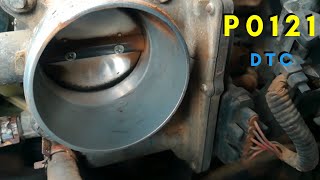
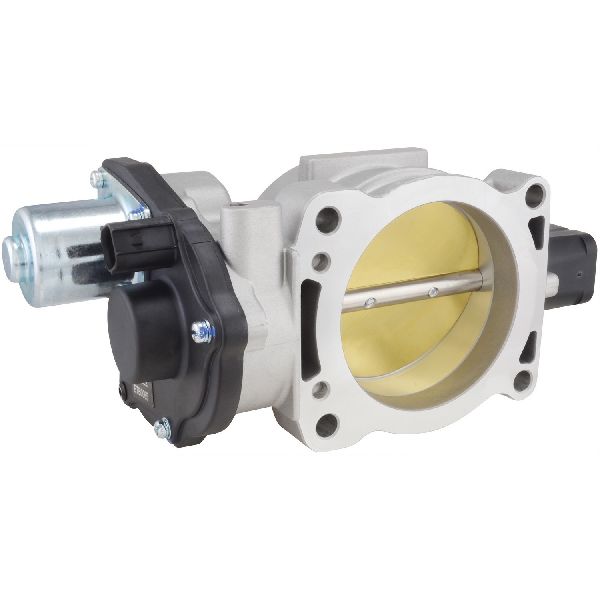
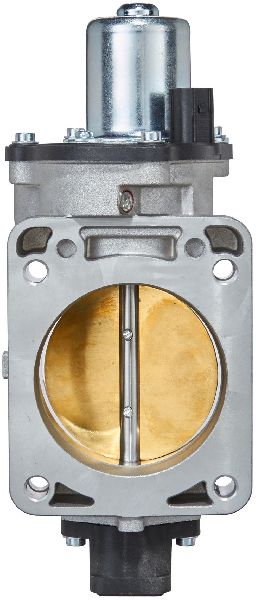
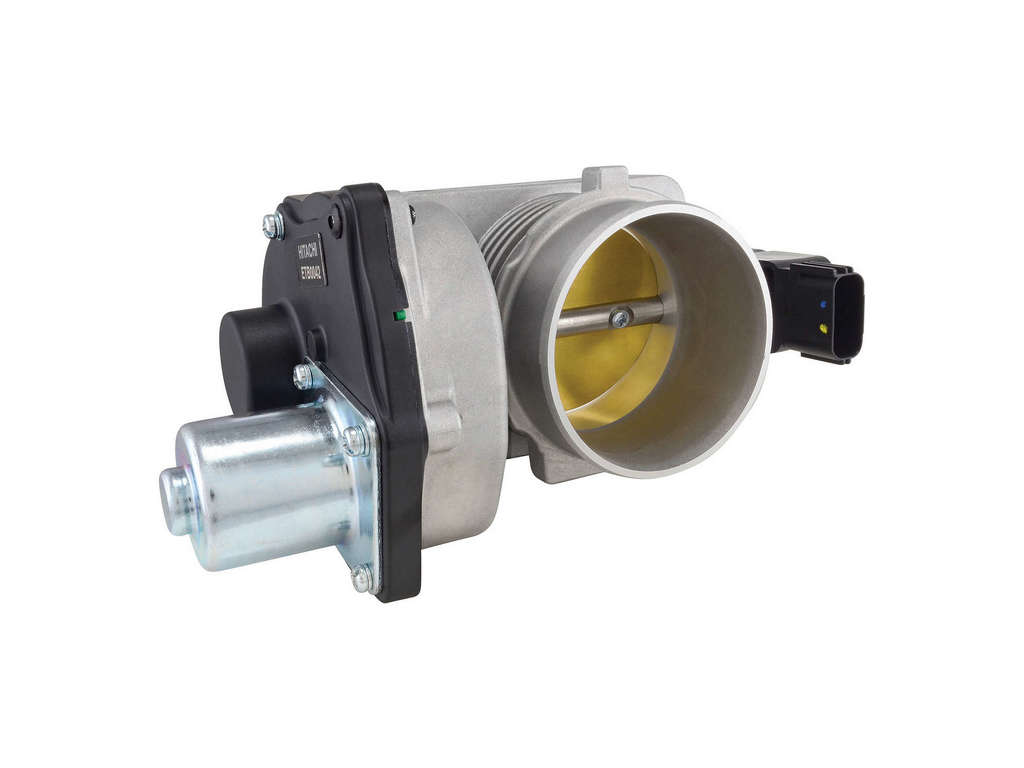
On a 2006-2010 Ford Explorer with either the 4.0L V6 or 4.6L V8, code P0121 is most often caused by a failing electronic throttle body. The throttle position sensor (TPS) is integrated and cannot be replaced separately. A thorough cleaning may provide a temporary fix if the throttle plate is sticking, but replacement of the entire throttle body assembly is the common and reliable solution. Expect to pay $150-$350 for a quality replacement part.
- P0121 on a 2006-2010 Explorer almost always points to a problem with the electronic throttle body.
- The first diagnostic step should be to inspect the wiring, followed by cleaning the throttle body of any carbon buildup.
- If cleaning doesn't work, the most reliable fix is to replace the entire throttle body assembly, as the sensor is integrated and cannot be replaced separately.
- Driving with this code is risky because the vehicle can enter a 'limp mode' with drastically reduced power at any time.
- This is a common DIY repair that can be done with basic hand tools in about an hour.
What's Unique About the 2006-2010 Ford Explorer
For the fourth-generation Ford Explorer (2006-2010), regardless of whether it has the 4.0L SOHC V6 or the 4.6L 3V V8, the Throttle Position Sensor (TPS) is not a separate, replaceable part. Instead, it is integrated into the electronic throttle body assembly. This drive-by-wire design means that when the sensor fails—a very common cause of P0121—the entire throttle body unit must be replaced. While this is more expensive than replacing a standalone sensor, it simplifies diagnosis, as you are replacing the sensor, motor, and throttle plate all at once.
Symptoms You May Notice
- Check Engine Light or Wrench Light illuminated.
- Vehicle enters 'limp mode' (reduced engine power).
- Hesitation or stumbling on acceleration.
- Rough or unstable idle.
- Engine stalling, especially at low speeds or when stopping.
- Poor or erratic throttle response.
- Engine surging or hunting for idle.
- Black smoke from exhaust during acceleration.
- Replacing only the Accelerator Pedal Position Sensor (APPS). While the APPS can cause similar symptoms, P0121 specifically points to a performance issue in the throttle body's sensor circuit, not the pedal's.
Most Likely Causes
- Failing Electronic Throttle Body Assembly 🔴 High Probability → Shop Fuel Injection Throttle Body The integrated Throttle Position Sensor (TPS) within the assembly is a common failure point. Over time, the electronic contacts inside wear out, causing erratic signals that the PCM flags as a performance problem.
How to confirm: After ruling out wiring issues, monitor the TPS voltage (PID: TP or TP1) with an OBD-II scanner. If the voltage jumps erratically as you slowly press the accelerator pedal, or if it doesn't sweep smoothly from ~0.5V to ~4.5V, the assembly is faulty. In some cases, a user on Ford Truck Enthusiast forums noted their scanner showed one TPS PID (TP1) was stuck at a very low voltage while the other (TP2) responded, pointing to an internal failure.
Typical fix: Replace the entire throttle body assembly. A relearn procedure is generally not required; however, some owners report smoother operation after performing a throttle reset procedure or simply disconnecting the battery for 15 minutes to clear the PCM's adaptive memory. The torque spec for the mounting bolts is low, around 89 inch-pounds, as they thread into a plastic intake manifold.
Est. part cost: $150-$350 - Dirty or Carbon-Clogged Throttle Body 🟡 Medium Probability → Shop Fuel Injection Throttle Body Carbon and oil vapor from the PCV system can build up around the throttle plate, causing it to stick or move slowly, especially when returning to idle. This creates a mismatch between where the computer expects the throttle to be and its actual position, triggering P0121.
How to confirm: Visually inspect the throttle body bore and plate for black, sticky carbon buildup. One owner reported that after a battery disconnect, the PCM's self-test caused the slightly sticky plate to not open as expected, immediately throwing codes P2104 and P2112. NHTSA ODI #10255038, involving a similar Ford throttle system, noted that technicians pinpointed the electronic throttle body physically sticking closed, which triggered codes P2104, P0121, and P2112.
Typical fix: Remove the air intake tube and thoroughly clean the throttle plate and bore with a dedicated throttle body cleaner and a soft brush or rag. This is often a successful first step before replacing the part.
Est. part cost: $5-$15 - Damaged Wiring or Connector ⚪ Low Probability The wiring harness leading to the throttle body is exposed to engine heat and vibration, which can make the insulation brittle and cause it to crack and fall off, leading to exposed wires and short circuits.
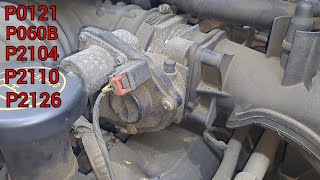
How to confirm: Visually inspect the wiring harness going to the throttle body connector for any signs of chafing, exposed wires, or corrosion on the connector pins. A mechanic on YouTube demonstrated finding multiple exposed wires right at the connector on a 2007 Explorer, which caused a cluster of throttle-related codes including P0121. Wiggle the harness with the engine running to see if it affects the idle.
Typical fix: Repair the damaged section of wire with heat shrink tubing or replace the connector pigtail if the damage is at the connector itself. The pigtail connector is often referenced by part number WPT-948.
Est. part cost: $15-$40
Rare But Worth Checking
- Failing Powertrain Control Module (PCM): This is extremely rare. The PCM should only be considered after the throttle body and all wiring have been definitively ruled out as the cause. One owner on a forum suspected a bad PCM after extensive testing, but this is not a common outcome. In a related Ford platform case, NHTSA ODI #10286213 notes that a dealer performed a PCM reflash and retest after receiving codes P0121, P2104, and P2112.
Diagnosis Steps
- Scan the vehicle for all OBD-II codes. Note any other codes present alongside P0121, as they can provide clues (e.g., P2104, P2112).
- Visually inspect the wiring harness and connector at the throttle body. Look closely for brittle, cracked, or missing insulation right at the connector, as this is a known failure point.
- Remove the air intake hose from the throttle body. Inspect the throttle bore and plate for heavy carbon buildup that could cause sticking.
- If significant carbon is present, clean the throttle body thoroughly with a dedicated cleaner and a soft cloth. Reassemble and test drive to see if the code returns.
- If cleaning does not resolve the issue, use an OBD-II scanner with live data capability to monitor the TPS voltage PIDs (e.g., TP1, TP2).
- With the key on and engine off, the voltage should be around 0.5-1.0 volts at closed throttle.
- Slowly press the accelerator pedal to the floor. The voltage should increase smoothly and linearly to approximately 4.5 volts at wide-open throttle.
- If the voltage reading is erratic, jumps, has dead spots, or one of the two sensor signals is flatlined, the throttle body assembly is faulty and needs to be replaced.
- If the wiring and throttle body sensor prove to be good, the final, though very unlikely, possibility is a fault within the Powertrain Control Module (PCM).
Parts You'll Likely Need
- Electronic Throttle Body Assembly
(OEM #Motorcraft part numbers vary by engine. For the 4.0L V6, a common part number is 6R3Z-9E926-AA (superseded by 9W7Z-9E926-A). For the 4.6L V8, a common part number is 3L5Z-9E926-AA. Always verify with VIN.)— This is the most common failure for code P0121 on this vehicle, as the internal, non-serviceable Throttle Position Sensor (TPS) fails.
Trusted brands: Motorcraft, Bosch, Cardone, TRQ
OEM price range: $250-$350
Aftermarket price range: $150-$250
Related Codes That Often Appear With This One
- P2104 — Indicates the PCM has forced the engine into a limited power mode because of a fault detected in the throttle actuator control system, often triggered by P0121.
- P2110 — Similar to P2104, this code means the Throttle Actuator Control System is limited to a specific RPM range due to a detected fault, frequently P0121.
- P2111 / P2112 — These codes indicate the throttle plate is stuck open or closed, which can be a mechanical result of a failed or dirty throttle body that also sets the P0121 electronic fault.
- P060B — This code, for an internal control module processing performance issue, can sometimes appear alongside P0121 when there's a severe wiring short or internal throttle body failure that confuses the PCM.
Platform-Specific Known Issues
- Ford issued Customer Satisfaction Program 16B32 for some 2011-2016 Ford vehicles for similar electronic throttle body issues, but it does not cover the 2006-2010 generation. However, it highlights a history of this component failing across Ford platforms.
- The wiring insulation at the throttle body connector is known to become brittle from heat cycles, crack, and fall off, leaving wires exposed and prone to shorting.
Mechanic-Grade Diagnostic Values
- TPS Reference Voltage (VREF) at connector — expected: Approximately 5.0 Volts. Failure: Voltage significantly below 5.0V or at 0V points to a wiring issue or a problem with the PCM.
- TPS Signal Voltage (TP1/TP2) with Key On, Engine Off — expected: Approximately 0.5V to 1.0V at closed throttle, sweeping smoothly to ~4.5V at wide-open throttle.. Failure: Voltage that is erratic, has dead spots, jumps, or does not return to the baseline value indicates a failed sensor within the throttle body.
- Throttle Body Mounting Bolt Torque — expected: 89 inch-pounds. Failure: Over-torquing can crack the plastic intake manifold; under-torquing can cause a vacuum leak.
Scan Tool Commands That Help
- Ford IDS / FORScan: Throttle Body Relearn / Reset All Adaptations — After replacing the throttle body or disconnecting the battery, the PCM may need to relearn the throttle plate's closed and open positions. While the vehicle can often relearn on its own through driving, this command forces the relearn immediately for smoother idle and performance.
Wiring & Ground Locations
- G102 — For the 4.0L engine, it's at the center rear of the engine compartment. For the 4.6L, it's at the rear of the engine compartment.. This is a primary engine ground. A poor connection here can affect various sensors, including the systems that the PCM uses to cross-check the throttle position sensor's plausibility, potentially causing or contributing to a P0121 code.
- Powertrain Control Module (PCM) — Located at the right side of the engine bulkhead.. The PCM is the source of the 5V reference voltage and the ground for the TPS circuit. All wiring for the throttle body originates from or returns to the PCM.
- Throttle Body Connector — Directly on the electronic throttle body assembly.. This is the most common location for wiring failures. The heat and vibration cause insulation to crack and wires to short, directly causing P0121 and other related codes. The connector pigtail is part number WPT-948.
Real Owner Repair Stories
- YouTube channel "Platinum Garage" (2006-2010 Ford Explorer with 4.0L SOHC engine) — Vehicle went into limp mode, engine cut out, butterfly valve in throttle body snapped shut.
❌ Tried (didn't work) The owner had previously replaced the throttle body with a high-mileage used unit, which eventually failed again.
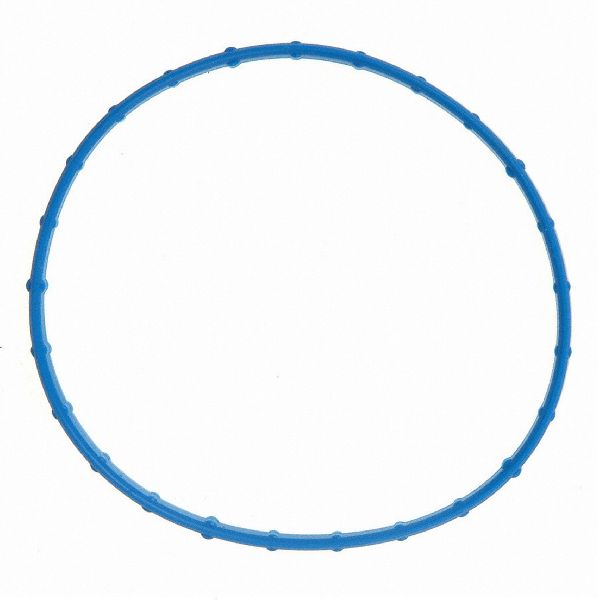
✅ What actually fixed it The final fix was replacing the failed throttle body with another used unit from a junkyard, along with a new gasket. The video also noted the common issue of cracked wiring at the connector and recommended replacing the pigtail harness for a long-term repair. - NHTSA ODI #11014092 — An owner reported that their vehicle scanned with codes P0100 and P0121 the last two times the car was driven.
- NHTSA ODI #10257081 — A report describes a vehicle being checked where a long list of service codes were found, including P0121, P2104, and P2112.
OEM Part Supersession History
6R3Z-9E926-AA→9W7Z-9E926-A— Part revision and update by Ford.
Heads up: While multiple parts sites show this supersession, they also incorrectly list applications for F-150s from the late 90s/early 2000s. It is critical to verify the correct part number for the Explorer using the vehicle's VIN, as there are variations.3L5Z-9E926-AA→9W7Z-9E926-A— Part revision and update by Ford.
Heads up: This supersession path is also listed by Ford parts dealers. Given the confusion in online catalogs, using a VIN to confirm the exact required part for a specific Explorer is the only reliable method.
Diagnostic Flowchart
Other Known Issues on This Vehicle
Issues unrelated to this code that are worth knowing about as an owner of this generation:
- 4.0L SOHC Timing Chain Cassette Failure 🔴 High — Very common, can occur as early as 45,000 miles but more typical after 100,000. Manifests as a 'rattle' on startup or during idle. (Ref: No recall, but it is an infamous and widely documented issue. Repair is very labor-intensive as one chain cassette is on the rear of the engine, often requiring engine removal.)
- 5R55S/W Transmission Failure 🔴 High — Common after 50,000-100,000 miles. Symptoms include delayed or harsh shifts (especially into 2nd, 3rd, 5th, and Reverse), shift flares, and shuddering. (Ref: No recall. Often caused by worn servo bores in the transmission case or a failing solenoid block.)
- Cracked Plastic Thermostat Housing (4.0L V6) 🔴 High — Extremely common failure point. The plastic housing has a seam that develops coolant leaks over time, leading to coolant loss and potential overheating. (Ref: No recall. Aftermarket aluminum housings are a popular and permanent fix.)
- Cracked Intake Manifold (4.6L V8) 🟠 Medium — Common issue where the plastic intake manifold cracks near the coolant crossover passage, causing a significant coolant leak. (Ref: No recall. Aftermarket replacements often feature a more durable aluminum crossover to prevent recurrence.)
- Water Intrusion Causing Misfires (4.6L V8) 🟠 Medium — A degraded cowl weatherstrip allows rainwater to drip directly into the spark plug wells, particularly for cylinders #5 and #8, shorting out the ignition coil and causing misfires after rain. (Ref: No recall. The fix is to seal the cowl area with RTV silicone.)
Used vs. New Parts: Buying Guide for This Vehicle
When a used part is the smart pick: A used throttle body from a junkyard can be a cost-effective choice for this repair, especially if on a tight budget. Some owners have had success with this approach, paying as little as $40 for a part with a short warranty. However, it carries the risk of the part having significant wear or failing prematurely.
Donor-vehicle mileage cap: roughly under 80000 miles for the part to have meaningful remaining life.
What to inspect on the donor part:
- Check for minimal carbon buildup on the throttle plate and bore.
- Ensure the electrical connector pins are clean, straight, and free of corrosion.
- If possible, check the donor vehicle's mileage; lower is always better.
- Ask if the part comes with a short-term warranty (e.g., 30-90 days).
OEM-only on this vehicle (don't cheap out):
- Electronic Throttle Body Assembly
Aftermarket brands forum-validated for this vehicle:
- Motorcraft (OEM)
- Bosch
Brands owners have reported issues with on this vehicle:
- Unbranded or 'white-box' parts from online marketplaces are frequently cited as having high failure rates. While brands like Cardone (remanufactured) or TRQ are available, forum consensus strongly favors new OEM Motorcraft parts for longevity.
Real Owner Stories
Aggregated from forums and TSBs cited above. Mileages and costs reflect what owners reported in those sources.
2007 Ford Explorer
Symptoms: Multiple throttle-related codes including P0121 and limp mode.
What fixed it: Repairing multiple exposed, damaged wires found right at the throttle body connector.
Source hint: YouTube - Parts shooter - 'ford explorer P0121 P060B P2104 P2110 P2126 fix'
2006 Ford Explorer
Symptoms: No throttle control and limp mode (P2104, P2112) immediately after a battery disconnect.
What fixed it: Thoroughly cleaning the throttle body plate and bore to remove sticky carbon buildup.
Source hint: Geeky Automotive - '[FIXED] 06 Ford Explorer P2104, P2112 No Throttle Control after Batt Disconnect'
Ford Explorer (Generation 2006-2010)
Symptoms: P0121, P0122, P2104, and P2106 codes; owner performed in-depth diagnostics checking voltages at the connector and observing PID data.
What fixed it: The owner suspected a PCM fault after a throttle body replacement failed to resolve the issue.
Source hint: Ford Truck Enthusiasts - 'P0121, P0122, P2104, P2106... Please help!!'
Related OBD-II Codes
Frequently Asked Questions
Does the Ford Customer Satisfaction Program 16B32 cover my 2006-2010 Explorer for throttle body issues?
I have a 2007 Explorer with P0121; is there a specific wiring part I should look for?
Do I need to perform a complex relearn procedure after replacing the throttle body on my Explorer?
What is the torque specification for the throttle body bolts on the 2006-2010 Explorer?
Could a dirty throttle body cause P0121 even if I haven't noticed performance issues before?
Are there other common issues on the 4.0L V6 Explorer I should watch for while fixing P0121?
Helpful Videos
Used OEM Parts in Stock
New Aftermarket Parts Available


The information in this article is provided for general reference and educational purposes only. Vehicle specifications, procedures, and part compatibility can vary by production date, trim level, and region. Always consult your vehicle's factory service manual and verify part numbers before purchasing or performing repairs. Safety-critical components such as airbags, seat belts, and braking systems should be installed by a qualified professional.
- Ford Explorer:
- 🧭 Diagnostic Flowchart
- 🎬 Helpful Videos
- 🛍️ Shop This Part
- What's Unique About the 2006-2010 Ford Explorer
- Symptoms You May Notice
- Most Likely Causes
- Rare But Worth Checking
- Diagnosis Steps
- Parts You'll Likely Need
- Related Codes That Often Appear With This One
- Platform-Specific Known Issues
- Mechanic-Grade Diagnostic Values
- Scan Tool Commands That Help
- Wiring & Ground Locations
- Real Owner Repair Stories
- OEM Part Supersession History
- Other Known Issues on This Vehicle
- Used vs. New Parts: Buying Guide for This Vehicle
- Real Owner Stories
- 2007 Ford Explorer
- 2006 Ford Explorer
- Ford Explorer (Generation 2006-2010)
- Related OBD-II Codes
- Frequently Asked Questions
- 🎟️ Get 5% Off