

P0121 on 2011-2019 Ford Explorer: Throttle Body Causes and Fixes
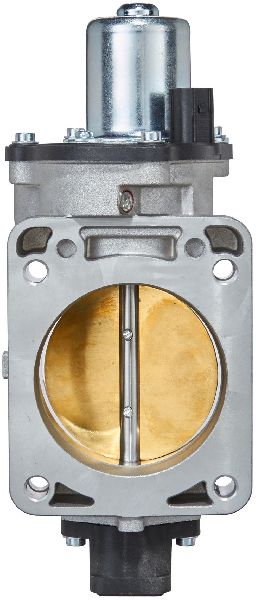
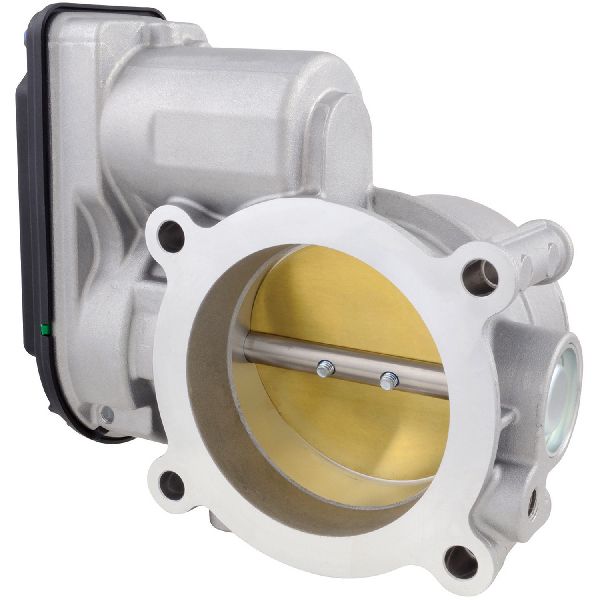
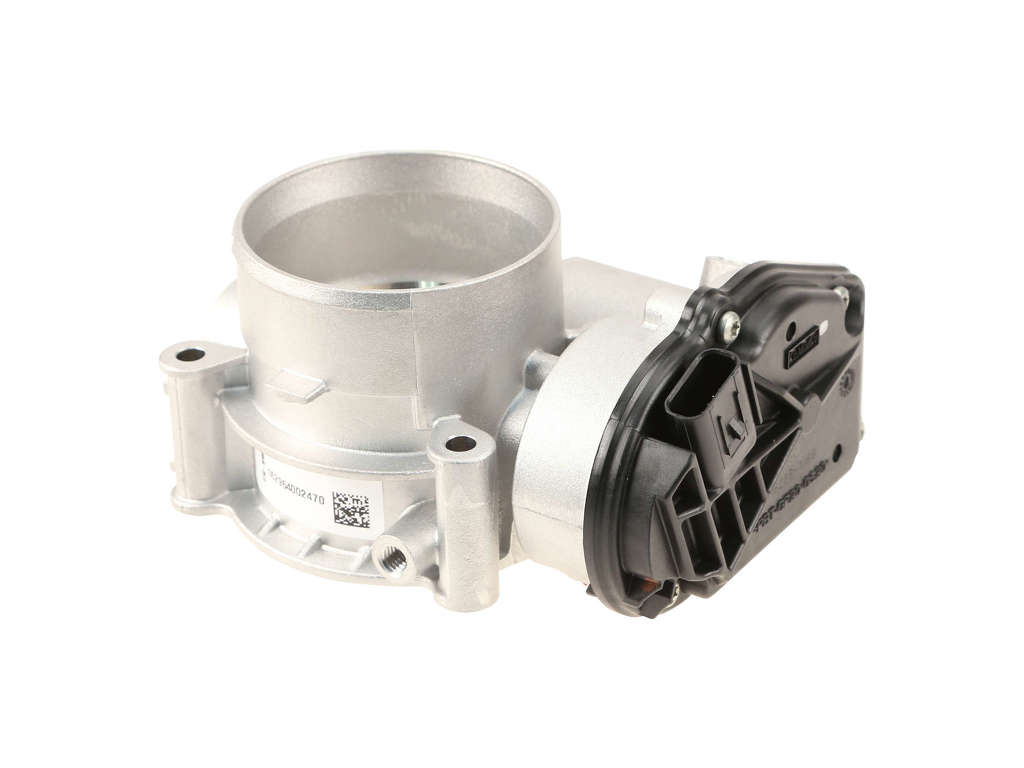
On a 2011-2019 Ford Explorer with the 3.5L EcoBoost engine, code P0121 almost always points to a failing electronic throttle body (ETB). The throttle position sensor (TPS) is integrated into this unit and cannot be replaced separately. The most reliable fix is to replace the entire throttle body assembly, which often resolves symptoms like sudden power loss ('limp mode'), poor acceleration, and rough idle.
- P0121 on a 2011-2019 Explorer almost always means you need a new electronic throttle body.
- Do not attempt to find a separate throttle position sensor; it is integrated into the throttle body assembly.
- Before replacing the throttle body, it's worth spending 30 minutes to inspect and clean it, as carbon buildup can sometimes be the sole cause.
- Driving with this code is risky due to the potential for the vehicle to suddenly lose power and enter 'limp mode'.
What's Unique About the 2011-2019 Ford Explorer
For the fifth-generation Ford Explorer (2011-2019), both the 3.5L EcoBoost and naturally aspirated engines use a 'drive-by-wire' system where the throttle position sensor (TPS) is an integral, non-serviceable part of the electronic throttle body (ETB). This design means that when the sensor fails and triggers a P0121 code, the entire throttle body assembly must be replaced. While this is more costly than a simple sensor swap, it simplifies diagnosis. This issue was common enough that Ford issued Customer Satisfaction Program 16B32 for other models using similar throttle bodies due to internal contamination causing the exact symptoms of P0121. Ford also issued a warranty extension to 10 years/150,000 miles for this part on some affected vehicles.
Generation note: The 2011-2019 year range covers the entire fifth generation of the Ford Explorer. The causes and fixes for P0121 are consistent across this generation for the specified engine, and also apply to the naturally aspirated 3.5L V6.
Symptoms You May Notice
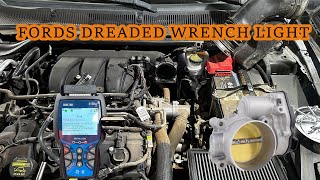
- Check Engine Light or Wrench Light is on
- Vehicle enters 'limp mode' (sudden loss of power)
- Poor or hesitant acceleration
- Rough or unstable idle
- Engine stalling
- Sudden surges in speed
- Harsh or delayed transmission shifting
- Replacing only the throttle position sensor (this is not possible as it's integrated)
- Replacing the accelerator pedal position (APP) sensor (this would typically set different codes, though some owners have mistakenly pursued this path)
Most Likely Causes
- Failing Electronic Throttle Body (ETB) 🔴 High Probability → Shop Fuel Injection Throttle Body The throttle position sensor (TPS) is integrated into the ETB and is a known failure point due to internal electronic contamination or wear, leading to increased electrical resistance. This is the most common reason for P0121 on this platform.
How to confirm: After confirming no wiring issues, the most definitive test is replacing the throttle body. A scan tool can monitor TPS voltage PIDs (TP1, TP2); often, one sensor will show erratic or stuck voltage while the other responds correctly, confirming an internal ETB fault.
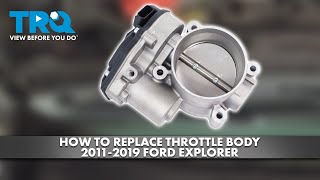
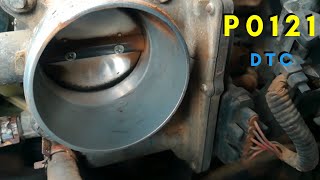
Typical fix: Replace the entire electronic throttle body assembly and the gasket. The Motorcraft OEM part number is often cited as AT4Z-9E926-B or its replacement, TB-12. 🎬 Watch this step-by-step throttle body replacement guide. A throttle relearn procedure should be performed after installation. 🎬 Watch this video to understand the P0121 code and its causes.
Est. part cost: $95-$250 - Dirty or Carbon-Clogged Throttle Body 🟡 Medium Probability → Shop Fuel Injection Throttle Body Carbon and oil from the PCV system can build up around the throttle plate, causing it to stick or not close properly. This can cause the sensor's reading to conflict with the computer's expected value, triggering the code.
How to confirm: Visually inspect the throttle body bore and plate for black, sticky buildup after removing the intake tube. The plate may move sluggishly by hand (with the engine off).
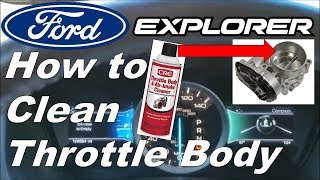
Typical fix: Remove the throttle body and clean it thoroughly with a dedicated throttle body cleaner and a soft cloth. Reinstall with a new gasket. This is often a good first step before replacing the entire unit. 🎬 See how to clean your throttle body to fix a rough idle.
Est. part cost: $5-$20 (for cleaner and gasket) - Damaged Wiring or Connector ⚪ Low Probability Vibrations and heat can cause wiring insulation to become brittle or pins in the connector to become loose over time.
How to confirm: Visually inspect the wiring harness leading to the throttle body for any signs of fraying, melting, or corrosion. Check the connector for loose pins or corrosion. Use a multimeter to check for the correct 5-volt reference and ground at the connector, and test for continuity on the signal wires back to the PCM.
Typical fix: Repair or replace the damaged section of the wiring harness or the connector pigtail.
Est. part cost: $15-$50
Rare But Worth Checking
- Faulty Powertrain Control Module (PCM): This is extremely rare. The PCM should only be suspected after the throttle body, wiring, and all other possibilities have been definitively ruled out.
Diagnosis Steps
- Scan the vehicle for all OBD-II codes. Note any other codes that are present, especially P2111 or P2112.
- Inspect the wiring harness and connector at the electronic throttle body. Look for any loose connections, corrosion, or damage.
- With the engine off, remove the air intake tube from the throttle body. Inspect the throttle bore and plate for heavy carbon buildup.
- If significant buildup is found, clean the throttle body thoroughly. Replace the gasket and reinstall. Clear the codes and perform a test drive.
- If the code returns or the throttle body was clean, use a scan tool to monitor the Throttle Position PIDs (TP1 and TP2). Observe for any erratic, jumping, or non-responsive values as you slowly open and close the throttle by hand (engine off). A smooth, linear response is expected.
- If a PID shows a fault, the issue is most likely the electronic throttle body assembly itself.
- Replace the electronic throttle body with a new unit and a new gasket.
- After replacement, perform a throttle body relearn procedure. This often involves turning the key to the 'on' position for a few minutes, then off, then starting the engine to allow the PCM to learn the new idle and throttle positions. Some sources suggest disconnecting the battery for 15 minutes will also work.
- Clear all codes and perform an extensive test drive to ensure the issue is resolved.
Parts You'll Likely Need
- Electronic Throttle Body Assembly
(OEM #AT4Z-9E926-B (superseded by TB-12))— This is the most common failure. The internal, non-serviceable throttle position sensor fails, requiring replacement of the entire assembly.
Trusted brands: Motorcraft, Standard Motor Products, Spectra Premium, Hitachi, TRQ
OEM price range: $180-$250
Aftermarket price range: $95-$180 - Throttle Body Gasket
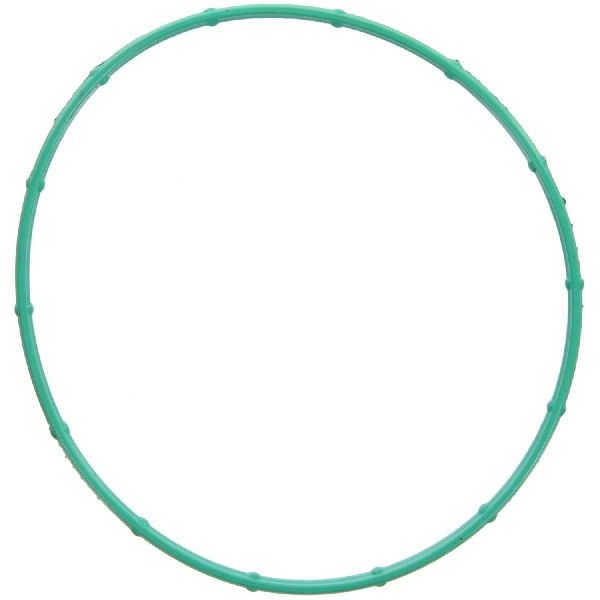
(OEM #Motorcraft CG769)— A new gasket should always be used whenever the throttle body is removed to prevent vacuum leaks.
Trusted brands: Motorcraft, Fel-Pro, Mahle
OEM price range: $10-$20
Aftermarket price range: $5-$15
Related Codes That Often Appear With This One
- P0120 — Indicates a general malfunction in the TPS 'A' circuit.
- P0122 — Indicates the TPS 'A' circuit input is low.
- P0123 — Indicates the TPS 'A' circuit input is high.
- P2111 — Indicates the Throttle Actuator Control System is Stuck Open, often a direct result of the ETB failure.
- P2112 — Indicates the throttle actuator control system is stuck closed, often triggered by the PCM when it detects a fault like P0121.
Technical Service Bulletins (TSBs) & Recalls
- SSM 46085: Revised diagnostic procedures for Electronic Throttle Bodies (ETBs).
- Customer Satisfaction Program 16B32: Covered ETB replacement on various 2015-2016 Ford models due to internal contamination.
- Customer Satisfaction Program 16B23: Covered ETB replacement on 2011-2012 Edge, MKX, and Mustang for the same contamination issue.
Platform-Specific Known Issues
- Ford issued Customer Satisfaction Program 16B32 for other 2015-2016 models with similar engines for ETB contamination issues, highlighting the prevalence of this problem in this era of Ford vehicles. A similar program, 16B23, covered 2011-2012 Edge/MKX/Mustang models.
- Ford also released TSB SSM 46085, which revised the diagnostic procedures for electronic throttle bodies, advising technicians not to use certain PIDs (ETC_ACT and ETC_DSD) for diagnosis, indicating it is a known area of concern.
Mechanic-Grade Diagnostic Values
- TPS 'A' (TP1) and 'B' (TP2) Voltage via Scan Tool — expected: Both sensors should show a smooth, linear voltage increase from approximately 0.5V at idle to 4.5V at wide-open throttle (WOT) with no dropouts or glitches. The two sensors will have opposing or offset voltage sweeps (e.g., one goes 0.5V->4.5V while the other goes 4.5V->0.5V).. Failure: One sensor's voltage is erratic, stuck at a specific value, or does not change smoothly as the throttle is opened. The PCM sets the code when the correlation between the two sensor signals is lost.
- TPS Internal Resistance Check via Multimeter — expected: With the connector unplugged, use a multimeter set to Ohms to find the two pins out of the six that show a change in resistance as you manually move the throttle plate. A smooth, steady change in resistance (e.g., from ~1kΩ to ~2.5kΩ) should be observed.. Failure: No pair of pins shows a smooth change in resistance, the reading jumps erratically, or shows an open circuit (infinite resistance) at any point in the throttle plate's travel. This confirms an internal failure of the TPS potentiometer.
Scan Tool Commands That Help
- Ford IDS (or equivalent professional scanner): Keep Alive Memory (KAM) Reset — This function should be used after replacing the throttle body. It forces the PCM to completely erase its learned adaptive values for fuel trim, idle, and throttle position. This is more thorough than disconnecting the battery and ensures the PCM will properly learn the characteristics of the new throttle body from a clean slate.
Wiring & Ground Locations
- C1580 — The 6-pin electrical connector on the electronic throttle body assembly itself.. This is the primary connection point for all throttle body functions, including the two throttle position sensors (TP1, TP2) and the throttle actuator control motor. A visual inspection for corrosion, pushed-out pins, or damage to the harness at this connector is a critical first step.
- ETB Circuit Ground — A specific ground point (G-number) for the ETB circuit is not readily available in public-facing documentation. However, primary engine-to-chassis ground straps should be inspected for integrity.. A poor ground connection can cause floating reference voltages and erratic sensor readings, mimicking the symptoms of a failed throttle body. While less common than ETB failure, checking major grounds is a valid step if a new throttle body does not resolve the code.
Real Owner Repair Stories
- 1A Auto YouTube Channel (2013 Ford Explorer Limited 3.5L AWD) — Rough idle, poor performance, and a check engine light.
❌ Tried (didn't work) The video presents cleaning as a potential first step but implies replacement is often necessary if cleaning doesn't resolve the issue.
✅ What actually fixed it The video demonstrates a complete replacement of the electronic throttle body assembly to resolve the symptoms. The torque specification for the four 8mm mounting bolts is cited as 89 in-lbs. - NHTSA ODI #10255038 — An owner reported that their vehicle was diagnosed with codes P2104, P0121, and P2112. Technicians pinpointed the issue to the electronic throttle body physically sticking closed, and the problem was resolved by replacing the ETB.
- NHTSA ODI #10286213 — A manufacturer service report for another Ford model noted that codes P0121, P2104, and P2112 were received; the repair involved replacing the throttle body assembly and performing a PCM reflash and power train control module retest.
OEM Part Supersession History
AT4Z-9E926-A→AT4Z-9E926-B— Standard part revision by the manufacturer. The updated part is intended to be a direct replacement.AT4Z-9E926-B→N/A
Heads up: Be cautious of part number BB5Z-9E926-C. While it may look similar, it is typically specified for the naturally aspirated 3.5L Ti-VCT engine, not the 3.5L EcoBoost. Using the wrong part can lead to incorrect performance and codes. Always verify the part number with the vehicle's VIN.
Diagnostic Flowchart
Other Known Issues on This Vehicle
Issues unrelated to this code that are worth knowing about as an owner of this generation:
- Internal Water Pump Failure 🔴 High — Common after 80,000-150,000 miles. Failure can cause coolant to mix with engine oil, leading to catastrophic engine damage. (Ref: No recall in the US, but a known issue subject to class-action lawsuits.)
- Power Transfer Unit (PTU) Overheating/Failure 🔴 High — Common on AWD models. The 'lifetime' fluid is cooked by the nearby exhaust, leading to breakdown and failure. Symptoms include a burning oil/propane smell and grinding noises.
- Timing Chain Stretch & Phaser Rattle on Cold Start 🟠 Medium — More common on earlier (2011-2015) 3.5L EcoBoost engines. A loud rattle for 2-5 seconds on cold start indicates wear. (Ref: Multiple TSBs issued, including 18-2305 and 21-2119, which updated repair procedures to include replacing VCT phasers along with the chain.)
- Carbon Monoxide Leak Into Cabin 🔴 High — Reported in some 2011-2017 models, leading to a major investigation and service campaign (17N03). Caused by unsealed seams or cracks in the exhaust manifold. (Ref: Ford Service Campaign 17N03)
- Cracked Rear Suspension Toe Links 🔴 High — Affected 2011-2017 models, could lead to a loss of steering control. (Ref: Subject of safety recall 19S17.)
Used vs. New Parts: Buying Guide for This Vehicle
When a used part is the smart pick: For this specific repair, buying a used throttle body from a junkyard is NOT recommended. The failure is electronic and age-related, meaning a used part has a high likelihood of failing soon after installation, if it works at all. The cost savings do not outweigh the risk of repeated labor and being stranded.
Donor-vehicle mileage cap: roughly under 60000 miles for the part to have meaningful remaining life.
What to inspect on the donor part:
- If buying used is unavoidable, source from the lowest-mileage vehicle possible.
- Inspect the connector pins for any signs of corrosion or damage.
- Check the throttle plate for excessive carbon buildup, which might indicate a poorly maintained engine.
- Avoid parts from vehicles with signs of a major front-end collision.
OEM-only on this vehicle (don't cheap out):
- Electronic Throttle Body Assembly
Aftermarket brands forum-validated for this vehicle:
- Hitachi is a known OEM supplier for many manufacturers and is generally considered a high-quality alternative if a Motorcraft part is unavailable.
Brands owners have reported issues with on this vehicle:
- Generic, unbranded, or remanufactured units are strongly discouraged by mechanics and forum users. Many have reported these parts failing quickly or being dead-on-arrival, leading to more diagnostic time and repeated repairs.
Documented NHTSA Reports
NHTSA ODI #11014092
An owner reported that while driving, their vehicle was scanned and found to have codes P0100-20 and P0121-20.
NHTSA ODI #10257081
A diagnostic report for a Ford vehicle noted that multiple codes were found during service, including P0121-FF, P2104-FF, and P2112FF, indicating a widespread issue with the throttle control system.
Real Owner Stories
Aggregated from forums and TSBs cited above. Mileages and costs reflect what owners reported in those sources.
2011-2019 Ford Explorer 3.5L EcoBoost V6
Symptoms: The vehicle experienced a sudden loss of power, entering 'limp mode' with the Wrench Light illuminated on the dashboard.
What fixed it: Replacement of the electronic throttle body assembly and gasket, followed by a throttle relearn procedure.
Source hint: Article Context Section: Symptoms and Common Causes
Ford Truck (3.5L EcoBoost Platform)
Symptoms: The owner observed P0121 and P0122 codes. Initial troubleshooting focused on the APP (Accelerator Pedal Position) sensor, but scan tool data showed the throttle position was stuck reading at 99.6%.
What fixed it: The issue was confirmed as an internal TPS failure within the throttle body after performing multimeter testing and monitoring PIDs.
Source hint: Ford Truck Enthusiasts threads
Related OBD-II Codes
Frequently Asked Questions
Is there a specific Ford program that covers the throttle body failure on my 2015 Explorer?
What is the recommended replacement part for the 3.5L EcoBoost throttle body?
My 2012 Explorer is showing P0121; is there a TSB or program for older models?
Are there specific diagnostic PIDs I should avoid using when troubleshooting the ETB on my Explorer?
Can I just clean the throttle body instead of replacing it?
Does the 3.5L EcoBoost require a special procedure after installing a new throttle body?
Helpful Videos
Used OEM Parts in Stock
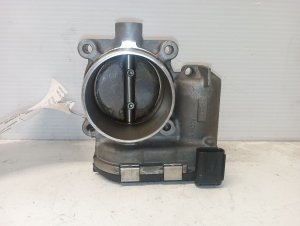
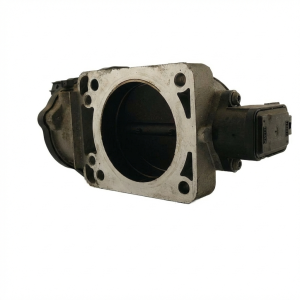
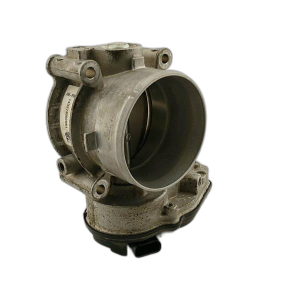
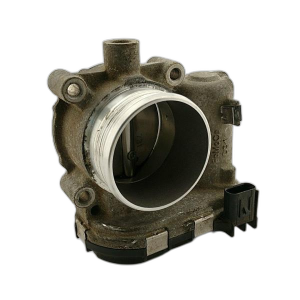
New Aftermarket Parts Available


The information in this article is provided for general reference and educational purposes only. Vehicle specifications, procedures, and part compatibility can vary by production date, trim level, and region. Always consult your vehicle's factory service manual and verify part numbers before purchasing or performing repairs. Safety-critical components such as airbags, seat belts, and braking systems should be installed by a qualified professional.
- Ford Explorer:
- 🧭 Diagnostic Flowchart
- 🎬 Helpful Videos
- 🛍️ Shop This Part
- What's Unique About the 2011-2019 Ford Explorer
- Symptoms You May Notice
- Most Likely Causes
- Rare But Worth Checking
- Diagnosis Steps
- Parts You'll Likely Need
- Related Codes That Often Appear With This One
- Technical Service Bulletins (TSBs) & Recalls
- Platform-Specific Known Issues
- Mechanic-Grade Diagnostic Values
- Scan Tool Commands That Help
- Wiring & Ground Locations
- Real Owner Repair Stories
- OEM Part Supersession History
- Other Known Issues on This Vehicle
- Used vs. New Parts: Buying Guide for This Vehicle
- Documented NHTSA Reports
- NHTSA ODI #11014092
- NHTSA ODI #10257081
- Real Owner Stories
- 2011-2019 Ford Explorer 3.5L EcoBoost V6
- Ford Truck (3.5L EcoBoost Platform)
- Related OBD-II Codes
- Frequently Asked Questions
- 🎟️ Get 5% Off