

P0121 on 2011-2015 GMC Savana: Throttle Position Sensor Causes and Fixes
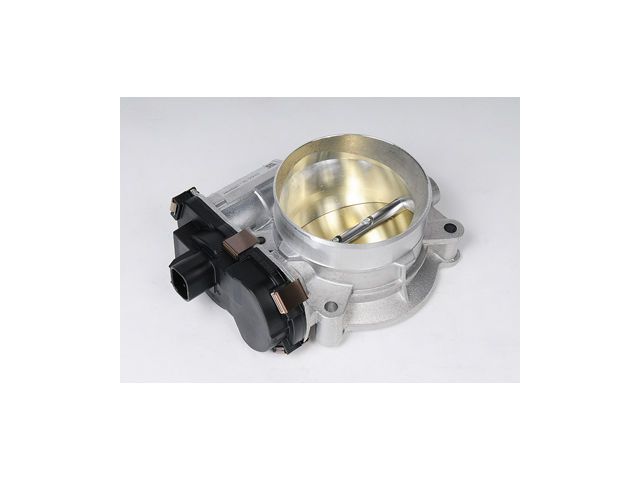
On a 2011-2015 GMC Savana, code P0121 is most often caused by a dirty or failing throttle body assembly, which contains the integrated throttle position sensor (TPS). This will typically trigger the 'Reduced Engine Power' warning and may be accompanied by code P2135. Cleaning the throttle body is a primary diagnostic step, but due to internal electronic failure, complete replacement of the throttle body assembly is the common and most permanent fix, costing around $150-$250 for an OEM part.
- P0121 on a 2011-2015 Savana almost always points to an issue with the electronic throttle body.
- The most common symptom is the 'Reduced Engine Power' message, which severely limits vehicle performance.
- First, try cleaning the throttle body, as carbon buildup can cause the code. This is a low-cost first step.
- If cleaning doesn't work, the entire throttle body assembly likely needs to be replaced. This is a common repair and is considered the definitive fix.
- Always inspect the wiring and connector to the throttle body for damage before replacing parts.
What's Unique About the 2011-2015 Gmc SAVANA
On these GMC Savana vans and their platform-mates (like the Chevrolet Express), P0121 is a very common issue, often related to high mileage as noted in GM's own Technical Service Bulletin PIP4578B. The problem is frequently tied to the entire electronic throttle body assembly, where the sensor is integrated and not separately replaceable. While carbon buildup in the throttle body can cause the code, it's often an early sign of the internal electronics of the assembly beginning to fail. This makes replacement a more permanent solution than just cleaning, a fact corroborated by numerous owner experiences in online forums.
Diagnostic Flowchart
Tap your situation to follow the diagnostic path that matches what you're seeing on this vehicle.
Symptoms You May Notice
- Check Engine Light is on
- "Reduced Engine Power" message on the dashboard
- Poor, hesitant, or delayed acceleration
- Engine stalling, especially at idle or when coming to a stop
- Rough or surging idle
- Unpredictable or harsh automatic transmission shifting
- Difficulty starting the engine
- Vehicle enters limp mode with very limited speed 🎬 Watch: Troubleshooting a Savana with Reduced Engine Power and starting issues.
- Replacing the accelerator pedal assembly when the fault lies with the throttle body at the engine.
Most Likely Causes
- Dirty Throttle Body 🔴 High Probability → Shop Fuel Injection Throttle Body Over time, carbon and grime from the PCV system build up in the throttle body, restricting the movement of the throttle plate. This can cause the plate to stick or move slowly, leading to a mismatch between the sensor's reading and the PCM's expectation, triggering P0121.
How to confirm: Visually inspect the throttle body bore and plate for black carbon buildup after removing the air intake duct. The buildup is often thickest right where the plate seats at idle.
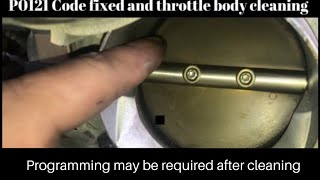
Typical fix: Clean the throttle body thoroughly with a dedicated throttle body cleaner and a soft brush or rag. Manually open the plate (with ignition off) to clean all surfaces. A throttle relearn procedure is highly recommended afterward to reset the learned idle values.
Est. part cost: $5-$15 - Failing Throttle Body Assembly 🔴 High Probability → Shop Fuel Injection Throttle Body The Throttle Position Sensor (TPS) is integrated into the throttle body on these vans and cannot be serviced separately. Internal wear and tear on the sensor's electronic components is a known failure point, as acknowledged by GM TSBs. On high-mileage vehicles, this is a very common cause, often presenting intermittently at first.
How to confirm: If cleaning the throttle body does not resolve the issue and the code returns, the assembly is the likely culprit. A scan tool can monitor the TPS1 and TPS2 voltage; erratic, jumpy, or non-linear readings while slowly opening the throttle indicate a bad sensor. The two sensors should also show a correlating sweep.
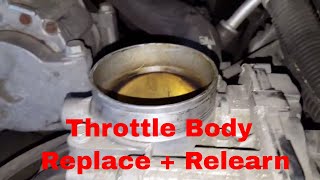
Typical fix: Replace the entire throttle body assembly. 🎬 See this walkthrough on how to change the throttle body. This is often a more permanent fix than just cleaning. An idle relearn procedure is required after replacement.
Est. part cost: $150-$250 - Wiring or Connector Issue 🟡 Medium Probability The wiring harness leading to the throttle body is exposed to engine heat and vibration, which can cause wires to fray or the connector pins to develop 'fretting corrosion'. This light corrosion creates intermittent signal loss. The pigtail connector itself can also fail.
How to confirm: Visually inspect the wiring harness for any signs of damage, chafing, or melting, especially near the connector. Unplug the connector and check for corrosion, moisture, or backed-out pins. Wiggle the harness with the engine running (if possible) to see if it triggers the fault.
Typical fix: Repair the damaged section of wire or replace the connector pigtail. Applying dielectric grease to the connector pins can help prevent future corrosion.
Est. part cost: $15-$40
Rare But Worth Checking
- Faulty Accelerator Pedal Position (APP) Sensor: → Shop Accelerator Pedal Assembly The PCM compares the APP sensor signal (your foot's input) to the TPS signal (the throttle's response). If the APP sensor is sending faulty data, it can make the TPS seem incorrect, triggering P0121. This is less common but worth considering if a new throttle body doesn't fix the issue.
- Faulty Powertrain Control Module (PCM): This is extremely rare. The PCM itself can fail, but this should only be considered after all other possibilities, including wiring integrity tests, have been exhaustively ruled out by a professional.
Diagnosis Steps
- Read all diagnostic trouble codes with an OBD-II scanner. Note any other codes that are present, especially P2135, P0068, or P1516.
- Inspect the wiring harness and connector at the throttle body. Look for any loose connections, corrosion, damaged wires, or signs of moisture.
- Remove the air intake tube from the throttle body. Inspect the throttle bore and plate for heavy carbon buildup.
- Thoroughly clean the throttle body using a dedicated cleaner and a soft cloth. Manually move the plate to clean all surfaces.
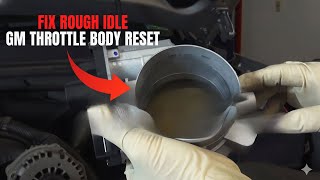
- Reconnect the intake, clear the codes, and perform a throttle relearn procedure. This can sometimes be done without a scan tool by following a specific sequence of ignition cycles and idling periods. 🎬 Watch: How to manually reset and relearn your electronic throttle.
- If the code returns, use a scan tool with live data capability to monitor the voltage from TPS1 and TPS2. The voltage should change smoothly and linearly as you slowly press the accelerator pedal (e.g., from ~0.5V to ~4.5V).
- If the voltage readings are erratic, jumpy, or do not change smoothly, the throttle body assembly is faulty and needs to be replaced.
- If TPS voltages appear normal, perform a wiring integrity test. This can involve using a multimeter to check for continuity and shorts, or jumping the 5V reference to the signal wire at the connector to see if the PCM reads a full 5V, confirming the wire is intact.
Parts You'll Likely Need
- Fuel Injection Throttle Body
(OEM #12670839 (Supersedes 217-3151))— This is the most common fix because the throttle position sensor is integrated into the assembly. A failure of the sensor or actuator motor requires replacing the entire unit. The ACDelco part number is 217-3151, which corresponds to GM Genuine part 12670839.
Trusted brands: ACDelco (GM Genuine), Standard Motor Products, Hitachi, Dorman, Bosch
OEM price range: $200-$250
Aftermarket price range: $100-$180
Related Codes That Often Appear With This One
- P2135 — This code specifically indicates a correlation error between the two throttle position sensors (TPS1 and TPS2) within the throttle body. Its presence alongside P0121 strongly points to a failing throttle body assembly.
- P0068 — Indicates a conflict between the MAP sensor, MAF sensor, and throttle position. This code often appears with P0121 as the PCM cross-checks these sensors for rationality, a scenario explicitly mentioned in GM TSB PIP4578B.
- P1516, P2101 — These codes relate to the Throttle Actuator Control (TAC) module or motor performance, which is part of the electronic throttle body. They often accompany P0121 when the throttle body itself is failing, as noted in TSB PIP4578B.
Technical Service Bulletins (TSBs) & Recalls
- PIP4578B: Addresses idle surge, reduced engine power, and DTCs including P0121, P0068, P1516, and P2101 on high mileage vehicles due to carbon buildup and the need for an idle learn reset.
Platform-Specific Known Issues
- GM TSB PIP4578B: High Mileage Carbon Buildup: A GM Technical Service Bulletin (PIP4578B) specifically mentions that DTC P0121, along with idle surge and reduced power mode, can be experienced on high-mileage vehicles. It explains that as carbon builds up, the PCM learns to open the throttle plate more to compensate. If the throttle body is cleaned or the PCM is reprogrammed without performing an 'idle learn reset', the old compensation values can cause new problems and codes. This bulletin confirms the direct link between carbon, the P0121 code, and the necessity of the relearn procedure.
- Throttle Body Relearn Procedure is Critical: → Shop Fuel Injection Throttle Body After cleaning or replacing the throttle body, a 'relearn' procedure is necessary. Failure to do so can cause a high idle, stalling, or an immediate return of the P0121 code because the PCM is still using the learned values from the old/dirty part. The procedure can often be done without a scan tool by idling the engine for specific intervals (e.g., idle for 3 minutes, ignition off for 60 seconds, idle for another 3 minutes).
Mechanic-Grade Diagnostic Values
- TPS 5-Volt Reference Wire Voltage — expected: 5.0 Volts DC (steady when opening/closing throttle). Failure: Voltage significantly lower or higher than 5.0V, or voltage that fluctuates.
- TPS Ground Wire Voltage — expected: Less than 100 millivolts (0.1V DC). Failure: Voltage reading higher than 100mV indicates a poor ground connection.
- TPS Signal Wire Voltage (Key On, Engine Off) — expected: Approx. 0.5V at closed throttle, sweeping smoothly up to approx. 4.5V at wide-open throttle.. Failure: Voltage is erratic, jumps, has dead spots, or does not correspond to throttle plate movement. A reading of 0V with the sensor connected points to a bad sensor or a short to ground.
- Scan Tool - Throttle Position Percentage at Idle — expected: Typically below 15-20% after cleaning and relearn.. Failure: A high reading at idle (e.g., 26-27%) can indicate excessive carbon buildup preventing the throttle plate from closing fully. After cleaning, this value should drop significantly (e.g., to 7%).
Scan Tool Commands That Help
- GM GDS2/Tech2 or equivalent professional scan tool: Idle Learn Reset / Throttle Learn — This function must be used after cleaning or replacing the throttle body. It clears the old learned airflow values from the PCM, preventing a high idle or the immediate return of P0121. The scan tool command is the most reliable way to perform the relearn.
- Scan Tool with Live Data: Signal Circuit Integrity Test (Manual) — If the TPS signal reads 0V, this test confirms if the wiring to the PCM is intact. Unplug the TPS, use a jumper wire to connect the 5V reference pin to the signal wire pin in the harness connector. The scan tool should now display 5V. If it does, the wiring is good and the sensor is bad.
Wiring & Ground Locations
- Throttle Body Connector (Typical GM) — On the throttle body assembly, connected to the integrated TPS.. This is the primary connection point for the sensor. The pins can suffer from fretting corrosion, and the pigtail is subject to heat and vibration damage. A typical pinout includes a 5V reference (Yellow), a low reference/ground (Black), and a signal wire (Blue).
- G103 — On the front of the passenger side (right) cylinder head.. This is a critical engine ground. While some sources show it on the cowl for other GM vehicles, on V8 trucks/vans of this era it is often on the engine itself. A poor connection here can cause various sensor and module issues, including erratic TPS signals.
- G102 — On the left rear of the engine block.. This ground point serves the ignition coils and is part of the engine's main grounding scheme. A loose or corroded G102 can introduce electrical noise that may affect sensitive sensor readings.
- G104 — At the rear of the left (driver's side) engine head. A ground strap often connects from here to the firewall (G108).. This ground is essential for the Engine Control Module (ECM). A service bulletin for other GM platforms notes that poor grounding at G103/G104 can cause erratic module behavior and set various DTCs.
Real Owner Repair Stories
- YouTube channel 'Oz Mechanics' (Chevrolet truck (similar GM V8 platform)) — Check Engine Light with code P0121.
❌ Tried (didn't work) Initial diagnosis showed a high throttle position percentage (26-27%) at idle via scan tool, indicating a problem.
✅ What actually fixed it The mechanic removed the air intake, thoroughly cleaned the carbon buildup from the throttle body and plate, and reassembled. After cleaning, the idle TPS reading dropped to 16% and then settled to 7% after performing an 'Idle Learn Reset' with a scan tool, which fixed the issue and cleared the code. - YouTube channel 'Garage Sport Labs' (2012 GMC Savana) — Dashboard messages: "Engine Reduced Power", "Repair Throttle", "Starting Disabled".
✅ What actually fixed it The video demonstrates replacing only the electronic side cover of the throttle body (Dorman part TH445), which contains the TPS sensor contacts. This was presented as a lower-cost alternative to replacing the entire throttle body assembly.
When the Usual Fixes Don't Work
- While replacing the entire throttle body assembly is the most common and recommended fix, at least one documented repair on a 2012 Savana involved replacing only the electronic side cover of the throttle body (which contains the TPS contacts) with an aftermarket part (Dorman TH445). This suggests that in some cases, a full mechanical replacement may not be necessary if the failure is confined to the sensor electronics and the throttle plate/motor are in good condition.
OEM Part Supersession History
12627217, 12669073→12670839— Standard part design updates by GM to integrate new materials and technologies.
Heads up: The part number 12670839 is listed for many 4-cylinder GM engines, not the V8s in the Savana. While the pass 2 information is correct about the ACDelco 217-3151 being a common part, the specific GM cross-reference 12670839 appears incorrect for this V8 application. Technicians must verify the correct throttle body part number by VIN.
Helpful Videos

Used OEM Parts in Stock
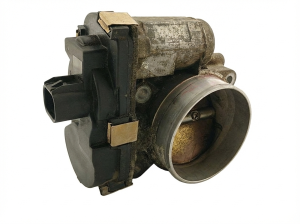
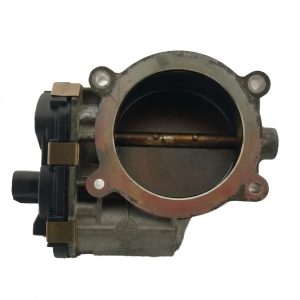
New Aftermarket Parts Available

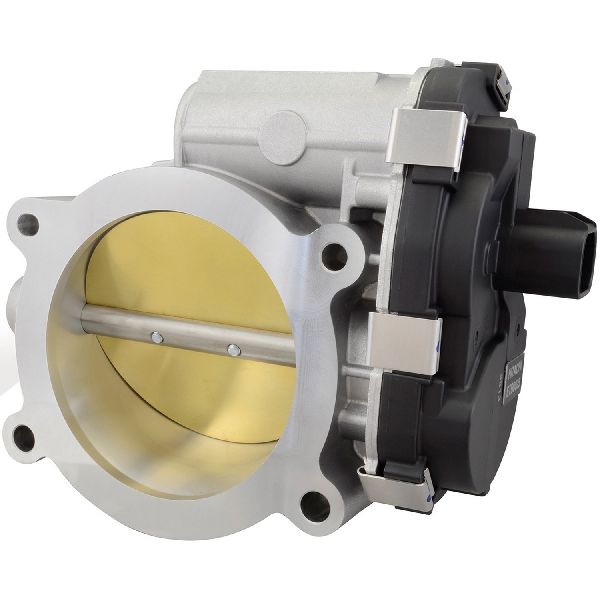
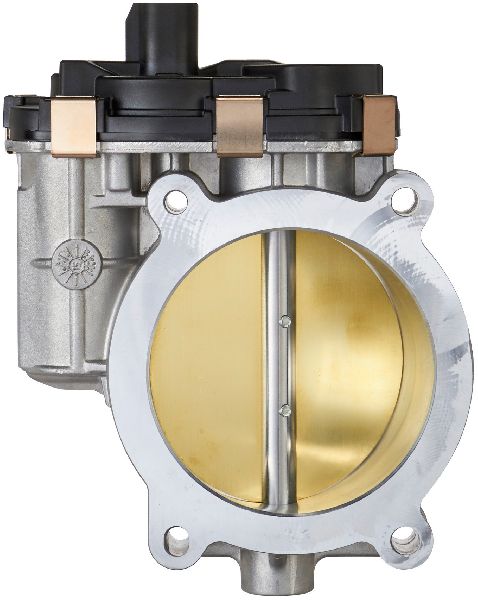


The information in this article is provided for general reference and educational purposes only. Vehicle specifications, procedures, and part compatibility can vary by production date, trim level, and region. Always consult your vehicle's factory service manual and verify part numbers before purchasing or performing repairs. Safety-critical components such as airbags, seat belts, and braking systems should be installed by a qualified professional.
- Gmc SAVANA:
- 🧭 Diagnostic Flowchart
- 🎬 Helpful Videos
- 🛍️ Shop This Part
- What's Unique About the 2011-2015 Gmc SAVANA
- Symptoms You May Notice
- Most Likely Causes
- Rare But Worth Checking
- Diagnosis Steps
- Parts You'll Likely Need
- Related Codes That Often Appear With This One
- Technical Service Bulletins (TSBs) & Recalls
- Platform-Specific Known Issues
- Mechanic-Grade Diagnostic Values
- Scan Tool Commands That Help
- Wiring & Ground Locations
- Real Owner Repair Stories
- When the Usual Fixes Don't Work
- OEM Part Supersession History
- 🎟️ Get 5% Off