

P0121 on 2017-2022 Honda CR-V: Throttle Position Sensor Causes and Fixes
On a 2017-2022 Honda CR-V, code P0121 is almost always caused by a failed throttle position sensor. Because the sensor is integrated into the electronic throttle body, the entire assembly must be replaced. The fix requires the new part and an idle relearn procedure.
- P0121 on a 2017-2022 CR-V almost always means the entire electronic throttle body assembly needs to be replaced.
- The throttle position sensor (TPS) is not sold as a separate part for this vehicle.
- Before replacing parts, always check the wiring and connector at the throttle body for damage.
- After replacing the throttle body, you must perform an idle relearn procedure for the engine to idle correctly.
- Do not confuse this issue with a faulty accelerator pedal sensor, which has its own codes.
What's Unique About the 2017-2022 Honda CR-V
On this generation of Honda CR-V, like most modern Hondas, the throttle position sensor (TPS) is not a separate, replaceable part. It is built directly into the electronic throttle body assembly. This design means that when the sensor fails electronically and triggers a P0121 code, the only solution is to replace the entire throttle body. While cleaning a dirty throttle body can solve some drivability issues, it will not fix the internal electronic failure that causes this specific code.
Symptoms You May Notice
- Check Engine Light is on
- Multiple other warning lights may illuminate (Brake System, Power Steering, etc.)
- Poor or hesitant acceleration
- Engine stalling, especially at idle or low speeds
- Unstable or fluctuating engine RPM
- Vehicle enters 'limp mode' with severely reduced power
- Sudden surges or loss of power
- Replacing the Accelerator Pedal Position (APP) sensor. P0121 specifically points to the sensor at the throttle body, not the one connected to the gas pedal, which has its own set of codes (e.g., P2138).
- Only cleaning the throttle body. While a dirty throttle body can cause idle and hesitation issues, cleaning alone will not fix an internal electronic sensor failure that triggers P0121.
Most Likely Causes
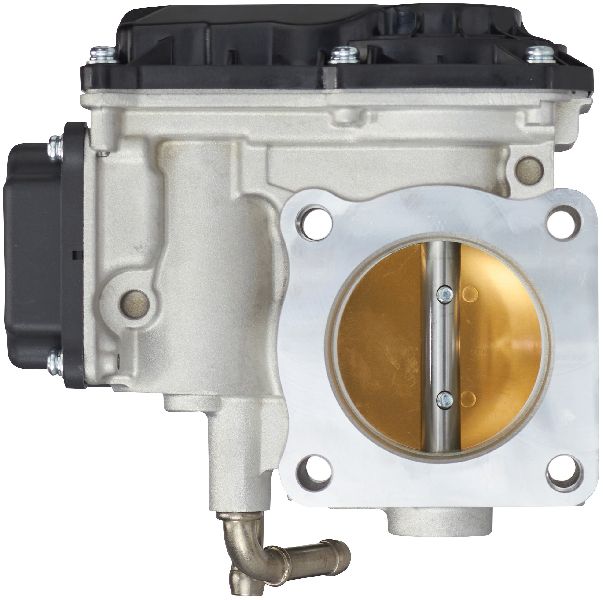
- Faulty Electronic Throttle Body Assembly 🔴 High Probability → Shop Fuel Injection Throttle Body The throttle position sensor (TPS) is integrated into the assembly and is a common point of electronic failure. It cannot be replaced separately, a design consistent across modern Hondas with the 1.5T and 2.4L engines.
How to confirm: Using a scan tool with live data, monitor the 'TP Sensor A' voltage with the key on, engine off. If the voltage is erratic, has dead spots, or does not change smoothly from ~0.5V to ~4.5V as the accelerator is pressed, the sensor inside the assembly has failed.
Typical fix: Replace the entire throttle body assembly. After replacement, an idle relearn procedure must be performed.
Est. part cost: $90-$280 - Damaged Wiring or Poor Connection ⚪ Low Probability
How to confirm: Visually inspect the wiring harness and the 6-pin connector at the throttle body for any signs of chafing, corrosion, moisture, or bent pins. A multimeter can be used to check for continuity and proper voltage at the connector.
Typical fix: Repair the damaged section of the wiring harness or clean/replace the connector.
Est. part cost: $5-$50
Rare But Worth Checking
- Faulty Powertrain Control Module (PCM): This is extremely rare. The PCM should only be considered after all other possibilities, including the throttle body and wiring, have been definitively ruled out.
Diagnosis Steps
- Connect an OBD-II scanner to confirm the P0121 code and check for any other related codes.
- Inspect the electrical connector and wiring harness going to the throttle body. Look for loose connections, corrosion, or physical damage.
- Use the scanner's live data function to observe the Throttle Position Sensor 'A' voltage. With the key on and engine off, the voltage should be around 0.5 volts at idle (pedal released) and sweep smoothly up to about 4.5 volts at wide-open throttle (pedal fully pressed).
- If the voltage reading is jumpy, has dead spots, or is stuck at a specific value, the sensor has failed and the throttle body assembly needs to be replaced.
- If the wiring is confirmed to be good but the live data is incorrect, the throttle body assembly needs to be replaced.
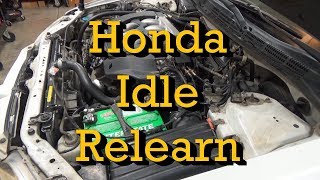
- After replacing the throttle body, perform an idle relearn procedure. This can often be done without a scan tool. 🎬 Watch: How to perform the Honda idle relearn procedure
- a. Turn off all electrical loads (A/C, radio, lights).
- b. Start the engine and hold the RPM at 3,000 until the radiator fan turns on (or coolant temp reaches ~194°F / 90°C).
- c. Let the engine idle with no loads for at least 5-10 minutes. Do not count time when the radiator fan is running.
Parts You'll Likely Need
- Electronic Throttle Body Assembly
(OEM #16400-59B-003 (for 1.5L Turbo), 16400-5A2-A02 (for 2.4L))— This is the primary fix because the throttle position sensor (TPS) that causes the code is integrated into this assembly and is not sold separately.
Trusted brands: Honda (OEM), Hitachi (Often the OEM manufacturer), Spectra Premium, Standard Motor Products
OEM price range: $170-$280
Aftermarket price range: $90-$180
Related Codes That Often Appear With This One
- P0123 — This is the code for 'Throttle Position Sensor 'A' Circuit High Input,' the counterpart to P0121, indicating a failure within the same sensor assembly.
- P2135 — This code for 'Throttle/Pedal Position Sensor/Switch A/B Voltage Correlation' indicates a disagreement between the two internal TPS sensors, pointing directly to a failing throttle body unit.
- P0068 — This code for 'MAP/MAF - Throttle Position Correlation' can be triggered when the TPS signal is illogical compared to the Manifold Absolute Pressure sensor reading.
Technical Service Bulletins (TSBs) & Recalls
- Honda TSB 18-114 / 18-124: Addresses the oil dilution issue in 2017-18 1.5T models. The repair procedure explicitly requires technicians to 'Reset the throttle position learned values, and do the PCM idle learn procedure,' linking engine control software updates to the throttle system.
Platform-Specific Known Issues
- The 1.5L Turbo engine in 2017-2018 models was notorious for fuel diluting the engine oil, especially in cold climates. This led to Honda issuing TSBs (18-114, 18-124) and a warranty extension. The fix involves software updates and sometimes an A/C control unit replacement. Notably, the TSB procedure includes 'Reset the throttle position learned values'.
- A safety recall (NHTSA Campaign 21V215000, Honda TSB 21-031) was issued for the fuel pump motor on some 2018-2019 CR-V models, which could cause stalling, a symptom also seen with P0121. It is important to check VIN eligibility for this separate recall.
- Some later models (2022+) are part of a NHTSA investigation into 'sticky steering' where steering effort can suddenly increase. This is an unrelated electronic power steering (EPS) issue.
Mechanic-Grade Diagnostic Values
- Throttle Position Sensor (TPS) 'A' Signal Voltage — expected: Approximately 0.5V at closed throttle (idle) and sweeps smoothly to ~4.5V at wide-open throttle (WOT).. Failure: Voltage readings that are jumpy, have dead spots, are stuck, or do not correspond to the throttle plate's movement.
- TPS Reference Voltage — expected: 5V +/- 0.5V at the connector.. Failure: Significantly lower or higher voltage, or no voltage, points to a wiring or PCM issue, not necessarily the sensor itself.
- DBW (Drive-By-Wire) Stuck Ratio — expected: Should be under 20% on a Honda-specific scan tool.. Failure: A value over 20% is a strong indication of carbon buildup inside the throttle body, which can cause performance issues even if it doesn't trigger P0121 directly.
Scan Tool Commands That Help
- Honda HDS (or compatible high-end scanner): ETCS (TAC) TEST > TP POSITION CHECK — This function is used to formally clear the throttle position (TP) learned values from the PCM. This is the dealer-level method for resetting the throttle body after cleaning or replacement, ensuring the subsequent idle relearn procedure is effective.
Wiring & Ground Locations
- G101 — A primary engine ground, commonly located on the engine block, on or near the thermostat housing.. A loose or corroded G101 ground can cause a wide array of sensor and PCM-related problems, including the incorrect voltage readings that trigger P0121. It's a fundamental check for any electronic fault.
- Throttle Body Connector — A 6-pin connector plugged directly into the electronic throttle body assembly, located on the back side of the 1.5T engine.. This is the direct connection for the TPS. Checking for pin integrity, moisture, and harness damage here is the first step in ruling out a simple connection issue before condemning the entire throttle body.
- Engine to Chassis Ground — There are multiple ground straps. One key ground is from the transmission to the chassis, and another from the fender to the engine.. Owners have noted these smaller ground wires can become corroded and green ('crusty green'), leading to poor electrical grounding for the entire engine management system. Cleaning or replacing these grounds can solve mysterious electronic issues.
OEM Part Supersession History
16400-5A2-A01→16400-5A2-A02— Undocumented, but typically for minor manufacturing improvements or supplier changes.
Heads up: The new part number (A02) fully replaces the old one (A01) and is backward compatible.
Model Year Variations Within This Range
- 2017-2019 (LX Trim): Models with the 2.4L K24W engine use throttle body part number 16400-5A2-A02.
- 2017-2022 (All trims with 1.5T): Models with the 1.5L Turbo L15B7 engine use throttle body part number 16400-59B-003.
Diagnostic Flowchart
Other Known Issues on This Vehicle
Issues unrelated to this code that are worth knowing about as an owner of this generation:
- Engine Oil Dilution (1.5L Turbo) 🔴 High — Common on 2017-2018 models, especially in cold climates with short trip usage. Less frequent on 2019+ models after software updates. (Ref: Honda TSB 18-114, 18-124; Warranty Extension)
- Sticky Steering 🔴 High — Affects some 2022 and newer models. NHTSA is investigating this issue (EA23003) which can cause momentary difficulty in steering at highway speeds. (Ref: Honda TSB 24-052 (for 2023+ models), NHTSA Investigation EA23003)
- Inadvertent Automatic Emergency Braking (AEB) 🔴 High — Subject of a large-scale NHTSA investigation (Engineering Analysis) across nearly 3 million 2017-2022 CR-V and Accord models. (Ref: NHTSA Engineering Analysis)
- Infotainment System Glitches 🟠 Medium — Commonly reported issues include screen blackouts, unresponsiveness, and random beeping. Often requires a system reboot or dealer software update.
- Fuel Injector Failure (1.5L Turbo) 🟠 Medium — Can cause misfires, rough idle, and trigger a cascade of warning lights. Some owners report this can lead to head gasket issues. (Ref: Warranty extension for some VINs.)
- Rear Differential Seizure (AWD Models) 🟠 Medium — NHTSA investigated reports of rear differentials locking up on 2018-2022 models, potentially causing a loss of power. (Ref: NHTSA Investigation (closed))
Used vs. New Parts: Buying Guide for This Vehicle
When a used part is the smart pick: A used OEM throttle body from a low-mileage donor vehicle can be a cost-effective and reliable alternative to a new aftermarket part. Since the failure is electronic, the primary risk is the unknown remaining lifespan of the sensor.
Donor-vehicle mileage cap: roughly under 60000 miles for the part to have meaningful remaining life.
What to inspect on the donor part:
- Verify the part number on the donor part matches your engine (1.5T vs 2.4L).
- Inspect the electrical connector pins to ensure they are straight, clean, and free of corrosion.
- Gently move the butterfly valve by hand; it should move smoothly without any sticking or binding.
- Avoid units that are excessively caked in carbon, as this may indicate high mileage or other engine issues on the donor car.
OEM-only on this vehicle (don't cheap out):
- While not strictly 'OEM-only', technicians strongly recommend using a genuine Honda or Hitachi (the typical OEM supplier) part over cheaper aftermarket alternatives, which may have a higher failure rate or cause calibration issues.
Aftermarket brands forum-validated for this vehicle:
- Hitachi (Often the OEM supplier)
- Spectra Premium
Brands owners have reported issues with on this vehicle:
- Unbranded, 'white-box' parts from online marketplaces are a significant gamble and may fail prematurely.
Real Owner Stories
Aggregated from forums and TSBs cited above. Mileages and costs reflect what owners reported in those sources.
2017 Honda CR-V
Symptoms: The vehicle hesitates even when pushing the gas pedal consistently or down all the way; owner reported fear for personal safety due to lack of throttle response.
What fixed it: Throttle body replacement (implied by failure mode and symptoms matching P0121).
Source hint: NHTSA Complaint Database
2019 Honda Accord 1.5T
Symptoms: Vehicle entered 'limp mode' with severely reduced power.
What fixed it: Throttle body replacement.
Source hint: Reddit (r/CRV, r/mechanicadvice)
2017-2022 Honda CR-V
Symptoms: Sudden appearance of multiple warning lights ('Christmas tree dash'), limp mode, and stalling.
What fixed it: Throttle body replacement; owners confirmed the integrated part cannot be serviced separately.
Source hint: crvownersclub.com
Related OBD-II Codes
Frequently Asked Questions
Does the oil dilution TSB 18-114 for my 2017 CR-V 1.5T involve the throttle system?
Can I just replace the Throttle Position Sensor (TPS) on my 2018 CR-V to fix P0121?
Is there a recall for the stalling issues I'm experiencing alongside the P0121 code?
What is the 'Christmas tree dash' mentioned by other CR-V owners regarding this code?
How do I perform the idle relearn on my CR-V after replacing the throttle body?
Should I use an aftermarket throttle body for my 1.5T engine?
Helpful Videos
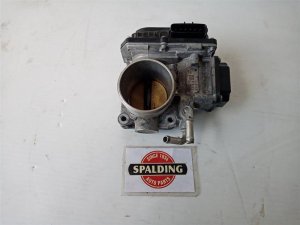
Used OEM Parts in Stock
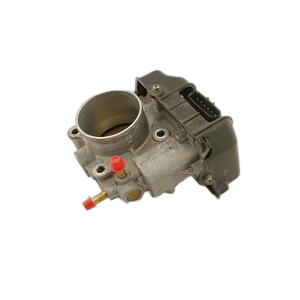
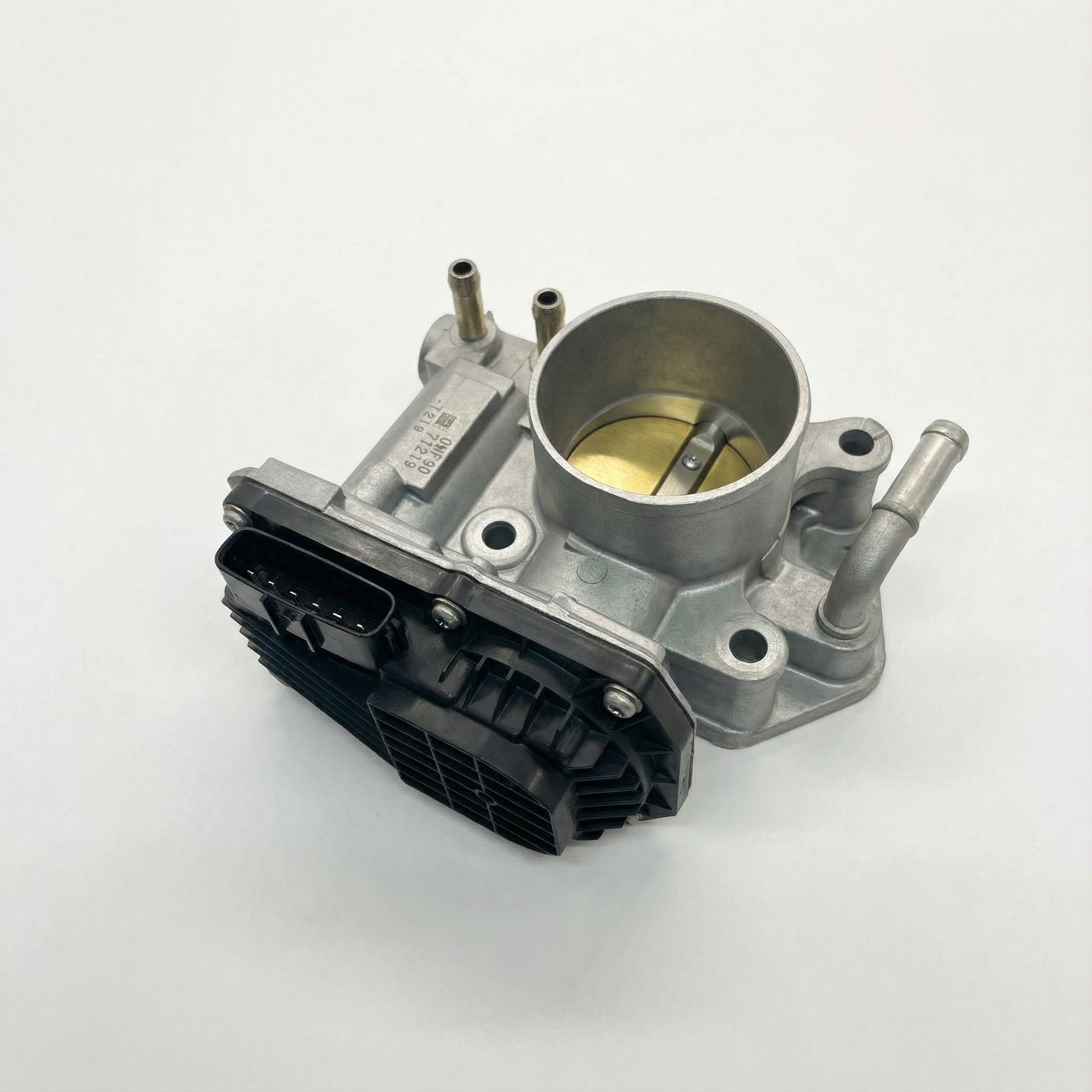
New Aftermarket Parts Available

The information in this article is provided for general reference and educational purposes only. Vehicle specifications, procedures, and part compatibility can vary by production date, trim level, and region. Always consult your vehicle's factory service manual and verify part numbers before purchasing or performing repairs. Safety-critical components such as airbags, seat belts, and braking systems should be installed by a qualified professional.
- Honda CR-V:
- 🧭 Diagnostic Flowchart
- 🎬 Helpful Videos
- 🛍️ Shop This Part
- What's Unique About the 2017-2022 Honda CR-V
- Symptoms You May Notice
- Most Likely Causes
- Rare But Worth Checking
- Diagnosis Steps
- Parts You'll Likely Need
- Related Codes That Often Appear With This One
- Technical Service Bulletins (TSBs) & Recalls
- Platform-Specific Known Issues
- Mechanic-Grade Diagnostic Values
- Scan Tool Commands That Help
- Wiring & Ground Locations
- OEM Part Supersession History
- Model Year Variations Within This Range
- Other Known Issues on This Vehicle
- Used vs. New Parts: Buying Guide for This Vehicle
- Real Owner Stories
- 2017 Honda CR-V
- 2019 Honda Accord 1.5T
- 2017-2022 Honda CR-V
- Related OBD-II Codes
- Frequently Asked Questions
- 🎟️ Get 5% Off