

P0121 on 2007-2017 Jeep Compass: Throttle Position Sensor Fault Causes and Fixes
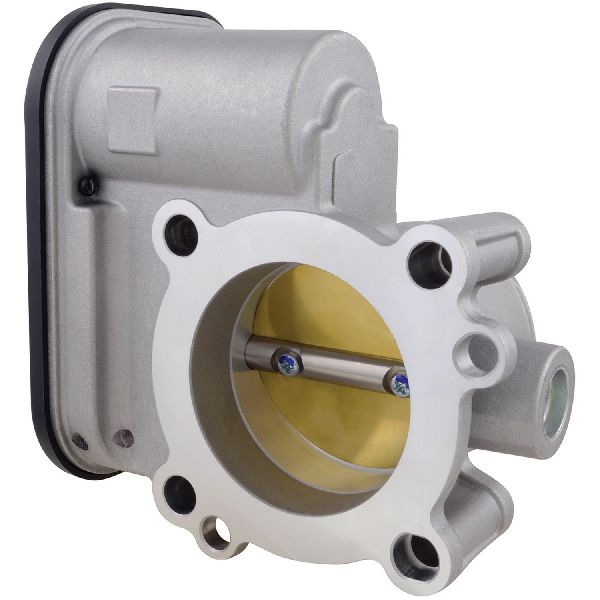
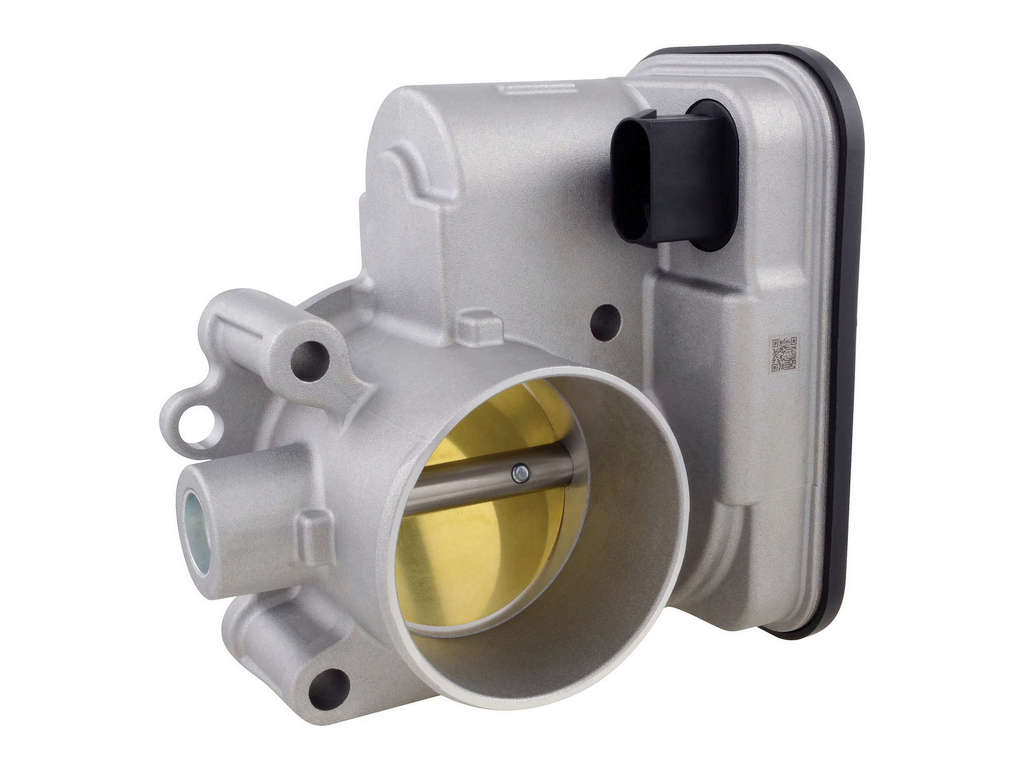
On a 2007-2017 Jeep Compass, code P0121 almost always indicates a failing electronic throttle body. The throttle position sensor (TPS) is integrated into it and not sold separately. The most common fix is replacing the entire throttle body assembly. Expect to pay $150-$300 for the part.
- P0121 on a 2007-2017 Jeep Compass almost always points to a faulty electronic throttle body.
- The throttle position sensor (TPS) is built into the throttle body and cannot be replaced separately.
- The root cause is often a mechanical failure of plastic gears inside the throttle body, not just an electronic sensor failure.
- Symptoms are often severe, including the vehicle entering a low-power 'limp mode' and displaying a red lightning bolt on the dash.
- Before replacing the throttle body, always check its electrical connector and wiring for damage, as this can be a much cheaper fix.
- After replacing the throttle body, a throttle relearn procedure is necessary, which can often be performed without a scan tool.
What's Unique About the 2007-2017 Jeep Compass
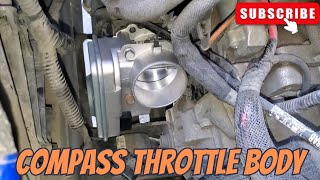
On the 2007-2017 Jeep Compass, like many Chrysler/Jeep products of this era, the throttle position sensor (TPS) is not a separate, replaceable part. It is integrated directly into the electronic throttle body assembly. This design means that a failure of the internal sensor, or more commonly, the plastic gears that operate the throttle plate, requires the replacement of the entire throttle body unit. This is the most common reason for this code to appear.
Generation note: The 2007-2017 range covers the first generation (MK) of the Jeep Compass. While the P0121 code has the same meaning across these years, the specific throttle body part number may differ. Always verify the part number for your specific model year and engine (2.0L or 2.4L).
Symptoms You May Notice
- Check Engine Light is on
- Flashing red lightning bolt symbol on the dashboard (Electronic Throttle Control warning light)
- Vehicle enters 'limp mode' with drastically reduced engine power
- Hesitation or stumbling during acceleration
- Rough or unstable idle
- Engine stalling, especially at idle or low speeds
- Poor fuel economy
- Inability to accelerate or very poor throttle response
- Replacing only the accelerator pedal position (APP) sensor. While related, the P0121 code on this vehicle points more directly to the sensor on the throttle body itself.
- Replacing the MAP sensor before verifying the throttle body's operation.
- Replacing the throttle body when the actual issue is a simple dirty throttle bore that needs cleaning.
Most Likely Causes
- Failing Electronic Throttle Body Assembly 🔴 High Probability → Shop Fuel Injection Throttle Body The Throttle Position Sensor (TPS) is integrated into the throttle body and is a common failure point. More specifically, owners and technicians have found that the internal plastic gears of the stepper motor that controls the throttle plate wear out or strip, leading to a mechanical failure that the sensor reports as a performance issue.
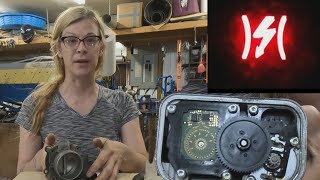
How to confirm: With a diagnostic scan tool, observe the throttle position voltage. If the voltage reading is erratic, jumps, or doesn't correspond smoothly with the throttle pedal input, the internal sensor is likely faulty. A more definitive test is to remove the throttle body; some owners report hearing loose or rattling parts inside, confirming an internal mechanical failure. One owner on YouTube disassembled the sealed unit to find stripped plastic gears inside. 🎬 Watch this teardown of the failed internal gears.
Typical fix: Replace the entire throttle body assembly. After replacement, a throttle relearn procedure is required. This can often be done without special tools by following a specific sequence, such as turning the key to the 'ON' position, slowly pressing the accelerator pedal to the floor and releasing it a few times, then turning the key off before starting the engine.
Est. part cost: $150-$350 - Damaged Wiring or Poor Connection 🟡 Medium Probability
How to confirm: Visually inspect the wiring harness and connector going to the throttle body. Look for any signs of chafing, melting, corrosion, or bent pins. Use a multimeter to check for proper voltage and ground at the connector. Wiggle the harness while monitoring sensor voltage on a scan tool to see if the reading fluctuates, indicating a poor connection.
Typical fix: Repair the damaged section of the wiring harness or clean/replace the connector.
Est. part cost: $10-$50 - Dirty or Carbon-Clogged Throttle Body ⚪ Low Probability → Shop Fuel Injection Throttle Body
How to confirm: Remove the air intake hose and visually inspect the throttle plate and bore for heavy carbon buildup. This buildup can cause the throttle plate to stick, leading to an incorrect position reading.
Typical fix: Clean the throttle body bore and plate thoroughly with a dedicated throttle body cleaner and a soft brush. Be careful not to damage the electronic components or force the butterfly valve open manually. After cleaning, a throttle relearn procedure is necessary.
Est. part cost: $5-$15
Rare But Worth Checking
- Faulty Powertrain Control Module (PCM): This is very rare. Before suspecting the PCM, all other possibilities, especially the throttle body and its wiring, must be exhaustively ruled out. Multiple, unrelated diagnostic codes appearing at once can sometimes point to a PCM issue.
- Faulty Manifold Absolute Pressure (MAP) Sensor: The PCM compares the TPS signal to the MAP signal. If the MAP sensor is providing an incorrect reading, it can cause the PCM to mistakenly flag the TPS signal as irrational, triggering a P0121 code.
Diagnosis Steps
- Verify the P0121 code is present using an OBD-II scanner. Check for any other related codes like P0221 or P2135.
- Visually inspect the wiring harness and connector at the throttle body for any obvious damage, corrosion, or loose connections. Perform a 'wiggle test' on the harness while observing live data.
- With the key on and engine off, use a scan tool to monitor the throttle position sensor voltage as you slowly press and release the accelerator pedal. The voltage should change smoothly with no dropouts or spikes.
- Remove the air intake tube from the throttle body and inspect the throttle bore and plate for heavy carbon buildup. Clean if necessary.
- If the wiring is good and the throttle body is clean, but the voltage readings are still erratic or you hear rattling from inside the unit, the throttle body assembly is the most likely culprit and should be replaced.
- After replacement, perform a throttle relearn procedure as specified by the manufacturer. This typically involves a series of key cycles and pedal depressions.
Parts You'll Likely Need
- Electronic Throttle Body Assembly
(OEM #04891735AC, 4891735AD, 4891735AB, 4891735AA)— This is the most common cause of a P0121 code on the Jeep Compass, as the non-serviceable Throttle Position Sensor and failure-prone internal gears are integrated within this unit.
Trusted brands: Mopar, Dorman, Hitachi, Standard Motor Products, Crown Automotive
OEM price range: $250-$400
Aftermarket price range: $150-$250
Related Codes That Often Appear With This One
- P0221 — This code refers to the 'B' circuit of the throttle position sensor. Since the throttle body contains two sensors for redundancy, seeing both P0121 and P0221 strongly indicates a failure within the throttle body assembly.
- P2135 — This code indicates a voltage correlation problem between the 'A' and 'B' throttle position sensors. It's another strong indicator that the internal sensors in the throttle body are failing and providing conflicting information to the PCM.
Platform-Specific Known Issues
- Throttle Body Relearn Procedure: → Shop Fuel Injection Throttle Body After replacing the throttle body or even just cleaning it, a relearn procedure is mandatory. Many owners have successfully performed this without a scan tool. A common method is: Turn the ignition to 'ON' (not start). Wait for the check engine light to be steady, then blink, then go steady again. Slowly press the accelerator pedal to the floor and slowly release it. Turn the key to 'OFF'. Wait a few seconds, then start the vehicle.
Mechanic-Grade Diagnostic Values
- TPS Reference Voltage — expected: 4.8V - 5.2V. Failure: Voltage below 4.8V or above 5.2V indicates a problem with the PCM or the 5V reference circuit.
- TPS Ground Circuit Voltage — expected: < 0.1V. Failure: Voltage significantly above 0.1V indicates a poor ground connection.
- TPS Signal Voltage (Scan Tool) — expected: Approximately 0.5V at idle, sweeping smoothly up to 4.5V at wide-open throttle.. Failure: Voltage that is erratic, has dropouts, or does not change smoothly when the accelerator is pressed.
Scan Tool Commands That Help
- Professional Scan Tool (e.g., WiTech): Throttle Body Relearn / ETC Relearn — This command should be used after replacing or thoroughly cleaning the electronic throttle body. It forces the PCM to learn the new fully closed and fully open positions of the throttle plate, which is essential for correct idle speed and throttle response. While manual procedures exist, a scan tool command is the most reliable method.
Wiring & Ground Locations
- Throttle Body Connector — Directly on the electronic throttle body, where the engine wiring harness connects.. This 6-pin connector is the single point for all power, ground, and signal wires for the integrated TPS and throttle motor. Corrosion, moisture, or loose pins here are a common cause of intermittent signals that trigger P0121.
- Shared 5V Reference Circuit — A wire within the main engine harness running from the PCM to multiple sensors, including the throttle body.. A short or open on this shared circuit, potentially caused by a different faulty sensor (like an oil pressure switch), can starve the TPS of its required 5-volt supply, causing it to send faulty data and trigger P0121.
Real Owner Repair Stories
- YouTube video by a professional mechanic (2014 Jeep Compass) — Flashing electronic throttle control light (lightning bolt), check engine light, traction control light on, audible clicking from throttle body with key on, no throttle response.
❌ Tried (didn't work) Initial diagnosis confirmed accelerator pedal position sensor was sending a signal, but the throttle blade position was not changing in response.
✅ What actually fixed it The mechanic replaced the entire electronic throttle body assembly. He noted the internal gears were slipping, causing the clicking noise. After replacement and clearing codes, all warning lights went out and throttle response was restored. - NHTSA ODI #11416771 — An owner reported that their vehicle intermittently jerks, shakes, or stalls while the RPMs fluctuate. The throttle sensor warning and MIL illuminate with stored codes P0121 and P2135, and the vehicle has suddenly lost power while in motion at 70 MPH.
OEM Part Supersession History
4891735AA, 4891735AB, 4891735AC→4891735AD— Standard part evolution and potential internal improvements by the manufacturer.
Heads up: All previous part numbers are replaced by 4891735AD, which fits the 2.0L and 2.4L engines across the 2007-2017 model years.
Model Year Variations Within This Range
- 2011-2018: Some replacement throttle bodies, particularly from aftermarket brands like Dorman, may note a difference in the electrical connector design, specifying a 'single row of pins' versus a 'dual stacked pin row'. It is critical to visually inspect the vehicle's original connector before ordering a replacement part to ensure a match.
Diagnostic Flowchart
Other Known Issues on This Vehicle
Issues unrelated to this code that are worth knowing about as an owner of this generation:
- Front and Rear Subframe Corrosion 🔴 High — Very common, especially in regions that use road salt. Can become structurally unsafe. Onset can be as early as 100,000 miles. (Ref: Chrysler extended the warranty to 10 years for this issue on some model years, but many owners report issues outside the coverage period.)
- CVT Transmission Overheating and Failure 🔴 High — A significant issue, particularly on 2007-2012 models equipped with the Jatco JF011E CVT. Problems include overheating, whining, shuddering, and premature failure. (Ref: A class-action lawsuit was filed concerning this transmission, which was also used in the Dodge Caliber and Jeep Patriot.)
- Water Leaks into Cabin 🟠 Medium — Commonly reported issue. Water can enter through sunroof drains, roof seams, or the HVAC air inlet, leading to wet carpets and potential electrical problems. (Ref: TSB 08-071-20 was issued for 2017-2018 models regarding a water leak at the HVAC inlet, but leaks are common across the generation.)
- Totally Integrated Power Module (TIPM) Failure 🔴 High — Common on earlier models (especially 2007). A failing TIPM can cause a wide range of bizarre electrical issues, from the horn honking randomly to no-start conditions.
- Relay Box Failure / No-Start Condition 🟠 Medium — A relay box located in the driver's side fender well is susceptible to moisture and corrosion, which can cause a no-crank, no-start condition.
Used vs. New Parts: Buying Guide for This Vehicle
When a used part is the smart pick: A used throttle body from a low-mileage donor vehicle can be a cost-effective option, as the failure is often mechanical wear of internal gears. However, it carries the risk of having a similar remaining lifespan to the part being replaced.
Donor-vehicle mileage cap: roughly under 75000 miles for the part to have meaningful remaining life.
What to inspect on the donor part:
- Verify the part number on the donor part matches the original or its superseded number (4891735AD).
- Inspect the electrical connector pins for any signs of corrosion or damage.
- Gently shake the unit; there should be no audible rattling, which would indicate broken internal gears.
- Check the throttle bore for excessive carbon buildup, which might suggest poor engine health of the donor vehicle.
Aftermarket brands forum-validated for this vehicle:
- Dorman (specifically their OE FIX versions, which claim improved internal sensors and seals)
- Hitachi (often the original equipment manufacturer)
- Standard Motor Products (SMP)
- Crown Automotive
Brands owners have reported issues with on this vehicle:
- Unbranded, no-name parts from online marketplaces should be approached with caution, as quality control can be inconsistent.
Real Owner Stories
Aggregated from forums and TSBs cited above. Mileages and costs reflect what owners reported in those sources.
2015 Jeep Compass
Symptoms: Owner confirmed the need to replace the throttle body and sought advice on the specific reset procedure required for the Electronic Throttle Control system.
What fixed it: Replacement of the throttle body assembly followed by a manual relearn procedure.
Source hint: r/JeepCompass on Reddit thread titled 'throttle_body_reset/'
2011 Jeep Compass
Symptoms: Limp mode, misfires, flashing ETC (lightning bolt) light, traction light, and check engine light.
What fixed it: After unsuccessfully replacing plugs and coils, the owner replaced the throttle body which had stripped internal gears.
Source hint: Cartalk Community Forums thread titled '2011-jeep-compass-limp-mode-misfire-flashing-etc-light-traction-light-check-engine/101416'
Jeep Compass Owner
Symptoms: An owner reported that the vehicle intermittently jerks, shakes, or stalls while the RPMs fluctuate. The throttle sensor warning and MIL illuminate with stored codes P0121 and P2135, and the vehicle has suddenly lost power while in motion at 70 MPH.
What fixed it: Throttle position sensor warning issues often require throttle body replacement.
Source hint: NHTSA ODI #11416771
Related OBD-II Codes
Frequently Asked Questions
Can I perform the throttle relearn on my 2011 Jeep Compass without a professional scan tool?
Is there a specific part number for the throttle body assembly used in the 2007-2017 Jeep Compass?
Why does my Jeep Compass enter 'limp mode' when the P0121 code triggers?
Are there any known structural issues I should check while fixing the P0121 code on my high-mileage Compass?
Could a water leak be related to the electrical issues causing my P0121 code?
Helpful Videos
Used OEM Parts in Stock
New Aftermarket Parts Available
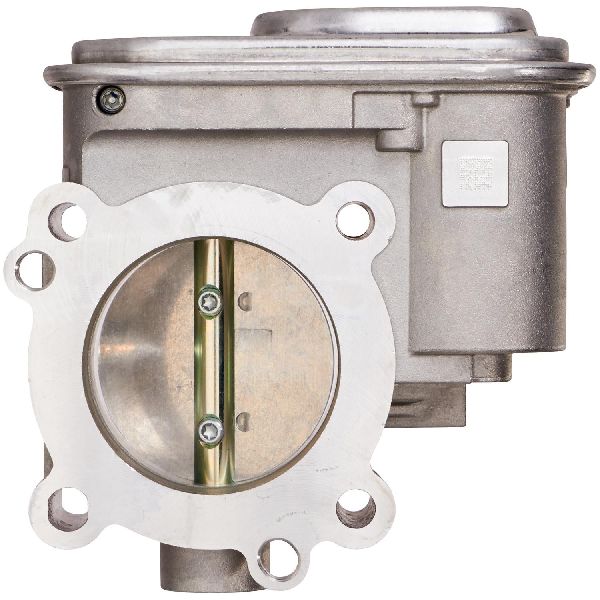
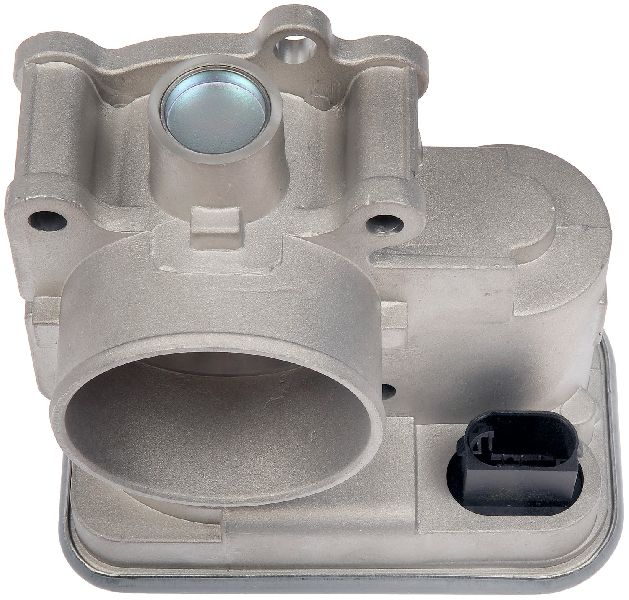



The information in this article is provided for general reference and educational purposes only. Vehicle specifications, procedures, and part compatibility can vary by production date, trim level, and region. Always consult your vehicle's factory service manual and verify part numbers before purchasing or performing repairs. Safety-critical components such as airbags, seat belts, and braking systems should be installed by a qualified professional.
- Jeep Compass:
- 🧭 Diagnostic Flowchart
- 🎬 Helpful Videos
- 🛍️ Shop This Part
- What's Unique About the 2007-2017 Jeep Compass
- Symptoms You May Notice
- Most Likely Causes
- Rare But Worth Checking
- Diagnosis Steps
- Parts You'll Likely Need
- Related Codes That Often Appear With This One
- Platform-Specific Known Issues
- Mechanic-Grade Diagnostic Values
- Scan Tool Commands That Help
- Wiring & Ground Locations
- Real Owner Repair Stories
- OEM Part Supersession History
- Model Year Variations Within This Range
- Other Known Issues on This Vehicle
- Used vs. New Parts: Buying Guide for This Vehicle
- Real Owner Stories
- 2015 Jeep Compass
- 2011 Jeep Compass
- Jeep Compass Owner
- Related OBD-II Codes
- Frequently Asked Questions
- 🎟️ Get 5% Off