

P0121 on 2011-2015 Kia Optima: Throttle Position Sensor Causes and Fixes
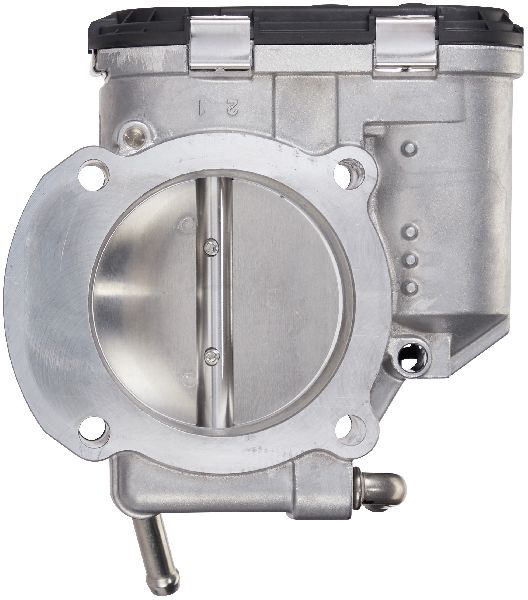
On a 2011-2015 Kia Optima, the P0121 code is almost always caused by a failing electronic throttle body assembly. The throttle position sensor (TPS) is integrated and cannot be replaced separately. Expect to pay $150-$300 for a new throttle body, with DIY difficulty rated at 2/5.
- P0121 on a 2011-2015 Optima almost always points to a bad electronic throttle body.
- The throttle position sensor (TPS) cannot be replaced by itself; you must replace the entire throttle body assembly.
- Before replacing the throttle body, check its electrical connector and consider cleaning the throttle plate of any carbon buildup.
- After replacement, a throttle body relearn procedure is mandatory for proper idle and throttle response.
What's Unique About the 2011-2015 Kia Optima
For the 2011-2015 Kia Optima (generation TF), the key issue with a P0121 code is that the throttle position sensor (TPS) is an integral part of the electronic throttle body assembly. It is not sold as a separate, replaceable component. Therefore, a sensor failure requires the replacement of the entire throttle body. This design simplifies diagnosis but increases the cost of the part compared to vehicles with a separate, serviceable sensor.
Symptoms You May Notice
- Check Engine Light is on
- Hesitation or stumbling during acceleration
- Rough or unstable idle
- Engine stalling, especially at low speeds or when stopping
- Vehicle enters 'limp mode' with significantly reduced engine power
- Poor fuel economy
- Delayed throttle response
- Sudden surges or dips in engine speed
- Black smoke from exhaust during acceleration
- Replacing the accelerator pedal position (APP) sensor. While the APP sensor also relates to throttle control, the P0121 code specifically points to the sensor at the throttle body on the engine, not the one connected to the gas pedal. A faulty APP sensor would typically set different codes.
Most Likely Causes
- Faulty Electronic Throttle Body Assembly 🔴 High Probability → Shop Fuel Injection Throttle Body The integrated throttle position sensor (TPS) is a common failure point due to wear and tear of its internal electronic components. The sensor is a potentiometer that can develop dead spots or erratic signal outputs over time, leading to the P0121 code.
How to confirm: With a diagnostic scan tool, observe the live data for the throttle position sensor voltage. As you slowly press the accelerator pedal, the voltage should increase smoothly from approximately 0.5V at idle to around 4.5V at wide-open throttle. If the voltage jumps, drops out, has dead spots, or is unresponsive, the throttle body assembly is faulty.
Typical fix: Replace the entire electronic throttle body assembly. After replacement, a throttle body relearn procedure is required to calibrate the new unit with the PCM.
Est. part cost: $150 - $300 - Dirty Throttle Body 🟡 Medium Probability → Shop Fuel Injection Throttle Body Gasoline Direct Injection (GDI) engines, like the Theta II, are prone to carbon buildup on intake components because fuel is not sprayed over the intake valves to clean them. Oil vapors from the PCV system can bake onto the throttle plate and bore, restricting its movement and causing the position sensor's readings to conflict with the PCM's expected values.
How to confirm: Visually inspect the throttle body bore and plate for significant black carbon deposits. A sticky or slow-moving throttle plate when moved by hand (with the engine off) is another indicator.
Typical fix: Clean the throttle body thoroughly with a dedicated throttle body cleaner and a soft brush. Ensure the throttle plate moves freely after cleaning. 🎬 Watch: Step-by-step guide to cleaning your throttle body This may resolve the code if the buildup was the primary cause.
Est. part cost: $5 - $15 for cleaner - Wiring or Connector Issue ⚪ Low Probability While not exceptionally common, the wiring harness connector to the throttle body can become loose, corroded, or damaged from engine vibration and heat over time.
How to confirm: Inspect the 6-pin electrical connector and wiring going to the throttle body for any signs of damage, corrosion, or loose pins. Perform a 'wiggle test' on the connector and harness while monitoring the TPS voltage on a scan tool to see if the reading fluctuates.
Typical fix: Repair the damaged wiring or clean/replace the connector as needed. Ensure a secure connection.
Est. part cost: $10 - $50
Rare But Worth Checking
- Faulty Powertrain Control Module (PCM): This is very rare. Before condemning the PCM, all other possibilities, including the throttle body and its wiring, must be exhaustively tested and ruled out. A PCM failure could manifest as an inability to read the sensor voltage correctly.
Diagnosis Steps
- Connect an OBD-II scanner and confirm that P0121 is the primary code. Note any other codes present, especially P0122, P0123, or P2135.
- Using the scanner's live data function, monitor the Throttle Position Sensor 'A' voltage. It should be around 0.5V at idle and sweep smoothly up to ~4.5V at wide-open throttle.
- If the voltage is erratic, has dead spots, or doesn't move with the pedal, proceed to inspect the throttle body.
- Turn the ignition off. Inspect the throttle body's electrical connector for damage, corrosion, or loose connections.
- Remove the air intake hose from the throttle body and inspect the throttle plate and bore for heavy carbon buildup. Clean if necessary, as this alone can sometimes fix the issue.
- If the wiring is intact and cleaning does not resolve the issue, the throttle body assembly is the most likely culprit and should be replaced.
- After replacement, perform a throttle body relearn procedure. This can often be done by turning the ignition to 'ON' (without starting the engine) for 10-15 seconds, then 'OFF' for 10 seconds, and repeating this cycle 3-5 times before starting the engine. Alternatively, letting the car idle for 10-15 minutes after reaching operating temperature can also complete the relearn process. 🎬 Watch: Four ways to perform a throttle body relearn
Parts You'll Likely Need
- Electronic Throttle Body Assembly
(OEM #35100-2G700 (for 2.4L GDi), 35100-2G710 (for 2.0T))— This is the most common cause of P0121, as the non-serviceable throttle position sensor is integrated into this assembly.
Trusted brands: Kia (OEM), Hyundai (OEM), Bosch, Cardone, Standard Motor Products
OEM price range: $250-$400
Aftermarket price range: $150-$250
Related Codes That Often Appear With This One
- P0122 — Indicates the TPS 'A' circuit voltage is low, which can be another symptom of a failing throttle body assembly.
- P0123 — Indicates the TPS 'A' circuit voltage is high, also pointing towards a failure within the integrated throttle body sensor.
- P2135 — This code indicates a correlation issue between TPS 'A' and 'B' signals, which is a common companion code when the throttle body's internal sensors begin to fail and send conflicting information to the PCM.
Platform-Specific Known Issues
- The Theta II engines in this year range were subject to several major engine-related recalls (e.g., NHTSA 17V224000 for bearing wear). While these recalls do not directly cover the throttle body, it's important for owners to be aware of these separate, more serious potential engine issues that could cause stalling or other drivability problems.
- A common owner experience shared on forums involves sudden limp mode activation on the highway, often accompanied by P0121 and P2135 codes, which is almost always resolved by replacing the throttle body assembly.
Mechanic-Grade Diagnostic Values
- Throttle Body Connector Pin 1 (5V Sensor Reference) — expected: ~5.0V with Key On, Engine Off.. Failure: Missing or significantly low voltage points to a wiring or PCM issue.
- Throttle Body Connector Pin 3 (Ground/Low Reference) — expected: ~0V (less than 0.1V).. Failure: Voltage significantly above 0V indicates a bad ground connection in the harness or at the PCM.
- Throttle Body Connector Pin 5 (5V Sensor Reference 2) — expected: ~5.0V with Key On, Engine Off.. Failure: No voltage or voltage significantly different from 5.0V points to a PCM or wiring issue.
- TPS 'A' Signal Voltage (Live Data) — expected: Approx. 0.5V at closed throttle, sweeping smoothly to approx. 4.5V at wide-open throttle.. Failure: Voltage is stuck, jumps, has dead spots, or does not correspond to pedal movement.
Scan Tool Commands That Help
- Kia GDS (Global Diagnostic System): Reset Adaptive Values — This function should be used after replacing the throttle body to clear the old learned values from the PCM and force it to relearn the new sensor's idle and wide-open throttle positions. It is the manufacturer-specified method for calibration.
- Kia GDS (Global Diagnostic System): Actuator Test Mode / Bidirectional Control for Throttle Body — This allows a technician to command the throttle plate to open and close directly from the scan tool. If the throttle plate does not respond to the command, it confirms a failure in the throttle body's motor or electronics, assuming the wiring has been verified as good.
Wiring & Ground Locations
- Throttle Body Connector — On the electronic throttle body, where the engine air intake hose connects.. This 6-pin connector provides power, ground, and signal lines for the integrated throttle position sensors and the throttle motor. A poor connection, corrosion, or damaged wire at this point is a common cause for P0121 and related codes.
- Engine Ground Wiring Assembly (Example PN: 91860-2T011) — This harness provides a primary ground path for the engine and its associated sensors to the chassis/battery. Specific ground points are located on the engine block, cylinder head, and transmission case.. A corroded or loose main engine ground can cause erratic voltage and sensor readings throughout the engine management system, including the throttle position sensor, leading to a P0121 code. Verifying the integrity of the main grounds is a critical step if sensor reference voltages are unstable.
Real Owner Repair Stories
- Reddit user post (Hyundai/Kia models after 2010) — Jerky or poor shifting between gears at both low and high speeds.
❌ Tried (didn't work) Initial diagnosis pointed towards transmission issues.
✅ What actually fixed it Performing a manual throttle position sensor relearn procedure resolved the jerky shifting. The procedure involved specific ignition on/off cycles to reset the ECU and throttle settings. - YouTube video by 'World Mechanics' (2013 Kia Optima) — Check Engine Light with codes P0120-P0124.
❌ Tried (didn't work) The video advises against immediately replacing parts.
✅ What actually fixed it The video demonstrates that the most common fixes are, in order: 1) Inspecting the wiring harness for damage, 2) Cleaning the throttle body of heavy carbon buildup, and 3) If those fail, replacing the entire throttle body assembly. The video emphasizes that cleaning often resolves the issue.
Model Year Variations Within This Range
- 2011-2013: The engine ground wiring assembly has a specific part number (918602T011) listed for the 2011-2013 Optima models (both 2.0T and 2.4L). While the throttle body itself may be consistent from 2011-2015, related wiring harnesses could have minor variations in these earlier years.
Diagnostic Flowchart
Other Known Issues on This Vehicle
Issues unrelated to this code that are worth knowing about as an owner of this generation:
- Catastrophic Engine Failure (Theta II) 🔴 High — Widespread across 2.0T and 2.4L GDi engines. Failure can occur at various mileages, often before 100,000 miles. (Ref: NHTSA Campaign: 17V224000. Subject of multiple class-action lawsuits and warranty extensions.)
- Excessive Carbon Buildup on Intake Valves 🟠 Medium — Common on GDI engines, with symptoms often appearing after 60,000 miles. Requires periodic professional cleaning (e.g., walnut blasting).
- Clicking/Clunking Steering Column 🟡 Low — Very common issue caused by a worn flexible steering coupler (Part No. 56315-2K000-FFF). Noise is annoying but generally not a safety risk. (Ref: Customer Satisfaction Program CS1604 extended warranty coverage for this part.)
Used vs. New Parts: Buying Guide for This Vehicle
When a used part is the smart pick: A used OEM throttle body from a low-mileage donor vehicle can be a cost-effective alternative to a new part, especially for a DIY repair. Since this is a common failure item, a used part is a calculated risk but can save significant money.
Donor-vehicle mileage cap: roughly under 60000 miles for the part to have meaningful remaining life.
What to inspect on the donor part:
- Verify the part number on the used unit (e.g., 35100-2G700 or 35100-2G710) matches the original part exactly.
- Inspect the electrical connector pins for any signs of corrosion, bending, or damage.
- Look at the throttle plate and bore; minimal carbon buildup suggests a healthier donor engine.
- Avoid parts from vehicles that show signs of flood damage or front-end collision.
- Ask for the donor vehicle's VIN to check its history and mileage if possible.
OEM-only on this vehicle (don't cheap out):
- While aftermarket is viable, an OEM (Kia/Hyundai) or OEM-supplier (Bosch) part is the safest bet for fitment and electronic compatibility. Some aftermarket units may have slightly different electronic characteristics that can cause persistent issues.
Aftermarket brands forum-validated for this vehicle:
- Bosch (often the OEM supplier)
- Dorman OE Fix (specifically mentions upgraded internal seals to prevent common failure modes)
- Standard Motor Products
Brands owners have reported issues with on this vehicle:
- Unbranded, no-name parts from online marketplaces can be a gamble, with higher rates of premature failure or out-of-box electronic calibration issues.
Real Owner Stories
Aggregated from forums and TSBs cited above. Mileages and costs reflect what owners reported in those sources.
2011-2015 Kia Optima 2.4L/2.0T
Symptoms: Sudden limp mode activation on the highway, often accompanied by P0121 and P2135 codes.
What fixed it: Replacing the throttle body assembly.
Source hint: vehicle_specific_issues
Kia Optima Theta II
Symptoms: Limp mode and hesitation.
What fixed it: New throttle body and subsequent relearn procedure.
Source hint: r/mechanicadvice on Reddit
Kia Optima Theta II
Symptoms: Jerky shifting after a battery disconnect.
What fixed it: Manual relearn procedure.
Source hint: r/mechanicadvice on Reddit
Kia Optima Theta II
Symptoms: P0121 code returned weeks or months after an initial cleaning of the throttle body.
What fixed it: Full throttle body replacement to permanently solve the problem.
Source hint: Kia-Forums.com and OptimaForums.com
Related OBD-II Codes
Frequently Asked Questions
Is the P0121 code related to the major engine recall NHTSA 17V224000 for my 2011-2015 Kia Optima?
Can I just clean the throttle body on my GDI engine to fix P0121?
What specific part numbers should I look for if buying a used throttle body for my Optima?
Do I need a special tool to calibrate the throttle body after replacing it?
Why does my Kia Optima enter 'limp mode' when this code triggers?
Is there a specific connector I should check for P0121?
Helpful Videos
Used OEM Parts in Stock
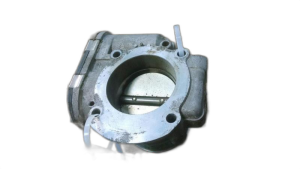
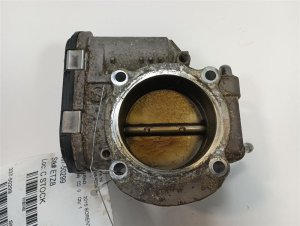
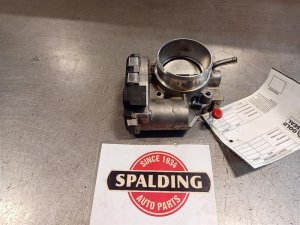
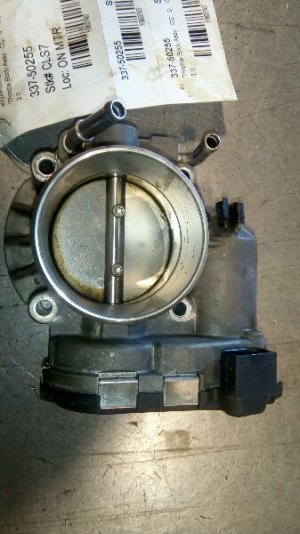
New Aftermarket Parts Available


The information in this article is provided for general reference and educational purposes only. Vehicle specifications, procedures, and part compatibility can vary by production date, trim level, and region. Always consult your vehicle's factory service manual and verify part numbers before purchasing or performing repairs. Safety-critical components such as airbags, seat belts, and braking systems should be installed by a qualified professional.
- Kia Optima:
- 🧭 Diagnostic Flowchart
- 🎬 Helpful Videos
- 🛍️ Shop This Part
- What's Unique About the 2011-2015 Kia Optima
- Symptoms You May Notice
- Most Likely Causes
- Rare But Worth Checking
- Diagnosis Steps
- Parts You'll Likely Need
- Related Codes That Often Appear With This One
- Platform-Specific Known Issues
- Mechanic-Grade Diagnostic Values
- Scan Tool Commands That Help
- Wiring & Ground Locations
- Real Owner Repair Stories
- Model Year Variations Within This Range
- Other Known Issues on This Vehicle
- Used vs. New Parts: Buying Guide for This Vehicle
- Real Owner Stories
- 2011-2015 Kia Optima 2.4L/2.0T
- Kia Optima Theta II
- Kia Optima Theta II
- Kia Optima Theta II
- Related OBD-II Codes
- Frequently Asked Questions
- 🎟️ Get 5% Off