

P0121 on 2002-2004 Kia Spectra 1.8L: TPS Failure vs. ECM Update Causes and Fixes
For the P0121 code on a 2002-2004 1.8L Kia Spectra, the issue is often a faulty Throttle Position Sensor (TPS) or an outdated Engine Control Module (ECM) software. Check for Kia TSB ENG 021 first; if the ECM update has been done, the TPS is the most likely culprit, costing $15-$75 for the part. The updated OEM part number is 0K24718911.
- First, investigate Kia TSB ENG 021. An ECM software update might be the only fix required.
- If the TSB is not applicable or already done, the Throttle Position Sensor (TPS) is the most likely failed part.
- Symptoms include hesitation, stalling, and a rough idle.
- Diagnosis is straightforward with a basic scan tool that can read live data.
- Replacing the TPS is a simple DIY job, typically requiring only basic hand tools.
What's Unique About the 2002-2004 Kia Spectra
For this specific generation of Kia Spectra, there is a critical Technical Service Bulletin (TSB ENG 021) issued by Kia. This TSB addresses the P0121 code by providing an ECM software update for vehicles built between May 14, 2001, and June 1, 2004, suggesting the original factory logic was too sensitive and could trigger the code even with a functional sensor. This makes diagnosis unique, as an ECM re-flash could be the required fix instead of a part replacement. However, given the vehicle's age, the original contact-style TPS is also a very common failure point due to wear.
Symptoms You May Notice
- Check Engine Light is on
- Engine hesitates, jerks, or stumbles during acceleration
- Poor or sluggish engine performance
- Engine stalls, especially when coming to a stop or at idle
- Unstable or rough idling
- Vehicle may enter 'limp mode' (failsafe mode) with severely reduced power
- Transmission may not shift correctly
- Engine is hard to start
- Replacing the Throttle Position Sensor when the underlying cause is the ECM software needing the TSB ENG 021 update.
- Replacing the entire throttle body when only the sensor is bad or the bore is dirty.
- Replacing the TPS when the actual fault is a break or chafe in the wiring harness leading to it. One owner on GMTNation forums replaced the throttle body for P0121, only to have the problem persist until a wiring issue was suspected.
Most Likely Causes
- Faulty Throttle Position Sensor (TPS) 🔴 High Probability → Shop Fuel Injection Throttle Body The original sensor is a contact-style potentiometer that physically wears out over time, creating dead spots or erratic signals in its voltage output.
How to confirm: Use a scan tool to graph the TPS voltage while slowly pressing the accelerator pedal with the key on, engine off. The voltage should sweep smoothly from ~0.5V to ~4.5V with no spikes or dropouts. A multimeter can also be used to backprobe the signal wire for the same smooth voltage increase.
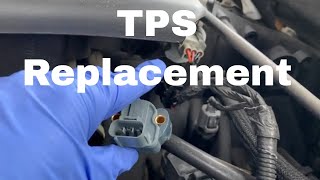
Typical fix: Replace the Throttle Position Sensor. This involves removing two screws, unplugging the electrical connector, and installing the new sensor. A helpful tip: you may need to loosen the Idle Air Control (IAC) valve to get enough clearance to remove the TPS from the back of the throttle body.
Est. part cost: $15-$75 - Outdated Engine Control Module (ECM) Software 🔴 High Probability Kia released Technical Service Bulletin (TSB) ENG 021 specifically for this code on vehicles built between May 14, 2001, and June 1, 2004, indicating the original ECM logic was flawed.
How to confirm: A Kia dealership or a shop with advanced scan tools (or access to Kia's service website) can check the current ROM ID of the ECM and compare it to the TSB to see if the update has been performed.
Typical fix: Reprogram (re-flash) the ECM with the updated software provided in the TSB. This must be done by a dealer or qualified shop.
Est. part cost: $0 (if under warranty), otherwise labor cost applies (typically 1-1.5 hours) - Dirty or Binding Throttle Body 🟡 Medium Probability → Shop Fuel Injection Throttle Body Over time, carbon and grime can build up around the throttle plate and bore, preventing it from closing properly or moving smoothly. This can cause the TPS reading to be out of sync with what the ECM expects at idle.
How to confirm: Remove the air intake hose from the throttle body and visually inspect the throttle plate and bore for black carbon buildup. Check if the plate moves freely without sticking.
Typical fix: Clean the throttle body bore and plate with a dedicated throttle body cleaner and a soft cloth or brush.
Est. part cost: $5-$10 (for cleaner) - Damaged Wiring or Corroded Connector ⚪ Low Probability Wiring can become brittle with age and engine bay heat. The harness near the TPS connector is a common point for issues.
How to confirm: Visually inspect the wiring harness leading to the TPS for any signs of chafing, breaks, or heat damage. Unplug the connector and check the pins for corrosion or a loose fit. Wiggle the harness with the engine running to see if it triggers the symptom.
Typical fix: Repair the damaged section of wire or replace the TPS connector pigtail.
Est. part cost: $10-$25 (for a pigtail)
Rare But Worth Checking
- Faulty Powertrain Control Module (PCM): This is very rare. All other possibilities, especially the TSB, faulty TPS, and wiring, should be exhaustively ruled out before considering PCM replacement.
Diagnosis Steps
- Check for TSB ENG 021: Before buying any parts, determine if your vehicle is within the affected production range (May 14, 2001 - June 1, 2004) and if the ECM update has been performed. This may require a call to a Kia dealer with your VIN.
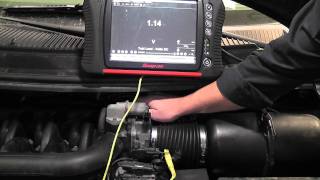
- Scan Tool Data Analysis: Connect an OBD-II scanner and view live data for the TPS. Observe the voltage percentage or raw voltage. It should be low at idle (around 10% or 0.5V) and increase smoothly to high at wide-open throttle (around 90% or 4.5V). Stomp the gas pedal (engine off) and watch for any glitches, spikes, or flat spots in the data.
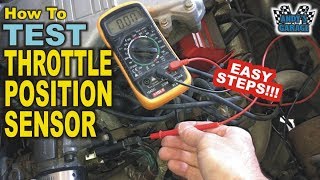
- Test the Sensor Circuit with a Multimeter: 🎬 Watch this step-by-step guide on testing a TPS. If you suspect the sensor or wiring, perform a more detailed test. Turn the ignition ON (engine OFF). Unplug the TPS connector. Use a multimeter to check for 5V reference on the supply pin and a good ground on the ground pin. If reference and ground are good, reconnect the TPS and backprobe the signal wire. The voltage should sweep smoothly from ~0.5V to ~4.5V as you manually open the throttle. Any jumps or dropouts indicate a bad TPS.
- Wiring Harness Inspection: Thoroughly inspect the wiring harness near the TPS connector for chafing, brittleness, or breaks. Pull back any loom or tape to get a clear view. Wiggle the harness while monitoring TPS voltage on a scan tool to see if the reading fluctuates.
- Throttle Body Inspection: Remove the intake boot and inspect the throttle body for heavy carbon buildup that could be causing the throttle plate to stick.
- Isolate the Cause: If the TSB has been done, the wiring is confirmed good, and the voltage signal is erratic, the TPS is faulty. If the signal is good but the code persists, re-verify the TSB status or consider a correlation problem with another sensor like the MAP sensor.
Parts You'll Likely Need
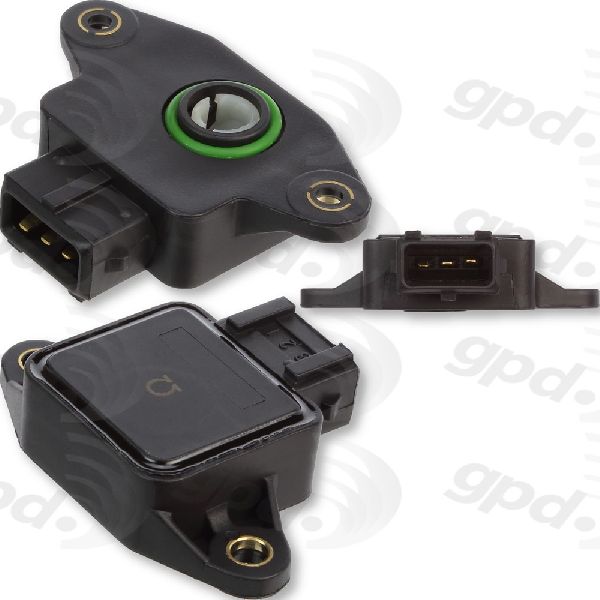
- Throttle Position Sensor (TPS)
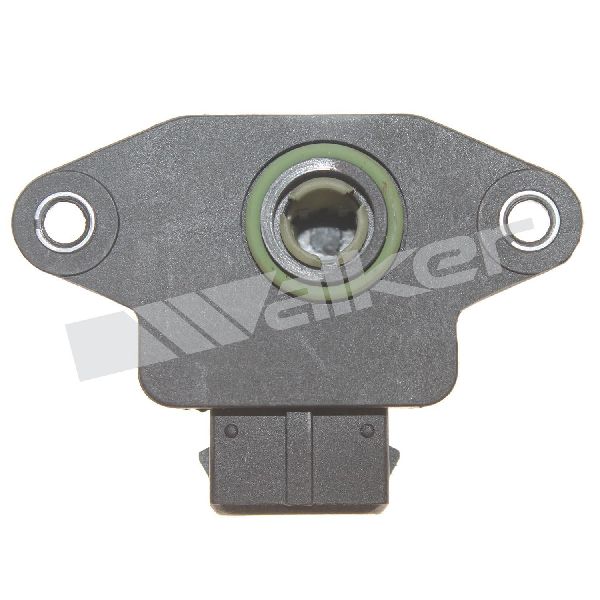
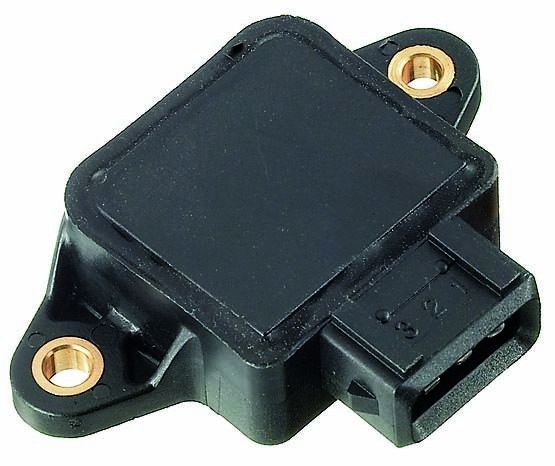
(OEM #0K24718911)— This is the most common part to fail and the updated, superseding OEM part number. The original contact-style sensor is a known wear item.
Trusted brands: Genuine Kia, Standard Motor Products (SMP), Walker, Beck/Arnley
OEM price range: $50-$75
Aftermarket price range: $15-$45
Related Codes That Often Appear With This One
- P0120 — This is a general TPS/Pedal Position Sensor 'A' Circuit Malfunction code.
- P0122 — This code indicates TPS 'A' Circuit Low Input, which can occur if the sensor has an internal short or a wiring issue.
- P0123 — This code indicates TPS 'A' Circuit High Input, pointing to a different failure mode of the same sensor or circuit.
Technical Service Bulletins (TSBs) & Recalls
- TSB ENG 021 (January 2005): 🎬 Watch this video on diagnosing the Spectra P0121 code. Provides an ECM software upgrade for 2002-2004 Spectra 1.8L vehicles (built 5/14/01-6/1/04) that may experience a MIL-on condition with DTC P0121.
Platform-Specific Known Issues
- A significant number of 2002-2004 1.8L Spectras built between May 2001 and June 2004 were subject to TSB ENG 021, which required an ECM software update to correct overly sensitive logic for setting the P0121 code.
Mechanic-Grade Diagnostic Values
- TPS Signal Wire Voltage (Backprobed) — expected: Smoothly sweeps from ~0.5V (closed throttle) to ~4.5V (wide-open throttle) as the accelerator is pressed.. Failure: Voltage readings that are erratic, have sudden jumps or dropouts, or do not change when the throttle moves.
- TPS Connector Pin Test (Key On, Engine Off, Connector unplugged) — expected: Using a multimeter, one pin should show ~5V (Reference Power from ECM), and another should have continuity to ground. The third is the signal wire.. Failure: Absence of 5V reference or a bad ground indicates a problem in the wiring or ECM, not necessarily the sensor itself.
- TPS Resistance (Ohms) — expected: A specific Ohm range is not reliably available in public documentation and requires the factory service manual.. Failure: The key indicator is not a specific number, but whether the resistance changes smoothly without dropouts as the sensor is actuated.
Scan Tool Commands That Help
- Kia GDS (Dealer Tool): ECM Reprogram / Software Update — This is the specific function required to perform the fix outlined in TSB ENG 021. It is used when the original ECM logic is too sensitive and needs to be updated.
- Basic Hand Tools: ECM/Learned Values Reset — After replacing a TPS or cleaning the throttle body, disconnecting the negative battery terminal for 5-10 minutes can clear the ECM's adaptive memory, forcing it to relearn values with the new/clean components.
Wiring & Ground Locations
- JB01, JB05 — Engine Compartment Fuse/Relay Box, located on the left rear side of the engine compartment.. These are central power distribution points for the engine management system. A fault or corrosion here could affect the power supply to the ECM or sensors.
- SC10 — A short connector located under the center console.. Wiring related to the engine control system passes through this area, making it a potential point of failure if damaged.
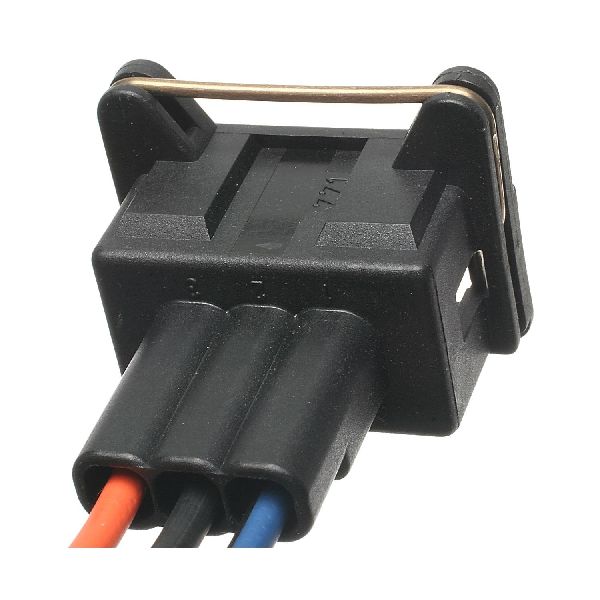
- TPS Connector — On the throttle body, which is attached to the intake manifold.. This is the direct connection to the sensor. It is a 3-wire connector for power, ground, and signal. The pigtail (Standard Motor Products S-745) is a known replacement part.
Diagnostic Flowchart
Other Known Issues on This Vehicle
Issues unrelated to this code that are worth knowing about as an owner of this generation:
- Automatic Transmission Failure 🔴 High — Widespread issue, often appearing before 100,000 miles. Symptoms include slipping in 1st gear, harsh shifts (especially 1-2), and jerking. (Ref: No recall, but multiple owner complaints and forum discussions exist. Some issues traced to faulty solenoids or a failing one-way sprague clutch.)
- Fuel Tank Strap Corrosion 🔴 High — Common in regions using road salt. Can lead to straps breaking and the fuel tank detaching. (Ref: NHTSA Campaign ID: 11V257000 (Recall). Affects 2004-2007 models. Dealers replace the straps with zinc-coated parts.)
- Critical Timing Belt Replacement Interval 🔴 High — The timing belt has a very short service life. Regulations suggest replacement every 60,000 km (~37,000 miles). Failure is catastrophic, causing pistons to hit valves.
- Common Sensor and Ignition Component Failures 🟠 Medium — Failures of various sensors are common. Notably, the Crankshaft Position Sensor (causing stalling), Mass Air Flow (MAF) sensor, and Oxygen (O2) sensor electrical connections are frequent failure points. Ignition coils and high-voltage wires also have a limited service life.
Used vs. New Parts: Buying Guide for This Vehicle
When a used part is the smart pick: For this specific repair, a used part is NOT recommended. The Throttle Position Sensor is a low-cost electronic part that fails due to internal wear over time. A used sensor from a salvage yard has unknown mileage and wear, and offers a poor value proposition compared to an inexpensive new part.
What to inspect on the donor part:
- Not applicable as used parts are not advised.
OEM-only on this vehicle (don't cheap out):
- While not strictly 'OEM-only', using the updated OEM part (0K24718911) or a reputable aftermarket equivalent is critical. Avoid unbranded, no-name parts.
Aftermarket brands forum-validated for this vehicle:
- Standard Motor Products (SMP)
- Walker
- Beck/Arnley
Brands owners have reported issues with on this vehicle:
- Ultra-low-cost, unbranded sensors from online marketplaces often have poor quality control and may fail prematurely or be out of specification from the start.
Real Owner Stories
Aggregated from forums and TSBs cited above. Mileages and costs reflect what owners reported in those sources.
2003 Kia Spectra 1.8L
Symptoms: The automatic transmission is slipping in first gear.
What fixed it: This is a known platform issue often caused by a failed one-way sprague clutch.
Source hint: Car Talk Community: '2003 Kia Spectra Transmission Question'
2002-2004 Kia Spectra 1.8L
Symptoms: Check Engine Light (MIL) is on with code P0121.
What fixed it: Reprogramming (re-flashing) the ECM with updated software as per TSB ENG 021.
Source hint: TSB ENG 021 (January 2005)
2004 Kia Spectra
Symptoms: Fuel tank straps corroding and potentially breaking.
What fixed it: Replacement of straps with zinc-coated parts under recall.
Source hint: NHTSA Campaign ID: 11V257000 (Recall)
Related OBD-II Codes
Frequently Asked Questions
Does TSB ENG 021 apply to my 2003 Kia Spectra 1.8L?
I'm replacing the TPS on my 1.8L Spectra; is there anything I need to move to get to it?
Can I use parts from a Kia Sephia to fix my P0121 code?
Is there a recall for the fuel tank on my 2004 Spectra?
How often should I change the timing belt on this 1.8L engine to avoid engine failure?
My Spectra is jerking and won't shift correctly; is this related to P0121?
Helpful Videos

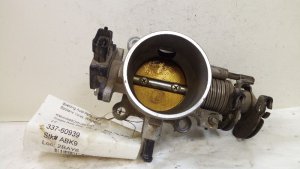
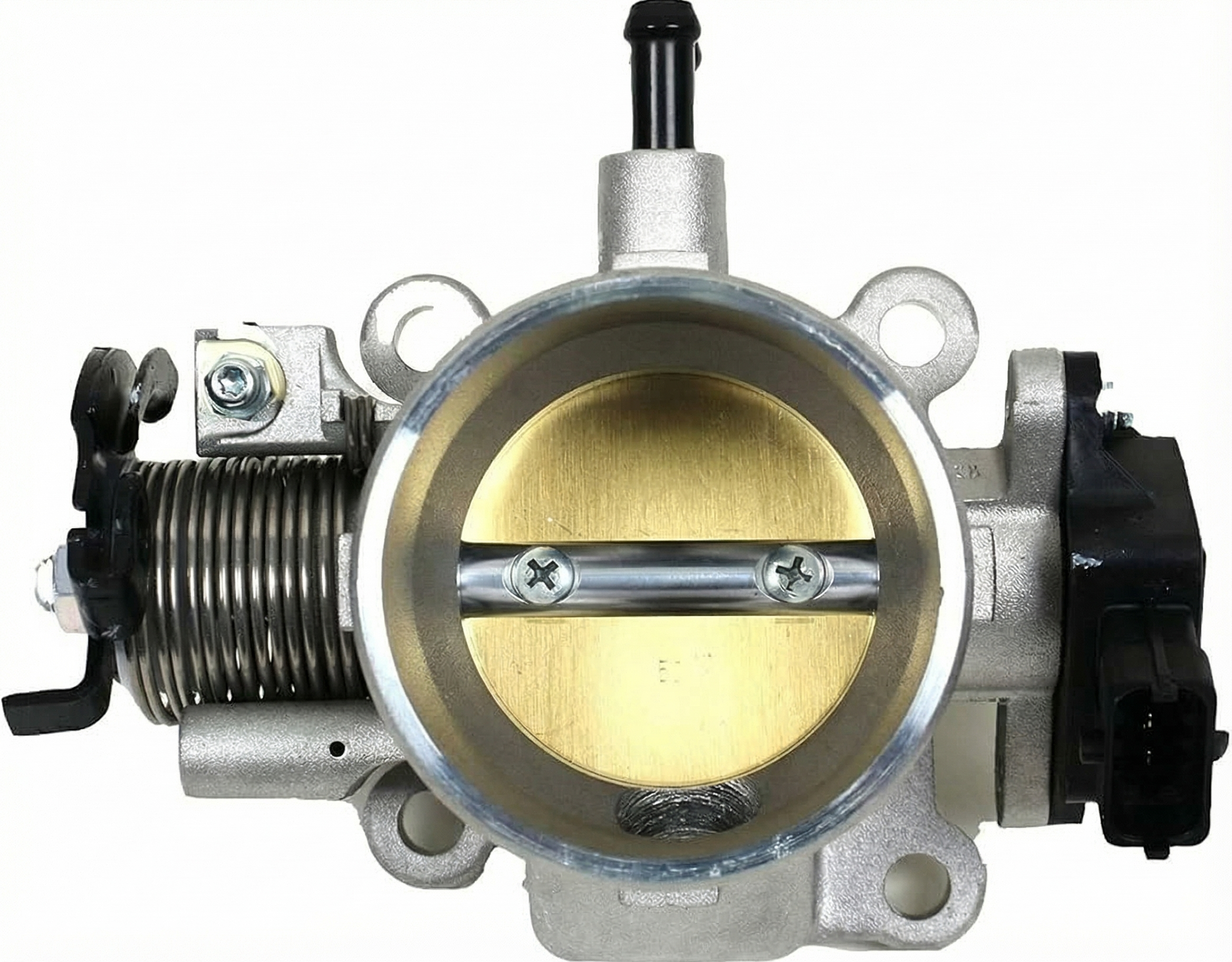
Used OEM Parts in Stock
New Aftermarket Parts Available


The information in this article is provided for general reference and educational purposes only. Vehicle specifications, procedures, and part compatibility can vary by production date, trim level, and region. Always consult your vehicle's factory service manual and verify part numbers before purchasing or performing repairs. Safety-critical components such as airbags, seat belts, and braking systems should be installed by a qualified professional.
- Kia Spectra:
- 🧭 Diagnostic Flowchart
- 🎬 Helpful Videos
- 🛍️ Shop This Part
- What's Unique About the 2002-2004 Kia Spectra
- Symptoms You May Notice
- Most Likely Causes
- Rare But Worth Checking
- Diagnosis Steps
- Parts You'll Likely Need
- Related Codes That Often Appear With This One
- Technical Service Bulletins (TSBs) & Recalls
- Platform-Specific Known Issues
- Mechanic-Grade Diagnostic Values
- Scan Tool Commands That Help
- Wiring & Ground Locations
- Other Known Issues on This Vehicle
- Used vs. New Parts: Buying Guide for This Vehicle
- Real Owner Stories
- 2003 Kia Spectra 1.8L
- 2002-2004 Kia Spectra 1.8L
- 2004 Kia Spectra
- Related OBD-II Codes
- Frequently Asked Questions
- 🎟️ Get 5% Off