

P0121 on 2012-2024 Mazda CX-5: Throttle Position Sensor Causes & Fixes
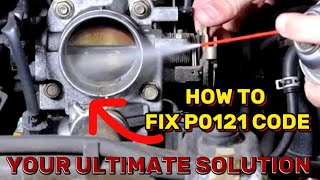
On a Mazda CX-5, code P0121 is most often caused by a dirty throttle body interfering with the throttle plate's movement. The first and most cost-effective fix is to clean the throttle body and perform an idle relearn procedure. A can of cleaner is under $15, and the job is DIY-friendly.
- P0121 on a Mazda CX-5 almost always points to an issue with the throttle body, not the gas pedal.
- The first, cheapest, and most likely fix is to thoroughly clean the carbon buildup from the throttle body.
- The Throttle Position Sensor (TPS) is built into the throttle body and cannot be replaced separately.
- A new throttle body does not require special programming with a dealer scan tool; a manual idle relearn procedure is sufficient.
What's Unique About the 2012-2024 Mazda CX-5
Mazda's SKYACTIV-G engines use Gasoline Direct Injection (GDI). While efficient, this design allows oil vapors from the PCV system and carbon to build up on the intake components, including the throttle body, since fuel is injected directly into the cylinder and no longer washes the back of the intake valves. This sticky carbon buildup can cause the throttle plate to stick or move slowly, especially when returning to idle, leading to the P0121 code. The most common fix is often just a thorough cleaning, rather than an immediate part replacement.
Generation note: This guide covers both the first generation (KE, 2012-2017) and second generation (KF, 2017-2024) of the Mazda CX-5. The underlying SKYACTIV engine architecture and electronic throttle body design are similar enough that the causes, symptoms, and diagnostic procedures for P0121 are consistent across both generations. The issue is common to all SKYACTIV-G engines.
Symptoms You May Notice
- Check Engine Light is on
- Hesitation or stumbling during acceleration
- Rough or unstable idle
- Engine stalling, especially when coming to a stop
- Reduced engine power or vehicle entering 'limp mode'
- Poor or delayed throttle response
- Occasional black smoke from exhaust during acceleration
- Replacing the Accelerator Pedal Position (APP) sensor. While the APP sensor can cause similar symptoms, P0121 specifically points to a performance issue with the sensor at the throttle body. Other codes (like P0222, P0223) usually accompany a failing APP sensor.
Most Likely Causes
- Dirty Throttle Body 🔴 High Probability → Shop Fuel Injection Throttle Body As a GDI engine, the SKYACTIV-G is prone to carbon and oil buildup in the intake tract from the PCV system, which can cause the throttle plate to stick or bind.
How to confirm: Remove the air intake hose from the throttle body and visually inspect for a thick black ring of carbon around the throttle plate and bore. The plate may feel sticky when moved by hand (with ignition off).
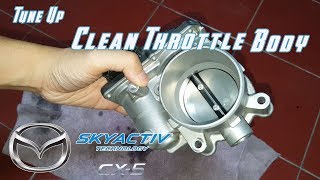
Typical fix: Remove the throttle body, clean it carefully with a dedicated throttle body cleaner and a soft cloth, paying special attention to the edges of the plate and the bore. 🎬 See this walkthrough for cleaning a Skyactiv engine throttle body Reinstall with a new gasket.
Est. part cost: $5-$15 for cleaner and a new gasket. - Failing Throttle Body Assembly 🟡 Medium Probability → Shop Fuel Injection Throttle Body The integrated Throttle Position Sensor (TPS) or the internal motor can fail electronically over time, causing erratic signals or a complete loss of signal.
How to confirm: After cleaning, if the code persists, use a scan tool to monitor the TPS voltage as the pedal is pressed. The voltage should sweep smoothly from ~0.5V to ~4.5V with no dropouts or spikes. If it's erratic, the assembly is faulty.
Typical fix: Replace the entire throttle body assembly. The sensor is not available separately. The common OEM part number is PY01-13-640A for 2.5L models.
Est. part cost: $150-$450 - Wiring or Connector Issue ⚪ Low Probability Engine vibration and heat can, over many years, cause wires to fray or the connector pins to lose tension or corrode.
How to confirm: Visually inspect the wiring harness leading to the throttle body for any signs of damage, chafing, or corrosion on the connector pins. Wiggle the connector with the engine running to see if it affects idle. Use a multimeter to check for proper voltage and ground at the connector.
Typical fix: Repair the damaged section of wiring or clean/replace the connector pigtail.
Est. part cost: $10-$50
Rare But Worth Checking
- Faulty Powertrain Control Module (PCM): This is extremely rare. The PCM should only be considered after all other possibilities, including the throttle body and wiring, have been definitively ruled out by a professional.
Diagnosis Steps
- Scan the vehicle for codes. Confirm P0121 is the primary code. Note any other codes that may be present.
- Visually inspect the throttle body connector and wiring harness for any obvious damage, looseness, or corrosion.
- Remove the intake ducting from the throttle body. Inspect the throttle bore and plate for heavy carbon buildup. A significant black ring is a key indicator.
- If significant carbon is present, disconnect the negative battery terminal. Then, remove the four bolts holding the throttle body and disconnect the electrical connector.
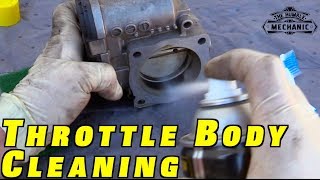
- Clean the throttle body thoroughly using a dedicated throttle body cleaner and a soft cloth or brush. Do NOT spray cleaner directly into the electronic components. Gently push the plate open to clean the edges and the bore behind it. Clean both sides of the throttle plate. 🎬 Watch: How to clean the throttle body and MAF sensor
- Reinstall the throttle body using a new gasket (e.g., PE01-13-655). Torque bolts to specification (approx. 8-10 Nm).
- Reconnect the electrical connector and intake ducting. Reconnect the battery.
- Perform an idle relearn procedure. Start the car and let it idle for several minutes until it reaches operating temperature and the idle speed stabilizes. The ECU will recalibrate the throttle plate's closed position.
- Clear the code and test drive the vehicle. If the code returns, the throttle body assembly itself is likely faulty and needs replacement.
Parts You'll Likely Need
- Throttle Body Gasket
(OEM #PE01-13-655)— A new gasket should always be used when removing and reinstalling the throttle body to prevent vacuum leaks.
Trusted brands: Mazda OE, Fel-Pro, Beck/Arnley
OEM price range: $15-$25
Aftermarket price range: $5-$10 - Electronic Throttle Body Assembly
(OEM #PY01-13-640A (for many 2.5L models, verify by VIN))— If cleaning the throttle body does not resolve the code, the internal sensor has likely failed, requiring replacement of the entire assembly.
Trusted brands: Mazda OE, Bosch, Hitachi, Cardone (Remanufactured)
OEM price range: $350-$500
Aftermarket price range: $150-$250
Technical Service Bulletins (TSBs) & Recalls
- TSB 01-002/23: While not for P0121, this TSB for cracked cylinder heads on 2.5T engines is a critical known issue for the platform.
- TSB 01-011/22: Addresses excessive oil consumption on some 2.5T engines due to faulty valve seals.
- TSB 09-018/22: Pertains to software updates for the Mazda Connect infotainment system to resolve bugs, a common owner complaint.
Platform-Specific Known Issues
- The direct-injection nature of the SKYACTIV engine makes carbon buildup on the throttle plate a common maintenance issue that can directly lead to code P0121. Owners report this as early as 60,000 miles.
- Some owners on forums note that even without a check engine light, periodic cleaning of the throttle body every 30,000-50,000 miles can restore smoother idle and throttle response.
Mechanic-Grade Diagnostic Values
- TPS Reference Voltage (VREF) — expected: 5V +/- 0.5V. Failure: Voltage outside of 4.8-5.2V range indicates a problem with the PCM or wiring.
- TPS Signal Voltage (TP1) at Closed Throttle — expected: ~0.5V. Failure: Voltage significantly higher or lower, or no voltage.
- TPS Signal Voltage (TP1) at Wide-Open Throttle (WOT) — expected: ~4.5V. Failure: Voltage does not reach near 4.5V, or has dropouts/spikes during sweep.
- TPS Signal Voltage (TP2) at Closed Throttle — expected: ~3.88V. Failure: Voltage significantly different, indicating a fault in the redundant sensor.
- TPS Signal Voltage (TP2) at Wide-Open Throttle (WOT) — expected: ~0.38V. Failure: Voltage does not sweep smoothly down to this approximate value.
- Throttle Actuator Control Motor Resistance — expected: 1-2 ohms between terminals E and F (example from service manual).. Failure: Open circuit (infinite resistance) or short circuit (zero resistance) indicates a failed motor.
Scan Tool Commands That Help
- FORScan / Mazda IDS: Reset KAM (Keep Alive Memory) — After cleaning or replacing the throttle body, resetting the KAM will clear all learned fuel trims and adaptive strategies, forcing the PCM to relearn idle and throttle parameters from scratch. This is more thorough than a simple battery disconnect.
- Mazda IDS (Dealer Tool): ETB Learning — This is the dealer-level guided function to force the PCM to learn the throttle valve's fully closed position. It typically involves cycling the ignition on and off several times for 15-second intervals as prompted by the tool.
Wiring & Ground Locations
- G03 — Left front of engine compartment, near the headlight assembly.. This is a primary engine bay ground point. A corroded or loose G03 can cause erratic sensor readings for multiple components, including the throttle body, due to an unstable ground reference for the PCM.
- Throttle Body Connector — 6-pin connector directly on the electronic throttle body.. This is the single point of failure for all power, ground, and signal wires to the throttle body. Pins can corrode or lose tension. Specific PCM terminal destinations for these wires (e.g., Throttle body terminal B to PCM terminal 1BS) are critical for continuity checks.
- PCM Ground — The PCM case is grounded through its mounting bolts to the chassis, typically located in the engine bay near the firewall.. The PCM requires a solid ground to provide accurate reference voltages to sensors like the TPS. While less common, poor grounding at the PCM itself can cause a host of difficult-to-diagnose sensor codes, including P0121.
Real Owner Repair Stories
- Reddit user StinkyMcShitzle (Not specified, but general automotive context) — P0121 code triggered.
✅ What actually fixed it The floor mat had slid forward and was bunched up under the gas pedal, preventing it from returning to the true idle position. The PCM saw a discrepancy between the expected idle TPS reading and the actual reading, triggering the P0121 range/performance code. Removing the obstruction and clearing the code resolved the issue.
OEM Part Supersession History
PY01-13-640→PY01-13-640A— Standard part revision, likely for improved reliability or minor manufacturing changes.
Heads up: PY01-13-640A is the common replacement for earlier 2.5L non-turbo models and is generally backward compatible.PY01-13-640A→PYFS-13-640— Part redesign for the updated KF generation CX-5 and other models with cylinder deactivation.
Heads up: PYFS-13-640 is for 2018+ 2.5L non-turbo engines. PY01-13-640A is for pre-2018 models. The parts are not interchangeable.
Model Year Variations Within This Range
- 2012-2017 (KE Generation): Uses throttle body part number PY01-13-640A (or its predecessor). The diagnostic procedure is consistent, but the replacement part is specific to this generation.
- 2018-2024 (KF Generation, 2.5L Non-Turbo): Uses throttle body part number PYFS-13-640. This engine may also feature cylinder deactivation, but the P0121 diagnosis remains focused on the throttle body itself.
- 2019-2024 (2.5L Turbo Models): Uses a different throttle body (Part numbers include PY8V-13-640). While P0121 can still occur, these engines have other known issues (e.g., TSB for cracked cylinder heads) that can cause similar symptoms like rough idle, so a broader diagnosis is important.
Diagnostic Flowchart
Other Known Issues on This Vehicle
Issues unrelated to this code that are worth knowing about as an owner of this generation:
- Cracked Cylinder Head (SKYACTIV-G 2.5T) 🔴 High — Primarily reported in 2019-2021 Turbo models. Can cause coolant leaks near the exhaust manifold. (Ref: Mazda TSB 01-002/23 (supersedes previous versions) addresses this by replacing the cylinder head and using a modified gasket.)
- Excessive Oil Consumption (SKYACTIV-G 2.5T) 🟠 Medium — Affects certain 2021 models with the 2.5L Turbo engine. Caused by faulty valve stem seals. (Ref: A TSB and a class-action settlement address this. Mazda TSB 01-011/22 details the repair procedure involving valve seal replacement.)
- Daytime Running Light (DRL) Failure 🟡 Low — Common on 2016 models. The LED DRLs may flicker or fail completely due to corrosion caused by a faulty sealing gasket. (Ref: Recall 4320A / NHTSA Campaign 20V063000 was issued to inspect and replace the gasket or the entire headlight assembly.)
- Infotainment System Glitches 🟡 Low — Reported across various model years, especially 2014-2016. Symptoms include random reboots, freezing, and unresponsive controls. (Ref: Multiple software updates have been released. TSB 09-018/22 (and its predecessors) provides instructions for updating the Mazda Connect firmware to the latest version to fix various bugs.)
- DPF and Oil Dilution Issues (SKYACTIV-D) 🔴 High — Specific to the 2.2L SKYACTIV-D diesel engine, especially in vehicles used for frequent short trips. Incomplete DPF regeneration cycles can lead to diesel fuel contaminating the engine oil, raising the oil level and causing poor lubrication.
Used vs. New Parts: Buying Guide for This Vehicle
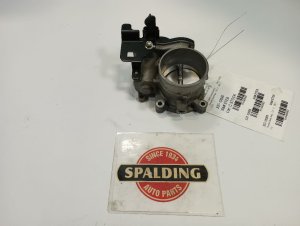
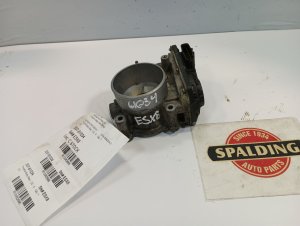
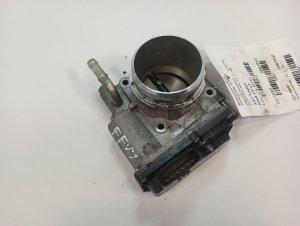
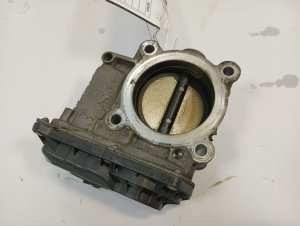
When a used part is the smart pick: A used OEM throttle body is a very smart choice for this repair, as the failure is often electronic and not strictly wear-related. Given the high cost of a new OEM part (often $400+), a used part from a reputable dismantler for $50-$100 offers significant savings.
Donor-vehicle mileage cap: roughly under 80000 miles for the part to have meaningful remaining life.
What to inspect on the donor part:
- Verify the part number stamped on the housing matches your required part (e.g., PY01-13-640A or PYFS-13-640).
- Inspect the electrical connector pins for any signs of green or white corrosion, bending, or damage.
- Look at the throttle plate and bore. While it may be dirty, avoid parts with heavy scoring or physical damage.
- Ask for a warranty. Many professional auto recyclers offer a 30-90 day or even 1-year warranty on electronic parts.
Aftermarket brands forum-validated for this vehicle:
- Bosch
- Hitachi (Often the original OE supplier)
Brands owners have reported issues with on this vehicle:
- Unnamed 'white box' brands from online marketplaces (e.g., Amazon, eBay) often have a higher failure rate and may not have the same precise sensor calibration as OEM or top-tier aftermarket parts.
Real Owner Stories
Aggregated from forums and TSBs cited above. Mileages and costs reflect what owners reported in those sources.
2012-2024 Mazda CX-5 SKYACTIV-G — ~60000 miles
Symptoms: Carbon buildup on the throttle plate leading to the P0121 code.
What fixed it: Cleaning the throttle body to remove carbon and oil buildup from the PCV system.
Source hint: vehicle_specific_issues
2016 Mazda CX-5 — 65000 miles
Symptoms: Owner inquired about maintenance cleaning; other users confirmed carbon buildup is common at this mileage.
What fixed it: Cleaning the throttle body using appropriate cleaners; users noted the seal is ideally replaced but sometimes reused.
Source hint: Mazda Forum (mazdaforum.com) thread 'Throttle Body Cleaning'
2012-2024 Mazda CX-5 SKYACTIV-G — 65000 miles
Symptoms: Significant carbon buildup visible in before-and-after photos, even though the vehicle had no prior symptoms.
What fixed it: A simple DIY throttle body cleaning.
Source hint: Reddit (r/CX5) thread 'Throttle Body Cleaning'
Related OBD-II Codes
Frequently Asked Questions
Is there a specific TSB for the P0121 code on my Mazda CX-5?
What is the correct replacement part number for the throttle body on a 2.5L SKYACTIV-G?
Do I need to replace the gasket when cleaning the throttle body?
How often should I clean the throttle body to prevent P0121 on my CX-5?
Can I just replace the sensor, or do I need the whole assembly?
Is there a special procedure I need to follow after cleaning the throttle body?
Helpful Videos
We Have This Part in Stock

The information in this article is provided for general reference and educational purposes only. Vehicle specifications, procedures, and part compatibility can vary by production date, trim level, and region. Always consult your vehicle's factory service manual and verify part numbers before purchasing or performing repairs. Safety-critical components such as airbags, seat belts, and braking systems should be installed by a qualified professional.
- Mazda CX-5:
- 🧭 Diagnostic Flowchart
- 🎬 Helpful Videos
- 🛍️ Shop This Part
- What's Unique About the 2012-2024 Mazda CX-5
- Symptoms You May Notice
- Most Likely Causes
- Rare But Worth Checking
- Diagnosis Steps
- Parts You'll Likely Need
- Technical Service Bulletins (TSBs) & Recalls
- Platform-Specific Known Issues
- Mechanic-Grade Diagnostic Values
- Scan Tool Commands That Help
- Wiring & Ground Locations
- Real Owner Repair Stories
- OEM Part Supersession History
- Model Year Variations Within This Range
- Other Known Issues on This Vehicle
- Used vs. New Parts: Buying Guide for This Vehicle
- Real Owner Stories
- 2012-2024 Mazda CX-5 SKYACTIV-G — ~60000 miles
- 2016 Mazda CX-5 — 65000 miles
- 2012-2024 Mazda CX-5 SKYACTIV-G — 65000 miles
- Related OBD-II Codes
- Frequently Asked Questions
- 🎟️ Get 5% Off