

P0121 on 2011-2017 Porsche Cayenne 4.8L V8: Throttle Position Sensor Causes and Fixes
On a 2011-2017 Porsche Cayenne with the 4.8L V8, code P0121 is caused by a fault in either the throttle body or the accelerator pedal assembly. Both parts contain non-serviceable position sensors that can fail. Symptoms include 'PSM Failure' warnings and limp mode. Diagnosis requires a scan tool to check live data from both components to determine which has failed. Expect to pay $250-$400 for a new pedal assembly or $200-$500 for an aftermarket throttle body.
- P0121 on a 2011-2017 Cayenne 4.8L almost always means you need a new throttle body assembly.
- Symptoms are serious and include 'limp mode' and multiple dash warnings; continued driving is not advised.
- Do not replace the MAF sensor for this code; it is a common misdiagnosis.
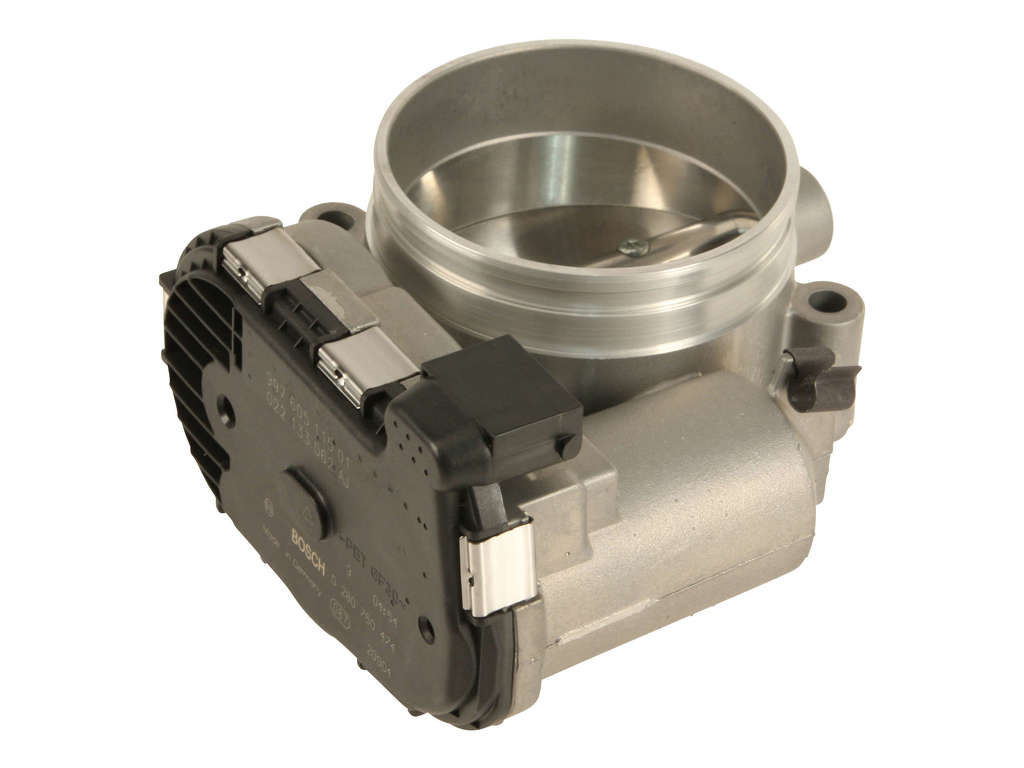
- Aftermarket throttle bodies from brands like Bosch are a cost-effective and reliable alternative to the more expensive OEM part.
- A throttle body adaptation procedure with a proper scan tool is required after replacement.
What's Unique About the 2011-2017 Porsche Cayenne
Unlike older vehicles, the 2011-2017 Cayenne integrates dual sensors into both the electronic throttle body and the accelerator pedal. While P0121 is a generic code, on this specific platform and its Panamera sibling, it is very commonly caused by the failure of the accelerator pedal assembly, not just the throttle body. Mechanics unfamiliar with this may incorrectly replace the throttle body, failing to fix the issue. The sensors are not sold separately for either component, so the entire faulty assembly must be replaced.
Symptoms You May Notice
- Check Engine Light is on
- Multiple dashboard warnings, such as 'PSM Failure', 'Chassis System Fault', and 'Reduced Engine Power'.
- Vehicle enters 'limp mode' with significantly limited power and acceleration.
- Hesitation or stumbling during acceleration.
- Engine idle is higher than normal (e.g., stuck around 1000-1200 RPM).
- Unstable or unresponsive throttle pedal, may require a restart to temporarily fix.
- Replacing the Mass Airflow (MAF) sensor. A faulty MAF sensor will typically set its own specific codes and does not usually cause a P0121 code on this vehicle.
- Replacing the throttle body when the accelerator pedal assembly is the actual cause. This is a common mistake on this platform due to the generic nature of the P0121 code.
Most Likely Causes
- Faulty Accelerator Pedal Assembly 🔴 High Probability → Shop Accelerator Pedal Assembly This is a very common failure point for P0121 on this platform. The two internal electronic potentiometers wear out over time, causing their voltage signals to become erratic or disagree with each other, which triggers the fault.
How to confirm: Use a high-end scan tool to monitor live data for 'Accelerator Pedal Potentiometer 1' and 'Potentiometer 2'. As you slowly press and release the pedal, the voltage readings should be smooth and correlate (one rising, one falling). If the readings are jumpy, erratic, or one drops out, the pedal assembly is faulty and must be replaced.
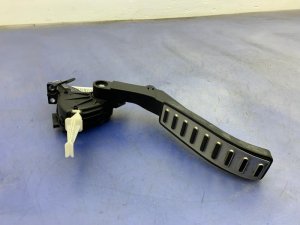
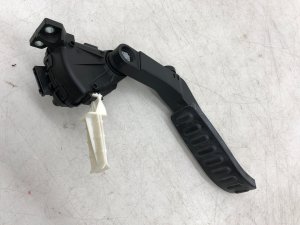
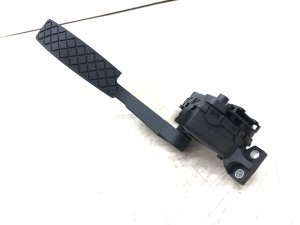
Typical fix: Replace the entire accelerator pedal assembly. It is a plug-and-play part and the sensors are not sold separately. Ensure the correct part is ordered (standard vs. sport/aluminum pedals 🎬 Watch: How to remove the accelerator pedal assembly. may differ).
Est. part cost: $250-$400 - Faulty Throttle Body Assembly 🔴 High Probability → Shop Fuel Injection Throttle Body The throttle position sensors are integrated into the throttle body and are a common failure point. Wear and tear on the internal electronic components and contacts cause the sensor signals to become erratic.
How to confirm: After confirming the accelerator pedal sensors are working correctly via live data, use the scan tool to monitor the voltage readings from throttle position sensors 1 and 2. If these readings are erratic, jumpy, or do not change smoothly as the throttle plate moves, the throttle body is faulty.
Typical fix: Replace the entire throttle body assembly. After replacement, a throttle body adaptation/relearn procedure must be performed 🎬 See this step-by-step throttle body replacement walkthrough. with a compatible scan tool.
Est. part cost: $200-$600 - Wiring Harness or Connector Damage 🟡 Medium Probability The engine bay environment involves high heat and vibration, which can cause wires to become brittle or chafe over time. The connectors at the throttle body or accelerator pedal can also develop corrosion or loose pins.
How to confirm: Visually inspect the wiring harnesses leading to both the throttle body and the accelerator pedal for any signs of cracking, melting, or chafing. Unplug the connectors and check for corrosion, moisture, or backed-out pins. Use a multimeter to check for continuity and ensure there are no shorts to ground or power.
Typical fix: Repair the damaged section of the wiring harness or replace the connector pigtail. Ensure all connections are clean and secure.
Est. part cost: $10-$150 - Excessive Carbon Buildup in Throttle Body ⚪ Low Probability → Shop Fuel Injection Throttle Body While more likely to cause sticking or idle issues, heavy carbon deposits can restrict the throttle plate's movement, causing a mismatch between the expected and actual position, potentially triggering a performance/range code.
How to confirm: Remove the intake boot and visually inspect the throttle bore and plate for a thick layer of black carbon.
Typical fix: Clean the throttle body thoroughly with a dedicated throttle body cleaner and a soft brush. Manually move the plate to clean all surfaces. This is a good first step before replacing parts.
Est. part cost: $10-$20
Rare But Worth Checking
- Faulty Engine Control Module (ECM/DME): This is extremely rare. The ECM itself could be failing to interpret the sensor signals correctly. This should only be considered after all other possibilities, including wiring, have been exhaustively ruled out by a professional.
Diagnosis Steps
- Read the codes with an OBD-II scanner and confirm P0121 is present. Note any other codes, like P0122 or P0222.
- Use a scan tool that can display live data. First, monitor the voltage from Accelerator Pedal Position sensors 1 and 2. The values should sweep smoothly and correlate as you press and release the pedal.
- If the accelerator pedal sensor readings are erratic, jumpy, or one drops to zero, the Accelerator Pedal Assembly has failed and needs to be replaced. This is a very common fix.
- If the pedal sensor readings are smooth and correct, proceed to check the throttle body. Visually inspect its wiring harness and connector for obvious damage, melting, or corrosion.
- With the engine off, remove the intake ducting from the throttle body. Inspect for heavy carbon buildup. If dirty, clean it thoroughly.
- If the code persists, monitor the live data for Throttle Position Sensors 1 and 2. If these readings are erratic or do not follow the pedal input smoothly, the throttle body assembly has failed and needs to be replaced.
- If both pedal and throttle sensor readings appear stable, perform a continuity and resistance check on the wiring between the ECM and the suspect component's connector to rule out a wiring fault.
- After replacing the throttle body or accelerator pedal, clear the codes. A throttle adaptation may be required after replacing the throttle body, which can be done with a compatible scan tool.
Parts You'll Likely Need
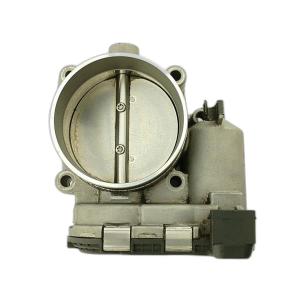
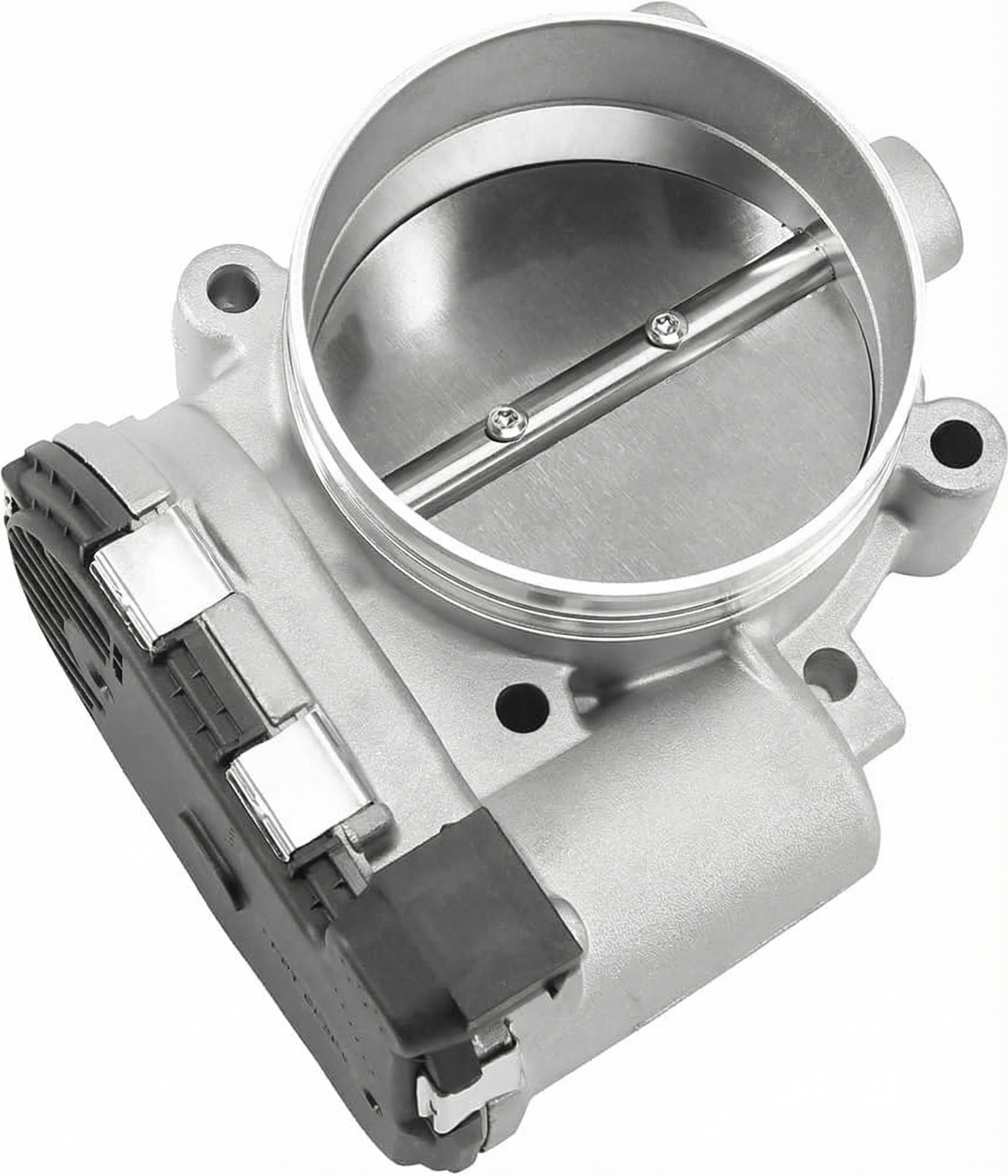
- Throttle Body Assembly
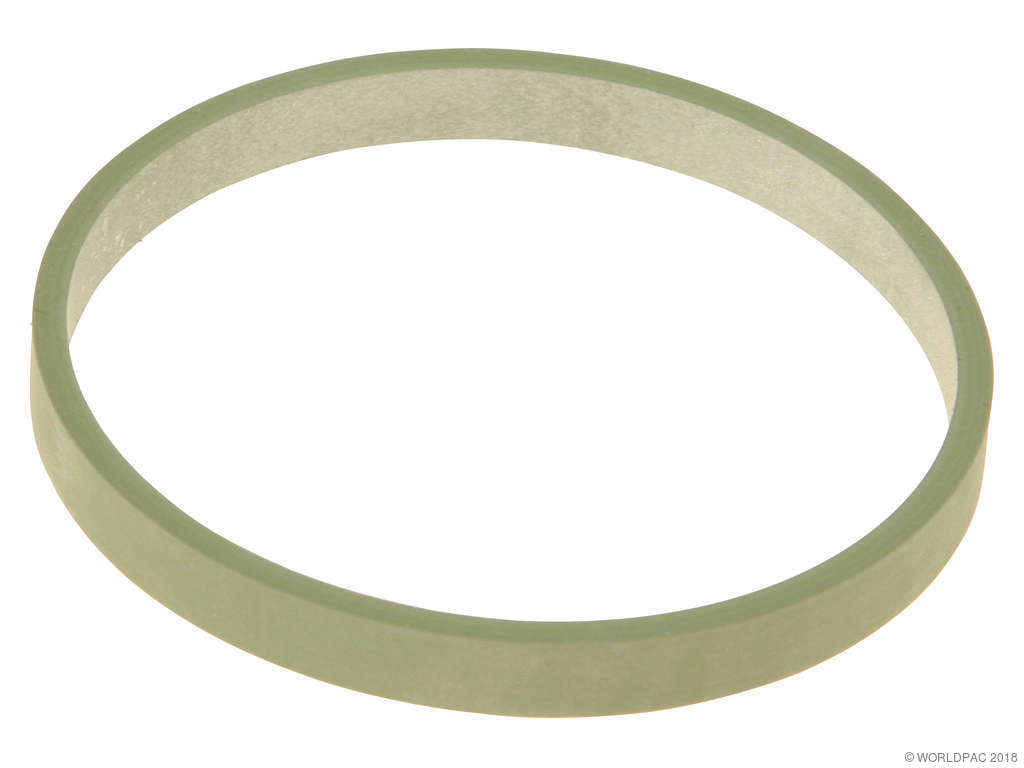
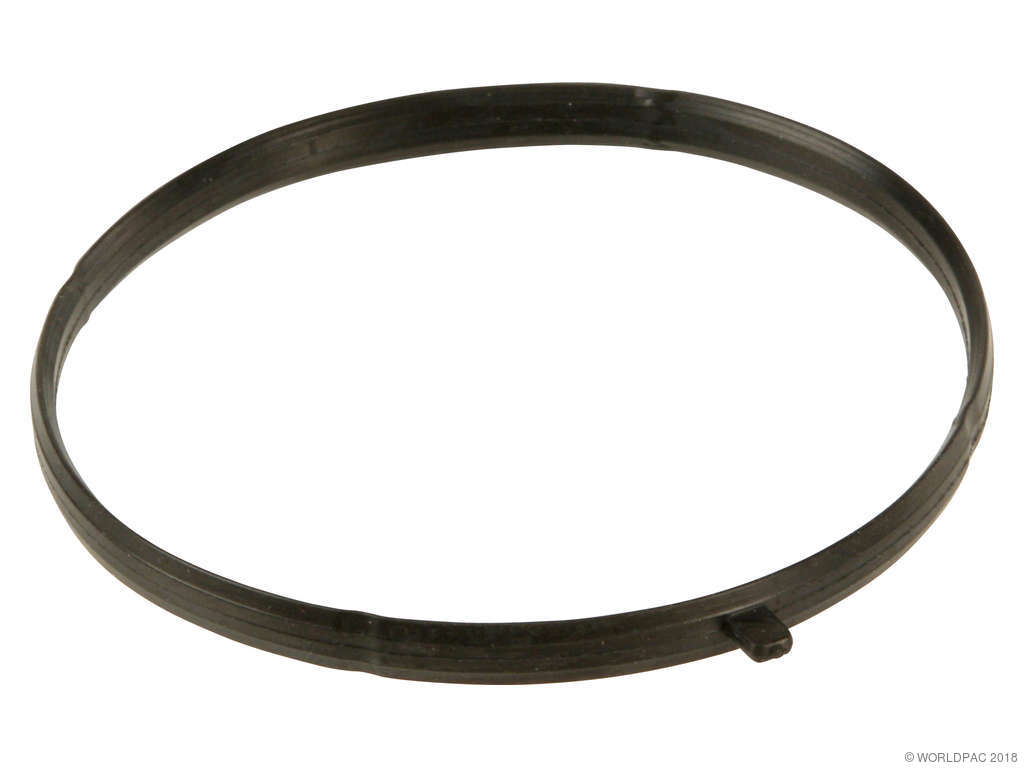
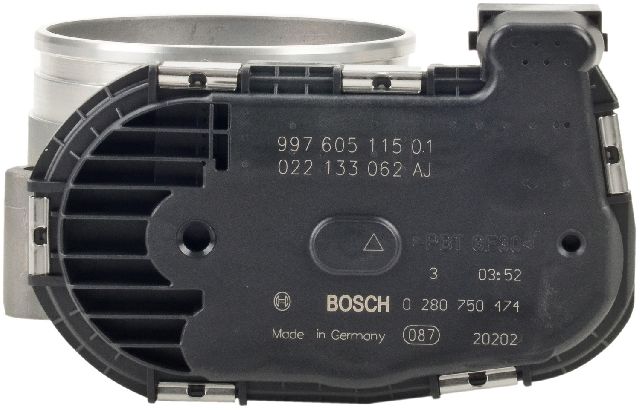
(OEM #94860511503)— A common failure point. The internal throttle position sensors fail, and they are not available as a separate part for this vehicle.
Trusted brands: Bosch, Genuine Porsche
OEM price range: $500-$650
Aftermarket price range: $200-$350 - Accelerator Pedal Assembly
(OEM #7P5723507BB or 95542302340 (Verify by VIN))— An equally common, if not more common, cause of P0121 on this platform. The internal potentiometers wear out, sending conflicting signals. Often misdiagnosed as a bad throttle body.
Trusted brands: Genuine Porsche
OEM price range: $250-$400
Aftermarket price range: $100-$200 (Used OEM)
Related Codes That Often Appear With This One
- P0222 — This code indicates 'Throttle/Pedal Position Sensor/Switch 'B' Circuit Low Input', pointing to the secondary, redundant sensor within the same faulty assembly (either pedal or throttle body), strengthening the diagnosis of a failed unit.
- P0122 — This code means 'Throttle/Pedal Position Sensor/Switch 'A' Circuit Low Input'. It often appears with P0121 and points directly to an electrical fault in the primary sensor circuit, most likely within the pedal or throttle body itself.
Platform-Specific Known Issues
- NHTSA Recall 16V-169: Brake Pedal Circlip: While not directly related to the P0121 electronic fault, a recall was issued for some 2011-2016 Cayenne models for a missing circlip on the brake pedal pivot pin. This could cause the pedal to dislodge, creating a safety hazard. It is worth checking if this recall has been performed on the vehicle, as it involves the pedal assembly area.
Mechanic-Grade Diagnostic Values
- Accelerator Pedal Sensor 1 Voltage (Unpressed/Idle) — expected: 0.4V - 0.8V. Failure: Reading is significantly outside this range.
- Accelerator Pedal Sensor 1 Voltage (Fully Pressed) — expected: 4.0V - 4.8V. Failure: Reading is significantly lower than 4.0V (e.g., 3.8V).
- Accelerator Pedal Sensor 2 Voltage (Unpressed/Idle) — expected: 4.0V - 4.6V. Failure: Reading is extremely low (e.g., below 1.0V).
- Accelerator Pedal Sensor 2 Voltage (Fully Pressed) — expected: 0.9V - 1.2V. Failure: Reading is significantly higher than 1.2V (e.g., 1.9V).
- Throttle Body Sensor 1 vs. Sensor 2 Correlation — expected: The two sensors should have opposing voltage sweeps. As one sensor's voltage rises from ~0V to ~5V, the other should fall from ~5V to ~0V.. Failure: Voltages do not sweep smoothly, are erratic, or do not oppose each other, indicating a faulty throttle body.
- Sensor 5V Reference Voltage at Connector — expected: ~5.0V. Failure: Voltage is significantly low or absent, pointing to a wiring issue or a fault in the DME's voltage regulator.
Hidden / Shadow Codes Worth Checking
- P154500: Throttle Valve Control System Malfunction. This is a manufacturer-specific code that points more directly to a fault within the throttle body assembly itself. (see via Professional scan tools like PIWIS or high-end tools like Durametric will display these alongside the generic P0121 code.)
- P155800: Throttle Valve Drive - Electrical Fault. This code specifically indicates an electrical problem with the motor that actuates the throttle plate, strengthening the diagnosis of a failed throttle body. (see via Visible on Porsche-specific diagnostic tools when a throttle body electrical failure occurs.)
Scan Tool Commands That Help
- Porsche PIWIS Tester: Throttle valve adaptation — This function is mandatory after replacing the throttle body. It teaches the DME the new throttle plate's fully open and fully closed positions. It can be found under the DME control unit menu, in 'Maintenance/repairs', then 'Adaptations'.
- Manual Procedure (No Scanner): Throttle Body Relearn/Adaptation — As a basic alternative to a PIWIS adaptation after parts replacement. With the engine off, turn the ignition on (do not start engine) and wait for at least 30-60 seconds without touching the accelerator pedal. Then turn the ignition off. This allows the DME to cycle the throttle and find its end stops.
Wiring & Ground Locations
- Engine Bay Ground Strap — A braided strap running from the engine block to the passenger side (right side) strut tower in the engine bay.. A corroded or loose main engine ground can cause unstable voltage and floating grounds for all engine sensors, including the throttle and pedal sensors, leading to erratic readings and fault codes.
- Engine-to-Chassis Ground Strap — Located underneath the vehicle, connecting the bottom of the engine to the frame in the front right corner.. This is a primary ground path. Corrosion from road salt and moisture is common here and can cause a high-resistance connection, leading to widespread, difficult-to-diagnose electrical issues.
- Main Chassis Ground Point — Located inside the cabin, in front of the driver's seat, accessible under a small carpet flap on the floor.. This is a central grounding point for many interior modules. While less likely to cause this specific engine code, checking it is good practice if multiple, seemingly unrelated electrical faults are present.
- DME (ECU) Location — Located in the cowl area at the base of the windshield. The drains in this area are known to clog, which can lead to water pooling and damaging the DME and its connectors.. Water damage to the DME is a known, if uncommon, cause of throttle control faults. If the vehicle has a history of water ingress or the cowl drains are full of debris, the DME should be inspected for corrosion.
Real Owner Repair Stories
- Rennlist Forum User 'jmc1024' (2012 Porsche Cayenne V6 (958)) — Limp mode, multiple throttle-related DTCs (P155800, P154500), throttle adaptation failed repeatedly, accelerator pedal sensor voltages out of spec.
❌ Tried (didn't work) Replacing the battery, Replacing the throttle body assembly, Replacing the accelerator pedal assembly
✅ What actually fixed it The Engine Control Unit (ECU/DME) was sent to a specialist (ECUDoctors.com) and repaired. The fault was a bad internal 5V reference voltage regulator and a faulty throttle body driver circuit within the ECU itself. - Rennlist Forum User 'BoxerJoe' (2011 Porsche Cayenne 3.6L (958)) — Check Engine Light, forced limited power (limp mode), engine surging, multiple codes including P012200, P022200, P155800, and P154500.
❌ Tried (didn't work) Replacing the throttle body assembly
✅ What actually fixed it Diagnosis by an independent shop determined the ECU/DME had failed and was attempting to operate the throttle body backwards. The ultimate fix was to replace the ECU.
OEM Part Supersession History
94860511503→94860511504— Unspecified revision by the manufacturer, likely for improved reliability or internal electronics.
Heads up: The parts are interchangeable. When ordering, you will likely receive the newer 948-605-115-04 part number.95542302300→95542302340— Unspecified revision for the accelerator pedal assembly.
Heads up: These parts are generally interchangeable for the specified models, but always verify by VIN as different pedal styles (e.g., aluminum sport vs. standard) exist.
Model Year Variations Within This Range
- 2015-2017: For the 2015 model year facelift (958.2), the Cayenne S and GTS trims dropped the 4.8L V8 in favor of a 3.6L twin-turbo V6. Therefore, this guide only applies to 2011-2014 Cayenne S and GTS models. The Cayenne Turbo and Turbo S models, however, retained the 4.8L V8 for the entire 2011-2017 period.
Diagnostic Flowchart
Other Known Issues on This Vehicle
Issues unrelated to this code that are worth knowing about as an owner of this generation:
- Camshaft Adjuster Bolt Failure 🔴 High — Most common on 2011-2012 models with the 4.8L V8. The original aluminum bolts are prone to shearing, which can cause sudden engine stall, loss of power braking assist, and potentially catastrophic engine damage if bolt heads are not fully recovered. (Ref: Porsche issued service campaign WC-22 and recall AH08 in some markets to replace the aluminum bolts with steel ones.)
- Transfer Case Failure 🟠 Medium — A very common issue across the 958 generation, particularly noticeable on 2011-2014 models. Symptoms include shuddering, jerking, or hesitation during acceleration, especially from a stop or in low-speed turns. The issue is so widespread that Porsche extended the warranty on the transfer case for many vehicles. (Ref: Warranty Extension (not a formal recall))
- Coolant Pipe & Hose Leaks 🟠 Medium — Multiple plastic coolant pipes and hoses are prone to becoming brittle and failing. A common leak occurs from a pipe in the engine valley under the intake manifold, often requiring significant labor to access. Other plastic fittings, like those for the alternator coolant lines, can also crack and leak. Upgrading to aluminum pipes is the recommended permanent fix.
Used vs. New Parts: Buying Guide for This Vehicle
When a used part is the smart pick: For the accelerator pedal assembly, a used OEM part from a reputable dismantler with a known low donor mileage can be a cost-effective option, as it is a simple plug-and-play component. For the throttle body, a used part is riskier due to electronic wear, but can be considered if on a tight budget and sourced from a low-mileage vehicle.
Donor-vehicle mileage cap: roughly under 80000 miles for the part to have meaningful remaining life.
What to inspect on the donor part:
- Verify the part number on the used component matches your original part exactly.
- For the throttle body, inspect the bore for excessive carbon buildup or scoring on the throttle plate.
- Check electrical connectors for any signs of corrosion, cracked plastic, or bent pins.
- Ask the seller for the VIN and mileage of the donor vehicle if possible.
OEM-only on this vehicle (don't cheap out):
- Engine Control Module (DME/ECU) - Must be a new or specialized remanufactured unit and requires dealer-level programming to the vehicle's VIN and security system.
Aftermarket brands forum-validated for this vehicle:
- Bosch for the Throttle Body Assembly (Bosch is the Original Equipment Manufacturer, part number 0280750114). Buying the Bosch-branded part is identical to the Genuine Porsche part but often significantly cheaper.
Brands owners have reported issues with on this vehicle:
- Unnamed, no-brand throttle bodies from online marketplaces should be avoided. These often have lower quality internal electronics that can fail prematurely or not calibrate correctly during the adaptation procedure.
Real Owner Stories
Aggregated from forums and TSBs cited above. Mileages and costs reflect what owners reported in those sources.
2012 Porsche Cayenne Base
Symptoms: Vehicle experienced limp mode and a PSM failure warning. The owner attempted to fix the issue by replacing the battery and the throttle body, but the problem persisted.
What fixed it: The issue was finally resolved by ordering and installing a new accelerator pedal assembly.
Source hint: Rennlist.com - '958 - 2012 Base - Throttle Body & Electrical Error'
2010-2016 Porsche Panamera 4.8L V8
Symptoms: The vehicle triggered a P0121 code, which was initially misdiagnosed by mechanics as a throttle body issue.
What fixed it: Replacement of the accelerator pedal assembly, as the internal electronic potentiometers had failed.
Source hint: Go-Parts.com Article - 'P0121 on 2010-2016 Porsche Panamera'
Related OBD-II Codes
Frequently Asked Questions
My 2012 Cayenne is showing 'PSM Failure' and 'Reduced Engine Power' along with P0121. Are these related?
Is there a recall for the pedal assembly on my 2011-2016 Cayenne?
I've already replaced my throttle body but P0121 returned. What is the most likely culprit?
Do I need to do anything special after replacing the throttle body on my 4.8L V8?
Could my Cayenne's P0121 be caused by carbon buildup?
Does the Porsche Panamera share this P0121 issue with the Cayenne?
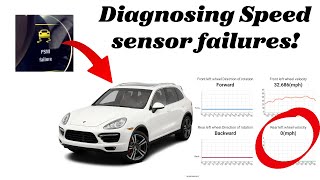
Helpful Videos

Used OEM Parts in Stock
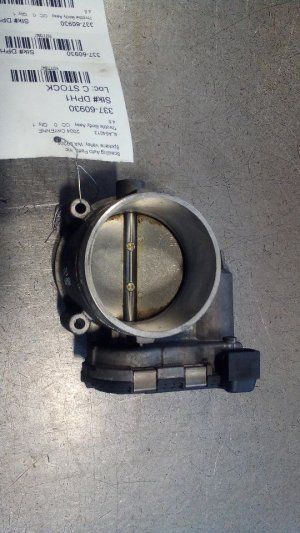
New Aftermarket Parts Available


The information in this article is provided for general reference and educational purposes only. Vehicle specifications, procedures, and part compatibility can vary by production date, trim level, and region. Always consult your vehicle's factory service manual and verify part numbers before purchasing or performing repairs. Safety-critical components such as airbags, seat belts, and braking systems should be installed by a qualified professional.
- Porsche Cayenne:
- 🧭 Diagnostic Flowchart
- 🎬 Helpful Videos
- 🛍️ Shop This Part
- What's Unique About the 2011-2017 Porsche Cayenne
- Symptoms You May Notice
- Most Likely Causes
- Rare But Worth Checking
- Diagnosis Steps
- Parts You'll Likely Need
- Related Codes That Often Appear With This One
- Platform-Specific Known Issues
- Mechanic-Grade Diagnostic Values
- Hidden / Shadow Codes Worth Checking
- Scan Tool Commands That Help
- Wiring & Ground Locations
- Real Owner Repair Stories
- OEM Part Supersession History
- Model Year Variations Within This Range
- Other Known Issues on This Vehicle
- Used vs. New Parts: Buying Guide for This Vehicle
- Real Owner Stories
- 2012 Porsche Cayenne Base
- 2010-2016 Porsche Panamera 4.8L V8
- Related OBD-II Codes
- Frequently Asked Questions
- 🎟️ Get 5% Off