

P0121 on 2003-2007 Saturn Ion 2.2L: Throttle Position Sensor Causes and Fixes
For a 2003-2007 Saturn Ion, code P0121 usually points to a failing throttle body assembly or a faulty accelerator pedal position sensor. The vehicle uses drive-by-wire, so the throttle position sensor is integrated into the throttle body and is not sold separately. Forum users frequently report the accelerator pedal assembly is the culprit. Expect to pay $100-$250 for a new throttle body or $75-$190 for a new pedal assembly.
- P0121 on a Saturn Ion means there's a problem in the electronic throttle control system.
- The most likely cause is a failed throttle body assembly, which contains a non-replaceable sensor.
- The second most likely cause is a failed accelerator pedal assembly.
- Do not attempt to buy a standalone Throttle Position Sensor (TPS); it is not a separate part for this car.
- Diagnosis involves using a scan tool to see which component—the throttle body or the pedal—is sending erratic signals.
What's Unique About the 2003-2007 Saturn Ion
The Saturn Ion with the 2.2L Ecotec engine uses an electronic throttle body where the throttle position sensor (TPS) is an integral, non-serviceable part of the throttle body assembly. Unlike older vehicles where you could replace just the small sensor, on this platform, a faulty TPS requires replacing the entire throttle body. Additionally, problems with the accelerator pedal position (APP) sensor, which is attached to the gas pedal, can also trigger this code. Forum members report that replacing the pedal assembly is a very common fix, sometimes more common than replacing the throttle body itself.
Symptoms You May Notice
- Check Engine Light is on
- "Reduced Engine Power" message on the dash
- Vehicle has very little acceleration or won't go over a certain speed (limp mode)
- Hesitation or stumbling during acceleration
- Engine stalls unexpectedly, especially at idle
- Rough or unstable idle, sometimes surging to high RPMs
- Hard to start engine
- Replacing only the throttle position sensor (This is not possible on the Saturn Ion as the part is integrated into the throttle body).
- Assuming the problem is the throttle body when it is actually the accelerator pedal assembly. Many forum users report success replacing the pedal after a throttle body replacement failed to fix the issue.
Most Likely Causes
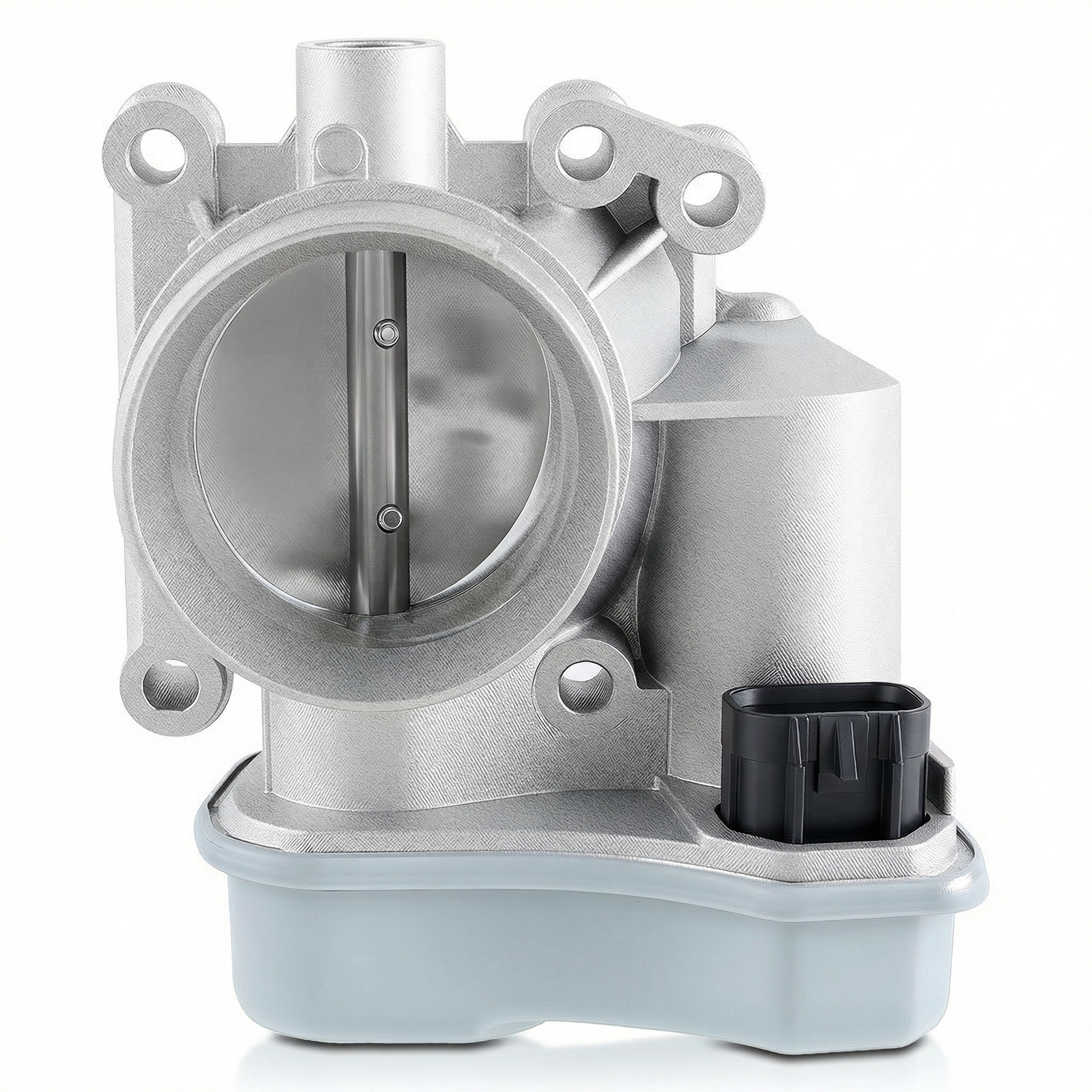
- Faulty Throttle Body Assembly 🔴 High Probability → Shop Fuel Injection Throttle Body The integrated throttle position sensor (TPS) is a common failure point. The internal electronics or resistive traces wear out, causing erratic signals. Carbon buildup can also cause the throttle plate to stick, leading to performance errors that trigger the code.
How to confirm: With a scan tool, observe the live data for 'Commanded Throttle' vs. 'Actual Throttle Position'. If the values differ significantly or the actual position is erratic as you slowly press the gas pedal, the throttle body is likely faulty. You may also hear a lack of the typical whining/clicking sound from the throttle body when turning the key to 'ON' without starting the engine.
Typical fix: Replace the entire throttle body assembly. The GM OEM part number is 12568796. After replacement, a throttle relearn procedure is required.
Est. part cost: $100-$250 - Faulty Accelerator Pedal Position (APP) Sensor 🔴 High Probability → Shop Accelerator Pedal Assembly The sensor is part of the gas pedal assembly and can wear out over time, sending incorrect signals to the ECM. Many owners on Saturn and Cobalt forums have fixed P0121 by replacing the pedal assembly after incorrectly assuming it was the throttle body.
How to confirm: Check for other codes like P2135, which specifically points to a correlation issue between sensors. A scan tool can monitor the APP sensor voltage (usually two separate signals, APP1 and APP2) to see if they are smooth, consistent, and track each other correctly as the pedal is pressed. For a 2005-2007 Ion, one APP sensor should read about 1.9V at idle and drop to 0.5V at wide-open throttle, while the second sensor should read about 2.7V at idle and drop to 1.9V at wide-open throttle.
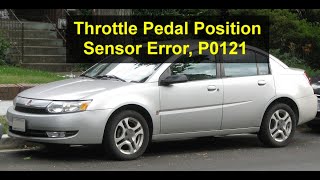
Typical fix: Replace the entire accelerator pedal assembly. The GM Genuine Parts number is 22731157. 🎬 Watch: Step-by-step guide to replacing the gas pedal assembly. This is often a straightforward unbolt-and-unplug replacement inside the cabin, though access to the top bolt can be tight.
Est. part cost: $75-$190 - Wiring or Connector Issues ⚪ Low Probability GM vehicles of this era are known for potential issues with wiring harnesses, specifically poor pin connections at the ECM or chafing of the harness. Corrosion can build up on connector pins, causing intermittent signal loss. A poor ground at G107 (left rear corner of the cylinder head) can cause various electrical issues, including TPS/APP sensor problems.
How to confirm: Visually inspect the wiring harnesses to the throttle body and the ECM for any signs of damage, corrosion, or loose pins. Wiggle the connectors while the engine is idling to see if it causes the problem to appear or disappear. Check for corrosion on the large connectors at the BCM (Body Control Module) in the passenger footwell area, as this is a known issue on platform mates like the Cobalt.
Typical fix: Repair the damaged section of the harness or clean and secure the connector pins using dielectric grease. In some cases, a new connector pigtail may need to be spliced in. Ensure ground G107 is clean and tight.
Est. part cost: $10-$50
Rare But Worth Checking
- Dirty Throttle Body: → Shop Fuel Injection Throttle Body While often a primary cause on other cars, on the Ion it's more likely to be a contributing factor. A thorough cleaning should be part of the diagnostic process, but it may not be the final fix. Be aware that cleaning can sometimes cause a temporary high idle until the computer relearns the new, cleaner closed-throttle position.
- Failing Engine Control Module (ECM): This is very rare, but a faulty ECM can misinterpret sensor signals. This should only be considered after all other possibilities (sensors, wiring) have been definitively ruled out. An ECM failure is the last resort diagnosis.
Diagnosis Steps
- Read the codes with an OBD-II scanner. Note any other codes present, especially P2135 or P0221.
- With the key on and engine off, use a scan tool to monitor the throttle position sensor voltage (TP1 and TP2) as you slowly press the gas pedal. The voltage should increase smoothly from about 0.5V to 4.5V without any jumps or dropouts.
- Use the scan tool to monitor the accelerator pedal position sensor voltage (APP1 and APP2). The readings should be smooth and directly correspond to your foot pressure on the pedal.
- Inspect the throttle body for significant carbon buildup. Clean it with a dedicated throttle body cleaner and a soft cloth if dirty.
- Inspect the wiring and connector at the throttle body for any visible damage, corrosion, or loose connections.
- Inspect the wiring and connector at the accelerator pedal assembly. Check for any signs of damage or moisture.
- Based on which component shows erratic readings, replace either the throttle body assembly (GM Part #12568796) or the accelerator pedal assembly (GM Part #22731157).
- After replacement, perform the throttle relearn procedure.
- Clear the codes and perform a test drive to confirm the fix.
Parts You'll Likely Need
- Throttle Body Assembly
(OEM #12568796)— This is a very common failure. The internal, non-replaceable sensor wears out, requiring the replacement of the entire unit.
Trusted brands: ACDelco (OEM), Bosch, Hitachi, Dorman
OEM price range: $175-$250
Aftermarket price range: $100-$180 - Accelerator Pedal Position Sensor Assembly
(OEM #22731157)— The second most likely cause, and a very common point of failure according to owner forums. The sensor is integrated with the pedal and is replaced as a single unit.
Trusted brands: ACDelco (OEM), Dorman, Standard Motor Products
OEM price range: $150-$190
Aftermarket price range: $75-$120
Related Codes That Often Appear With This One
- P2135 — This code, 'Throttle/Pedal Position Sensor/Switch A/B Voltage Correlation', often appears with P0121. It specifically indicates a disagreement between the two redundant position sensors within either the throttle body or the pedal assembly, strengthening the diagnosis of a failed component.
- P0221 — Similar to P0121 and P2135, this code refers to a range/performance problem but for the 'B' circuit of the throttle/pedal position sensor. Seeing these codes together strongly points to a failing throttle body or pedal assembly.
Technical Service Bulletins (TSBs) & Recalls
- GM Special Coverage Adjustment 14582: While not specifically for the Ion in all cases, this TSB addresses P0121/P2135 on a wide range of GM vehicles from the same era with similar electronic throttle bodies. It acknowledges the defect and provides a procedure for diagnosis and replacement of the throttle body or its sensor components (where applicable).
- GM TSB 12-06-04-003A: Addresses DTC P2135 on Ecotec engines and details a repair procedure involving cleaning and potentially replacing the throttle body, highlighting the sensitivity of the system.
Platform-Specific Known Issues
- A known issue on some GM vehicles from this period involves poor terminal connections at the ECM, which can mimic sensor failures. A Technical Service Bulletin for a related code (P2135) on similar platforms points to checking these connections.
- GM Special Coverage Adjustment 14582 was issued for some GM vehicles for DTC P2135, P0121, or P0221 related to the throttle body, though the Ion may not be explicitly covered, the underlying issue is the same.
Mechanic-Grade Diagnostic Values
- Accelerator Pedal Position (APP) Sensor 1 Voltage (2005-2007) — expected: Approx. 1.9V at idle, decreasing to approx. 0.5V at wide-open throttle.. Failure: Voltage readings that are erratic, jump, or do not change smoothly as the pedal is depressed.
- Accelerator Pedal Position (APP) Sensor 2 Voltage (2005-2007) — expected: Approx. 2.7V at idle, decreasing to approx. 1.9V at wide-open throttle.. Failure: Voltage readings that are inconsistent with Sensor 1 or show spikes/glitches.
- Throttle Position Sensor (TPS) Signal Voltage — expected: Smoothly increases from ~0.5V to ~4.5V as the throttle plate opens.. Failure: Any jumps, drops, or dead spots in the voltage sweep as the pedal is slowly pressed.
- ECM 5-Volt Reference at TPS connector — expected: 4.75V to 5.25V with key on, engine off.. Failure: Voltage outside of this range indicates a problem with the ECM or wiring, not the sensor itself.
- Throttle Body Bolt Torque — expected: 89 inch-pounds. Failure: N/A
Scan Tool Commands That Help
- GM Tech2: Idle Learn Reset / Throttle Relearn — This function, found under 'Special Functions' or 'Module Setup' for the Engine Control Module, is used after replacing or cleaning the throttle body to reset the learned idle position and prevent high or unstable idle.
- GM Tech2: Read Live Data (TP Sensor 1/2, APP Sensor 1/2) — To observe the voltage signals from both the throttle body and accelerator pedal sensors in real-time. This is the primary method to identify which component is sending erratic or out-of-range signals.
Wiring & Ground Locations
- G107 — On the left rear corner of the cylinder head.. This is a primary ground point for the Powertrain Control Module (PCM) and multiple sensors. A loose or corroded connection here can cause a host of intermittent electrical problems, including sensor performance codes like P0121.
- G103 — At the lower left front side of the engine compartment (2003 models).. An important engine bay ground. While G107 is more directly tied to the PCM, ensuring all major grounds are clean and secure is critical when diagnosing electrical faults.
- G105 — On the lower left rear of the engine, above the starter.. Another key engine ground point that can affect ECM operation if compromised.
- ECM Connector — At the left side of the engine compartment.. The pins for the APP and TP sensors terminate here. Corrosion or poor pin tension in this connector can mimic a sensor failure. The APP sensor signals (APP sens 1 sig, APP sens 2 sig) and TP sensor signals (TP sens 1 sig, TP sens 2 sig) can be checked at this connector.
- BCM Connector — At the lower center of the dash.. The Body Control Module communicates with the ECM via the Class 2 Serial Data line. Water intrusion or corrosion at the BCM is a known issue on this platform and can cause a wide range of seemingly unrelated electronic problems.
Real Owner Repair Stories
- Cobalt SS Network forum user (2006 Chevrolet Cobalt SS 2.4L (platform mate)) — P0121 code, high idle (2800 RPM) after cleaning the throttle body.
❌ Tried (didn't work) Standard idle relearn procedure (idle 3 mins, off 60s, idle 3 mins) did not work.
✅ What actually fixed it Driving the car for several days (approx. 300 miles). The ECU eventually adapted to the cleaner throttle body on its own, and the idle returned to normal. Another user with a 2007 Ion 2.4L confirmed the same experience, stating it took about a week of driving for the high idle to resolve itself. - Medium blog post by owner Ryan Cresawn (2006 Saturn Ion, 142,825 miles) — Engine RPMs fluctuated +/- 100 RPMs at idle, engine would nearly stall when accelerating from a stop with A/C on.
❌ Tried (didn't work) Replacing the spark plugs.
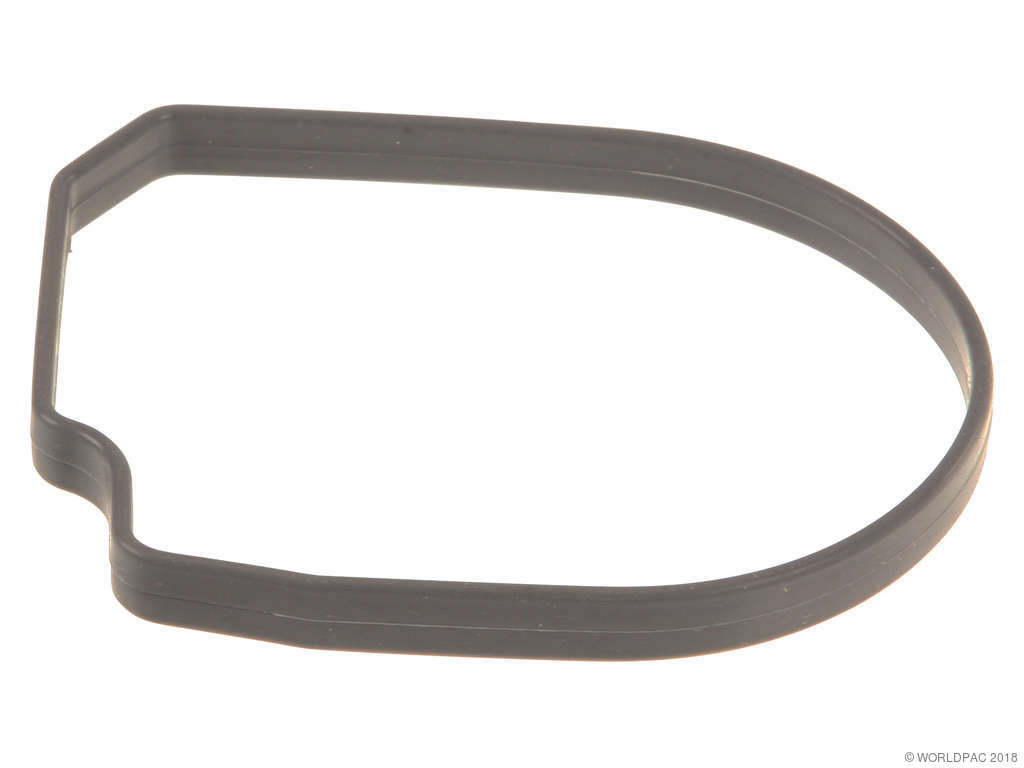
✅ What actually fixed it Removing and thoroughly cleaning the throttle body of carbon and gum buildup. After cleaning and reinstalling with a new seal (torqued to 89 in-lbs), the idle became steady and the near-stall issue was resolved.
OEM Part Supersession History
25312094→12568796— Part has been updated by the manufacturer.
Diagnostic Flowchart
Used vs. New Parts: Buying Guide for This Vehicle
When a used part is the smart pick: For a vehicle of this age, a used throttle body or accelerator pedal assembly from a reputable salvage yard can be a cost-effective option, especially if the donor vehicle has low mileage.
Donor-vehicle mileage cap: roughly under 80000 miles for the part to have meaningful remaining life.
What to inspect on the donor part:
- For a throttle body, check the throttle plate for excessive carbon buildup or scoring.
- Verify the electrical connector pins are clean, straight, and free of corrosion.
- Ask for the VIN of the donor car to check for accident history; avoid parts from flood-damaged vehicles.
- Inquire about the salvage yard's return policy in case the part is defective.
Aftermarket brands forum-validated for this vehicle:
- ACDelco (OEM)
- Bosch
- Hitachi
- Dorman (specifically their OE FIX models which may feature upgraded non-contact Hall effect sensors to prevent wear).
Brands owners have reported issues with on this vehicle:
- No-name, unbranded parts from online marketplaces should be avoided, as their internal electronics may not meet OEM specifications for reliability and accuracy, leading to a quick return of the P0121 code.
Real Owner Stories
Aggregated from forums and TSBs cited above. Mileages and costs reflect what owners reported in those sources.
Chevrolet Cobalt 2.4L
Symptoms: After cleaning the throttle body to address a P0121 code, the car developed a persistent high idle.
What fixed it: Driving the car for several days, approximately 300 miles, allowed the ECU to fully relearn the new idle position and resolve the high idle issue.
Source hint: CobaltSS.net - Thread 'P0121 throttle body cleaning and high idle'
Related OBD-II Codes
Frequently Asked Questions
Is my 2007 Saturn Ion covered by GM's Special Coverage Adjustment 14582 for the P0121 code?
My Ion has a P0121 code. Is it more likely the throttle body or the gas pedal?
What are the correct GM part numbers for the throttle body and accelerator pedal on my 2.2L Ion?
I replaced the throttle body on my Ion and now the idle is high. What do I do?
Besides the sensors, are there any common wiring issues I should check for P0121 on my Ion?
What are the correct APP sensor voltage readings for a 2005-2007 Ion when diagnosing P0121?
Helpful Videos
Used OEM Parts in Stock
New Aftermarket Parts Available




The information in this article is provided for general reference and educational purposes only. Vehicle specifications, procedures, and part compatibility can vary by production date, trim level, and region. Always consult your vehicle's factory service manual and verify part numbers before purchasing or performing repairs. Safety-critical components such as airbags, seat belts, and braking systems should be installed by a qualified professional.
- Saturn Ion:
- 🧭 Diagnostic Flowchart
- 🎬 Helpful Videos
- 🛍️ Shop This Part
- What's Unique About the 2003-2007 Saturn Ion
- Symptoms You May Notice
- Most Likely Causes
- Rare But Worth Checking
- Diagnosis Steps
- Parts You'll Likely Need
- Related Codes That Often Appear With This One
- Technical Service Bulletins (TSBs) & Recalls
- Platform-Specific Known Issues
- Mechanic-Grade Diagnostic Values
- Scan Tool Commands That Help
- Wiring & Ground Locations
- Real Owner Repair Stories
- OEM Part Supersession History
- Used vs. New Parts: Buying Guide for This Vehicle
- Real Owner Stories
- Chevrolet Cobalt 2.4L
- Related OBD-II Codes
- Frequently Asked Questions
- 🎟️ Get 5% Off