

P0121 on 2005-2007 Subaru Outback: Causes and Fixes for Throttle/Pedal Sensor Faults
On a 2005-2007 Outback, P0121 is most often caused by a failing accelerator pedal position (APP) sensor. Before replacing parts, also check for a dirty throttle body and inspect the wiring. A replacement pedal assembly costs around $60-$150. The cruise control light will often blink along with the Check Engine Light.
- For a 2005-2007 Subaru Outback, P0121 is most likely caused by a faulty accelerator pedal position (APP) sensor, not the sensor on the engine.
- The blinking cruise control light is a standard Subaru feature accompanying a Check Engine Light and does not indicate a separate problem.
- Before buying any parts, spend $10 on throttle body cleaner and clean the throttle plate and bore, then perform an idle relearn procedure, as this can sometimes fix the issue.
- Use a scan tool to watch live data from the APP sensor. If the readings are jumpy or drop out when you press the pedal, the pedal assembly needs to be replaced.
What's Unique About the 2005-2007 Subaru Outback
While P0121 is a generic code, on this generation of Subaru Outback and its platform-mate, the Subaru Legacy, it very frequently points to a failure of the accelerator pedal position (APP) sensor assembly rather than the throttle body itself. Many owners replace the throttle position sensor (TPS) or the entire throttle body only to find the problem persists because the root cause was the pedal assembly. The APP sensor is a known high-failure item on these models after they accumulate mileage.
Symptoms You May Notice
- Check Engine Light is on
- Blinking cruise control light (a common Subaru indicator for any CEL)
- Engine hesitates or stumbles during acceleration
- Rough or unstable idle
- Engine stalling at low speeds
- Vehicle enters 'limp mode' with reduced engine power
- Sudden surges or loss of power while driving
- Unresponsive or sluggish throttle pedal
- Replacing the throttle body or throttle position sensor when the actual fault is a bad accelerator pedal position sensor.
- Replacing sensors without first cleaning the throttle body, which is a cheap and easy diagnostic step that often resolves the issue.
- Mistaking a floor mat obstructing the pedal for a sensor failure.
Most Likely Causes
- Faulty Accelerator Pedal Position (APP) Sensor 🔴 High Probability → Shop Accelerator Pedal Assembly This specific part is a common failure point on high-mileage 2005-2007 Outbacks and Legacys, and is often the true cause of a P0121 code. The internal contacts wear out over time.
How to confirm: Use a scan tool to monitor the live data for the APP sensor (often labeled as APP Sensor 1 and 2). The voltage should sweep smoothly from ~0.5V to ~4.5V as you press and release the pedal. Any jumps, drops, or dead spots indicate a faulty sensor. The sensor is integrated into the accelerator pedal assembly.
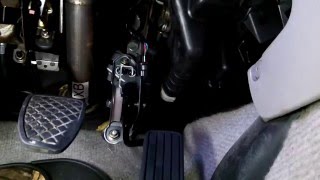
Typical fix: Replace the entire accelerator pedal assembly. It is typically held on by two 12mm nuts and has one electrical connector. The job takes less than 30 minutes. 🎬 See this walkthrough on how to replace the gas pedal.
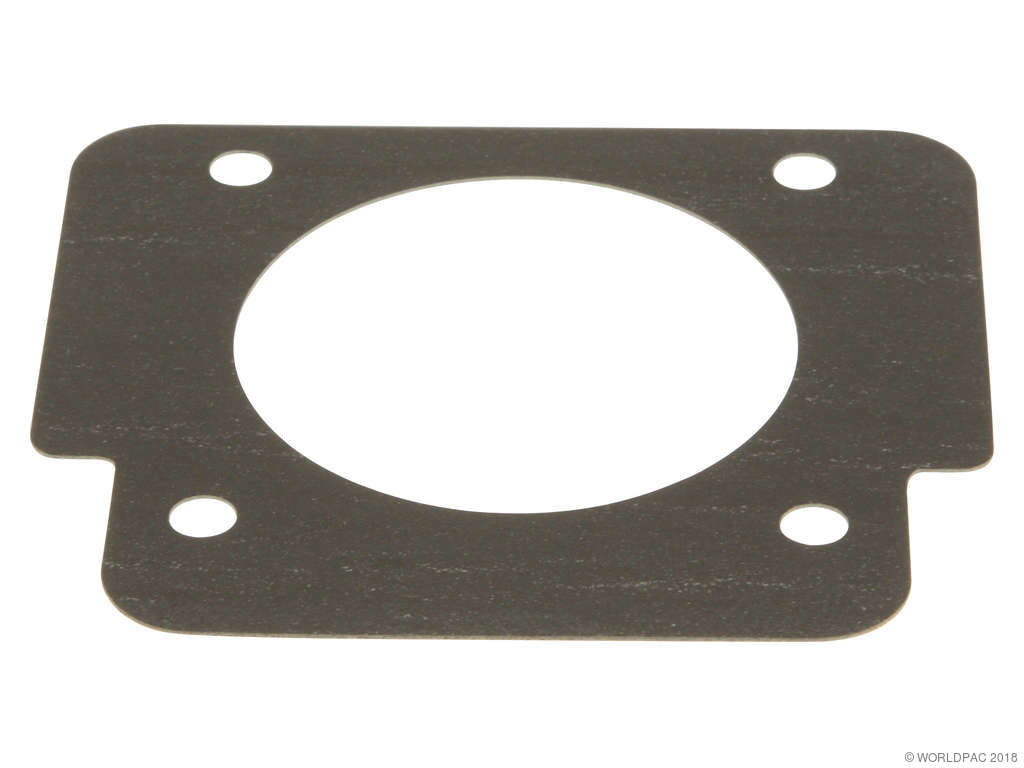
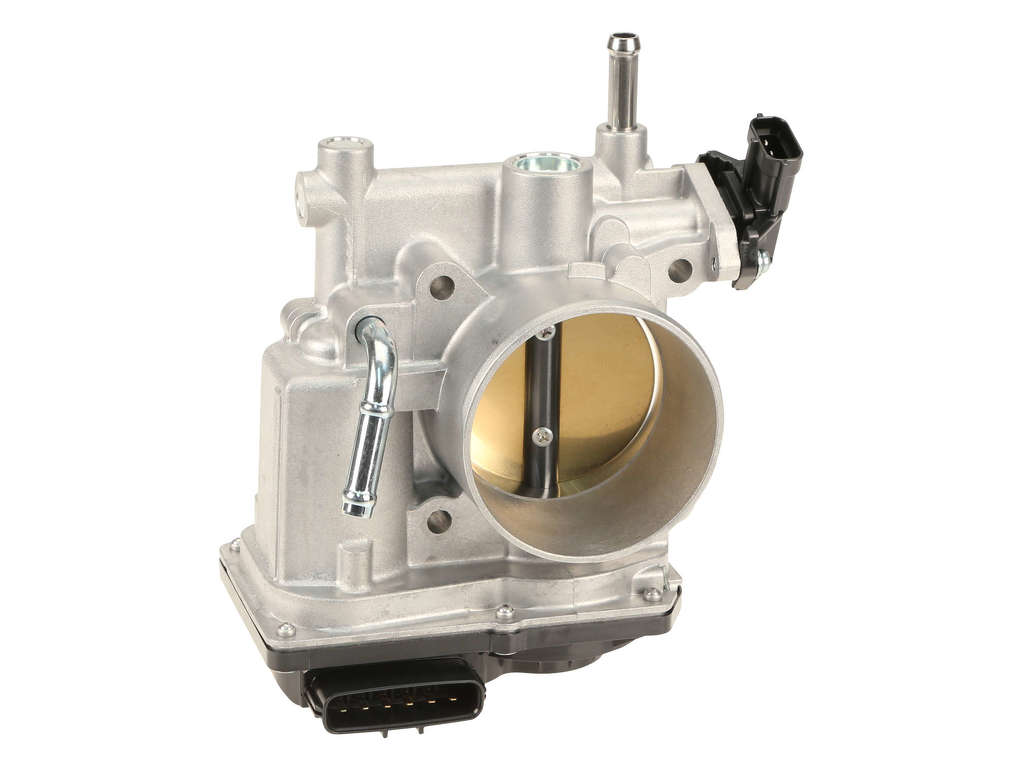
Est. part cost: $60-$150 - Dirty or Sticking Throttle Body 🟡 Medium Probability → Shop Fuel Injection Throttle Body Over time, carbon and oil residue from the PCV system can build up in the throttle body, causing the throttle plate to stick and not move smoothly, leading to a mismatch between pedal input and throttle position.
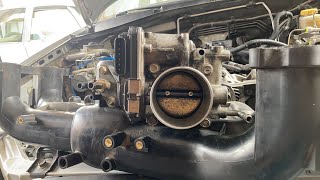
How to confirm: Remove the air intake hose from the throttle body and visually inspect the throttle plate and bore for black carbon buildup. Manually move the plate to feel for any sticking or binding.
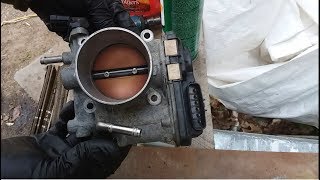
Typical fix: Clean the throttle body thoroughly with a dedicated throttle body cleaner and a soft brush or rag. After cleaning, a throttle body relearn procedure is often necessary to restore a stable idle. 🎬 Watch: How to clean a Subaru drive-by-wire throttle body.
Est. part cost: $10-$20 - Faulty Throttle Position Sensor (TPS) ⚪ Low Probability → Shop Fuel Injection Throttle Body
How to confirm: Test the sensor with a multimeter to check for correct reference voltage (around 5V) and a smooth signal voltage sweep (approx. 0.5V to 4.5V) as the throttle is opened and closed. Note that on some 2005 models, the TPS is integrated into the throttle body and cannot be replaced separately.
Typical fix: If the sensor is a separate, bolt-on part, replace it. If it is integrated, the entire throttle body assembly must be replaced.
Est. part cost: $40-$100 for a sensor, $200-$400 for a throttle body - Wiring or Connector Issue ⚪ Low Probability
How to confirm: Visually inspect the wiring harnesses and connectors for the accelerator pedal assembly and the throttle body. Look for any frayed wires, loose pins, or corrosion. Perform a 'wiggle test' on the harness while monitoring sensor data on a scan tool; spikes or dropouts indicate a wiring fault.
Typical fix: Repair the damaged section of wiring or clean/replace the faulty connector.
Est. part cost: $5-$50
Rare But Worth Checking
- Faulty Powertrain Control Module (PCM): This is very rare. The PCM should only be considered after all other possibilities (sensors, wiring, throttle body) have been definitively ruled out through testing.
Diagnosis Steps
- Scan the vehicle for any other trouble codes. If codes like P0222 or P0223 are present, it strongly suggests a faulty accelerator pedal assembly.
- Use a scan tool to observe live data from both the Throttle Position Sensor (TPS) and the Accelerator Pedal Position Sensor (APP). The APP sensor should have two readings (APP1, APP2). Check for smooth, linear response as you slowly press and release the gas pedal. Jumpy or erratic readings from the APP sensors point to the pedal assembly.
- Visually inspect the throttle body for carbon buildup. If dirty, disconnect the battery, clean it thoroughly with appropriate cleaner, and perform an idle relearn procedure.
- Inspect the wiring and connectors at both the throttle body and the accelerator pedal assembly. Look for any signs of damage, corrosion, or looseness. Perform a 'wiggle test' on the harnesses while watching live data.
- If live data confirms the APP sensor is faulty, replace the accelerator pedal assembly. This is the most common fix.
- If the throttle position sensor data is erratic and the throttle body is clean and moves freely, test the sensor's circuit with a multimeter before condemning the sensor or the entire throttle body assembly.
- After any repair, clear the codes and perform a test drive, including varied acceleration, to ensure the issue is resolved and the check engine light does not return.
Parts You'll Likely Need
- Accelerator Pedal Assembly
(OEM #36010AG021)— This is the most frequent cause of code P0121 on this specific vehicle. The integrated sensor fails over time.
Trusted brands: Subaru (OEM), Dorman, Standard Motor Products (SMP)
OEM price range: $160-$240
Aftermarket price range: $60-$120 - Throttle Body Cleaner — A dirty throttle body is a common secondary cause and cleaning it is a necessary first step in diagnosis.
Trusted brands: CRC, Gumout, WD-40 Specialist
Aftermarket price range: $10-$20
Related Codes That Often Appear With This One
- P0222 — This code ('Throttle/Pedal Position Sensor B Circuit Low Input') often appears with P0121 because modern electronic throttle systems use two sensors (A and B) for redundancy. A fault in the pedal assembly will often trigger codes for both sensor circuits, strongly indicating the pedal assembly is the culprit.
- P0223 — Similar to P0222, this code ('Throttle/Pedal Position Sensor B Circuit High Input') points to the secondary sensor in the assembly, further strengthening the diagnosis of a faulty pedal unit.
Platform-Specific Known Issues
- Throttle Body Relearn Procedure: → Shop Fuel Injection Throttle Body After cleaning the throttle body or disconnecting the battery, the ECU may lose its learned idle position, resulting in a high or unstable idle. A specific relearn procedure is required, which typically involves turning the key to the 'ON' position for 10-15 seconds, starting the car and letting it idle for 10 minutes without touching the accelerator, and then performing a few key cycles.
Mechanic-Grade Diagnostic Values
- Accelerator Pedal Position Sensor (APP) Main Signal Voltage — expected: Approx. 1.0V at idle, sweeping linearly to ~3.5V at wide-open throttle (WOT).. Failure: Voltage is erratic, jumps, drops to zero, or does not change smoothly when the pedal is pressed.
- Accelerator Pedal Position Sensor (APP) Sub Signal Voltage — expected: Approx. 0.3V at idle, increasing to ~2.5V at WOT.. Failure: Voltage does not track with the main sensor, is flat, or has dead spots.
- APP Sensor Resistance (between pins) — expected: 1.5–2.5 kΩ at idle, 3.0–3.5 kΩ at full throttle.. Failure: Readings are outside this range, or show an open/infinite resistance at any point in the pedal's travel.
- Throttle Position Sensor (TPS) Signal Voltage — expected: Approx. 0.5V at idle (closed throttle) to 4.5V at WOT.. Failure: Signal is outside this range, doesn't correspond with throttle plate angle, or is jumpy.
Scan Tool Commands That Help
- iCarsoft, BlueDriver, or similar: Throttle Body/ETC Actuator Test — After cleaning the throttle body or if a sticking throttle plate is suspected, this bidirectional command forces the throttle plate to sweep through its full range of motion, which can help verify if the motor is responding correctly to ECU commands.
Wiring & Ground Locations
- ECM Connector B136 — At the Engine Control Module (ECM), typically located in the passenger-side footwell behind the glove box.. This connector contains the pins for the throttle position sensor. For example, on a 2005 Forester (similar architecture), Pin 14 is the TPS signal and Pin 35 is the sensor ground. A poor connection at these specific pins can cause P0121.
- ECM Connector B134 — At the Engine Control Module (ECM).. This connector contains the pins for the accelerator pedal position sensor. For a 2005 STI (similar architecture), pins C15 and C16 provide 5V reference, C17 is the main signal, C28 is the sub signal, and C34 is the sensor ground. Verifying voltage and ground at these specific pins is a key diagnostic step.
- Ground Point GE — On the center of the dash for 2.5L models, or on the right rear of the engine for 3.0L models.. This is a primary engine-related ground point. A loose or corroded ground here can introduce electrical noise and voltage drops, affecting sensor readings from the TPS and APP, potentially triggering a P0121 code.
- Electronic Throttle Control Shield — The shielded wiring running to the throttle body.. The wiring for the throttle control is shielded to prevent electromagnetic interference. This shield must have a good ground connection (often at the ECM). If the shield's ground is compromised, it can lead to erratic signals and performance-related codes like P0121.
Real Owner Repair Stories
- Reddit user in r/MechanicAdvice (2006 Subaru Outback 2.5L Automatic, ~200,000 miles) — Initially an occasional P2138 code (APP Sensor Correlation), but during diagnosis, the throttle would snap wide open at 30% pedal application.
❌ Tried (didn't work) A new accelerator pedal assembly from Subaru did not fix the issue.
✅ What actually fixed it The technician found that the connector terminals for the accelerator pedal sensor had been spread open, causing a poor connection. After carefully tightening the female pins in the connector and resetting the ECM, the issue was resolved.
OEM Part Supersession History
36010AG020→36010AG021— Likely an internal revision to improve reliability or address the known failure pattern of the integrated sensors.
Model Year Variations Within This Range
- 2005 (some models): On some earlier 2005 models, the Throttle Position Sensor (TPS) may be integrated into the throttle body assembly and not available as a separate, replaceable part. On later models, it is more consistently a bolt-on sensor. This is important because if the TPS is the confirmed failure, an integrated design requires replacing the entire throttle body.
Diagnostic Flowchart
Other Known Issues on This Vehicle
Issues unrelated to this code that are worth knowing about as an owner of this generation:
- Head Gasket Failure (2.5L EJ253 Engine) 🔴 High — Very common on the naturally aspirated 2.5L engine, typically after 80,000-150,000 miles. Less common on the 3.0L H6.
- Catalytic Converter Failure (P0420 Code) 🟠 Medium — Frequently occurs at higher mileage, often preceded by other issues like misfires or failing O2 sensors.
- AVCS Solenoid Malfunction 🟠 Medium — The Active Valve Control System (AVCS) solenoids can get clogged with oil sludge or fail electronically, causing rough idle, poor performance, and specific fault codes (e.g., P0011, P0021).
- Front Lower Control Arm Bushing Failure 🟡 Low — The rear bushings on the front lower control arms are a known wear item, leading to clunking noises and alignment issues.
- Mass Airflow (MAF) Sensor Contamination 🟡 Low — A dirty MAF sensor can cause hesitation, stalling, and poor fuel economy. Cleaning is often effective before replacement is needed.
Used vs. New Parts: Buying Guide for This Vehicle
When a used part is the smart pick: A used accelerator pedal assembly from a reputable junkyard can be a cost-effective option, as the failure is due to wear and a lower-mileage used part can provide significant savings over a new OEM unit.
Donor-vehicle mileage cap: roughly under 80000 miles for the part to have meaningful remaining life.
What to inspect on the donor part:
- Verify the donor vehicle's mileage; aim for a vehicle with under 80,000 miles if possible.
- Inspect the connector pins on the used assembly for any signs of corrosion, bending, or damage.
- Ensure the pedal moves smoothly without any grittiness or sticking.
- Check the part number on the used assembly to ensure it matches (36010AG021 or the superseded 36010AG020).
OEM-only on this vehicle (don't cheap out):
- While aftermarket pedal assemblies exist, OEM is often recommended for perfect fitment and sensor calibration. If choosing aftermarket, stick to well-known brands.
Aftermarket brands forum-validated for this vehicle:
- Standard Motor Products (SMP)
- Dorman (often a viable budget option, but check for recent positive reviews for this specific part number)
Brands owners have reported issues with on this vehicle:
- No-name, unbranded parts from online marketplaces can have poor quality control, leading to incorrect voltage readings and a quick return of the P0121 code.
Real Owner Stories
Aggregated from forums and TSBs cited above. Mileages and costs reflect what owners reported in those sources.
2005-2007 Subaru Outback
Symptoms: P0121 and P0222 codes, vehicle went into limp mode.
What fixed it: Replacing the accelerator pedal assembly solved the problem instantly after an attempt to clean the throttle body failed to fix it.
Source hint: subaruoutback.org thread titled 'P0121 and P0222 codes, limp mode'
Subaru Legacy GT (platform mate)
Symptoms: P0121 code was present; live data scan showed the APP sensor 1 signal was flatlined.
What fixed it: Replaced the whole pedal assembly (part # 36010AG021), and the car drove like new.
Source hint: NASIOC thread discussing P0121 on a Legacy GT
Related OBD-II Codes
Frequently Asked Questions
I think my accelerator pedal sensor is bad on my 2006 Outback. What is the part number for the replacement?
I just cleaned the throttle body on my Outback and now the idle is high. How do I fix this?
My check engine light is on for P0121, but why is my cruise control light also blinking?
Can I just replace the Throttle Position Sensor (TPS) by itself on my 2005 Outback?
I have a P0121 code, but also a P0222. What does that mean for my Outback?
I have a 2007 Subaru Legacy with a P0121 code. Does this article apply to my car too?
Helpful Videos

We Have This Part in Stock


The information in this article is provided for general reference and educational purposes only. Vehicle specifications, procedures, and part compatibility can vary by production date, trim level, and region. Always consult your vehicle's factory service manual and verify part numbers before purchasing or performing repairs. Safety-critical components such as airbags, seat belts, and braking systems should be installed by a qualified professional.
- Subaru Outback:
- 🧭 Diagnostic Flowchart
- 🎬 Helpful Videos
- 🛍️ Shop This Part
- What's Unique About the 2005-2007 Subaru Outback
- Symptoms You May Notice
- Most Likely Causes
- Rare But Worth Checking
- Diagnosis Steps
- Parts You'll Likely Need
- Related Codes That Often Appear With This One
- Platform-Specific Known Issues
- Mechanic-Grade Diagnostic Values
- Scan Tool Commands That Help
- Wiring & Ground Locations
- Real Owner Repair Stories
- OEM Part Supersession History
- Model Year Variations Within This Range
- Other Known Issues on This Vehicle
- Used vs. New Parts: Buying Guide for This Vehicle
- Real Owner Stories
- 2005-2007 Subaru Outback
- Subaru Legacy GT (platform mate)
- Related OBD-II Codes
- Frequently Asked Questions
- 🎟️ Get 5% Off