

P0121 on 1998-2002 Toyota Land Cruiser: Throttle Position Sensor Range/Performance Fixes
On a 1998-2002 Land Cruiser, P0121 almost always points to a failing Throttle Position Sensor (TPS). A new OEM-spec sensor is the most common fix, costing around $60-$120 for the part. This is a common DIY repair, but the new sensor must be properly adjusted to a specific idle percentage (14.4-16%) using a scan tool for the fix to be successful.
- P0121 on a 1998-2002 Land Cruiser is almost always a faulty Throttle Position Sensor (TPS).
- Symptoms include engine hesitation, erratic transmission shifting, and potential stalling or 'limp mode'.
- Using a quality OEM (Toyota) or Denso sensor is highly recommended for a successful, long-lasting repair.
- After replacing the sensor, it MUST be adjusted using a scan tool to read between 14.4-16% at idle to prevent the code from returning.
What's Unique About the 1998-2002 Toyota Land Cruiser
The 100-Series Land Cruiser with the 2UZ-FE V8 uses a traditional, cable-actuated throttle body with a bolt-on TPS. Unlike later drive-by-wire systems, the problem is almost always isolated to this single, relatively simple sensor. The TPS on these engines is known to wear out over time, causing a gradual onset of drivability issues before finally setting a code. Owners often report erratic shifting and hesitation long before the Check Engine Light appears, sometimes with no codes stored initially. The system can be confused with the Accelerator Pedal Position Sensor (APPS), but for a P0121 code, the TPS on the throttle body is the primary culprit.
Symptoms You May Notice
- Hesitation or stumbling during acceleration
- Harsh, late, or erratic automatic transmission shifting
- Engine stalling, especially when coming to a stop or at idle
- Rough or surging idle
- Check Engine Light and/or VSC/TRAC lights are on
- Reduced or unresponsive throttle response, sometimes feeling like the pedal does nothing
- Sudden loss of power at a steady cruise, feeling as if you took your foot off the gas
- Vehicle enters 'limp mode' with severely reduced power
- Replacing the Accelerator Pedal Position Sensor (APPS). This vehicle does have an APPS, but it is a separate component from the TPS. While they can fail and cause similar symptoms (often with codes P1120/P1121), the P0121 code specifically points to a performance issue with the TPS on the throttle body.
Most Likely Causes
- Failing Throttle Position Sensor (TPS) 🔴 High Probability → Shop Fuel Injection Throttle Body The TPS is a moving part (a potentiometer) that physically wears out over many cycles of throttle application. This creates electrical 'dead spots' or noisy signals, particularly common on high-mileage vehicles. Forum consensus strongly indicates that cheap aftermarket sensors fail quickly, and using an OEM Toyota or Denso part is critical for a lasting repair. In broader Toyota manufacturer records, such as NHTSA ODI #10449313, technicians have confirmed that a P0121 code often results from an internal malfunction within the throttle pedal position sensor switch circuit.
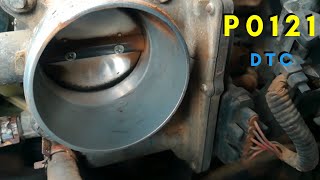
How to confirm: Use a scan tool to watch the TPS data ('TP %' or 'Throttle Pos') in a live graph. With the key on and engine off, slowly press and release the gas pedal. The reading should be smooth from idle (~14-16%) to wide-open throttle (~78-80%). Any jumps, dropouts, or flat spots indicate a bad sensor. 🎬 See this easy technique for testing your TPS in seconds
Typical fix: Replace the Throttle Position Sensor and adjust it correctly.
Est. part cost: $60-$120 - Dirty or Sticking Throttle Body 🟡 Medium Probability → Shop Fuel Injection Throttle Body Carbon and oil vapor from the PCV system can build up around the throttle plate, causing it to stick slightly. This can prevent the throttle from returning to its true idle position, making the TPS readings appear irrational to the ECM.
How to confirm: Remove the intake boot and visually inspect the throttle bore and plate for black carbon buildup. Manually move the throttle linkage to feel for any binding or sticking. A dirty throttle body is a common contributor to TPS-related codes.
Typical fix: Clean the throttle body bore and plate thoroughly with throttle body cleaner and a soft brush. It is recommended to spray the cleaner onto a rag to wipe it clean, rather than directly into the throttle body 🎬 Watch: How to clean the 100 Series throttle body safely, to avoid damaging the sensor.
Est. part cost: $5-$15 - Damaged Wiring or Connector ⚪ Low Probability After 20+ years, engine bay heat and vibrations can make the plastic TPS connector brittle and the wires fragile. The locking tab on the connector is known to break, allowing the plug to work itself loose and cause an intermittent connection.
How to confirm: Visually inspect the TPS connector for cracks, corrosion, or a broken locking tab. Gently wiggle the wiring harness near the sensor with the engine running to see if it causes a change in idle or triggers the fault.
Typical fix: Repair the damaged section of wire or replace the connector pigtail. In cases of a broken locking tab, a zip tie can serve as a temporary fix, but replacing the pigtail is the correct long-term solution.
Est. part cost: $10-$30
Rare But Worth Checking
- Incorrectly Installed/Adjusted TPS: This is common after a replacement if the proper procedure isn't followed. The sensor has slotted mounting holes and must be rotated to the correct baseline setting. An improperly adjusted new sensor will still throw a P0121 code. The target is 14.4-16% throttle position at idle on a scan tool. An older method involves using feeler gauges and an ohmmeter to set the IDL-E2 contact points.
- Massive Vacuum Leak: On some vehicles, the ECM cross-references the TPS signal with the MAP sensor signal. A large vacuum leak (e.g., from an intake manifold gasket) can create a disagreement between these sensors, leading the ECM to flag the TPS with a P0121 code.
- Failing Powertrain Control Module (PCM): This is extremely rare. All other possibilities, including wiring, sensor function, and adjustment, should be exhaustively ruled out before considering the PCM as the cause.
Diagnosis Steps
- Connect an OBD-II scanner and confirm P0121 is present. Check for any other related codes (P0120, P0122, P0123) and read the freeze frame data to see the engine conditions when the code was set. As noted in NHTSA ODI #10314544, failing to analyze freeze frame data can lead to an incomplete investigation of recurring P0121 issues.
- Visually inspect the TPS wiring harness and connector. Look for obvious signs of damage, corrosion, loose pins, or a broken connector locking tab.
- Using the live data function on the scanner, monitor the 'Throttle Position' value. With the key on and engine off, the value should be stable and within the specified range of 14.4% to 16% at idle (closed throttle).
- Slowly press the accelerator pedal to the floor. The throttle position percentage should increase smoothly and linearly with no glitches, spikes, or dropouts. A jumpy or erratic reading confirms a faulty sensor.
- If scan tool data is inconclusive, remove the intake air boot to access the throttle body. Check for heavy carbon buildup that could cause the throttle plate to stick, and clean it thoroughly if needed.
- If the sensor tests bad or all other checks pass, replace the Throttle Position Sensor with a high-quality OEM 🎬 Watch: Step-by-step walkthrough for replacing your throttle position sensor or Denso part.
- After installation, adjust the new sensor. Loosen the mounting screws slightly and rotate the sensor until the live data on the scan tool shows a throttle position between 14.4% and 16% with the throttle closed. Tighten the screws and re-verify the reading.
Parts You'll Likely Need
- Throttle Position Sensor
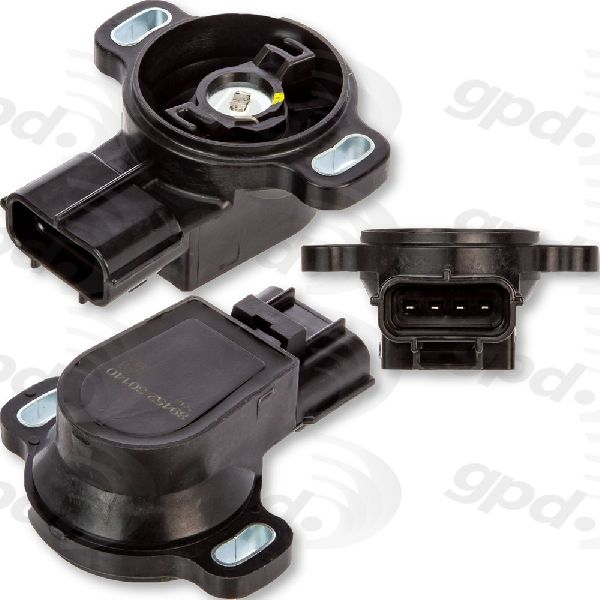
(OEM #89452-22090)— This is the most common failure point for code P0121 on this engine. It is a wearable electronic component that fails with age and use. Forum members repeatedly advise against using cheap, unbranded aftermarket sensors, as they often fail prematurely or are dead-on-arrival.
Trusted brands: Toyota (Genuine OEM), Denso (OEM Supplier), Aisin, NTK
OEM price range: $90-$120
Aftermarket price range: $40-$90
Related Codes That Often Appear With This One
- P0120 — P0120 indicates a general malfunction in the TPS 'A' circuit, while P0121 points to a performance/range issue. They often appear together as the sensor degrades.
- P0122 — Indicates the TPS circuit voltage is too low. This can be triggered by the same failing sensor that causes P0121.
- P0123 — Indicates the TPS circuit voltage is too high. This can be triggered by the same failing sensor that causes P0121.
Platform-Specific Known Issues
- Real-World Failure: Broken Connector Tab: An owner on IH8MUD.com traced an intermittent P1121 (a related code) to the connector for the throttle level assembly. The plastic locking tab had broken off, allowing the connector to vibrate loose over time. A temporary fix was a zip tie, but the permanent solution was replacing the connector pigtail. This highlights the importance of checking physical connections, not just the sensor itself.
- Owner Experience: Limp Mode and Reset Procedure: A 2000 Land Cruiser owner on IH8MUD experienced a sudden loss of accelerator control and a P0121 code, which put the vehicle into limp mode. After replacing the TPS, the code would not clear with a standard scanner. The final step that resolved the issue was disconnecting the battery overnight to fully reset the ECU.
- Documented Manufacturer Trends: While not a recall, some owners have noted that Toyota has issued TSBs for other models regarding the P0121 code, as mentioned in NHTSA ODI #10426542, though specific repair instructions can vary by platform.
Mechanic-Grade Diagnostic Values
- TPS Resistance: Between terminals VC and E2 — expected: 1.25 - 2.35 kΩ at 68°F (20°C). Failure: Resistance outside of this range indicates an internal sensor fault.
- TPS Resistance: Between terminals VTA & E2 (Throttle Fully Closed) — expected: 0.2 - 5.7 kΩ. Failure: A reading outside this range, or an open/infinite reading, points to a bad sensor.
- TPS Resistance: Between terminals VTA & E2 (Throttle Fully Open) — expected: 2.0 - 10.2 kΩ. Failure: The resistance should sweep smoothly from closed to open. Any jumps or dead spots indicate failure.
- TPS Voltage: VTA1 signal at ECU — expected: 0.5 - 1.1 V (Throttle Closed), 3.2 - 4.8 V (Throttle Fully Open). Failure: Voltage outside these ranges or that doesn't change smoothly indicates a fault in the sensor or circuit.
- TPS Voltage: VTA2 signal at ECU — expected: 2.1 - 3.1 V (Throttle Closed), 4.8 - 5.0 V (Throttle Fully Open). Failure: The ECM flags P0121 if the difference between VTA1 and VTA2 is out of the expected range for a given throttle angle.
- TPS Reference Voltage at Connector — expected: ~5.0 V DC between VC (power) and E2 (ground) terminals with key on, engine off.. Failure: No voltage or low voltage points to a wiring issue or a problem with the ECU's 5V reference circuit.
Scan Tool Commands That Help
- Toyota Techstream: ECU Reset / Clear Memory — After replacing the TPS and performing the mechanical adjustment, a full ECU reset may be required if the code persists. While a standard scanner can clear codes, a full reset (or a prolonged battery disconnect) clears learned values and forces the ECU to re-adapt to the new sensor's baseline readings.
Wiring & Ground Locations
- TPS Connector (E6) — On the throttle body, connected to the Throttle Position Sensor.. This is the primary connection point for the sensor. The pins are: VC (5V Reference), VTA1 (Primary Signal), VTA2 (Secondary Signal), and E2 (Sensor Ground). All voltage and resistance tests start here or at the corresponding ECU pins.
- Ground Point: EC — On the rear bank of the left cylinder head.. This is a primary engine ground point. The TPS circuit relies on a clean ground path (E2) to the ECU, which is grounded to the engine block. A corroded or loose ground at this location can introduce noise and voltage offsets, causing a P0121 code.
- Ground Point: ED — On the rear bank of the right cylinder head.. This is another main engine ground point. Verifying all major engine-to-chassis grounds are clean and tight is a critical step when diagnosing sensor performance codes that have a wiring component.
Real Owner Repair Stories
- IH8MUD.com Forum User (2000 Toyota Land Cruiser, 82,000 miles) — Sudden loss of accelerator control while driving, Check Engine Light and other dash lights illuminated, vehicle entered limp mode.
❌ Tried (didn't work) Initial diagnosis pointed to either the TPS or the APPS.
✅ What actually fixed it The user was advised that code P0121 is specific to the Throttle Position Sensor (TPS) on the throttle body, not the Accelerator Pedal Position Sensor (APPS), guiding the correct part replacement. - NHTSA ODI #10396160 — An owner reported checking codes with a diagnostic tool after experiencing drivability issues and found an active P0121 indicating a Throttle/Pedal Position Sensor A Circuit Range Performance fault.
- NHTSA ODI #10295338 — A report describes a recurring acceleration problem where the diagnosis confirmed code P0121, indicating the throttle position sensor was out of range, with a repair estimate reaching $1200.00.
OEM Part Supersession History
89452-33010→89452-22090— Part consolidation and potential design revision.89452-06010→89452-22090— Part consolidation and potential design revision.
Model Year Variations Within This Range
- 1998-2002: While the engine is the same 4.7L 2UZ-FE, there were minor changes. An IH8MUD forum member noted that when swapping an engine from a '98 into a '01, the alternator and transmission wiring harness plugs were different, requiring a harness swap. The throttle bodies were also noted as being different, though not visually distinct. These changes are unlikely to affect the diagnosis of P0121 but are important for part sourcing.
Diagnostic Flowchart
Used vs. New Parts: Buying Guide for This Vehicle
When a used part is the smart pick: A used part is generally not recommended for the Throttle Position Sensor itself, as it is a wear item. However, purchasing a complete, low-mileage used throttle body assembly can be a good value if it includes a known-good OEM sensor and the throttle body itself is cleaner than the vehicle's original.
Donor-vehicle mileage cap: roughly under 100000 miles for the part to have meaningful remaining life.
What to inspect on the donor part:
- Check for clean, uncorroded electrical pins on the TPS connector.
- Ensure the throttle linkage moves smoothly without binding or excessive play.
- Look for the OEM Denso or Toyota branding on the sensor body; avoid if it's a no-name aftermarket part.
- Visually inspect the throttle bore for excessive carbon buildup or scoring.
OEM-only on this vehicle (don't cheap out):
- Throttle Position Sensor (TPS)
Aftermarket brands forum-validated for this vehicle:
- Denso (OEM supplier)
- Aisin
- NTK
Brands owners have reported issues with on this vehicle:
- Unbranded or generic 'white-box' sensors from online marketplaces are frequently reported to fail quickly or be dead-on-arrival.
Real Owner Stories
Aggregated from forums and TSBs cited above. Mileages and costs reflect what owners reported in those sources.
2000 Toyota Land Cruiser 4.7L 2UZ-FE V8
Symptoms: Sudden loss of accelerator control and a P0121 code, which put the vehicle into limp mode.
What fixed it: After replacing the TPS, the code would not clear with a standard scanner. The issue was fully resolved by disconnecting the battery overnight to reset the ECU.
Source hint: Owner Experience: Limp Mode and Reset Procedure
1998-2002 Toyota Land Cruiser 4.7L 2UZ-FE V8
Symptoms: An intermittent P1121 (a related code) was triggered by a loose connection.
What fixed it: The plastic locking tab on the connector had broken. A temporary fix was a zip tie, but the permanent solution was replacing the connector pigtail.
Source hint: Real-World Failure: Broken Connector Tab
2000 Toyota Land Cruiser 4.7L 2UZ-FE V8 — 82000 miles
Symptoms: Sudden accelerator failure and a P0121 code.
What fixed it: Diagnosis confirmed the issue pointed to the Throttle Position Sensor (TPS), indicating replacement was the necessary repair.
Source hint: IH8MUD.com: P0121 code APPS/TPS?
Related OBD-II Codes
Frequently Asked Questions
What throttle position percentage should I see on my scanner for my 1998-2002 Land Cruiser?
Can I use a cheaper aftermarket Throttle Position Sensor (TPS) on my 2UZ-FE engine?
My Land Cruiser is in 'limp mode' from a P0121 code. I replaced the TPS, but the code won't clear. What's the next step?
Besides the sensor itself, is there a common physical failure point to check for P0121?
I have a Lexus LX470 with a P0121 code. Does this Land Cruiser information apply?
How do I properly adjust the new TPS after installing it?
Helpful Videos

We Have This Part in Stock


The information in this article is provided for general reference and educational purposes only. Vehicle specifications, procedures, and part compatibility can vary by production date, trim level, and region. Always consult your vehicle's factory service manual and verify part numbers before purchasing or performing repairs. Safety-critical components such as airbags, seat belts, and braking systems should be installed by a qualified professional.
- Toyota Land Cruiser:
- 🧭 Diagnostic Flowchart
- 🎬 Helpful Videos
- 🛍️ Shop This Part
- What's Unique About the 1998-2002 Toyota Land Cruiser
- Symptoms You May Notice
- Most Likely Causes
- Rare But Worth Checking
- Diagnosis Steps
- Parts You'll Likely Need
- Related Codes That Often Appear With This One
- Platform-Specific Known Issues
- Mechanic-Grade Diagnostic Values
- Scan Tool Commands That Help
- Wiring & Ground Locations
- Real Owner Repair Stories
- OEM Part Supersession History
- Model Year Variations Within This Range
- Used vs. New Parts: Buying Guide for This Vehicle
- Real Owner Stories
- 2000 Toyota Land Cruiser 4.7L 2UZ-FE V8
- 1998-2002 Toyota Land Cruiser 4.7L 2UZ-FE V8
- 2000 Toyota Land Cruiser 4.7L 2UZ-FE V8 — 82000 miles
- Related OBD-II Codes
- Frequently Asked Questions
- 🎟️ Get 5% Off