

P0121 on 2004-2009 Toyota Prius: Throttle Position Sensor Causes and Fixes
On a 2004-2009 Prius, P0121 is almost always caused by a dirty throttle body or a failed internal throttle position sensor. Start by cleaning the throttle body, which often resolves the issue. If the problem persists, the entire throttle body assembly needs replacement, as the sensor is not sold separately. A used part costs ~$50-100, while a new OEM part (22030-21020) is ~$400+.
- Always start by cleaning the throttle body; it's the most common and cheapest fix, often restoring performance and fuel economy.
- Do not attempt to buy a standalone Throttle Position Sensor (TPS) for this car; it is not a separate part.
- If cleaning fails, the entire throttle body assembly (OEM part 22030-21020) must be replaced.
- The car will enter a 'limp mode' with severely reduced power, so avoid driving on highways until fixed.
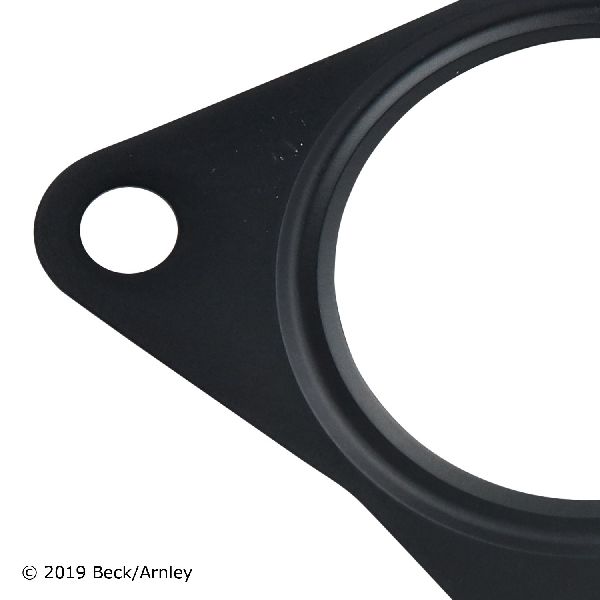
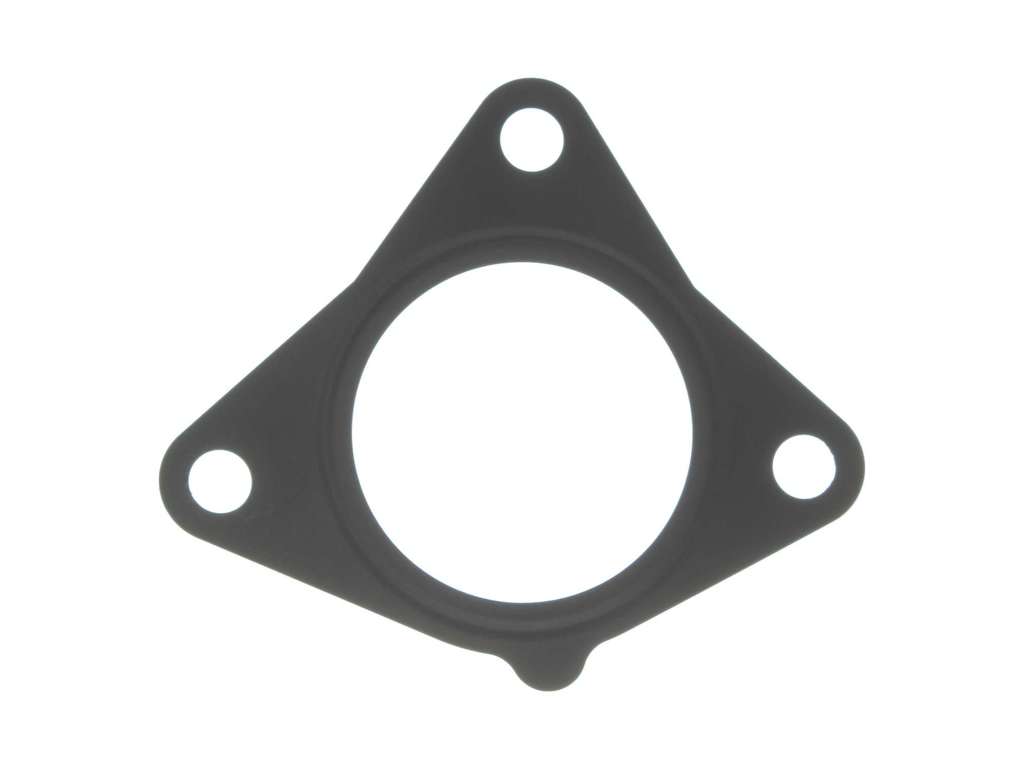
- When removing the throttle body for cleaning or replacement, always use a new gasket (OEM part 22271-21030) upon reinstallation to prevent vacuum leaks.
What's Unique About the 2004-2009 Toyota Prius
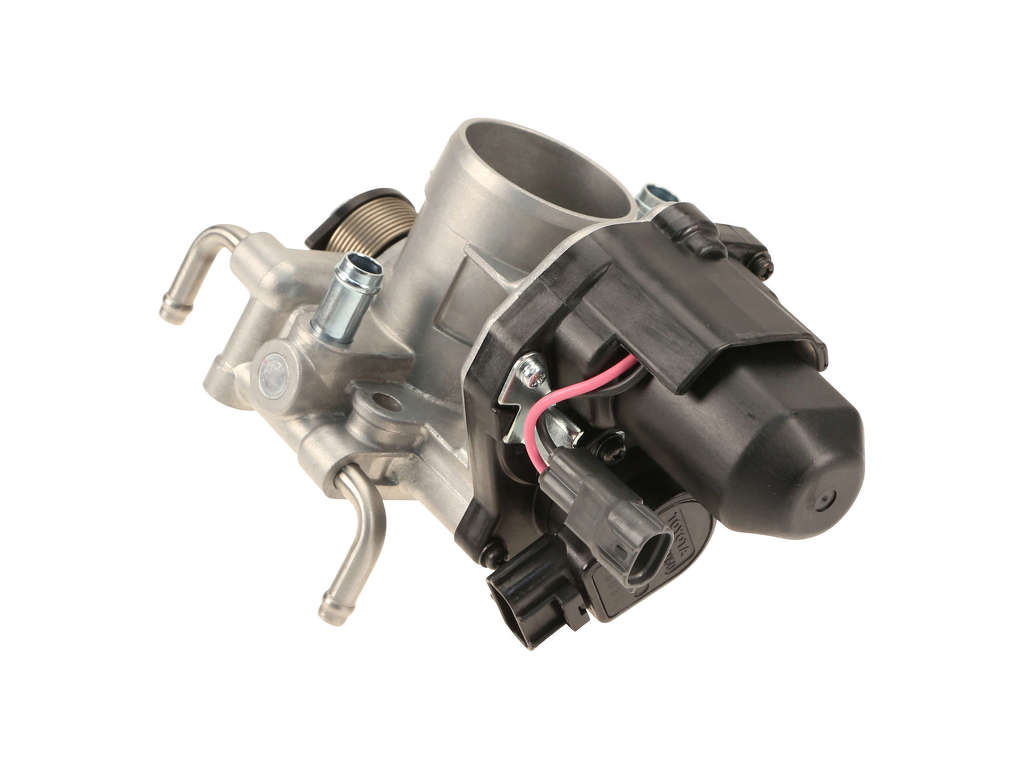
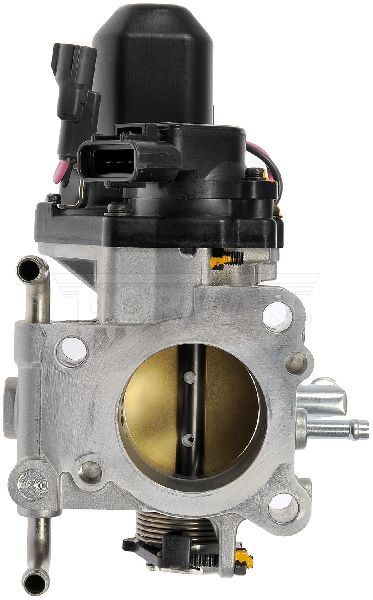
The most critical thing to know about the 2004-2009 (Gen 2) Prius is that the Throttle Position Sensor (TPS) is integrated into the throttle body assembly and is not sold or serviced as a separate part. Many owners and even some mechanics mistakenly believe they can replace just the sensor. This design means that if the sensor itself has failed, the entire throttle body must be replaced. However, a very common trigger for this code is simply a dirty throttle body causing the plate to stick, which should always be the first thing checked and is a frequent fix reported by owners.
Symptoms You May Notice
- Check Engine Light and 'Red Triangle of Death' illuminated
- Sudden and significant loss of engine power (entering 'limp mode')
- Very slow or hesitant acceleration
- Engine may stall, especially when coming to a stop
- Engine RPM may surge up and down when pressing the accelerator
- Car may shut off while driving and require a restart after waiting several minutes
- Replacing the Accelerator Pedal Position (APP) Sensor. This code points specifically to the sensor on the throttle body, not the gas pedal.
- Purchasing a standalone Throttle Position Sensor (TPS). The sensor is not sold separately for this vehicle; it is integrated into the throttle body assembly.
Most Likely Causes
- Dirty or Sticking Throttle Body 🔴 High Probability → Shop Fuel Injection Throttle Body Over time, carbon and oil vapor from the PCV system can build up in the throttle body, causing the throttle plate to stick or move slowly. This creates a mismatch between the expected and actual sensor readings, triggering the P0121 code.
How to confirm: Remove the air intake hose from the throttle body. Visually inspect the throttle plate and bore for a layer of black carbon buildup. Manually move the plate (with the engine off) to feel for any sticking, binding, or scraping.
Typical fix: Remove the throttle body and clean it thoroughly with a dedicated throttle body cleaner and a soft, lint-free cloth. Do not spray cleaner directly into the electronic components. Reinstall with a new gasket.
Est. part cost: $5-$15 for a can of throttle body cleaner. - Failed Throttle Body Assembly (Internal TPS Failure) 🟡 Medium Probability → Shop Fuel Injection Throttle Body The internal electronic components (potentiometers) of the throttle position sensor can wear out or fail after high mileage, leading to an internal short or open circuit. This is a non-serviceable part.
How to confirm: If a thorough cleaning of the throttle body does not resolve the code, and the wiring is confirmed to be good, the throttle body assembly itself is the culprit. This is a common failure point after cleaning proves ineffective, as documented in many owner forums.
Typical fix: Replace the entire throttle body assembly. The Throttle Position Sensor is integrated and cannot be replaced separately.
Est. part cost: $50-$150 (used), $400-$600 (new OEM) - Damaged Wiring or Loose Connector ⚪ Low Probability
How to confirm: Visually inspect the wiring harness and electrical connector at the throttle body for any signs of damage, corrosion, or loose pins. Wiggle the connector with the engine running to see if it affects idle.
Typical fix: Repair the damaged section of wiring or clean/tighten the connector pins.
Est. part cost: $0-$25
Rare But Worth Checking
- Faulty Engine Control Module (ECM): This is extremely rare. The ECM should only be considered after all other possibilities, including a faulty replacement throttle body, have been eliminated.
Diagnosis Steps
- Read the trouble codes with an OBD-II scanner to confirm P0121 is present. Note any other codes.
- Visually inspect the wiring harness and connector at the throttle body for obvious damage, corrosion, or a loose connection.
- Remove the air intake hose from the throttle body. Inspect the throttle plate and bore for heavy carbon buildup.
- If dirty, remove the throttle body from the intake manifold (four bolts). Clean it thoroughly off the car using throttle body cleaner and a soft cloth. Pay special attention to the edges of the throttle plate and the bore where it seats. Do not let cleaner enter the black plastic electronic housing.
- Reinstall the throttle body with a new gasket (Part No. 22271-21030) to prevent vacuum leaks.
- Clear the trouble codes with the scanner and perform a test drive. Many owners report an immediate improvement in performance and MPG after cleaning.
- If the P0121 code returns, the throttle body assembly itself has likely failed internally and requires replacement.
- Replace the throttle body assembly (OEM Part No. 22030-21020).
- After replacement, disconnect the 12V battery for a few minutes to reset the ECM's learned values, then reconnect and start the car. This serves as an idle relearn procedure.
Parts You'll Likely Need
- Throttle Body Assembly
(OEM #22030-21020)— This is the primary fix if cleaning the original part does not work, as the throttle position sensor (TPS) is integrated and not sold separately. This part number is confirmed to fit the 2001-2009 Prius.
Trusted brands: Toyota (OEM), Aisin
OEM price range: $400-$600
Aftermarket price range: $150-$450 - Throttle Body Gasket
(OEM #22271-21030)— A new gasket should always be used whenever the throttle body is removed to prevent vacuum leaks. This is the correct part number for the 1NZ-FXE engine in this generation.
Trusted brands: Toyota (OEM), Fel-Pro, Mahle
OEM price range: $5-$15
Aftermarket price range: $2-$10
Platform-Specific Known Issues
- A user on PriusChat with a 2006 Prius at 220k miles experienced the sudden power loss and P0121 code. After receiving advice, they cleaned the throttle body and MAF sensor, which were 'definitely dirty'. The fix was successful, and they noted an immediate 10-15 MPG gain. (Source: PriusChat, Thread 'P0121 and the red triangle.', User 'Priumvirate').
- Another PriusChat user experienced stalling and limp mode with P0121. They confirmed through the forum that the sensor is not replaceable and that the entire assembly must be changed if cleaning doesn't work. (Source: PriusChat, Thread 'P0121 - Throttle Body / TPS Sensor failure - Remedies?', User 'Mavi').
- Cross-manufacturer data from Toyota vehicles with similar throttle systems, such as NHTSA ODI #10426542, notes that a manufacturer TSB exists for the P0121 code, though the bulletin may not always result in a significant performance improvement for every driver.
Mechanic-Grade Diagnostic Values
- VTA1 and VTA2 Voltage Correlation — expected: The voltage difference (VTA2 - VTA1) must be between 0.8V and 1.6V.. Failure: A voltage difference less than 0.8V or more than 1.6V for over 2 seconds sets the P0121 code.
- VTA1 / VTA2 Short Circuit Check — expected: VTA1 and VTA2 should never be at the same voltage.. Failure: If VTA1 is within 0.02V of VTA2, the ECM interprets this as a short circuit and sets a fault.
- Throttle Position Sensor Resistance (at connector, disconnected) — expected: Between terminals 1 (VC) and 4 (E2): 1.2 to 3.2 kΩ. Between terminals 2 (VTA1) and 4 (E2): 1.8 to 10.5 kΩ. Between terminals 3 (VTA2) and 4 (E2): 1.8 to 10.5 kΩ. (All at 20°C/68°F). Failure: Readings outside of these ranges indicate a faulty throttle body assembly.
- Fail-Safe Throttle Angle — expected: When P0121 is active, the throttle valve is returned to a fixed angle by a spring.. Failure: The throttle angle will be fixed at approximately 6 degrees, resulting in severely limited engine power ('limp mode').
Scan Tool Commands That Help
- Toyota Techstream: Live Data Monitoring (Powertrain -> Engine and ECT -> Data List) — Use this to monitor 'Throttle Pos Sens 1' (VTA1) and 'Throttle Pos Sens 2' (VTA2) voltages in real-time. While slowly pressing the accelerator, both voltages should increase smoothly without glitches or dropouts. This can confirm an internal sensor failure if the readings are erratic.
- Any OBD-II Scanner / Manual Procedure: Idle Relearn / ECM Reset — After cleaning or replacing the throttle body, the ECM needs to relearn the new closed-throttle position. The simplest method is to disconnect the 12V battery for at least 60 seconds. The ECM will automatically relearn the idle position within a minute or so of the first start-up after reconnection. No special scan tool command is required for this specific vehicle.
Wiring & Ground Locations
- T3 Throttle Body Connector — On the throttle body assembly, connected to the black plastic housing.. This connector carries the power, ground, and signal wires (VTA1, VTA2) for the throttle position sensor. A loose or corroded connection here can directly cause P0121. The pins are: Pin 1 (VC - 5V Reference), Pin 2 (VTA1 - Signal 1), Pin 3 (VTA2 - Signal 2), Pin 4 (E2 - Sensor Ground).
- ECM (Engine Control Module) — Located behind the glove compartment assembly. The glove box must be removed for access.. The ECM receives and interprets the VTA1 and VTA2 signals. While rare, a fault in the ECM itself or the wiring between the throttle body and the ECM can cause this code. The relevant ground for the sensor circuit is E2.
- Ground Point EA1 — On the engine wire harness, near the radiator fan.. This is a major engine-related ground point. While not directly for the TPS sensor ground (E2), a poor connection here can cause various electrical issues and noise that could potentially affect sensor readings.
Real Owner Repair Stories
- PriusChat user 'Mavi' (2004-2009 Toyota Prius (Gen 2)) — Car started stalling, engine shut off, and entered limp mode. P0121 code was present.
❌ Tried (didn't work) Regularly cleaned the MAF sensor and throttle body prior to the failure, but the code appeared randomly.
✅ What actually fixed it Replaced the entire throttle body assembly with a used unit and a new gasket purchased from eBay for approximately $50. This resolved the stalling and cleared the code. - Reddit user 'rickenrique' (2007 Prius, 120,000 miles) — Red triangle light, Check Engine Light, P0121 code.
❌ Tried (didn't work) Clearing the code would temporarily remove the red triangle, but the check engine light remained and the issue would return.
✅ What actually fixed it Purchased a used throttle body for $60 and replaced it. The user reported it had been fine for 4,000 miles post-repair. - NHTSA ODI #10396160 — An owner of a similar Toyota model reported the ECU showing an active P0121 code for "Throttle/Pedal Position Sensor A, Circuit Range Performance," which required driving the vehicle slowly to a dealership for service.
- NHTSA ODI #10449313 — A driver experienced a failure on the highway and had the car towed; the dealership diagnosis confirmed code P0121 and identified an internal malfunction within the throttle pedal position sensor switch A circuit.
- NHTSA ODI #10295338 — One owner reported an acceleration problem occurring multiple times over six months, with the diagnosis being code P0121 indicating the throttle position sensor was out of range, resulting in a repair estimate of $1200.
- NHTSA ODI #10314544 — A report describes a recurring P0121 problem where the dealer failed to analyze freeze frame data or investigate beyond simply reading the OBD II code.
OEM Part Supersession History
22030-21020→N/A— This part number appears to be stable for the entire 2004-2009 generation and is also listed as fitting the 2001-2003 Gen 1 Prius.
Heads up: While the part may fit multiple years, it is critical to source from a 2004-2009 donor if buying used to ensure correct wear characteristics and electronics for the Gen 2 system.
Diagnostic Flowchart
Other Known Issues on This Vehicle
Issues unrelated to this code that are worth knowing about as an owner of this generation:
- Combination Meter Failure 🟠 Medium — Very common. The dashboard display (speedometer, fuel gauge) goes blank intermittently or completely. Can also prevent the car from shutting off properly. Caused by a failed capacitor on the circuit board. (Ref: Toyota issued a warranty extension (ZE5) for this issue, but it has since expired.)
- Inverter Coolant Pump Failure 🔴 High — Common failure item, especially on 2004-2007 models. The pump fails, causing the hybrid system inverter to overheat, triggering a P0A93 code and the 'Red Triangle of Death'. Can cause the vehicle to shut down while driving. (Ref: A recall was issued for 2004-2007 models to replace the pump due to an internal defect. The redesigned part is more reliable.)
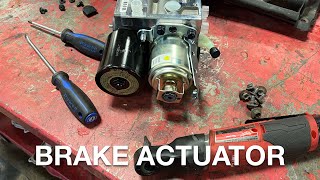
- Brake Actuator Assembly Failure 🔴 High — A significant and expensive failure. The actuator, which contains the pump and accumulator, fails to hold pressure, leading to a hard brake pedal, loud/frequent pump noises, and multiple warning lights (C1256, C1391). (Ref: A warranty extension (ZE1) was offered, but it has expired. Failure is a major safety concern.)
- Excessive Oil Consumption 🟠 Medium — Many 1NZ-FXE engines begin to consume oil at higher mileage (typically over 100k miles). Often attributed to piston rings (specifically low-tension rings) getting stuck with carbon deposits. Owners report needing to add a quart of oil every 1000-3000 miles.
- Hybrid Battery (HV Battery) Degradation/Failure 🔴 High — Inevitable with age and mileage. The NiMH battery pack's capacity degrades, leading to poor fuel economy, reduced electric-only range, and eventually failure. Onset is typically after 10 years or 150,000+ miles, but varies widely.
Used vs. New Parts: Buying Guide for This Vehicle
When a used part is the smart pick: A used throttle body is a very common and cost-effective repair for P0121 on this vehicle. Since the failure is electronic within a sealed unit, and a new OEM part is expensive, a low-mileage used part from a reputable salvage source is a smart financial choice, as validated by numerous owner forum posts.
Donor-vehicle mileage cap: roughly under 120000 miles for the part to have meaningful remaining life.
What to inspect on the donor part:
- Ask for the donor vehicle's mileage if possible; aim for under 120,000 miles.
- Visually inspect the throttle plate and bore. Minimal carbon is acceptable, but avoid units with heavy, caked-on buildup.
- Check that the electrical connector pins are straight, clean, and free of corrosion.
- Gently move the throttle plate by hand; it should move smoothly and snap back shut without any sticking or binding.
Aftermarket brands forum-validated for this vehicle:
- Aisin: Aisin is a Toyota-owned company and the Original Equipment Manufacturer (OEM) for this part. An Aisin-branded throttle body (part number THT-015 for later models, confirm for Gen 2) is equivalent to the genuine Toyota part and is the most recommended option if not buying used or new OEM.
Brands owners have reported issues with on this vehicle:
- While cheaper brands like Dorman, Spectra, and various unbranded parts are available, forum consensus strongly favors using a genuine Toyota part, an Aisin part, or a low-mileage used OEM unit for the best long-term reliability and to avoid compatibility issues.
Real Owner Stories
Aggregated from forums and TSBs cited above. Mileages and costs reflect what owners reported in those sources.
2006 Toyota Prius 1.5L — 220000 miles
Symptoms: Sudden power loss and P0121 code; throttle body and MAF sensor were found to be 'definitely dirty'.
What fixed it: Cleaned the throttle body and MAF sensor.
Source hint: PriusChat thread 'P0121 and the red triangle.', User 'Priumvirate'
2008 Toyota Prius 1.5L
Symptoms: Car was stalling, engine shut off, and the battery drained. Had to wait 10 minutes before the car could be restarted to drive home slowly.
What fixed it: Replacement of the entire throttle body assembly because the TPS is integrated and cannot be replaced separately.
Source hint: PriusChat thread 'P0121 - Throttle Body / TPS Sensor failure - Remedies?', User 'Mavi'
Related OBD-II Codes
Frequently Asked Questions
Can I just replace the Throttle Position Sensor (TPS) on my 2004-2009 Prius?
Is there a specific gasket I need when reinstalling the throttle body after cleaning?
Why does my Prius enter 'limp mode' and show the 'Red Triangle of Death' for a P0121 code?
Will cleaning the throttle body actually improve my fuel economy?
How do I perform an idle relearn after replacing the throttle body?
Is the P0121 issue common on other Toyota models with the 1.5L engine?
Helpful Videos

We Have This Part in Stock


The information in this article is provided for general reference and educational purposes only. Vehicle specifications, procedures, and part compatibility can vary by production date, trim level, and region. Always consult your vehicle's factory service manual and verify part numbers before purchasing or performing repairs. Safety-critical components such as airbags, seat belts, and braking systems should be installed by a qualified professional.
- Toyota Prius:
- 🧭 Diagnostic Flowchart
- 🎬 Helpful Videos
- 🛍️ Shop This Part
- What's Unique About the 2004-2009 Toyota Prius
- Symptoms You May Notice
- Most Likely Causes
- Rare But Worth Checking
- Diagnosis Steps
- Parts You'll Likely Need
- Platform-Specific Known Issues
- Mechanic-Grade Diagnostic Values
- Scan Tool Commands That Help
- Wiring & Ground Locations
- Real Owner Repair Stories
- OEM Part Supersession History
- Other Known Issues on This Vehicle
- Used vs. New Parts: Buying Guide for This Vehicle
- Real Owner Stories
- 2006 Toyota Prius 1.5L — 220000 miles
- 2008 Toyota Prius 1.5L
- Related OBD-II Codes
- Frequently Asked Questions
- 🎟️ Get 5% Off