

P0121 on 2013-2018 Toyota RAV4: Throttle Position Sensor Causes and Fixes
P0121 on a 2013-2018 RAV4 with the 2.5L engine usually means the throttle body is dirty, causing the throttle position sensor to send erratic signals. A thorough cleaning often fixes it. If not, the entire throttle body assembly, which includes the non-serviceable sensor, likely needs replacement.
- Start with the simplest fix: thoroughly clean the throttle body. This resolves the P0121 code in many cases.
- The throttle position sensor is part of the throttle body assembly on this RAV4; you cannot buy it separately.
- If cleaning doesn't work, you will likely need to replace the entire throttle body assembly.
- Symptoms include hesitation, rough idle, and the vehicle entering a low-power 'limp mode'.
- This is a manageable DIY repair for those with basic tools, potentially saving hundreds in labor costs.
What's Unique About the 2013-2018 Toyota RAV4
The 2013-2018 RAV4 primarily uses the 2.5L 2AR-FE engine with an electronic throttle control system (ETCS), meaning there's no physical cable between the gas pedal and the throttle. The throttle position sensor (TPS) is integrated into the throttle body assembly and is not sold as a separate, replaceable part. While wiring or pedal sensor issues can occur, owner experiences overwhelmingly suggest that the most common culprit for a P0121 code on this platform is a simple buildup of carbon inside the throttle body, which impedes the movement of the throttle plate and confuses the sensor.
Symptoms You May Notice
- Check Engine Light is on
- Vehicle enters 'limp mode' with significantly reduced power
- Hesitation or stumbling during acceleration
- Rough or unstable idle
- Engine may stall, especially at low speeds or when coming to a stop
- Poor or delayed throttle response
- Hard starting
- Replacing the accelerator pedal position (APP) sensor. While the APP sensor is part of the overall throttle control system, P0121 specifically points to a performance problem with the sensor at the throttle body, not the pedal. Diagnosing the pedal first is usually incorrect.
- Confusing symptoms with torque converter shudder. The shudder described in TSB T-SB-0023-15 occurs at light throttle between 25-50 mph and can feel like hesitation, but it typically does not trigger a P0121 code or put the vehicle in limp mode.
Most Likely Causes
- Dirty Throttle Body 🔴 High Probability → Shop Fuel Injection Throttle Body Over time, carbon and oil vapor from the PCV system can build up inside the throttle body, creating a sticky film. This restricts the movement of the throttle plate, especially near the closed (idle) position, causing the sensor's reported position to mismatch the ECM's expectation.
How to confirm: Remove the air intake hose from the throttle body and visually inspect the throttle plate and bore for black, sticky carbon deposits. The buildup is often most prominent on the back of the plate and around the edges where it seats.
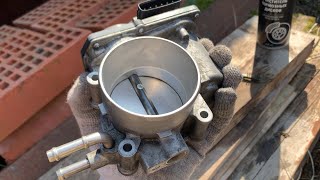
Typical fix: Clean the throttle body thoroughly with a dedicated throttle body cleaner and a soft, lint-free cloth or brush. Disconnect the battery first. 🎬 Watch: Step-by-step guide to cleaning the 2AR-FE throttle body. Manually open the plate to clean the edges and the bore completely. After reassembly, the car may have a high idle for a short time as the ECM relearns the new clean, closed position, but a formal relearn procedure is not typically required.
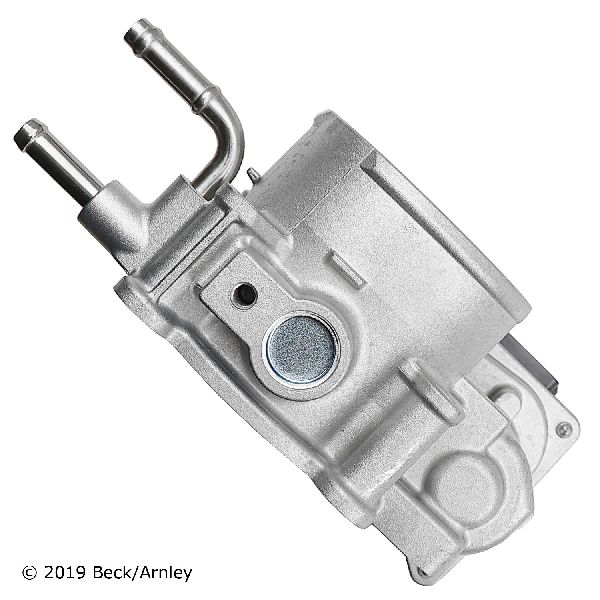
Est. part cost: $5-$15 - Faulty Throttle Body Assembly 🟡 Medium Probability → Shop Fuel Injection Throttle Body The throttle position sensor (TPS) is integrated into the throttle body and cannot be replaced separately. If the internal sensor electronics fail or the motor wears out, the entire assembly must be replaced. This is the next logical step if a thorough cleaning does not resolve the code. In some Toyota models, a technician "performed inspection and found internal malfunction" within the unit (NHTSA ODI #10449313).
How to confirm: After cleaning the throttle body, use a scan tool to monitor the live data for throttle position sensor voltages (TP1 and TP2). The voltage should increase smoothly as the pedal is pressed. Jumps, dropouts, or a failure to respond indicate a bad sensor. You can also listen for abnormal buzzing or clicking from the throttle body motor with the ignition on.
Typical fix: Replace the entire throttle body assembly. The OEM part number is 22030-0V010, which supersedes 22030-36010. 🎬 See this walkthrough on how to replace the assembly. Disconnecting the battery during the repair will reset the ECM's learned values.
Est. part cost: $150-$500 - Damaged Wiring or Connector ⚪ Low Probability While less common, the wiring harness leading to the throttle body can become damaged from heat, vibration, or chafing over time, leading to a poor connection or short circuit.
How to confirm: Visually inspect the wiring harness and connector at the throttle body for any signs of fraying, corrosion, melted plastic, or loose pins. Gently wiggle the connector with the engine running to see if it affects the idle.
Typical fix: Repair the damaged section of wire or replace the connector pigtail. In one documented case, the insulation on wires near the harness connector had worn through, causing an intermittent short. 🎬 Watch: A real-world case study on diagnosing a tricky P0121.
Est. part cost: $10-$50
Rare But Worth Checking
- Faulty Accelerator Pedal Position (APP) Sensor: → Shop Accelerator Pedal Assembly This is uncommon, as a faulty pedal sensor usually triggers different codes (like P2138). However, as part of the same overall circuit, a failing APP sensor could theoretically contribute to a P0121 rationality fault in rare instances.
- Faulty Engine Control Module (ECM): This is very rare. The ECM should only be considered after all other possibilities, including the throttle body, wiring, and pedal sensor, have been definitively ruled out.
Diagnosis Steps
- Read the code with an OBD-II scanner and check for any other related codes. Note the freeze frame data to see the conditions when the fault occurred. As noted in NHTSA ODI #10314544, failing to analyze freeze frame data can lead to an incomplete investigation of the P0121 fault.
- Disconnect the negative battery terminal.
- Remove the air intake hose from the throttle body. Inspect the throttle bore and plate for heavy carbon buildup.
- If dirty, clean the throttle body thoroughly using throttle body cleaner and a soft cloth. Do not spray cleaner directly on the electrical connector. Manually push the plate open to clean around the edges where it seats.
- Reconnect the intake and battery, clear the codes, and perform a test drive. Note that the idle may be high or slightly rough for a few minutes as the computer relearns.
- If the code reappears, use a scan tool with live data capability to monitor the throttle position sensor voltages (VTA1 and VTA2).
- Slowly press the accelerator pedal from idle to wide-open and back. Watch the voltage readings. They should rise and fall smoothly without any spikes, glitches, or dropouts.
- If the voltage is erratic or doesn't respond correctly, the throttle body assembly is faulty and needs to be replaced.
- If the sensor data appears normal, perform a wiggle test on the wiring harness and connector to the throttle body with the engine running to check for intermittent connection issues. Inspect the harness closely for chafing or damage.
Parts You'll Likely Need
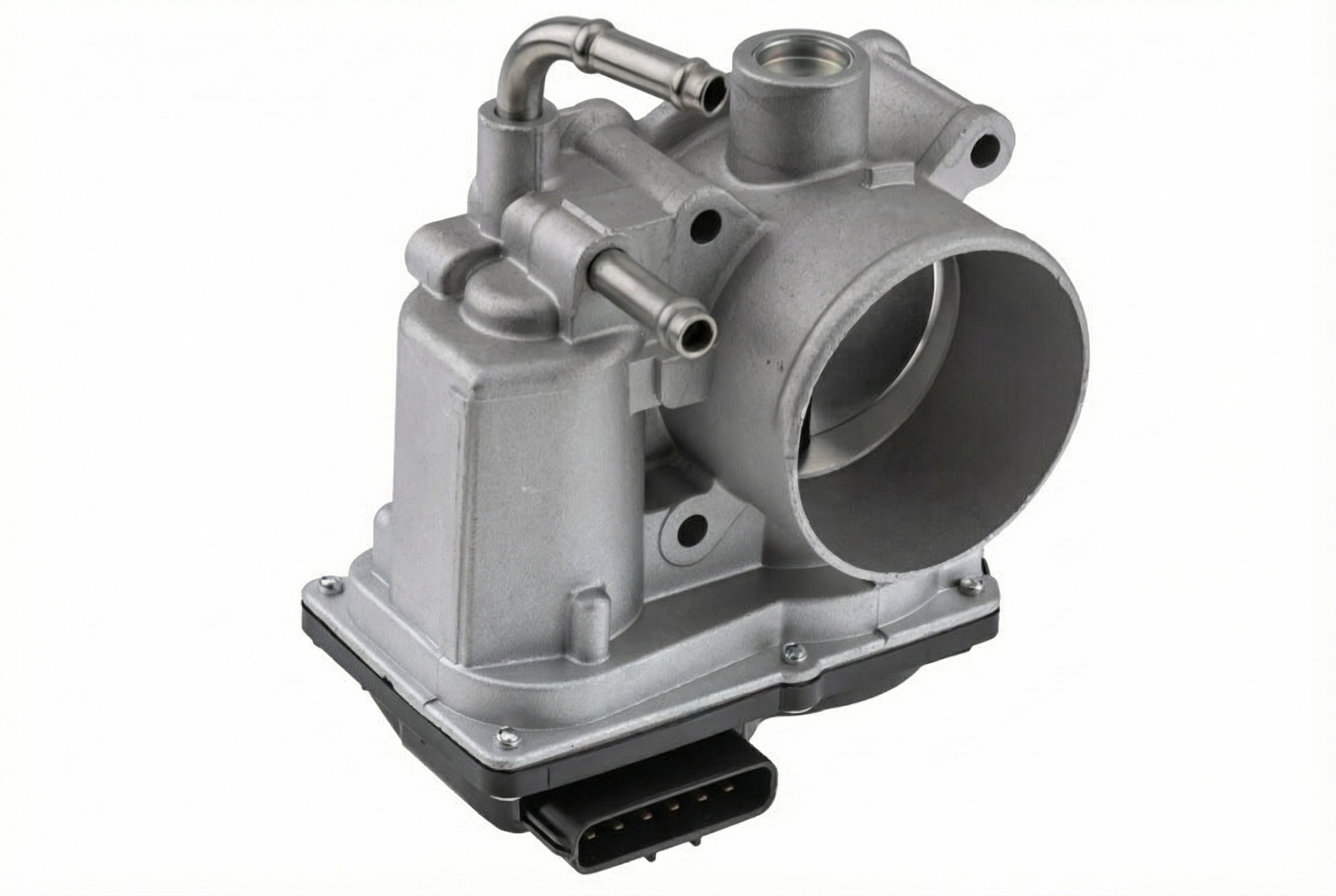
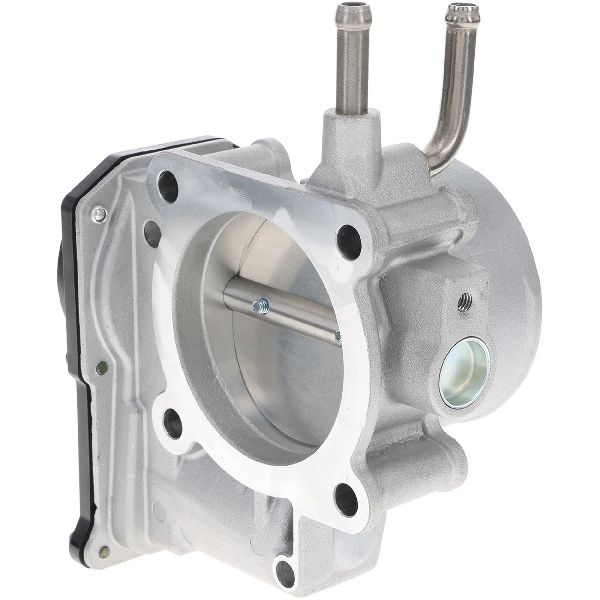
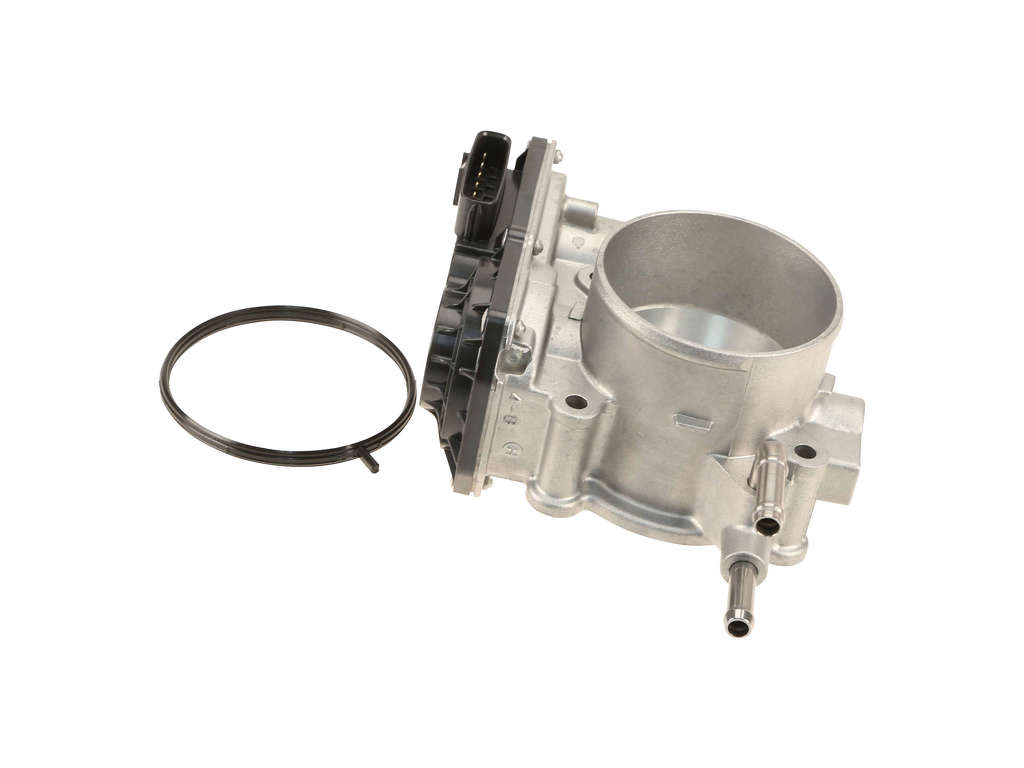
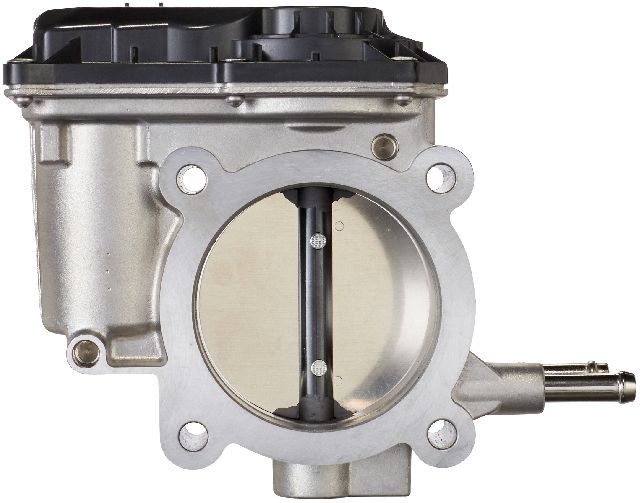
- Throttle Body Assembly
(OEM #22030-0V010)— This is the required repair if cleaning does not solve the issue, as the sensor is integrated. This part number fits the 2.5L 2AR-FE engine.
Trusted brands: Toyota (Genuine), Aisin, Denso
OEM price range: $320-$460
Aftermarket price range: $150-$300 - Throttle Body Cleaner — This is the first and most likely fix. A dirty throttle body is the most common cause of P0121.
Trusted brands: CRC, WD-40 Specialist, Berryman
Aftermarket price range: $5-$15
Related Codes That Often Appear With This One
- P0120 — P0120 indicates a general malfunction in the TPS 'A' circuit, while P0121 points to a range/performance issue. They often appear together as they relate to the same sensor.
- P0122 — Indicates the TPS 'A' circuit voltage is too low, which can happen if the sensor fails or wiring is shorted to ground.
- P0123 — Indicates the TPS 'A' circuit voltage is too high, which can happen with a sensor failure or wiring short.
Technical Service Bulletins (TSBs) & Recalls
- T-SB-0023-15: Details the torque converter shudder issue on 2013-2015 models, a condition sometimes confused with P0121 symptoms. The fix involves a new torque converter and an ECM reprogram.
- T-SB-0023-13: A general service bulletin about correct floor mat installation, which is referenced in pre-delivery service but not directly related to the P0121 code itself.
- NHTSA ODI #10426542: An owner reported being told by a technician that Toyota has issued a TSB related to the P0121 fault recorded in the engine computer.
Platform-Specific Known Issues
- A Warranty Enhancement Program (ZE6), detailed in TSB T-SB-0023-15, was issued for 2013-2015 RAV4 models for a torque converter shudder felt at light throttle between 25-50 mph. While this does not directly cause code P0121, the symptoms of light throttle hesitation could be confused by a driver.
- A recall (NHTSA 23V-723) was issued for 2013-2018 RAV4s for a 12-volt battery hold-down clamp that, if used with certain replacement batteries, could allow the battery to shift and short circuit, increasing fire risk. This is unrelated to P0121 but is an important safety note for this vehicle range.
Mechanic-Grade Diagnostic Values
- ECM Voltage Rationality Check — expected: The ECM compares VTA1 and VTA2 signals. The code is set if the calculated difference is outside a specific range for more than 2 seconds.. Failure: Difference between VTA1 and VTA2 is less than 0.8V or more than 1.6V.
- Scan Tool Live Data: Throttle Sensor Position — expected: At idle with engine off, VTA1 should read 0.5V - 1.0V. At wide open throttle, it should read approximately 4.5V.. Failure: Voltage that is stuck, erratic, or has dropouts when the pedal is smoothly depressed.
- Scan Tool Live Data: Throttle Position % — expected: Should read 0% when the throttle is fully closed and between 50% and 80% when fully open.. Failure: A reading above 0% at idle, or a failure to reach the expected range when fully open.
- Throttle Body Motor Resistance — expected: 0.3 to 100 ohms.. Failure: A reading outside of this range indicates a fault in the internal motor windings.
Hidden / Shadow Codes Worth Checking
- Freeze Frame Data: While not a 'shadow code', this is a critical piece of sub-information stored with the P0121 code. It captures a snapshot of all major sensor values (engine speed, vehicle speed, coolant temp, etc.) at the exact moment the fault was triggered. Analyzing this data is crucial to understand the conditions that led to the fault. (see via Any standard OBD-II scanner or professional tool like Toyota Techstream.)
Scan Tool Commands That Help
- Toyota Techstream: Data List Monitoring — Use this to view live voltage and percentage data for 'THROTTLE POS #1' (VTA1) and 'THROTTLE POS #2' (VTA2) to check for smooth operation as the accelerator is pressed.
- Toyota Techstream: Active Test — Allows a technician to directly command components to function, such as the throttle motor. This can help isolate whether the component itself is faulty or if the problem lies in the wiring or ECM signals.
- Toyota Techstream: Electronic Throttle Learning — This function should be performed after replacing the throttle body assembly or the ECM to ensure the new component's closed-throttle position is correctly learned by the system.
Wiring & Ground Locations
- Throttle Body Connector (E26) — Directly on the throttle body assembly.. This 6-pin connector provides power, ground, and signal lines for both the motor and the dual position sensors. A loose or corroded pin here is a direct cause of P0121. Pinout is typically: M+ (Motor+), M- (Motor-), E2 (Sensor Ground), VTA2 (Sensor 2 Signal), VC (5V Power), VTA1 (Sensor 1 Signal).
- Engine Harness Grounds — Key grounds for the 2AR-FE are located on the valve cover, bolting to the chassis near the strut tower, and on the side of the cylinder head, underneath the throttle body.. A poor or corroded ground connection at these points can create a floating ground, causing incorrect voltage readings from sensors, including the TPS, leading to false P0121 codes.
Real Owner Repair Stories
- The Chevrolet Cobalt SS Forum (similar electronic throttle behavior) (2006 Chevy SS, 194k miles (demonstrates a common ETCS issue, not specific to RAV4)) — P0121 code.
❌ Tried (didn't work) A standard 'idle relearn' procedure (idle 3 mins, off 60 secs, idle 3 mins) did not fix the high idle.
✅ What actually fixed it After cleaning the throttle body, the engine idled extremely high (2800-4000 RPM). The owner chose to drive the vehicle instead of attempting further resets. The idle speed gradually decreased and returned to normal after approximately 300 miles of driving as the ECM self-adapted. This is a critical expectation-setter for DIYers.
OEM Part Supersession History
22030-36010→22030-0V010— Standard part revision, likely for improved reliability or manufacturing efficiency.
Model Year Variations Within This Range
- 2016-2018: The 2016 model year received a significant mid-cycle refresh with updated exterior styling (front fascia, lights), new interior materials, and additional tech options like a 4.2-inch gauge cluster display. However, the 2.5L 2AR-FE engine and the electronic throttle control system were carried over without major changes, meaning the diagnostic and repair procedure for code P0121 remains consistent for the entire 2013-2018 range.
Diagnostic Flowchart
Other Known Issues on This Vehicle
Issues unrelated to this code that are worth knowing about as an owner of this generation:
- Torque Converter Shudder 🟠 Medium — Common on 2013-2015 models, typically felt as a vibration or rumble under light throttle between 25-50 mph. (Ref: Toyota issued a Warranty Enhancement Program (ZE6 / T-SB-0023-15) extending coverage. The fix involves replacing the torque converter and reprogramming the ECM.)
- HVAC Evaporator Drain Clog 🟡 Low — Can occur in any model year, often in specific geographic areas where insects build nests in the drain hose, leading to water leaking onto the passenger floorboard. (Ref: Toyota TSB T-SB-0080-19 describes the issue and the availability of an insect-repellent drain hose tip.)
- Unresponsive or Glare-Prone Navigation/Infotainment Screen 🟡 Low — Widespread complaints on 2013-2016 models regarding screen glare making it unreadable in daylight, and touchscreens becoming unresponsive. (Ref: No recall, but numerous owner complaints and third-party repair services exist to replace the touch digitizer.)
- Power Liftgate Malfunction 🟡 Low — Reported on 2015-2017 models, where the power liftgate may fail to open or close, particularly in cold weather.
Used vs. New Parts: Buying Guide for This Vehicle
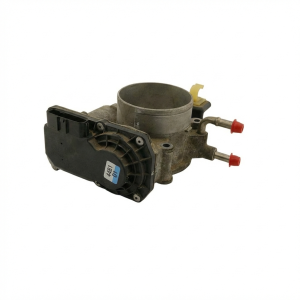
When a used part is the smart pick: A used throttle body from a reputable auto recycler can be a cost-effective solution, as it is a complete bolt-on assembly. It makes sense if the vehicle is older and the budget for a new OEM part is a concern. Since the sensor is integrated, you are replacing the entire potential failure point.
Donor-vehicle mileage cap: roughly under 80000 miles for the part to have meaningful remaining life.
What to inspect on the donor part:
- Check for a clean throttle plate and bore; excessive carbon may suggest high mileage or poor engine health.
- Ensure the electrical connector pins are straight and free of corrosion.
- Verify the donor vehicle's mileage if possible; lower is always better.
- Look for a return policy or short-term warranty from the seller.
OEM-only on this vehicle (don't cheap out):
- While not strictly 'OEM-only', using a genuine Toyota or OEM-supplier part (like Aisin or Denso) for the throttle body is highly recommended over no-name online brands to ensure correct electronic calibration and longevity.
Aftermarket brands forum-validated for this vehicle:
- Aisin (often the original equipment manufacturer for Toyota)
- Denso
Brands owners have reported issues with on this vehicle:
- Unbranded, low-cost units from online marketplaces are a gamble, as they may have incorrect sensor calibration or use lower-quality motors and electronics, leading to a repeat failure.
Real Owner Stories
Aggregated from forums and TSBs cited above. Mileages and costs reflect what owners reported in those sources.
2014 Toyota RAV4
Symptoms: The vehicle experienced code P0121 and entered limp mode.
What fixed it: Cleaning the throttle body was recommended as the first step, with replacement of the entire assembly as the final solution if cleaning failed.
Source hint: RAV4World - 'P0121 Throttle Position Sensor'
Documented NHTSA Reports
Toyota Owner Experience (NHTSA ODI #10396160)
Symptoms: An owner reported that while driving, the ECU displayed an active P0121 code for Throttle/Pedal Position Sensor A, Circuit Range Performance.
Toyota Owner Experience (NHTSA ODI #10295338)
Symptoms: An owner reported an acceleration problem occurring multiple times over six months, with the dealership identifying code P0121 for the throttle position sensor being out of range.
Related OBD-II Codes
Frequently Asked Questions
Can I just replace the Throttle Position Sensor (TPS) on my 2013-2018 RAV4 to fix P0121?
Does TSB T-SB-0023-15 for the torque converter shudder cause the P0121 code?
Is there a specific part number I should look for if I need to replace the throttle body?
Will cleaning the throttle body require a professional computer relearn on my RAV4?
Are there any safety recalls for the 2013-2018 RAV4 I should be aware of while fixing this?
Helpful Videos

Used OEM Parts in Stock
New Aftermarket Parts Available


The information in this article is provided for general reference and educational purposes only. Vehicle specifications, procedures, and part compatibility can vary by production date, trim level, and region. Always consult your vehicle's factory service manual and verify part numbers before purchasing or performing repairs. Safety-critical components such as airbags, seat belts, and braking systems should be installed by a qualified professional.
- Toyota RAV4:
- 🧭 Diagnostic Flowchart
- 🎬 Helpful Videos
- 🛍️ Shop This Part
- What's Unique About the 2013-2018 Toyota RAV4
- Symptoms You May Notice
- Most Likely Causes
- Rare But Worth Checking
- Diagnosis Steps
- Parts You'll Likely Need
- Related Codes That Often Appear With This One
- Technical Service Bulletins (TSBs) & Recalls
- Platform-Specific Known Issues
- Mechanic-Grade Diagnostic Values
- Hidden / Shadow Codes Worth Checking
- Scan Tool Commands That Help
- Wiring & Ground Locations
- Real Owner Repair Stories
- OEM Part Supersession History
- Model Year Variations Within This Range
- Other Known Issues on This Vehicle
- Used vs. New Parts: Buying Guide for This Vehicle
- Real Owner Stories
- 2014 Toyota RAV4
- Documented NHTSA Reports
- Toyota Owner Experience (NHTSA ODI #10396160)
- Toyota Owner Experience (NHTSA ODI #10295338)
- Related OBD-II Codes
- Frequently Asked Questions
- 🎟️ Get 5% Off