

P0122 on 2008-2016 Audi A4 2.0L TFSI: Causes, Fixes, and Throttle Body Replacement
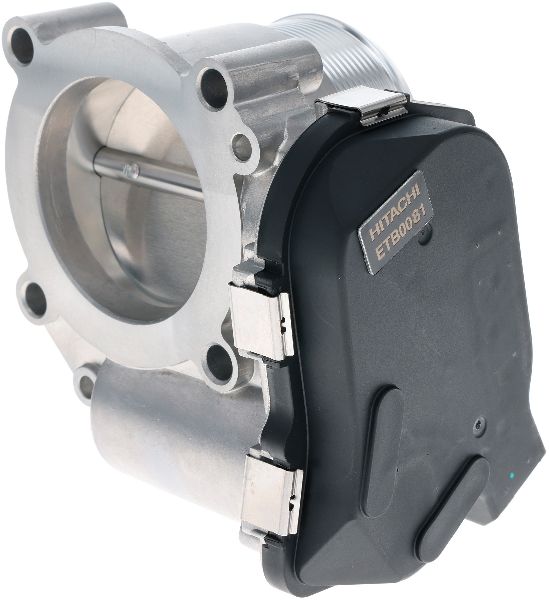
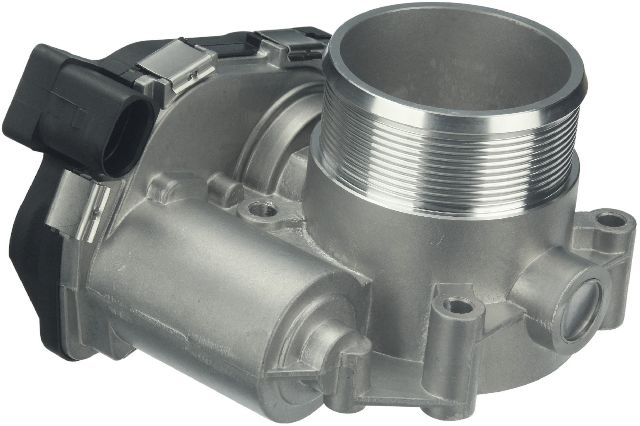
On a 2008-2016 Audi A4 2.0L TFSI, code P0122 is almost always caused by a failing electronic throttle body assembly. This triggers the EPC light and limp mode. Expect to pay $250-$500 for an OEM-quality throttle body, and remember that a throttle body adaptation with a proper scan tool is mandatory after replacement.
- P0122 on your A4 almost always means you need a new throttle body.
- The EPC light and limp mode are the key symptoms you will experience.
- Before replacing the part, always inspect the wiring and connector for damage, as this is a known VAG weak point.
- You cannot skip the Throttle Body Adaptation (TBA) after the repair. This requires a VAG-compatible scan tool.
- Always verify the correct part number for your specific vehicle's VIN before ordering.
What's Unique About the 2008-2016 Audi A4
The Audi A4 B8 platform, like most modern Volkswagen Auto Group (VAG) vehicles, heavily relies on its 'drive-by-wire' system. A failure here immediately triggers the EPC (Electronic Power Control) light, a hallmark of VAG throttle system issues, and puts the car into a protective 'limp mode'. While the P0122 code itself is generic, its primary cause on this specific engine is very frequently the failure of the integrated throttle body assembly, rather than a separate, replaceable sensor. The throttle body contains two sensors (G187 and G188) for redundancy; P0122 specifically points to the 'A' sensor (G187). Furthermore, a mandatory 'Throttle Body Adaptation' (TBA) procedure is required after any repair, which necessitates a VAG-specific scan tool like VCDS, differentiating the repair process from many other makes.
Generation note: The 2008-2016 model year range covers the entire Audi A4 B8 generation, including the mid-cycle facelift (B8.5) from 2013-2016. The 2.0L TFSI (EA888 Gen 2) engine was the core gasoline engine for this entire period, and the causes, symptoms, and fixes for code P0122 are consistent across all years in this range.
Symptoms You May Notice
- Check Engine Light is on
- EPC (Electronic Power Control) warning light is illuminated
- Vehicle enters 'limp mode' with drastically reduced engine power
- Poor, delayed, or no throttle response
- Rough or unstable idle
- Engine stalling
- Hesitation during acceleration
- Car shakes or vibrates, especially at idle
- Replacing the accelerator pedal assembly. P0122 specifically points to the throttle position sensor at the engine, not the pedal position sensor in the cabin, although they work together.
Most Likely Causes
- Failed Electronic Throttle Body Assembly 🔴 High Probability → Shop Fuel Injection Throttle Body The internal throttle position sensor (TPS) electronics are integrated into the assembly and are a common failure point on VAG vehicles of this era. The internal potentiometers or their contacts wear out, leading to a signal voltage below the minimum threshold.
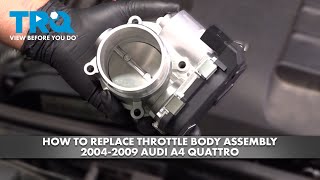
How to confirm: Using a scan tool (like VCDS), check live data for the throttle position angle (sensors G187 and G188). If the reading for sensor 'A' (G187) is stuck at a very low percentage (e.g., 0.0%) or doesn't change smoothly as the throttle is manually opened (with engine off), the sensor has failed. 🎬 Watch: How to test a throttle position sensor A user on Audi Owners Club confirmed this fix after getting P0122 and P2100.
Typical fix: Replace the entire throttle body assembly. A Throttle Body Adaptation (TBA) must be performed with a compatible scan tool immediately after installation. This is the most common and definitive repair.
Est. part cost: $250-$500 - Wiring Harness or Connector Damage 🟡 Medium Probability The wiring harness leading to the throttle body can become brittle from engine heat and vibration. The 6-pin connector itself is a known point of failure, where pins can back out or develop high resistance from corrosion, causing intermittent low voltage signals.
How to confirm: Visually inspect the entire harness leading to the throttle body for chafing, breaks, or melted sections. Unplug the connector and check for corrosion, moisture, or backed-out pins. Wiggle the harness with the engine running (if possible) to see if it affects the idle. Use a multimeter to check for 5V reference, good ground, and for a short-to-ground on the signal wire.
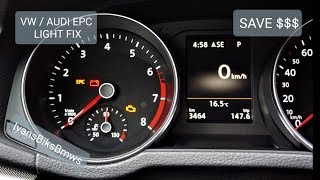
Typical fix: Repair the damaged section of wire. If the connector is faulty, replace the connector pigtail. Clean corroded terminals with electronic contact cleaner. Some owners have had to replace the 6-pin plug to permanently resolve recurring issues. 🎬 See how to diagnose and fix the EPC light
Est. part cost: $15-$50 - Dirty Throttle Body ⚪ Low Probability → Shop Fuel Injection Throttle Body Direct injection engines like the TFSI are prone to carbon buildup. While this usually causes performance codes or a sticking throttle plate (which might trigger a P2111 'stuck open' code), severe buildup could theoretically cause the plate to not return to its proper home position, leading to an electrical fault code. However, it's more likely to cause other symptoms first.
How to confirm: Remove the intake pipe from the throttle body and inspect the throttle plate and bore for heavy black carbon deposits. The plate should move freely by hand (with ignition off).
Typical fix: Remove the throttle body and clean it thoroughly with throttle body cleaner and a soft brush. A Throttle Body Adaptation is required after cleaning and reinstallation.
Est. part cost: $10-$20
Rare But Worth Checking
- Faulty Engine Control Module (ECM): This is very rare. The ECM should only be considered as the cause after all other possibilities, including the throttle body and its wiring, have been definitively ruled out. A mechanic on an AudiWorld forum noted that even after replacing a throttle body, the issue returned, hinting at a deeper problem, though it wasn't confirmed to be the ECM.
Diagnosis Steps
- Scan the vehicle for all fault codes using a VAG-compatible scanner (like VCDS). Note any other codes that appear alongside P0122, such as P0222 or P2100.
- Turn the ignition on (engine off). Use the scanner to monitor live data for Throttle Position Sensor 'A' (G187) and 'B' (G188). The reading for 'A' will likely be 0.0% or an abnormally low, fixed value.
- Have an assistant slowly press the accelerator pedal and watch the live data. The percentage for a healthy sensor should increase smoothly. If 'A' is stuck, erratic, or doesn't respond, the sensor has failed.
- Visually inspect the wiring harness and the 6-pin connector at the throttle body. Look for any signs of chafing, melting, corrosion, or loose pins. Pay close attention to the connector itself, as it's a known weak point.
- If wiring looks good, disconnect the connector. Use a multimeter to verify you have a 5-volt reference and a good ground at the connector pins. Test the signal wire for a short to ground.
- If power and ground are present and the wiring is intact, the throttle body assembly is the most likely culprit. Replace the throttle body.
- After replacing (or cleaning) the throttle body, you MUST perform a Throttle Body Adaptation (TBA) using your scan tool. The car may not run correctly or idle properly until this is done. 🎬 Watch: How to perform a throttle body adaptation Failure to adapt can sometimes result in an 'aborted due to safety reasons' message in VCDS, which may point to a persistent wiring or component issue.
Parts You'll Likely Need
- Electronic Throttle Body Assembly
(OEM #06F133062T (or Q, M, J, H, G, E, A). Always confirm with VIN.)— This is the most common cause of P0122, as the internal sensor fails. Part numbers have been superseded over time. The original may be 06F133062A, with later revisions being 06F133062Q or 06F133062T.
Trusted brands: VDO (OEM), Bosch, Continental
OEM price range: $350-$500
Aftermarket price range: $150-$300 - Throttle Body Connector Pigtail — If inspection reveals corrosion or damage to the 6-pin connector, replacing the pigtail is a more robust repair than trying to fix individual pins.
Trusted brands: Genuine Audi/VW, URO Parts, Meyle
OEM price range: $30-$60
Aftermarket price range: $15-$30
Related Codes That Often Appear With This One
- P2100 — This code means 'Throttle Actuator Control Motor Circuit/Open'. It often appears with P0122 because if the sensor has failed, the ECM may also flag a fault with the motor that controls the throttle plate, as it can't verify its position. A user on the Audi Owners Club forum experienced both codes together and resolved them by replacing the throttle body.
- P0222 — This is 'Throttle/Pedal Position Sensor/Switch 'B' Circuit Low Input'. The throttle body has two redundant sensors (A and B, or G187 and G188) for safety. It's common for both to be flagged if there is a major electrical failure within the unit.
- P0121 — This code, 'Throttle/Pedal Position Sensor/Switch 'A' Circuit Range/Performance', may appear alongside P0122. It indicates that the sensor's signal is not plausible or performing as expected, which can happen as the sensor begins to fail before it shorts out completely.
Technical Service Bulletins (TSBs) & Recalls
- While no TSB was found specifically for P0122 on the B8 A4, Audi TSB 2018260 for the previous generation addresses high contact resistance in the throttle body connector causing similar codes (like P0123), highlighting the importance of checking the wiring.
- An Audi TSB (2022028/5) for other models mentions throttle body faults and reinforces the need for adaptation after replacement.
Platform-Specific Known Issues
- The illumination of the EPC (Electronic Power Control) light is a direct and immediate symptom of this fault on the B8 A4, often preceding the Check Engine Light.
- A Throttle Body Adaptation (TBA) using a VAG-specific scan tool is not optional; it is a required step after cleaning or replacing the throttle body to make the car run correctly.
- A YouTube video by a user repairing a 2012 VW Passat with a similar engine showed the exact same symptoms (EPC light, limp mode) and fix (throttle body replacement) for code P0122, confirming the issue across the VAG family.
Mechanic-Grade Diagnostic Values
- TPS 'A' (G187) Signal Voltage — expected: Approx. 0.5V at idle (throttle closed) to 4.5V at wide-open throttle.. Failure: Voltage is stuck below the minimum threshold, typically <0.2V.
- VCDS Live Data: TPS 1 (G187) Percentage — expected: Should sweep smoothly from a low single-digit percentage (~3-5%) to a high percentage (~90-95%) as the accelerator pedal is pressed.. Failure: The value is stuck at 0.0%, jumps erratically, or does not change with pedal input.
- VCDS Live Data: TPS 2 (G188) Percentage — expected: Should sweep smoothly and inversely to Sensor 1, from a high percentage (~95-97%) down to a low percentage (~3-5%).. Failure: The signal does not mirror Sensor 1 or shows erratic behavior.
- Ground Path Integrity Voltage Drop — expected: Less than 0.2 volts.. Failure: A reading above 0.4 volts indicates excessive resistance in the ground circuit, often due to corroded ground points.
Scan Tool Commands That Help
- VCDS (VAG-COM): Throttle Body Adaptation (TBA) — This is a mandatory procedure after replacing or cleaning the throttle body. The ECU uses it to relearn the full range of motion of the throttle plate. Failure to perform this can result in incorrect idle, poor performance, or the fault code returning.
- VCDS (VAG-COM): Procedure for KWP-2000/CAN controllers: [01 - Engine] -> [Basic Settings - 04] -> Enter Group '060' -> Click [Go!]. Wait for the display to show 'ADP OK'. — This is the specific command sequence for performing the TBA on many B8 platform vehicles. The process takes about 30 seconds.
- VCDS (VAG-COM): Procedure for UDS controllers: [01 - Engine] -> [Basic Settings] -> Select 'Throttle Body Adaptation' from the dropdown list -> Click [Go!]. — This is the command sequence for later model year B8.5 vehicles that use the UDS protocol. The tool will guide you through the process.
Wiring & Ground Locations
- Throttle Body Connector — A 6-pin oval connector located directly on the electronic throttle body assembly.. This is the primary connection point for power, ground, and the two TPS signals going to the ECM. It is a known weak point for corrosion and pin tension issues that can cause a low voltage signal.
- Engine-to-Chassis Ground Strap — A braided metal strap connecting the engine block or transmission bellhousing to the vehicle's chassis/frame rail.. A corroded or loose main engine ground strap causes high resistance, leading to unstable voltage references for all engine sensors, including the TPS. A voltage drop test is the best way to confirm its integrity.
- G105 - Firewall Ground — A primary ground point connecting the engine block to the firewall.. This is a key grounding point for the engine management system. Corrosion here can cause a host of intermittent electrical issues, including sensor faults like P0122.
Real Owner Repair Stories
- Audi Owners Club (UK) user 'Jkha' (2008 Audi A4 B8) — Check Engine Light with codes P2100 and P0122.
✅ What actually fixed it Replacing the complete throttle body assembly and performing the relearning sequence cleared the fault codes. - AudiWorld Forums user 'Arty29' (Audi (model not specified, but issue is relevant)) — Intermittent throttle body fault, EPC light, limp mode, even after a new throttle body was installed.
❌ Tried (didn't work) Replacing the throttle body (problem returned after ~20 miles).
✅ What actually fixed it The Audi dealer found and repaired a fault in the wiring loom related to 'pin 47' which connects to the throttle body. The user noted that if the issue returned, the next step would be ECU replacement.
When the Usual Fixes Don't Work
- While a failed throttle body is the most common fix, it is not guaranteed. In some documented cases, owners have replaced the throttle body only for the P0122 fault and EPC light to return. Subsequent diagnosis by dealerships pointed to more complex root causes, such as a faulty pin in the main engine wiring harness or, in very rare cases, a failing driver circuit within the Engine Control Module (ECM) itself. These instances highlight that if a new, quality throttle body does not resolve the code, a deeper electrical diagnosis of the wiring and ECM is required.
OEM Part Supersession History
06F133062A/E/G/H/J/M/Q→06F133062T, 06F133062AG— Incremental manufacturing updates, likely for improved durability of internal electronics and materials.
Heads up: All revisions (J, Q, T, AG, etc.) are physically and electronically interchangeable for this application. They share the same dimensions, mounting points, and connector type.
Model Year Variations Within This Range
- 2008-2016: While the EA888 Gen 2 engine received a minor revision for the B8.5 facelift (2013-2016), such as an updated timing chain tensioner, the electronic throttle body design, control system, and the diagnostic procedure for code P0122 remained consistent across the entire generation.
Diagnostic Flowchart
Other Known Issues on This Vehicle
Issues unrelated to this code that are worth knowing about as an owner of this generation:
- Excessive Oil Consumption 🔴 High — Very common on early B8 models (2008-2011). Caused by faulty piston ring design. Can require new pistons and rings to fix. (Ref: Subject of a class-action lawsuit which led to extended warranties and repair programs for affected vehicles.)
- Timing Chain Tensioner Failure 🔴 High — A well-documented failure on the EA888 Gen 2 engine. The original tensioner can fail without warning, causing the timing chain to jump and leading to catastrophic engine damage. Typically a concern for vehicles over 70k miles. (Ref: Several TSBs were issued, and a class-action settlement extended warranties for some owners. It is highly recommended to check if the updated tensioner has been installed.)
- Water Pump Failure 🟠 Medium — The original water pumps have plastic housings that can crack and leak over time, causing coolant loss and overheating. Failure can occur anywhere from 50,000 to 100,000 miles. (Ref: No recall, but a very common repair. Aftermarket all-aluminum water pump assemblies are a popular and recommended upgrade.)
- Intake Manifold Carbon Buildup 🟠 Medium — As a direct-injection engine, the intake valves are not cleaned by fuel spray. Over 50,000-80,000 miles, carbon deposits build up, restricting airflow and causing misfires, rough idle, and reduced performance. (Ref: No recall; this is considered a maintenance item. Requires periodic manual cleaning (e.g., walnut blasting).)
- PCV Valve Failure 🟡 Low — The diaphragm in the Positive Crankcase Ventilation (PCV) valve can tear, leading to a loud whistling noise from the engine, rough idle, high oil consumption, and various lean-condition fault codes. (Ref: No recall. This is a relatively inexpensive and easy part to replace.)
Used vs. New Parts: Buying Guide for This Vehicle
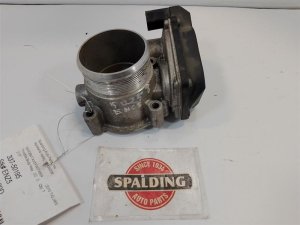
When a used part is the smart pick: A used throttle body can be a cost-effective option if sourced from a reputable salvage yard with a clear return policy and from a donor vehicle with documented low mileage. However, because this is an electronic part with internal wear components, it carries a significant risk of premature failure.
Donor-vehicle mileage cap: roughly under 60000 miles for the part to have meaningful remaining life.
What to inspect on the donor part:
- Verify the donor vehicle's mileage is under 60,000 miles.
- Inspect the 6-pin electrical connector for any signs of corrosion, bent pins, or cracks.
- Ensure the throttle plate is clean and moves freely without binding.
- Check that the part number matches one of the compatible revisions (e.g., 06F133062T, 06F133062Q, etc.).
OEM-only on this vehicle (don't cheap out):
- While not strictly 'OEM-only', using a brand known to be an Original Equipment Manufacturer (OEM) is highly recommended for this part.
Aftermarket brands forum-validated for this vehicle:
- VDO (often the original manufacturer)
- Bosch
- Continental
Brands owners have reported issues with on this vehicle:
- Unnamed, no-brand units from online marketplaces should be avoided, as their internal electronics and calibration may not meet OEM specifications, leading to persistent issues or premature failure.
Real Owner Stories
Aggregated from forums and TSBs cited above. Mileages and costs reflect what owners reported in those sources.
2008 Audi A4 B8 2.0L TFSI
Symptoms: Check engine light on with codes P2100 and P0122; throttle position sensor acting very weird.
What fixed it: Replaced the throttle body and performed the relearn sequence (adaptation).
Source hint: Audi Owners Club (UK) - Thread 'Throttle position sensor acting very weird.'
2012 Volkswagen Passat 2.0T (VAG EA888)
Symptoms: EPC light illuminated and vehicle entered limp mode.
What fixed it: Replacement of the throttle body assembly.
Source hint: YouTube video by a user repairing a 2012 VW Passat with a similar engine
Related OBD-II Codes
Frequently Asked Questions
Can I just clean the throttle body on my B8 A4 to fix the P0122 code?
Is there a specific TSB for throttle body connector issues on the Audi A4?
Why did my Audi A4 enter 'limp mode' and display an EPC light?
Do I need special tools to fix P0122 on my 2.0L TFSI?
Are there other VAG vehicles that share this throttle body failure?
Helpful Videos


Used OEM Parts in Stock
New Aftermarket Parts Available




The information in this article is provided for general reference and educational purposes only. Vehicle specifications, procedures, and part compatibility can vary by production date, trim level, and region. Always consult your vehicle's factory service manual and verify part numbers before purchasing or performing repairs. Safety-critical components such as airbags, seat belts, and braking systems should be installed by a qualified professional.
- Audi A4:
- 🧭 Diagnostic Flowchart
- 🎬 Helpful Videos
- 🛍️ Shop This Part
- What's Unique About the 2008-2016 Audi A4
- Symptoms You May Notice
- Most Likely Causes
- Rare But Worth Checking
- Diagnosis Steps
- Parts You'll Likely Need
- Related Codes That Often Appear With This One
- Technical Service Bulletins (TSBs) & Recalls
- Platform-Specific Known Issues
- Mechanic-Grade Diagnostic Values
- Scan Tool Commands That Help
- Wiring & Ground Locations
- Real Owner Repair Stories
- When the Usual Fixes Don't Work
- OEM Part Supersession History
- Model Year Variations Within This Range
- Other Known Issues on This Vehicle
- Used vs. New Parts: Buying Guide for This Vehicle
- Real Owner Stories
- 2008 Audi A4 B8 2.0L TFSI
- 2012 Volkswagen Passat 2.0T (VAG EA888)
- Related OBD-II Codes
- Frequently Asked Questions
- 🎟️ Get 5% Off