

P0122 on 2012-2020 Chevrolet Sonic: Throttle Position Sensor Circuit Low Causes and Fixes
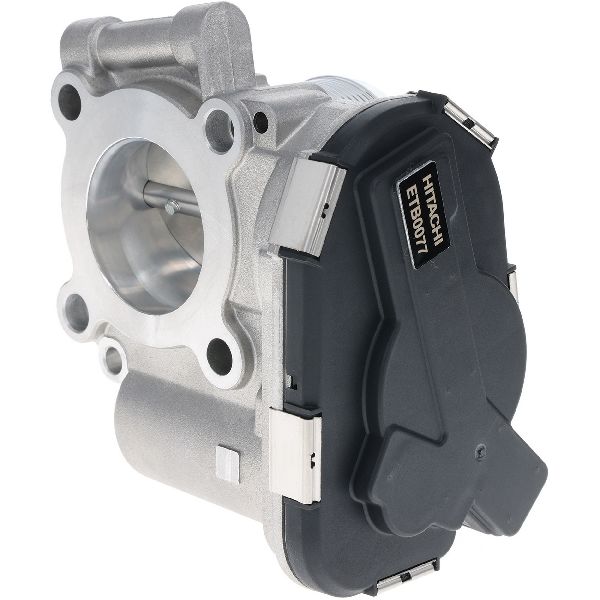
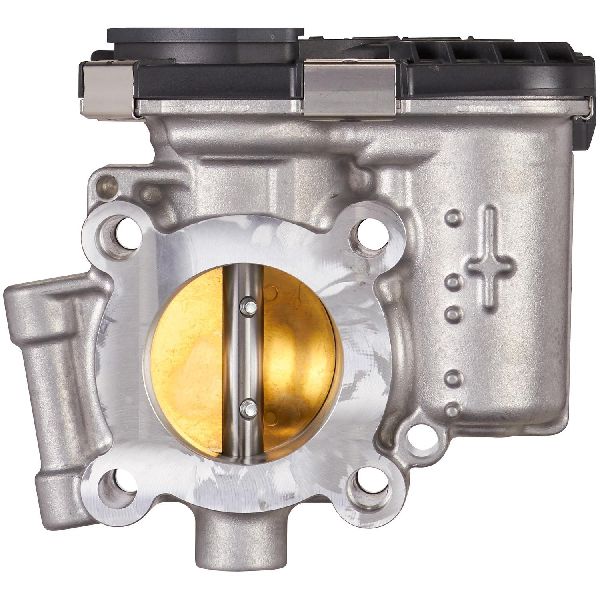
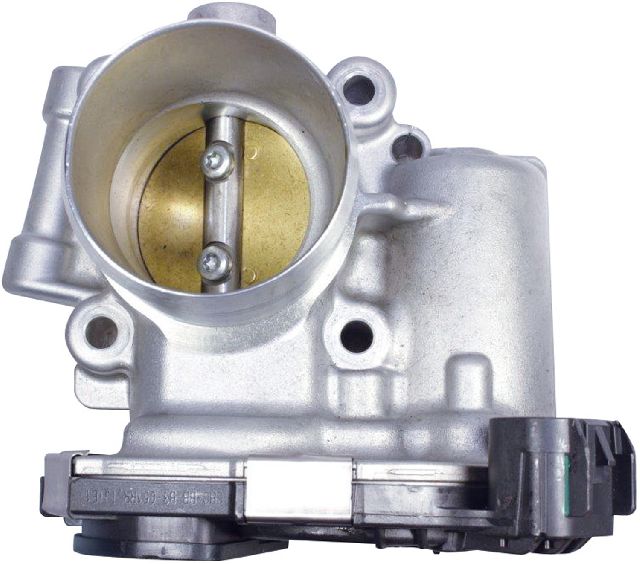
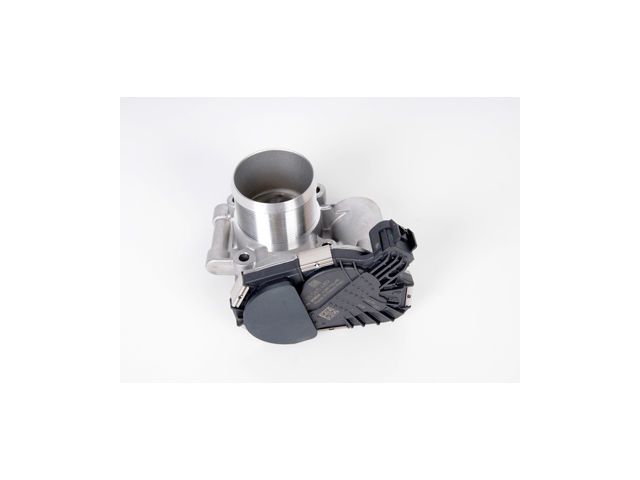
On a 2012-2020 Chevrolet Sonic, code P0122 is almost always caused by a failing electronic throttle body assembly. The throttle position sensor (TPS) is integrated and not sold separately. Expect to replace the entire throttle body, which costs between $298 and $397 for the part and is a 1/5 to 2/5 difficulty DIY job. This is a well-known issue on the Sonic and its platform mates, the Chevy Cruze and Buick Encore.
- P0122 on a Sonic almost always means you need a new throttle body assembly.
- Symptoms are serious and include reduced power ('limp mode') and potential stalling, making the car unsafe to drive.
- Before
What's Unique About the 2012-2020 Chevrolet Sonic
The Chevrolet Sonic, like most modern vehicles, uses a 'drive-by-wire' system where the throttle position sensor is not a separate, replaceable part. Instead, it is integrated directly into the electronic throttle body assembly. Because of this design, a P0122 code on a Sonic almost always necessitates the replacement of the entire throttle body, rather than just a small, inexpensive sensor. This is a common point of failure on Sonics and related GM vehicles like the first-generation Chevrolet Cruze, Chevrolet Trax, and Buick Encore that share the same platform and engines.
Symptoms You May Notice
- Check Engine Light is on
- Reduced Engine Power message and limp mode activation
- Hesitation or stumbling upon acceleration
- Rough, unstable, or high idle
- Engine stalling, especially when coming to a stop
- Very slow or no throttle response
- Unresponsive or erratic throttle behavior
- Replacing the accelerator pedal position (APP) sensor. While the APP sensor can cause similar symptoms, it typically sets different codes (e.g., P2138). P0122 specifically points to the sensor at the throttle body.
- Cleaning the throttle body. While cleaning a dirty throttle body can resolve sticking or idle issues, it will not fix the internal electronic failure of the position sensor that causes a P0122 voltage code.
Most Likely Causes
- Faulty Throttle Body Assembly 🔴 High Probability → Shop Fuel Injection Throttle Body The integrated Throttle Position Sensor (TPS) is a well-documented, common failure point on this platform. Since it cannot be replaced separately, the entire assembly is the required fix.
How to confirm: Use a scan tool to monitor live data for 'TPS Angle' or 'TPS Voltage'. At idle, the voltage should be around 0.5V and increase smoothly to ~4.5V at wide-open throttle. A P0122 fault will typically show a voltage stuck near 0V. You can also back-probe the sensor connector with a multimeter to verify the signal wire voltage. A video from 'Electrical Car Repair LIVE' on YouTube demonstrates this diagnostic process on a related Chevy Cruze.
Typical fix: Replace the entire throttle body assembly. A throttle relearn procedure is recommended after installation.
Est. part cost: $100-$350 - Wiring Harness or Connector Issue 🟡 Medium Probability Vibrations and heat in the engine bay can cause wires to chafe or the main connector on the throttle body to become loose or corroded over time.
How to confirm: Visually inspect the wiring harness and the 6-pin connector going to the throttle body for any signs of damage, melting, or corrosion. With the key on, engine off, check for 5V reference voltage and a good ground at the connector with a multimeter. Wiggle the harness while monitoring TPS voltage on a scan tool to see if the reading fluctuates, which would indicate an intermittent connection.
Typical fix: Repair the damaged section of the wiring harness or clean/replace the connector pigtail.
Est. part cost: $10-$50
Rare But Worth Checking
- Corroded Bulkhead Connectors (X101/X202): A forum post by a technician on 2CarPros.com noted that the accelerator pedal and throttle body wiring passes through bulkhead connectors X101 (engine bay) and X202 (driver's side kick panel). Water intrusion, especially from a clogged sunroof drain, can cause corrosion in X202, leading to various throttle-related codes. This is worth checking if a new throttle body doesn't fix the issue.
- Faulty Powertrain Control Module (ECM): This is extremely rare and should be considered a last resort. The ECM is only a likely cause after all other possibilities, including the throttle body and all related wiring, have been thoroughly tested and ruled out.
Diagnosis Steps
- Connect an OBD-II scanner and confirm P0122 is present. Check for other related codes like P0223 or P2135, which are commonly seen together.
- Using the scanner's live data function, observe the Throttle Position Sensor 'A' (TPS1) voltage. It will likely be at or near 0 volts.
- Turn the ignition off. Inspect the throttle body connector and its wiring for any visible damage, corrosion, or loose pins.
- Turn the ignition on (engine off). Carefully use a multimeter to test the connector. You should find one pin with 5 volts (reference), one with a good ground (near 0 ohms to chassis ground), and the signal wire (which will show the low voltage reading).
- If 5V reference is missing or the ground is bad, trace the wiring to find the open or short. Check the bulkhead connectors X101 and X202 for corrosion if needed, especially if the vehicle has a sunroof.
- If reference voltage and ground are good, the fault is almost certainly the throttle body assembly itself.
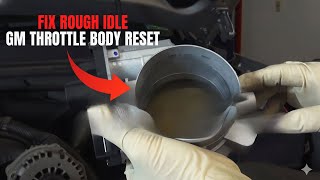
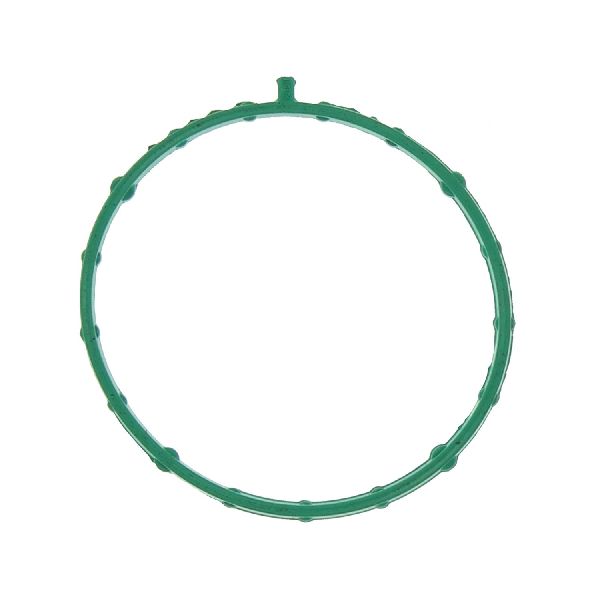
- Replace the throttle body assembly and gasket. After installation, clear the codes. Perform a throttle relearn procedure. While some sources suggest the car will learn on its own, the official GM procedure involves using a scan tool or a specific manual sequence of idling and key cycles to ensure stable idle speed. 🎬 Watch: How to manually relearn your GM throttle body
Parts You'll Likely Need
- Throttle Body Assembly
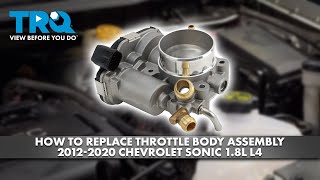
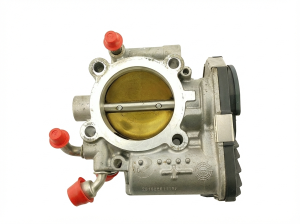
(OEM #1.8L Engine: 55577375 🎬 Watch: How to replace the 1.8L throttle body (superseded by 55561495); 1.4L Turbo Engine: 55565489 🎬 See this 1.4T throttle body replacement walkthrough)— This is the most common failure. The throttle position sensor (TPS) that causes code P0122 is integrated into this assembly and cannot be replaced separately on the Sonic.
Trusted brands: ACDelco (OEM), Bosch, Standard Motor Products, TRQ
OEM price range: $298-$397
Aftermarket price range: $100-$250
Related Codes That Often Appear With This One
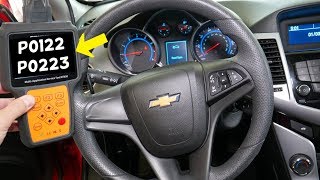
- P0223 — P0223 is 'Throttle/Pedal Position Sensor/Switch 'B' Circuit High Input'. The ECM uses two TPS sensors (A and B) for redundancy. A failure often affects both sensors, causing them to report conflicting high and low voltage readings simultaneously. This pair of codes is a very strong indicator of a failed throttle body.
- P2135 — P2135 is 'Throttle/Pedal Position Sensor/Switch 'A'/'B' Voltage Correlation'. This code sets when the ECM sees a disagreement between the two internal TPS sensors that is outside the expected range, which is a direct result of one sensor failing and sending a low voltage signal.
Technical Service Bulletins (TSBs) & Recalls
- GM Special Coverage 14371: Covers leaking water pumps on 2012-2014 Sonic/Cruze with 1.4L engine for 10 years/150,000 miles.
- PIC5574A: Notes potential for loose ground connections at G104 and G105 causing multiple communication codes and no-start conditions, which could be relevant if other electrical issues are present.
Documented NHTSA Reports
- NHTSA ODI #11323165 describes a situation where a vehicle experienced a shudder at low RPMs (30-50 mph) and subsequently received a P0122 code after fast acceleration.
- NHTSA ODI #10809597 reports that a P0122 code appeared alongside Stabilitrak warnings and a "Reduced Engine Power" message, occurring in conjunction with several other electrical and sensor codes.
Platform-Specific Known Issues
- A special coverage program (N232395330) exists for 2017-2018 Sonics with the 1.4L engine for turbocharger failure. While not directly for P0122, the symptoms of reduced power can overlap. It's worth checking if your vehicle is covered if you experience performance issues.
- GM Special Coverage bulletin 14371 extends warranty coverage for leaking water pumps on some 2012-2014 Sonics with the 1.4L engine to 10 years or 150,000 miles. While unrelated to P0122, it is a very common issue on this platform.
Mechanic-Grade Diagnostic Values
- TPS1 (Sensor 'A') Signal Voltage — expected: Approx. 0.5V at idle, sweeping smoothly to approx. 4.5V at Wide-Open Throttle (WOT).. Failure: Stuck at or near 0V, or does not sweep smoothly when the throttle is opened manually. A P0122 is typically set below 0.2V.
- TPS2 (Sensor 'B') Signal Voltage — expected: Approx. 4.5V at idle, sweeping smoothly down to approx. 0.5V at WOT. This is the inverse of TPS1 for redundancy.. Failure: Voltage does not mirror TPS1 or is stuck at a specific value. Often sets P0223 (High Input) when TPS1 fails low.
- 5V Reference Voltage at TB Connector — expected: Stable 5.0V with Key On, Engine Off.. Failure: Voltage is low, absent, or fluctuating, indicating a wiring or ECM issue.
- Ground Circuit at TB Connector — expected: Less than 100mV (0.1V) when tested against battery negative.. Failure: High voltage reading indicates a poor ground connection, which can cause incorrect sensor readings.
- Throttle Body Bolt Torque — expected: 8 Nm or 71 lb-in.. Failure: N/A
Scan Tool Commands That Help
- GDS2 (GM Dealer Scan Tool): Idle Learn Reset — This function should be used immediately after cleaning or replacing the throttle body. It resets the ECM's learned airflow values to zero, forcing it to recalibrate to the new/clean throttle body's baseline position. This prevents high idle, unstable idle, or stalling.
- Manual Relearn (No Scan Tool): Idle Learn Procedure — If a GDS2 or equivalent scan tool is not available. The procedure involves specific key cycles and idling periods. Start and idle the engine in Park for 3 minutes. Turn the ignition OFF for 60 seconds. Start and idle the engine again for 3 minutes. The idle should now be stable. This allows the ECM to learn the new minimum throttle position.
Wiring & Ground Locations
- G103 — On the cowl at the left rear of the engine compartment, above the brake booster.. This is a major ground point for the BCM, Instrument Panel Cluster (IPC), and Data Link Connector (DLC). While not a direct ground for the TPS, a poor connection here can cause bizarre communication errors and faulty data that may accompany throttle codes.
- G105 — At the left front of the engine compartment, under the battery tray on the frame rail.. This ground is critical for multiple engine compartment components. A GM Preliminary Information bulletin (PIC5574A) specifically calls out inspecting G105 for looseness, paint, or weld slag as a cause for intermittent no-start and communication code issues on the 2012 Sonic. A bad ground here can introduce electrical noise and voltage drops affecting sensor readings.
- Throttle Body Connector — 6-pin connector on the electronic throttle body assembly.. This is where all voltage and signal tests are performed. It contains the 5V reference, ground, and two signal wires (TPS1 and TPS2) for the integrated sensors. A visual inspection for corrosion or backed-out pins is the first step in any diagnosis.
Real Owner Repair Stories
- YouTube Commenter on 'CODE P0122 P0223... FIX CHEVROLET CRUZE CHEVY SONIC' (Chevrolet Cruze (shared platform/engine)) — P0122 and P0223 codes, reduced engine power.
❌ Tried (didn't work) Replaced throttle body assembly
✅ What actually fixed it The problem persisted after replacing the throttle body. The final fix was discovering and repairing a faulty ground wire connection. The commenter did not specify which ground, but this highlights the importance of checking grounds (like G105) if a new part doesn't solve the issue.
OEM Part Supersession History
55577375→55561495— Later revision of the part for the 1.8L engine. Often cited as an improvement over the original.
Heads up: The parts are interchangeable. If you have the original 55577375, the correct replacement is 55561495.
Diagnostic Flowchart
Other Known Issues on This Vehicle
Issues unrelated to this code that are worth knowing about as an owner of this generation:
- PCV System Failure (Valve Cover / Intake Manifold) 🔴 High — Extremely common on 1.4L Turbo engines, typically between 60k-100k miles. A torn diaphragm in the valve cover or a missing check valve in the intake manifold causes a massive vacuum leak. (Ref: GM TSB PIP5197 provides technical details.)
- Cracked Plastic Thermostat Housing / Water Outlet 🔴 High — Very common on both 1.4L and 1.8L engines. The plastic becomes brittle and cracks, causing significant coolant leaks. Many owners upgrade to an aftermarket aluminum housing.
- Leaking Water Pump (1.4L Engine) 🟠 Medium — Common failure, often occurring before 100k miles, leading to coolant loss and potential overheating. (Ref: GM Special Coverage 14371 extends the warranty to 10 years/150,000 miles for some 2012-2014 models.)
- Oil Leaks (Oil Cooler, Valve Cover, Oil Pan) 🟠 Medium — Frequent reports of oil leaks from the oil cooler seals, valve cover gasket, and oil pan gasket as the vehicle ages.
- Failing Ignition Coil Pack 🟡 Low — The single coil pack assembly is a common replacement item, causing misfires (P0300-P0304) and rough running. Often fails multiple times over the life of the vehicle.
Used vs. New Parts: Buying Guide for This Vehicle
When a used part is the smart pick: A used OEM throttle body from a low-mileage donor vehicle can be a cost-effective alternative to a new, cheap aftermarket part, which may have lower quality control. Given the high failure rate, a new OEM part is the safest bet, but a used OEM part is often better than a new non-OEM part.
Donor-vehicle mileage cap: roughly under 60000 miles for the part to have meaningful remaining life.
What to inspect on the donor part:
- Verify the part number matches your engine (1.8L vs 1.4L). For the 1.8L, look for the later revision 55561495.
- Inspect the electrical connector pins for any signs of green or white corrosion, or any bent pins. Do not buy if the connector is damaged.
- Look at the throttle plate and bore. It should be relatively clean with minimal carbon buildup, which can indicate lower mileage and a well-maintained donor vehicle.
- Ask for the VIN of the donor car to check its mileage and history if possible.
Aftermarket brands forum-validated for this vehicle:
- ACDelco (OEM)
- Bosch (Often the OEM supplier)
- Standard Motor Products (SMP)
- TRQ
Brands owners have reported issues with on this vehicle:
- Unbranded, no-name parts from online marketplaces are a gamble. They may fail prematurely or have incorrect calibrations, causing persistent idle or performance issues.
Real Owner Stories
Aggregated from forums and TSBs cited above. Mileages and costs reflect what owners reported in those sources.
2013 Chevrolet Sonic LT 1.8L
Symptoms: Hesitation during acceleration and a persistent check engine light. Scanned codes P0122 and P0222. Replaced the sensor alone but the problem persisted.
What fixed it: Replacing the entire throttle body assembly.
Source hint: owner_reports - vertexaisearch.cloud.google.com
2016 Chevrolet Cruze Limited 1.4L
Symptoms: Throttle body voltage ranges off; codes P0122 and P0223 present.
What fixed it: Replacing the throttle body (confirmed as a shared platform fix for Sonic/Cruze).
Source hint: Reddit r/cruze - '2016 chevy cruze limited 1.4 code p0122 p0223 Throttle body voltage ranges off'
Chevrolet Owner (NHTSA ODI #11323165)
Symptoms: An owner reported a shudder at low RPMs (30-50 mph) and a P0122 code specifically after fast acceleration.
Chevrolet Owner (NHTSA ODI #10809597)
Symptoms: A report noted that Stabilitrak and Reduced Engine Power warnings were accompanied by a P0122 code along with multiple other electrical and powertrain codes.
Related OBD-II Codes
Frequently Asked Questions
Can I just replace the Throttle Position Sensor (TPS) on my Chevrolet Sonic to fix P0122?
Is there a special warranty for water pump leaks on my 2013 Sonic 1.4L?
My 2017 Sonic 1.4L has reduced engine power; is there a specific program for this?
Do I need to do anything special after installing a new throttle body?
Could a sunroof leak cause my P0122 code?
Are there common ground issues I should check for electrical codes?
Helpful Videos
Used OEM Parts in Stock
New Aftermarket Parts Available


The information in this article is provided for general reference and educational purposes only. Vehicle specifications, procedures, and part compatibility can vary by production date, trim level, and region. Always consult your vehicle's factory service manual and verify part numbers before purchasing or performing repairs. Safety-critical components such as airbags, seat belts, and braking systems should be installed by a qualified professional.
- Chevrolet Sonic:
- 🧭 Diagnostic Flowchart
- 🎬 Helpful Videos
- 🛍️ Shop This Part
- What's Unique About the 2012-2020 Chevrolet Sonic
- Symptoms You May Notice
- Most Likely Causes
- Rare But Worth Checking
- Diagnosis Steps
- Parts You'll Likely Need
- Related Codes That Often Appear With This One
- Technical Service Bulletins (TSBs) & Recalls
- Documented NHTSA Reports
- Platform-Specific Known Issues
- Mechanic-Grade Diagnostic Values
- Scan Tool Commands That Help
- Wiring & Ground Locations
- Real Owner Repair Stories
- OEM Part Supersession History
- Other Known Issues on This Vehicle
- Used vs. New Parts: Buying Guide for This Vehicle
- Real Owner Stories
- 2013 Chevrolet Sonic LT 1.8L
- 2016 Chevrolet Cruze Limited 1.4L
- Chevrolet Owner (NHTSA ODI #11323165)
- Chevrolet Owner (NHTSA ODI #10809597)
- Related OBD-II Codes
- Frequently Asked Questions
- 🎟️ Get 5% Off