

P0122 on 2013-2015 Chrysler 300: Throttle Position Sensor Circuit Low Causes and Fixes
On a 2013-2015 Chrysler 300, code P0122 is most often caused by a failed throttle body assembly, which contains the integrated throttle position sensor. Expect to pay $150-$350 for an aftermarket part and up to $500 for an OEM Mopar part. Before replacing, check for wiring damage, ensure the connector is secure, and check for any available PCM software updates from a dealer. This issue is also common on platform mates like the Dodge Charger and Jeep Grand Cherokee.
- P0122 on a 2013-2015 Chrysler 300 almost always points to a problem with the electronic throttle body.
- The most likely fix is replacing the entire throttle body assembly, as the sensor is built-in.
- Before replacing parts, check for damaged wiring to the throttle body and ask a dealer if any PCM software updates (TSBs) are available for your VIN.
- Driving with this code is unsafe due to the risk of stalling or the vehicle entering a low-power limp mode.
- This is a DIY-friendly repair for those with basic tools, with a difficulty of 2 out of 5.
What's Unique About the 2013-2015 Chrysler 300
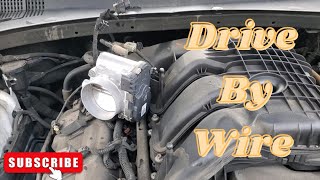
For this generation of Chrysler 300 and its platform mates (Dodge Charger, Challenger), the throttle position sensors are not sold separately; they are integrated into the electronic throttle body assembly. This means a sensor failure typically requires replacing the entire throttle body. Additionally, Chrysler issued several Technical Service Bulletins (TSBs) that include this code, indicating that the issue is a known problem and may sometimes be resolved with a PCM software update rather than a hardware replacement. [Bulletin #18-045-16 REV. A, #18-094-16, #18-074-15 REV A] These updates can adjust the sensitivity parameters within the PCM to prevent false codes.
Diagnostic Flowchart
Tap your situation to follow the diagnostic path that matches what you're seeing on this vehicle.
Symptoms You May Notice
- Check Engine Light illuminated
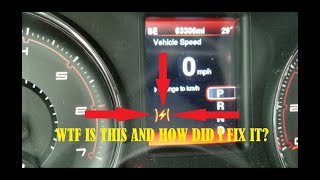
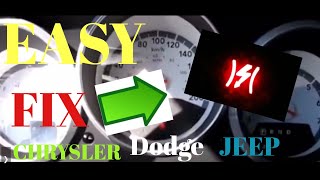
- Electronic Throttle Control (ETC) warning light (red lightning bolt symbol) on the dashboard
- Vehicle enters 'limp mode' with significantly reduced engine power and throttle response
- Engine stalls, especially when coming to a stop or at idle
- Rough or unstable idle
- Hesitation, stumbling, or surging during acceleration
- Poor or erratic automatic transmission shifting
- No throttle response at all, even when pressing the accelerator pedal
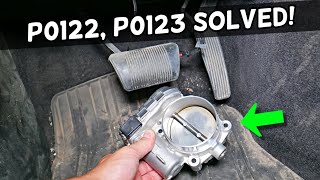
- Replacing the accelerator pedal position (APP) sensor. While the APP sensor is part of the same system, P0122 specifically points to the sensor at the throttle body 🎬 Watch: Diagnosing P0122 and P0123 codes on a Dodge Charger ('A' circuit), not the pedal. However, issues with the APP sensor can sometimes cause similar symptoms, so it's important to diagnose based on the specific code.
Most Likely Causes
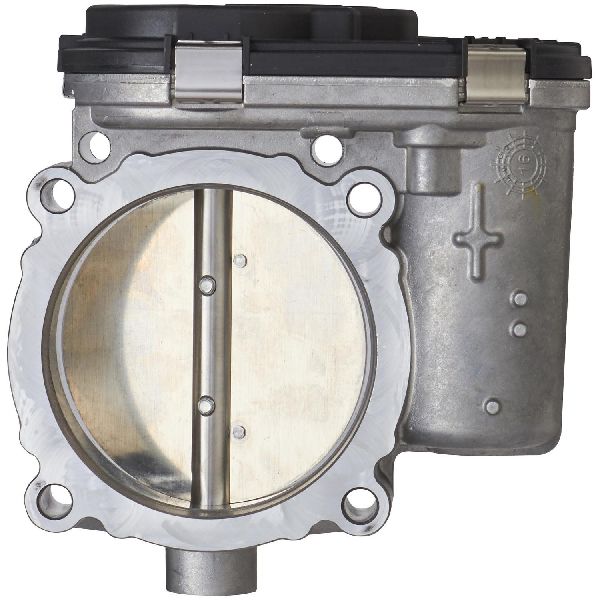
- Faulty Electronic Throttle Body Assembly 🔴 High Probability → Shop Fuel Injection Throttle Body The throttle position sensors are integrated directly into the throttle body and are a known failure point. Wear and tear on the internal electronics cause the sensor to send an incorrect low voltage signal.
How to confirm: Use a scan tool with live data to monitor the TPS1 voltage. With the key on and engine off, the voltage should sweep smoothly from about 0.5V to 4.5V as you slowly press the gas pedal. If the voltage is stuck low (e.g., below 0.2V), doesn't change, or has dropouts, the throttle body is faulty.
Typical fix: Replace the entire throttle body assembly. After replacement, a throttle relearn procedure is required to calibrate the new unit with the PCM.
Est. part cost: $150-$500 - Wiring Harness or Connector Issue 🟡 Medium Probability The wiring harness leading to the throttle body is subject to engine vibration and heat, which can cause wires to break or insulation to chafe over time, leading to a short to ground. The connector pins can also become loose or corroded.
How to confirm: Visually inspect the wiring harness and the connector at the throttle body. Check for the red safety tab being fully engaged. Wiggle the connector with the engine running to see if it induces a stall or code. Unplug the connector and inspect for bent, loose, or corroded pins. With the connector unplugged, check for continuity to ground on the signal wire; there should be none.
Typical fix: Repair the damaged section of the wiring harness or clean/replace the connector pigtail. Ensure the connector is fully seated and the red locking tab is pushed in.
Est. part cost: $20-$100 - PCM Software Update Needed ⚪ Low Probability Chrysler released multiple TSBs for this vehicle platform that address erroneously set diagnostic trouble codes. An outdated PCM software version can have overly sensitive parameters that trigger a P0122 code, especially in conjunction with other codes. [Bulletin #18-045-16, #18-094-16, #18-074-15]
How to confirm: A Chrysler dealership or a qualified shop with a wiTECH scan tool can check the vehicle's current software calibration against the latest available version by VIN. The presence of TSBs #18-045-16, #18-094-16, and #18-074-15 all list P0122 as a code that can be addressed by a flash.
Typical fix: Update the PCM software to the latest version. This is often called 'flashing' or 'reflashing' the PCM and must be done by a dealer or properly equipped independent shop.
Est. part cost: $100-$250
Rare But Worth Checking
- Faulty Powertrain Control Module (PCM): This is the least likely cause and should only be considered after all other possibilities are exhaustively ruled out. A user on DodgeForum.com mentioned a previous owner had a failed ECU as the root cause after replacing other parts.
Diagnosis Steps
- Scan for Codes: Use an OBD-II scanner to confirm P0122 and check for any other related codes (like P0123, P0222, P0223). Note the freeze frame data to understand the conditions when the fault occurred.
- Check for TSBs: Ask a dealer or use an online service to check for any applicable Technical Service Bulletins related to P0122 or PCM software updates for your specific VIN. The existence of TSBs #18-045-16, #18-094-16, and #18-074-15 makes this a critical first step.
- Inspect Wiring and Connector: Carefully inspect the electrical connector and wiring harness going to the throttle body. Look for frayed wires, corrosion in the connector, or loose pins. Ensure the red locking tab on the connector is fully seated.
- Test Sensor Voltage (Live Data): Use a scan tool that can display live data. Monitor the voltage for TPS1. With the key on, engine off, it should be around 0.5-1.0V at closed throttle and increase smoothly to ~4.5V at wide-open throttle. If the voltage is stuck below 0.5V, is erratic, or doesn't respond, the sensor is faulty.
- Test Circuit Integrity: If you suspect a wiring issue, disconnect the harness from the PCM and throttle body. Check for continuity on the signal wire and ensure there are no shorts to ground or power on the 5V reference or signal circuits.
- Replace Throttle Body: If the wiring and PCM software are confirmed to be good and the sensor voltage is incorrect, the throttle body assembly is the confirmed culprit. Replace the entire unit. 🎬 See this step-by-step throttle body replacement walkthrough
- Perform Throttle Relearn: After replacement, a throttle relearn procedure is mandatory. A common method is to turn the ignition to 'On' (engine off) for 10 seconds, slowly press the accelerator pedal to the floor and release it slowly, then turn the ignition off for 10 seconds before starting the engine. Some cases may require a scan tool to perform the relearn. 🎬 Watch: How to perform the throttle relearn procedure
Parts You'll Likely Need
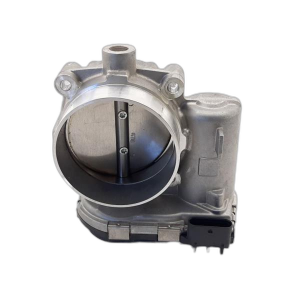
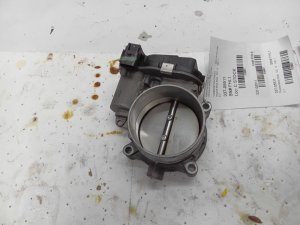
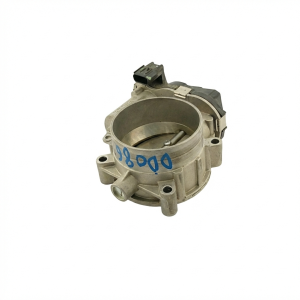
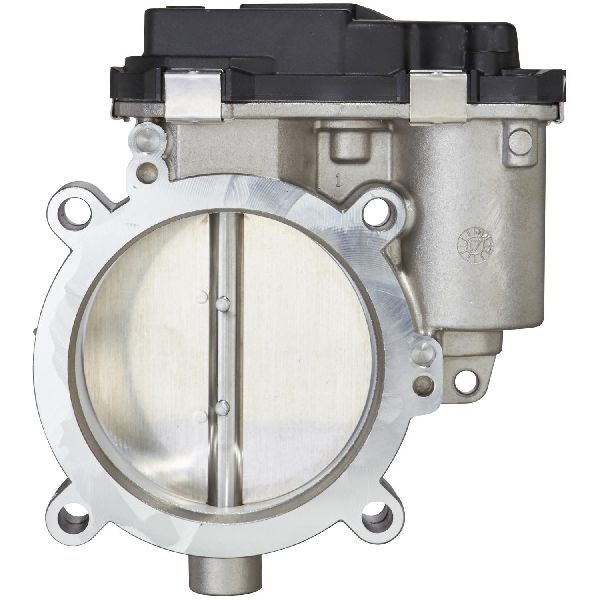
- Electronic Throttle Body Assembly
(OEM #5184349AF (for 3.6L V6, supersedes 5184349AB, AC, AD, AE))— This is the most common fix because the faulty throttle position sensor (TPS) is integrated into this assembly and cannot be replaced separately on this platform.
Trusted brands: Mopar, Bosch, Dorman, Hitachi
OEM price range: $350-$500
Aftermarket price range: $150-$300
Related Codes That Often Appear With This One
- P0123 — This is for 'Throttle Position Sensor 1 Circuit High.' It's common to see codes for both high and low circuits when a sensor is failing erratically or there's a wiring issue. [Bulletin #18-045-16 REV. A]
- P0222 — This is for 'Throttle Position Sensor 2 Circuit Low.' The throttle body uses two separate sensors (TPS1 and TPS2) for redundancy. A fault that affects the throttle body can often cause codes for both sensors to appear simultaneously, strongly pointing to the throttle body itself or its connector. [Bulletin #18-074-15 REV A]
- P0223 — This is for 'Throttle Position Sensor 2 Circuit High,' the counterpart to P0222. Seeing a mix of these codes strongly points to a failing throttle body or a wiring issue. [Bulletin #18-045-16 REV. A]
- P2135 — This code for 'Throttle Position Sensor 1-2 Correlation' is a critical indicator. It means the PCM is seeing a disagreement between the two redundant TPS signals, which strongly points to a failing throttle body assembly or a connector/wiring issue affecting both signals.
Technical Service Bulletins (TSBs) & Recalls
- 18-045-16 REV. A: Mentions P0122 in a list of DTCs related to powertrain issues that can be resolved with a PCM flash.
- 18-094-16: Lists P0122 among other DTCs related to electrical system issues that can be resolved with a PCM flash.
- 18-074-15 REV A: Identifies P0122 as a potential code that can be resolved with a PCM flash.
Platform-Specific Known Issues
- Chrysler has issued multiple Technical Service Bulletins (TSBs) that include code P0122 for this vehicle. Bulletins #18-045-16 REV. A, #18-094-16, and #18-074-15 REV A all list P0122 alongside other throttle position and crankshaft sensor codes, indicating a known pattern of electronic issues that may be addressed by a PCM software update.
- Owner forums for the Chrysler 300 and its platform mate, the Dodge Charger, are filled with threads where owners describe the sudden onset of limp mode with the 'red lightning bolt' light, which is almost always resolved by replacing the entire throttle body assembly.
Mechanic-Grade Diagnostic Values
- TPS 'A' (TPS1) Signal Voltage (KOEO) — expected: Approx. 0.5V - 1.0V at closed throttle, sweeping smoothly to ~4.5V at wide-open throttle.. Failure: Voltage is stuck below ~0.2V, does not change with pedal movement, or has erratic jumps/dropouts.
- TPS 'B' (TPS2) Signal Voltage (KOEO) — expected: Opposite sweep of TPS1, approx. 4.5V at closed throttle, sweeping smoothly down to ~0.5V at wide-open throttle.. Failure: Voltage does not sweep smoothly or does not oppose TPS1, indicating an internal sensor fault.
- PCM 5-Volt Reference at TPS Connector — expected: 4.8V - 5.2V with key on, engine off.. Failure: Voltage is low or absent, indicating a wiring issue or a problem with the PCM/shared sensor circuit.
- TPS Ground Circuit Continuity — expected: < 0.5 ohms to a known good ground.. Failure: High resistance or an open circuit (OL) indicates a break in the ground wire or a bad ground connection at the PCM.
Scan Tool Commands That Help
- wiTECH (or equivalent professional scanner): Throttle Body/ETC Relearn — This function is required after replacing the throttle body to calibrate the new part to the PCM. It is the most reliable method and is necessary if manual relearn procedures fail.
- wiTECH (or equivalent professional scanner): Reset Adaptive Memory — After performing a repair like fixing a wiring connector or replacing the throttle body, resetting all adaptive memory can clear learned values that may have been compensating for the fault, ensuring a clean start for the system.
Wiring & Ground Locations
- G102 — In the right side of the engine compartment.. This is a primary ground point for multiple components, including the Powertrain Control Module (PCM). A poor connection at G102 can cause erratic behavior and low voltage faults for sensors grounded through the PCM, including the TPS.
- Throttle Body Connector — Directly on the electronic throttle body, at the engine's air intake.. This 6-pin connector is the single point of failure for both TPS signals, the 5V reference, ground, and the throttle motor. The red locking tab must be fully engaged to ensure a secure connection. Loose pins or corrosion here are a common cause of P0122.
- Splice S132 (for 5V Reference Circuit F855) — Within the engine wiring harness.. The 5V reference circuit is shared between the throttle body (pin 2), the crankshaft position sensor, and the accelerator pedal position sensor. A fault in this splice or the shared wire can cause multiple, seemingly unrelated codes and symptoms.
Real Owner Repair Stories
- OnlineMechanicTips YouTube Channel (Chrysler PT Cruiser (similar electronic throttle principles)) — Stalling, P0122 code present.
❌ Tried (didn't work) Replacing the Throttle Position Sensor (TPS) multiple times.
✅ What actually fixed it The electrical connector pigtail for the TPS was faulty with loose internal contacts. Replacing the entire connector and splicing it into the harness resolved the issue. - iATN (International Automotive Technicians Network) forum post (Dodge Ram 1500 (shares platform architecture)) — TPS-related trouble codes.
❌ Tried (didn't work) Initial wiring checks.
✅ What actually fixed it A faulty clock spring was shorting and feeding voltage back onto the TPS ground circuit, which was a shared ground. Replacing the clock spring fixed the TPS codes. - Chevrolet Aveo forum user (Chevrolet Aveo) — Random high idle (1500-2100 RPM) and occasional P0122 code.
❌ Tried (didn't work) Cleaning the throttle body.
✅ What actually fixed it As a diagnostic step, the user unplugged the TPS connector while the engine was idling high. The idle immediately dropped to normal as the ECU reverted to default values. This confirmed the TPS was sending a bad signal. Replacing the TPS solved the problem.
When the Usual Fixes Don't Work
- While the most common cause of P0122 is a failed throttle body assembly, it should not be replaced without performing due diligence. Real-world technician reports show that underlying issues are frequently missed. For example, a faulty electrical connector pigtail can mimic a failed sensor, leading to repeated, unnecessary throttle body replacements. In another documented case, a shorting clock spring, which shares a ground circuit with the TPS on some Chrysler platforms, was the true root cause of the throttle code. These cases highlight the importance of thoroughly testing the circuit's integrity—including voltage, ground, and connector security—before condemning the expensive throttle body assembly.
OEM Part Supersession History
5184349AE and older (AB, AC, AD)→5184349AF— Manufacturer revision for improved reliability or minor design change.
Heads up: Applies to 3.6L V6 engine. Always use the latest revision.53034251AC, 53034251AB→53034251AD— Manufacturer revision for improved reliability or design change.
Heads up: Applies to 2013+ 5.7L V8 HEMI engine. The throttle body for 2012 and older models (e.g., 04591847AC) is a different, discontinued part and is not compatible.
Model Year Variations Within This Range
- 2013-2015: The 2015 model year marked a significant refresh, including the 8-speed ZF automatic transmission becoming standard on the 5.7L V8 models. This change involved different PCM software and calibrations. While the throttle body part number may be the same, it is critical to ensure any required PCM software updates (flashes) are correct for the specific model year and transmission combination.
Helpful Videos
Used OEM Parts in Stock
New Aftermarket Parts Available



The information in this article is provided for general reference and educational purposes only. Vehicle specifications, procedures, and part compatibility can vary by production date, trim level, and region. Always consult your vehicle's factory service manual and verify part numbers before purchasing or performing repairs. Safety-critical components such as airbags, seat belts, and braking systems should be installed by a qualified professional.
- Chrysler 300:
- 🧭 Diagnostic Flowchart
- 🎬 Helpful Videos
- 🛍️ Shop This Part
- What's Unique About the 2013-2015 Chrysler 300
- Symptoms You May Notice
- Most Likely Causes
- Rare But Worth Checking
- Diagnosis Steps
- Parts You'll Likely Need
- Related Codes That Often Appear With This One
- Technical Service Bulletins (TSBs) & Recalls
- Platform-Specific Known Issues
- Mechanic-Grade Diagnostic Values
- Scan Tool Commands That Help
- Wiring & Ground Locations
- Real Owner Repair Stories
- When the Usual Fixes Don't Work
- OEM Part Supersession History
- Model Year Variations Within This Range
- 🎟️ Get 5% Off