

P0122 on 2002-2005 Ford Explorer 4.0L V6: Causes, Symptoms, and Fixes
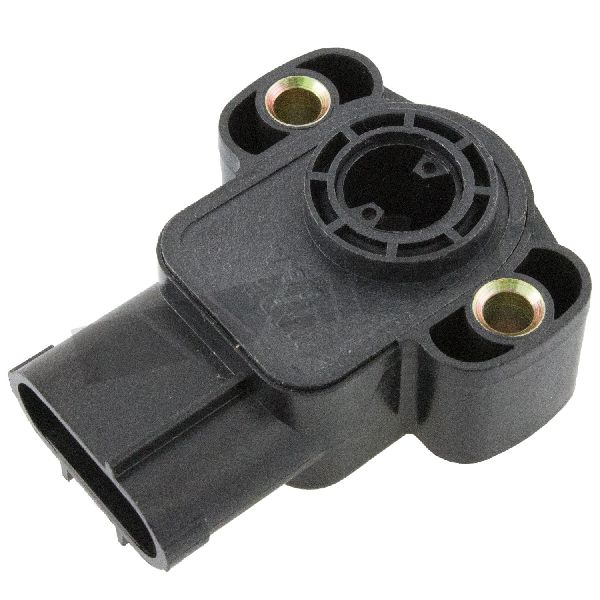
This code almost always means the Throttle Position Sensor (TPS) has failed. On the 2002-2005 Explorer with the 4.0L V6, this is an inexpensive, bolt-on sensor on the side of the throttle body that can be replaced with basic tools in under an hour. Using a Motorcraft-branded sensor is highly recommended to avoid repeat failures.
- P0122 on a 2002-2005 Explorer almost always points to a bad Throttle Position Sensor (TPS).
- Symptoms are severe and include stalling, hesitation, and poor shifting, making the vehicle unsafe to drive.
- This is a great DIY repair for beginners. The TPS is an external, bolt-on part that is easy to access and replace.
- Using a genuine Motorcraft brand replacement sensor is critical to ensure a lasting repair.
What's Unique About the 2002-2005 Ford Explorer
The 2002-2005 Ford Explorer uses a traditional, cable-operated throttle body with a separate, bolt-on Throttle Position Sensor. This makes diagnosis and repair simpler and cheaper compared to the later 2006+ models, which have the sensor integrated into a more expensive electronic throttle body assembly. While no TSBs exist for P0122 specifically, Ford did issue TSB 05-14-4 for other TPS-related codes (P2135) on 2004-2005 models, indicating known issues with the sensor's reliability and requiring a new sensor and a PCM reflash to fix. Additionally, manufacturer service bulletins for other Ford models, such as TSB #TSB18-2062 and TSB #TSB 16-0163, list P0122 alongside symptoms like rough running, loss of engine RPM, and intermittent illuminated MILs, reinforcing that this code is a staple of Ford drivability diagnostics.
Symptoms You May Notice
- Hesitation, stumbling, or a 'dead spot' when pressing the gas pedal.
- Engine stalls, especially when coming to a stop or at idle.
- Rough, surging, or unstable idle, sometimes idling very high.
- Little to no acceleration, or the engine feels like it's in 'limp mode'.
- Harsh, erratic, or delayed automatic transmission shifting.
- Illuminated Check Engine Light.
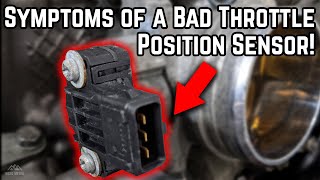
- Hard starting engine. 🎬 Watch: A breakdown of common bad TPS symptoms
- Replacing the fuel filter or fuel pump, as the hesitation symptoms can feel like a fuel delivery problem.
- Replacing the Idle Air Control (IAC) valve, as a bad TPS can cause erratic idling.
- Replacing the entire throttle body assembly when only the bolt-on sensor is needed.
Most Likely Causes
- Failed Throttle Position Sensor (TPS) 🔴 High Probability → Shop Fuel Injection Throttle Body The sensor contains a mechanical wiper that moves across a resistive strip. Over many thousands of throttle movements, this strip wears out, creating 'dead spots' or a complete loss of signal, which results in a low voltage reading. This is a very common failure item on Ford trucks of this era.
How to confirm: Using a scan tool's live data, watch the TPS voltage ('TP' or 'TPS V') as you slowly open the throttle with the key on, engine off. The voltage should sweep smoothly from ~0.9V to ~4.5V. If it reads below ~0.5V at closed throttle, drops out, jumps, or stays low, the sensor is bad. Alternatively, back-probe the signal wire with a multimeter 🎬 See how to test and replace the sensor yourself to watch the voltage sweep.
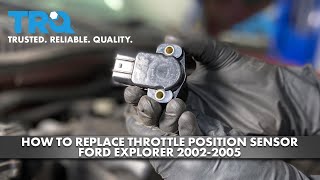
Typical fix: Replace the throttle position sensor on the side of the throttle body. It is strongly recommended to use a genuine Motorcraft part to ensure longevity.
Est. part cost: $40-$90 - Wiring or Connector Issue 🟡 Medium Probability The engine harness is subjected to constant heat and vibration, which can cause wires to chafe, break internally, or melt. For example, NHTSA ODI #11697060 describes a case where a Ford dealer found the wiring harness rubbing at the intake manifold, requiring disassembly and repair to resolve code P0122. The connector pins at the TPS can also corrode or become loose, causing an intermittent or total loss of signal.
How to confirm: Visually inspect the wiring harness going to the TPS for any signs of damage, chafing, or melting. Unplug the connector and check for corrosion, moisture, or bent/loose pins. With the key on, use a multimeter to confirm you have a 5-volt reference and a good ground at the connector pigtail. If power and ground are present but the signal is still bad, the issue is likely the sensor itself.
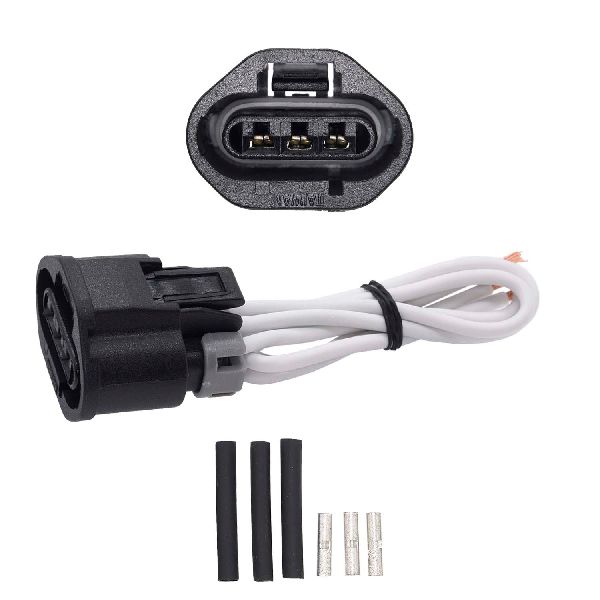
Typical fix: Repair the damaged section of the wiring harness or clean/replace the connector pigtail.
Est. part cost: $15-$40
Rare But Worth Checking
- Faulty Powertrain Control Module (PCM): This is very rare and should only be considered after the TPS and its entire circuit have been thoroughly tested and confirmed to be good. A forum user on Ranger-Forums noted that after confirming the sensor and wiring were good, the PCM was the final point of failure.
Diagnosis Steps
- Connect an OBD-II scanner and confirm P0122 is the primary code. Check for any other related codes like P0121, P0123, or P2135.
- View live data on the scanner. Find the parameter for TPS voltage (often listed as 'TP' or 'TPS V'). At idle (throttle closed, key on, engine off), the voltage should be steady, typically around 0.9V for this vehicle.
- Slowly press the accelerator pedal to the floor. The TPS voltage should increase smoothly and linearly to about 4.5V at wide-open throttle.
- If the voltage reading is stuck low (e.g., under 0.5V), drops to zero at any point, or jumps erratically, the TPS is almost certainly faulty.
- If the reading is stuck low, perform a wiring check. Unplug the TPS connector. Identify the three wires: 5V reference (VREF), ground (GND), and signal (TP SIG).
- With the key on, use a multimeter to verify you have ~5 volts on the reference wire and a solid ground on the ground wire.
- If power and ground are good, but the signal is bad on the scan tool, the TPS has failed. Replace it. Using a Motorcraft part is highly recommended.
- If power or ground is missing at the connector, you have a wiring problem that must be traced back toward the PCM. Check for breaks or shorts in the harness.
- After replacing the part, clear the codes, reset the PCM (by disconnecting the battery for 15 minutes), and perform a test drive to allow the computer to relearn idle and shift strategies.
Parts You'll Likely Need
- Throttle Position Sensor (TPS)
(OEM #Motorcraft DY1164 (supercedes 6L2Z-9B989-D))— This is the most common failure point for code P0122 due to internal mechanical wear. Aftermarket sensors are known to fail prematurely, making the OEM Motorcraft part the preferred choice.
Trusted brands: Motorcraft, Bosch, Standard Motor Products (SMP), Delphi
OEM price range: $60-$90
Aftermarket price range: $25-$50
Related Codes That Often Appear With This One
- P0121 — This code indicates a 'Throttle/Pedal Position Sensor/Switch 'A' Circuit Range/Performance' problem, which can be set along with P0122 if the sensor's signal is erratic or illogical before failing low.
- P0123 — This is for a 'Circuit High Input'. It's less common to see with P0122 but can occur if the sensor or wiring is shorting in a way that causes both high and low voltage readings at different times.
- P2135 — Indicates 'Throttle/Pedal Position Sensor/Switch A/B Voltage Correlation'. This code is specifically mentioned in TSB 05-14-4 for 2004-2005 models and points to a disagreement between redundant sensors, often caused by one failing low.
Technical Service Bulletins (TSBs) & Recalls
- TSB 05-14-4: Addresses wrench light with DTCs P2106 and P2135 on 2004-2005 Explorers (and other Fords). The fix is to replace the TPS and reprogram the PCM.
- TSB #TSB 16-0163: Notes that the engine may exhibit a constant or intermittent illuminated MIL with various drivability issues and DTC P0122.
- TSB #TSB18-2062: Documents concerns of engine running rough, crank no-start, loss of power, and loss of engine RPM associated with P0122.
Platform-Specific Known Issues
- Ford issued TSB 05-14-4 for some 2004-2005 models that would illuminate a 'wrench' light and set codes P2106 and P2135, which also points to a TPS failure. The fix involved a new sensor (Part No. 3L5Z-9B989-AA) and a PCM reflash, highlighting known sensor issues on this platform.
- Owners on forums like Ranger-Forums and Ford-Trucks.com frequently report that using cheaper, non-Motorcraft TPS sensors leads to the code returning quickly, emphasizing the need for a quality OEM part.
Mechanic-Grade Diagnostic Values
- TPS VREF (Reference Voltage) at Connector — expected: 4.9V - 5.2V with key on, engine off.. Failure: Voltage below 4.9V or missing (0V) indicates a wiring issue or PCM fault.
- TPS Signal Voltage at Connector (Back-probed) — expected: Approx. 0.7V - 1.0V at closed throttle, sweeping smoothly to ~4.5V at wide-open throttle.. Failure: Voltage stuck below 0.5V, jumping, or having dead spots during the sweep indicates a failed TPS.
- TPS Ground Circuit Voltage Drop (Back-probed) — expected: Less than 0.2V (200 millivolts).. Failure: Voltage significantly higher than 0.2V indicates high resistance in the ground wire or a poor ground connection at the chassis.
- TPS Total Resistance (Sensor Unplugged) — expected: Greater than 4k Ohms between the power and ground pins.. Failure: An open circuit (O.L.) or a reading significantly lower than 4k Ohms indicates a failed sensor.
Scan Tool Commands That Help
- Professional Scan Tool (e.g., Ford IDS, Autel, Snap-on): TPS Relearn / Idle Relearn — After replacing the TPS or disconnecting the battery, a relearn procedure is necessary. While no specific scan tool command is required for this model, the process involves letting the engine idle for 10-15 minutes without throttle input for the PCM to learn the new sensor's baseline idle position.
Wiring & Ground Locations
- TPS Connector — Bolted to the side of the throttle body, on the engine's air intake.. This is the direct connection point for the sensor. The connector itself or its pigtail can become corroded, loose, or damaged from heat and vibration, causing the P0122 code even with a good sensor.
- G100 / G101 — Located on the driver's side front of the engine compartment, on the fender apron near the battery and radiator.. These are primary chassis and PCM grounds. A corroded or loose connection here can cause erratic sensor readings and low voltage faults across multiple systems, including the 5V reference circuit for the TPS.
- G102 — Located at the center rear of the engine compartment, near the firewall.. This is a key engine ground. A poor connection here can affect the sensor ground reference, leading to incorrect voltage readings by the PCM.
- PCM Connector Pin 47 (Signal) — On the main 60-pin connector at the Powertrain Control Module (PCM).. This is the specific pin where the TPS signal wire (typically Gray/White) terminates. When diagnosing a persistent P0122 with a good sensor and connector, checking for continuity and lack of shorts on this wire back to the PCM is the final step.
- PCM Connector Pin 46 (Signal Return/Ground) — On the main 60-pin connector at the Powertrain Control Module (PCM).. This is the sensor ground reference pin (typically Gray/Red wire). A fault in this wire can cause the signal voltage to be skewed low.
Real Owner Repair Stories
- YouTube user comment/video (1996 Ford F-150 (similar 4.9/5.0/5.8L era system)) — Persistent P0122 code even after replacing the TPS.
❌ Tried (didn't work) Replacing the Throttle Position Sensor (TPS) multiple times., Checking wiring for continuity.
✅ What actually fixed it The TPS connector pigtail itself was the culprit. Despite looking visually okay, the internal connections had increased resistance over time. Replacing the connector pigtail finally resolved the code. - Jeep Cherokee Forum (similar logic applies to shared sensor circuits) (Jeep Cherokee XJ with 4.0L engine) — P0122 and P0123 codes (low and high voltage), sluggish acceleration, stalling.
❌ Tried (didn't work) Replacing the TPS three times with different brands., Cleaning all grounds and battery terminals., Replacing the TPS wiring harness pigtail.
✅ What actually fixed it The user discovered the output signal voltage would randomly drop intermittently. This pointed to a short in the signal wire within the main engine harness, not the sensor or pigtail. The proposed fix was to run a new, separate signal wire from the TPS connector directly to the PCM, bypassing the intermittent short in the original harness. - NHTSA ODI #11467242 — An owner reported that after running a diagnostics test, they discovered the TAC system was faulty with codes P0122, P0223, and P0110. The vehicle would start and idle briefly but would die while driving.
- NHTSA ODI #10561056 — A report describes an instance where the car would not accelerate above 1,000 RPM, with P0122 appearing alongside a long list of other codes including P2104 and P2110.
OEM Part Supersession History
6L2Z-9B989-A→6L2Z-9B989-D— Part revision and update by Ford.6L2Z-9B989-D→Motorcraft Service P/N DY1164— This is the service part number commonly sold by retailers that corresponds to the OEM part.
Heads up: DY1164 is the correct and current replacement. Using older stock or unverified aftermarket parts is a common cause of repeat failures.
Model Year Variations Within This Range
- 2004-2005: These model years were specifically mentioned in TSB 05-14-4 for related TPS codes (P2135). The fix required not only a new sensor but also a PCM reflash to update the software logic for interpreting TPS signals, suggesting a known sensitivity or software issue in these specific years.
Diagnostic Flowchart
Other Known Issues on This Vehicle
Issues unrelated to this code that are worth knowing about as an owner of this generation:
- Timing Chain Cassette Failure 🔴 High — Very common, especially on engines over 75,000-100,000 miles. A characteristic 'rattle' at startup is the primary warning sign. (Ref: No specific recall, but a widely documented problem. Repair is engine-out and very expensive.)
- Cracked Plastic Thermostat Housing 🟠 Medium — Extremely common failure point. The plastic housing becomes brittle from heat cycles and cracks, causing a coolant leak at the front-top of the engine.
- 5R55W/S Automatic Transmission Failure 🔴 High — Common issues include failed solenoid packs causing harsh/delayed shifting, and worn servo bores leading to loss of gears (especially Overdrive).
- Cracked Rear Liftgate Panel 🟡 Low — The plastic trim panel below the rear window is famous for cracking, usually near the emblem. This is a cosmetic issue but affects most 2002-2005 Explorers.
- Intake Manifold Gasket Leaks 🟠 Medium — The O-ring style intake manifold gaskets can become hard and brittle with age, causing vacuum leaks that lead to lean codes (P0171, P0174) and a rough idle.
Used vs. New Parts: Buying Guide for This Vehicle
When a used part is the smart pick: A used TPS is almost never a smart choice. The part fails from internal mechanical wear, so a used sensor from a junkyard has unknown mileage and wear, and is likely to fail soon. The low cost of a new, quality aftermarket or OEM part makes buying used impractical.
Donor-vehicle mileage cap: roughly under 20000 miles for the part to have meaningful remaining life.
What to inspect on the donor part:
- Not applicable due to high risk of premature failure.
OEM-only on this vehicle (don't cheap out):
- Throttle Position Sensor (TPS) - While not strictly 'OEM-only', forum consensus strongly indicates that cheap, no-name aftermarket sensors fail at a very high rate for this vehicle. Sticking to Motorcraft is the most reliable way to ensure the repair lasts.
Aftermarket brands forum-validated for this vehicle:
- Motorcraft (OEM)
- Bosch
- Standard Motor Products (SMP)
- Delphi
Brands owners have reported issues with on this vehicle:
- Generic, unbranded, or 'white-box' sensors from online marketplaces are frequently reported to be dead-on-arrival or fail within a few months.
Real Owner Stories
Aggregated from forums and TSBs cited above. Mileages and costs reflect what owners reported in those sources.
2005 Ford Explorer XLT 6 cilindros — 250000 miles
Symptoms: When in traffic for a long time, the RPMs drop and it turns off. Received codes P0122, P0191, P0193, P2100, P2110.
What fixed it: The computer (PCM) was replaced, and then the throttle body sensor (TPS) was replaced.
Source hint: Opinautos owner report
2002 Ford Explorer 4.0L V6
Symptoms: After getting a P0122 code, the transmission began shifting very harshly.
What fixed it: Replacing the TPS.
Source hint: Ranger-Forums - 'Throttle Position Sensor Install'
2004 Ford Explorer 4.0L V6
Symptoms: Wrench light illuminated on the dashboard along with drivability issues.
What fixed it: Replacement of the TPS (Part No. 3L5Z-9B989-AA) and a PCM reflash.
Source hint: TSB 05-14-4
2001-2011 Ford Ranger 4.0L SOHC V6
Symptoms: Recurring P0122 code even after initial troubleshooting.
What fixed it: If a Motorcraft TPS is already installed and the code persists, the PCM itself may be the culprit.
Source hint: Ranger-Forums - 'low voltage to tps sensor'
Related OBD-II Codes
Frequently Asked Questions
Does TSB 05-14-4 apply to my 2004 Ford Explorer with a wrench light and P0122?
Can I use an aftermarket sensor to fix the P0122 on my 4.0L Explorer?
Why is my Explorer shifting harshly into gear along with the P0122 code?
What should the TPS voltage read at idle on a 2002-2005 Explorer 4.0L?
Could my rough idle be caused by something other than the TPS?
Is there a specific way to reset the computer after replacing the sensor?
Helpful Videos

Used OEM Parts in Stock
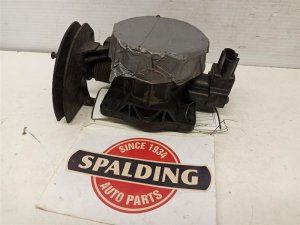
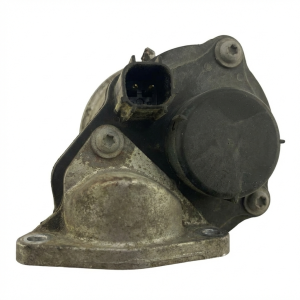
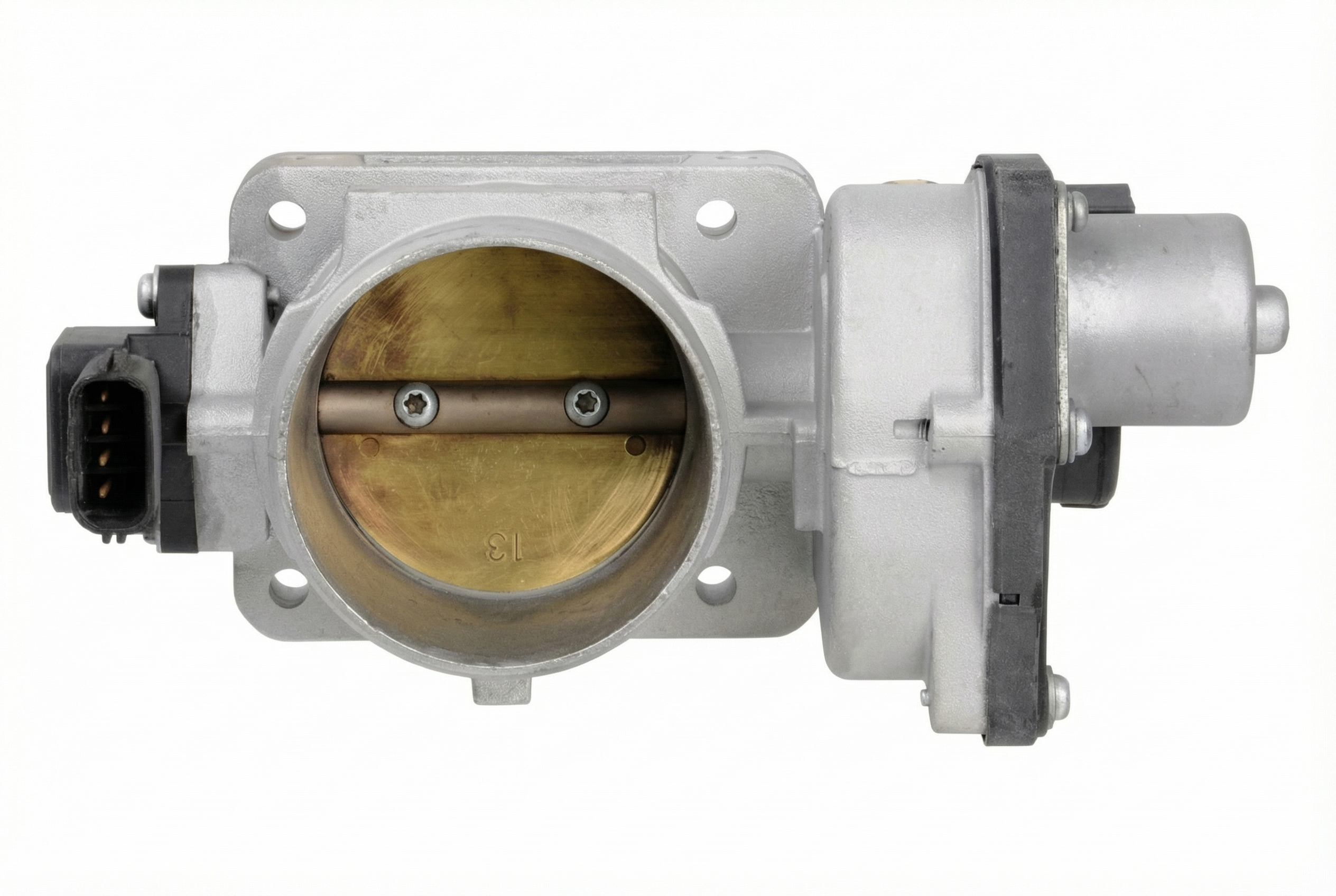
New Aftermarket Parts Available


The information in this article is provided for general reference and educational purposes only. Vehicle specifications, procedures, and part compatibility can vary by production date, trim level, and region. Always consult your vehicle's factory service manual and verify part numbers before purchasing or performing repairs. Safety-critical components such as airbags, seat belts, and braking systems should be installed by a qualified professional.
- Ford Explorer:
- 🧭 Diagnostic Flowchart
- 🎬 Helpful Videos
- 🛍️ Shop This Part
- What's Unique About the 2002-2005 Ford Explorer
- Symptoms You May Notice
- Most Likely Causes
- Rare But Worth Checking
- Diagnosis Steps
- Parts You'll Likely Need
- Related Codes That Often Appear With This One
- Technical Service Bulletins (TSBs) & Recalls
- Platform-Specific Known Issues
- Mechanic-Grade Diagnostic Values
- Scan Tool Commands That Help
- Wiring & Ground Locations
- Real Owner Repair Stories
- OEM Part Supersession History
- Model Year Variations Within This Range
- Other Known Issues on This Vehicle
- Used vs. New Parts: Buying Guide for This Vehicle
- Real Owner Stories
- 2005 Ford Explorer XLT 6 cilindros — 250000 miles
- 2002 Ford Explorer 4.0L V6
- 2004 Ford Explorer 4.0L V6
- 2001-2011 Ford Ranger 4.0L SOHC V6
- Related OBD-II Codes
- Frequently Asked Questions
- 🎟️ Get 5% Off