

P0122 on 2011-2019 Ford Explorer 3.5L: Throttle Position Sensor Low Input Causes and Fixes
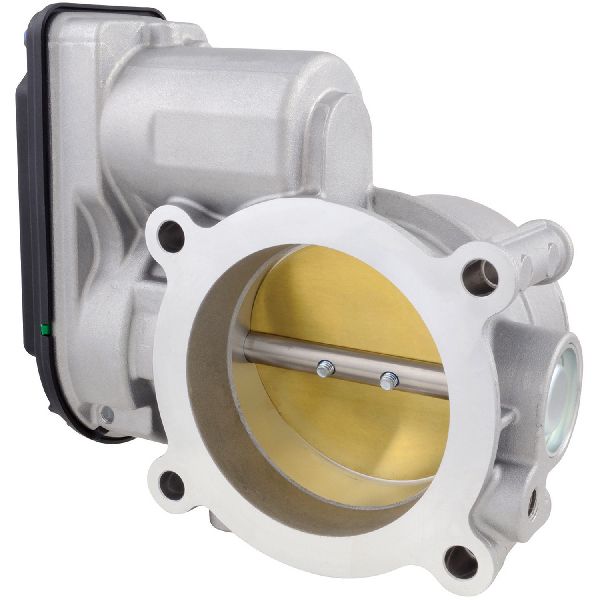
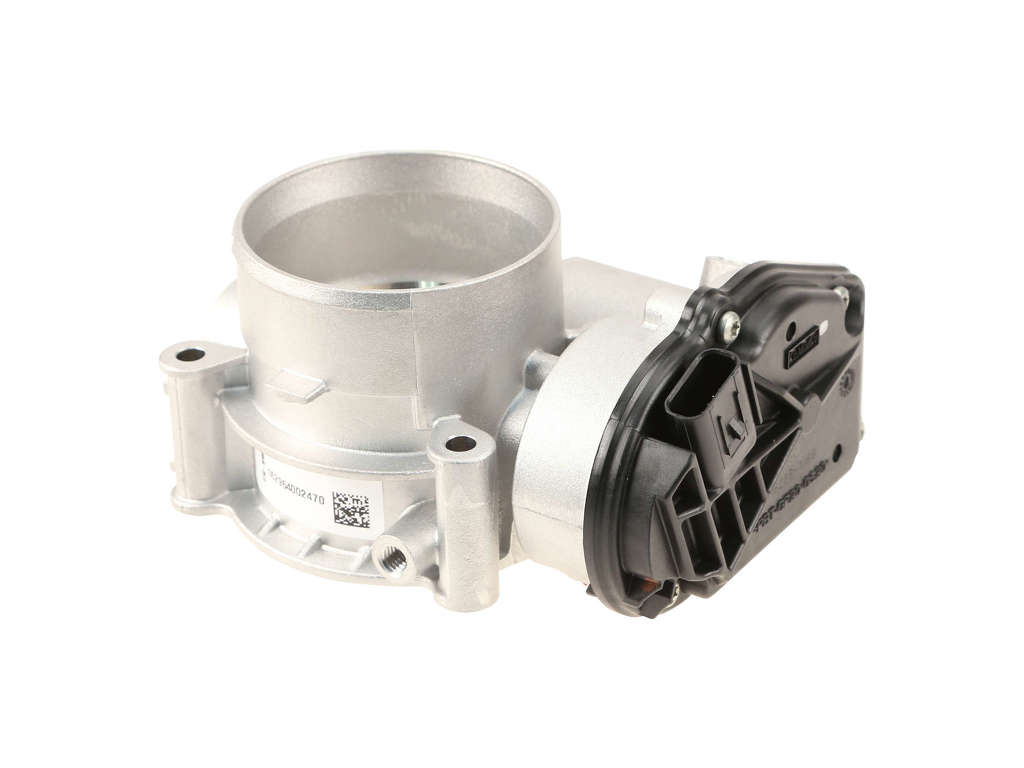
On a 2011-2019 Ford Explorer with the 3.5L V6, code P0122 is almost always caused by a failing electronic throttle body assembly. The throttle position sensor (TPS) is integrated into this part and cannot be replaced separately. The most common OEM part number is AT4Z-9E926-B, which supersedes AT4Z-9E926-A. Expect to pay between $80-$200 for a new throttle body assembly and plan for about an hour of labor. Replacement is the standard fix.
- P0122 on a 2011-2019 Explorer almost always means the electronic throttle body assembly has failed.
- The throttle position sensor (TPS) is not a separate part; you must replace the entire throttle body.
- Symptoms are severe and include a sudden, dangerous loss of power ('limp mode') while driving.
- This is a DIY-friendly repair that takes about an hour with basic tools. A 'KAM reset' is necessary after replacement.
- Always replace the throttle body gasket at the same time to prevent future vacuum leaks.
What's Unique About the 2011-2019 Ford Explorer
The 2011-2019 Ford Explorer uses a modern electronic throttle body (ETB), also known as 'drive-by-wire'. Unlike older vehicles with a separate, replaceable TPS, the sensors on this platform are integrated directly into the throttle body assembly. This means a sensor failure requires replacing the entire unit. Ford has a history of throttle body issues across many models from this era, often leading to a sudden loss of power as the vehicle enters a protective 'limp mode'. The failure is so common that Ford issued Customer Satisfaction Program 13N03, extending the warranty for this part on other models like the Edge and Fusion, citing contamination of the internal electrical contacts. While the Explorer was not officially included, it uses a similar part and suffers the same failure mode.
Symptoms You May Notice
- Sudden loss of engine power (entering 'limp home' mode)
- Wrench light illuminated on the dashboard
- Check Engine Light is on
- Poor or hesitant acceleration.
- Rough or unstable idle.
- Engine stalling at low speeds.
- Unresponsive or erratic throttle behavior.
- Replacing the accelerator pedal position (APP) sensor. While the APP sensor can cause similar drivability issues, the P0122 code specifically points to the sensor at the throttle body, not the pedal.
Most Likely Causes
- Failing Electronic Throttle Body (ETB) 🔴 High Probability → Shop Fuel Injection Throttle Body The internal electronic sensors and motor contacts within the throttle body are known to wear out or become contaminated, leading to intermittent electrical connectivity. This is a well-documented, high-failure-rate issue on many Ford vehicles from this period that use the 3.5L and 3.7L Cyclone engines.
How to confirm: Use a scan tool to monitor the throttle position sensor voltage PIDs (TP1, TP2). The voltage for sensor 'A' (TP1) will read abnormally low (typically under 0.2V) or won't change smoothly as the gas pedal is pressed. You may also see related codes like P2111, P2112, or P2135, which further point to an ETB failure.
Typical fix: Replace the entire electronic throttle body assembly and the corresponding gasket. After replacement, a throttle body relearn procedure (or KAM reset) is required to ensure proper idle and performance.
Est. part cost: $80-$200 - Wiring Harness or Connector Issue ⚪ Low Probability While less common than ETB failure, the wiring harness connector at the throttle body can become corroded or the wires can chafe, leading to a short or open circuit. This can mimic the symptoms of a failed ETB. A manufacturer service bulletin, TSB 16-0163, notes that various drivability issues and P0122 can be exhibited due to wiring concerns. Furthermore, NHTSA ODI #11697060 describes a case where a technician found the wiring harness rubbing at the intake manifold, requiring disassembly and repair to resolve the P0122 code.
How to confirm: Visually inspect the wiring harness and 6-pin connector going to the throttle body for any signs of damage, corrosion, or loose pins. With the key on and engine off, use a multimeter to check for the correct reference voltage (usually 5V) and a good ground at the connector. A 'wiggle test' on the harness while monitoring live data can help identify intermittent connections.
Typical fix: Repair the damaged section of the wiring harness or clean/replace the connector. Ensure the red locking tab on the connector is fully seated upon reinstallation.
Est. part cost: $5-$50
Rare But Worth Checking
- Powertrain Control Module (PCM) Fault: This is extremely rare. Before condemning the PCM, all other possibilities, including the throttle body and wiring, must be exhaustively ruled out. A faulty PCM can sometimes mimic the symptoms of a bad throttle body by failing to provide the correct 5V reference signal.
Diagnosis Steps
- Connect an OBD-II scanner and confirm P0122 is the primary code. Note any other codes present, such as P0121, P2111, P2112, or P2135.
- Using the scanner's live data function, monitor the voltage PIDs for Throttle Position Sensor 'A' (TP1) and 'B' (TP2).
- With the key on and engine off, slowly press the accelerator pedal to the floor and release it. The voltage for TP1 should sweep smoothly from a low value (around 0.5-1.0V) to a high value (around 4.5V). A reading that is stuck low (under 0.5V) or does not change confirms a sensor fault.
- If the scan tool data is inconclusive, turn off the vehicle and disconnect the throttle body electrical connector. Inspect the 6-pin connector and its terminals for corrosion, moisture, or damage.
- Using a multimeter, check for a 5-volt reference signal and a good ground at the connector with the key on, engine off. If either is missing, the problem lies in the wiring or the PCM.
- If wiring and power/ground are confirmed to be good, the failure is internal to the electronic throttle body assembly, which is the most likely scenario.
- Replace the electronic throttle body assembly and its gasket.
- After installation, perform a Keep Alive Memory (KAM) reset. This can be done with a capable scan tool, by disconnecting the negative battery terminal for at least 15-30 minutes, or by following a specific idle relearn procedure. A common procedure involves letting the engine idle for several minutes, then idling with the A/C on, and finally idling in Drive before driving the vehicle normally.
Parts You'll Likely Need
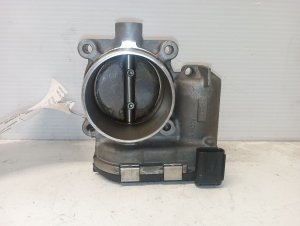
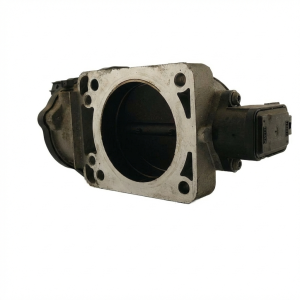
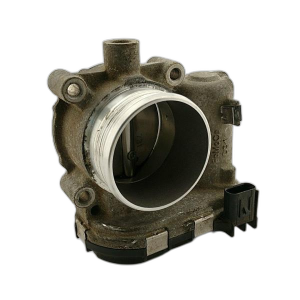
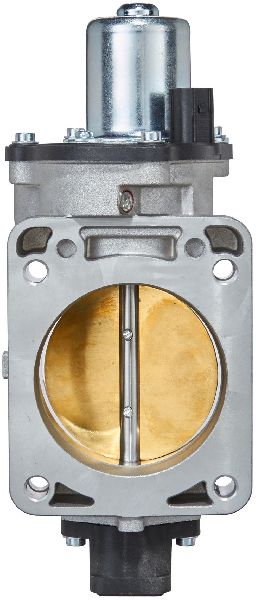
- Electronic Throttle Body Assembly
(OEM #AT4Z-9E926-B)— This is the most common failure point for code P0122, as the internal throttle position sensor is integrated into the assembly and is not sold separately. The part number AT4Z-9E926-B supersedes the older part number AT4Z-9E926-A.
Trusted brands: Motorcraft, Bosch, Standard Motor Products (SMP), Hitachi
OEM price range: $150-$250
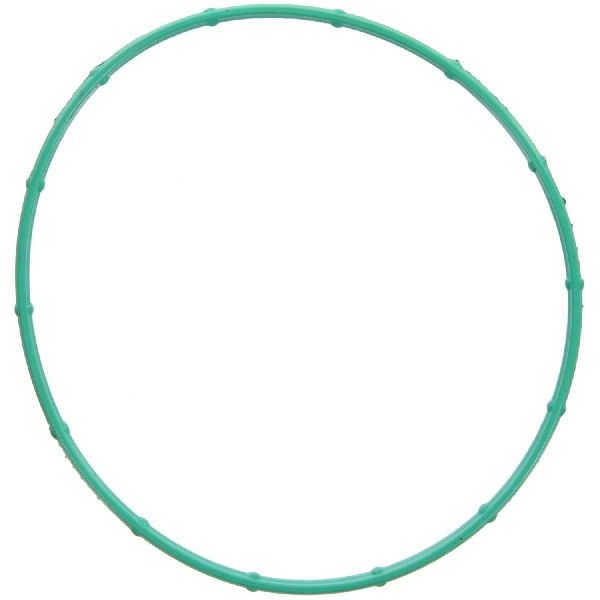
Aftermarket price range: $80-$180 - Throttle Body Gasket
(OEM #AT4Z-9E936-A)— The gasket should always be replaced when the throttle body is removed to prevent vacuum leaks.
Trusted brands: Motorcraft, Fel-Pro, Mahle
OEM price range: $10-$20
Aftermarket price range: $5-$15
Related Codes That Often Appear With This One
- P0121 — This code indicates a performance/range issue with the TPS circuit and often appears with P0122 as the sensor begins to fail.
- P2112 — Indicates the throttle actuator is stuck closed. The PCM may trigger this code as it forces the vehicle into 'limp mode' in response to the faulty sensor reading from P0122. Manufacturer bulletin TSB18-2062 lists P2112 alongside P0122 as codes associated with a loss of power or engine RPM.
- P2135 — This code indicates a voltage correlation issue between the two internal throttle position sensors ('A' and 'B'). It is commonly set when one of the sensors fails and its readings no longer match the other.
- P2111 — Indicates the throttle actuator is stuck open. This is another common companion code triggered by the internal electronic failure of the throttle body.
Technical Service Bulletins (TSBs) & Recalls
- TSB SSM 46085: While not a direct fix, Ford issued this bulletin to update service manual diagnostics for electronic throttle bodies, acknowledging the complexity of diagnosing these components.
- TSB 16-0163: This manufacturer bulletin notes that vehicles may exhibit an intermittent or constant MIL with P0122 and various drivability issues.
- TSB18-2062: This bulletin addresses concerns of engine rough running, loss of power, and loss of engine RPM associated with DTC P0122 and related throttle codes.
Platform-Specific Known Issues
- Ford issued Customer Satisfaction Program 13N03 for other models (like the Fusion, Edge, and Lincoln MKX) for identical throttle body issues, extending the warranty to 10 years or 150,000 miles. While the 2011-2019 Explorer was not officially included in this specific program, it suffers from the same design flaw, causing sudden power loss and limp mode.
Mechanic-Grade Diagnostic Values
- TP1 & TP2 PID Voltage (Key On, Engine Off) — expected: Ford's dual-sensor strategy is often opposing. For example, TP1 may read ~3.7-4.7V closed and sweep down to ~0.7-2.9V open, while TP2 reads ~0.3-1.9V closed and sweeps up to ~4.1V open. The critical factor is a smooth sweep with no dropouts.. Failure: The sensor 'A' (TP1) voltage is stuck below 0.3V for more than 200 milliseconds, does not sweep, or has dead spots.
- ETB Connector (C175B) Reference Voltage — expected: 5 volts at the ETCREF pin.. Failure: Voltage significantly below 5V indicates a wiring issue or a fault in the PCM's 5V reference circuit.
Hidden / Shadow Codes Worth Checking
- Mode $06: Provides access to the raw results of the PCM's non-continuous self-tests, including those for the electronic throttle control system. This allows a technician to see the test values, minimum/maximum limits, and pass/fail status for specific component checks (TIDs and CIDs) before a full-blown DTC is set. (see via A professional-level OBD-II scanner with Mode $06 capability. The readiness monitors for the system must have completed for the data to be valid.)
Scan Tool Commands That Help
- Ford IDS / FORScan: Clear/Reset Keep Alive Memory (KAM) — This MUST be performed after replacing the electronic throttle body. It erases the PCM's learned adaptive values for idle and throttle position, forcing it to relearn the characteristics of the new part.
- Ford IDS / FDRS: Throttle Body Actuation Test — This bidirectional test commands the throttle plate to open and close while the technician observes live data. It is used to verify if the throttle motor is physically stuck or if the position sensors are reading correctly through the entire range of motion.
Wiring & Ground Locations
- C175B — The 6-pin electrical connector located directly on the Electronic Throttle Body assembly.. This is the single point of failure for all electrical signals to and from the throttle body. Key pins to test are for TP1 (signal), ETCREF (5V reference), and ETCRTN (signal return/ground). A poor connection here will directly cause P0122.
- G104 / G105 — Common engine compartment ground points, typically on the front corners or sides of the engine compartment.. The signal return (ground) for the TPS circuit ultimately connects to a chassis ground. A corroded or loose main engine ground can cause floating voltages and erratic sensor readings, mimicking a component failure.
Real Owner Repair Stories
- Reddit r/MechanicAdvice user EPHS828 (2008 Ford Explorer 4.6L (platform with similar ETB failure modes)) — Wrench light on dashboard, vehicle enters limp mode. Code indicates throttle body sensor failure.
❌ Tried (didn't work) Replaced the throttle body with a new Duralast (aftermarket) part. It failed after 2 years., Replaced it again with another new Duralast part with a lifetime warranty. It failed after 3 months., Replaced it a third time under warranty. It failed after 2 months., Replaced it a fourth time under warranty. It failed after 1 month.
✅ What actually fixed it After taking the vehicle to a Ford dealer, the technician stated that Duralast parts don't work well and that it needed an OEM (Motorcraft) part. The owner then sourced a used OEM part from a salvage yard, which resolved the recurring failures.
Documented NHTSA Reports
- An owner reported in NHTSA ODI #11467242 that after running diagnostics for a vehicle that would die while driving, the TAC system was found to be faulty with codes P0122, P0223, and P0110.
- NHTSA ODI #10561056 describes an incident where a vehicle would not accelerate above 1,000 RPM, with P0122 and P2135 among the numerous codes associated with the failure.
OEM Part Supersession History
AT4Z-9E926-A→AT4Z-9E926-B— Standard part revision by the manufacturer, likely to improve reliability or address known failure modes.
Model Year Variations Within This Range
- 2016: In addition to the broader Customer Satisfaction Program 13N03, Ford also issued a related program, 16B32, for some 2016 model year Explorers concerning the throttle body. The failure mode and repair remain the same.
Diagnostic Flowchart
Other Known Issues on This Vehicle
Issues unrelated to this code that are worth knowing about as an owner of this generation:
- Internal Water Pump Failure 🔴 High — Common issue, especially on models approaching or exceeding 100,000 miles. Failure can occur without significant warning.
- Power Transfer Unit (PTU) Overheating and Failure 🔴 High — Common on AWD models. The PTU fluid is cooked by heat from the nearby exhaust, leading to fluid breakdown and gear failure.
- Exhaust Odor in Cabin 🟠 Medium — Widespread issue across many model years, subject of NHTSA investigation and multiple TSBs (e.g., TSB 14-0130). (Ref: TSB-14-0130)
- Paint Bubbling on Aluminum Hood 🟡 Low — Very common cosmetic issue, particularly on the leading edge of the hood.
- Purge Valve Solenoid Failure 🟠 Medium — A common cause for starting issues after refueling.
Used vs. New Parts: Buying Guide for This Vehicle
When a used part is the smart pick: A used part is very risky due to the high failure rate of the internal electronics. However, as documented in forums, a low-mileage OEM (Motorcraft) throttle body from a salvage yard can be a more reliable and budget-friendly option than a new, non-OEM aftermarket part of questionable quality.
Donor-vehicle mileage cap: roughly under 60000 miles for the part to have meaningful remaining life.
What to inspect on the donor part:
- Verify the donor vehicle's mileage is low.
- Inspect the part for any physical damage, corrosion, or signs of previous tampering.
- Ensure the throttle plate moves freely without binding (when manually actuated).
- If possible, get the VIN of the donor vehicle to check its history.
OEM-only on this vehicle (don't cheap out):
- Electronic Throttle Body Assembly
Aftermarket brands forum-validated for this vehicle:
- Bosch
- Standard Motor Products (SMP)
- Hitachi
Brands owners have reported issues with on this vehicle:
- Duralast (based on multiple forum reports of premature and repeated failures for this specific application)
Real Owner Stories
Aggregated from forums and TSBs cited above. Mileages and costs reflect what owners reported in those sources.
2016 Ford Explorer 3.5L V6
Symptoms: Owner concerned about electronic throttle body issues and sudden power loss symptoms persisting in this model year.
What fixed it: Replacement of the electronic throttle body assembly.
Source hint: Edmunds Car Forums
2011-2019 Ford Explorer 3.5L V6
Symptoms: Sudden 'limp mode' events while driving on the highway.
What fixed it: Replacement of the throttle body (part AT4Z-9E926-B).
Source hint: explorerforum.com
Ford Explorer 3.5L V6
Symptoms: Vehicle entering limp mode with a P0122 code present.
What fixed it: Repairing bare TPS wires or replacing the failed throttle body assembly.
Source hint: Reddit r/MechanicAdvice
2011-2019 Ford Explorer 3.5L V6
Symptoms: Intermittent 'wrench light' on the dashboard that disappears after a restart, making the issue difficult to diagnose without a stored code.
What fixed it: Replacement of the electronic throttle body.
Source hint: Ford Truck Enthusiasts Forums
Related OBD-II Codes
Frequently Asked Questions
Is my 2011-2019 Ford Explorer covered under the Customer Satisfaction Program 13N03 for throttle body issues?
What specific part number do I need to fix the P0122 code on my Explorer 3.5L?
Why does my Explorer enter 'limp home' mode and show a wrench light, but the light disappears after I restart the car?
Does Ford have a TSB for diagnosing throttle body issues on this vehicle?
What procedure is required after I replace the throttle body on my 2011-2019 Explorer?
Helpful Videos
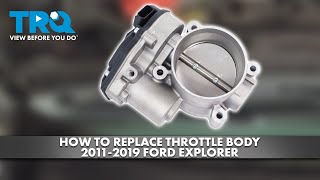
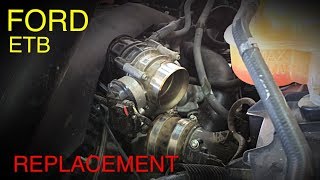
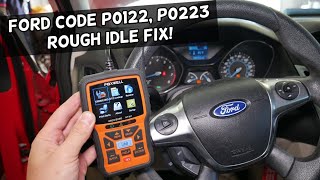
Used OEM Parts in Stock
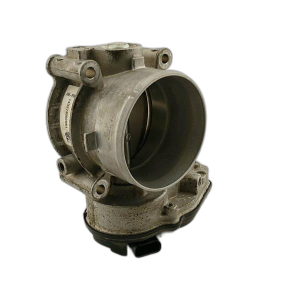
New Aftermarket Parts Available


The information in this article is provided for general reference and educational purposes only. Vehicle specifications, procedures, and part compatibility can vary by production date, trim level, and region. Always consult your vehicle's factory service manual and verify part numbers before purchasing or performing repairs. Safety-critical components such as airbags, seat belts, and braking systems should be installed by a qualified professional.
- Ford Explorer:
- 🧭 Diagnostic Flowchart
- 🎬 Helpful Videos
- 🛍️ Shop This Part
- What's Unique About the 2011-2019 Ford Explorer
- Symptoms You May Notice
- Most Likely Causes
- Rare But Worth Checking
- Diagnosis Steps
- Parts You'll Likely Need
- Related Codes That Often Appear With This One
- Technical Service Bulletins (TSBs) & Recalls
- Platform-Specific Known Issues
- Mechanic-Grade Diagnostic Values
- Hidden / Shadow Codes Worth Checking
- Scan Tool Commands That Help
- Wiring & Ground Locations
- Real Owner Repair Stories
- Documented NHTSA Reports
- OEM Part Supersession History
- Model Year Variations Within This Range
- Other Known Issues on This Vehicle
- Used vs. New Parts: Buying Guide for This Vehicle
- Real Owner Stories
- 2016 Ford Explorer 3.5L V6
- 2011-2019 Ford Explorer 3.5L V6
- Ford Explorer 3.5L V6
- 2011-2019 Ford Explorer 3.5L V6
- Related OBD-II Codes
- Frequently Asked Questions
- 🎟️ Get 5% Off