

P0122 on 2012-2014 Ford Focus 2.0L: Throttle Position Sensor 'A' Circuit Low Causes and Fixes
On a 2012-2014 Focus 2.0L, code P0122 is most often caused by a failed electronic throttle body assembly. Before replacing it, inspect the wiring harness for chafing near the intake manifold as specified in TSB 18-2062. A new throttle body costs approximately $100-$250. This was a known defect acknowledged by Ford under Customer Satisfaction Program 13N03, which extended the warranty, though it has now expired.
- P0122 on a 2012-2014 Focus almost always points to a problem with the electronic throttle body or its related wiring.
- The most common cause is a failed throttle body assembly, a known defect covered by Ford's now-expired Customer Satisfaction Program 13N03.
- Before replacing the throttle body, you MUST inspect the engine wiring harness for chafing against the intake manifold, as detailed in TSB 18-2062.
- Driving with this code is unsafe as the car can enter 'limp mode' or stall at any time.
- The fix is typically a DIY-friendly replacement of the entire throttle body assembly followed by a relearn procedure.
What's Unique About the 2012-2014 Ford Focus
The 2012-2014 Ford Focus with the 2.0L GDI engine is notorious for electronic throttle body (ETB) failures. The problem was so widespread that Ford created 'Customer Satisfaction Program 13N03,' which extended the warranty on the ETB to 10 years or 150,000 miles due to contamination on the internal motor contacts causing intermittent connectivity. While this warranty has likely expired for these model years, it confirms that a faulty throttle body is the most probable cause for throttle-related codes like P0122. Additionally, a specific wiring issue affects these cars; Technical Service Bulletin (TSB) 18-2062 was issued for an engine harness that can chafe and short out against the intake manifold, causing a host of issues including P0122.
Symptoms You May Notice
- Check Engine Light and/or Wrench Light are illuminated
- "Engine Fault, Service Now" message on the dashboard information screen
- Vehicle enters 'limp mode' with drastically reduced engine power
- Poor or no acceleration; throttle pedal is unresponsive
- Engine stalls, especially at idle or when returning to idle
- Rough or unstable idle
- Hesitation during acceleration
- Replacing the accelerator pedal assembly. The pedal sends the driver's request, but P0122 specifically points to a problem with the sensor reading the throttle plate's actual position at the engine.
Most Likely Causes
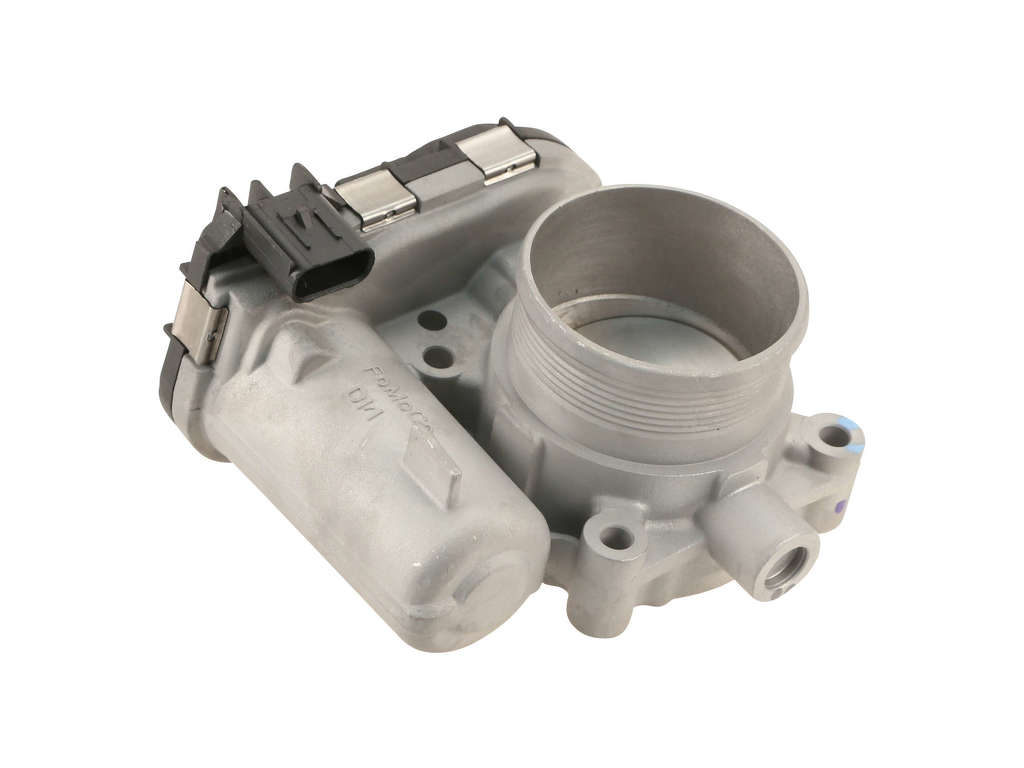
- Failed Electronic Throttle Body (ETB) Assembly 🔴 High Probability → Shop Fuel Injection Throttle Body This is a well-documented, widespread failure point for this platform, acknowledged by Ford's Customer Satisfaction Program 13N03. The internal electronics of the integrated throttle position sensor fail due to contamination on the motor contacts. Many owners in forums confirm this is the most common fix.
How to confirm: After ruling out wiring issues, use a scan tool to monitor the throttle position sensor voltage (TPS1 or TP percentage). If the voltage is stuck low (e.g., under 0.2V) or the percentage is stuck high (e.g. 99%) and does not change smoothly as the throttle is manually opened (with the engine off), the ETB assembly is faulty.
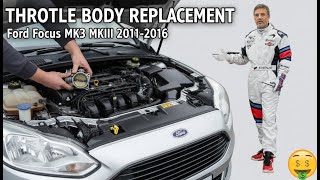
Typical fix: Replace the entire electronic throttle body assembly. The sensor is not sold separately. 🎬 Watch: Step-by-step guide to replacing the throttle body assembly. After replacement, clear the codes and perform a throttle relearn procedure.
Est. part cost: $100-$250 - Chafed Engine Wiring Harness 🟡 Medium Probability Ford issued Technical Service Bulletin (TSB) 18-2062 for 2012-2014 models, noting that the engine harness can rub against the intake manifold near the throttle body, causing wires to short to ground. This TSB specifically lists P0122 as a potential resulting code.
How to confirm: Visually inspect the engine harness where it runs close to the intake manifold, directly behind the throttle body. The TSB advises lifting the harness to inspect the underside for signs of rubbing, exposed copper, or damaged insulation. 🎬 See how to diagnose and fix these common wiring issues.
Typical fix: Repair the damaged wires by soldering in new sections and adding protective material like 7/8-inch split-loom convolute or high-quality electrical tape (Coroplast is specified in the TSB) to prevent future chafing.
Est. part cost: $0-$20 - Damaged or Corroded Connector ⚪ Low Probability
How to confirm: Disconnect the electrical connector at the throttle body. Inspect the pins and sockets for corrosion, moisture, backed-out pins, or a loose fit. A Reddit user noted their connector clip was broken, causing a loose connection and similar issues.
Typical fix: Clean the connector terminals with an electronics cleaner. If pins are damaged or the connector housing is broken, the connector pigtail may need to be replaced.
Est. part cost: $15-$40
Rare But Worth Checking
- Faulty Powertrain Control Module (PCM): This is extremely rare. The PCM should only be considered after all other possibilities, including the throttle body and all related wiring, have been definitively ruled out. A corrupted software code, P1674, may accompany other codes if the PCM is the issue.
Diagnosis Steps
- Scan for any other trouble codes to see if P0122 appears with others, which can help pinpoint the issue. Note accompanying codes like P0222, P2111, P2112, or P2135.
- CRITICAL: Inspect the engine wiring harness for chafing near the intake manifold, as detailed in TSB 18-2062. This is a known issue and must be checked before replacing parts. The TSB procedure involves removing the air cleaner assembly for better access.
- Inspect the throttle body electrical connector for a secure fit, corrosion, or damaged pins. Ensure the red locking tab is engaged.
- Using a scan tool with live data capability, monitor the voltage for TPS1 (Throttle Position Sensor 1) and TPS2. With the key on and engine off, they should show steady, opposing voltages at idle position (e.g., TPS1 ~0.7V, TPS2 ~4.3V). P0122 indicates TPS1 will be much lower (e.g., <0.2V).
- If the voltage is abnormally low and wiring/connectors are confirmed to be good, the electronic throttle body assembly is the faulty component.
- If the throttle body is replaced, perform a throttle relearn procedure. This often involves disconnecting the battery for 15 minutes, reconnecting, starting the engine, and then letting the vehicle idle for 10-15 minutes to allow the PCM to recalibrate. 🎬 Watch: How to perform the critical throttle calibration procedure. Some sources also suggest turning the key to 'ON' (without starting) for a minute before starting the engine.
Parts You'll Likely Need
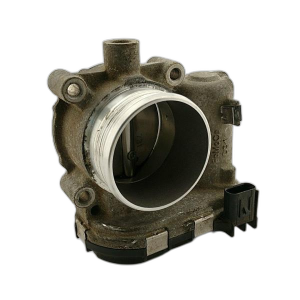
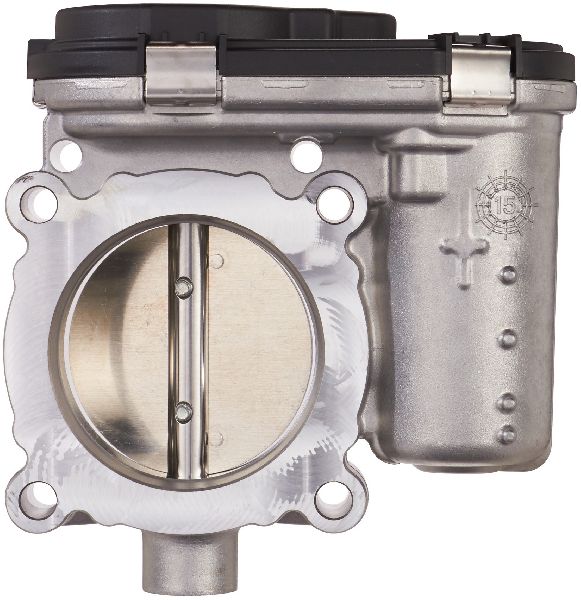
- Electronic Throttle Body Assembly
(OEM #CP9Z-9E926-D)— This is the most common failure part for code P0122 on this vehicle. The throttle position sensor is integrated and not sold separately. The original part number may have been CP9Z-9E926-A.
Trusted brands: Motorcraft (OEM), Hitachi, Bosch, NTK
OEM price range: $150-$340
Aftermarket price range: $100-$180
Related Codes That Often Appear With This One
- P2111 — Stands for 'Throttle Actuator Control System - Stuck Open'. The PCM may log this if it detects a conflict between the sensor reading and its ability to control the throttle plate. This code is explicitly mentioned in TSB 18-2062.
- P2112 — Stands for 'Throttle Actuator Control System - Stuck Closed'. This is very common with a failed throttle body on this car, as the system defaults to a closed position when a fault is detected. This code is also listed in TSB 18-2062.
- P0222 — This is for 'Throttle/Pedal Position Sensor/Switch 'B' Circuit Low Input'. The throttle body has two redundant sensors (TPS 'A' and 'B') for safety. A failure often affects both, triggering codes for each circuit. TSB 18-2062 also lists this code.
- P2135 — Stands for 'Throttle/Pedal Position Sensor/Switch 'A' / 'B' Voltage Correlation'. This code is triggered when the PCM sees a disagreement between the two throttle position sensors, which is common when the assembly fails. It is also listed in TSB 18-2062.
Technical Service Bulletins (TSBs) & Recalls
- TSB 18-2062: Supersedes TSB 15-0036. Addresses various drivability concerns, including code P0122, caused by the engine harness chafing against the intake manifold on 2012-2014 Focus models with the 2.0L GDI engine.
- Customer Satisfaction Program 13N03: Not a TSB, but a Ford warranty extension program that directly addresses the root cause of the most common failure (faulty throttle body) for this code.
Platform-Specific Known Issues
- Customer Satisfaction Program 13N03: Ford acknowledged the high failure rate of the electronic throttle body and extended the warranty to 10 years/150,000 miles. The cause was identified as contamination of internal motor contacts. This program has now expired for most vehicles.
- TSB 18-2062: Details a specific issue where the engine wiring harness can chafe against the intake manifold, causing a short circuit and triggering P0122 among many other codes.
Mechanic-Grade Diagnostic Values
- Throttle Position Sensor 'A' (TPS1) Voltage, Key On Engine Off (KOEO) — expected: Approximately 0.5V to 1.0V at closed throttle, sweeping smoothly to ~4.5V at wide-open throttle.. Failure: Voltage is below 0.2V, triggering the P0122 code. The reading may also be erratic or non-responsive when the pedal is pressed.
- TPS Reference Voltage at Connector — expected: 5 Volts on the reference wire from the PCM.. Failure: Significantly less than 5V indicates a wiring or PCM issue, not a faulty sensor.
- Low-Side Fuel Pressure, Key On Engine Off (KOEO) — expected: 72.5 psi (500 kPa).. Failure: While not a direct cause of P0122, this value is useful for overall engine health diagnosis on the 2.0L GDI engine.
Scan Tool Commands That Help
- Ford IDS / FORScan: Reset All Adaptations / Reset KAM (Keep Alive Memory) — This should be performed after replacing the throttle body to clear the old learned values and force the PCM to relearn the new sensor's idle and range limits.
- Ford IDS / FORScan: Reset Intake Air Throttle Learned Values — A specific function found in FORScan that targets only the throttle adaptations. This is a more precise alternative to a full KAM reset after throttle body replacement.
- Any OBD-II Scanner with Live Data: Monitor PIDs: TP_REL, TP_V_A (or TPS1), TP_V_B (or TPS2) — Essential for diagnosis. Watching the relative throttle position and the individual sensor voltages while pressing the pedal can confirm if the sensor is failing, showing dropouts, or not responding, before you replace any parts.
Wiring & Ground Locations
- Engine Harness Chafe Point — On the underside of the engine wiring harness where it passes over and may contact the corner of the intake manifold, directly behind the throttle body.. This is the exact location described in TSB 18-2062. A short to ground of the TPS signal wire at this point will directly cause a P0122 code.
- Main Engine Ground — Under the air filter box, bolted to the chassis frame rail.. A poor main engine or PCM ground can cause floating voltage references and erratic sensor readings across the entire system, potentially triggering low voltage codes like P0122.
- Transmission Ground — A ground strap or wire bolted to a threaded boss on the transmission bell housing.. This ground is critical for the engine/transmission assembly. A loose or corroded connection here can cause a wide range of electrical issues, including no-start conditions and sensor faults.
- Throttle Body Connector (C134) — The 6-pin electrical connector that plugs directly into the electronic throttle body assembly.. This is the primary connection point for the TPS signal, reference voltage, and ground. All diagnostic voltage and resistance checks are performed at these pins.
Real Owner Repair Stories
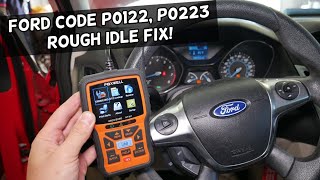
- YouTube video by 'FIX P0122 / P2111' (2012 Ford Focus 2.0L) — Wrench light, limp mode, rough idle, hesitation, and trouble codes P0122 and P2111.
❌ Tried (didn't work) The video directly proceeds to the most common fix, implying that cleaning or other diagnostics are often insufficient.
✅ What actually fixed it The problem was resolved by replacing the entire electronic throttle body assembly and then performing a throttle relearn procedure. - P2112 diagnostic article (common companion code) (2016 Ford Focus SE) — Vehicle stalls, loses power on acceleration, misfires, rough idle, no throttle response, and codes P2111 and P2112.
❌ Tried (didn't work) The article notes that cleaning the throttle body will not fix the internal electronic failure that causes these codes.
✅ What actually fixed it The definitive fix was the replacement of the electronic throttle body assembly.
"I Checked Everything" — The Actual Cause
- A smoke test for vacuum leaks would typically come back clean for this code. The root cause is almost always electrical, not related to unmetered air. The most common 'hidden' issue that standard part replacement misses is the chafed wiring harness detailed in TSB 18-2062. A technician who only reads the code and replaces the throttle body without inspecting the harness may find the problem persists or returns.
OEM Part Supersession History
CP9Z-9E926-A→CP9Z-9E926-D— Part revision by Ford, likely to improve reliability and address the failures that led to the Customer Satisfaction Program 13N03.
Model Year Variations Within This Range
- 2012-2014: Vehicles built on or before February 4, 2014 (automatic transmission) or February 19, 2014 (manual transmission) are specifically called out in TSB 18-2062 regarding the potential for a chafed engine wiring harness. Vehicles built after these dates are less likely to have this specific issue.
Diagnostic Flowchart
Other Known Issues on This Vehicle
Issues unrelated to this code that are worth knowing about as an owner of this generation:
- DPS6 PowerShift Automatic Transmission Failure 🔴 High — Extremely widespread on 2012-2016 models with the automatic transmission. Symptoms include shuddering, hesitation, slipping, and complete failure to engage. Onset can be as early as 10,000-30,000 miles. (Ref: Multiple lawsuits and warranty extensions (e.g., 14M01, 14M02) were issued, extending coverage for the clutch and Transmission Control Module (TCM).)
- Canister Purge Valve (CPV) Malfunction 🟠 Medium — Common across 2012-2018 models. A stuck-open CPV can cause excessive vacuum in the fuel tank, leading to tank deformation, erratic fuel gauge readings, stalling, and difficulty starting after refueling. (Ref: NHTSA Recall 18V-735 (and subsequent recall 19V-515 for incomplete repairs) was issued to reprogram the PCM and replace the CPV if necessary.)
- Passenger-Side Engine Mount Collapse 🟠 Medium — Very common. The hydraulic-filled passenger-side engine mount is prone to leaking and collapsing, causing excessive engine vibration to be felt in the cabin, especially when in gear (Drive or Reverse). Often fails between 60,000 and 100,000 miles. (Ref: While TSBs exist for older Focus models regarding engine vibration, this specific mount failure on the Mk3 is primarily addressed by standard replacement.)
- Engine Runs Rough / Stalling Due to Wiring Harness Chafe 🟠 Medium — A known issue on 2012-2014 models where the main engine harness can rub against the intake manifold, causing various sensor circuits to short out. (Ref: TSB 18-2062 was issued to inspect, repair, and protect the harness. This can cause a wide range of codes, not just P0122.)
Used vs. New Parts: Buying Guide for This Vehicle
When a used part is the smart pick: For this specific repair, a used part is NOT recommended. The electronic throttle body is a known high-failure component due to internal electronic contact wear. A used part from a junkyard carries a very high risk of having the same defect or failing shortly after installation.
What to inspect on the donor part:
- Not applicable as used parts are not advised.
OEM-only on this vehicle (don't cheap out):
- While not strictly 'OEM-only', using a new OEM Motorcraft (CP9Z-9E926-D) or a reputable Tier 1 aftermarket brand (e.g., Hitachi, Bosch, NTK) is strongly recommended over a used or unbranded part to ensure longevity.
Aftermarket brands forum-validated for this vehicle:
- Hitachi
- Bosch
- NTK
Brands owners have reported issues with on this vehicle:
- Unbranded, 'white box' parts from online marketplaces should be avoided due to inconsistent quality control and high likelihood of premature failure.
Real Owner Stories
Aggregated from forums and TSBs cited above. Mileages and costs reflect what owners reported in those sources.
2013 Ford Focus 2.0L GDI
Symptoms: The vehicle entered limp mode with the 'Engine Fault, Service Now' message and a wrench light. The diagnostic process showed TPS1 voltage was abnormally low.
What fixed it: Replacement of the electronic throttle body assembly followed by a diagnostic scan to confirm voltage levels.
Source hint: YouTube - Electrical Car Repair LIVE
2012-2014 Ford Focus 2.0L GDI
Symptoms: Drivability concerns and code P0122 caused by wiring shorts to ground.
What fixed it: Lifting the engine harness near the intake manifold to inspect for exposed copper, repairing damaged wires with solder, and applying Coroplast tape or 7/8-inch split-loom convolute.
Source hint: TSB 18-2062
2012 Ford Focus 2.0L GDI
Symptoms: Loose connection and circuit issues leading to throttle position codes.
What fixed it: Inspecting the throttle body electrical connector; found a broken connector clip which required securing or replacing the pigtail.
Source hint: Reddit r/MechanicAdvice - User experience with P0122
Related OBD-II Codes
Frequently Asked Questions
Does TSB 18-2062 apply to my 2012 Ford Focus with code P0122?
Is there a warranty extension for the throttle body on my 2014 Focus?
Can I just replace the sensor on the throttle body to fix P0122?
What is the 'Engine Fault, Service Now' message on my dashboard?
How do I perform the throttle relearn procedure after replacing the ETB?
Could my P0122 code be related to the PowerShift transmission issues?
Helpful Videos

Used OEM Parts in Stock
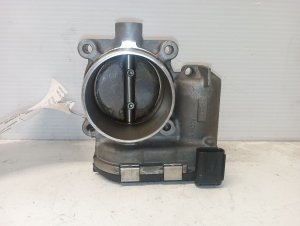
New Aftermarket Parts Available


The information in this article is provided for general reference and educational purposes only. Vehicle specifications, procedures, and part compatibility can vary by production date, trim level, and region. Always consult your vehicle's factory service manual and verify part numbers before purchasing or performing repairs. Safety-critical components such as airbags, seat belts, and braking systems should be installed by a qualified professional.
- Ford Focus:
- 🧭 Diagnostic Flowchart
- 🎬 Helpful Videos
- 🛍️ Shop This Part
- What's Unique About the 2012-2014 Ford Focus
- Symptoms You May Notice
- Most Likely Causes
- Rare But Worth Checking
- Diagnosis Steps
- Parts You'll Likely Need
- Related Codes That Often Appear With This One
- Technical Service Bulletins (TSBs) & Recalls
- Platform-Specific Known Issues
- Mechanic-Grade Diagnostic Values
- Scan Tool Commands That Help
- Wiring & Ground Locations
- Real Owner Repair Stories
- "I Checked Everything" — The Actual Cause
- OEM Part Supersession History
- Model Year Variations Within This Range
- Other Known Issues on This Vehicle
- Used vs. New Parts: Buying Guide for This Vehicle
- Real Owner Stories
- 2013 Ford Focus 2.0L GDI
- 2012-2014 Ford Focus 2.0L GDI
- 2012 Ford Focus 2.0L GDI
- Related OBD-II Codes
- Frequently Asked Questions
- 🎟️ Get 5% Off