

P0122 on 2012-2017 Honda Accord: Throttle Position Sensor Circuit Low Causes and Fixes
For a 2012-2017 Honda Accord, code P0122 almost always means the entire electronic throttle body assembly has failed. The sensor is integrated and not sold separately by Honda. Expect to pay $200-$450 for an OEM replacement part, with a DIY difficulty of 2/5. Aftermarket solutions are not recommended due to reliability issues.
- P0122 on a 2012-2017 Accord points to a low voltage signal from the throttle position sensor.
- The most common cause is a failed sensor, which is integrated into the throttle body assembly; the entire assembly must be replaced for a reliable fix.
- Symptoms are serious and affect drivability, including poor acceleration, stalling, and limp mode.
- Ensure you purchase the correct throttle body part number for your specific year and engine (2.4L vs 3.5L, 8th gen vs 9th gen).
- After replacing or cleaning the throttle body, a throttle idle relearn procedure is mandatory to ensure smooth operation.
What's Unique About the 2012-2017 Honda Accord
The key issue for this generation of Honda Accord is that the Throttle Position Sensor (TPS) is not sold as a separate part by Honda. It is integrated into the electronic throttle body assembly. While some aftermarket sensors exist, they are known to be unreliable and require drilling out the original tamper-proof rivets to install, which is not a recommended procedure. Therefore, the standard and most reliable repair is to replace the entire throttle body assembly, which is a more expensive part but a more straightforward and effective fix.
Generation note: Yes, this range covers two Accord generations. The 2012 model is the last year of the 8th generation, while 2013-2017 models are the 9th generation. The primary fix (throttle body replacement) is the same, but the specific part numbers differ between generations and engines (2.4L 4-cylinder vs 3.5L V6).
Symptoms You May Notice
- Check Engine Light is on
- Poor, hesitant, or no acceleration
- Engine goes into "limp mode" with severely reduced power
- Rough or unstable idle
- Engine may stall, especially when coming to a stop
- Vehicle moves without pressing the accelerator pedal (high idle).
- Surging.
- Replacing only the accelerator pedal position (APP) sensor. While the APP sensor is part of the drive-by-wire system, P0122 specifically points to the sensor circuit at the throttle body, not the pedal.
Most Likely Causes
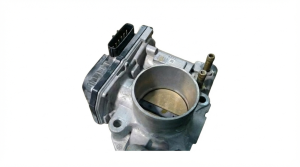
- Failed Throttle Body Assembly 🔴 High Probability → Shop Fuel Injection Throttle Body The Throttle Position Sensor (TPS) is integrated into the throttle body and is a common failure point. Honda does not service the sensor separately, making assembly replacement the standard repair.
How to confirm: Using an OBD-II scanner with live data, monitor the TPS 'A' voltage with the key on, engine off. The voltage should be around 0.5V at closed throttle and sweep smoothly up to ~4.5V at wide-open throttle. If the voltage is stuck low (e.g., <0.3V) or doesn't change, the assembly is faulty.
Typical fix: Replace the entire throttle body assembly. After replacement, an 'idle relearn' or 'throttle adaptation' procedure must be performed. This can often be done without a scan tool.
Est. part cost: $200-$450 - Wiring or Connector Issue ⚪ Low Probability Wiring can become brittle over time due to engine heat cycles. The connector pins can also corrode or become loose. Rodent damage to the soy-based wiring insulation used by Honda is also a known issue.
How to confirm: Visually inspect the wiring harness and 6-pin connector going to the throttle body for any signs of damage, corrosion, or loose pins. Use a multimeter to check for a stable 5V reference voltage and a good ground at the connector with the key on.
Typical fix: Repair the damaged section of the wiring harness or clean/replace the connector. For rodent damage, applying Honda's anti-rodent tape (which contains capsaicin) to the repaired harness is recommended.
Est. part cost: $5-$50 - Dirty/Sticking Throttle Body ⚪ Low Probability → Shop Fuel Injection Throttle Body
How to confirm: Remove the intake boot and inspect the throttle plate and bore for heavy carbon buildup that could prevent the plate from closing properly, potentially confusing the PCM's expected closed-throttle voltage reading.
Typical fix: Clean the throttle body bore and plate with a dedicated throttle body cleaner and a soft cloth. An idle relearn procedure is required after cleaning.
Est. part cost: $10-$20
Rare But Worth Checking
- Faulty Powertrain Control Module (PCM): This is extremely rare. All other possibilities, especially the throttle body and wiring, should be exhaustively ruled out before considering the PCM as the cause.
Diagnosis Steps
- Connect an OBD-II scanner and confirm P0122 is the primary code. 🎬 Watch: Understanding P0122 causes and diagnostic steps. Note any other codes present.
- Access live data on the scanner and monitor the 'TP Sensor A' or 'Absolute Throttle Position' value.
- With the key on and engine off, the reading should be stable and low (around 0.5V or 10%).
- Slowly press the accelerator to the floor. The voltage/percentage should increase smoothly and linearly to ~4.5V or ~90-100%.
- If the voltage is stuck low, jumps erratically, or doesn't respond, the throttle body assembly is the likely culprit.
- If the sensor data seems okay, turn the ignition off and disconnect the throttle body 6-pin connector. Inspect the connector and harness for any visible damage, corrosion, or loose connections.
- With the connector disconnected and key on, use a multimeter to verify a 5V reference signal and a good ground on the appropriate pins of the harness-side connector.
- If wiring is good, consider cleaning the throttle body before replacing it, especially if it appears very dirty.
- If the issue persists after confirming good wiring and a clean/new throttle body, the problem may be a rare PCM fault.
Parts You'll Likely Need
- Electronic Throttle Body Assembly (2.4L, 9th Gen)
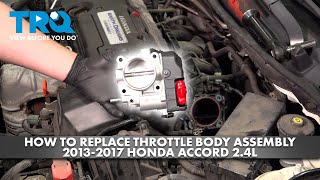
(OEM #16400-5A2-A02)— This is for the 2013-2017 Accord 2.4L. It is the most common failure part for code P0122, as the sensor is integrated. This part number supersedes 16400-5A2-A01. 🎬 See this step-by-step 9th Gen throttle body replacement.
Trusted brands: Honda (OEM)
OEM price range: $250-$400
Aftermarket price range: $150-$250 - Electronic Throttle Body Assembly (2.4L, 8th Gen)
(OEM #16400-R40-A02)— This is for the 2012 Accord 2.4L. It is the most common failure part for code P0122. This part number supersedes 16400-R40-A01.
Trusted brands: Honda (OEM)
OEM price range: $300-$450
Aftermarket price range: $180-$300 - Electronic Throttle Body Assembly (3.5L V6, 8th/9th Gen)
(OEM #16400-RN0-A01)— This part fits V6 models across both the 8th and 9th generations (2012-2017). It is the standard replacement for P0122 on J35 engines. It supersedes part number 16400-RYE-A01.
Trusted brands: Honda (OEM)
OEM price range: $350-$500
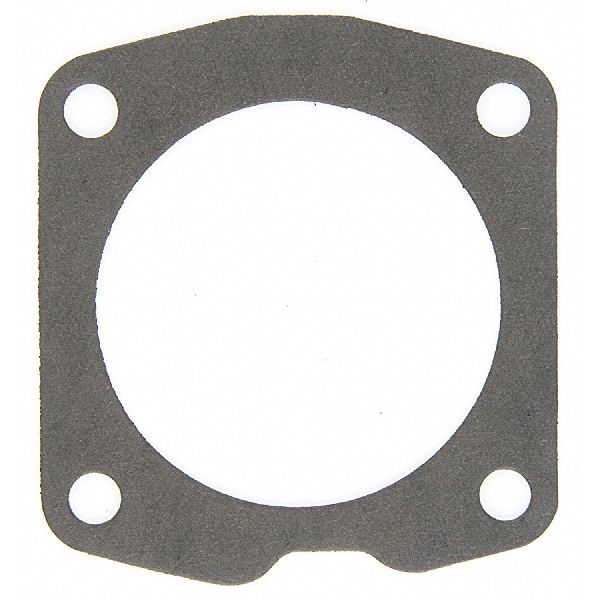
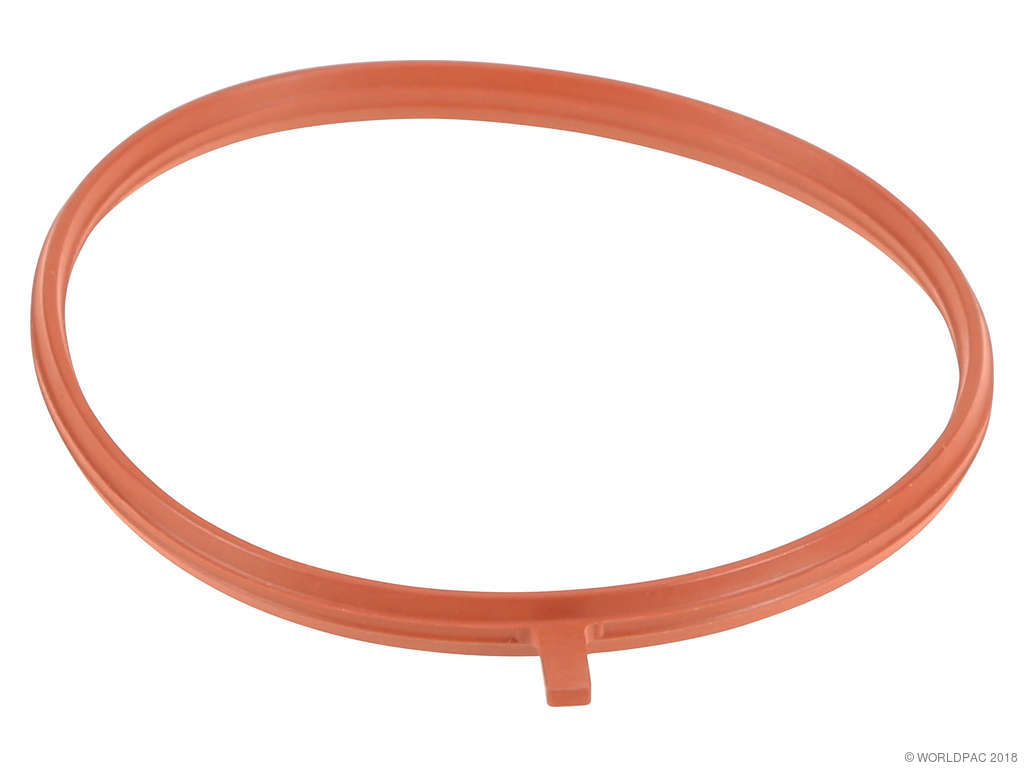
Aftermarket price range: $200-$350 - Throttle Body Gasket
(OEM #17107-5R0-004 (for 2.4L))— It is best practice to replace the gasket anytime the throttle body is removed to prevent vacuum leaks.
Trusted brands: Honda (OEM), Fel-Pro
OEM price range: $5-$15
Aftermarket price range: $3-$10
Related Codes That Often Appear With This One
- P0222 — This code is for 'Throttle/Pedal Position Sensor/Switch 'B' Circuit Low'. Since these cars have two TP sensors (A and B), a systemic failure like a power or ground issue could cause both codes to appear simultaneously.
Platform-Specific Known Issues
- Idle Relearn Procedure without Scan Tool: After replacing or cleaning the throttle body, an idle relearn procedure is mandatory. Many owners successfully perform this without a dealer scan tool. The general procedure involves warming the engine to operating temperature (until the cooling fans cycle), then letting it idle with no electrical load for 5-10 minutes. 🎬 Watch: How to perform the Honda idle relearn procedure.
Mechanic-Grade Diagnostic Values
- TPS 'A' Signal Voltage (Key On, Engine Off, Throttle Closed) — expected: ~0.5V DC. Failure: Voltage is below 0.3V for at least 200 milliseconds.
- TPS 'A' Signal Voltage (Key On, Engine Off, Wide Open Throttle) — expected: ~4.5V DC. Failure: Voltage does not sweep smoothly up to this value or remains low.
- TPS Reference Voltage at Harness Connector — expected: ~5.0V DC. Failure: Significantly lower or no voltage, indicating a PCM or wiring issue.
- TPS Ground at Harness Connector — expected: Good continuity to chassis ground (near 0 ohms).. Failure: High resistance or an open circuit, indicating a bad ground wire.
Scan Tool Commands That Help
- Honda Diagnostic System (HDS) or compatible advanced scanner (e.g., Foxwell NT510): ETCS TEST > TP POSITION CHECK — This function is used to clear the throttle position learned value from the PCM's memory. It is a required step before performing the idle relearn procedure after replacing the throttle body to ensure the PCM accepts the new sensor's baseline position.
- Honda Diagnostic System (HDS) or compatible advanced scanner: Reset ECM/PCM — This command forces a full reset of the powertrain control module's adaptive memory. It is often performed in conjunction with clearing the TP learned value and is more thorough than simply disconnecting the battery.
Wiring & Ground Locations
- G101 — On the right front of the engine (for 2.4L models), often on the intake manifold plenum on the driver's side.. This is a primary engine and PCM ground point. A corroded or loose G101 can cause floating or incorrect ground references for sensors, including the TPS, leading to erroneous low voltage readings.
- Throttle Body Connector — A 6-pin connector directly on the electronic throttle body assembly.. This is the single point of connection for the TPS 'A' and 'B' sensors, as well as the throttle motor. All voltage and ground tests for the sensor circuit are performed at this connector's harness side.
Real Owner Repair Stories
- Car Talk Community Forum (2011 Honda Accord 2.4L (8th Gen, but procedure is relevant)) — High idle after throttle body replacement.
❌ Tried (didn't work) Multiple attempts at the standard idle relearn procedure.
✅ What actually fixed it The idle relearn procedure only succeeded after the owner unplugged and replugged the Accelerator Pedal Position (APP) sensor connector. This suggests a poor connection at the APP sensor was preventing the PCM from properly completing the throttle relearn sequence, even though no APP sensor codes were present. - Reddit /r/accord (2017 Honda Accord Sport, 82k miles) — Warning lights at idle, high idle (2000 RPM in Park), car wants to keep moving when foot is off the gas.
❌ Tried (didn't work) Mechanic replaced the throttle body with an OEM part, but the idle relearn procedure repeatedly failed.
✅ What actually fixed it The thread ends with the mechanic still perplexed, highlighting a critical edge case: even with a new OEM part, the idle relearn can fail. This points towards an underlying issue that prevents the relearn from completing, such as a vacuum leak, an issue with the APP sensor connection as seen in other cases, or a wiring fault. - NHTSA ODI #10332710 — An owner reported that upon coming to a complete stop, the vehicle experienced slow acceleration and was unable to pick up speed. Once it did, the check engine light came on with code P0122 for the throttle pedal position sensor.
Documented NHTSA Reports
While the following reports involve other Honda models, they describe identical P0122 behavior relevant to the Honda throttle system architecture:
- NHTSA ODI #10321183: A technician found a defective throttle body associated with error code P0122 after an owner experienced sensor issues.
- NHTSA ODI #10148538: A report notes that a P0122 throttle position switch low voltage condition caused the automatic transmission not to shift correctly and prevented acceleration.
- NHTSA ODI #10307082: An owner documented a P0122 code specifically identifying low voltage on the TPS.
Diagnostic Flowchart
Other Known Issues on This Vehicle
Issues unrelated to this code that are worth knowing about as an owner of this generation:
- VTC Actuator Rattle at Cold Start (2.4L) 🟠 Medium — Common on 2012-2015 models with the 2.4L engine, especially in colder climates. A loud rattle for ~2 seconds at startup is the primary symptom. (Ref: Honda TSB 16-012. A class action lawsuit was also filed regarding this issue.)
- Grinding Starter / No Start (V6) 🟠 Medium — Common on 2013-2016 V6 models with automatic transmissions. Can cause intermittent no-start conditions or a loud grinding noise. (Ref: Honda TSB 16-002 describes replacing the starter and rotating the torque converter ring gear to fix a clearance issue.)
- Excessive Oil Consumption (V6) 🔴 High — Affects 2012 models with the 3.5L V6 engine, related to the Variable Cylinder Management (VCM) system. Can lead to fouled spark plugs and engine misfires. (Ref: A class-action lawsuit was settled, which extended the powertrain warranty for affected vehicles.)
- Torque Converter Judder (CVT & Auto) 🟡 Low — A shudder or judder may be felt while driving at steady speeds, typically between 20-60 mph, on both 4-cylinder (CVT) and V6 (Automatic) models. (Ref: Honda TSB 17-017 and 17-018 address this with a software update and/or transmission fluid flush.)
- Weak Starter (4-Cylinder) 🟡 Low — The starter motor on 2013-2017 4-cylinder models is a frequently reported failure item, often failing around 50,000-80,000 miles.
Used vs. New Parts: Buying Guide for This Vehicle
When a used part is the smart pick: A used OEM throttle body from a reputable salvage yard can be a cost-effective option if the donor vehicle has low mileage and no history of electrical issues. It is generally preferable to a new aftermarket part.
Donor-vehicle mileage cap: roughly under 80000 miles for the part to have meaningful remaining life.
What to inspect on the donor part:
- Check for a clean throttle bore with minimal carbon buildup.
- Ensure the electrical connector pins are straight and free of corrosion.
- Verify the donor vehicle's VIN to confirm it did not have an open recall or TSB related to the throttle body.
- Avoid parts from vehicles that show signs of flood damage or engine fires.
OEM-only on this vehicle (don't cheap out):
- Electronic Throttle Body Assembly
Brands owners have reported issues with on this vehicle:
- Unbranded or generic aftermarket throttle bodies and standalone sensors are widely reported on forums to have high failure rates, incorrect calibration out of the box, and can cause persistent idle and performance issues.
Real Owner Stories
Aggregated from forums and TSBs cited above. Mileages and costs reflect what owners reported in those sources.
2013 Accord LX
Symptoms: Experienced P0122 code, limp mode, and stalling.
What fixed it: Replacing the entire throttle body assembly.
Source hint: https://www.driveaccord.net/threads/2013-accord-lx-p0122-code.549218/
2012 Accord EX-L
Symptoms: Vehicle triggered both P0122 and P0222 codes.
What fixed it: Replacing the throttle body.
Source hint: https://www.driveaccord.net/threads/p0122-and-p0222-on-2012-accord-ex-l.542385/
2014 Accord Sport
Symptoms: Received a P0122 code; confirmed the sensor is integrated and cannot be replaced alone.
What fixed it: Replacing the throttle body assembly.
Source hint: https://www.reddit.com/r/mechanicadvice/comments/g3p2cl/2014_honda_accord_sport_p0122_code/
Related OBD-II Codes
Frequently Asked Questions
Can I replace just the Throttle Position Sensor (TPS) on my 2012-2017 Honda Accord?
Do I need a professional scan tool to perform the idle relearn after replacing the throttle body?
Is there a specific TSB for the starter grinding issue on my V6 Accord?
My 2.4L Accord has a loud rattle for two seconds at cold start; is this related to P0122?
What should I use to protect my wiring from rodents, as I heard Honda uses soy-based insulation?
Is the torque converter shudder on my 2013 Accord covered by a software update?
Helpful Videos
Used OEM Parts in Stock
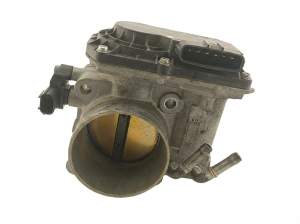
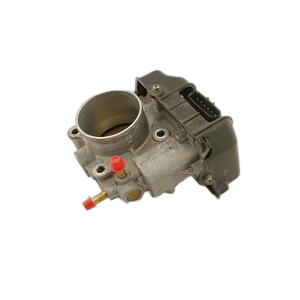
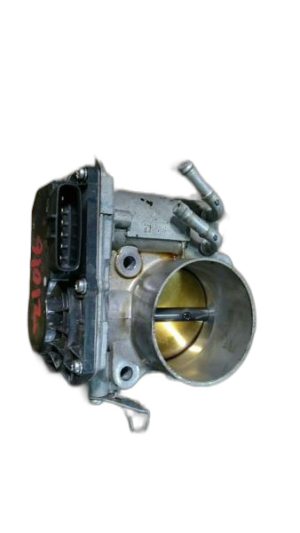
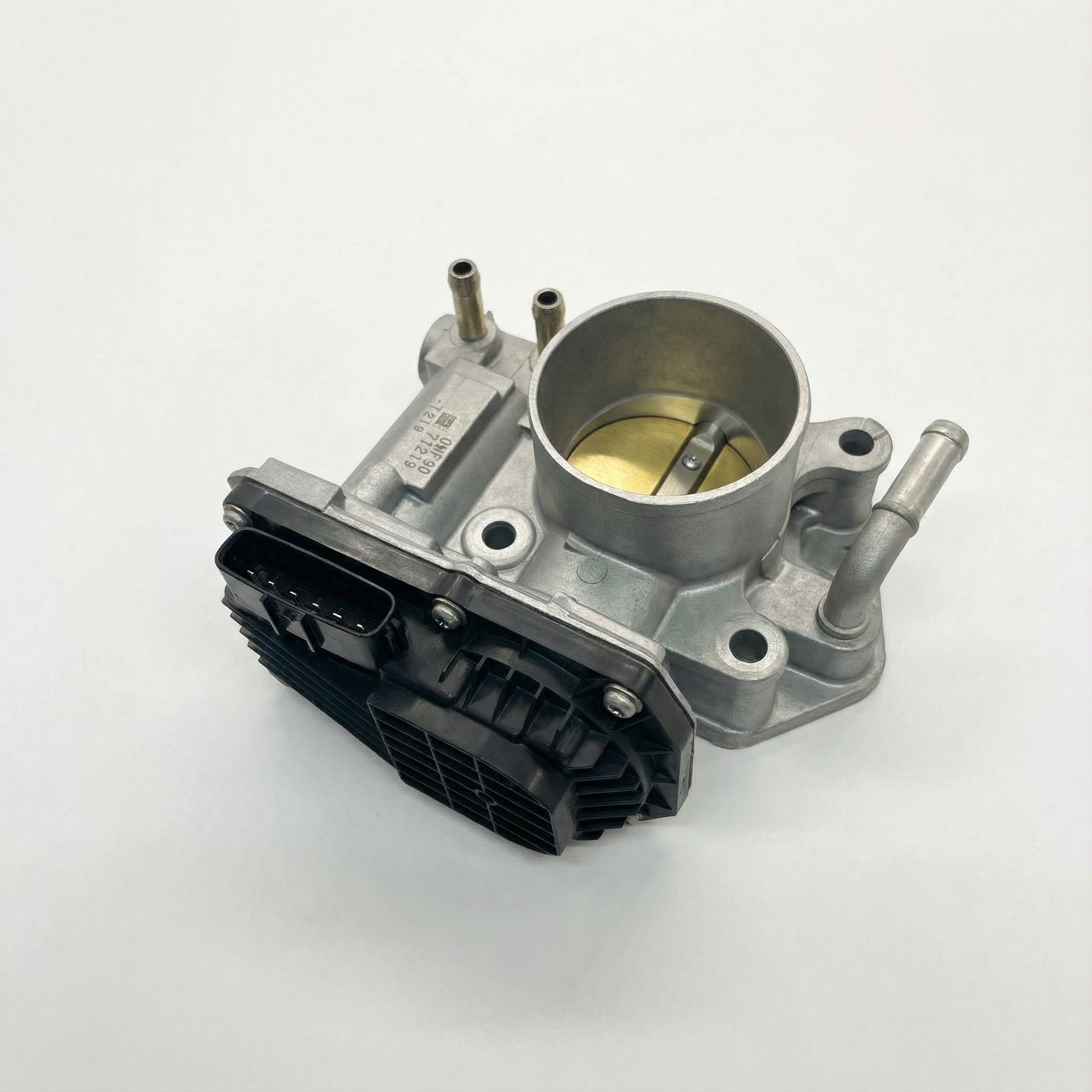
New Aftermarket Parts Available



The information in this article is provided for general reference and educational purposes only. Vehicle specifications, procedures, and part compatibility can vary by production date, trim level, and region. Always consult your vehicle's factory service manual and verify part numbers before purchasing or performing repairs. Safety-critical components such as airbags, seat belts, and braking systems should be installed by a qualified professional.
- Honda Accord:
- 🧭 Diagnostic Flowchart
- 🎬 Helpful Videos
- 🛍️ Shop This Part
- What's Unique About the 2012-2017 Honda Accord
- Symptoms You May Notice
- Most Likely Causes
- Rare But Worth Checking
- Diagnosis Steps
- Parts You'll Likely Need
- Related Codes That Often Appear With This One
- Platform-Specific Known Issues
- Mechanic-Grade Diagnostic Values
- Scan Tool Commands That Help
- Wiring & Ground Locations
- Real Owner Repair Stories
- Documented NHTSA Reports
- Other Known Issues on This Vehicle
- Used vs. New Parts: Buying Guide for This Vehicle
- Real Owner Stories
- 2013 Accord LX
- 2012 Accord EX-L
- 2014 Accord Sport
- Related OBD-II Codes
- Frequently Asked Questions
- 🎟️ Get 5% Off