

P0122 on 2017-2022 Honda CR-V: Throttle Position Sensor Circuit Low Causes and Fixes
P0122 on a 2017-2022 CR-V almost always means the throttle position sensor has failed. Since the sensor is built into the electronic throttle body, the entire assembly must be replaced. After replacement, a mandatory idle relearn procedure is required.
- P0122 on a 2017-2022 CR-V points to a low voltage signal from the throttle position sensor.
- The most common cause is a failed sensor, which is integrated into the electronic throttle body, requiring the entire assembly to be replaced.
- Before replacing parts, always check the wiring and connector at the throttle body for damage, as this can cause the same code.
- After replacing or cleaning the throttle body, you MUST perform an idle relearn procedure for the engine to function correctly.
What's Unique About the 2017-2022 Honda CR-V
The 5th generation CR-V (2017-2022) uses an electronic throttle body across all its engine options (1.5L Turbo and the earlier 2.4L). Unlike older vehicles where the Throttle Position Sensor (TPS) was a small, replaceable component, on this platform it is an integral, non-serviceable part of the entire throttle body assembly. This design means a sensor failure requires replacing the whole unit, which is a more expensive part but a relatively straightforward repair. A critical and often overlooked step after replacement is performing the idle relearn procedure, which is essential for the engine to run correctly and avoid idle or drivability issues.
Symptoms You May Notice
- Check Engine Light is on
- Hesitation or stumbling during acceleration
- Reduced engine power (vehicle enters 'limp mode')
- Rough, unstable, or high idle 🎬 See how a faulty TPS causes idle surge issues
- Engine may stall, especially when coming to a stop
- Poor or unresponsive throttle control
- Vehicle will not accelerate
- Replacing the accelerator pedal position (APP) sensor. While the APP sensor is part of the throttle control system, P0122 specifically points to the sensor at the throttle body ('A' circuit), not the pedal.
Most Likely Causes
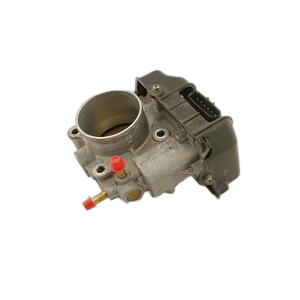
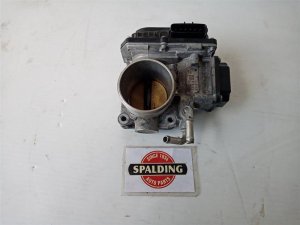
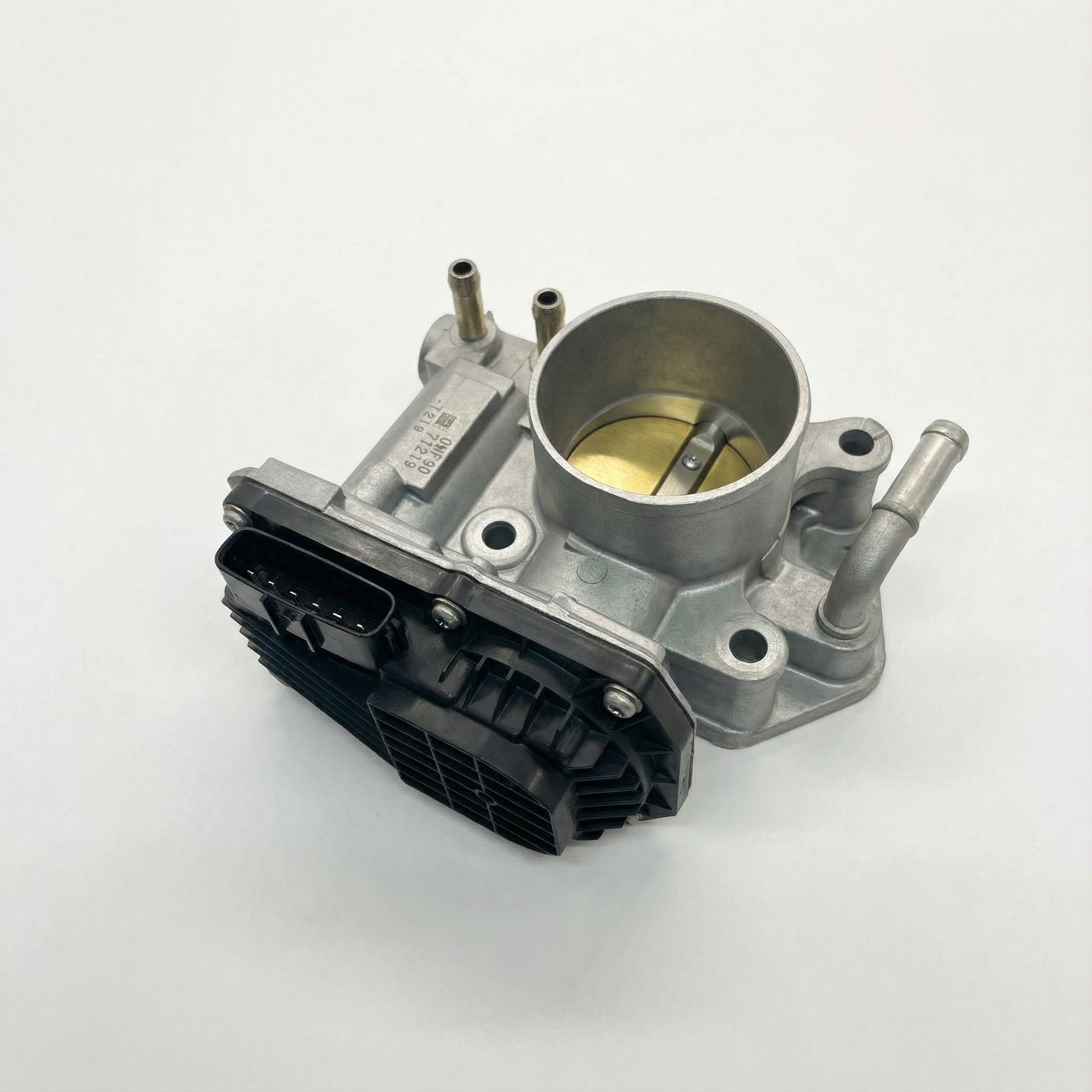
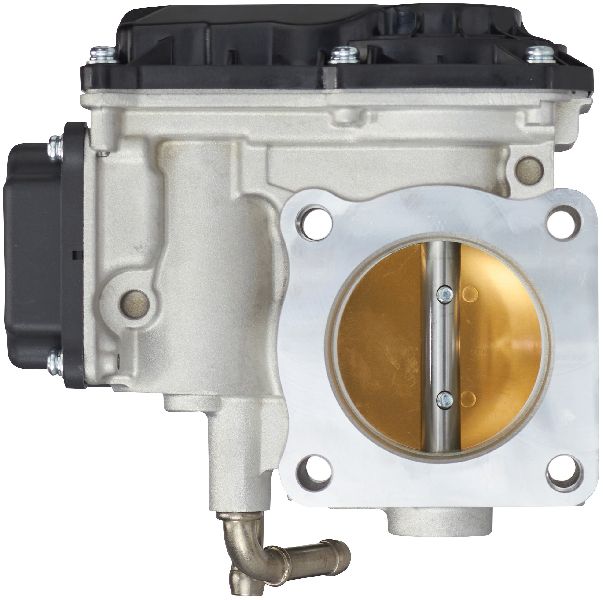
- Faulty Electronic Throttle Body Assembly 🔴 High Probability → Shop Fuel Injection Throttle Body The throttle position sensor (TPS) is integrated into the assembly and is a common point of electronic failure. It cannot be replaced separately, a design consistent across modern Hondas.
How to confirm: Using a scan tool with live data, monitor the 'TP Sensor A' voltage with the key on, engine off. If the voltage reads below the specified threshold (e.g., <0.3V) and does not change smoothly as the accelerator is pressed, the sensor has failed. Wiggling the connector harness while watching the data can help rule out a loose connection.
Typical fix: Replace the entire electronic throttle body assembly. After replacement, perform the idle relearn procedure.
Est. part cost: $250-$450 - Wiring Harness or Connector Issue 🟡 Medium Probability
How to confirm: Visually inspect the wiring harness and connector going to the throttle body for any signs of damage, corrosion, or loose pins. Use a multimeter to check for proper 5V reference voltage and ground at the connector. A short to ground on the signal wire will also cause this code.
Typical fix: Repair the damaged section of the wiring harness or clean/replace the connector.
Est. part cost: $10-$50 - Faulty Powertrain Control Module (PCM) ⚪ Low Probability
How to confirm: This is diagnosed by exclusion. If the throttle body and wiring have been confirmed to be good but the code persists, the PCM's internal circuit for reading the sensor may be at fault. This requires professional diagnosis.
Typical fix: Replace and reprogram the PCM.
Est. part cost: $600-$1000+
Diagnosis Steps
- Read the code with an OBD-II scanner to confirm P0122 is present. 🎬 Watch: How to diagnose and test for a P0122 code
- Use the scanner's live data feature to observe the voltage of 'TP Sensor A'. With the key on and engine off, it should be above 0.3V.
- If the voltage is below the threshold, the fault is active. If it's normal, the issue may be intermittent. Try clearing the code and see if it returns immediately.
- While watching the live data, gently wiggle the wiring harness and connector at the throttle body. If the voltage drops out or fluctuates wildly, you have a wiring issue.
- If the wiring appears stable, turn the ignition off and disconnect the throttle body connector. Inspect the pins for corrosion, moisture, or damage.
- If wiring and connections are good, the throttle position sensor inside the throttle body assembly is the most likely culprit.
- After replacing the throttle body, you MUST perform the idle relearn procedure. A common manual method is: a) Warm the engine to normal operating temperature (radiator fan comes on). b) Turn the engine off. c) Reset the ECU by disconnecting the battery for at least 10 minutes. d) Turn off all electrical accessories (A/C, radio, lights). e) Start the engine and let it idle for 10 minutes without touching the throttle. 🎬 Watch: Step-by-step DIY idle relearn without a scan tool
Parts You'll Likely Need
- Electronic Throttle Body Assembly
(OEM #16400-59B-003 (for 1.5L Turbo), 16400-5A2-A02 (for 2.4L K24W))— The throttle position sensor (TPS) that causes code P0122 is integrated into this assembly and is not sold separately. A faulty sensor requires the replacement of the entire unit.
Trusted brands: Honda (OEM), Hitachi, Standard Motor Products, Spectra Premium
OEM price range: $350-$450
Aftermarket price range: $150-$300
Related Codes That Often Appear With This One
- P0222 — This code is for 'Throttle Position Sensor 'B' Circuit Low'. Since the throttle body contains two redundant sensors (A and B) for safety, seeing both codes together strongly confirms a failure within the throttle body assembly itself or its main connector.
- P2135 — This code indicates a 'Throttle/Pedal Position Sensor/Switch A/B Voltage Correlation' error. It means the PCM is seeing a disagreement between the two internal throttle position sensors, which often points to a failing throttle body assembly.
Technical Service Bulletins (TSBs) & Recalls
- While no TSBs directly address P0122 for this specific failure, TSB 18-114 for 2017-18 models with other codes does involve resetting 'throttle position learned values' as part of a software update, highlighting the importance of throttle calibration on this platform.
Platform-Specific Known Issues
- Intermittent Nature: Some owners on forums report the P0122 code appearing intermittently, especially in colder weather, before becoming a hard fault. One user on CarKiller noted the code would appear about once a week in the morning.
- Replacement is the Standard Fix: Forum discussions consistently conclude that cleaning the throttle body is ineffective for an electronic fault like P0122. Replacement of the entire assembly is the confirmed repair, as noted by users on Honda-Tech and Reddit.
Mechanic-Grade Diagnostic Values
- TP Sensor 'A' Signal Voltage (Live Data) — expected: Greater than 0.3V with key on, engine off (KOEO).. Failure: A reading of less than 0.3V for 200 milliseconds or more confirms the fault.
- Throttle Body Connector 5V Reference — expected: Approximately 5.0V between the reference voltage pin (VCC) and a known good ground with the connector unplugged and KOEO.. Failure: Significantly less than 5.0V indicates a wiring or PCM issue, not a throttle body failure.
- TP Sensor Signal Voltage Sweep — expected: A smooth, linear increase from ~0.5V at closed throttle to ~4.5V at wide-open throttle (WOT) when back-probing the signal wire.. Failure: Voltage that is jumpy, erratic, has dropouts, or does not sweep through the full range indicates a failed sensor.
Scan Tool Commands That Help
- Honda Diagnostic System (HDS) or equivalent professional scan tool: Reset ECM/PCM — This should be performed before the idle learn procedure to clear all adaptive memory, ensuring the system starts fresh.
- Honda Diagnostic System (HDS) or equivalent professional scan tool: TP POSITION CHECK — Used to clear the throttle position (TP) learned value specifically. This is a critical step after replacing the throttle body to allow the new component's baseline to be learned correctly.
- Autel MaxiSys (and other high-end scanners): Throttle/Idle Learn — After replacing the throttle body, this guided function walks the technician through the relearn process, confirming when the procedure is complete. Some scan tools may perform this function more reliably or faster than others.
Wiring & Ground Locations
- G101 — On the left rear of the engine.. This is a primary engine ground. A loose or corroded connection here can cause a variety of sensor and PCM-related issues, including incorrect voltage readings that could potentially trigger a P0122 code.
- G201 — Located at the right rear of the engine compartment.. This is a key ground point for components in the engine bay. Verifying it is clean and tight is a fundamental step in diagnosing any electronic fault code.
- Throttle Body Connector — A 6-pin connector attached directly to the electronic throttle body assembly.. This is the direct interface for the throttle position sensor. All voltage, ground, and signal checks are performed at this connector's pins. Corrosion or damage here is a common cause of the P0122 code.
OEM Part Supersession History
16400-5A2-A01→16400-5A2-A02— Standard part revision by the manufacturer.
Heads up: The new part number (16400-5A2-A02) is a direct replacement for the original and is used on the 2.4L engine.
Model Year Variations Within This Range
- 2017-2019 (LX Trim): Models with the 2.4L K24W engine use throttle body part number 16400-5A2-A02.
- 2017-2022 (All trims with 1.5T): Models with the 1.5L Turbo engine use throttle body part number 16400-59B-003.
Diagnostic Flowchart
Other Known Issues on This Vehicle
Issues unrelated to this code that are worth knowing about as an owner of this generation:
- Engine Oil Dilution (1.5L Turbo) 🔴 High — Common, especially in 2017-2018 models and vehicles used for short trips in cold climates. Fuel mixes with engine oil, reducing lubrication. (Ref: Honda issued software updates (e.g., TSB 18-114) and a warranty extension to address the issue.)
- Sticky Steering at Highway Speeds 🔴 High — Widespread reports of a momentary increase in steering effort or a 'notchy' feeling, typically while driving on the highway. (Ref: TSB 23-037 was issued, instructing dealers to replace the electronic power steering (EPS) gearbox.)
- Parasitic Battery Drain 🟠 Medium — Common in 2017-2019 models, leading to a dead battery after the vehicle sits for a few days. (Ref: A class-action lawsuit was filed regarding this issue. Fixes often involve software updates or identifying faulty modules.)
- Infotainment System Glitches 🟡 Low — Frequently reported on 2017-2019 models, symptoms include the screen freezing, going black, or random beeping. (Ref: Software updates from the dealer are the typical fix.)
- Fuel Injector Failure (1.5L Turbo) 🟠 Medium — Can cause cold-start misfires and, in some cases, contribute to more severe issues like head gasket failure due to detonation.
Used vs. New Parts: Buying Guide for This Vehicle
When a used part is the smart pick: A used throttle body from a low-mileage, late-model year donor vehicle can be a cost-effective option, as this is a complete bolt-on assembly with no complex coding required, only a relearn procedure. It makes sense if the budget is tight and the donor part's history is known (e.g., from a rear-end collision).
Donor-vehicle mileage cap: roughly under 60000 miles for the part to have meaningful remaining life.
What to inspect on the donor part:
- Check the 6-pin electrical connector for any signs of corrosion, bent pins, or damage to the plastic housing.
- Ensure the throttle body is from a vehicle with the same engine (1.5T vs 2.4L) as the part numbers are different.
- Look for the OEM manufacturer markings (e.g., Honda, Keihin).
- Manually move the throttle plate (if possible without power) to feel for any binding or roughness, though this is difficult on electronic units.
OEM-only on this vehicle (don't cheap out):
- While not strictly 'OEM-only', using a genuine Honda or Hitachi (often the original equipment manufacturer) throttle body is highly recommended. Complex electronics like this are a common failure point for cheaper aftermarket brands.
Aftermarket brands forum-validated for this vehicle:
- Hitachi: Hitachi is often the OEM for Honda and their parts are considered equivalent to genuine Honda parts.
Brands owners have reported issues with on this vehicle:
- Unbranded or exceptionally cheap 'no-name' throttle bodies found on online marketplaces. While tempting, they have a high rate of premature failure or can be dead-on-arrival, wasting time and money.
Real Owner Stories
Aggregated from forums and TSBs cited above. Mileages and costs reflect what owners reported in those sources.
2017-2022 Honda CR-V
Symptoms: The P0122 code appeared intermittently, specifically about once a week in the morning during colder weather, before eventually becoming a hard fault.
What fixed it: Replacement of the entire electronic throttle body assembly.
Source hint: vehicle_specific_issues: 'Intermittent Nature' citing CarKiller
1999 Honda CR-V
Symptoms: The owner measured the TPS signal voltage and found it to be exactly 0.3V at closed throttle.
What fixed it: The diagnostic check confirmed the 'low input' condition for P0122, leading to the standard sensor/assembly replacement.
Source hint: Reddit r/MechanicAdvice: '1999 Honda CR-V TPS Sensor'
2017-2018 Honda CR-V 1.5L Turbo
Symptoms: Issues related to throttle position learned values and engine oil dilution.
What fixed it: Software updates and resetting 'throttle position learned values' as part of the manufacturer's update procedure.
Source hint: TSB 18-114
Honda CR-V Owner Report
Symptoms: An owner reported that the P0122 throttle position switch low voltage code caused the automatic transmission not to shift correctly and prevented acceleration (NHTSA ODI #10148538).
What fixed it: Diagnostics identified the low voltage fault at the throttle position switch.
Honda Owner Experience
Symptoms: A driver experienced a complete stop followed by slow acceleration where the vehicle was unable to pick up speed. The check engine light triggered code P0122 (NHTSA ODI #10332710).
What fixed it: Identification of the throttle position sensor circuit fault.
Documented NHTSA Reports
Manufacturer records and owner complaints provide further insight into this fault across the Honda platform. NHTSA ODI #10321183 notes that a defective throttle body was found to be the cause of error code P0122, a problem echoed in several owner forums. Additionally, NHTSA ODI #10307082 describes a low-voltage condition on the TPS (DTC P0122) that began to set during vehicle operation, suggesting a need for manufacturer awareness regarding this engine circuit.
Related OBD-II Codes
Frequently Asked Questions
Can I just clean the throttle body on my 2017-2022 CR-V to fix the P0122 code?
Does TSB 18-114 apply to the P0122 code on my 2017-2018 Honda CR-V?
Is there a specific voltage I should look for when diagnosing P0122 on my CR-V?
Why can't I just replace the Throttle Position Sensor (TPS) by itself?
What procedure must be done after I replace the throttle body?
Could my CR-V's P0122 code be related to the cold weather?
Helpful Videos
![Honda CRV TPS fix [idle surge issue] P0122](https://img.youtube.com/vi/PGupfBD4uXE/mqdefault.jpg)
Used OEM Parts in Stock
New Aftermarket Parts Available

The information in this article is provided for general reference and educational purposes only. Vehicle specifications, procedures, and part compatibility can vary by production date, trim level, and region. Always consult your vehicle's factory service manual and verify part numbers before purchasing or performing repairs. Safety-critical components such as airbags, seat belts, and braking systems should be installed by a qualified professional.
- Honda CR-V:
- 🧭 Diagnostic Flowchart
- 🎬 Helpful Videos
- 🛍️ Shop This Part
- What's Unique About the 2017-2022 Honda CR-V
- Symptoms You May Notice
- Most Likely Causes
- Diagnosis Steps
- Parts You'll Likely Need
- Related Codes That Often Appear With This One
- Technical Service Bulletins (TSBs) & Recalls
- Platform-Specific Known Issues
- Mechanic-Grade Diagnostic Values
- Scan Tool Commands That Help
- Wiring & Ground Locations
- OEM Part Supersession History
- Model Year Variations Within This Range
- Other Known Issues on This Vehicle
- Used vs. New Parts: Buying Guide for This Vehicle
- Real Owner Stories
- 2017-2022 Honda CR-V
- 1999 Honda CR-V
- 2017-2018 Honda CR-V 1.5L Turbo
- Honda CR-V Owner Report
- Honda Owner Experience
- Documented NHTSA Reports
- Related OBD-II Codes
- Frequently Asked Questions
- 🎟️ Get 5% Off