

P0122 on 2016-2022 Honda Pilot 3.5L V6: Causes and Fixes for Throttle Position Sensor Low Voltage
P0122 on a 2016-2022 Pilot almost always points to a problem with the electronic throttle body, as the sensor is integrated. The fix is typically replacing the entire throttle body assembly. Expect to pay around $200-$300 for an OEM part and about 1-1.5 hours of labor.
- P0122 on a 2016-2022 Pilot means the throttle position sensor voltage is too low.
- The most likely cause is a failed sensor, which requires replacing the entire throttle body assembly.
- Before replacing the throttle body, always check the wiring and connector for damage, as this is a cheaper fix.
- After replacement or cleaning, an idle relearn procedure is mandatory for the engine to run correctly.
What's Unique About the 2016-2022 Honda Pilot
On the 2016-2022 Honda Pilot with the 3.5L V6 engine (J35Y6), the vehicle uses a modern 'drive-by-wire' system. Unlike older vehicles where the throttle position sensor could be a small, separate, and easily replaceable part, on this Pilot generation the TPS is integrated directly into the electronic throttle body assembly. This means that if the sensor itself fails, the entire throttle body assembly must be replaced, which is the most common repair for this code.
Symptoms You May Notice
- Check Engine Light is on
- Multiple warning lights on the dashboard (e.g., 'Emission System Problem', 'Brake System Problem', 'Hill Start Assist Problem')
- Hesitation or stumbling when accelerating.
- Engine has little or no power (may enter 'limp mode').
- Rough or erratic idle speed.
- Engine may stall, especially at low speeds.
- Poor fuel economy.
- Unresponsive or erratic throttle behavior.
- Replacing the accelerator pedal position (APP) sensor. While the APP sensor also relates to throttle control, P0122 specifically refers to the sensor at the throttle body ('A' circuit), not the one at the pedal.
Most Likely Causes
- Faulty Throttle Body Assembly 🔴 High Probability → Shop Fuel Injection Throttle Body The throttle position sensor (TPS) is integrated into the throttle body assembly on this model. Internal failure of the sensor electronics is a common wear item, requiring the replacement of the entire unit. This is the most frequent resolution reported by owners.
How to confirm: Using a scan tool, observe the live data for 'TP Sensor A' voltage with the key on, engine off. If the voltage is stuck below ~0.3V and does not change smoothly as the accelerator pedal is slowly pressed, the sensor is likely bad. Since it's integrated, this points to the assembly. 🎬 Watch: Diagnostic walkthrough for TP Sensor A low voltage codes. The normal range should be approximately 0.45V at closed throttle to 4.5V at wide-open throttle.
Typical fix: Replace the entire throttle body assembly. After replacement, a throttle body idle relearn procedure is mandatory to prevent rough or high idle.
Est. part cost: $200-$350 - Wiring Harness or Connector Issue 🟡 Medium Probability The wiring harness leading to the throttle body is subject to engine heat and vibration, which can cause wires to fray, short to ground, or break internally over time. The connector pins can also corrode or become loose.
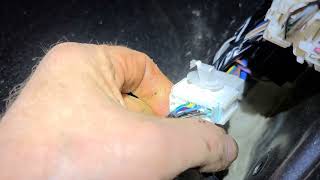
How to confirm: Visually inspect the wiring and connector at the throttle body for any signs of damage, melting, or corrosion. With the connector unplugged, check for continuity to ground on the signal wire (a specific source mentions the 'THL1' wire). Use a multimeter to verify the 5V reference and ground circuits at the connector.
Typical fix: Repair the damaged section of wiring or replace the pigtail connector.
Est. part cost: $15-$50 - Dirty Throttle Body ⚪ Low Probability → Shop Fuel Injection Throttle Body Carbon and oil vapor from the PCV system can build up inside the throttle body, restricting the movement of the throttle plate. While this more commonly causes idle issues, it can sometimes prevent the plate from returning to its true zero position, affecting the sensor reading.
How to confirm: Remove the air intake hose and visually inspect the inside of the throttle body and around the throttle plate for black carbon buildup.
Typical fix: Clean the throttle body thoroughly with a dedicated throttle body cleaner and a soft brush or rag. This is often attempted before replacing the part. An idle relearn procedure is recommended after cleaning.
Est. part cost: $5-$15
Rare But Worth Checking
- Faulty Powertrain Control Module (PCM): This is very rare. The PCM should only be considered after all other possibilities, including the throttle body and wiring, have been exhaustively tested and ruled out.
Diagnosis Steps
- Connect an OBD-II scanner and confirm P0122 is the active code. Check for any other related codes like P0123 or P0222.
- View live data on the scanner. Observe the voltage for 'TP Sensor A'. With the key on and engine off, it should be around 0.45V-0.5V. If it reads near zero or below 0.3V, a fault is present.
- Slowly press the accelerator pedal to the floor. The voltage should increase smoothly and linearly to about 4.5V. Any dropouts, spikes, or flat spots indicate a problem.
- Turn the ignition off. Inspect the throttle body connector for corrosion, bent pins, or loose connections. Check the wiring harness for any visible damage, chafing, or melting.
- Disconnect the throttle body connector. Turn the ignition on. Use a multimeter to test the terminals on the harness side. You should find a 5V reference wire and a good ground wire.
- If power and ground are good, the issue is highly likely the throttle body assembly itself. If power or ground is missing, trace and repair the corresponding circuit.
- After replacing the throttle body, perform the 'Idle Relearn Procedure'. This typically involves warming the engine to normal operating temperature (until the radiator fan cycles), then letting it idle for about 5 minutes with all electrical accessories off.
- If the wiring and throttle body are confirmed good, the final, least likely culprit is the PCM.
Parts You'll Likely Need
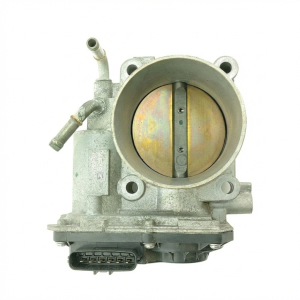
- Throttle Body Assembly
(OEM #16400-5J6-A01)— This is the most common fix because the throttle position sensor (TPS) that triggers the code is integrated into this assembly for the 2016-2022 Pilot. A sensor failure requires replacing the whole unit. This part number is applicable to models with the 6-speed automatic transmission.
Trusted brands: Honda (OEM), Hitachi (OEM supplier), Dorman, Standard Motor Products
OEM price range: $250-$350
Aftermarket price range: $150-$250
Related Codes That Often Appear With This One
- P0123 — Throttle Position Sensor 'A' Circuit High Input. Seeing both P0122 and P0123 intermittently can indicate a failing sensor or a wiring issue causing erratic voltage readings.
- P0222 — Throttle/Pedal Position Sensor/Switch 'B' Circuit Low Input. The throttle body has redundant sensors ('A' and 'B'). If both show a low input code, it strongly points to a common cause like a power, ground, or connector issue affecting the entire assembly.
Platform-Specific Known Issues
- A failure of the throttle position sensor commonly triggers a cascade of warning lights beyond just the Check Engine Light. Owners frequently report seeing 'Emission System Problem,' 'Brake System Problem,' 'Hill Start Assist Problem,' and 'Power Steering Problem' messages appear simultaneously, all originating from the single P0122 fault. 🎬 Watch: See how a single sensor failure triggers multiple dashboard warnings.
Mechanic-Grade Diagnostic Values
- TP Sensor 'A' (THL1) Signal Voltage — expected: ~0.45V at closed throttle, rising smoothly to ~4.5V at wide-open throttle.. Failure: Voltage is stuck below 0.3V, or has dropouts/spikes when the throttle is opened slowly.
- 5V Reference Voltage at Throttle Body Connector — expected: Approximately 5.0 volts. Failure: Voltage is significantly lower than 5.0V or is absent, indicating a wiring or PCM issue.
- Ground Circuit at Throttle Body Connector — expected: Good continuity to chassis ground (near 0 ohms).. Failure: High resistance or an open circuit, indicating a bad ground wire.
Scan Tool Commands That Help
- Honda Diagnostic System (HDS): TP Position Check — To verify if the PCM is recognizing the throttle as closed when it should be. This is a specific test function within the dealer-level software to confirm sensor learning status.
- Honda Diagnostic System (HDS): Throttle Position Sensor Reset / ETCS (Throttle) Test — This is a mandatory function to be performed after replacing the throttle body. It clears the old learned values and forces the PCM to learn the new sensor's closed and wide-open positions. Failure to do this will result in an erratic idle or persistent codes.
- Professional Scan Tool (e.g., Autel): Idle Relearn / Throttle Adaptation — Used after cleaning or replacing the throttle body to stabilize the idle. While a manual procedure exists, a scan tool can force the relearn process to complete faster and more reliably.
Wiring & Ground Locations
- Throttle Body Connector (6-Pin) — Directly on the electronic throttle body, located between the air filter housing and the intake manifold.. This is the primary connection point for the integrated TPS. Pin #5 is the 5V reference circuit that should be tested. A short in the signal wire, often referred to as THL1, can cause the P0122 code.
- Main Chassis Ground — On the chassis frame near the battery. From the factory, this connection point is often painted.. A poor main ground connection can cause a variety of electrical issues, including erratic sensor readings. One owner found that the factory ground was bolted to a painted surface, and creating a clean, unpainted connection point and adding a supplemental ground wire resolved erratic electronic behavior.
Real Owner Repair Stories
- YouTube user comment on a grounding upgrade video (2019 Honda Pilot Elite) — General electrical gremlins, including infotainment system freezing and concerns about throttle response reliability.
❌ Tried (didn't work) Initially just dealt with intermittent issues.
✅ What actually fixed it The owner discovered the main vehicle ground from the battery was bolted to a painted surface. They scuffed the paint off to create a bare metal connection and added a supplemental 1/0 gauge ground wire from the battery to the chassis, another to the cylinder head, and a 4-gauge ground to the throttle body itself. This resulted in a more stable charging voltage and resolved the electrical issues. - Honda Owner Report (NHTSA ODI #10332710) — An owner of a similar Honda model reported that after coming to a complete stop, they experienced slow acceleration and were unable to pick up speed; once the vehicle did accelerate, the check engine light triggered code P0122.
- Honda Owner Report (NHTSA ODI #10148538) — A driver noted that a P0122 "Throttle Position Switch Low Volt" code caused the automatic transmission not to shift correctly and prevented normal acceleration.
OEM Part Supersession History
16400-5J6-A01→No official supersession found, this part number remains current for the specified models.— N/A
Heads up: This part number is specifically for models equipped with the 6-speed automatic transmission. Pilots with the 9-speed automatic transmission (found on higher trims from 2016-2020 and all trims 2021-2022) may use a different part number. Always verify with VIN.
Model Year Variations Within This Range
- 2016-2020 (Touring/Elite), 2021-2022 (All Trims): These model years and trims feature a 9-speed automatic transmission instead of the 6-speed. This can affect which throttle body part number is correct for the vehicle. While the P0122 code and diagnosis are the same, the physical part may be different. Part number 16400-5J6-A01 is explicitly listed for the 6-speed models.
Diagnostic Flowchart
Other Known Issues on This Vehicle
Issues unrelated to this code that are worth knowing about as an owner of this generation:
- Fuel Injector Failure 🔴 High — Common enough to warrant a warranty extension. Can occur around 60k miles, causing misfires (P030x) and air-fuel ratio codes (P219A/B). (Ref: Honda TSB 20-100 and 21-010 extended the warranty on fuel injectors to 10 years/150,000 miles for certain 2016-2019 Pilots.)
- Harsh Shifting / Shudder (9-Speed AT) 🟠 Medium — A widely reported issue on models equipped with the ZF 9-speed automatic transmission. Can manifest as rough shifts, hesitation, or shuddering. (Ref: Multiple software updates (e.g., TSB 17-034) were released to improve shift logic, and a class-action lawsuit was filed regarding these transmission problems.)
- Infotainment System Glitches 🟡 Low — Owners report issues with the screen freezing, going black, rebooting randomly, or connectivity problems with Apple CarPlay/Android Auto. (Ref: Often addressed with software updates or a system reboot (disconnecting the battery).)
- Prematurely Warped Brake Rotors 🟡 Low — Vibration or pulsation felt through the steering wheel or seat when braking, sometimes occurring in as little as 10,000-20,000 miles.
- Auto Start/Stop System Failure 🟠 Medium — System may fail to restart the engine at a stop, sometimes requiring a full reboot of the car. Can be related to battery health or other system faults. (Ref: A warranty extension was issued for some vehicles to address this issue.)
Used vs. New Parts: Buying Guide for This Vehicle
When a used part is the smart pick: A used OEM throttle body from a low-mileage donor vehicle can be a cost-effective alternative to a new OEM part, especially if the budget is tight. Since this is a common failure item, a used part carries some risk, but it is often significantly cheaper than new.
Donor-vehicle mileage cap: roughly under 60000 miles for the part to have meaningful remaining life.
What to inspect on the donor part:
- Verify the part number on the used unit matches your original (e.g., GMF6B).
- Inspect the connector for any bent, corroded, or damaged pins.
- Look for a clean throttle plate and bore; heavy carbon buildup may suggest high mileage or poor engine health in the donor vehicle.
- Ask the seller for the VIN or mileage of the donor car if possible.
- Ensure there is a return policy in case the part is also faulty.
OEM-only on this vehicle (don't cheap out):
- While aftermarket options exist, the throttle body is a critical component for engine management. Many technicians and forums strongly recommend using a genuine Honda OEM part or one from the original supplier (like Hitachi) to avoid compatibility, calibration, and longevity issues.
Aftermarket brands forum-validated for this vehicle:
- Hitachi (Often the OEM supplier for Honda)
Brands owners have reported issues with on this vehicle:
- Unbranded, no-name parts from online marketplaces are a significant gamble and may fail prematurely or not calibrate correctly.
Documented NHTSA Reports
While the following reports involve other Honda models, they describe the same P0122 fault behavior relevant to the Pilot's shared engineering:
- NHTSA ODI #10321183: A technician diagnosed a defective throttle body after finding error code P0122, noting that several forums address this exact issue across Honda platforms.
- NHTSA ODI #10307082: An owner reported the engine setting DTC P0122 due to low voltage on the TPS, expressing concern about the frequency of this engine problem.
Real Owner Stories
Aggregated from forums and TSBs cited above. Mileages and costs reflect what owners reported in those sources.
2016-2022 Honda Pilot 3.5L V6
Symptoms: The dashboard displayed a 'Christmas tree' effect of warning lights including Emissions, Brakes, and Hill Start Assist all at once.
What fixed it: Replacement of the entire throttle body assembly followed by an idle relearn procedure.
Source hint: piloteers.org
2016-2022 Honda Pilot 3.5L V6
Symptoms: Sudden limp mode and a dashboard full of warnings.
What fixed it: Throttle body replacement.
Cost: $700-$750
Source hint: Reddit r/HondaPilot
Related OBD-II Codes
Frequently Asked Questions
Why are my Brake System and Hill Start Assist lights on when the code is for a throttle sensor?
Can I just replace the Throttle Position Sensor (TPS) on my 3.5L V6 Pilot?
Is there a specific procedure I need to follow after replacing the throttle body?
Does TSB 20-100 or 21-010 apply to my P0122 code?
What voltage should I see for 'TP Sensor A' on my scan tool?
Could a dirty throttle body be causing my P0122 code?
Helpful Videos
Used OEM Parts in Stock
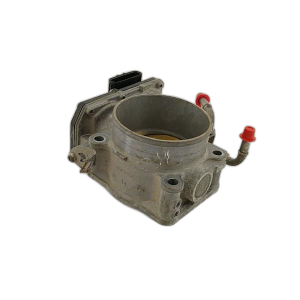
New Aftermarket Parts Available


The information in this article is provided for general reference and educational purposes only. Vehicle specifications, procedures, and part compatibility can vary by production date, trim level, and region. Always consult your vehicle's factory service manual and verify part numbers before purchasing or performing repairs. Safety-critical components such as airbags, seat belts, and braking systems should be installed by a qualified professional.
- Honda Pilot:
- 🧭 Diagnostic Flowchart
- 🎬 Helpful Videos
- 🛍️ Shop This Part
- What's Unique About the 2016-2022 Honda Pilot
- Symptoms You May Notice
- Most Likely Causes
- Rare But Worth Checking
- Diagnosis Steps
- Parts You'll Likely Need
- Related Codes That Often Appear With This One
- Platform-Specific Known Issues
- Mechanic-Grade Diagnostic Values
- Scan Tool Commands That Help
- Wiring & Ground Locations
- Real Owner Repair Stories
- OEM Part Supersession History
- Model Year Variations Within This Range
- Other Known Issues on This Vehicle
- Used vs. New Parts: Buying Guide for This Vehicle
- Documented NHTSA Reports
- Real Owner Stories
- 2016-2022 Honda Pilot 3.5L V6
- 2016-2022 Honda Pilot 3.5L V6
- Related OBD-II Codes
- Frequently Asked Questions
- 🎟️ Get 5% Off