

P0122 on 2000-2006 Hyundai Accent: Throttle Position Sensor Circuit Low Causes and Fixes
For the 2000-2006 Hyundai Accent, code P0122 is almost always caused by a faulty Throttle Position Sensor (TPS). It's an inexpensive and easy part to replace yourself, often resolving issues like stalling, hesitation, and harsh automatic transmission shifting. An aftermarket sensor costs between $20-$60, while an OEM part is around $130. The repair involves removing two screws and a connector, making it a great DIY fix.
- P0122 on a 2000-2005 Accent is almost certainly a bad Throttle Position Sensor (TPS).
- This is a very DIY-friendly repair that requires basic hand tools and about 30 minutes.
- The correct OEM part number is 35170-22600. Verify this number before purchasing.
- A major symptom of this failure on automatic models is harsh or incorrect gear shifting, which can be mistaken for a transmission problem.
- If your Accent is a 2006 model, visually confirm you have the older (LC) body style before buying parts, as it was a transition year to a new generation.
What's Unique About the 2000-2006 Hyundai Accent
The 2000-2006 year range covers two different generations of the Accent, which have different throttle systems. The 2000-2005 (LC generation) models use a traditional throttle cable and a simple, replaceable TPS mounted on the throttle body. The redesigned 2006 model (MC generation) was a transition year that introduced a more modern setup. Unlike many newer cars that integrate the TPS into the entire throttle body assembly, a P0122 on the common 2000-2005 Accent does not require replacing the whole unit, making the fix much cheaper and simpler.
Generation note: The specified 2000-2006 range covers two generations: the Second Generation (LC, 2000-2005, with a 2003 facelift) and the start of the Third Generation (MC, 2006-2011). This guide primarily focuses on the LC generation, which uses a separate, replaceable TPS. 2006 owners should visually confirm if they have the older LC body style or the newer, redesigned MC body style, as parts may differ.
Symptoms You May Notice
- Check Engine Light is on
- Hesitation or stumbling during acceleration
- Lack of power or unresponsive acceleration
- Engine stalls when coming to a stop or at idle
- Rough, erratic, or high idle
- Poor fuel economy
- Harsh, delayed, or incorrect automatic transmission shifting
- Engine bucking or jerking
- Replacing the accelerator pedal sensor (this vehicle does not have one; it uses a throttle cable).
- Replacing the Mass Airflow (MAF) or MAP sensor without proper diagnosis.
- Replacing the Idle Air Control (IAC) valve; while it can cause idle issues, it typically won't set a P0122 circuit code.
- Assuming an automatic transmission issue is internal when it's actually caused by the faulty TPS input.
Most Likely Causes
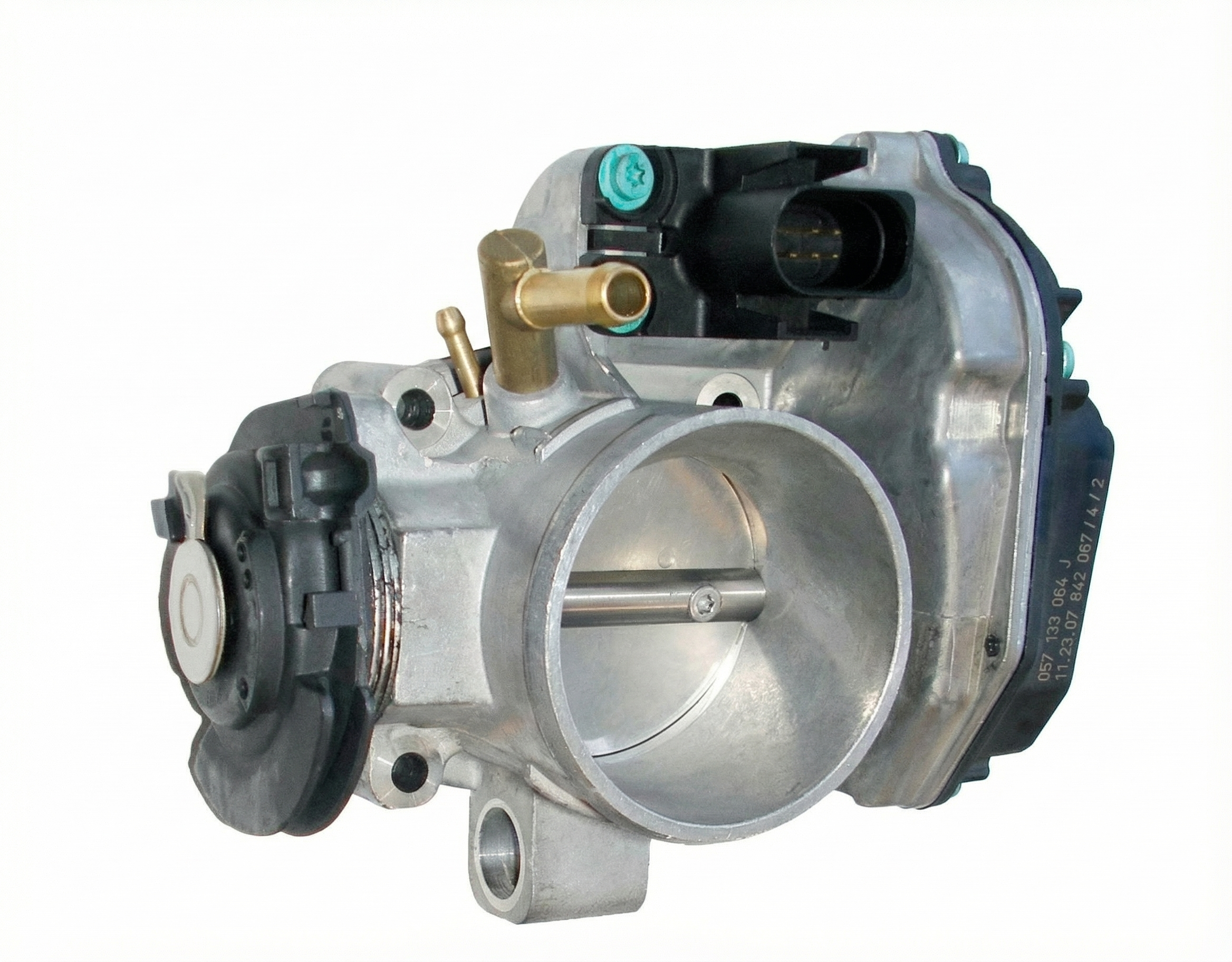
- Faulty Throttle Position Sensor (TPS) 🔴 High Probability → Shop Fuel Injection Throttle Body The sensor is a simple potentiometer that wears out over time from the constant movement of the throttle shaft. This wear creates dead spots or internal shorts in the resistive track, causing the output voltage to drop below the minimum threshold.
How to confirm: With the key on, engine off, use a multimeter to back-probe the TPS signal wire. The voltage should be ~0.25-0.8V at closed throttle and sweep smoothly up to ~4.5V at wide-open throttle. If the voltage is stuck below 0.2V, jumps erratically, or doesn't change, the sensor is bad. A scan tool showing erratic TPS percentage during slow throttle application also confirms failure.
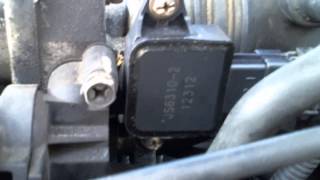
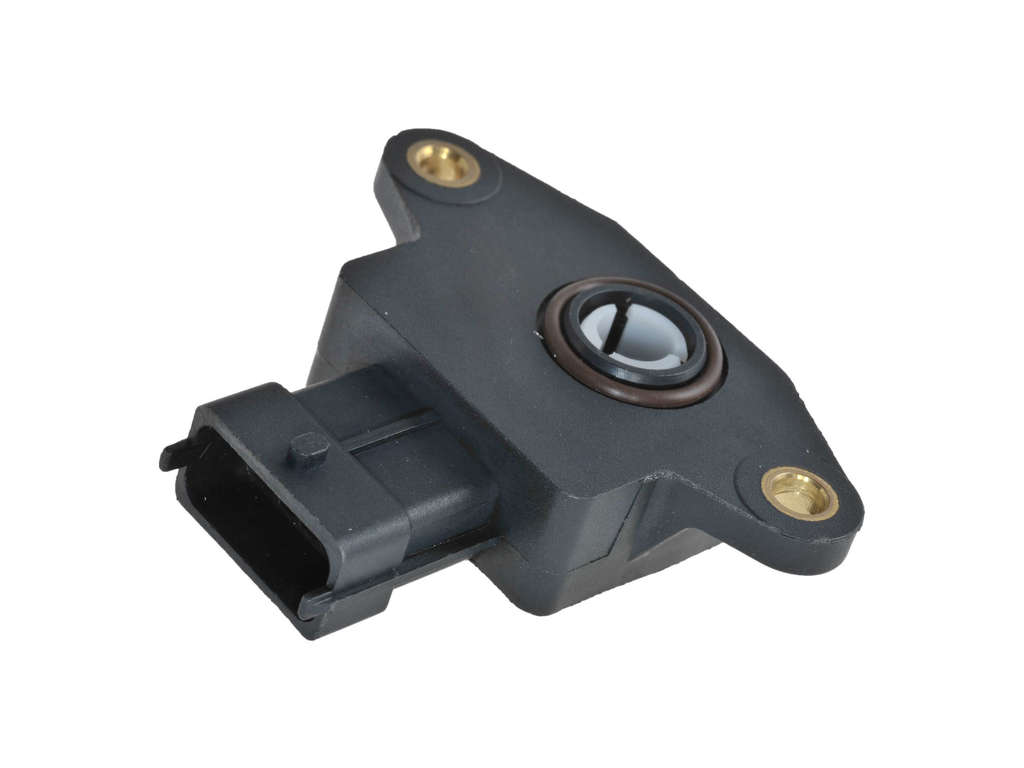
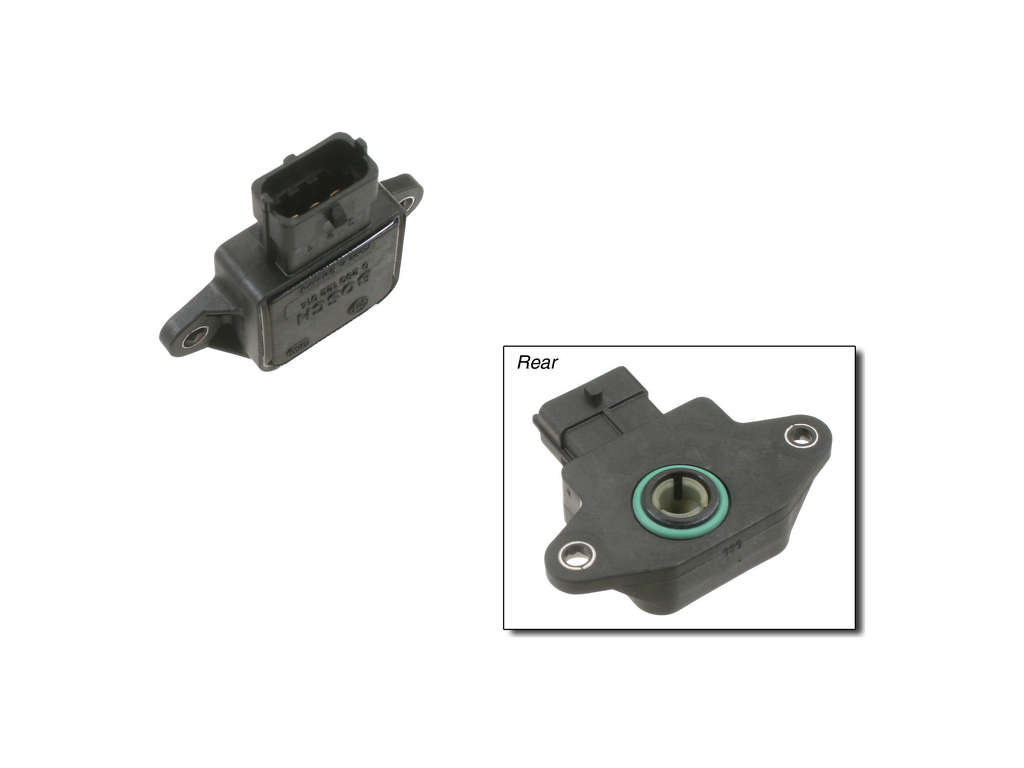
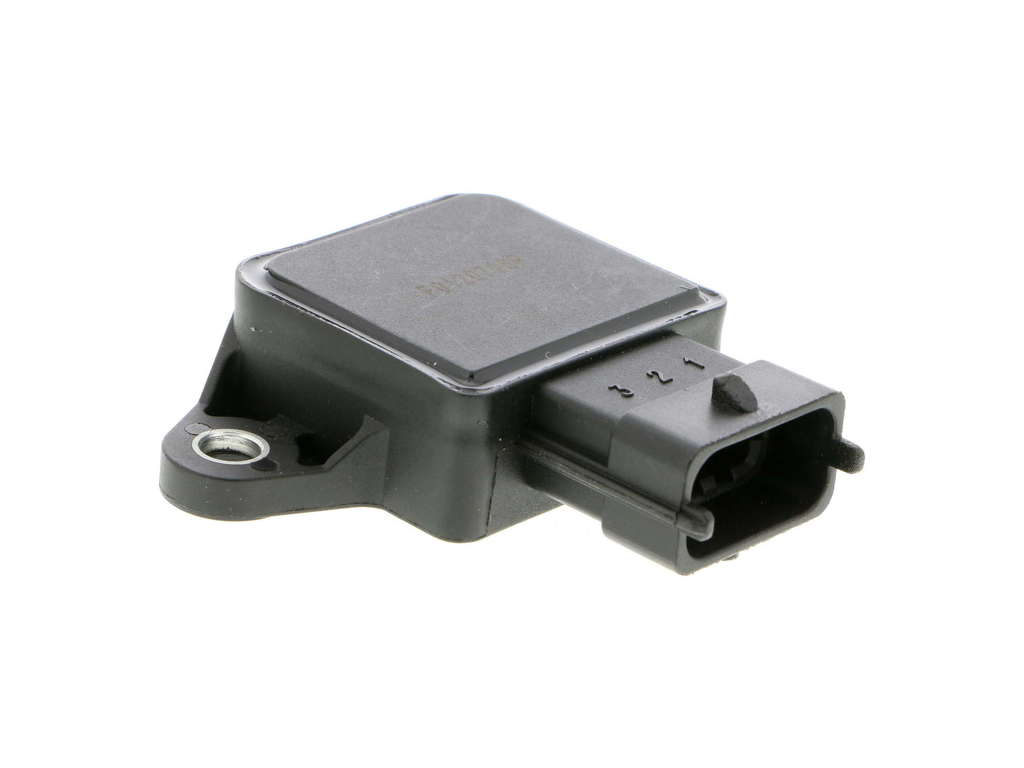
Typical fix: Replace the Throttle Position Sensor. It is mounted to the side of the throttle body with two Phillips head screws. 🎬 Watch: Locate the throttle position sensor on your Accent After replacement, it is good practice to disconnect the battery for 10-15 minutes to reset the ECM's adaptive memory.
Est. part cost: $20-$130 - Wiring or Connector Issue 🟡 Medium Probability Engine vibration and heat can cause wires in the harness leading to the TPS to break or insulation to chafe over time, leading to a short to ground. The connector pins can also become corroded or loose.
How to confirm: Visually inspect the wiring harness leading to the TPS for any signs of damage, melting, or corrosion. Check the connector for bent or corroded pins. Wiggle the connector and harness with the engine running to see if it affects idle. Test for continuity and a short to ground on the signal wire between the TPS and the ECM.
Typical fix: Repair the damaged section of wire or clean/replace the connector pigtail.
Est. part cost: $5-$25
Rare But Worth Checking
- Faulty Powertrain Control Module (ECM): This is very rare. The ECM should only be considered after all other possibilities, including the sensor and wiring, have been definitively ruled out. An ECM failure is unlikely to only affect the TPS circuit.
Diagnosis Steps
- Scan the vehicle for fault codes to confirm P0122 is present and note any other codes.
- Visually inspect the TPS connector and wiring harness for obvious damage, corrosion, or loose connections. Pay attention to where the harness might rub against brackets or the engine.
- With the ignition ON and engine OFF, use a multimeter to test the TPS. Check for 5V reference and a good ground at the connector.
- Back-probe the signal wire. Voltage should be between 0.25V and 0.8V with the throttle closed.
- Slowly open the throttle by hand. The voltage should increase smoothly and linearly to approximately 4.5V at wide-open throttle. Any dead spots, sudden drops, or erratic jumps indicate a failed sensor.
- If the voltage is stuck low (e.g., under 0.2V), the TPS is faulty and must be replaced.
- If the TPS signal tests good, the problem is likely in the wiring between the sensor and the ECM. 🎬 Watch: How to diagnose and fix low voltage sensor codes Perform a continuity test on the signal wire and check for a short to ground.
- As a final step, consider cleaning the throttle body bore and plate with a dedicated throttle body cleaner, as heavy carbon buildup can sometimes prevent the throttle plate from closing fully, affecting the base reading, though it's less likely to cause a circuit low code.
Parts You'll Likely Need
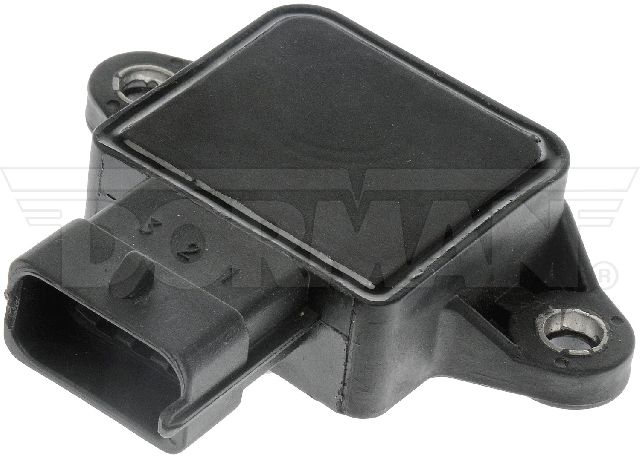
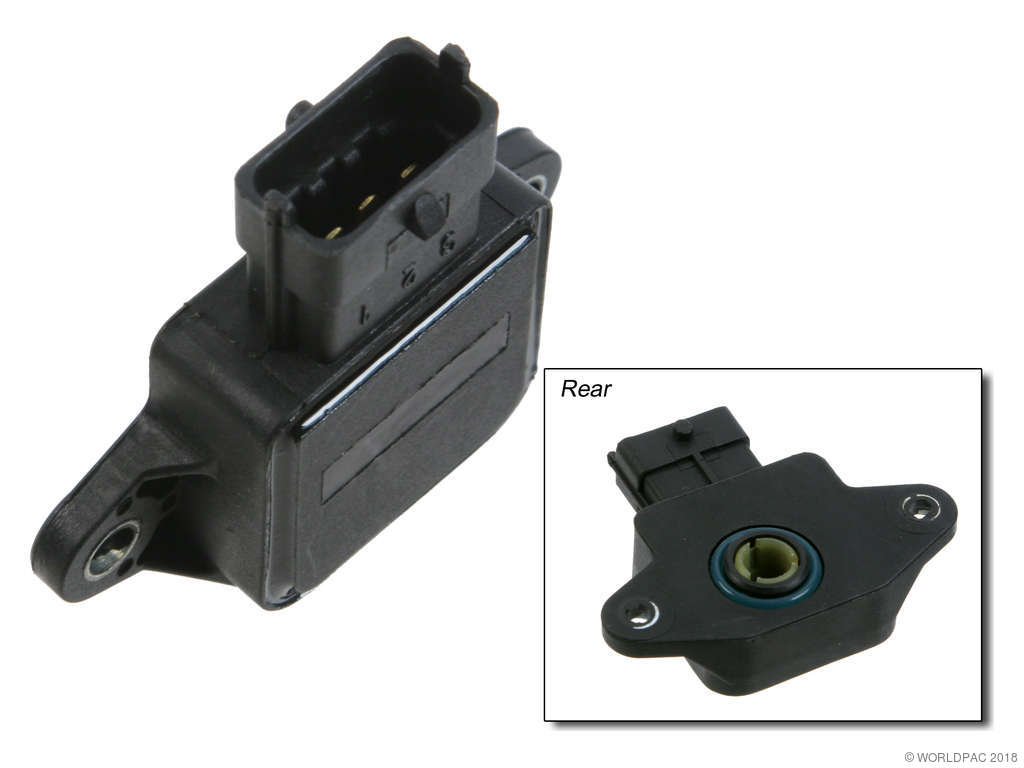
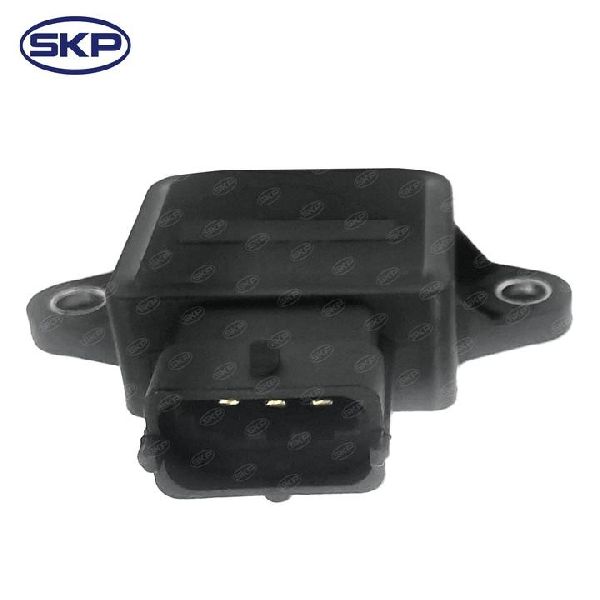
- Throttle Position Sensor (TPS)
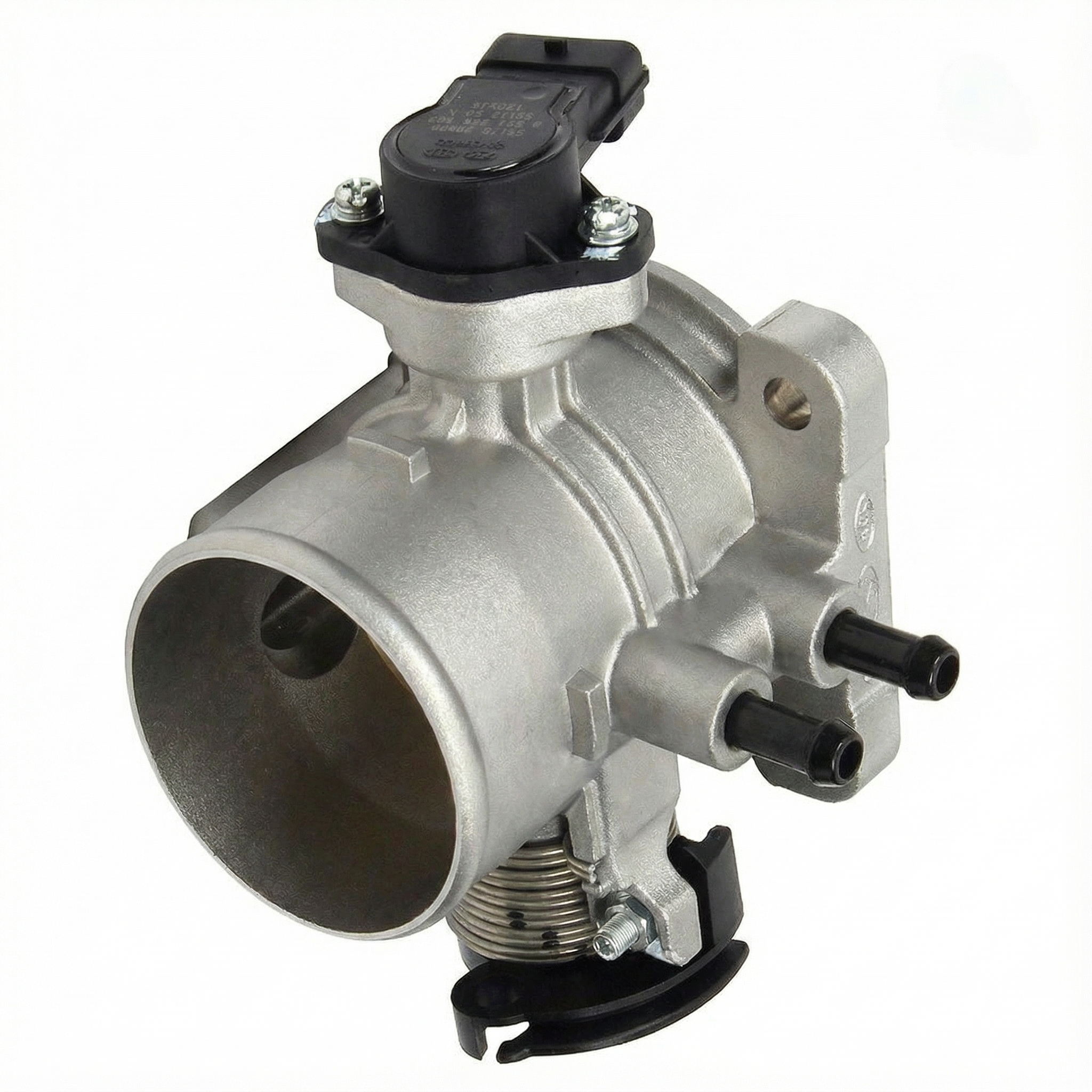
(OEM #35170-22600)— This is the most common failure point for code P0122 on this vehicle. It is a wearable electronic component that fails with age and use.
Trusted brands: Hyundai (OEM), NGK, Walker, SKP, Bosch, Delphi
OEM price range: $120-$140
Aftermarket price range: $20-$60
Related Codes That Often Appear With This One
- P0121 — P0121 indicates a 'Range/Performance' problem with the TPS. It's common to see this code alongside P0122 if the sensor is failing intermittently or providing erratic signals that are not just low, but also illogical compared to engine load.
- P0123 — P0123 is for 'Circuit High Input'. Seeing both P0122 and P0123 can point to severe internal sensor failure or a wiring issue causing the signal to short to both ground and power at different times.
Platform-Specific Known Issues
- No Relearn Procedure Needed: For the LC generation Accent (2000-2005), a formal electronic relearn procedure is generally not required after replacing the TPS. Simply disconnecting the battery for 10-15 minutes while performing the swap is sufficient to reset the ECU's learned values.
- Confusion with Automatic Transmission Problems: A failing TPS on this model is notorious for causing severe automatic transmission shifting problems, including harsh engagement, delayed shifts, and high RPM before shifting. Owners may misdiagnose this as a major transmission failure, when it is simply the TPS providing incorrect data to the transmission control module. 🎬 See how a bad TPS causes shifting issues on an Accent
Mechanic-Grade Diagnostic Values
- TPS Signal Voltage (Key On, Engine Off) — expected: 0.25V - 0.8V at closed throttle, sweeping smoothly to 4.0V - 4.8V at wide-open throttle.. Failure: Voltage is below 0.1V, does not change, or has dead spots/jumps during sweep.
- ECM Fault-Setting Threshold — expected: TPS signal voltage > 0.1V.. Failure: The ECM will set code P0122 if it detects a signal voltage below 0.1V for more than 0.02 seconds.
- TPS Internal Resistance (between terminals 1 and 2) — expected: 0.71 kΩ - 1.38 kΩ at idle position; 2.2 kΩ - 3.4 kΩ at wide-open throttle.. Failure: Resistance is outside of these ranges or shows an open circuit (infinite resistance).
- TPS Internal Resistance (between terminals 2 and 3) — expected: 1.6 kΩ - 2.4 kΩ regardless of throttle position.. Failure: Resistance is outside of this range or changes with throttle movement.
Wiring & Ground Locations
- G12 — At the rear of the cylinder head, to the right of the ignition coils.. This is a primary engine ground point. A loose or corroded connection here can affect the ground reference for multiple sensors, including the TPS, potentially causing low voltage readings.
- TPS Connector (Harness Side) — The 3-pin connector that plugs into the Throttle Position Sensor on the throttle body.. Testing is done here. Pin 3 is the TPS signal output to the ECM, Pin 4 (on a 4-pin connector if applicable) or another pin provides the 5V reference, and Pin 1 is ground. A broken wire at this connector is a known failure point.
Real Owner Repair Stories
- YouTube channel 'Bilal Auto Center' (2006 Hyundai Accent) — Check Engine Light with codes P0122 and P0123, extremely harsh transmission shifting, engine revving to 4000-5000 RPM before a gear would engage.
❌ Tried (didn't work) Changing the transmission fluid., Replacing the gear sensor., Replacing the Throttle Position Sensor (TPS) with a new one.
✅ What actually fixed it The mechanic found a broken wire right at the TPS connector harness. After repairing the broken wire, all symptoms, including the severe transmission shifting issue, were resolved immediately. - NHTSA ODI #11292479 — In a related Hyundai electrical issue, an owner reported that even after painting grounding points, the problem persisted with multiple codes including P0122, P0123, and P0222, eventually requiring the vehicle to be limped to a shop.
OEM Part Supersession History
35170-23500→35170-22600— Manufacturer part consolidation and revision.
Heads up: The correct part is 35170-22600. Be careful not to use part number 35170-22001; although it may look similar, it is for older models and has a different internal resistance curve, which will not work correctly with the ECM on this vehicle.
Diagnostic Flowchart
Other Known Issues on This Vehicle
Issues unrelated to this code that are worth knowing about as an owner of this generation:
- Automatic Transmission Failure 🔴 High — Particularly common on 2000-2004 models. Can manifest as harsh shifting, slipping, or complete failure to engage gears.
- Body Rust 🟠 Medium — Common in areas that use road salt. Rust often appears on rear wheel arches, rocker panels, and subframes.
- Engine Stalling / Powertrain Defects 🔴 High — The 2002 model year is noted for a high number of complaints regarding engine stalling while driving.
- Faulty Brake Light Switch 🟠 Medium — A recall was issued for 2006-2009 models for a faulty brake light switch that could prevent brake lights from illuminating and interfere with push-button start and cruise control disengagement. (Ref: NHTSA Recall)
- Difficult Manual Shifting / Clutch Problems 🟠 Medium — Reported on 2000-2002 models, making it difficult or impossible to shift gears. The issue was reportedly addressed in later models.
Used vs. New Parts: Buying Guide for This Vehicle
When a used part is the smart pick: Given the very low cost of new aftermarket sensors (as low as $15-$25), buying a used TPS from a junkyard is generally not recommended. The only time it might make sense is if you are acquiring an entire throttle body assembly for other reasons and the sensor is included.
Donor-vehicle mileage cap: roughly under 80000 miles for the part to have meaningful remaining life.
What to inspect on the donor part:
- Check for physical damage to the sensor housing or connector.
- Ensure the connector pins are straight and free of corrosion.
- If possible, test the resistance with a multimeter before purchase to ensure it's within spec and sweeps smoothly.
Aftermarket brands forum-validated for this vehicle:
- Bosch
- Delphi
- NGK/NTK
- Walker
Brands owners have reported issues with on this vehicle:
- Unbranded, no-name parts from online marketplaces are a gamble. Failure can replicate the original problem, wasting time on diagnosis.
Real Owner Stories
Aggregated from forums and TSBs cited above. Mileages and costs reflect what owners reported in those sources.
2006 Hyundai Accent
Symptoms: The gear would jerk with a loud bang when shifting, and it would not shift until the RPM reached 4500. The computer showed code P0122.
What fixed it: Repairing a cut wire at the TPS connector.
Source hint: YouTube: 2006 Hyundai Accent code p0122 p0123 throttle position sensor || Transmission Not Shifting
2002 Hyundai Accent
Symptoms: Owner was concerned about whether a 'training' or relearn procedure was necessary after a sensor replacement.
What fixed it: Replacing the TPS and disconnecting the battery to reset the ECU.
Source hint: Hyundai-Forums: Replacing TPS Hyundai Accent 2002
Related OBD-II Codes
Frequently Asked Questions
Do I need to perform a special electronic relearn procedure after replacing the TPS on my 2002 Hyundai Accent?
My 2006 Accent is jerking and shifting harshly; could this be the TPS even if it feels like a transmission failure?
What is the specific part number for the TPS if I need to replace it on my 2005 Accent?
Is there a recall for engine stalling on the 2002 Hyundai Accent related to P0122?
What voltage should I see when testing the TPS on my Hyundai Accent?
Helpful Videos

Used OEM Parts in Stock
New Aftermarket Parts Available

The information in this article is provided for general reference and educational purposes only. Vehicle specifications, procedures, and part compatibility can vary by production date, trim level, and region. Always consult your vehicle's factory service manual and verify part numbers before purchasing or performing repairs. Safety-critical components such as airbags, seat belts, and braking systems should be installed by a qualified professional.
- Hyundai Accent:
- 🧭 Diagnostic Flowchart
- 🎬 Helpful Videos
- 🛍️ Shop This Part
- What's Unique About the 2000-2006 Hyundai Accent
- Symptoms You May Notice
- Most Likely Causes
- Rare But Worth Checking
- Diagnosis Steps
- Parts You'll Likely Need
- Related Codes That Often Appear With This One
- Platform-Specific Known Issues
- Mechanic-Grade Diagnostic Values
- Wiring & Ground Locations
- Real Owner Repair Stories
- OEM Part Supersession History
- Other Known Issues on This Vehicle
- Used vs. New Parts: Buying Guide for This Vehicle
- Real Owner Stories
- 2006 Hyundai Accent
- 2002 Hyundai Accent
- Related OBD-II Codes
- Frequently Asked Questions
- 🎟️ Get 5% Off