

P0122 on 2012-2017 Hyundai Azera 3.3L: Throttle Position Sensor Low Input Causes & Fixes
On the 2012-2017 Azera, P0122 almost always means the entire electronic throttle body assembly has failed and needs replacement. The sensor is integrated and not sold separately. Expect to pay ~$100-$200 for an aftermarket part or ~$250-$400 for an OEM unit. It is a manageable DIY job that requires a simple 'relearn' procedure after installation.
- P0122 on a 2012-2017 Azera points directly to a problem with the throttle body's internal sensor.
- The most probable fix is replacing the entire electronic throttle body assembly; the sensor itself is not sold separately.
- Before buying parts, use a scan tool's live data feature to confirm the TPS signal is faulty (stuck low or not moving smoothly).
- This is a DIY-friendly repair for those with basic tools, potentially saving hundreds of dollars in labor costs.
- Always check the wiring and connector for damage before replacing the throttle body, as this is a less expensive potential fix.
- After replacement, a manual throttle relearn procedure is necessary to prevent idle and performance issues.
What's Unique About the 2012-2017 Hyundai Azera
On the Azera's 3.3L Lambda II V6 engine, which uses a modern 'drive-by-wire' system, the throttle position sensors (TPS) are not separate, replaceable components. Instead, they are integrated directly into the electronic throttle body assembly. Therefore, a confirmed P0122 fault due to a bad sensor requires the replacement of the entire throttle body unit, not just a small sensor. This design is shared across many Hyundai and Kia vehicles with the 3.3L V6 engine.
Symptoms You May Notice
- Check Engine Light is on
- Sudden and severe loss of engine power (vehicle enters 'limp mode')
- Poor, delayed, or hesitant acceleration
- Rough, unstable, or high idle
- Engine may stall, especially when coming to a stop or at idle
- Car may have difficulty starting
- Jerky or improper automatic transmission shifting
- Replacing the accelerator pedal position sensor (APPS). While the APPS can cause similar symptoms, P0122 specifically points to the sensor circuit at the throttle body, not the pedal.
- Replacing the throttle body without checking for a simpler wiring issue first.
Most Likely Causes
- Faulty Electronic Throttle Body Assembly 🔴 High Probability → Shop Fuel Injection Throttle Body The integrated Throttle Position Sensor (TPS) is the most common failure point. The internal electronics wear out over time, causing the voltage signal to drop out. This is a well-documented issue on Hyundai/Kia vehicles with this drive-by-wire system.
How to confirm: Using a scan tool with live data, monitor the TPS voltage (TP1 or Sensor A). With the key on, engine off, the voltage will be near zero (below 0.2V) or will not increase smoothly from ~0.5V to ~4.5V as the accelerator is pressed. Any dead spots or erratic jumps confirm sensor failure. 🎬 See how to test the sensor using a scan tool.
Typical fix: Replace the entire throttle body assembly and perform a throttle relearn procedure.
Est. part cost: $100-$400 - Wiring Harness or Connector Issue 🟡 Medium Probability Engine bay heat and vibrations can cause the wiring leading to the throttle body to fray, or the connector pins can become corroded, loose, or contaminated with oil.
How to confirm: Visually inspect the wiring harness and the 6-pin connector at the throttle body for any signs of damage, corrosion, or loose pins. Use a multimeter to check for a stable 5-volt reference signal and a good ground at the connector with the key on.
Typical fix: Repair the damaged section of wiring or clean/replace the electrical connector pigtail.
Est. part cost: $10-$50 - Faulty Powertrain Control Module (PCM) ⚪ Low Probability While rare, an internal failure of the PCM's driver circuit for the TPS can cause this code. There are no specific predispositions for this on the Azera.
How to confirm: This is a diagnosis of exclusion. If the throttle body and wiring have been tested and are confirmed to be good, the PCM is the likely culprit. This requires professional-level diagnostics to confirm.
Typical fix: Replace and reprogram the PCM.
Est. part cost: $500-$1000+
Rare But Worth Checking
- Pending ECM Software Update:
Diagnosis Steps
- Connect an OBD-II scanner and confirm P0122 is present. Note any other codes, especially P0222, P2135, P2106, or P2110, as they provide valuable context.
- Access the live data stream on the scanner. Observe the voltage for 'TPS1' or 'Throttle Position Sensor A'.
- With the Key On, Engine Off (KOEO), the voltage should be stable and low, typically 0.4V-0.8V. A reading of 0.0V to 0.2V indicates a circuit low fault.
- Slowly press the accelerator pedal to the floor. The voltage should increase smoothly and linearly to approximately 4.5V. Any jumps, drops, or flat spots indicate a faulty sensor.
- If the signal is abnormal, perform a thorough visual inspection of the throttle body's electrical connector and its wiring harness for any signs of damage, corrosion, loose pins, or oil contamination.
- If the wiring appears intact, unplug the connector. With the key on, use a multimeter to verify the 5V reference wire and the ground wire at the connector are functioning correctly.
- If the 5V reference and ground are present but the live data signal is still faulty, the throttle position sensor has failed internally. The entire throttle body assembly must be replaced. 🎬 Watch this step-by-step guide on replacing the throttle body.
- After replacing the throttle body, perform a throttle relearn procedure. A common manual method is to turn the ignition 'ON' (engine off) for 15 seconds, then 'OFF' for 10 seconds, repeating this cycle 4-5 times before starting the engine. 🎬 Check out other ways to perform a throttle relearn procedure.
- Clear the codes with the scanner and take the vehicle for a test drive to confirm the fix.
Parts You'll Likely Need
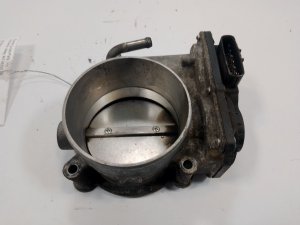
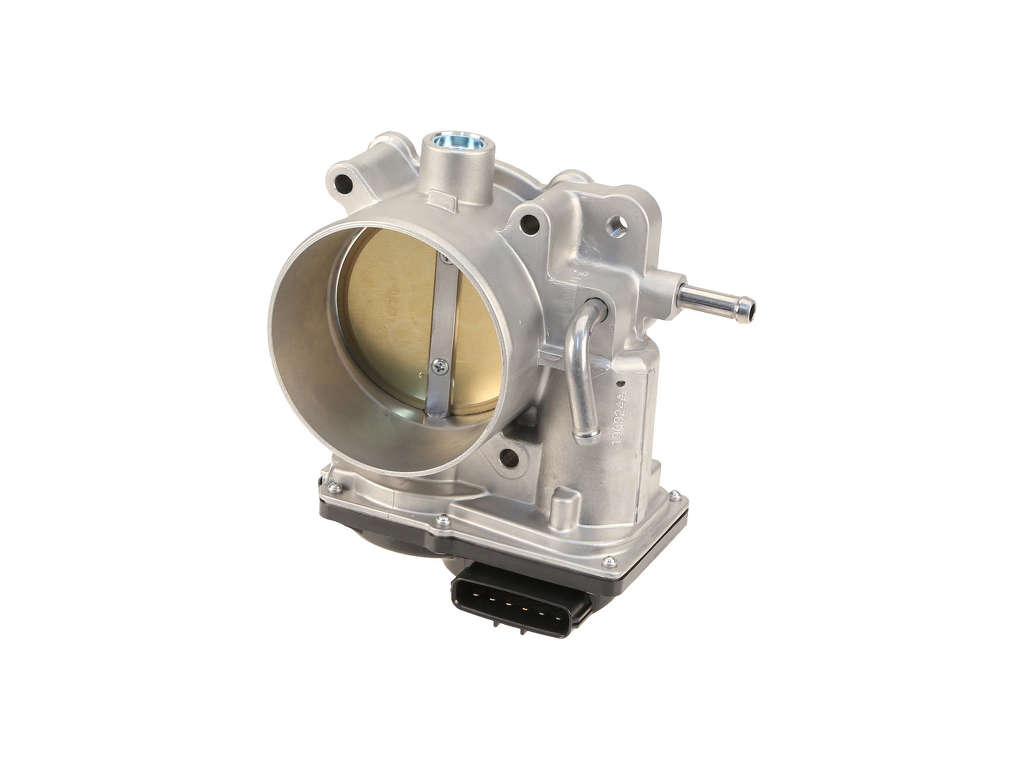
- Electronic Throttle Body Assembly
(OEM #35100-3CAA0)— This is the most common cause of a P0122 code on this vehicle, as the internal Throttle Position Sensor (TPS) fails and is not serviceable separately.
Trusted brands: Hyundai (OEM), A1 Cardone (Remanufactured), Standard Motor Products, Walker Products
OEM price range: $250-$400
Aftermarket price range: $100-$200
Related Codes That Often Appear With This One
- P0222 — This code is for 'TPS Circuit 'B' Low Input'. If both sensor circuits fail low simultaneously, it strongly points to a shared power or ground issue in the wiring or connector.
- P2135 — This code indicates a 'Throttle/Pedal Position Sensor/Switch A/B Voltage Correlation' error. The PCM constantly compares the signals from the two internal TPS circuits (A and B). If sensor 'A' fails and sends a low signal (P0122), its voltage will no longer correlate with sensor 'B', triggering P2135. This is very common.
- P2106 — This is an informational code for 'Throttle Actuator Control System - Forced Limited Power'. It indicates the PCM has intentionally put the vehicle into 'limp mode' because of a critical fault like P0122.
- P2110 — Similar to P2106, this code means 'Throttle Actuator Control System - Forced Limited RPM'. It confirms the PCM is actively restricting engine speed as a safety measure due to the throttle system fault.
Technical Service Bulletins (TSBs) & Recalls
- While no specific TSB for P0122 on the Azera was found, Hyundai has issued numerous ECM software updates for other models to improve DTC logic for throttle and engine performance codes (e.g., TSB 21-01-041H, 20-01-008H). It is always prudent to have a dealer check for any open campaigns or available updates for your specific VIN.
Platform-Specific Known Issues
- The 3.3L GDI Lambda II engine is known to be susceptible to carbon buildup on the intake valves, as fuel is injected directly into the cylinder and does not wash over the valves. While this does not directly cause P0122, significant buildup can cause hesitation and misfires. If replacing the throttle body, it is an excellent opportunity to inspect the intake for carbon deposits and consider a GDI intake cleaning service.
Mechanic-Grade Diagnostic Values
- TPS1 Signal Voltage (KOEO, Throttle Closed) — expected: ~0.4V - 0.8V. Failure: Voltage is less than 0.176V for more than 0.14 seconds.
- TPS1 Signal Voltage (KOEO, Throttle Wide Open) — expected: ~4.5V - 4.8V. Failure: Voltage does not increase smoothly or reach the expected maximum.
- TPS Reference Voltage at Connector — expected: 4.75V to 5.25V. Failure: Voltage is outside this range, indicating a wiring or PCM issue, not a TPS issue.
- PCM/Sensor Ground Circuit Resistance — expected: Approx. 1 Ohm or less. Failure: Resistance is significantly higher, indicating a poor ground connection that can cause erratic sensor readings.
Scan Tool Commands That Help
- Hyundai GDS (Global Diagnostic System): Actuation Test - ETC Motor — To command the throttle body to open and close while observing live data. This verifies if the motor and mechanical components are working, helping to isolate the fault to the sensor portion if the motor actuates but the voltage reading is still incorrect.
- Hyundai GDS (Global Diagnostic System): Resetting Adaptive Values — After replacing the throttle body, this function in the 'Vehicle Software Management' or 'Special Function' menu resets the PCM's learned values for idle and throttle response, which is the dealer-level equivalent of a manual relearn procedure.
- Hyundai GDS (Global Diagnostic System): Wiggle Test — This function zooms in on the live data graph, making it easier to spot voltage drops or spikes while physically wiggling the wiring harness and connectors to the throttle body, helping to pinpoint intermittent connection issues.
Wiring & Ground Locations
- Throttle Body Connector — Directly on the electronic throttle body, located between the air filter housing and the intake manifold.. This 6-pin connector is the single interface for the throttle motor and both TPS sensors. Corrosion, oil contamination, or loose pins here are a common cause of P0122.
- Throttle Body Connector Pin 21 (ECM side) — At the main Engine Control Module (ECM) connector.. This pin provides the +3.3V or +5V power supply for TPS #1 and #2. Testing for correct voltage here can help diagnose a PCM fault.
- Ground Point GE04 — On the left rear of the engine compartment.. This is a primary engine ground point. A loose or corroded connection here can create a high-resistance ground path for engine sensors, including the TPS, leading to unstable voltage readings and fault codes like P0122.
- Main Engine Ground Strap — A braided metal strap connecting the engine block or cylinder head to the vehicle's chassis/frame.. A corroded or broken main engine ground is a critical failure point that can cause a host of difficult-to-diagnose electrical problems, including sensor circuit faults. This should be inspected before condemning expensive electronic parts.
OEM Part Supersession History
35100-3CAA0→35100-3CAA0 (current)— No supersession found. The part number appears to be consistent for the entire vehicle range.
Heads up: This part is also used on the 2013-2018 Hyundai Santa Fe and 2019 Santa Fe XL with the 3.3L engine, making it widely available.
Model Year Variations Within This Range
- 2015-2017: The Azera received a facelift for the 2015 model year which included revised front and rear fascias, new wheel designs, and updated interior tech like an 8-inch screen. However, the 3.3L Lambda II V6 engine and its specifications remained unchanged, meaning the throttle body (PN 35100-3CAA0) and the P0122 diagnosis are identical across the 2012-2017 range.
Diagnostic Flowchart
Other Known Issues on This Vehicle
Issues unrelated to this code that are worth knowing about as an owner of this generation:
- Excessive Oil Consumption 🔴 High — Can begin to manifest after 70,000-90,000 miles. Caused by carbon buildup on piston rings and fuel dilution of oil, both common to GDI engines. (Ref: While the Lambda V6 was not part of the main Theta II engine failure lawsuits, it is included in some class actions for oil consumption. Hyundai has sometimes offered goodwill engine replacements.)
- Intake Valve Carbon Buildup 🟠 Medium — A universal issue for all GDI engines, including the Lambda II. Becomes problematic after 60,000-80,000 miles, causing rough idle, hesitation, and misfires. (Ref: No recall, as this is considered a maintenance issue. Regular GDI intake cleaning services (every 20-30k miles) are recommended for prevention.)
- Harsh or Delayed Transmission Shifts 🟠 Medium — Some owners report issues with the 6-speed automatic transmission, especially as mileage exceeds 100k, such as clunks when cold or delayed shifts. (Ref: Hyundai marketed the fluid as 'lifetime', but fluid changes are recommended. Some issues can be addressed with a TCM software update.)
- Timing Chain Tensioner Noise 🟡 Low — A rattling or buzzing noise on startup can indicate wear in the timing chain tensioners. (Ref: Improved tensioners are available, but this is not a widespread failure point like on other engines.)
Used vs. New Parts: Buying Guide for This Vehicle
When a used part is the smart pick: A used throttle body from a low-mileage donor vehicle can be a cost-effective option, but it is a gamble. Given that the internal electronic sensors are a known failure point due to wear, a used part may have a limited remaining lifespan. It makes most sense if the budget is extremely tight and the donor vehicle's history is known.
Donor-vehicle mileage cap: roughly under 60000 miles for the part to have meaningful remaining life.
What to inspect on the donor part:
- Check for a clean throttle plate and bore, free of heavy carbon buildup or scoring.
- Ensure the electrical connector pins are straight, clean, and free of corrosion.
- Verify the part number (35100-3CAA0) matches exactly.
- Ask for the donor vehicle's mileage and check for any signs of collision damage to the front of the car.
OEM-only on this vehicle (don't cheap out):
- While not strictly 'OEM-only', using a genuine Hyundai throttle body is highly recommended for longevity and to avoid compatibility issues. Remanufactured units from reputable brands are a second-best option.
Aftermarket brands forum-validated for this vehicle:
- Aisin (often an OEM supplier for Japanese and Korean brands)
- Standard Motor Products
- A1 Cardone (Remanufactured)
Brands owners have reported issues with on this vehicle:
- Unbranded, low-cost units from online marketplaces should be avoided, as their internal electronics may not meet OEM specifications for accuracy and durability, leading to a repeat failure.
Real Owner Stories
Aggregated from forums and TSBs cited above. Mileages and costs reflect what owners reported in those sources.
2007 Hyundai Azera 3.3L
Symptoms: Owner and dealer confusion over the proper throttle relearn, reprogram, or recalibrate procedure for the throttle position sensor.
What fixed it: Attempted various methods including battery disconnects and specific key cycles to recalibrate the sensor.
Source hint: Hyundai Forums - 2007 Azera TPS Relearn Discussion
2014-2020 Kia Sorento 3.3L V6
Symptoms: Vehicle entering limp mode and displaying P0122 and P2135 codes.
What fixed it: Replacement of the electronic throttle body assembly.
Source hint: Platform mates section regarding Kia Sorento (3.3L V6) common failures
2014-2016 Kia Cadenza 3.3L V6
Symptoms: Limp mode and hesitation caused by the integrated TPS in the throttle body.
What fixed it: Replacement of the throttle body assembly (P/N 35100-3CAA0).
Source hint: Platform mates section regarding Kia Cadenza (3.3L V6) shared components
Documented NHTSA Reports
NHTSA ODI #11292479
Symptoms: An owner reported multiple fault codes including P0122, P0222, P2106, and P1295. The vehicle entered limp mode and the owner noted concerns regarding how the system was grounded.
What fixed it: The owner attempted to address grounding points that appeared to be painted, though the problem persisted with additional codes until professional diagnostic intervention was sought.
Source hint: NHTSA ODI #11292479
Related OBD-II Codes
Frequently Asked Questions
Is there a specific TSB for the P0122 code on my 2012-2017 Hyundai Azera?
Can I just replace the sensor, or do I need the whole throttle body assembly (P/N 35100-3CAA0)?
How do I perform the throttle relearn procedure on my Azera after a repair?
My Azera is hesitating and has a rough idle; could this be related to the GDI engine design?
Could the P0122 code be caused by the transmission instead of the engine?
Is the 3.3L Lambda II V6 in my Azera prone to the same failures as the 4-cylinder Hyundai engines?
Helpful Videos

Used OEM Parts in Stock
New Aftermarket Parts Available


The information in this article is provided for general reference and educational purposes only. Vehicle specifications, procedures, and part compatibility can vary by production date, trim level, and region. Always consult your vehicle's factory service manual and verify part numbers before purchasing or performing repairs. Safety-critical components such as airbags, seat belts, and braking systems should be installed by a qualified professional.
- Hyundai Azera:
- 🧭 Diagnostic Flowchart
- 🎬 Helpful Videos
- 🛍️ Shop This Part
- What's Unique About the 2012-2017 Hyundai Azera
- Symptoms You May Notice
- Most Likely Causes
- Rare But Worth Checking
- Diagnosis Steps
- Parts You'll Likely Need
- Related Codes That Often Appear With This One
- Technical Service Bulletins (TSBs) & Recalls
- Platform-Specific Known Issues
- Mechanic-Grade Diagnostic Values
- Scan Tool Commands That Help
- Wiring & Ground Locations
- OEM Part Supersession History
- Model Year Variations Within This Range
- Other Known Issues on This Vehicle
- Used vs. New Parts: Buying Guide for This Vehicle
- Real Owner Stories
- 2007 Hyundai Azera 3.3L
- 2014-2020 Kia Sorento 3.3L V6
- 2014-2016 Kia Cadenza 3.3L V6
- Documented NHTSA Reports
- NHTSA ODI #11292479
- Related OBD-II Codes
- Frequently Asked Questions
- 🎟️ Get 5% Off