

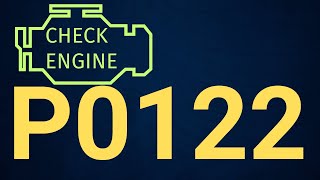
P0122 on 2013-2016 Jeep Grand Cherokee: Throttle Position Sensor Circuit Low Causes and Fixes
On a 2013-2016 Jeep Grand Cherokee, code P0122 is most often caused by a faulty throttle body assembly, as the sensor is integrated. Before replacing it, check for relevant software updates (TSBs), as a PCM flash can sometimes resolve the issue. A new throttle body costs between $150 and $350. The second most common cause is a software glitch requiring a PCM update from the dealer, as specified in multiple TSBs.
- P0122 means the throttle position sensor signal is too low.
- On this Grand Cherokee, first check for software updates (TSBs) before buying parts.
- The most common hardware fix is replacing the entire throttle body assembly, not just a sensor.
- Symptoms include stalling, poor acceleration, and the vehicle entering 'limp mode'.
- A DIY replacement of the throttle body is possible with basic tools and takes about an hour.
What's Unique About the 2013-2016 Jeep GRAND CHEROKEE
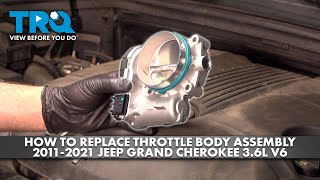
For the 2013-2016 (WK2) Grand Cherokee, this code doesn't always point to a failed part. Jeep has issued several Technical Service Bulletins (TSBs), including 18-090-16 REV. A and 18-113-15, indicating that P0122, along with other codes, can be erroneously triggered due to software glitches in the Powertrain Control Module (PCM). In many cases, a simple software update from a dealership can be the correct fix, rather than replacing the entire throttle body assembly. 🎬 See this walkthrough on replacing the throttle body assembly. This makes checking for available PCM updates a crucial first step in the diagnosis for this specific vehicle generation.
Diagnostic Flowchart
Tap your situation to follow the diagnostic path that matches what you're seeing on this vehicle.
Symptoms You May Notice
- Check Engine Light (MIL) is on
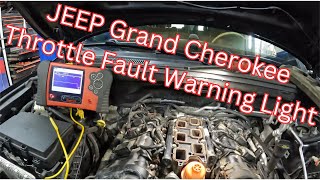
- Electronic Throttle Control (ETC) warning light (lightning bolt symbol) is on 🎬 Watch: See what the throttle fault warning light looks like.
- Engine stalling or idling roughly
- Hesitation or lack of acceleration
- Vehicle enters 'limp mode' with limited power and RPM
- Unpredictable throttle response or surging
- Harsh or delayed transmission shifting
- Replacing the Accelerator Pedal Position (APP) Sensor. The APP sensor is located at the gas pedal and reports pedal movement to the PCM. While it works within the same system, P0122 specifically points to the sensor at the throttle body, not the pedal.
- Replacing the transmission or assuming a transmission fault. Symptoms like harsh shifting and limp mode can mimic transmission problems, but can be caused by the PCM receiving incorrect throttle data.
Most Likely Causes
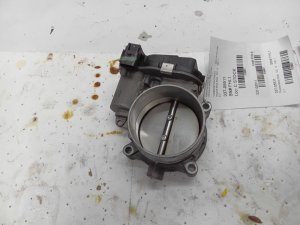
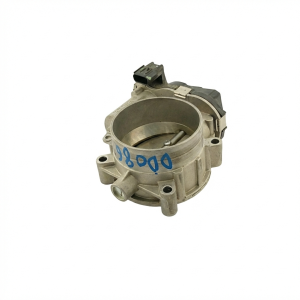
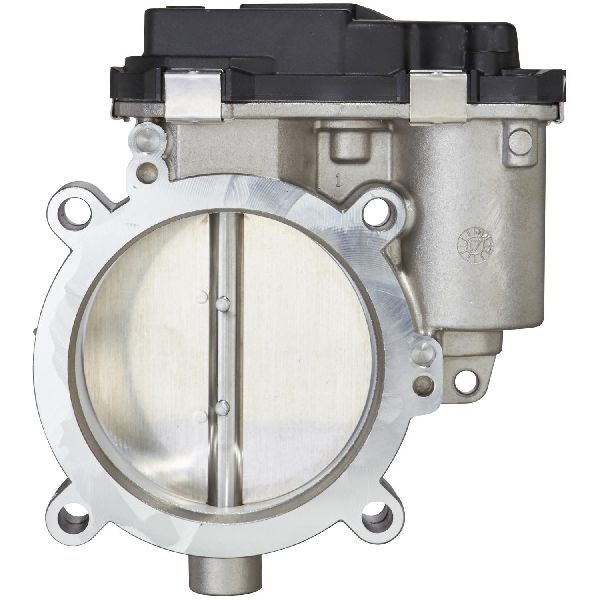
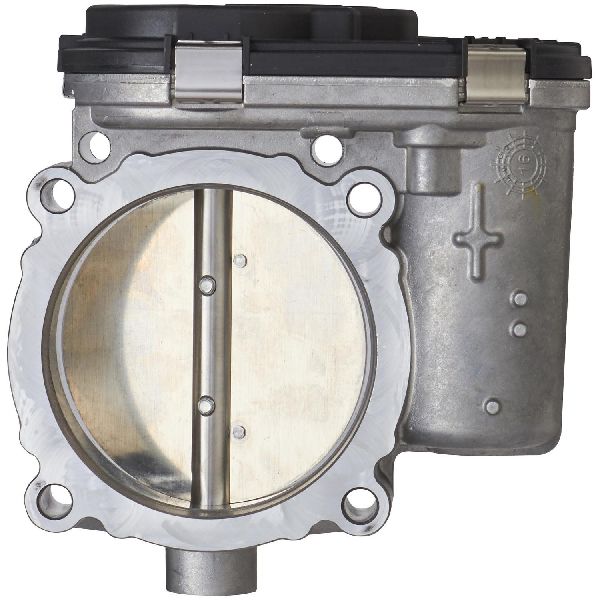
- Faulty Throttle Body Assembly 🔴 High Probability → Shop Fuel Injection Throttle Body On the WK2 Grand Cherokee, the Throttle Position Sensor (TPS) is integrated into the electronic throttle body and is not sold as a separate component. Failure of the internal sensor requires replacement of the entire assembly. This is a common failure point across many modern vehicles.
How to confirm: Using a scan tool with live data, monitor the TPS voltage. The voltage should be stuck below the specified threshold, often ~0.2V, regardless of pedal position. A diagnostic check would involve verifying the 5V reference and ground at the connector; if those are good but the signal is low, the throttle body is condemned.
Typical fix: Replace the entire throttle body assembly. After replacement, a throttle relearn procedure is recommended.
Est. part cost: $150-$450 - Outdated Powertrain Control Module (PCM) Software 🟡 Medium Probability Manufacturer TSBs #18-090-16 REV. A, #18-098-16, and #18-113-15 all list P0122 as a code that can be resolved with a PCM software update. This indicates Jeep recognized a logic issue that could falsely trigger the code.
How to confirm: A Jeep dealership or a properly equipped independent shop can check your vehicle's VIN for available software updates using the wiTECH diagnostic application.
Typical fix: Flash the PCM with the latest manufacturer software. This is a dealer-only or specialist procedure.
Est. part cost: $0 (if under warranty) - $250 - Wiring or Connector Issue ⚪ Low Probability Harnesses in the engine bay are exposed to heat and vibration, which can lead to chafed wires or loose/corroded connector pins over time. The connector at the throttle body is a common point of failure.
How to confirm: Visually inspect the wiring harness and connector at the throttle body for damage. Check for a secure connection and look for pushed-out or corroded pins. Use a multimeter to check for 5V reference, good ground, and signal continuity between the PCM and the TPS connector. A short to ground on the signal wire is a potential cause.
Typical fix: Repair the damaged section of the wiring harness or clean/replace the connector.
Est. part cost: $5-$50
Rare But Worth Checking
- Faulty Powertrain Control Module (PCM): This is the least likely cause. All other possibilities, especially wiring and the throttle body itself, should be exhaustively ruled out before condemning the PCM. A PCM failure can sometimes cause a no-start condition along with the P0122 code.
Diagnosis Steps
- Check for TSBs: This is the most critical first step for this platform. Contact a dealer with your VIN to see if there are any open recalls or software updates (flashes) for the PCM related to P0122, specifically mentioning TSBs 18-090-16, 18-098-16, or 18-113-15.
- Scan for Codes: Use an OBD-II scanner to confirm P0122 and look for any other related codes (e.g., P0123, P0222, P0700). Note if the code is active or stored.
- Inspect Wiring: Carefully inspect the throttle body electrical connector and wiring harness for any signs of damage, corrosion, or loose connections. Ensure the red locking tab on the connector is fully seated.
- Analyze Live Data: Use a scan tool that can display live data. With the key on and engine off, observe the 'TPS1 Voltage' or 'Throttle Position %'. The voltage should be stuck low (typically under 0.2V). If it reads normally, the problem may be intermittent.
- Test the Circuit: If you have a multimeter, unplug the throttle body. With the key on, engine off, check for a 5-volt reference and a good ground at the connector. If both are present, the issue is highly likely the throttle body itself. If they are missing, the problem is in the wiring or the PCM.
- Replace the Throttle Body: If the circuit tests good and the sensor signal is still faulty, replace the entire throttle body assembly.
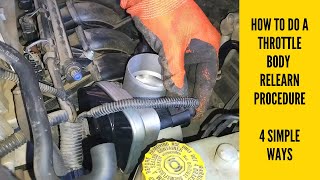
- Perform Relearn Procedure: After replacement, a throttle body relearn procedure is required to calibrate the new part. This can be done with a capable scan tool, or by a manual procedure such as disconnecting the battery for 10+ minutes, or turning the ignition to 'ON' for a few minutes before starting.
Parts You'll Likely Need
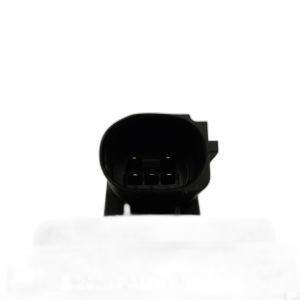
- Throttle Body Assembly
(OEM #5184349AF (for 3.6L V6), 53034251AD (for 5.7L/6.4L V8))— This is the most common hardware failure for P0122, as the sensor is integrated into the assembly on this vehicle. Part numbers can supersede, so always verify with VIN.
Trusted brands: Mopar, Bosch, Dorman, Cardone (Remanufactured)
OEM price range: $250-$450
Aftermarket price range: $150-$250
Related Codes That Often Appear With This One
- P0123 — This is the code for 'Throttle Position Sensor 1 Circuit High', the opposite of P0122. Seeing both can indicate an intermittent sensor or wiring problem. It is also listed in the same TSBs.
- P0222 — This code is for 'Throttle Position Sensor 2 Circuit Low'. Modern electronic throttle bodies use two sensors for redundancy. A failure in the system can often trigger codes for both sensors.
- P0335 / P0339 — These are codes for the Crankshaft Position Sensor. The provided TSBs show that a PCM software issue can cause these codes to appear alongside the TPS codes.
- P0700 — This is a generic Transmission Control System Malfunction code. The Transmission Control Module (TCM) requests the MIL to be lit by the PCM. It often appears with TPS codes because the transmission relies on accurate throttle position data to shift correctly.
Technical Service Bulletins (TSBs) & Recalls
- 18-090-16 REV. A: Mentions P0122 as one of several codes that may be addressed by a PCM software update for 2016 models, particularly the 6.4L.
- 18-098-16: Also lists P0122 in the context of a PCM flash for various drivability issues on 2015 models.
- 18-113-15: Specifically calls out P0122 for the 2013 6.4L and 3.6L engines as a code that may be set, addressable by a software update.
Platform-Specific Known Issues
- A known issue, documented in TSBs #18-090-16 REV. A, #18-098-16, and #18-113-15, is the potential for the PCM to set a P0122 code erroneously. A software update is the specified fix in these cases.
- Some early 2013 models with the 5.7L Hemi may use an older throttle body part number from the previous generation; it's important to verify the correct part number before ordering.
Mechanic-Grade Diagnostic Values
- TPS1 Signal Voltage (Key On, Engine Off) — expected: 0.5V to 1.0V at closed throttle, smoothly increasing to 4.5V - 4.7V at wide-open throttle.. Failure: Voltage is stuck below the expected minimum, typically under 0.2V, and does not change with pedal input.
- TPS Reference Voltage at Connector — expected: 5.0 Volts. Failure: Voltage is significantly lower than 5.0V or absent, indicating a wiring or PCM issue.
Scan Tool Commands That Help
- wiTECH or JScan: ETC Relearn / Throttle Body (ETC) Re-Learn — This function is required after replacing the throttle body, disconnecting the battery, or cleaning the throttle body to recalibrate the home and range of motion for the throttle plate.
Wiring & Ground Locations
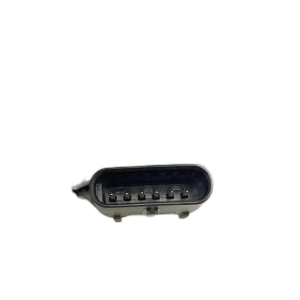
- Throttle Body Connector (3.6L Engine) — On the right rear of the engine, connected to the throttle body assembly.. This 6-pin connector provides power, ground, and signal lines for the two internal throttle position sensors. A poor connection, corrosion, or damaged wire at this specific plug is a direct cause of P0122. The pins are: 1: ETC Motor (+), 2: TP2 Signal, 3: 5V Reference, 4: TP1 Signal, 5: ETC Motor (-), 6: Sensor Return (Ground).
- Engine Ground Strap — A braided copper strap located behind the alternator, grounding the engine block to the passenger side frame rail.. A loose, corroded, or broken main engine ground strap can cause erratic voltage and sensor readings throughout the electrical system, potentially triggering false P0122 codes. All sensor grounds rely on a solid engine-to-chassis ground path.
Real Owner Repair Stories
- YouTube - '2014 JEEP Grand Cherokee Throttle Fault Warning Light' (2014 Jeep Grand Cherokee with 3.6L V6) — Throttle fault warning light on, vehicle in limp mode, oil pressure light blinking, would only idle.
❌ Tried (didn't work) Initial diagnosis pointed towards the throttle body or pedal sensor due to the codes.
✅ What actually fixed it The root cause was a short-to-ground in the 5V reference circuit shared by multiple sensors. The insulation on the oil pressure switch connector wiring had cracked and was shorting against the foil loom. Replacing the oil pressure switch connector resolved the P0122 and other related codes.
OEM Part Supersession History
5184349AB, 5184349AC, 5184349AD, 5184349AE→5184349AF— Component revisions and improvements for performance and reliability.
Heads up: The listed part numbers are for the 3.6L V6 engine. Always verify the correct part number with the vehicle's VIN, as Hemi V8 engines use a different part.
Model Year Variations Within This Range
- 2014-2016: The 2014 model year received a significant facelift, introducing a new 8-speed automatic transmission and an optional 3.0L EcoDiesel V6 engine. While the P0122 code applies across the 2013-2016 range, diagnostic procedures for transmission-related symptoms may differ on 2014+ models due to the new transmission.
- 2016: For 2016, the 3.6L V6 engine was updated with variable valve timing and lift, and an auto stop-start system was added to improve fuel economy. The horsepower increased to 295. These changes could potentially affect PCM software strategies related to throttle control.
Helpful Videos

Used OEM Parts in Stock
New Aftermarket Parts Available



The information in this article is provided for general reference and educational purposes only. Vehicle specifications, procedures, and part compatibility can vary by production date, trim level, and region. Always consult your vehicle's factory service manual and verify part numbers before purchasing or performing repairs. Safety-critical components such as airbags, seat belts, and braking systems should be installed by a qualified professional.
- Jeep GRAND CHEROKEE:
- 🧭 Diagnostic Flowchart
- 🎬 Helpful Videos
- 🛍️ Shop This Part
- What's Unique About the 2013-2016 Jeep GRAND CHEROKEE
- Symptoms You May Notice
- Most Likely Causes
- Rare But Worth Checking
- Diagnosis Steps
- Parts You'll Likely Need
- Related Codes That Often Appear With This One
- Technical Service Bulletins (TSBs) & Recalls
- Platform-Specific Known Issues
- Mechanic-Grade Diagnostic Values
- Scan Tool Commands That Help
- Wiring & Ground Locations
- Real Owner Repair Stories
- OEM Part Supersession History
- Model Year Variations Within This Range
- 🎟️ Get 5% Off