

P0122 on 2011-2015 Kia Optima 2.4L: Causes and Fixes for Throttle Position Sensor Fault
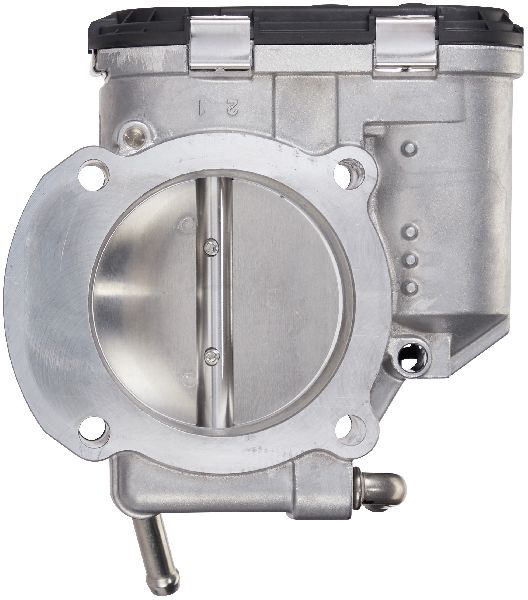
On a 2011-2015 Kia Optima 2.4L, code P0122 almost always means the entire electronic throttle body assembly has failed. The sensor is integrated and not sold separately. The most common fix is replacing the whole unit, which costs around $220-$350 for an OEM part (P/N 35100-2G700). Before replacing, it is critical to rule out the P1326 code, which produces identical limp-mode symptoms but indicates a potentially catastrophic engine failure covered by an extended warranty.
- P0122 on this Optima almost always points to a failed electronic throttle body (P/N 35100-2G700), which requires full replacement.
- The symptoms (limp mode, no power) are identical to the P1326 KSDS code, which signals a major engine problem. Always check for P1326 first.
- The TPS sensor is integrated into the throttle body and cannot be purchased or replaced separately.
- A no-tools throttle relearn procedure is possible and necessary after replacement for proper idle and shifting.
- Check for open recalls or warranty extensions related to the engine (SC147) and KSDS (PI1802) before paying for repairs.
What's Unique About the 2011-2015 Kia Optima
The key issue for the 2011-2015 Optima (and its platform-mate, the Hyundai Sonata) is that the throttle position sensor (TPS) is integrated into the electronic throttle body assembly and is not sold as a separate part. This design means a simple sensor failure requires a more expensive replacement of the entire throttle body. Additionally, the symptoms of this code—sudden limp mode and loss of power—are identical to those caused by the infamous Knock Sensor Detection System (KSDS) issue (code P1326). P1326 is triggered by engine vibrations consistent with connecting rod bearing wear, a widespread and critical problem with the Theta II engine that led to recalls and a lifetime engine warranty for many owners. This overlap frequently leads to misdiagnosis, making it essential to check for P1326 before replacing the throttle body.
Symptoms You May Notice
- Check Engine Light is on (may be flashing in some cases)
- Vehicle enters 'limp mode' (reduced engine power, RPM limited to ~2000)
- Poor, delayed, or no acceleration
- Engine hesitation or stalling, especially during acceleration.
- Rough or unusually high idle.
- Surging.
- Jerky or poor automatic transmission shifting.
- Electronic Stability Control (ESC) light is on
- Replacing the accelerator pedal assembly. The code P0122 specifically refers to the sensor circuit at the throttle body, not the pedal.
- Mistaking KSDS Limp Mode (DTC P1326) for a throttle body failure. The symptoms are nearly identical, but P1326 indicates the knock sensor has correctly detected engine-destroying vibrations. Always check for P1326 before replacing the throttle body.
Most Likely Causes
- Faulty Electronic Throttle Body Assembly 🔴 High Probability → Shop Fuel Injection Throttle Body The internal electronics of the integrated Throttle Position Sensor (TPS) are a known high-failure item on this platform due to wear over time. This is a well-documented failure across many Hyundai/Kia models sharing the Theta II engine.
How to confirm: Using a scan tool's live data, monitor the TPS 'A' (TPS1) voltage with the key on, engine off. The voltage should sweep smoothly from ~0.5V to ~4.5V 🎬 See how to test a throttle position sensor as the accelerator is pressed. If it stays low (under 0.2V), drops out, or is erratic, the sensor has failed. A healthy sensor should read between 0.29V and 0.71V at closed throttle.
Typical fix: Replace the entire electronic throttle body assembly. 🎬 Watch: Kia Optima throttle body removal and replacement guide A throttle relearn procedure is required after installation.
Est. part cost: $220-$350 - Wiring or Connector Issue 🟡 Medium Probability The wiring harness to the throttle body is exposed to engine heat and vibration, which can cause wires to fray, short to ground, or pins in the connector to become loose or corroded. In some cases, the wires can melt together.
How to confirm: Visually inspect the wiring harness leading to the throttle body for any signs of damage, melting, or corrosion. Unplug the connector and check for bent or corroded pins. With a multimeter, check for the correct 5V reference and a good ground at the connector.
Typical fix: Repair the damaged section of the harness or replace the connector pigtail.
Est. part cost: $15-$50 - Dirty or Sticking Throttle Body ⚪ Low Probability → Shop Fuel Injection Throttle Body Gasoline Direct Injection (GDI) engines like the Theta II are prone to carbon and oil vapor buildup in the intake system, which can cause the throttle plate to stick. However, P0122 is an electrical circuit code, so cleaning a dirty throttle body is unlikely to resolve the issue unless the buildup is so severe it prevents the plate from returning to its base position, affecting the sensor's voltage reading.
How to confirm: Remove the intake hose and visually inspect the throttle bore and plate for heavy carbon deposits that could restrict movement.
Typical fix: Clean the throttle body thoroughly with a dedicated throttle body cleaner and a soft brush. This is a good first step but often does not fix a true electrical circuit code.
Est. part cost: $5-$15
Rare But Worth Checking
- Faulty Powertrain Control Module (PCM): This is very uncommon. The PCM should only be considered after all other possibilities, including the throttle body and wiring, have been definitively ruled out.
Diagnosis Steps
- Connect an OBD-II scanner and confirm P0122 is present. Check for other codes, especially P0222, P2135, and the critical P1326. If P1326 is present, stop and address that first as it may be an engine warranty issue.
- Visually inspect the electrical connector and wiring harness at the electronic throttle body. Look for frayed wires, loose pins, or signs of corrosion.
- With the key in the 'ON' position (engine off), use the scanner's live data function to monitor the voltage of 'Throttle Position Sensor A' (TPS1).
- The voltage at closed throttle should be between 0.29V and 0.71V. A reading below 0.2V confirms the 'Circuit Low' condition.
- Slowly press and release the accelerator pedal. The voltage should sweep smoothly and consistently up to ~4.5V. If it stays low, is erratic, or has dead spots, the sensor is likely faulty.
- If the sensor data is faulty, the next step is to test the wiring. Using a multimeter and a wiring diagram, confirm there is a 5-volt reference and a good ground at the throttle body connector.
- If wiring is confirmed to be good, the failure is internal to the electronic throttle body assembly.
- If the problem persists after these steps, consider cleaning the throttle body bore and plate as a final, low-cost check before replacement.
Parts You'll Likely Need
- Electronic Throttle Body Assembly
(OEM #35100-2G700)— This is the most common fix because the throttle position sensor (TPS) that causes code P0122 is integrated into this assembly and cannot be replaced separately on this vehicle. Note: The 2.0L Turbo engine uses a different part number (35100-2G710).
Trusted brands: Kia/Hyundai (Genuine OEM), Mando (Often the OEM supplier), Hitachi, Standard Motor Products (SMP)
OEM price range: $220-$350
Aftermarket price range: $100-$200
Related Codes That Often Appear With This One
- P2135 — This code for 'Throttle/Pedal Position Sensor/Switch 'A'/'B' Voltage Correlation' is very common with P0122 because it indicates the two internal TPS signals don't agree, which happens when the integrated sensor fails.
- P0222 — This is the 'Circuit Low' code for the secondary throttle position sensor ('B' circuit). Seeing both codes together strongly points to a problem with the entire throttle body assembly or its electrical connector.
- P1607 — Indicates an 'ECM-ETS Communication Line Malfunction'. This often accompanies throttle body codes and points to a failure in the electronic throttle system, reinforcing the diagnosis of a bad throttle body assembly.
Technical Service Bulletins (TSBs) & Recalls
- PI1802 - Knock Sensor Detection System (KSDS) ECU Logic Improvement: Relevant because its symptoms (limp mode) mimic a P0122 failure, making it a common point of misdiagnosis.
- SC147 - Theta II Engine Safety Recall: Describes the inspection and replacement process for engines failing due to connecting rod bearing wear, the root cause that P1326 is designed to detect.
- TSB 10-FL-018 - ETC Adaptive Value Relearn: Details the official procedure to reset the throttle adaptive values after replacement, which is necessary for proper function. 🎬 Watch: Four ways to perform a throttle body relearn
Platform-Specific Known Issues
- This vehicle may be subject to an engine warranty extension and a software update for the Knock Sensor Detection System (KSDS) under campaign PI1802. This system can also trigger limp mode with code P1326, which can be mistaken for a throttle body issue.
- Safety Recall SC147 extended the warranty on the engine short block for many of these vehicles due to premature connecting rod bearing wear. A P1326 code is the primary indicator that the vehicle may be eligible for an engine inspection and potential replacement under this program.
Mechanic-Grade Diagnostic Values
- TPS 'A' (TPS1) Signal Voltage, Key On Engine Off (KOEO) — expected: Approx. 0.5V - 1.0V at closed throttle, sweeping smoothly to 4.5V - 4.7V at wide-open throttle.. Failure: Voltage is stuck below 0.2V, does not change with pedal press, or has dropouts/jumps.
- TPS Reference Voltage at Connector — expected: 5.0V.. Failure: Voltage is significantly lower than 5.0V or is absent. This indicates a wiring or PCM issue, not necessarily a bad throttle body.
- TPS Ground Circuit at Connector — expected: 0V (Good connection to ground).. Failure: Any voltage reading above 0V indicates a poor ground connection, which can cause the low signal voltage of P0122.
Scan Tool Commands That Help
- Kia GDS (Global Diagnostic System): Actuation Test > ETC Motor — To command the electronic throttle control motor to open and close with the engine off. This verifies if the motor and butterfly valve are physically capable of moving, helping to isolate an electrical failure from a mechanical jam.
- Kia GDS (Global Diagnostic System): Vehicle S/W Management > Resetting Adaptive Values — This is the official dealer-level procedure to be performed after replacing the throttle body. It forces the ECU to erase old calibration data and learn the positions of the new sensor, which is critical for correct idle and performance.
- DIY / No Tool Method: Manual Throttle Body Relearn Procedure — For DIYers without a scan tool after replacing the throttle body. The procedure involves a sequence of turning the ignition on and off to make the ECU learn the new throttle plate limits. A common version is: Key ON (engine off) for 10-15 seconds, Key OFF for 10-15 seconds, repeated 5 times.
Wiring & Ground Locations
- Throttle Body Connector — On the electronic throttle body, located between the air intake hose and the intake manifold.. This is the primary point for electrical testing (5V reference, ground, and signal wire). Corrosion or loose pins in this 6-pin connector are a common cause of P0122.
- 91860-4C010 — This is the OEM part number for the main engine-to-chassis ground strap for 2012-2013 US-built 2.4L models. A faulty or corroded ground strap can cause a variety of electrical issues, including incorrect sensor voltage readings like P0122.. A poor main ground can create a floating ground reference for all engine sensors. This can cause the TPS signal voltage to read artificially low, triggering a P0122 even if the sensor and its dedicated wiring are good.
Real Owner Repair Stories
- YouTube video by 'World Mechanics' (2013 Kia Optima) — Check Engine Light with codes P0120-P0124.
❌ Tried (didn't work) The video suggests checking wiring and cleaning the throttle body first.
✅ What actually fixed it The video identifies a faulty throttle body assembly as the most common cause for these codes on this platform and demonstrates its location for replacement. - NHTSA ODI #10469579 — An owner of a related Kia model reported that the check engine light came on and the vehicle had no passing gear during acceleration, specifically citing code P0122 for the TPS.
OEM Part Supersession History
35100-2G700→No direct supersession found, but multiple compatible part numbers exist for different applications within the model range.— N/A
Heads up: The throttle body for the 2.0L Turbo engine (35100-2G710) and the Hybrid model are different and not interchangeable with the 2.4L GDI part. Always verify the part number with the vehicle's VIN.
Model Year Variations Within This Range
- 2011-2013: The 2.4L engine was rated at 200 hp.
- 2014-2015: Following a facelift, the 2.4L engine was rated at 192 hp. The throttle body part number appears to remain the same across the 2011-2015 range for the 2.4L engine.
- 2011-2015 (California Emissions States): Vehicles with a SULEV (Super Ultra Low Emissions Vehicle) rating had a slightly lower power output of 192 hp due to different tuning, but use the same throttle body.
Diagnostic Flowchart
Other Known Issues on This Vehicle
Issues unrelated to this code that are worth knowing about as an owner of this generation:
- Catastrophic Engine Failure (Rod Bearing Wear) 🔴 High — Extremely common, affecting a large percentage of 2.4L Theta II GDI engines. Can occur at various mileages, often under 100k miles. (Ref: Recall SC147, TSB PI1802 (KSDS Update), Lifetime Engine Warranty Extension for many VINs.)
- Excessive Oil Consumption 🟠 Medium — Widespread issue, often starting around 60,000-100,000 miles. Owners report consuming a quart of oil every 1,000 miles or less. Often attributed to carbon-stuck piston rings. (Ref: TSB ENG203 (describes oil consumption test procedure).)
- Worn MDPS Steering Coupler 🟡 Low — Extremely common. Causes a distinct clicking or clunking noise in the steering column when turning at low speeds. The part is a small rubber bushing that degrades. (Ref: Customer Satisfaction Program CS1604 / TSB CHA072 extended the warranty for this part to 10 years/unlimited miles.)
- Carbon Buildup on Intake Valves 🟠 Medium — Common to all GDI (Gasoline Direct Injection) engines, including the Theta II. Can cause misfires (P0300), rough idle, and poor performance over time.
Used vs. New Parts: Buying Guide for This Vehicle
When a used part is the smart pick: A used OEM throttle body can be a cost-effective choice if the donor vehicle has low mileage and the part is confirmed to be in good working order. Given that this is a common failure point, a used part carries a higher risk than a new one.
Donor-vehicle mileage cap: roughly under 60000 miles for the part to have meaningful remaining life.
What to inspect on the donor part:
- Verify the part number on the used unit matches the original (35100-2G700).
- Inspect the electrical connector pins for any signs of corrosion, bending, or damage.
- Look at the throttle plate and bore; excessive carbon buildup may suggest high mileage or other engine issues.
- Ask for the donor vehicle's VIN and mileage to assess its history.
- Prefer sellers who offer a short warranty or return period.
OEM-only on this vehicle (don't cheap out):
- While aftermarket is available, the OEM / Mando unit is highly recommended for fitment and reliability, as electronic components can be a gamble with cheaper brands.
Aftermarket brands forum-validated for this vehicle:
- Mando (Often the original OEM supplier)
- Standard Motor Products (SMP)
- Hitachi
Brands owners have reported issues with on this vehicle:
- Unbranded, no-name parts from online marketplaces are a significant risk due to inconsistent quality control and calibration, which can lead to persistent issues even after replacement.
Real Owner Stories
Aggregated from forums and TSBs cited above. Mileages and costs reflect what owners reported in those sources.
2017 Kia Optima Hybrid
Symptoms: P1326 code and limp mode for the third time; car repeatedly enters limp mode despite passing dealer tests.
What fixed it: The source highlights the diagnostic challenge where the vehicle remains in limp mode due to the Knock Sensor Detection System (KSDS) logic, often requiring engine inspection under the lifetime warranty program.
Source hint: Reddit r/kia - 'P1326 code and limp mode for third time, 2017 Optima Hybrid'
2011-2015 Kia Sorento 2.4L Theta II
Symptoms: Loss of throttle response and P0122 code; common failure of the integrated TPS electronics.
What fixed it: Manual no-tool throttle body relearn or reset procedure after replacing the throttle body assembly.
Source hint: Reddit r/kia - 'SOLVED: Kia Throttle Position Sensor Relearn or Throttle Body Reset for Push to Start and Key Ignition Models'
Related OBD-II Codes
Frequently Asked Questions
My 2013 Kia Optima is in limp mode and limited to 2000 RPM. Could this be related to the engine recall SC147?
I replaced my throttle body to fix P0122; do I need to do anything else for my Optima to run correctly?
Is the P0122 code on my 2.4L Theta II engine usually just a dirty throttle plate?
Can a bad wiring harness cause P0122 on a 2015 Kia Optima?
My ESC light and Check Engine Light are both on at the same time. Is this normal for P0122?
Helpful Videos

Used OEM Parts in Stock
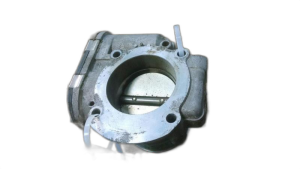
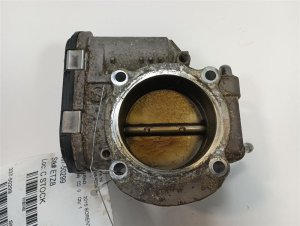
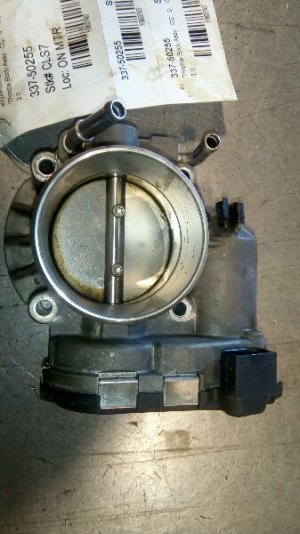
New Aftermarket Parts Available


The information in this article is provided for general reference and educational purposes only. Vehicle specifications, procedures, and part compatibility can vary by production date, trim level, and region. Always consult your vehicle's factory service manual and verify part numbers before purchasing or performing repairs. Safety-critical components such as airbags, seat belts, and braking systems should be installed by a qualified professional.
- Kia Optima:
- 🧭 Diagnostic Flowchart
- 🎬 Helpful Videos
- 🛍️ Shop This Part
- What's Unique About the 2011-2015 Kia Optima
- Symptoms You May Notice
- Most Likely Causes
- Rare But Worth Checking
- Diagnosis Steps
- Parts You'll Likely Need
- Related Codes That Often Appear With This One
- Technical Service Bulletins (TSBs) & Recalls
- Platform-Specific Known Issues
- Mechanic-Grade Diagnostic Values
- Scan Tool Commands That Help
- Wiring & Ground Locations
- Real Owner Repair Stories
- OEM Part Supersession History
- Model Year Variations Within This Range
- Other Known Issues on This Vehicle
- Used vs. New Parts: Buying Guide for This Vehicle
- Real Owner Stories
- 2017 Kia Optima Hybrid
- 2011-2015 Kia Sorento 2.4L Theta II
- Related OBD-II Codes
- Frequently Asked Questions
- 🎟️ Get 5% Off