

P0122 on 2004-2009 Mazda 3 2.0L: Throttle Position Sensor Low Input Causes and Fixes
P0122 on a first-generation Mazda 3 almost always means the entire electronic throttle body has failed. The throttle position sensor (TPS) is integrated and not sold separately for this model. The most common and reliable fix is to replace the entire throttle body assembly. Expect to pay $250-$450 for a new OEM throttle body assembly.
- P0122 on this Mazda 3 is almost always a failed throttle body assembly.
- The Throttle Position Sensor (TPS) is integrated and cannot be replaced separately.
- A throttle body relearn procedure is mandatory after replacement to ensure proper function.
- Verify wiring and connectors before replacing the part, but expect the throttle body itself to be the culprit.
- The correct OEM part number is L3R4-13-640.
What's Unique About the 2004-2009 Mazda 3
On the 2004-2009 Mazda 3 with the 2.0L engine, the throttle position sensor (TPS) is not a separate, replaceable part. Instead, it is integrated directly into the electronic throttle body assembly. This means that if the sensor fails, which is the most common cause of P0122, the entire throttle body unit must be replaced. While you might see standalone TPS sensors for sale online, they are typically for different models or years, and the standard, reliable repair for this specific vehicle is a complete throttle body replacement.
Symptoms You May Notice
- Check Engine Light is on
- Hesitation or stumbling during acceleration
- Poor or delayed throttle response
- Engine stalling, especially when coming to a stop or at idle
- Rough, low, or unstable idle
- Vehicle enters 'limp mode' with significantly reduced engine power
- Poor fuel economy
- Hard starting engine
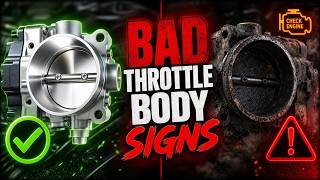
- Unpredictable or jerky shifting in automatic transmissions 🎬 Watch: 5 signs of a bad throttle body you shouldn't ignore.
- Replacing only the throttle position sensor. On this vehicle, the sensor is integrated into the throttle body and is not designed to be replaced separately. Attempting to install a standalone sensor will not work.
- Replacing the accelerator pedal position (APP) sensor. The APP sensor is located on the gas pedal assembly and will typically set its own specific trouble codes (e.g., P2122, P2127, P2138). While its symptoms can be similar, P0122 specifically points to the sensor at the throttle body.
Most Likely Causes
- Failed Electronic Throttle Body Assembly 🔴 High Probability → Shop Fuel Injection Throttle Body The internal, non-serviceable throttle position sensor (TPS) is the common failure point within the assembly. Wear and tear over time causes the sensor's electronic components to fail and send a voltage signal below the minimum threshold. This is the most frequently reported cause by owners in online forums.
How to confirm: Use a scan tool to monitor live data for 'TP' or 'TPS'. At idle (foot off the pedal), the voltage should be around 0.5V. As you press the pedal, it should sweep smoothly up to ~4.5V at wide-open throttle. If the voltage is stuck near 0V, jumps erratically, or does not change smoothly, the throttle body is faulty.
Typical fix: Replace the entire electronic throttle body assembly. After replacement, a throttle body relearn procedure must be performed to calibrate the new unit with the PCM.
Est. part cost: $250-$450 for an OEM unit, $100-$200 for an aftermarket unit. - Wiring Harness or Connector Issue 🟡 Medium Probability The wiring harness leading to the throttle body is subject to engine heat and vibration, which can cause wires to chafe, break, or corrode over time. A short to ground in the signal wire is a common cause for a 'low input' code. Corrosion inside the connector is also a known issue.
How to confirm: Visually inspect the wiring harness and the connector at the throttle body for any signs of damage, melting, corrosion, or loose pins. With the key on (engine off), unplug the connector and use a multimeter to check for a 5V reference signal and a good ground at the appropriate pins. If either is missing, the problem is in the wiring or the PCM.
Typical fix: Repair the damaged section of the wiring harness or replace the connector pigtail. Clean corroded terminals with electrical contact cleaner. Ensure all connections are clean and secure.
Est. part cost: $10-$50 for wiring repair supplies. - Dirty Throttle Body ⚪ Low Probability → Shop Fuel Injection Throttle Body Carbon can build up around the throttle plate, preventing it from closing completely or moving smoothly. While this more commonly causes idle issues, it can sometimes affect the sensor's baseline reading or cause binding that the PCM interprets as a fault.
How to confirm: Remove the intake hose from the throttle body and visually inspect the throttle plate and bore for significant black carbon deposits.
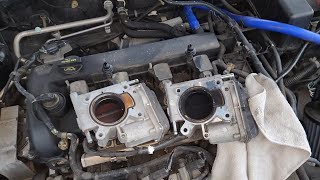
Typical fix: Clean the throttle body bore and plate using a dedicated throttle body cleaner and a soft cloth. Do not spray 🎬 See this walkthrough on how to clean or replace the unit. cleaner directly onto the electrical components. A relearn procedure is recommended after cleaning.
Est. part cost: $5-$15 for cleaner.
Rare But Worth Checking
- Faulty Powertrain Control Module (PCM): This is very uncommon and should only be considered after all other possibilities, including the throttle body and wiring, have been thoroughly tested and ruled out. A faulty PCM driver circuit can fail to correctly interpret the signal from a good sensor or fail to provide the correct 5V reference.
Diagnosis Steps
- Read Fault Codes: Use an OBD-II scanner to confirm P0122 is the primary code. Note any other codes that are present, such as P0123, P0223, or P2135, as they strongly suggest a throttle body failure.
- Inspect Wiring: Perform a thorough visual inspection of the wiring harness and connector going to the electronic throttle body. Look for any signs of chafing, melting, corrosion, or loose pins.
- Analyze Live Data: With the scanner connected, view the live data stream for the Throttle Position Sensor (TPS) percentage and voltage. With the key on and engine off, the reading should be low (around 10-15% or ~0.5V).
- Test TPS Sweep: Slowly press the accelerator pedal to the floor. The TPS percentage should increase smoothly to around 90% and the voltage should rise to ~4.5V without any dropouts or glitches. If the signal is stuck low, jumps erratically, or has dead spots, the throttle body assembly is almost certainly the problem.
- Test Power and Ground: If the live data is suspect, unplug the throttle body connector. With the key on, use a multimeter to verify you have a 5-volt reference and a good ground on the correct pins in the connector. If either is missing, you have a wiring or PCM issue.
- Confirm the Part: If the wiring provides correct power and ground, and the signal sweep test fails, the electronic throttle body assembly needs to be replaced.
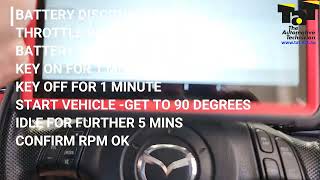
- Perform Relearn Procedure: After replacing the throttle body or cleaning it, perform a throttle body relearn procedure. This typically involves a sequence of key-on, key-off, and idling periods to allow the PCM to calibrate to the new part.
Parts You'll Likely Need
- Electronic Throttle Body Assembly
(OEM #L3R4-13-640)— This is the most common failure for code P0122, as the internal, non-serviceable Throttle Position Sensor (TPS) fails. This assembly includes the throttle plate, motor, and both TPS sensors. The part number L3R4-13-640 supersedes the older number L3G2-13-640A.
Trusted brands: Mazda (OEM), Hitachi, Bosch, Dorman
OEM price range: $250-$450
Aftermarket price range: $120-$250
Related Codes That Often Appear With This One
- P0123 — Throttle Position Sensor 'A' Circuit High Input. Seeing both P0122 and P0123 can indicate an intermittent wiring problem or a complete failure of the sensor, causing the voltage to fluctuate wildly between its lowest and highest possible readings.
- P2135 — Throttle/Pedal Position Sensor/Switch 'A'/'B' Voltage Correlation. Electronic throttle bodies have two TPS sensors for redundancy. This code means their signals don't agree, which strongly points to a failing throttle body assembly where one or both internal sensors have failed.
- P0223 — Throttle/Pedal Position Sensor/Switch 'B' Circuit High Input. This code, especially when paired with P0122, indicates a serious correlation fault between the two internal sensors, further strengthening the diagnosis of a failed throttle body assembly.
Platform-Specific Known Issues
- Throttle Body Relearn Procedure is Critical: → Shop Fuel Injection Throttle Body After replacing or thoroughly cleaning the throttle body, a 'relearn' procedure is necessary. Failure to do so can result in a high or unstable idle, surging, or the P0122 code returning. The procedure typically involves disconnecting the battery to reset the PCM, followed by a specific sequence of key turns and idling to allow the computer to calibrate the new throttle plate position.
Technical Service Bulletins (TSBs) & Recalls
- TSB Bulletin #01-007-13-2767: While issued for the Tribute model, this manufacturer bulletin notes that P0122 may be present alongside P2135 and P2111. It describes drivability symptoms such as an intermittent rough idle or an idle speed below specification.
Mechanic-Grade Diagnostic Values
- TPS 'A' Signal Wire Voltage (at connector, key on, engine off) — expected: Approx. 0.5V - 0.9V at closed throttle, sweeping smoothly to approx. 4.5V - 4.7V at wide-open throttle.. Failure: Voltage is stuck below 0.2V regardless of throttle position, or has dead spots/jumps during the sweep.
- 5V Reference Wire Voltage (at connector, key on, engine off) — expected: 5.0 Volts.. Failure: Voltage is significantly lower than 5.0V or is absent, indicating a wiring or PCM issue.
- Ground Wire Resistance (at connector, key off) — expected: Less than 1 Ohm to chassis ground.. Failure: High resistance indicates a poor ground connection, which can cause low voltage readings.
- PCM MAP Sensor Signal (for correlation) — expected: At idle, voltage should be between 1.4V and 1.8V.. Failure: A MAP sensor voltage stuck high (near 4.5V) can sometimes accompany throttle codes, pointing to a wider sensor ground or reference voltage issue.
Scan Tool Commands That Help
- Mazda IDS (or equivalent professional scanner): Throttle Body Relearn / ETC Relearn — This function must be used after replacing the electronic throttle body or after a thorough cleaning. It resets the learned closed-throttle position and allows the PCM to calibrate the new operational range of the throttle plate.
Wiring & Ground Locations
- Engine Ground Strap — On many Mazda 3 models, a primary engine-to-chassis ground is located on the passenger side of the engine bay, connecting the engine block or transmission case to the frame rail near the headlight.. A corroded or loose main ground can create a floating ground, causing low and erratic voltage readings on various sensors, including the TPS. Cleaning this ground point to bare metal is a crucial step when diagnosing any low-voltage sensor code.
- Throttle Body Connector (Harness Side) — The 6-pin electrical connector that plugs directly into the electronic throttle body assembly.. This is the primary point for testing the 5V reference, ground, and the two TPS signal wires. Verifying correct voltages here is the fastest way to determine if the fault is in the throttle body itself or upstream in the wiring/PCM.
Real Owner Repair Stories
- AliExpress Reviewer (2008 Mazda 3 2.0L Automatic) — Erratic idle behavior, surging at stoplights even when the engine was warm.
❌ Tried (didn't work) Replacing the air filter, Cleaning the intake manifold, Resetting the ECM multiple times
✅ What actually fixed it Replacing the entire electronic throttle body assembly with part number L3R4-13-640 resolved the surging and idle issues. The owner also reported a measurable improvement in fuel economy of approximately 1.8 MPG after the replacement.
OEM Part Supersession History
L3G2-13-640A→L3R4-13-640— Standard part revision and update by the manufacturer.
Heads up: The two parts are generally interchangeable for the specified vehicle range, but it is always recommended to use the latest revision (L3R4-13-640) to ensure compatibility and benefit from any design improvements.
Model Year Variations Within This Range
- 2004-2005 vs 2006-2009: While the P0122 diagnosis is similar, there was a part number change around the 2006 model year. The throttle body for 2006-2009 models is confirmed as L3G2-13-640A, superseded by L3R4-13-640. Owners of 2004-2005 models should double-check the specific part number on their original unit, though the replacement procedure and common failure remain the same.
Diagnostic Flowchart
Other Known Issues on This Vehicle
Issues unrelated to this code that are worth knowing about as an owner of this generation:
- Passenger-Side Engine Mount Failure 🔴 High — Very common, often failing before 100,000 miles. The hydraulic fluid-filled mount leaks, causing excessive engine vibration at idle and while accelerating. (Ref: Multiple TSBs exist for related models and later generations, such as 01-012/16 and 01-021/12, indicating ongoing issues with mount design.)
- Automatic Transmission Control Module (TCM) Failure 🔴 High — A notorious issue, especially on 2006-2009 models. The TCM is mounted directly on the transmission, leading to overheating and solder joint failure. Symptoms include harsh shifting, getting stuck in gear, and the 'AT' light illuminating.
- Premature Body Rust 🟠 Medium — Widespread on 2004-2008 models, particularly in regions that use road salt. Common areas are the rear wheel arches, rocker panels, and underbody. The issue was reportedly improved for the 2009 model year. (Ref: While no specific recall for body rust on this generation, Mazda has issued numerous rust-related recalls for other components and later models, acknowledging a history of corrosion issues.)
- Suspension Clunking Noises 🟡 Low — Commonly reported as the vehicle ages. The noise is often traced to worn front sway bar end links, bushings, or struts. The parts are relatively inexpensive.
- Oil Consumption and Valve Train Ticking 🟡 Low — The 2.0L and 2.3L MZR engines are known to consume some oil between changes. If the oil level gets low, a distinct ticking noise from the hydraulic lash adjusters in the valvetrain can occur.
Used vs. New Parts: Buying Guide for This Vehicle
When a used part is the smart pick: A used OEM throttle body from a low-mileage donor vehicle can be a cost-effective option, especially if the failure on the donor was unrelated to the engine (e.g., rear-end collision). However, this part is a known wear item, so a used part carries inherent risk.
Donor-vehicle mileage cap: roughly under 80000 miles for the part to have meaningful remaining life.
What to inspect on the donor part:
- Verify the donor vehicle's mileage. Aim for a part from a car with under 80,000 miles.
- Inspect the throttle plate and bore. Minimal carbon buildup is a good sign.
- Check the electrical connector for any signs of corrosion, bent pins, or damage.
- Ask for a warranty if buying from a salvage yard. Many offer a 30-90 day guarantee.
OEM-only on this vehicle (don't cheap out):
- While not strictly 'OEM-only', using a genuine Mazda or a reputable OEM-supplier (like Hitachi or Bosch) throttle body is highly recommended for reliability and fitment.
Aftermarket brands forum-validated for this vehicle:
- Bosch (Often the original OEM manufacturer)
- Hitachi (Another potential OEM supplier)
Brands owners have reported issues with on this vehicle:
- Dorman: While Dorman offers an 'OE FIX' with an upgraded non-contact sensor, forum discussions show mixed reviews on long-term reliability for their electronic parts. Some users report success, while others experience premature failure.
- Cardone (Remanufactured): Quality can be inconsistent. A new part from a reputable brand is generally a safer investment than a remanufactured electronic throttle body.
- Unbranded/Generic eBay/Amazon parts: These often have the highest failure rates and may not perform the relearn procedure correctly.
Related OBD-II Codes
Frequently Asked Questions
I have a P0122 code along with P2135 on my Mazda 3. What does this combination usually mean?
Can I just clean the throttle body to fix the P0122 code on my 2.0L Mazda 3?
I replaced the throttle body on my 2008 Mazda 3, but now the idle is high and unstable. What went wrong?
How can I test the throttle position sensor (TPS) on my Mazda 3 myself?
What are the most common causes for P0122 on this Mazda 3 besides a bad throttle body?
My mechanic quoted me for a new throttle body. Is there a big price difference between OEM and aftermarket parts?
Helpful Videos

We Have This Part in Stock


The information in this article is provided for general reference and educational purposes only. Vehicle specifications, procedures, and part compatibility can vary by production date, trim level, and region. Always consult your vehicle's factory service manual and verify part numbers before purchasing or performing repairs. Safety-critical components such as airbags, seat belts, and braking systems should be installed by a qualified professional.
- Mazda 3:
- 🧭 Diagnostic Flowchart
- 🎬 Helpful Videos
- 🛍️ Shop This Part
- What's Unique About the 2004-2009 Mazda 3
- Symptoms You May Notice
- Most Likely Causes
- Rare But Worth Checking
- Diagnosis Steps
- Parts You'll Likely Need
- Related Codes That Often Appear With This One
- Platform-Specific Known Issues
- Technical Service Bulletins (TSBs) & Recalls
- Mechanic-Grade Diagnostic Values
- Scan Tool Commands That Help
- Wiring & Ground Locations
- Real Owner Repair Stories
- OEM Part Supersession History
- Model Year Variations Within This Range
- Other Known Issues on This Vehicle
- Used vs. New Parts: Buying Guide for This Vehicle
- Related OBD-II Codes
- Frequently Asked Questions
- 🎟️ Get 5% Off