

P0122 on 2002-2006 Nissan Altima: Throttle Position Sensor Causes and Fixes
This code means the throttle position sensor (TPS) is sending a low voltage signal to the computer. On this Altima, the TPS is part of the electronic throttle body and isn't sold separately. The most common fix is replacing the entire throttle body assembly and performing a specific 'relearn' procedure. This issue is extremely common on both the 2.5L and 3.5L engines.
- P0122 on a 2002-2006 Altima almost always points to a problem with the electronic throttle body.
- The throttle position sensor (TPS) is built into the throttle body; you cannot buy it separately.
- The most likely fix is replacing the entire throttle body assembly.
- After replacing or cleaning the throttle body, you MUST perform the specific three-part idle relearn procedure for the car to run correctly.
- Before buying parts, check the wiring and connector to the throttle body to rule out a simple electrical fault.
What's Unique About the 2002-2006 Nissan Altima
The 2002-2006 Nissan Altima (L31 generation) uses an electronic 'drive-by-wire' throttle system. Unlike older vehicles, it does not have a separate, replaceable throttle position sensor. Instead, the sensor is integrated directly into the electronic throttle body assembly. 🎬 Watch: Step-by-step guide to replacing your Altima's throttle body. Because of this design, a P0122 code, especially when paired with P2135, almost always points to a failure of the entire throttle body unit, not just a small sensor. Furthermore, any replacement or even a thorough cleaning of the throttle body requires a specific, multi-step 'relearn' procedure to recalibrate the system, which is a common point of confusion for DIY repairs.
Symptoms You May Notice
- Check Engine Light is on
- Engine stalls, especially at low speeds or when coming to a stop
- Unstable, rough, or high idle
- Hesitation or lack of power during acceleration
- Vehicle enters 'limp mode' (fail-safe mode) with drastically reduced speed
- Erratic or unresponsive throttle behavior
- Engine surging
- Hard starting
- Replacing only the throttle position sensor. The sensor is integrated into the throttle body on this vehicle and cannot be replaced separately.
- Replacing the throttle body but failing to perform the mandatory idle relearn procedure, leading to a continued high or erratic idle and potentially new trouble codes like P0507. 🎬 Watch: How to properly reset and reprogram the throttle body.
- Using a cheap, low-quality aftermarket throttle body. Many owners report these parts failing within a short period, causing the original codes to return.
Most Likely Causes
- Failing Electronic Throttle Body Assembly 🔴 High Probability → Shop Fuel Injection Throttle Body The internal electronics of the integrated throttle position sensors are a known high-failure point on this platform. The dual sensors' internal contacts wear out or fail, leading to voltage signals that are too low or disagree with each other, triggering P0122 and often P2135.
How to confirm: After confirming the wiring is intact, use a scan tool to monitor the TPS voltage. If the voltage for sensor 'A' (TPS1) is stuck low (e.g., below 0.2V) and doesn't change smoothly as the throttle is manually opened and closed (with the engine off, key on), the throttle body is faulty. This is frequently accompanied by code P2135 (Throttle/Pedal Position Sensor/Switch 'A'/'B' Voltage Correlation).
Typical fix: Replace the entire electronic throttle body assembly. After replacement, a three-part relearn procedure (Accelerator Pedal Released Position, Throttle Valve Closed Position, and Idle Air Volume) is mandatory. Using an OEM or high-quality aftermarket part (like Hitachi, the original supplier) is highly recommended as cheap aftermarket units are known to fail quickly.
Est. part cost: $150-$450 - Damaged Wiring or Poor Connection 🟡 Medium Probability The wiring harness leading to the throttle body can become brittle from engine heat cycles, leading to intermittent shorts or open circuits. The connector pins can also corrode or lose tension.
How to confirm: Visually inspect the wiring harness and connector going to the throttle body for any signs of cracking, melting, or corrosion. Use a multimeter to check for a stable 5V reference voltage and a good ground at the connector. Wiggle the harness while monitoring live data on a scan tool to see if the TPS voltage fluctuates wildly, indicating a wiring fault.
Typical fix: Repair the damaged section of the wiring harness or clean/replace the connector. In some cases, a new connector pigtail may need to be spliced in.
Est. part cost: $15-$75 - Dirty or Obstructed Throttle Body ⚪ Low Probability → Shop Fuel Injection Throttle Body Carbon buildup can sometimes restrict the throttle plate from closing fully or moving smoothly. While this more commonly causes high idle codes (P0507) or performance issues (P0121), it can occasionally cause the sensor to report an incorrect low value if the plate is sticking near the closed position.
How to confirm: Remove the intake boot and visually inspect the throttle bore and plate for heavy carbon deposits. The plate should move smoothly by hand (with ignition off).
Typical fix: Clean the throttle body carefully with a dedicated throttle body cleaner and a soft cloth. IMPORTANT: Do not force the throttle plate open aggressively. After cleaning, the Idle Air Volume relearn procedure must be performed.
Est. part cost: $10-$20
Rare But Worth Checking
- Faulty Engine Control Module (ECM): This is extremely rare. The ECM should only be considered after all other possibilities, including the throttle body, wiring, and even the accelerator pedal position (APP) sensor, have been definitively ruled out.
- Faulty Accelerator Pedal Position (APP) Sensor: → Shop Accelerator Pedal Assembly While less common for a P0122 code, a failing APP sensor can sometimes cause related drivability issues and codes. In one documented case, a user replaced the throttle body for P0122/P2135, but the issue returned until the APP sensor was also replaced.
Diagnosis Steps
- Read the codes with an OBD-II scanner to confirm P0122 and note any other codes present, especially P2135.
- Inspect the wiring harness and connector at the electronic throttle body. Look for any frayed wires, corrosion, or loose pins.
- With the ignition ON and engine OFF, use a multimeter to verify the 5-volt reference and ground circuits at the throttle body connector.
- Using a scan tool with live data, monitor the voltage of TPS1 (Sensor A). It should be around 0.4V-0.8V at closed throttle and increase smoothly to ~4.5V at wide-open throttle. A reading stuck below 0.2V indicates a problem.
- If wiring is confirmed good but the voltage reading is incorrect, the electronic throttle body assembly is the most likely culprit.
- If you replace or clean the throttle body, you MUST perform the three-part relearn procedure. A stopwatch is essential for the manual method. 🎬 See this video for a clear walkthrough of the idle relearn.
- Accelerator Pedal Released Position Learning: Turn ignition ON for 2 seconds, then OFF for 10 seconds. Repeat this cycle once more.
- Throttle Valve Closed Position Learning: With the pedal released, turn ignition ON. Turn ignition OFF and wait at least 10 seconds. You should hear the throttle body motor cycle during this time.
- Idle Air Volume Learning (The 'Pedal Dance'): This is a precisely timed sequence. Pre-conditions: Engine fully warmed up (coolant temp 158-212°F), battery voltage >12.9V, all electrical loads OFF, steering wheel straight. Turn key ON, wait 3 sec. Press and release accelerator pedal 5 times in 5 sec. Wait 7 sec. Press and hold pedal for ~20 sec until Check Engine Light stops blinking and stays solid. Release pedal within 3 sec and start engine. Let idle for 20-30 seconds.
Parts You'll Likely Need
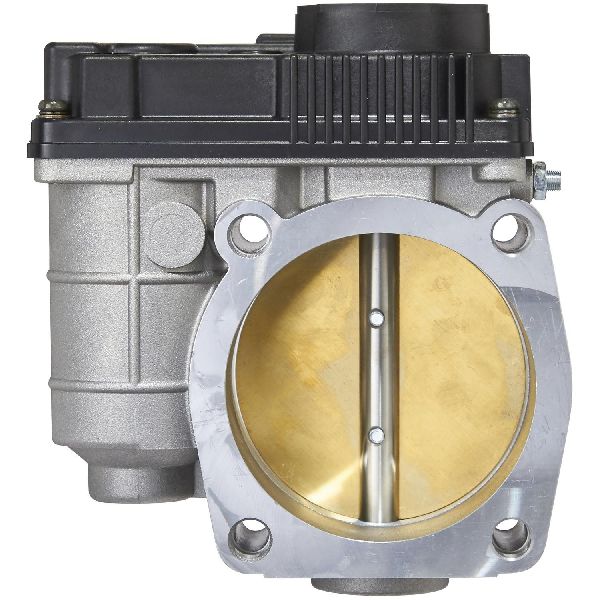
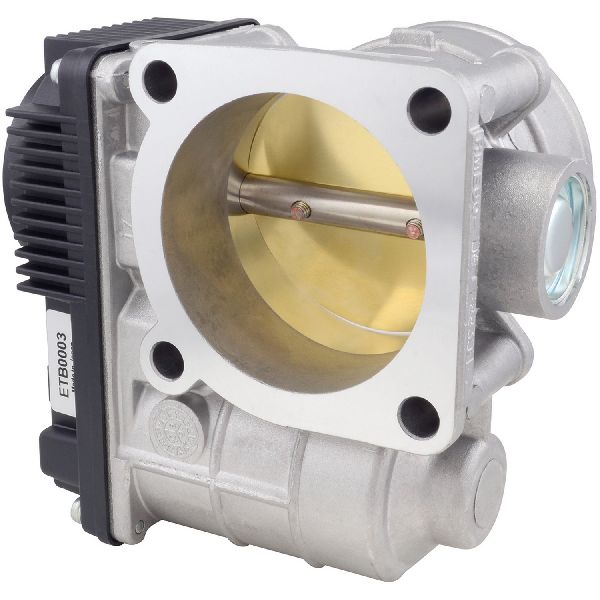
- Electronic Throttle Body Assembly
(OEM #16119-AE013 (or superseding 16119-AE01A/B/C) for 2.5L QR25DE; 16119-8J103 (or superseding 16119-8J10B) for 3.5L VQ35DE)— This is the most common failure for code P0122 on this platform, as the throttle position sensor is integrated into this unit.
Trusted brands: Hitachi (OEM supplier), Nissan Genuine, Bosch, AISIN
OEM price range: $350-$550
Aftermarket price range: $150-$300
Related Codes That Often Appear With This One
- P2135 — Throttle/Pedal Position Sensor/Switch 'A'/'B' Voltage Correlation. This is the most common companion code. The throttle body contains two separate TPS sensors for redundancy. This code means their voltage readings do not agree, pointing directly to an internal failure of the throttle body assembly.
- P0123 — Throttle Position Sensor 'A' Circuit High Input. This can appear intermittently if the sensor circuit is shorting or failing erratically, sending both high and low signals at different times.
- P0507 — Idle Control System RPM Higher Than Expected. This code often appears after a throttle body is cleaned or replaced if the Idle Air Volume Learning procedure is not performed correctly or fails.
- P0121 — Throttle Position Sensor 'A' Circuit Performance Problem. This often appears with P0122 as the sensor's signal is erratic or not where the ECM expects it to be based on other engine parameters.
Platform-Specific Known Issues
- The integrated nature of the throttle position sensor means a simple sensor swap is not possible; the entire throttle body must be replaced.
- Failure to perform the precise, timed idle relearn procedure after service is a very common reason for continued idle problems. Many DIYers and even some shops struggle with the manual 'pedal dance' method.
- Using cheap aftermarket throttle bodies is a false economy, as many owners report them failing within months, leading to a repeat repair.
Mechanic-Grade Diagnostic Values
- TPS1 (Sensor 'A') Live Data Voltage (2.5L QR25DE) — expected: ~0.75 V at idle (throttle closed).. Failure: Stuck at or near 0.0V, or does not increase smoothly when throttle is applied.
- TPS2 (Sensor 'B') Live Data Voltage (2.5L QR25DE) — expected: ~0.01 V at idle (throttle closed).. Failure: Voltage does not correlate inversely or as expected with TPS1.
- Throttle Control Motor Resistance (3.5L VQ35DE) — expected: 1 - 15 Ω at room temperature.. Failure: Reading is outside of this range.
- ECM Terminal Voltage Check Precaution — expected: N/A. Failure: Do not use ECM ground terminals when measuring input/output voltage. Doing so may result in damage to the ECM's transistor. Use a body ground instead.
Scan Tool Commands That Help
- Nissan CONSULT or equivalent professional scan tool (e.g., Autel): Idle Air Volume Learning (found under 'Special Functions' or 'Work Support') — This is the preferred, more reliable method for performing the idle relearn procedure after cleaning or replacing the throttle body. It avoids the tricky timing of the manual 'pedal dance' and provides confirmation of completion.
Wiring & Ground Locations
- ECM Location — Behind the glove box assembly.. The ECM receives signals from the throttle body and controls it. Access is needed for advanced wiring checks between the ECM and the throttle body connector.
- Throttle Actuator Shield Wire Ground — The shield wire for the electric throttle control actuator is grounded with the ECM. On similar generation Nissans, this corresponds to ground point E15, located on the lower left side of the engine compartment.. A poor ground for the shield wire can introduce electrical noise into the TPS signal, causing erratic readings and triggering P0122 or P2135.
- Main Engine/Transmission Ground Strap — A primary ground strap connects the negative battery terminal to the chassis and then to a bolt on the transmission case. This is visible looking through the driver's side front wheel well.. This main ground is critical for all engine electronics, including the ECM and ignition coils. This specific strap is known to corrode and break, causing a wide range of electrical issues, including random misfires (P0300) and potentially affecting sensor readings.
Real Owner Repair Stories
- Reddit user in r/MechanicAdvice (2011 Nissan Altima 2.5S (next generation, but same failure pattern)) — Car went into limp mode, Check Engine and Traction Control lights on with code P2135.
❌ Tried (didn't work) First mechanic replaced the throttle body; problem returned in a week., Mechanic then replaced it with another new throttle body AND a new accelerator pedal; problem returned after a couple of weeks., Mechanic performed relearn procedure multiple times; lights would go off but return later.
✅ What actually fixed it The story was unresolved, but highlights a critical point: repeated failure of new parts (throttle body and APP sensor) strongly suggests an underlying wiring harness issue or a faulty ECM, which the mechanic had not yet diagnosed. - YouTube video by 'fixing code P2135 P0122 part 2' (2007 Ford Edge 3.5L) — Check engine light with codes P2135 and P0122.
❌ Tried (didn't work) Replaced the throttle body assembly.
✅ What actually fixed it The problem was not resolved until the Accelerator Pedal Position (APP) sensor was also replaced. This confirms that for this code set, the APP sensor can be the root cause even though the code points to the throttle body sensor. - NHTSA ODI #10958658 (Nissan Xterra) — An owner reported receiving error codes P0122, P0128, and P0123 that would come and go. The report noted that the air intake flow hose had been replaced and similar issues seemed to exist for other Nissan models.
- NHTSA ODI #10369175 (Nissan Sentra) — A report describes a vehicle that would not start and pulled multiple codes including P0122, P2128, and P0605. The eventual repair involved replacing the ECM unit and repairing a fuel pump wire in the main harness after a pin test.
"I Checked Everything" — The Actual Cause
- In a complex case on a 2.5L Nissan with no throttle response (similar symptoms to P0122), a technician found that after replacing a faulty PCM, the 5V reference voltage was still being cut. The ultimate cause was a disconnected EVAP canister pressure sensor, which also uses the 5V reference circuit. The ECM detected this fault and, as a fail-safe, cut power to the entire circuit, including the throttle body, inducing a limp mode. This is an edge case where a fault in an unrelated sensor on the same circuit can cause throttle-related symptoms.
When the Usual Fixes Don't Work
- While P0122 almost always points to the throttle body, it is not the only possibility. In a documented case on a similar drive-by-wire system, replacing the throttle body did not fix the P0122/P2135 codes. The ultimate fix was replacing the accelerator pedal position (APP) sensor, demonstrating that the fault can lie with the pedal assembly even when the code seems specific to the throttle body sensor 'A' circuit.
OEM Part Supersession History
16119-AE013→16119-AE01A, 16119-AE01B, 16119-AE01C— Standard part revision and improvement by the manufacturer.
Heads up: The newer revisions are direct replacements for the original part on the 2.5L QR25DE engine.
Diagnostic Flowchart
Other Known Issues on This Vehicle
Issues unrelated to this code that are worth knowing about as an owner of this generation:
- Pre-Catalytic Converter Failure (2.5L QR25DE) 🔴 High — Very common, especially on 2002-2006 models. The ceramic honeycomb inside the exhaust manifold's pre-cat disintegrates, and the debris can be sucked back into the engine, causing catastrophic failure via scored cylinder walls and excessive oil consumption. (Ref: No recall, but a known issue often leading to engine replacement. A related TSB for later models is NTB12-120a.)
- Rusted Front Floor Pans 🔴 High — Extremely common. A design flaw allows moisture to become trapped under the carpet, leading to severe corrosion that can create large holes in the driver and passenger floorboards. Often discovered too late. (Ref: Subject of class-action lawsuits and a Voluntary Service Campaign (PC926) in some regions. Nissan issued TSB NTB15-059 with a repair procedure using a plate.)
- Excessive Oil Consumption (2.5L QR25DE) 🔴 High — Widespread problem, often a direct result of the pre-catalytic converter failure damaging piston rings. (Ref: No specific recall for this generation, but it is a well-documented engine problem.)
- Crankshaft and Camshaft Position Sensor Failure 🟠 Medium — Common failure item across many Nissan models of this era, including the Altima. Leads to intermittent stalling, no-start conditions, and codes like P0335 or P0340. (Ref: A recall was issued for some vehicles, but not all. Owners should check with a dealer using their VIN.)
- Failing Passenger-Side Engine Mount 🟠 Medium — The right-side (passenger) engine mount is known to collapse or leak fluid, typically around 100,000 miles, causing excessive engine vibration at idle and while driving.
Used vs. New Parts: Buying Guide for This Vehicle
When a used part is the smart pick: A used OEM throttle body from a reputable junkyard is often considered a smarter choice than a new, non-OEM aftermarket part. Since the failure is electronic wear, a low-mileage donor is ideal. This provides the reliability of an OEM part at a lower cost.
Donor-vehicle mileage cap: roughly under 100000 miles for the part to have meaningful remaining life.
What to inspect on the donor part:
- Verify the part number on the used unit matches your original or its supersession.
- Inspect the connector for any bent, corroded, or damaged pins.
- Check that the throttle plate is clean and moves without obvious binding (though do not force it by hand).
- Ask for the donor vehicle's mileage if possible; lower is always better.
OEM-only on this vehicle (don't cheap out):
- Electronic Throttle Body
Aftermarket brands forum-validated for this vehicle:
- Hitachi (Original Equipment Manufacturer)
- Bosch
Brands owners have reported issues with on this vehicle:
- Forum users have specifically reported early failures with store brands like Duralast for this component on Nissans. It is generally advised to avoid generic, low-cost aftermarket electronic throttle bodies.
Real Owner Stories
Aggregated from forums and TSBs cited above. Mileages and costs reflect what owners reported in those sources.
2005 Nissan Altima 2.5L — ~135000 miles
Symptoms: The car started hesitating during acceleration and the idle was very rough. The Check Engine Light came on and it went into 'limp mode' with very little power.
What fixed it: Initially tried a cheap aftermarket throttle body, but the problem returned within a few months. The final fix was replacing it again with a high-quality Hitachi unit and correctly performing the three-part idle relearn procedure.
Source hint: vehicle_specific_issues
Related OBD-II Codes
Frequently Asked Questions
I replaced the throttle body on my Altima to fix P0122, but now the idle is very high and unstable. What did I do wrong?
Can I just replace the small throttle position sensor (TPS) on the side of the throttle body instead of the whole expensive assembly?
Is it okay to use a cheap aftermarket throttle body from an online store to save money?
My scanner shows code P2135 along with P0122. Does this mean I have two separate problems?
What is the 'pedal dance' I've read about for this Altima?
Does this same throttle body issue affect other Nissan or Infiniti vehicles?
Helpful Videos


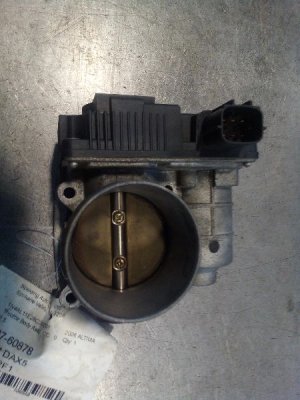
Used OEM Parts in Stock
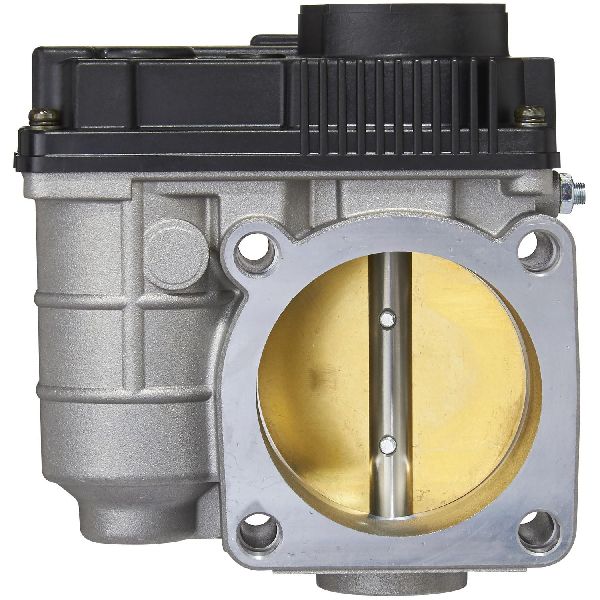
New Aftermarket Parts Available


The information in this article is provided for general reference and educational purposes only. Vehicle specifications, procedures, and part compatibility can vary by production date, trim level, and region. Always consult your vehicle's factory service manual and verify part numbers before purchasing or performing repairs. Safety-critical components such as airbags, seat belts, and braking systems should be installed by a qualified professional.
- Nissan Altima:
- 🧭 Diagnostic Flowchart
- 🎬 Helpful Videos
- 🛍️ Shop This Part
- What's Unique About the 2002-2006 Nissan Altima
- Symptoms You May Notice
- Most Likely Causes
- Rare But Worth Checking
- Diagnosis Steps
- Parts You'll Likely Need
- Related Codes That Often Appear With This One
- Platform-Specific Known Issues
- Mechanic-Grade Diagnostic Values
- Scan Tool Commands That Help
- Wiring & Ground Locations
- Real Owner Repair Stories
- "I Checked Everything" — The Actual Cause
- When the Usual Fixes Don't Work
- OEM Part Supersession History
- Other Known Issues on This Vehicle
- Used vs. New Parts: Buying Guide for This Vehicle
- Real Owner Stories
- 2005 Nissan Altima 2.5L — ~135000 miles
- Related OBD-II Codes
- Frequently Asked Questions
- 🎟️ Get 5% Off