

P0122 on 2008-2013 Subaru Forester Diesel: Throttle Position Sensor Low Voltage Causes and Fixes
This code means the throttle position sensor is sending a lower-than-expected voltage signal to the computer. On the 2008-2013 Forester with the EE20 diesel engine, this usually points to a faulty throttle position sensor, which is integrated into the throttle body assembly. A complete throttle body replacement is the most common and definitive fix.
- P0122 means the throttle position sensor's voltage signal is too low.
- On a 2008-2013 Forester, this almost always points to a problem with the sensor on the throttle body.
- The most common fix is replacing the entire throttle body assembly, as the sensor is usually not sold separately.
- Before buying parts, check the wiring and connector for damage, and use a scanner's live data to confirm the sensor is not responding.
- Do not continue driving with this issue, as it can lead to stalling and unpredictable acceleration, posing a safety risk.
What's Unique About the 2008-2013 Subaru Forester
The 2008-2013 Subaru Forester, including the EE20 diesel model, uses an electronic throttle control (ETC) or 'drive-by-wire' system. This means there is no physical cable between the gas pedal and the throttle. Instead, sensors on the pedal and throttle body communicate electronically. For this generation, the throttle position sensor is an integral part of the throttle body assembly, meaning the sensor itself often cannot be replaced separately. This makes diagnosis slightly different from older, cable-actuated systems and often leads to replacing the entire throttle body to fix a sensor issue. The engine management and many related components for the EE20 are supplied by DENSO Corporation.
Generation note: The 2008-2013 year range covers the third generation (SH) of the Subaru Forester. The information provided is specific to this generation and its EE20 diesel engine, which was known for several reliability issues in its early years.
Symptoms You May Notice
- Check Engine Light is on
- Flashing cruise control light (a common Subaru indicator of an engine fault)
- Engine may hesitate, stumble, or lag during acceleration
- Reduced engine power or entering 'limp mode'
- Rough or high idling
- Engine may stall unexpectedly
- Poor fuel economy
- Unpredictable or erratic throttle response
- Transmission may not shift correctly
- Replacing the Accelerator Pedal Position (APP) sensor. While the APP sensor can cause similar symptoms, P0122 specifically points to the 'A' circuit on the throttle body side. Other codes would likely be present if the APP sensor was the primary fault.
Most Likely Causes
- Faulty Throttle Position Sensor (TPS) 🔴 High Probability → Shop Fuel Injection Throttle Body The TPS is a moving part that can wear out over time. On this vehicle, it's integrated into the throttle body, making it a common failure point for the entire assembly. The entire throttle body must be replaced.
How to confirm: Use an OBD-II scanner with live data to monitor the TPS voltage. With the key on and engine off, the voltage should increase smoothly from about 0.5V to around 4.5V as you slowly press the accelerator pedal. If the voltage is stuck low (e.g., below 0.2V) or doesn't change smoothly, the sensor is likely bad. You can also use a multimeter to test the resistance across the sensor's pins while actuating the throttle plate; an erratic or non-existent reading indicates a bad sensor.
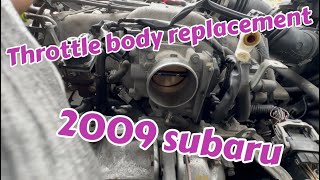
Typical fix: Replace the entire throttle body assembly, as the sensor is not sold separately for this generation. After replacement, a throttle body 'relearn' procedure is mandatory to reset the ECU's learned idle position.
Est. part cost: $150-$400 - Wiring or Connector Issue 🟡 Medium Probability Engine vibrations and heat can cause wires to break or insulation to fray over time. The connector at the throttle body is also exposed to the elements, and pins can corrode or back out.
How to confirm: Visually inspect the wiring harness and connector leading to the throttle body for any signs of damage, corrosion, or loose pins. Use a multimeter to check for a stable 5V reference signal and a good ground connection at the connector with the key on. Wiggle the harness while monitoring the voltage to check for intermittent shorts.
Typical fix: Repair the damaged section of wiring or replace the connector pigtail. Clean corroded pins with a dedicated electrical contact cleaner.
Est. part cost: $10-$50 - Dirty Throttle Body ⚪ Low Probability → Shop Fuel Injection Throttle Body Carbon and oil vapor from the PCV and EGR systems can build up inside the throttle body, restricting the movement of the throttle plate and causing it to stick.
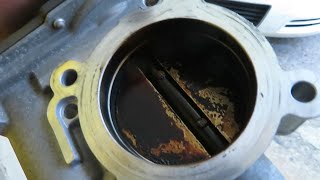
How to confirm: Remove the air intake hose from the throttle body and inspect the throttle plate and bore for significant carbon buildup. A sticky or slow-moving plate can cause the sensor's readings to be inaccurate or not return to the proper baseline, triggering a low voltage code.
Typical fix: Clean the throttle body bore and plate with a dedicated throttle body cleaner and a soft cloth or brush. Do not force the plate open on an electronic throttle body; have the ignition on (engine off) while a helper presses the gas pedal. An idle relearn procedure is often required after cleaning.
Est. part cost: $5-$15
Rare But Worth Checking
- Faulty Powertrain Control Module (PCM): This is the least likely cause and should only be considered after all other possibilities (sensor, wiring, connections) have been thoroughly ruled out. A faulty PCM is a rare and expensive failure. A user on a forum considered this after checking all wiring continuity back to the ECM plug.
Diagnosis Steps
- Connect an OBD-II scanner to confirm the P0122 code and check for any other related codes. Note if the cruise control light is flashing.
- Use the scanner's live data feature to view the Throttle Position Sensor 'A' voltage.
- With the ignition on (engine off), observe the voltage. It should be at a low baseline, typically around 0.5V.
- Slowly press the accelerator pedal to the floor. The voltage should rise smoothly and steadily to about 4.5V.
- If the voltage is stuck below the minimum threshold (e.g., <0.2V), is erratic, or does not respond, proceed to check the sensor and wiring.
- Turn the ignition off. Visually inspect the throttle body connector and wiring harness for any visible damage, corrosion, or loose connections.
- If the wiring looks good, disconnect the connector. Turn the ignition on and use a multimeter to verify you have a 5V reference signal and a good ground at the appropriate pins on the harness side.
- If power and ground are present, the issue is most likely the throttle position sensor itself. Since it is integrated, the entire throttle body assembly will need replacement.
- If power or ground is missing, trace the wiring back to the PCM to find and repair the open or short circuit.
- After any repair (replacement or cleaning), clear the codes and perform a mandatory 'idle relearn' procedure. This typically involves letting the engine idle for a set period after reconnecting the battery to allow the ECU to learn the new throttle parameters. 🎬 Watch: How to perform a throttle position relearn on this Forester
- Perform a test drive to ensure the problem is resolved.
Parts You'll Likely Need
- Throttle Body Assembly
(OEM #16112AA210 (Note: This is a common part number for EE20 engines, but always verify with VIN. Other similar part numbers include 16112AA38A for other Subaru engines.))— On this specific vehicle generation, the Throttle Position Sensor (TPS) is integrated into the throttle body and not sold as a separate component. Therefore, a faulty sensor requires replacing the entire assembly.
Trusted brands: Subaru (OEM), Hitachi, Bosch, DENSO
OEM price range: $250-$400
Aftermarket price range: $150-$250
Related Codes That Often Appear With This One
- P0121 — P0121 indicates a performance or range problem with the TPS, suggesting the signal is erratic or not where the PCM expects it to be, which can happen alongside a low input fault.
- P0123 — This code for 'TPS Circuit High Input' can appear with P0122 if there is an intermittent short or a failing sensor that sends erratic signals at both extremes.
- P2109 — A related Subaru TSB mentions P2109 'Throttle/Pedal Position Sensor “A” Minimum Stop Performance' in conjunction with other throttle-related codes, suggesting it can be part of the same fault pattern.
Platform-Specific Known Issues
- On many Subarus, including the Forester, a check engine light will often be accompanied by a flashing cruise control light. This is normal behavior to alert the driver to an engine management fault and does not indicate a separate problem with the cruise control system.
Mechanic-Grade Diagnostic Values
- TPS Signal Voltage (Key On, Engine Off) — expected: Smoothly sweeps from ~0.5V (closed throttle) to ~4.5V (wide-open throttle).. Failure: Voltage is stuck low (below 0.5V), does not change with pedal movement, or has dead spots.
- TPS 'A' Circuit Fault Threshold — expected: Signal voltage should remain above the minimum specified by the PCM.. Failure: The PCM logs code P0122 when the signal voltage drops below the minimum threshold, often cited as being between 0.17V and 0.2V.
- TPS Connector Reference Voltage — expected: Approximately 5.0 volts on the reference wire from the PCM.. Failure: Significantly lower than 5.0V or no voltage indicates a wiring issue or a problem with the PCM's 5V reference circuit.
Scan Tool Commands That Help
- Manual Procedure (or Scan Tool Service Function): Throttle Body Idle Relearn Procedure — This is mandatory after disconnecting the battery, cleaning the throttle body, or replacing the throttle body assembly. It allows the ECU to learn the new baseline closed-throttle position and ensures a stable idle.
Diagnostic Flowchart
Other Known Issues on This Vehicle
Issues unrelated to this code that are worth knowing about as an owner of this generation:
- Crankshaft Failure 🔴 High — Most common in early Euro 4 engines (2008-2010). Failures can occur at relatively low mileage (50,000-80,000 miles). Attributed to issues with block manufacturing, bearing design, or incorrect sealant application blocking oilways.
- Diesel Particulate Filter (DPF) Clogging 🟠 Medium — Common on vehicles used for frequent short trips, which prevents the DPF from reaching temperature for passive regeneration. Can lead to limp mode and require forced regeneration or costly replacement.
- Glow Plug Failure / Seizure 🟠 Medium — Glow plugs on the EE20 are known to fail and can be difficult to remove without breaking, potentially requiring cylinder head removal for extraction.
- Oil Dilution 🟠 Medium — Incomplete DPF regeneration cycles can lead to diesel fuel diluting the engine oil, degrading its lubricating properties and potentially contributing to premature engine wear.
- Dual-Mass Flywheel (DMF) and Clutch Issues 🟡 Low — Manual transmission models were sometimes prone to vibrations and premature wear of the DMF and clutch assembly.
Used vs. New Parts: Buying Guide for This Vehicle
When a used part is the smart pick: A used OEM throttle body from a low-mileage, reputable salvage yard can be a cost-effective option. It is often considered more reliable than a cheap, new aftermarket part due to better software and electronic compatibility with the Subaru ECU.
Donor-vehicle mileage cap: roughly under 80000 miles for the part to have meaningful remaining life.
What to inspect on the donor part:
- Verify the donor vehicle's mileage is reasonably low.
- Inspect the throttle body for physical damage, such as cracks in the housing or a bent connector.
- Check the throttle plate for excessive carbon buildup, which might indicate a poorly maintained engine.
- Ensure the electrical connector pins are straight, clean, and free of corrosion.
OEM-only on this vehicle (don't cheap out):
- Throttle Body Assembly: While used OEM is an option, many mechanics strongly recommend a new OEM part to guarantee it has the latest design updates and will function correctly without compatibility issues.
Aftermarket brands forum-validated for this vehicle:
- DENSO (often the original equipment manufacturer)
- Hitachi
- Bosch
Brands owners have reported issues with on this vehicle:
- Unbranded, no-name parts from online marketplaces should be avoided, as their internal electronics may not meet OEM specifications, leading to repeat failures or other drivability issues.
Real Owner Stories
Aggregated from forums and TSBs cited above. Mileages and costs reflect what owners reported in those sources.
2009 Subaru Legacy EE20 2.0L Diesel — 87000 miles
Symptoms: Owner experienced a broken crankshaft, a known severe issue for early EE20 diesel engines.
What fixed it: The context notes this as a known reliability issue for the platform sharing the EE20 engine, often attributed to block manufacturing or bearing design.
Source hint: ScoobyNet.com thread titled 'boxer diesel crankshaft broken'
Related OBD-II Codes
Frequently Asked Questions
Why is my cruise control light flashing along with the Check Engine Light on my Forester diesel?
Can I just replace the Throttle Position Sensor (TPS) on my 2008-2013 EE20 engine?
Is there a specific procedure I need to follow after replacing the throttle body to clear the P0122 code?
Could carbon buildup cause a P0122 code on my Forester diesel?
What voltage should I see when testing the TPS on my EE20 Forester?
Are there other major engine issues I should be aware of on the 2008-2013 Forester Diesel?
Helpful Videos

Used OEM Parts in Stock
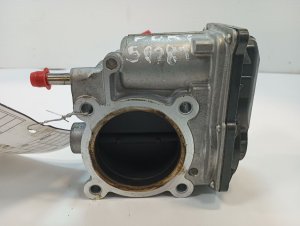
New Aftermarket Parts Available

The information in this article is provided for general reference and educational purposes only. Vehicle specifications, procedures, and part compatibility can vary by production date, trim level, and region. Always consult your vehicle's factory service manual and verify part numbers before purchasing or performing repairs. Safety-critical components such as airbags, seat belts, and braking systems should be installed by a qualified professional.
- Subaru Forester:
- 🧭 Diagnostic Flowchart
- 🎬 Helpful Videos
- 🛍️ Shop This Part
- What's Unique About the 2008-2013 Subaru Forester
- Symptoms You May Notice
- Most Likely Causes
- Rare But Worth Checking
- Diagnosis Steps
- Parts You'll Likely Need
- Related Codes That Often Appear With This One
- Platform-Specific Known Issues
- Mechanic-Grade Diagnostic Values
- Scan Tool Commands That Help
- Other Known Issues on This Vehicle
- Used vs. New Parts: Buying Guide for This Vehicle
- Real Owner Stories
- 2009 Subaru Legacy EE20 2.0L Diesel — 87000 miles
- Related OBD-II Codes
- Frequently Asked Questions
- 🎟️ Get 5% Off