

P0122 on 2000-2006 Toyota Tundra 4.7L V8: Throttle Position Sensor Low Input Causes and Fixes
On a first-generation Tundra with the 4.7L V8, code P0122 almost always means the Throttle Position Sensor (TPS) has failed. The engine's computer is seeing a voltage from the sensor that is too low (below ~0.2V). Replacing the sensor is a simple DIY fix, with a quality Denso or OEM part costing between $60 and $125. This is a very common wear item on the 2UZ-FE engine.
- P0122 on a 2000-2006 Tundra almost certainly points to a bad Throttle Position Sensor (TPS).
- This is a DIY-friendly repair that typically takes less than an hour and requires basic hand tools.
- Always use a high-quality OEM (Toyota) or OEM-supplier (Denso, Aisin) replacement sensor, as cheap aftermarket parts are known to fail prematurely.
- After replacing the sensor, it's a good practice to reset the engine computer by disconnecting the negative battery terminal for about 15 minutes to clear learned values.
- Before buying a part, quickly check the sensor's wiring and connector for any obvious damage, as this is a less common but possible cause.
What's Unique About the 2000-2006 Toyota Tundra
The first-generation Toyota Tundra with the 4.7L 2UZ-FE V8 engine uses a traditional, mechanical throttle cable for model years 2000-2004. This simplifies diagnosis for P0122, as it isolates the fault to the single Throttle Position Sensor (TPS) mounted on the throttle body, eliminating the accelerator pedal sensors found on newer trucks. The TPS on this engine is a well-known wear item but is a separate, easily replaceable component, making the repair straightforward and cost-effective. For 2005-2006 models, Toyota introduced an Electronic Throttle Control System (ETCS-i), or 'drive-by-wire', which changes the diagnosis.
🎬 Watch: Servicing the electronic throttle actuator on 2005-2006 models.Symptoms You May Notice
- Check Engine Light is on
- Hesitation or stumbling during acceleration
- Poor or no throttle response
- Engine stalling, especially at idle or when coming to a stop
- Rough or unusually high idle
- Poor fuel economy
- Vehicle may enter 'limp mode' with limited power
- Erratic or harsh automatic transmission shifting
- Replacing the entire throttle body assembly. On this engine, the TPS is a separate, serviceable part. The entire throttle body is rarely the cause of an electrical code like P0122.
- Replacing the fuel pump or fuel filter. While these can cause hesitation, they will not set a specific TPS circuit code.
Most Likely Causes
- Failed Throttle Position Sensor (TPS) 🔴 High Probability → Shop Fuel Injection Throttle Body The TPS is a potentiometer with a wiper that physically moves across a resistive track. After many years and hundreds of thousands of throttle movements, this track wears out, creating 'dead spots' or causing the signal voltage to drop off completely. It is one of the most common failure points on the 2UZ-FE engine.
How to confirm: With the key on and engine off, use a scan tool to observe the throttle position percentage or voltage. It will likely read 0% or a voltage below 0.3V and not change when the gas pedal is pressed. Alternatively, back-probe the sensor's signal wire with a multimeter; it should sweep smoothly from ~0.5V (closed) to ~4.5V (wide open) as the throttle is opened manually. A reading stuck near zero or one that drops out indicates failure.
Typical fix: Replace the Throttle Position Sensor on the side of the throttle body. It is held on by two small screws, which may be seized and require care during removal.
Est. part cost: $40-$125 - Wiring Harness or Connector Issue 🟡 Medium Probability The wiring harness in the engine bay becomes brittle from years of heat cycles. Wires can chafe against brackets, break internally, or the connector pins can corrode or become loose, causing a short to ground or an open circuit.
How to confirm: Visually inspect the wiring harness for any obvious damage like chafing, melting, or rodent chew marks. Unplug the connector and check for green/white corrosion or pushed-out pins. Use a multimeter to check for a stable 5V reference voltage and a good ground at the connector with the key on. Wiggle the harness while monitoring live data to see if the signal fluctuates, indicating an intermittent break.
Typical fix: Repair the damaged section of wire or replace the connector pigtail.
Est. part cost: $10-$30 - Incorrectly Installed or Adjusted TPS ⚪ Low Probability This typically only occurs immediately after a new sensor has been installed. The sensor has slotted mounting holes allowing for slight rotation to set the base idle voltage correctly. If installed without proper adjustment, the idle voltage may be too low, triggering the code.
How to confirm: This is a likely cause if the P0122 code appeared immediately after replacing the TPS. Check live data on a scan tool; the throttle position should be within the specified range at idle (usually just above 0% and ~0.5V) before the engine is started.
Typical fix: Loosen the sensor's mounting screws and slightly rotate it until the correct idle voltage/percentage is achieved, then retighten the screws. 🎬 See how to properly reset and adjust your new sensor.
Est. part cost: $0
Rare But Worth Checking
- Rodent Damage to Wiring: The 2UZ-FE engine's design features a valley under the intake manifold where rodents can nest. They are known to chew on wiring harnesses in this area, including the knock sensor and other nearby sensor wires, which could potentially cause a short or open in the TPS circuit.
- Inaccessible Starter Motor Location: While not a direct cause of P0122, the starter motor on the 2UZ-FE is located in the engine valley, beneath the intake manifold. A repair of the starter or nearby components could potentially disturb the main engine wiring harness, which includes the TPS circuit, leading to a P0122 code if the harness is damaged or not re-secured properly.
- Failed Powertrain Control Module (PCM): This is extremely rare on Toyota vehicles. The PCM itself can fail, but this should only be considered after all other possibilities, including the sensor and all related wiring, have been exhaustively tested and proven to be good.
Diagnosis Steps
- Read the code with an OBD-II scanner and check for any other related codes. Note the freeze-frame data to see engine conditions when the code was set.
- Perform a thorough visual inspection of the Throttle Position Sensor, its electrical connector, and the visible portion of the wiring harness. Look for cracks, corrosion, loose connections, or signs of rodent damage.
- With the ignition in the 'ON' position (engine off), use a scan tool to monitor the live data for 'Throttle Position'. The reading should be low but above 0% at idle (typically 0.5V-1.0V) and increase smoothly to near 100% (~4.5V) as you manually open the throttle. A reading stuck at 0V or 0% points to a problem.
- If a scan tool isn't available, unplug the TPS connector. Use a multimeter to verify the harness-side connector is receiving a 5-volt reference signal on one pin and has a good ground on another (less than 0.1V).
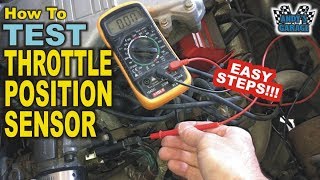
- Test the sensor itself. Reconnect it and use the back-probe method to measure the voltage on the signal wire. As the throttle is slowly opened by hand, the voltage should sweep smoothly and consistently from approximately 0.5V to 4.5V. Any dropouts, spikes, or a reading stuck at zero indicates a bad sensor. 🎬 Watch: This video shows you how to test the sensor.
- If the sensor tests good but the code persists, perform a 'wiggle test'. While monitoring the TPS signal on a scan tool or multimeter, wiggle the wiring harness between the sensor and the firewall to check for any intermittent opens or shorts.
- If the sensor and wiring are confirmed to be good, the final and least likely possibility is a fault within the ECM.
Parts You'll Likely Need
- Throttle Position Sensor (TPS)
(OEM #89452-35020)— This is the most common failure part for code P0122 on this specific vehicle. It is a mechanical wear item that fails over time.
Trusted brands: Toyota (Genuine), Denso (OEM supplier, part # 198500-1121 often cross-references), Aisin
OEM price range: $80-$125
Aftermarket price range: $40-$75 - TPS Mounting Screws
(OEM #90159-50383 (example, verify))— The original small Phillips head screws are often seized in the aluminum throttle body and can strip easily during removal. It is wise to have replacements on hand.
Trusted brands: Toyota (Genuine), Aftermarket hardware
OEM price range: $2-$5
Aftermarket price range: $1-$3
Related Codes That Often Appear With This One
- P0120 — This is a general 'Throttle/Pedal Position Sensor/Switch 'A' Circuit Malfunction' code that can appear alongside the more specific P0122.
- P0121 — This code indicates a 'Range/Performance' problem with the TPS, suggesting the signal is erratic or not where the ECM expects it to be, which can happen as a sensor begins to fail.
- P0123 — This is the opposite code, for 'Circuit High Input'. Seeing both P0122 and P0123 intermittently can point to a sensor with an internal short or a loose connection causing wild voltage swings.
Platform-Specific Known Issues
- The 2000-2004 Tundra uses a cable-actuated throttle, making the TPS a simple, separate part on the throttle body. The 2005-2006 models use a 'drive-by-wire' system (ETCS-i) which complicates diagnosis.
- Some parts catalogs list 89452-30140 for early models, but this part rotates in the incorrect direction for this application. The correct part for the cable-actuated 2UZ-FE is 89452-35020. Always verify the part number with the vehicle's VIN.
- Owners report great success using the Denso-branded sensor, which is the original equipment manufacturer, often at a lower cost than the Toyota-branded part.
Mechanic-Grade Diagnostic Values
- TPS Resistance (between terminals VC & E2) — expected: 1.25 - 2.35 kΩ at 68°F (20°C). Failure: A reading outside this range indicates a faulty sensor.
- TPS Signal Voltage (VTA) at ECM, throttle fully closed — expected: 0.5V - 1.0V. Failure: A reading below ~0.2V will trigger P0122.
- TPS Signal Voltage (VTA) at ECM, throttle wide open — expected: ~4.5V. Failure: Voltage does not sweep smoothly to this level or drops out.
- Reference Voltage at TPS connector (VC pin) — expected: 4.5V - 5.5V with key on, engine off. Failure: No voltage or low voltage points to a wiring or ECM issue, not a bad sensor.
Wiring & Ground Locations
- E2 (Sensor Ground) — The TPS sensor ground (E2) is provided directly by the Engine Control Module (ECM), not a chassis ground. The main engine-to-chassis grounds are located at the rear of the cylinder heads near the transmission.. A bad engine ground can cause floating voltages and erratic sensor behavior. While the TPS ground is in the ECM, the ECM itself relies on solid engine and chassis grounds. Verifying the main ground straps are clean and tight is a valid, though less common, diagnostic step for persistent, unexplained electrical issues.
- ECM Connector E8 (for 2005-2006 ETCS-i models) — Behind the glove compartment.. For drive-by-wire models, testing at the ECM is necessary to differentiate between a bad sensor, wiring fault, or ECM issue. Pin 20 (VTA) and Pin 18 (VTA2) are the signal wires, Pin 13 (VC) is the 5V reference, and Pin 22 (E2) is the sensor ground.
Real Owner Repair Stories
- Tundras.com forum user (2002 Toyota Tundra 4.7L V8) — Hesitation, stalling at low speeds, and P0122 code. Symptoms were intermittent.
❌ Tried (didn't work) Initially replaced the Throttle Position Sensor with an aftermarket part, which failed within a few months.
✅ What actually fixed it The user found that the throttle body plate was sticking due to carbon buildup. This caused the throttle to not return to the correct idle position, putting stress on the TPS and causing erratic readings. The final fix was to thoroughly clean the throttle body bore and plate with throttle body cleaner and then install a new, genuine Denso TPS. The combination of cleaning the throttle body and using a high-quality OEM sensor resolved the issue permanently. - YotaTech forum user (2000 Toyota Tundra 4.7L V8) — Check Engine Light with codes P0122 and P0123 (high voltage).
❌ Tried (didn't work) Clearing the codes.
✅ What actually fixed it The user performed a resistance test on the TPS and found it was out of specification. Replacing the TPS with a new unit and clearing the codes resolved the problem. This case highlights that having both high and low voltage codes simultaneously is a strong indicator of an internal sensor failure.
OEM Part Supersession History
89452-35020→89452-35020 (still active), sometimes incorrectly cross-referenced to 89452-22090— N/A
Heads up: Part number 89452-35020 is the correct sensor for the cable-driven 4.7L 2UZ-FE. Some catalogs may suggest 89452-30140 or 89452-22090, which are physically similar but have a different rotational direction or voltage sweep. Using the wrong part will result in immediate running issues and new trouble codes. The Denso aftermarket equivalent is often listed as 198500-1121.
Model Year Variations Within This Range
- 2000-2004: These models use a mechanical throttle cable. Diagnosis for P0122 is straightforward and focuses on the TPS sensor on the throttle body, its wiring, and the ECM.
- 2005-2006: These models use the Electronic Throttle Control System (ETCS-i), or 'drive-by-wire'. While they still have a TPS on the throttle body, they also have an Accelerator Pedal Position (APP) sensor. A P0122 code on these trucks requires a more complex diagnosis to determine if the fault lies with the TPS, the APP sensor, the throttle motor, the wiring between them, or the ECM. The symptoms and causes listed in this article primarily apply to the more common 2000-2004 cable-throttle setup.
Diagnostic Flowchart
Other Known Issues on This Vehicle
Issues unrelated to this code that are worth knowing about as an owner of this generation:
- Frame Rust Perforation 🔴 High — Very common on vehicles in the 'Salt Belt' states. A recall and warranty enhancement program were issued for 2000-2003 models, but all first-gen Tundras are susceptible. (Ref: NHTSA Campaign ID: 09V444000 (for 2000-2003 models); Warranty Enhancement Programs also existed.)
- Lower Ball Joint Failure 🔴 High — A well-documented and dangerous issue where premature wear can cause the ball joint to separate, leading to a loss of steering control. Many owners perform preventative replacement around 100,000 miles. (Ref: NHTSA Campaign IDs: 05V225000 (for 2002-2004 models) and 07V013000 (for 2004-2006 models).)
- Cracked Exhaust Manifolds 🟠 Medium — Extremely common issue on the 2UZ-FE, causing an audible 'ticking' noise, especially when the engine is cold. The noise may lessen or disappear as the engine warms up and the metal expands.
- Timing Belt and Water Pump Replacement 🟠 Medium — This is a critical maintenance item, not a failure. The 2UZ-FE is a non-interference engine, so a snapped belt won't destroy the engine, but it will leave the driver stranded. The replacement interval is every 90,000-100,000 miles and should include the water pump, tensioner, and idlers.
- Pink Milkshake (Radiator/Transmission Cooler Failure) 🔴 High — Occurs when the internal wall between the radiator and the integrated transmission fluid cooler fails, allowing coolant and transmission fluid to mix. This can quickly destroy the transmission. It is a known issue on many Toyota trucks and SUVs of this era.
Used vs. New Parts: Buying Guide for This Vehicle
When a used part is the smart pick: Almost never for the sensor itself. The Throttle Position Sensor is a high-wear electronic component with a finite lifespan. A used sensor from a junkyard has an unknown history and is likely to fail soon, if it works at all. Buying a complete used throttle body assembly to harvest the OEM screws or connectors can be a cost-effective option if those small parts are damaged or lost.
Donor-vehicle mileage cap: roughly under 50000 miles for the part to have meaningful remaining life.
What to inspect on the donor part:
- For a complete throttle body assembly, check for minimal carbon buildup inside the bore.
- Ensure the throttle plate moves smoothly without sticking or binding.
- Verify the electrical connector is free of corrosion, and the plastic is not cracked or brittle.
OEM-only on this vehicle (don't cheap out):
- Throttle Position Sensor (TPS)
Aftermarket brands forum-validated for this vehicle:
- Denso (This is the Original Equipment Manufacturer and is identical to the Toyota genuine part, often at a lower price)
- Aisin
Brands owners have reported issues with on this vehicle:
- Unbranded, 'white-box' sensors from online marketplaces. Forum consensus indicates these parts have a very high failure rate, often failing within weeks or months, causing the original problem to return.
Real Owner Stories
Aggregated from forums and TSBs cited above. Mileages and costs reflect what owners reported in those sources.
2000 Toyota Tundra 4.7L 2UZ-FE
Symptoms: The vehicle was experiencing hesitation and stalling. A multimeter test confirmed a dead spot in the sensor's signal.
What fixed it: Replacing the TPS with a new one from the dealership.
Source hint: TundraSolutions.com - 'P0122 Throttle Position Sensor Code' post by user '99yota'
Related OBD-II Codes
Frequently Asked Questions
Which specific Throttle Position Sensor part number should I use for my 2000-2004 Tundra 4.7L?
Is there a difference in the TPS system for the 2005-2006 Tundra models?
Can I use an aftermarket sensor, or should I stick with OEM for the 2UZ-FE?
My Tundra has a P0122 and a ticking noise when cold; are these related?
Are there any recalls for the 2000-2006 Tundra that I should check while fixing my TPS?
I just replaced my TPS and now the idle is wrong. Did I get a bad part?
Helpful Videos


We Have This Part in Stock

The information in this article is provided for general reference and educational purposes only. Vehicle specifications, procedures, and part compatibility can vary by production date, trim level, and region. Always consult your vehicle's factory service manual and verify part numbers before purchasing or performing repairs. Safety-critical components such as airbags, seat belts, and braking systems should be installed by a qualified professional.
- Toyota Tundra:
- 🧭 Diagnostic Flowchart
- 🎬 Helpful Videos
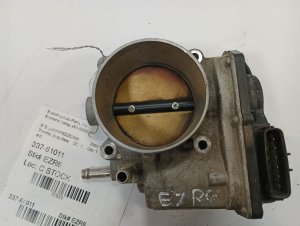
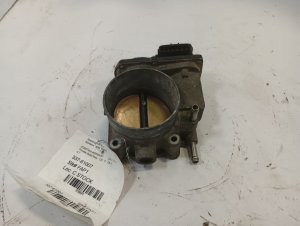
- 🛍️ Shop This Part
- What's Unique About the 2000-2006 Toyota Tundra
- Symptoms You May Notice
- Most Likely Causes
- Rare But Worth Checking
- Diagnosis Steps
- Parts You'll Likely Need
- Related Codes That Often Appear With This One
- Platform-Specific Known Issues
- Mechanic-Grade Diagnostic Values
- Wiring & Ground Locations
- Real Owner Repair Stories
- OEM Part Supersession History
- Model Year Variations Within This Range
- Other Known Issues on This Vehicle
- Used vs. New Parts: Buying Guide for This Vehicle
- Real Owner Stories
- 2000 Toyota Tundra 4.7L 2UZ-FE
- Related OBD-II Codes
- Frequently Asked Questions
- 🎟️ Get 5% Off