

P0123 on 2005-2011 Audi A6 3.2L FSI: Throttle Position Sensor High Input Causes and Fixes
On a 2005-2011 Audi A6 3.2L, P0123 is most often caused by a wiring issue between the throttle body and the engine computer, as noted in an Audi TSB. Before replacing the expensive throttle body, inspect the wiring harness for damage. A throttle body replacement can cost over $700 for the part alone.
- Always check the wiring harness between the throttle body and the ECM first; this is a known issue documented by Audi in TSB 2018260/8.
- Do not immediately assume the expensive throttle body has failed. A wiring repair is much cheaper.
- If you replace or clean the throttle body, a 'Throttle Body Adaptation' with a proper scan tool is not optional—it is required for the car to run correctly.
- Symptoms include a Check Engine Light, EPC light, and the car entering a low-power 'limp mode'.
What's Unique About the 2005-2011 Audi A6
For the C6 generation Audi A6 with the 3.2L FSI engine, this code is frequently linked to a specific, documented wiring problem. Audi released a Technical Service Bulletin (TSB 2018260/8, also listed as 97-08-25) for the 2005-2009 models pointing to high contact resistance in the wiring harness between the throttle body and the ECM as the primary culprit. This means that unlike many other cars where a high input code points directly to a failed sensor, on this specific Audi, the wiring itself is a very common point of failure that must be checked first.
Symptoms You May Notice
- Check Engine Light (MIL) is on
- Electronic Power Control (EPC) light is illuminated on the dashboard
- Vehicle enters a low-power 'limp mode' with severely limited acceleration
- Rough or unstable idle
- Hesitation or jerky acceleration
- Engine may stall
- Engine revs but power does not increase
- Replacing the throttle body assembly when the actual problem is a fault in the wiring harness. The Audi TSB for this issue makes it clear that wiring is a primary suspect and should be checked first to avoid the unnecessary expense of a new throttle body.
Most Likely Causes
- Wiring Harness Fault (Contact Resistance) 🔴 High Probability Audi issued Technical Service Bulletin 2018260/8 specifically for this issue on 2005-2009 models, indicating a known weakness in the wiring or connectors between the ECM and the throttle body. The TSB recommends a wiring repair kit with improved gold-plated contacts.
How to confirm: Visually inspect the wiring harness leading to the throttle body for any signs of fraying, damage, or corrosion at the 6-pin connector. Perform a 'wiggle test' with the engine running: gently move the connector and harness; if the idle changes or the EPC light flickers, the wiring is faulty. Use a multimeter to check for continuity and shorts in the wires between the throttle body connector and the ECM connector, referencing a factory wiring diagram. Wire resistance should be a maximum of 1.5 ohms.
Typical fix: Repair the damaged section of the wiring harness using the official Audi repair kit (part number may vary, e.g., 000979025FA for individual wires) which uses crimp connectors with gold-plated terminals. Do not use solder, as it can become brittle. In some cases, simply unplugging, cleaning the pins with contact cleaner, and reconnecting the throttle body connector may provide a temporary fix, confirming a connection problem.
Est. part cost: $20-$60 for wiring repair supplies. - Faulty Throttle Body Assembly 🟡 Medium Probability → Shop Fuel Injection Throttle Body The internal electronics of the throttle position sensor, which is integrated into the throttle body, can fail intermittently or completely, especially at higher mileage (over 100k miles).
How to confirm: If the wiring harness has been confirmed to be in good condition, the fault is likely internal to the throttle body itself. A diagnostic scan tool can be used to monitor the throttle position sensor voltage in real-time; erratic or pegged high readings point to a bad sensor. Swapping with a known-good unit is a definitive test.
Typical fix: Replace the entire throttle body assembly. After replacement, a 'Throttle Body Adaptation' (TBA) procedure must be performed with a compatible diagnostic tool (like VCDS/VAG-COM) to calibrate the new unit with the ECM.
Est. part cost: $400-$750 - Dirty or Obstructed Throttle Body ⚪ Low Probability → Shop Fuel Injection Throttle Body Carbon buildup is common on FSI engines and can restrict the movement of the throttle plate, potentially causing the motor to strain and sensors to report incorrect values. However, this usually causes performance issues or different codes before P0123.
How to confirm: Remove the air intake hose and visually inspect the throttle plate and bore for significant black carbon buildup.
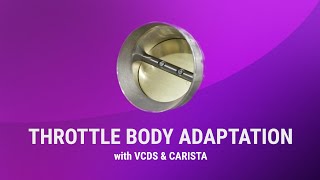
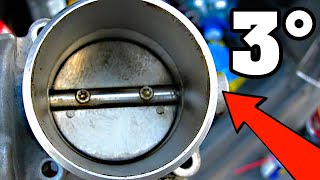
Typical fix: Clean the throttle body bore and plate with a dedicated throttle body cleaner and a soft brush or cloth. Do not spray cleaner directly into the electronics. A Throttle Body Adaptation is highly recommended after cleaning. 🎬 See this video guide on VAG throttle body adaptation
Est. part cost: $5-$15 for cleaner.
Rare But Worth Checking
- Faulty Engine Control Module (ECM): → Shop Engine Control Module (ECM) This is extremely rare. The ECM should only be considered as the cause after all other possibilities, including wiring and the throttle body itself, have been exhaustively tested and ruled out.
Diagnosis Steps
- Scan for Codes: Use an OBD-II scanner (VCDS is preferred for VW/Audi) to confirm P0123 and check for any other related codes like P0221 or P1579.
- Inspect Wiring (TSB First): Before touching any parts, carefully inspect the entire wiring harness between the throttle body and the firewall, focusing on the 6-pin connector. Look for chafing, breaks, or corroded pins. Perform a 'wiggle test' on the harness with the engine running to see if it affects the idle.
- Test the Circuit: If visual inspection is inconclusive, use a multimeter and a wiring diagram to test for the proper 5V reference voltage, ground, and signal at the throttle body connector. Verify the signal wire is not shorted to power. Check wire resistance between the throttle body connector and ECM connector; it must be below 1.5 ohms.
- Inspect and Clean Throttle Body: Remove the intake boot and inspect the throttle body for heavy carbon buildup that could impede the throttle plate's movement. If dirty, clean it thoroughly. This is a low-cost step but is less likely to be the root cause of a 'High Input' code.
- Test with a Known-Good Part: If wiring and cleanliness are ruled out, the most definitive test is to replace the throttle body assembly.
- Perform Adaptation: After any cleaning, replacement, or significant wiring repair, perform the mandatory Throttle Body Adaptation. Using VCDS, go to Engine -> Basic Settings -> Group 060, and act 🎬 Watch: How to perform a throttle body adaptation using VCDSivate. The system will cycle and report 'ADP OK'.
Parts You'll Likely Need
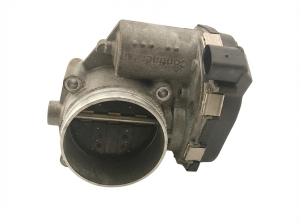
- Throttle Body Assembly
(OEM #06E133062C (superseded by 06E133062G))— If the internal throttle position sensor has failed, the entire assembly must be replaced as the sensor is not available separately.
Trusted brands: Bosch, VDO (Continental)
OEM price range: $600-$750
Aftermarket price range: $350-$500 - Throttle Body Gasket
(OEM #06E133073)— The gasket should always be replaced whenever the throttle body is removed to prevent vacuum leaks.
Trusted brands: Victor Reinz, Elring
OEM price range: $10-$20
Aftermarket price range: $5-$15 - Wiring Harness Repair Kit
(OEM #Varies, e.g., 000979009E (individual wire))— Needed to perform the repair outlined in TSB 2018260 if the wiring harness is found to be the cause.
Trusted brands: Audi Genuine Part
OEM price range: $30-$80
Related Codes That Often Appear With This One
- P0221 — This code for 'Throttle/Pedal Position Sensor 'B' Circuit Range/Performance' often appears with P0123 because the system uses two sensors (G187 and G188) for redundancy. A wiring or component failure often affects both sensor signals.
- P0121 — This code for 'Throttle/Pedal Position Sensor 'A' Circuit Range/Performance' can also be stored alongside P0123, indicating an implausible signal.
- P1579 — This is a manufacturer-specific code for 'Throttle Actuator (J338) - Adaptation Not Started'. It often appears when the throttle body has been replaced or cleaned but the adaptation procedure was not performed, or if the underlying fault is preventing adaptation.
Technical Service Bulletins (TSBs) & Recalls
- Audi TSB 2018260/8 (also listed as 97-08-25): MIL on with P0123, P0121, P0221, etc., stored in ECM, caused by contact resistance in the wiring. Recommends installing a wiring repair kit.
Platform-Specific Known Issues
- A Technical Service Bulletin (TSB 2018260/8 or 97-08-25) was issued for 2005-2009 models due to high contact resistance in the throttle valve wiring harness, making this a known factory issue that should be the first diagnostic check.
Mechanic-Grade Diagnostic Values
- Throttle Body Connector - 5V Reference Voltage — expected: 4.5 - 5.5 Volts. Failure: Voltage below 4.5V or above 5.5V indicates a problem with the ECM or wiring.
- Wiring resistance between Throttle Body connector and ECM connector — expected: Max 1.5 ohms. Failure: Resistance higher than 1.5 ohms indicates excessive resistance in the wire, a common cause for this code per the TSB.
- VCDS Measuring Block 062 - Throttle Position Sensor 1 (G187) and 2 (G188) Angle — expected: At idle (foot off pedal), values should be around 12-16%. As the throttle is opened, both values should increase smoothly and in correlation with each other.. Failure: One value is stuck high (e.g., >90%), does not change, or moves erratically. A large discrepancy between the two sensor values will also trigger a fault.
Scan Tool Commands That Help
- VCDS (VAG-COM): Engine -> Measuring Blocks -> Group 062 — Use this to view the live angle percentage readings from the two internal throttle position sensors (G187 and G188). This is critical for diagnosing whether the sensor is sending a faulty 'high' signal or if the signal is erratic.
- VCDS (VAG-COM): Engine -> Basic Settings -> Group 060 — This is the Throttle Body Adaptation (TBA) procedure. It is mandatory after cleaning or replacing the throttle body. Running this command allows the ECM to learn the new closed, open, and partial throttle positions. Failure to perform adaptation can cause codes like P1579 to appear.
Wiring & Ground Locations
- Throttle Body Connector (J338) — 6-pin electrical connector plugged directly into the throttle body assembly, located at the rear of the intake manifold.. This is the primary location for the wiring fault described in TSB 2018260/8. High contact resistance or damage to the pins/wires in this connector is the most common cause of P0123 on this vehicle.
- Engine Block Ground Strap — A thick braided strap or wire connecting the engine block/cylinder head to the vehicle's chassis/firewall.. A poor engine ground can cause unstable or incorrect readings from all engine sensors that use the block as a ground reference. While not the most common cause, it can lead to erratic electrical issues, including sensor voltage faults.
- ECM Ground Point — The ECM is located in the plenum chamber (under the plastic cowl below the windshield). Its ground points are typically secured to the chassis nearby. A key ground point is often found on the right side of the engine compartment near the alternator.. The ECM relies on a clean, solid ground to accurately interpret sensor voltages. A compromised ECM ground can cause it to misread the throttle position sensor signal, potentially leading to a 'high input' code.
Real Owner Repair Stories
- AudiWorld Forums user 'Bill Mitchell' ('07 Audi A6 3.2L, 230,239 km) — Intermittent throttle body codes (P0221, P1579) and limp mode.
❌ Tried (didn't work) Replacing the throttle body with a used unit. The codes returned a month later.
✅ What actually fixed it The user suspected and suggested replacing the ECM power supply relay, noting that a TSB existed for this relay on newer cars and that intermittent, strange running issues could be a symptom.
OEM Part Supersession History
06E133062C→06E133062G, 06E133062H— Likely an internal revision to improve reliability of the electronic components or address wear issues. The 'G' and 'H' revisions are the current replacements.
Heads up: The parts are physically interchangeable, but it is always recommended to use the latest revision (G or H) for any replacement.
Model Year Variations Within This Range
- 2005-2009: These model years are specifically called out in Audi TSB 2018260/8 for the wiring harness contact resistance issue. While later models (2010-2011) can still experience this code, the wiring is a less likely 'known issue' compared to the earlier production years.
Diagnostic Flowchart
Other Known Issues on This Vehicle
Issues unrelated to this code that are worth knowing about as an owner of this generation:
- Intake Valve Carbon Buildup 🔴 High — Becomes noticeable between 50,000-80,000 miles. A universal issue for early FSI engines. Symptoms include rough idle, misfires, and loss of power. (Ref: Audi TSB 2019948, which addresses misfires, recommends intake valve cleaning as a solution.)
- Timing Chain Tensioner Failure 🔴 High — Can occur after 60,000-80,000 miles, often signaled by a rattling noise on cold starts. Failure can be catastrophic and requires engine-out service.
- High Oil Consumption / Oil Leaks 🟠 Medium — Common on higher mileage (80,000+ miles) engines. Leaks often originate from valve cover gaskets, timing chain covers, and oil filter housing gaskets.
- Intake Manifold Runner Flap Failure 🟠 Medium — Carbon buildup can cause the plastic runner flaps in the intake manifold to stick, typically after 70,000 miles, triggering codes like P2006/P2007.
Used vs. New Parts: Buying Guide for This Vehicle
When a used part is the smart pick: A used throttle body can be a cost-effective option if you can verify it comes from a lower-mileage, running vehicle. Given the high cost of a new OEM part, a used unit can save hundreds of dollars. However, it carries the risk of having the same internal electronic failure.
Donor-vehicle mileage cap: roughly under 80000 miles for the part to have meaningful remaining life.
What to inspect on the donor part:
- Ask for the VIN of the donor car to verify mileage and model year.
- Inspect the electrical connector pins for any signs of corrosion, bending, or damage.
- Check the throttle plate for excessive carbon buildup; a very dirty unit may suggest a high-mileage or poorly maintained engine.
- Ensure there is no physical damage to the housing or electrical components.
OEM-only on this vehicle (don't cheap out):
- Wiring Harness Repair Kit: For the TSB-related wiring fix, it is critical to use the official Audi repair wires with gold-plated terminals to ensure a durable, low-resistance connection.
Aftermarket brands forum-validated for this vehicle:
- Bosch
- VDO (Continental)
Brands owners have reported issues with on this vehicle:
- Unbranded, low-cost units from online marketplaces. Forum discussions often show these parts failing quickly or having calibration issues, leading to more diagnostic time and repeated repairs.
Real Owner Stories
Aggregated from forums and TSBs cited above. Mileages and costs reflect what owners reported in those sources.
2006 Audi A6 3.2L FSI V6 — 119000 miles
Symptoms: Stalling and multiple warning lights on the dashboard.
What fixed it: Replacement of the throttle body assembly (dealer diagnosed as intermittent failure).
Cost: $1200+
Source hint: AudiWorld: 'Throttle Body Failure on 3.2 at 119K miles: Unusual?'
2005-2009 Audi A6 3.2L FSI V6
Symptoms: MIL on with P0123, P0121, or P0221 stored in the ECM.
What fixed it: Installing a wiring repair kit with improved gold-plated contacts to resolve contact resistance.
Source hint: Audi TSB 2018260/8 (also listed as 97-08-25)
Audi A6 (C6) 3.2L FSI V6
Symptoms: Intermittent codes and limp mode even after replacing the throttle body with a used unit.
What fixed it: The source suggests investigating other electrical issues like the wiring or the ECM relay when a throttle body swap fails.
Source hint: AudiWorld: 'Throttle Actuator & ECM intermittent codes limp mode 3.2 engine'
Related OBD-II Codes
Frequently Asked Questions
My 2007 Audi A6 3.2L has an EPC light and P0123; is there a known factory defect for this?
Can I just solder the wires to fix the throttle body connector on my A6?
What is the 'Throttle Body Adaptation' I keep hearing about for the 3.2L FSI engine?
Is it possible that carbon buildup is causing my P0123 code?
How can I tell if the wiring harness is the problem without expensive tools?
What is the maximum resistance allowed for the throttle body wiring on this Audi?
Helpful Videos
We Have This Part in Stock

The information in this article is provided for general reference and educational purposes only. Vehicle specifications, procedures, and part compatibility can vary by production date, trim level, and region. Always consult your vehicle's factory service manual and verify part numbers before purchasing or performing repairs. Safety-critical components such as airbags, seat belts, and braking systems should be installed by a qualified professional.
- Audi A6:
- 🧭 Diagnostic Flowchart
- 🎬 Helpful Videos
- 🛍️ Shop This Part
- What's Unique About the 2005-2011 Audi A6
- Symptoms You May Notice
- Most Likely Causes
- Rare But Worth Checking
- Diagnosis Steps
- Parts You'll Likely Need
- Related Codes That Often Appear With This One
- Technical Service Bulletins (TSBs) & Recalls
- Platform-Specific Known Issues
- Mechanic-Grade Diagnostic Values
- Scan Tool Commands That Help
- Wiring & Ground Locations
- Real Owner Repair Stories
- OEM Part Supersession History
- Model Year Variations Within This Range
- Other Known Issues on This Vehicle
- Used vs. New Parts: Buying Guide for This Vehicle
- Real Owner Stories
- 2006 Audi A6 3.2L FSI V6 — 119000 miles
- 2005-2009 Audi A6 3.2L FSI V6
- Audi A6 (C6) 3.2L FSI V6
- Related OBD-II Codes
- Frequently Asked Questions
- 🎟️ Get 5% Off