

P0123 on 2006-2013 Chevrolet Corvette LS7: Throttle Position Sensor High Voltage Causes and Fixes
On a 2006-2013 Corvette with the LS7 V8, code P0123 is almost always caused by a failed throttle position sensor (TPS). Since the sensor is built into the throttle body, the entire assembly must be replaced. The correct part number depends on the year: 2006-2008 models use the 'silver blade' (GM P/N 12570790), while 2009-2013 models use the 'gold blade' (GM P/N 12605109). A throttle relearn procedure is mandatory after replacement.
- P0123 on an LS7 Corvette almost always means the throttle body has failed internally and requires replacement.
- Crucially, you must use the correct throttle body: GM #12570790 ('silver blade') for 2006-2008 models, and GM #12605109 / 19420707 ('gold blade') for 2009-2013 models.
- Before buying parts, check battery health and inspect the throttle body's wiring and connector for obvious damage or corrosion.
- After replacing the throttle body, a throttle relearn procedure is mandatory to prevent idle and performance issues.
What's Unique About the 2006-2013 Chevrolet Corvette
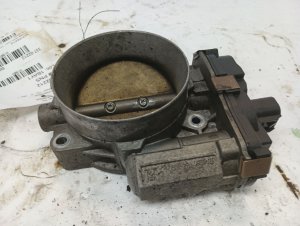
The C6 Corvette uses a 'drive-by-wire' system with no physical throttle cable. The critical issue on this platform is that the throttle position sensors (TPS) are integrated directly into the electronic throttle body assembly and are not sold separately by GM. This design means that if the common internal TPS failure occurs, the entire throttle body unit must be replaced. A key distinction for the C6 generation is the throttle body used: 2006-2008 LS7 models typically use the 90mm 'silver blade' throttle body (GM Part #12570790). Around 2009, GM switched to a 'gold blade' 90mm throttle body for the LS7 and LS3 engines (GM Part #12605109, superseded by #19420707). Using the correct version for the vehicle's model year is important for proper function, as the PCM calibration is different and they are not interchangeable. The C6 platform also integrates the Throttle Actuator Control (TAC) functions directly into the Powertrain Control Module (PCM), unlike the C5 which used a separate TAC module.
Symptoms You May Notice
- "Reduced Engine Power" message on the driver information center
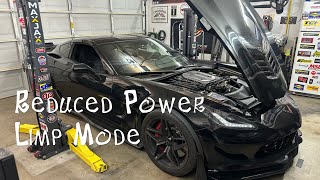
- Vehicle enters 'limp mode,' limiting speed and RPM
- Poor, hesitant, or delayed acceleration
- Unpredictable or erratic throttle response
- Bucking or jerking when trying to accelerate
- Engine idle speed is higher than normal
- Check Engine Light is on
- Engine may stall at low speeds
- Traction Control or Active Handling system fault messages
- Replacing the accelerator pedal position (APP) sensor. P0123 specifically refers to the sensor at the throttle body on the engine. The APP sensor at the gas pedal has its own distinct trouble codes (e.g., P2138).
Most Likely Causes
- Faulty Throttle Body Assembly (Internal TPS Failure) 🔴 High Probability → Shop Fuel Injection Throttle Body The non-serviceable throttle position sensor is integrated into the throttle body assembly. Internal failure of this sensor is the most common cause of P0123 on this platform, as documented in numerous owner forums.
How to confirm: After verifying the wiring and connectors are intact, the diagnosis is confirmed by exclusion. If the 5V reference and ground are good at the connector but the signal voltage is stuck high (above 4.5V) regardless of pedal input, 🎬 Watch how to test a throttle position sensor the throttle body assembly is faulty.
Typical fix: Replace the entire throttle body assembly with the correct part number for the model year. A 'throttle relearn' procedure is required after installation.
Est. part cost: $200-$500 - Wiring or Connector Issue 🟡 Medium Probability Engine heat and vibration can cause wiring harnesses to become brittle or chafe over time. Corrosion or fretting at the connector pins (a known GM issue) can also disrupt the signal.
How to confirm: Visually inspect the wiring harness leading to the throttle body for any signs of damage, chafing, or melting. A known chafe point is near injector #7 where the harness may bend. Disconnect the connector and check for corrosion, moisture, or bent/loose pins. Use a multimeter to test for a stable 5-volt reference and good ground at the connector.
Typical fix: Repair the damaged section of the wiring harness or clean/replace the electrical connector pigtail. Cleaning the connector with electrical cleaner and applying dielectric grease is a common, often successful first step.
Est. part cost: $10-$100
Rare But Worth Checking
- Faulty Powertrain Control Module (PCM): → Shop Engine Control Module (ECM) This is extremely rare. The PCM should only be considered after all other possibilities, including the throttle body and wiring, have been definitively ruled out.
Diagnosis Steps
- Connect an OBD-II scanner to confirm P0123 is the primary code and check for any other related codes like P0223 or P2135.
- Using the scanner's live data function, observe the voltage for TPS1 and TPS2. With the key on, engine off, TPS1 should read ~0.5V and sweep smoothly to ~4.5V as the accelerator is pressed. P0123 will often show a voltage stuck high.
- Visually inspect the entire wiring harness going to the throttle body. Look for any signs of chafing, melting, or physical damage, especially where the harness might rub against other components, such as near injector #7.
- Disconnect the electrical connector at the throttle body. Inspect the pins and terminals for corrosion, moisture, or damage. Ensure a snug fit. Cleaning the pins and applying dielectric grease is a common preventative and corrective measure.
- With the key on and engine off, use a multimeter to check the electrical connector (harness side). Verify you have a steady 5-volt reference on the correct pin and a solid ground on the ground pin. Refer to the wiring pinout for your specific model year.
- Check for poor engine grounds, specifically G107 on the rear of the driver's side cylinder head and G105/G106 on the engine block. A loose or corroded ground can cause floating voltage readings.
- If the wiring, power, and grounds are all confirmed to be good, the fault is almost certainly internal to the throttle body assembly.
- Replace the throttle body assembly, ensuring you use the correct part for your vehicle's year (Silver Blade #12570790 for '06-'08, Gold Blade #12605109 for '09-'13).
- After installation, perform the throttle relearn procedure. A common method without a scan tool is as follows:
- Start the engine and let it idle in Park until the coolant temperature reaches at least 176°F (80°C).
- Let the engine idle for at least 3-5 more minutes at this temperature.
- Turn the engine off and wait for at least 60 seconds.
- Restart the engine. The idle should now be stable. Some variations of the procedure suggest idling for periods with the A/C on and off as well.
- Drive the vehicle at speeds above 44 mph with several decelerations and extended idles to allow the PCM to fully adapt.
Parts You'll Likely Need
- Throttle Body Assembly (2006-2008)
(OEM #12570790)— For 2006-2008 models, this 'silver blade' assembly is the correct replacement. The internal, non-serviceable TPS is the typical point of failure.
Trusted brands: ACDelco, GM Genuine Parts
OEM price range: $350-$500
Aftermarket price range: $200-$350 - Throttle Body Assembly (2009-2013)
(OEM #12605109 (superseded by 19420707))— For 2009-2013 models, this 'gold blade' assembly is the correct replacement. The internal TPS is the failure point.
Trusted brands: ACDelco, GM Genuine Parts, Soler Performance (popular, performance-oriented aftermarket option)
OEM price range: $250-$450
Aftermarket price range: $200-$350
Related Codes That Often Appear With This One
- P0223 — This code is for 'Throttle/Pedal Position Sensor/Switch 'B' Circuit High Input'. Since drive-by-wire systems use two sensors for redundancy, a failure that affects both circuits (like a power, ground, or internal electronic issue) can cause both codes to appear simultaneously.
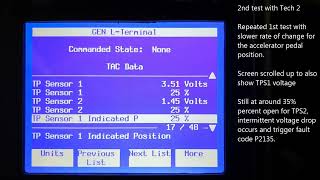
- P2135 — This code indicates 'Throttle/Pedal Position Sensor/Switch 'A'/'B' Voltage Correlation'. The ECM constantly compares the signals from the two TPS sensors. If one fails and sends a high voltage (P0123), it will no longer correlate with the other sensor, triggering P2135. 🎬 See a professional diagnostic walkthrough for code P2135
- P0122 — This is the opposite code, for 'Circuit Low Input'. Seeing P0122 and P0123 together often points to a severe electrical issue, like a failing alternator causing voltage spikes and drops, or a completely failed throttle body sending erratic signals.
Technical Service Bulletins (TSBs) & Recalls
- GM TSB #PIP4786B: While written for trucks, it is relevant as it addresses intermittent 'Reduced Engine Power' with codes like P0123, advising technicians to check for terminal fretting/corrosion at the throttle body and PCM connectors.
- GM TSB #13-06-01-001A: This bulletin addresses the well-known LS7 valve guide wear issue, a separate but critical problem for owners of this engine.
Platform-Specific Known Issues
- Electrical System Health: Corvette owners on forums have reported that a failing battery or alternator can cause voltage fluctuations that trigger a cascade of throttle-related codes, including P0123, P0122, and P0223, even if the throttle body itself is functional. Before replacing the throttle body, it is wise to have the battery load-tested and verify the alternator's output is stable, especially if the failure was sudden and accompanied by other electrical symptoms.
Mechanic-Grade Diagnostic Values
- Throttle Body Connector (X120) Pinout Voltages (Key On, Engine Off) — expected: Pin D (TPS1 Signal): ~4.0V at closed throttle, sweeps down to ~1.0V at wide-open. Pin F (TPS2 Signal): ~1.0V at closed throttle, sweeps up to ~4.0V at wide-open. Pin C: 5V Reference. Pin E: Low Reference (Ground).. Failure: For P0123, Pin D (TPS1 Signal) will be stuck high (above 4.5V) and will not sweep correctly when the pedal is pressed. Any pin not showing its expected voltage indicates a wiring or PCM issue.
Scan Tool Commands That Help
- Tech2 / GDS2: Throttle Position Sensor Voltage/Angle Comparison — When P0123 is accompanied by correlation code P2135, this function allows a technician to directly compare the ECM's commanded throttle angle with the actual angles reported by TPS1 and TPS2 in real-time. This confirms if the sensors are disagreeing, definitively pointing to a faulty throttle body.
Wiring & Ground Locations
- Throttle Body Connector (X120) — On the electronic throttle body mounted to the front of the intake manifold.. This 6-pin connector is the single interface for both TPS sensors and the throttle motor. Corrosion, moisture, or backed-out pins here are a primary cause of P0123 and related codes.
- G107 — On the rear of the left (driver's side) cylinder head.. This is a primary engine control ground. A loose or corroded G107 can cause erratic sensor readings and has been implicated in various electronic throttle control issues, including floating voltages that can trigger a P0123.
- G105 / G106 — On the lower right side of the engine block, typically near the starter.. These are critical grounds for the PCM. The main negative battery cable also connects here. A fault at this location can cause a wide range of driveability codes, including P0123.
- Wiring Harness Chafe Point — A known potential chafe point is near injector #7 where the harness bends around a metal bracket.. Vibration can cause the harness to rub through its insulation at this point, potentially causing the TPS signal wire to short to power, which would directly cause a P0123 code.
Real Owner Repair Stories
- CorvetteForum user (2006 Corvette (LS2, but same diagnostic principle)) — Intermittent 'Reduced Engine Power' mode during a long trip.
❌ Tried (didn't work) Waiting for the car to cool down, which only provided a temporary fix.
✅ What actually fixed it The connector for the throttle body was not fully seated. Pushing the connector on until it clicked securely resolved the problem permanently, indicating a connection issue rather than a part failure. - CorvetteForum user (2005 C6 Corvette LS2, 75,000 miles) — Occasional P2135 (Throttle Position Sensor 1-2 Correlation) code during cruising speeds.
❌ Tried (didn't work) Replacing the stock GM throttle body with two different Dorman aftermarket units. Both Dorman units caused the same P2135 code to appear immediately upon moderate to heavy acceleration (over 25% throttle).
✅ What actually fixed it The user's experience implies that the aftermarket Dorman units had different internal TPS calibration ranges than the OEM unit, causing the PCM to detect a correlation fault. The resolution requires finding a known-good used OEM unit or a high-quality aftermarket part specifically calibrated for the vehicle, like those from Soler Performance. - NHTSA ODI #10003154 (Cross-manufacturer reference) — An owner of a vehicle from the same manufacturer reported that the vehicle would unexpectedly lose power and lack accelerator response. A P0123 code was active and present, indicating a problem in the throttle position sensor circuit.
OEM Part Supersession History
12605109→19420707— Standard part number update by GM.
Heads up: These parts are interchangeable and are the correct 'gold blade' throttle body for 2009-2013 LS7/LS3 models.12570790 ('Silver Blade')→N/A— N/A
Heads up: The 'silver blade' throttle body for 2006-2008 models cannot be replaced with the 'gold blade' (12605109/19420707) used on 2009+ models. The PCM calibrations are different, and the car will not function correctly.
Model Year Variations Within This Range
- 2006-2008: These models use the 'silver blade' throttle body (GM P/N 12570790). The internal electronics and PCM calibration are specific to this part.
- 2009-2013: These models use the 'gold blade' throttle body (GM P/N 12605109, superseded by 19420707). This part is not backward-compatible with earlier C6 models.
Diagnostic Flowchart
Other Known Issues on This Vehicle
Issues unrelated to this code that are worth knowing about as an owner of this generation:
- LS7 Valve Guide Wear 🔴 High — A widely documented issue, most prevalent on 2006-2011 models. Caused by a supplier's machining error leading to non-concentric valve guides and seats. Can result in excessive oil consumption, valvetrain noise, and ultimately catastrophic engine failure if a valve head drops. Many owners perform a preventative cylinder head rebuild ($3,000-$6,000) to correct the geometry and install more durable bronze guides. (Ref: GM TSB #13-06-01-001A acknowledges the concern and provides a diagnostic procedure, but does not constitute a recall.)
- Harmonic Balancer Failure / Wobble 🟠 Medium — Common across all C6 models, including the LS7. The rubber elastomer bonding the outer pulley ring to the inner hub degrades, causing the balancer to wobble. Early symptoms include a persistent 'chirping' noise from the belt area. If it fails completely, it can throw the serpentine belt, leading to a loss of power steering, alternator function, and water pump circulation, causing rapid overheating. (Ref: TSB #05-06-01-001A addressed a loose crank bolt on early 2005 models, but the more common issue is the rubber delamination, which is not covered by a specific TSB for all years.)
Used vs. New Parts: Buying Guide for This Vehicle
When a used part is the smart pick: A used OEM throttle body can be a viable option if sourced from a reputable seller with a clear return policy, but it carries significant risk. Since the internal sensor is the primary failure point and it's a wear item, a used part may have limited life remaining or could be faulty from the start.
Donor-vehicle mileage cap: roughly under 60000 miles for the part to have meaningful remaining life.
What to inspect on the donor part:
- Verify the part number is correct for your model year ('silver blade' vs 'gold blade').
- Inspect the electrical connector pins for any signs of corrosion, bending, or damage.
- Check the throttle blade for excessive carbon buildup or scoring, which might indicate a hard life.
- Ask the seller for the mileage of the donor vehicle if possible.
Aftermarket brands forum-validated for this vehicle:
- Soler Performance: Frequently recommended on Corvette forums as a high-quality, reliable alternative to OEM. They offer new and reworked throttle bodies with potentially improved throttle response.
Brands owners have reported issues with on this vehicle:
- Dorman: Forum members have reported calibration and compatibility issues with Dorman throttle bodies on the C6 platform, leading to persistent trouble codes even with a new part.
Real Owner Stories
Aggregated from forums and TSBs cited above. Mileages and costs reflect what owners reported in those sources.
2006-2013 Chevrolet Corvette LS7
Symptoms: Experienced multiple TPS codes including P0122 and P0223, along with a 0 reading on the oil pressure gauge, immediately after replacing a dead battery.
What fixed it: The context suggests this is an electrical sensitivity issue where battery/charging system health must be verified before replacing hardware.
Source hint: CorvetteForum.com thread titled 'p0122-p0223-and-0-on-the-oil-pressure.html'
2006-2013 Chevrolet Corvette LS7
Symptoms: A cluster of TPS codes (P0120, P0122, P0123, P0220, P0223) appeared suddenly.
What fixed it: The failure was linked to an alternator failure; the charging system health was the root cause of the throttle control faults.
Source hint: CorvetteForum.com thread titled 'continued-issues-help.html'
2006-2008 Chevrolet Corvette LS7
Symptoms: Reduced Engine Power message, limp mode, and P0123 code with signal voltage stuck above 4.5V.
What fixed it: Replacement of the 'Silver Blade' throttle body assembly (P/N 12570790) followed by a throttle relearn procedure.
Source hint: Article Context: Common Causes and Diagnosis Steps
Related OBD-II Codes
Frequently Asked Questions
Which specific throttle body part number do I need for my 2007 Corvette Z06?
Does GM TSB #PIP4786B apply to the P0123 code on my Corvette?
Can I just replace the Throttle Position Sensor (TPS) on my LS7 throttle body?
Is there a way to reset the idle after replacing the throttle body without a professional scan tool?
Could my P0123 code be related to the LS7 valve guide issue mentioned in TSB #13-06-01-001A?
I just replaced my battery and now I have a P0123 code. Are they related?
Helpful Videos

Used OEM Parts in Stock
New Aftermarket Parts Available




The information in this article is provided for general reference and educational purposes only. Vehicle specifications, procedures, and part compatibility can vary by production date, trim level, and region. Always consult your vehicle's factory service manual and verify part numbers before purchasing or performing repairs. Safety-critical components such as airbags, seat belts, and braking systems should be installed by a qualified professional.
- Chevrolet Corvette:
- 🧭 Diagnostic Flowchart
- 🎬 Helpful Videos
- 🛍️ Shop This Part
- What's Unique About the 2006-2013 Chevrolet Corvette
- Symptoms You May Notice
- Most Likely Causes
- Rare But Worth Checking
- Diagnosis Steps
- Parts You'll Likely Need
- Related Codes That Often Appear With This One
- Technical Service Bulletins (TSBs) & Recalls
- Platform-Specific Known Issues
- Mechanic-Grade Diagnostic Values
- Scan Tool Commands That Help
- Wiring & Ground Locations
- Real Owner Repair Stories
- OEM Part Supersession History
- Model Year Variations Within This Range
- Other Known Issues on This Vehicle
- Used vs. New Parts: Buying Guide for This Vehicle
- Real Owner Stories
- 2006-2013 Chevrolet Corvette LS7
- 2006-2013 Chevrolet Corvette LS7
- 2006-2008 Chevrolet Corvette LS7
- Related OBD-II Codes
- Frequently Asked Questions
- 🎟️ Get 5% Off