

P0123 on 2008-2012 Ford Escape: Throttle Position Sensor High and Throttle Body Fixes
On a 2008-2012 Ford Escape, code P0123 is almost always caused by a failing electronic throttle body assembly, not just a bad sensor. This is a widespread, documented flaw. Replacing the entire throttle body is the standard fix, costing around $150-$250 for the part.
- For a 2008-2012 Ford Escape, P0123 almost always means the entire electronic throttle body has failed.
- This is a known, widespread issue confirmed by an NHTSA investigation and a Ford warranty extension program (13N03).
- Do not just clean the throttle body or try to replace a sensor; the entire assembly must be replaced for a lasting repair.
- After replacement, a throttle relearn procedure (battery disconnect, idle, drive cycle) is necessary to ensure proper idle and performance.
- This is a DIY-friendly repair for many home mechanics, with the part being relatively accessible on the engine.
- Check if your vehicle was covered by the 13N03 warranty extension, though it has likely expired for most vehicles by now.
What's Unique About the 2008-2012 Ford Escape
The 2008-2012 Ford Escape is notorious for electronic throttle body (ETB) failures. The problem, caused by contamination on the ETB's internal motor contacts leading to intermittent electrical connectivity, became so widespread that it prompted a National Highway Traffic Safety Administration (NHTSA) investigation (PE13-003). In response, Ford created Customer Satisfaction Program 13N03, which extended the warranty on the throttle body to 10 years or 150,000 miles for many of these vehicles, acknowledging the high failure rate. Therefore, a P0123 code on this specific vehicle, often accompanied by a wrench light, points strongly towards a faulty throttle body assembly rather than a simple sensor or wiring issue.
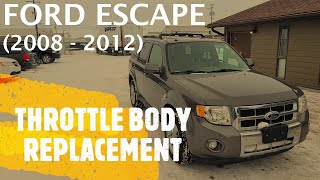
🎬 Watch: Diagnose and fix the wrench light and no throttle responseSymptoms You May Notice
- Check Engine Light is on
- Wrench light appears on the dashboard
- Vehicle enters 'limp mode' (reduced power)
- Sudden loss of power or hesitation during acceleration.
- Engine stalling, especially at idle or when coming to a stop
- Rough or erratic idle.
- Engine surging or revving unexpectedly
- Harsh or erratic transmission shifting
- Replacing only the throttle position sensor (TPS). On this vehicle, the TPS is integrated into the throttle body assembly, and the entire unit is the point of failure. The sensor is not typically sold separately.
- Cleaning the throttle body without replacement. While cleaning a dirty throttle body can solve some drivability issues, it will not fix the internal electronic fault that causes code P0123 on these models. The problem will almost certainly return.
Most Likely Causes
- Failing Electronic Throttle Body (ETB) Assembly 🔴 High Probability → Shop Fuel Injection Throttle Body A well-documented design flaw in the internal electronics of the ETB led to widespread failures, prompting an NHTSA investigation and a Ford warranty extension program (13N03). Contamination on the internal motor contacts is the primary cause of the intermittent electrical connectivity failure.
How to confirm: While other causes are possible, the high failure rate makes the ETB the primary suspect. Diagnosis involves checking for a stable 5-volt reference and good ground at the connector. A scan tool can monitor the TPS voltage; if it's stuck high (over 4.5V) or doesn't change smoothly as the throttle is commanded, the ETB is faulty. Given the history, if codes P0123, P2111, or P2112 are present, the ETB is almost certainly the cause.
Typical fix: Replace the entire electronic throttle body assembly. Cleaning is rarely a permanent solution for the internal electronic fault.
Est. part cost: $150-$300
Rare But Worth Checking
- Wiring Harness Issue: A short to voltage in the signal wire between the throttle body and the PCM can cause a constant high voltage reading. This could be due to chafing or damage to the harness. Check the wiring loom for any visible damage before replacing parts.
- Powertrain Control Module (PCM) Failure: → Shop Engine Control Module (ECM) While extremely rare, a fault within the PCM's internal circuits could cause it to misread the TPS signal. This should only be considered after the throttle body and wiring have been thoroughly checked and ruled out.
Diagnosis Steps
- Use an OBD-II scanner to confirm P0123 is present and check for other related codes like P2111 or P2112.
- With the key on, engine off, use a scan tool to observe the live data for the Throttle Position Sensor (TPS) voltage. It will likely be stuck at a high value (e.g., 4.5V or higher).
- Inspect the wiring harness and connector at the throttle body for any visible signs of damage, corrosion, or loose pins.
- If wiring looks good, the most probable cause is a failed throttle body assembly. Given the extremely high failure rate and Ford's own Customer Satisfaction Program (13N03), replacing the throttle body is the standard and most effective repair.
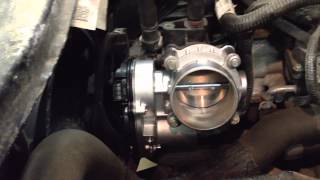
- After replacement, a throttle body relearn procedure must be performed. This can often be done without special tools by first disconnecting the battery for several minutes to clear the PCM's memory. After reconnecting, let the vehicle idle for at least 10 minutes, then drive a mix of city and highway speeds to allow the PCM to relearn the throttle parameters. 🎬 Watch: How to perform the electronic throttle body calibration
Parts You'll Likely Need
- Electronic Throttle Body Assembly
(OEM #Motorcraft DS7Z-9E926-D (or DS7Z-9E926-A) for 2.5L I4 & 3.0L V6. Always verify with VIN.)— This is the primary point of failure for code P0123 on the 2008-2012 Escape due to a well-documented design flaw. The throttle position sensor is integrated into this assembly.
Trusted brands: Motorcraft, Bosch, Hitachi, Standard Motor Products
OEM price range: $200-$350
Aftermarket price range: $100-$250
Related Codes That Often Appear With This One
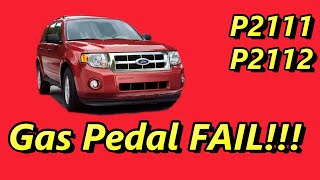
- P2111 — This code means 'Throttle Actuator Control System - Stuck Open'. It often appears as part of the same throttle body failure mode.
- P2112 — This code for 'Throttle Actuator Control System - Stuck Closed' is very common on this platform and directly points to the same widespread electronic throttle body failure.
Technical Service Bulletins (TSBs) & Recalls
- Ford Customer Satisfaction Program 13N03: Not a TSB, but a warranty extension program directly addressing the failing electronic throttle body.
- NHTSA Recall 14V284000 (Ford 14S05): Addresses the common electric power steering failure on 2008-2011 models.
- TSB 16-0043: Addresses a fluid leak from the left-side halfshaft seal on vehicles with the 6F35 transmission.
Platform-Specific Known Issues
- NHTSA Investigation PE13-003 was opened to investigate throttle body failures causing stalling and surging in 2009-2013 Ford Escapes and other models.
- Ford issued Customer Satisfaction Program 13N03, extending the warranty on the electronic throttle body for affected 2009-2013 Escapes and Mariners to 10 years or 150,000 miles. If the vehicle exceeded the limits, coverage lasted through January 31, 2015.
Mechanic-Grade Diagnostic Values
- TPS 'A' Signal Voltage (Key On, Engine Off) — expected: Approximately 0.4V - 0.8V at closed throttle, sweeping smoothly to ~4.5V - 4.8V at wide-open throttle.. Failure: Voltage is stuck high (near 5.0V), does not change with throttle movement, or has dropouts/spikes during the sweep.
- 5-Volt Reference Voltage (VREF) at ETB Connector — expected: Approximately 5.0 volts with the key on, engine off.. Failure: Voltage is significantly lower than 5.0V or is absent, indicating a wiring or PCM issue.
- Scan Tool Live Data: Relative Throttle Position (TP_REL) — expected: 15-19% at idle.. Failure: A value that does not correspond to the commanded throttle position (TAC_PCT) by more than a few percent.
- Dual TPS Voltage Sweep (TP1 vs TP2) — expected: As one sensor's voltage rises (e.g., ~0.5V to ~4.5V), the other sensor's voltage should fall mirror-image (e.g., ~4.5V to ~0.5V).. Failure: Any glitch, spike, or flat line in either sensor's reading during the sweep points to an internal failure of the throttle body assembly.
Scan Tool Commands That Help
- Ford IDS / FORScan: Clear KAM (Keep Alive Memory) — This function is used to erase the adaptive learning tables stored in the PCM, including idle and fuel trims. It should be performed after replacing the throttle body or disconnecting the battery to force the system to start a fresh learn cycle.
- Ford IDS / FORScan: Throttle Body Relearn / Reset All Adaptations — Professional scan tools can initiate a specific service routine to relearn the throttle body parameters immediately after replacement, which is more precise than the manual idle-relearn method.
- FORScan: Live Data PID Monitoring (TP1, TP2, TAC_PCT, TP_REL) — FORScan allows for detailed monitoring of specific Ford PIDs (Parameter IDs) for the two throttle position sensors, the commanded actuator position, and the relative throttle position. This is crucial for diagnosing intermittent glitches or confirming that sensor voltages are tracking each other correctly.
Wiring & Ground Locations
- C139 — The 6-pin electrical connector located directly on the electronic throttle body assembly.. This is the primary test point for all voltage, ground, and signal checks. Corrosion, moisture, or backed-out pins in this connector can directly cause high or low resistance, triggering TPS codes. Applying dielectric grease during reassembly is a common preventative measure.
- G104 — Located on the left front of the engine compartment, near the Battery Junction Box (BJB).. This is a major ground point for the engine compartment. A poor or corroded connection here can disrupt the ground reference for multiple sensors, including the throttle body, leading to erratic voltage readings.
- G101 — On the rear of the engine (for the 2.5L model).. This is a critical engine-to-chassis ground. A loose or corroded G101 can cause a host of sensor data errors and intermittent electrical problems, including incorrect TPS voltage signals.
OEM Part Supersession History
9L8Z-9E926-A→DS7Z-9E926-A, then DS7Z-9E926-D— Part revision and improvement by Ford to address the widespread failure issues.
Heads up: DS7Z-9E926-D is the latest, most reliable version and is the recommended replacement for all earlier part numbers on this vehicle.
Model Year Variations Within This Range
- 2009-2012: For the 2009-2012 model years, the throttle position sensor is definitively integrated into the electronic throttle body and is not available as a separate part. This requires the replacement of the entire assembly to fix a sensor-related code like P0123.
- 2008: While most 2008 models also have the integrated ETB, some very early production models or specific engine configurations from the 2001-2008 generation used a separable, bolt-on TPS. It is crucial for 2008 owners to visually inspect their throttle body to confirm whether the sensor is a separate black plastic module bolted to the side or if it's integral.
Diagnostic Flowchart
Other Known Issues on This Vehicle
Issues unrelated to this code that are worth knowing about as an owner of this generation:
- Electric Power Steering (EPAS) Failure 🔴 High — Extremely common. A faulty torque sensor in the steering column causes a sudden loss of power assist. (Ref: NHTSA Recall 14V284000 (Ford Recall 14S05) was issued for 2008-2011 models, but failures are still reported after the recall fix.)
- 6F35 Transmission Failure 🔴 High — Widespread issues reported, including harsh shifting, slipping, shuddering, and complete failure, sometimes at low mileage. This has led to class-action lawsuits. (Ref: TSB 16-0043 addresses a common fluid leak from the left-side halfshaft seal.)
- Rear Shock Tower Rust 🔴 High — Very common in regions using road salt. The upper rear shock mount area in the wheel well rusts through, causing the shock to detach. The passenger side is more commonly affected. (Ref: No recall, but aftermarket repair kits (e.g., Dorman 924-358) are widely available due to the frequency of the issue.)
- Cracked ABS Tone Ring 🟠 Medium — Common failure where the front ABS sensor ring cracks, causing the ABS and traction control lights to illuminate and the system to activate erratically at low speeds.
Used vs. New Parts: Buying Guide for This Vehicle
When a used part is the smart pick: A used throttle body from a salvage yard can be a cost-effective option, but it is a gamble. It makes most sense if the vehicle is near the end of its life and the primary goal is a low-cost, immediate repair. Given the high failure rate of the original parts, you risk installing a part that may fail soon.
Donor-vehicle mileage cap: roughly under 80000 miles for the part to have meaningful remaining life.
What to inspect on the donor part:
- Look for a donor vehicle that is a later model year (e.g., 2011-2012) if possible.
- Check the part number on the used unit; if it is the updated DS7Z-9E926-D, it is a better bet than the original 9L8Z-9E926-A.
- Inspect the connector pins for any signs of corrosion or damage.
- Ask the salvage yard about any warranty or return policy they offer.
OEM-only on this vehicle (don't cheap out):
- Electronic Throttle Body Assembly
Aftermarket brands forum-validated for this vehicle:
- Motorcraft (OEM)
- Bosch
Brands owners have reported issues with on this vehicle:
- Unbranded, no-name parts from online marketplaces should be avoided. While Dorman offers a replacement (e.g., 977-300), owner feedback is mixed, and sticking with the updated OEM Motorcraft part is the safest recommendation due to the critical nature of this component.
Real Owner Stories
Aggregated from forums and TSBs cited above. Mileages and costs reflect what owners reported in those sources.
2008 Ford Escape
Symptoms: Check engine light, vehicle is not idling well. Wrench light is on.
What fixed it: Replaced the throttle body.
Source hint: NHTSA PE13-003
2005 Ford Escape
Symptoms: Contradictory P0122 (Low Voltage) and P0123 (High Voltage) codes causing jerking motions.
What fixed it: Replacing the TPS sensor (part #988F-9B989-BB).
Source hint: Go-Parts.com (citing Escape-City.com)
2009-2012 Ford Escape
Symptoms: Owners discuss real-world experiences with the extended throttle body warranty and the failure of the electronic throttle body.
What fixed it: Electronic throttle body replacement under Ford's Customer Satisfaction Program 13N03.
Source hint: Ford Truck Enthusiasts Forum - '2009-12: Extended Throttle Body warranty may be useless'
Related OBD-II Codes
Frequently Asked Questions
Is there a warranty extension for the throttle body on my 2009-2013 Ford Escape?
My 2010 Escape is stalling and surging; did the NHTSA investigate this?
Can I just clean the throttle body to fix the P0123 code?
What specific replacement part should I use for the throttle body?
Do I need to perform a special procedure after replacing the ETB?
Does the Mercury Mariner share this P0123 throttle body issue?
Helpful Videos

Used OEM Parts in Stock
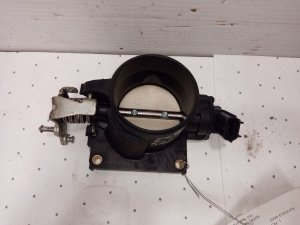
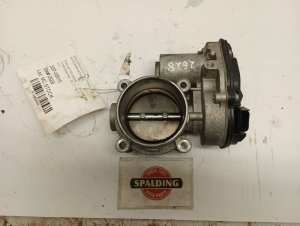
New Aftermarket Parts Available


The information in this article is provided for general reference and educational purposes only. Vehicle specifications, procedures, and part compatibility can vary by production date, trim level, and region. Always consult your vehicle's factory service manual and verify part numbers before purchasing or performing repairs. Safety-critical components such as airbags, seat belts, and braking systems should be installed by a qualified professional.
- Ford Escape:
- 🧭 Diagnostic Flowchart
- 🎬 Helpful Videos
- 🛍️ Shop This Part
- What's Unique About the 2008-2012 Ford Escape
- Symptoms You May Notice
- Most Likely Causes
- Rare But Worth Checking
- Diagnosis Steps
- Parts You'll Likely Need
- Related Codes That Often Appear With This One
- Technical Service Bulletins (TSBs) & Recalls
- Platform-Specific Known Issues
- Mechanic-Grade Diagnostic Values
- Scan Tool Commands That Help
- Wiring & Ground Locations
- OEM Part Supersession History
- Model Year Variations Within This Range
- Other Known Issues on This Vehicle
- Used vs. New Parts: Buying Guide for This Vehicle
- Real Owner Stories
- 2008 Ford Escape
- 2005 Ford Escape
- 2009-2012 Ford Escape
- Related OBD-II Codes
- Frequently Asked Questions
- 🎟️ Get 5% Off