

P0123 on 1991-2001 Ford Explorer: Throttle Position Sensor High Input Causes & Fixes
On a 1991-2001 Ford Explorer, code P0123 almost always points to a failing Throttle Position Sensor (TPS). This is a common, inexpensive DIY repair, with the part costing between $25 and $85. Owners strongly recommend using a Motorcraft-branded replacement part for reliability.
- P0123 on a 1991-2001 Explorer means the Throttle Position Sensor (TPS) is sending an abnormally high voltage signal to the computer.
- The most common symptoms are poor acceleration, erratic shifting, and stalling.
- The cause is almost always a faulty TPS, which is a relatively inexpensive part and simple to replace for a DIYer.
- Diagnosis can be confirmed with a multimeter by checking for a smooth voltage sweep from the sensor as you open the throttle.
- Do not mistake the symptoms for a major transmission problem; always check for this code first if you experience erratic shifting.
- For best results and longevity, use a genuine Motorcraft replacement TPS, as aftermarket versions are known to fail more frequently.
What's Unique About the 1991-2001 Ford Explorer
For the first and second generation Ford Explorer, the P0123 code is a straightforward issue almost always related to the separate, replaceable Throttle Position Sensor (TPS). Unlike later 'drive-by-wire' models (2002+ for the V6, 2006+ for V8), where the sensor is often integrated into the entire throttle body assembly, the TPS on these earlier Explorers is a simple bolt-on component. This makes diagnosis and repair significantly easier and less expensive for owners of this specific year range.
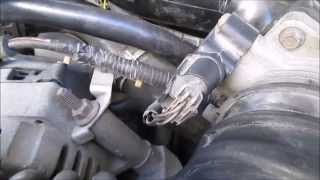
Generation note: This guide covers the First Generation (1991-1994) and Second Generation (1995-2001) Ford Explorer. The function and replacement of the Throttle Position Sensor are very similar across the common engines of this period (4.0L OHV, 4.0L SOHC, 5.0L V8), as they all use 🎬 See a quick walkthrough for the 5.0L V8 sensor replacement a cable-actuated throttle body with a separate, replaceable TPS. The 4.0L SOHC engine was subject to a recall (NHTSA #00V-422) for 1997-1998 models for sticking throttles, highlighting known issues with the throttle system on these engines.
Symptoms You May Notice
- Check Engine Light is on
- Hesitation or stumbling during acceleration
- Engine stalling, especially when returning to idle
- Rough or high idle
- Harsh, erratic, or incorrect automatic transmission shifting
- Lack of engine power or poor throttle response
- Vehicle may enter a 'limp mode' with reduced power
- Bucking or jerking while driving
- Replacing the fuel filter or spark plugs without first diagnosing the TPS circuit.
- Assuming the transmission is failing due to erratic shifting when the root cause is a bad signal from the TPS.
- Replacing the TPS when the actual problem is a corroded connector or a chafed wire in the harness.
Most Likely Causes
- Faulty Throttle Position Sensor (TPS) 🔴 High Probability → Shop Fuel Injection Throttle Body The sensor is a potentiometer with moving internal wipers that wear out over time. This wear creates dead spots or shorts, causing the signal voltage to spike to its maximum reading, triggering the P0123 code. Many owners on forums strongly recommend using OEM Motorcraft parts over cheaper aftermarket sensors, which are reported to fail prematurely.
How to confirm: With the ignition on (engine off), use a multimeter to back-probe the TPS signal wire (typically Grey/White on 4.0L models). The voltage should be around 0.7-1.0V at idle and sweep smoothly up to ~4.5-4.9V at wide-open throttle. Any spikes, drops, or a constant high voltage indicates a bad sensor.
Typical fix: Replace the Throttle Position Sensor. It is mounted on the side of the throttle body with two screws, which can be difficult to remove without stripping.
Est. part cost: $25-$85 - Wiring or Connector Issue 🟡 Medium Probability After 20+ years, engine heat and vibration can cause wiring insulation to become brittle and crack, or the connector pins to corrode or loosen. A short-to-power on the signal wire will cause a constant high voltage reading.
How to confirm: Visually inspect the wiring harness and connector going to the TPS for any signs of damage, corrosion, or loose pins. With the sensor unplugged and key on, check the Brown/White wire for a steady 5V reference and the Grey/Red wire for a good ground path. A wiggle test on the harness while monitoring voltage can reveal intermittent shorts.
Typical fix: Repair the damaged section of wiring or clean/replace the connector pigtail. Applying dielectric grease to the connector can prevent future moisture intrusion.
Est. part cost: $10-$30 - Dirty or Binding Throttle Body ⚪ Low Probability → Shop Fuel Injection Throttle Body Carbon buildup over many years can cause the throttle plate to not close properly or move smoothly.
How to confirm: If the throttle plate is sticking, it may prevent the TPS from returning to its proper closed-throttle voltage, though this is less likely to cause a 'high input' code than an 'implausible signal' code. Inspect the throttle bore for heavy carbon buildup.
Typical fix: Clean the throttle body bore and plate with a dedicated throttle body cleaner and a soft brush.
Est. part cost: $5-$15
Rare But Worth Checking
- Faulty Powertrain Control Module (PCM): → Shop Engine Control Module (ECM) This is very rare. Before suspecting the PCM, you must exhaust all other possibilities by thoroughly testing the sensor and wiring. A PCM failure is the cause in less than 1% of cases.
- Faulty Alternator: A failing alternator can sometimes produce excessive voltage, which can affect all sensors in the vehicle, including the TPS. This would typically be accompanied by other electrical issues and fault codes.
Diagnosis Steps
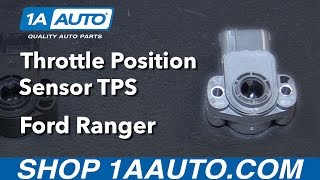
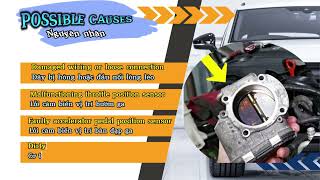
- Scan for trouble codes to confirm P0123 is present. Note any 🎬 Watch this guide on fixing the P0123 high signal code other codes.
- Visually inspect the TPS connector and wiring harness for damage, corrosion, or loose connections. Pay close attention to where the harness might rub against other components.
- With the key on, engine off (KOEO), use a multimeter to test the TPS connector (while still connected to the sensor if possible by back-probing).
- Check the reference voltage wire (often Brown/White); it should have a steady ~5 volts from the PCM.
- Check the ground wire (often Grey/Red); it should have good continuity to chassis ground.
- Check the signal wire (often Grey/White). Voltage should be ~0.7-1.0V with the throttle closed.
- Slowly open the throttle by hand while watching the multimeter. The voltage should increase smoothly and linearly to about 4.5V - 4.9V at wide-open throttle. Any jumps, dead spots, or an immediate high reading confirms a bad sensor.
- If the sensor tests good, perform a 'wiggle test' on the harness with the multimeter connected to see if the voltage spikes, indicating an intermittent short.
- If a new sensor is installed, it is a good practice to disconnect the battery for 15 minutes to reset the PCM's adaptive memory, allowing it to learn the new sensor's values.
Parts You'll Likely Need
- Throttle Position Sensor (TPS)
(OEM #Motorcraft CX-1542 (replaces F57Z-9B989-A). Note: It is critical to order by the stamp number on the original part (e.g., F57F9B989AA).)— This is the most common failure point for code P0123. The sensor's internal components wear out, causing incorrect voltage signals. Community consensus strongly favors the reliability of the OEM Motorcraft part over aftermarket alternatives.
Trusted brands: Motorcraft (Highly Recommended), Delphi, NTK, Duralast
OEM price range: $60-$85
Aftermarket price range: $25-$55
Related Codes That Often Appear With This One
- P0121 — P0121 indicates a 'Throttle Position Sensor Performance' problem. It can be set along with P0123 if the sensor's signal is erratic and not just high.
- P0122 — P0122 indicates 'TPS Circuit Low Input'. It's the opposite of P0123, but if the sensor is failing intermittently, it's possible for the computer to log both high and low faults over time.
- P1443 — On some 4.0L SOHC models, a P1443 (EVAP Purge Flow Condition) can sometimes appear with other throttle-related codes due to shared vacuum lines or system diagnostics, though not directly related.
Technical Service Bulletins (TSBs) & Recalls
- NHTSA ID: 00V422000 / Ford Recall: 00S33 - While not for P0123 specifically, this 2000 recall addresses sticking throttles on 1997-1998 Explorers with the 4.0L SOHC engine due to a manufacturing defect in the throttle body. It's relevant context for known throttle system issues on this platform.
Platform-Specific Known Issues
- Community Wisdom: Owners consistently report that aftermarket TPS units, while cheaper, have a high failure rate. It is strongly recommended to spend the extra money on a genuine Motorcraft sensor to avoid having to do the job twice.
- Stubborn Screws: The two original Phillips head screws holding the TPS are often installed with thread locker and are notoriously difficult to remove without stripping. A common pro-tip is to replace them with M5-0.80 hex-head bolts for easier future service.
- No Calibration Needed: Unlike some other vehicles, the TPS on this generation of Explorer is not adjustable. Installation is a simple bolt-on procedure. After installation, resetting the PCM by disconnecting the battery is recommended.
Mechanic-Grade Diagnostic Values
- TPS Total Resistance — expected: > 4k Ohms. Failure: An open circuit (O.L.) or a reading significantly lower than 4k Ohms indicates a failed sensor. Note: This test is done with the sensor unplugged.
- TPS Signal Ground to Chassis Ground Resistance — expected: < 1.5 Ohms. Failure: Resistance higher than 1.5 Ohms indicates a problem in the wiring harness, a corroded 10-pin connector, or a fault in the PCM's ground circuit.
- VREF Voltage at TPS Connector — expected: 4.9V - 5.0V. Failure: Voltage significantly below 4.9V points to an issue with the PCM's 5V reference circuit or a short in another sensor sharing the same VREF line (like the MAP or EGR sensor).
- Alternator AC Ripple Voltage — expected: < 0.5V AC. Failure: With the engine running, setting a multimeter to AC volts and measuring across the battery terminals should show less than 0.5V AC. A higher reading indicates failing diodes in the alternator, which can introduce electrical noise and cause sensor errors.
Hidden / Shadow Codes Worth Checking
- KOEO Code 23: On pre-1995 models with the EEC-IV system, the Key-On, Engine-Off (KOEO) self-test will flash code 23, which means 'Throttle Position Sensor out of self-test range'. This is the direct predecessor to the OBD-II P0123 code. (see via Using an analog voltmeter on the self-test connector or by counting the flashes of the Check Engine Light after initiating the self-test.)
Wiring & Ground Locations
- G101 — Engine compartment, left-hand (driver's) side, near the front/radiator.. This is a primary engine bay ground. Corrosion or a loose connection here can affect the PCM and its sensor readings, including the TPS signal return path.
- G104 — Engine compartment, right-hand (passenger) side, often near the rear of the engine or on the engine support.. Another critical engine ground. A poor connection can create a floating ground, causing sensor voltages to read incorrectly high.
- PCM Pin 46 (1994 Models) — Pin 46 on the 60-pin EEC-IV PCM connector.. This is the dedicated Signal Return (sensor ground) pin for the TPS. Checking continuity from the TPS connector's ground wire to this pin can confirm harness integrity.
- PCM Pin 47 (1994 Models) — Pin 47 on the 60-pin EEC-IV PCM connector.. This is the TPS Signal input pin. Testing voltage directly at this pin can isolate a wiring issue from a PCM issue.
- PCM Pin 26 (1994 Models) — Pin 26 on the 60-pin EEC-IV PCM connector.. This is the VREF (5 Volt Reference) output pin that powers the TPS. If 5V is missing at the sensor, checking it here confirms if the PCM is sending it.
- PCM Case Ground — The metal case of the PCM itself is grounded to the firewall/bulkhead, sometimes via a braided strap.. The PCM relies on this main ground for its internal operations. If this connection is poor, it can cause numerous, intermittent issues, including failure to provide ground to relays or process sensor signals correctly.
Real Owner Repair Stories
- Ford F150 Forum (1987 Ford F-150 5.0L (with similar EEC-IV system)) — Hesitation on throttling up, active KOEO code 23 (TPS fail self-test), and memory code 53 (TPS voltage above range).
❌ Tried (didn't work) After replacing the TPS and clearing codes, the drivability was fixed and memory codes were gone, but the active KOEO code 23 and Check Engine Light persisted.
✅ What actually fixed it The user confirmed the new TPS tested perfectly (0.75V at idle, smooth sweep to 4.5V WOT) and fixed the hesitation. The story highlights that even with a functional sensor, a persistent KOEO code can indicate a subtle wiring or PCM self-test issue that doesn't affect driving but still fails the initial diagnostic check. The final fix for the light was not posted, but the diagnostic journey is valuable. - Ford Truck Enthusiasts Forum (1987 Ford Bronco (with similar EEC-IV system)) — Crank no-start condition with a TPS code.
✅ What actually fixed it A forum expert suggested that a TPS sending a constant high voltage signal can trick the EEC-IV computer into 'clear flood mode,' which disables the fuel injectors during cranking. The diagnostic step was to unplug the TPS entirely; if the engine then starts, it confirms the TPS was sending a false Wide-Open-Throttle signal.
OEM Part Supersession History
F57Z-9B989-A→Motorcraft CX-1542— Standard part lifecycle update.
Heads up: The physical part may also have a stamp number like F57F-9B989-AA on it, which is a valid identifier for cross-referencing. Always verify fitment by vehicle year and engine, as connector shapes can vary.
Model Year Variations Within This Range
- 1991-1994 (approx.): These early models typically use the EEC-IV computer and an 'early' style TPS wiring color code: Black (Ground), Orange (5V Reference), and Green (Signal). The PCM is a 60-pin unit.
- 1995-2001 (approx.): These later models use OBD-II computers (though some '95s were transitional) and a 'late' style TPS wiring color code: Grey/Red (Signal Ground), Brown/White (5V Reference), and Grey/White (TPS Signal). This is the most commonly cited color scheme for the second generation.
Diagnostic Flowchart
Used vs. New Parts: Buying Guide for This Vehicle
When a used part is the smart pick: For this specific part, a used sensor is almost never a smart choice. The TPS is a potentiometer with internal wipers that physically wear out over time. A used part from a junkyard has unknown mileage and wear, and is likely to fail soon after installation, if it works at all.
Donor-vehicle mileage cap: roughly under 5000 miles for the part to have meaningful remaining life.
What to inspect on the donor part:
- Not applicable, as used purchase is not recommended.
OEM-only on this vehicle (don't cheap out):
- Throttle Position Sensor (TPS)
Aftermarket brands forum-validated for this vehicle:
- NTK
- Delphi
Brands owners have reported issues with on this vehicle:
- Unbranded 'white-box' parts and many lower-cost store brands have a high rate of premature failure according to extensive forum discussions. While more expensive, a genuine Motorcraft sensor is the most reliable option and is strongly recommended by veteran owners to avoid repeat repairs.
Real Owner Stories
Aggregated from forums and TSBs cited above. Mileages and costs reflect what owners reported in those sources.
1992 Explorer
Symptoms: The owner was diagnosing the EEC-IV equivalent of a P0123 code, indicating a high TPS signal.
What fixed it: The forum thread details the diagnostic process, which involves testing the specific wire colors (Grey/White for signal, Grey/Red for ground) for the correct voltage sweep from idle (~0.71-1.29V) to wide-open throttle (~4.25-4.89V) to confirm if the sensor is faulty.
Source hint: Ford-Trucks.com thread titled 'explorer testing the tps (throttle position sensor) ecm code 124'
1991-2001 Ford Explorer
Symptoms: After replacing a faulty TPS with a cheap aftermarket part, the P0123 code and associated symptoms like hesitation and poor shifting returned shortly after.
What fixed it: Replacing the failed aftermarket sensor with a genuine OEM Motorcraft TPS resolved the issue permanently. This avoided having to do the job a second time.
Source hint: Vehicle Specific Issues / Community Wisdom
Related OBD-II Codes
Frequently Asked Questions
Do I need to calibrate or adjust the new Throttle Position Sensor on my 1991-2001 Explorer?
Is it okay to use a cheaper aftermarket TPS, or should I buy the OEM Motorcraft part?
What's the trick for removing the original TPS screws without stripping them?
What are the correct TPS voltage readings I should see when testing on my 4.0L Explorer?
Is there a recall related to throttle problems on these Explorers?
What are the wire colors for testing the TPS on a 4.0L Explorer?
Will a TPS from a Ford Ranger or Mercury Mountaineer work on my Explorer?
Helpful Videos
Used OEM Parts in Stock
New Aftermarket Parts Available

The information in this article is provided for general reference and educational purposes only. Vehicle specifications, procedures, and part compatibility can vary by production date, trim level, and region. Always consult your vehicle's factory service manual and verify part numbers before purchasing or performing repairs. Safety-critical components such as airbags, seat belts, and braking systems should be installed by a qualified professional.
- Ford Explorer:
- 🧭 Diagnostic Flowchart
- 🎬 Helpful Videos
- 🛍️ Shop This Part
- What's Unique About the 1991-2001 Ford Explorer
- Symptoms You May Notice
- Most Likely Causes
- Rare But Worth Checking
- Diagnosis Steps
- Parts You'll Likely Need
- Related Codes That Often Appear With This One
- Technical Service Bulletins (TSBs) & Recalls
- Platform-Specific Known Issues
- Mechanic-Grade Diagnostic Values
- Hidden / Shadow Codes Worth Checking
- Wiring & Ground Locations
- Real Owner Repair Stories
- OEM Part Supersession History
- Model Year Variations Within This Range
- Used vs. New Parts: Buying Guide for This Vehicle
- Real Owner Stories
- 1992 Explorer
- 1991-2001 Ford Explorer
- Related OBD-II Codes
- Frequently Asked Questions
- 🎟️ Get 5% Off