

P0123 on 1995-2001 Ford Explorer 4.0L V6: Causes and Fixes for TPS Circuit High
On a 1995-2001 Ford Explorer, code P0123 is almost always caused by a faulty Throttle Position Sensor (TPS). This can cause severe, erratic transmission shifting that is often mistaken for a transmission failure. Replacing the TPS is a simple DIY fix, with a genuine Motorcraft part costing around $40-$85.
- If you have a P0123 code and your transmission is shifting harshly, the Throttle Position Sensor (TPS) is the most likely culprit, not the transmission itself.
- Diagnose the TPS with a multimeter by checking for a smooth voltage sweep from closed to open throttle. A jump or constant high voltage confirms failure.
- This is a very DIY-friendly repair that can be done in under an hour with basic hand tools.
- Strongly consider paying extra for a genuine Motorcraft replacement TPS (like part #F57Z-9B989-A) to avoid premature failure common with cheaper aftermarket parts.
What's Unique About the 1995-2001 Ford Explorer
🎬 Watch: Top 5 problems for 2nd Gen ExplorersFor the second-generation Ford Explorer and its platform mates like the Ranger and Mountaineer, the P0123 code is notoriously linked to severe automatic transmission problems, such as harsh, erratic, or delayed shifting. Many owners have initially feared a catastrophic transmission failure, only to find that the root cause was an inexpensive and easy-to-replace TPS. The 4.0L engine's PCM relies heavily on the TPS signal for shift scheduling, so a faulty sensor directly impacts transmission behavior. Due to the high failure rate of aftermarket parts, owner forums strongly advise using only genuine Motorcraft sensors for this repair.
Symptoms You May Notice
- Harsh, erratic, or delayed automatic transmission shifting
- Hesitation or stumbling during acceleration
- Engine stalling, especially when returning to idle
- Rough or high idle
- Check Engine Light is on
- Vehicle may enter 'limp mode' with reduced power
- Poor fuel economy 🎬 Watch: Common symptoms of a bad throttle position sensor
- Transmission Failure: The most common misdiagnosis. The severe and erratic shifting caused by a bad TPS often leads owners and even some shops to believe the 5R55E automatic transmission needs to be rebuilt or replaced.
- Fuel Pump or Filter Issue: While hesitation can be a symptom of fuel delivery problems, the 'circuit high' nature of P0123 points specifically to a sensor input issue, not a fuel pressure problem.
Most Likely Causes
- Faulty Throttle Position Sensor (TPS) 🔴 High Probability → Shop Fuel Injection Throttle Body The TPS is a potentiometer with a mechanical wiper that wears out over time. This wear creates internal shorts or open spots, causing the signal voltage to spike to its maximum reading and trigger the P0123 code.
How to confirm: With the key on and engine off, use a multimeter to back-probe the TPS signal wire (Grey/White). Voltage should be ~0.7-1.0V at closed throttle and sweep smoothly to ~4.5V at wide-open throttle. Any spikes, dropouts, or a constant high voltage reading (stuck at ~5V) confirms a bad sensor.
Typical fix: Replace the Throttle Position Sensor. It is mounted on the side of the throttle body with two screws. Ensure the new sensor is seated correctly and do not overtighten the screws. 🎬 See this quick guide on fixing the P0123 code Disconnecting the battery for 20 minutes after installation can help the PCM relearn.
Est. part cost: $25-$85 - Wiring or Connector Issue ⚪ Low Probability The wiring harness connector for the TPS can become corroded, or the wires can fray or short to a power source due to engine vibration and heat over time. A similar issue was noted in Ford TSB 00-3-5 for the Ranger 4.0L, which addresses a poor electrical connection causing high idle.
How to confirm: Visually inspect the TPS connector for corrosion, pushed-out pins, or damage. Check the wiring harness for any chafed, melted, or broken wires, especially where it might rub against other engine components. Perform a 'wiggle test' on the harness while monitoring voltage to see if it fluctuates.
Typical fix: Clean the connector terminals with electrical contact cleaner. If the connector or wiring is damaged, replace the connector pigtail. The Motorcraft pigtail part number is often WPT-189 (or an equivalent like Standard Motor Products S-1784).
Est. part cost: $20-$50
Rare But Worth Checking
- Faulty Powertrain Control Module (PCM): → Shop Engine Control Module (ECM) This is extremely rare. The PCM should only be considered after definitively ruling out the TPS and all related wiring. A faulty PCM might have a shorted input circuit or require a software update.
Diagnosis Steps
- Confirm the P0123 code is present using an OBD-II scanner. Note any other codes.
- Visually inspect the Throttle Position Sensor connector and its wiring harness for any obvious damage, corrosion, or loose connections.
- With the key on, engine off (KOEO), use a multimeter to back-probe the TPS connector.
- Verify the reference wire (Brown/White) has a steady ~5 volts.
- Verify the ground wire (Grey/Red) has good continuity to the chassis ground.
- Measure the voltage on the signal wire (Grey/White). It should be approximately 0.7-1.0 volts with the throttle closed.
- Slowly open the throttle by hand while watching the multimeter. The voltage should increase smoothly and linearly to about 4.5 volts at wide-open throttle.
- If the voltage is stuck high (at or near 5V), or if it spikes, drops out, or has dead spots during the sweep test, the TPS is faulty and needs to be replaced.
- If the TPS tests good, thoroughly inspect the signal wire between the sensor and the PCM for a short to a power source. A 'wiggle test' on the harness can help identify intermittent shorts.
Parts You'll Likely Need
- Throttle Position Sensor (TPS)
(OEM #DY-988 (Motorcraft, supersedes F57Z-9B989-A))— This is the direct cause of code P0123 in the vast majority of cases. The internal resistive element wears out, causing a high voltage signal.
Trusted brands: Motorcraft, Delphi, NGK, Standard Motor Products
OEM price range: $40-$85
Aftermarket price range: $25-$50 - TPS Connector Pigtail
(OEM #WPT-189 (Motorcraft))— Needed if the original connector is corroded, melted, or has damaged wires, which can also cause a P0123 code.
Trusted brands: Motorcraft, Dorman, Standard Motor Products
OEM price range: $30-$50
Aftermarket price range: $15-$30
Related Codes That Often Appear With This One
- P0121 — This code for 'TPS Range/Performance' can appear if the sensor signal is erratic or doesn't sweep smoothly, which is a common failure mode of a worn-out TPS.
- P0122 — This is the opposite code for 'TPS Circuit Low'. Seeing a history of both P0122 and P0123 strongly suggests an intermittently failing TPS or a wiring problem.
- P07xx (e.g., P0731) — Because the PCM uses the TPS signal to control transmission shift logic and line pressure, a P0123 fault can cause the PCM to set various transmission-related trouble codes due to incorrect or harsh shifting.
Technical Service Bulletins (TSBs) & Recalls
- Ford TSB 00-3-5: While officially for the 1998-2000 Ranger and Taurus SHO, this bulletin addresses a high idle condition caused by a poor electrical connection at the TPS wiring harness. It is highly relevant as it describes a known wiring failure mode for the same powertrain components.
Platform-Specific Known Issues
- A known issue on this platform is that a failing TPS will cause severe automatic transmission shifting problems that can be easily misdiagnosed as a catastrophic transmission failure.
- Aftermarket TPS units are widely reported on owner forums to be unreliable or fail quickly. Using a genuine Motorcraft replacement part (DY-988) is strongly recommended for longevity.
- For 1997-1998 models, a recall (NHTSA #00V-422) was issued for sticking throttles on the 4.0L SOHC engine, which could cause related symptoms.
Mechanic-Grade Diagnostic Values
- TPS Total Resistance (unplugged) — expected: > 4k Ohms. Failure: A reading of Open Loop (O.L.) or significantly less than 4k Ohms indicates a failed sensor.
- TPS Signal Ground to Chassis Ground Resistance — expected: < 1.5 Ohms. Failure: Resistance higher than 1.5 Ohms points to a problem in the wiring harness, a corroded connector, or a PCM ground circuit fault.
- PCM Pin 91 (Signal Return) to Chassis Ground — expected: < 1.0 Ohms. Failure: High resistance indicates a poor ground path for the sensor circuit within the PCM or harness.
- Scan Tool PID: TP_V (Throttle Position Voltage) — expected: ~0.7-1.0V at closed throttle, sweeping smoothly to ~4.5-4.9V at Wide-Open Throttle (WOT).. Failure: Voltage stuck high (>4.8V), jumping erratically, or showing dead spots during sweep.
Scan Tool Commands That Help
- Ford IDS / FORScan: Reset All Adaptations / KAM Reset — After replacing the TPS or cleaning the throttle body, resetting the Keep Alive Memory (KAM) forces the PCM to immediately relearn the new sensor's baseline closed-throttle voltage, preventing potential high idle or erratic behavior during the initial drive cycles.
Wiring & Ground Locations
- PCM Pin 89 — On the 104-pin PCM connector, located in the engine bay on the passenger side firewall.. This is the specific pin for the TPS Signal wire (Grey/White). It's the terminal point for checking the signal wire's integrity from the sensor to the computer.
- PCM Pin 90 — On the 104-pin PCM connector.. This pin provides the 5-Volt Reference (VREF) to the TPS via the Brown/White wire. A fault here would affect multiple sensors.
- PCM Pin 91 — On the 104-pin PCM connector.. This is the Signal Return (sensor ground) pin for the TPS via the Grey/Red wire. A poor connection here will cause incorrect voltage readings.
- G100 — Located at the LH rear corner of the engine compartment, on the fender apron.. This is a primary engine compartment ground. While not the direct sensor ground (which is provided by the PCM), a poor connection here can introduce electrical noise and cause erratic behavior in various electronic systems.
- G101 / G104 — Located at the front of the engine compartment, near the radiator support and battery. G104 is often a specific engine support ground.. These are major chassis and engine grounds. A corroded or loose connection at these points can affect the PCM's main ground and, by extension, the stability of the sensor reference voltages and grounds it provides.
Real Owner Repair Stories
- YouTube video comment section (2000 Ford Explorer 4.0L SOHC) — P0123 code, harsh shifting, and a high, surging idle.
❌ Tried (didn't work) Replaced the Throttle Position Sensor (TPS) with an aftermarket part, which did not solve the problem.
✅ What actually fixed it The owner replaced the aftermarket TPS with a genuine Motorcraft TPS. After clearing the codes and disconnecting the battery for 30 minutes to reset the PCM, all symptoms were resolved. - therangerstation.com forum member (1999 Ford Ranger 4.0L (same powertrain)) — P0123 and P0122 codes appeared after cleaning the throttle body.
❌ Tried (didn't work) Assuming the new codes meant the sensor was damaged during cleaning, the owner replaced the TPS, but the codes returned.
✅ What actually fixed it The issue was resolved by cleaning the throttle body again, but this time paying special attention to ensure the throttle plate was not binding and could close completely. A small ridge of carbon missed the first time was preventing the plate from returning to the true idle position, causing the TPS voltage to be out of range at both ends of its travel.
OEM Part Supersession History
F57Z-9B989-A→DY-988 (Motorcraft)— Standard part number update and consolidation.
Heads up: The OEM part may also be stamped with an engineering number like F57F-9B989-AA or F4SF-9B989-AA. It is critical to order by the service part number (F57Z-9B989-A or DY-988) for guaranteed fitment.
Model Year Variations Within This Range
- 1995-2001: The TPS wiring color code for this generation is typically: Grey/Red (Ground), Brown/White (5V Reference), and Grey/White (Signal).
- Pre-1995 (First Gen): Earlier models with the EEC-IV computer often used a different color code: Black (Ground), Orange (5V Reference), and Green (Signal). This is important for those sourcing parts or diagrams from overlapping model years.
Diagnostic Flowchart
Other Known Issues on This Vehicle
Issues unrelated to this code that are worth knowing about as an owner of this generation:
- Timing Chain Cassette Failure 🔴 High — Very common, especially on the rear (firewall side) cassette. Often manifests as a rattling or 'marbles in a can' noise between 2000-3000 RPM, particularly on cold starts. Can lead to catastrophic engine failure if ignored.
- Cracked Plastic Thermostat Housing / Intake Manifold 🟠 Medium — The original composite intake manifolds and integrated thermostat housings are prone to cracking over time due to heat cycles, causing significant coolant leaks.
- Blend Door Actuator Failure 🟡 Low — Extremely common. A plastic gear inside the actuator strips, causing a repetitive clicking or tapping sound from behind the dashboard when the climate controls are used. Results in an inability to change air temperature.
- 5R55E Automatic Transmission Failures 🔴 High — While often misdiagnosed due to the TPS issue, the 5R55E transmission has its own well-documented problems, including solenoid body failures, worn separator plate gaskets, and broken reverse servo bands leading to loss of gears.
Used vs. New Parts: Buying Guide for This Vehicle
When a used part is the smart pick: A used OEM (Motorcraft) TPS from a junkyard can be a viable, low-cost option if its history is known or if it can be tested on-site. Given the simplicity of the part, failure is often due to wear, not age alone. It is a better choice than a new, non-reputable aftermarket part.
Donor-vehicle mileage cap: roughly under 120000 miles for the part to have meaningful remaining life.
What to inspect on the donor part:
- Look for a donor vehicle with lower mileage if possible.
- Inspect the connector pins on the used sensor for any signs of corrosion or damage.
- If possible, bring a multimeter to the junkyard. Test the resistance between the 5V and Ground pins (should be a steady ~4-5k Ohms) and check that the signal pin sweeps smoothly as you manually rotate the sensor tang.
OEM-only on this vehicle (don't cheap out):
- Throttle Position Sensor (TPS) - Due to a very high rate of premature failure and out-of-box defects reported on forums, it is strongly recommended to use only genuine Motorcraft (DY-988) sensors for this repair. The cost savings of a cheap aftermarket part are often negated by the need to replace it again shortly after.
Aftermarket brands forum-validated for this vehicle:
- NTK
- Delphi
Brands owners have reported issues with on this vehicle:
- Unbranded, 'white-box' parts from online marketplaces are frequently cited as being unreliable for this specific application.
Real Owner Stories
Aggregated from forums and TSBs cited above. Mileages and costs reflect what owners reported in those sources.
2000 Ford Explorer 4.0L SOHC V6
Symptoms: Transmission 'slamming into gear' and shifting erratically; owner was quoted over $2000 for a transmission rebuild.
What fixed it: Replaced the TPS with a Motorcraft part.
Cost: $0-$60
Source hint: explorerforum.com thread mentioned in common_causes
1999 Ford Explorer 4.0L SOHC V6
Symptoms: Harsh shifting and high idle.
What fixed it: Installed a new Motorcraft TPS.
Source hint: explorerforum.com - Thread '99 Explorer TPS P0123 Question'
1995-2001 Ford Explorer 4.0L SOHC V6
Symptoms: P0122 and P0123 codes appeared immediately after cleaning the throttle body.
What fixed it: Discussion confirmed the need for a battery disconnect for 20 minutes to help the ECU relearn or checking for incorrect installation.
Source hint: therangerstation.com - Thread 'Throttle Position Sensor Reset'
1995-2001 Ford Explorer 4.0L SOHC V6
Symptoms: Suspected major transmission failure (5R55E) due to severe shifting problems.
What fixed it: Identified the root cause as a faulty TPS rather than internal transmission damage.
Source hint: ford-trucks.com - '4r55e 5r55e Ranger / Explorer Transmission Problems'
Related OBD-II Codes
Frequently Asked Questions
My 2000 Explorer is slamming into gear and the shop wants $2000 for a rebuild. Could this just be the P0123 code?
Is there a specific replacement part recommended for the 4.0L SOHC V6 TPS?
Does Ford TSB 00-3-5 apply to my Explorer's high idle and P0123 code?
I heard there was a recall for sticking throttles on 1997-1998 Explorers; is this related to P0123?
Should I reset the computer after replacing the TPS on my Explorer?
What color wires should I look for when testing the TPS on my 4.0L SOHC?
Helpful Videos


Used OEM Parts in Stock
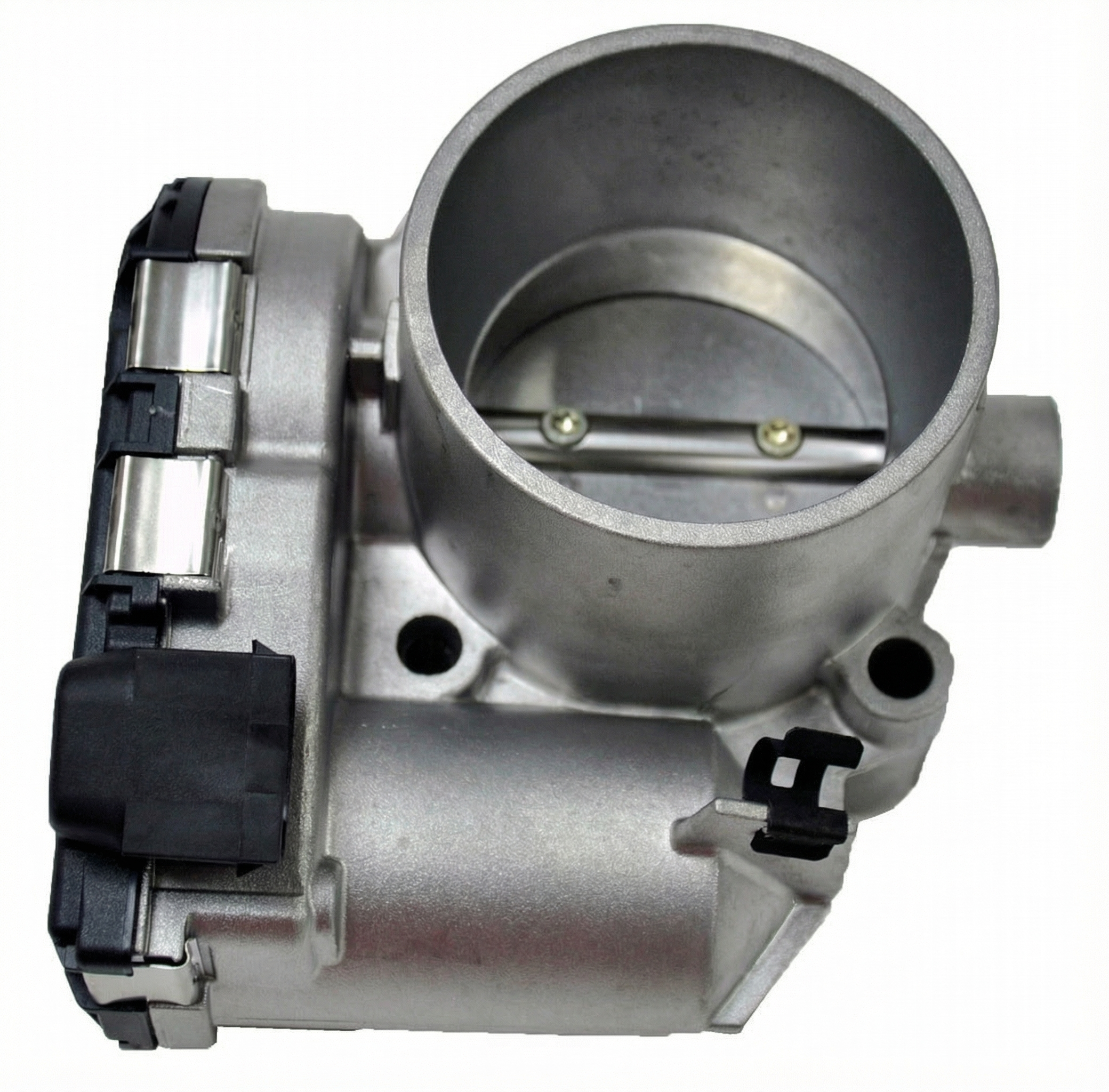
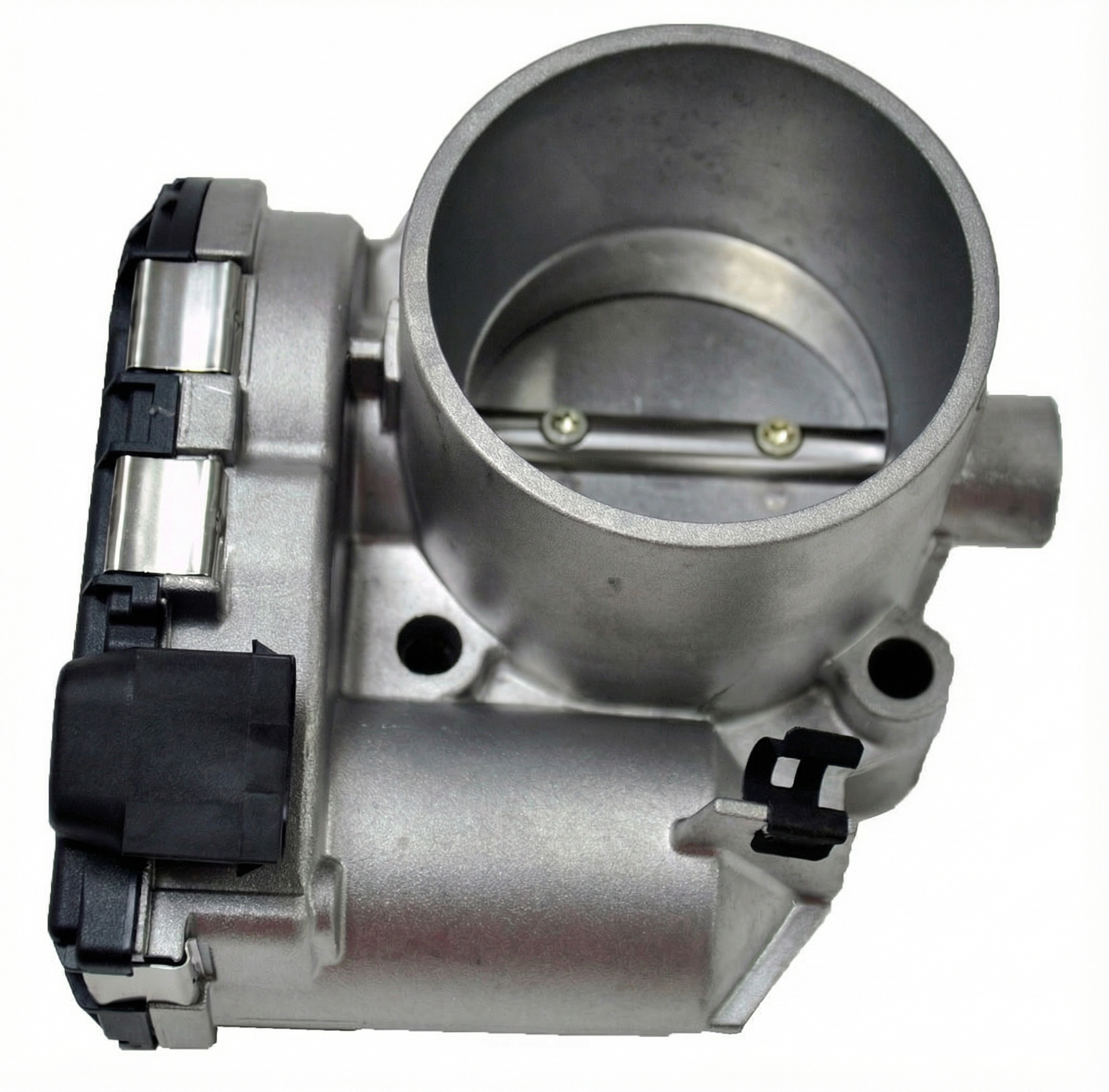
New Aftermarket Parts Available
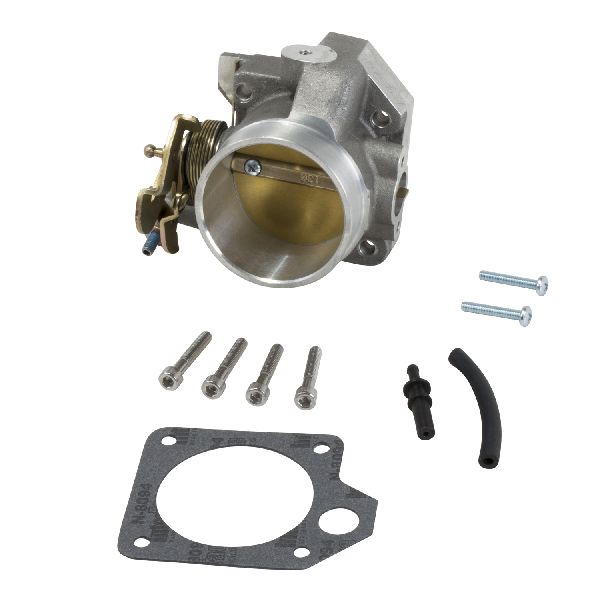


The information in this article is provided for general reference and educational purposes only. Vehicle specifications, procedures, and part compatibility can vary by production date, trim level, and region. Always consult your vehicle's factory service manual and verify part numbers before purchasing or performing repairs. Safety-critical components such as airbags, seat belts, and braking systems should be installed by a qualified professional.
- Ford Explorer:
- 🧭 Diagnostic Flowchart
- 🎬 Helpful Videos
- 🛍️ Shop This Part
- What's Unique About the 1995-2001 Ford Explorer
- Symptoms You May Notice
- Most Likely Causes
- Rare But Worth Checking
- Diagnosis Steps
- Parts You'll Likely Need
- Related Codes That Often Appear With This One
- Technical Service Bulletins (TSBs) & Recalls
- Platform-Specific Known Issues
- Mechanic-Grade Diagnostic Values
- Scan Tool Commands That Help
- Wiring & Ground Locations
- Real Owner Repair Stories
- OEM Part Supersession History
- Model Year Variations Within This Range
- Other Known Issues on This Vehicle
- Used vs. New Parts: Buying Guide for This Vehicle
- Real Owner Stories
- 2000 Ford Explorer 4.0L SOHC V6
- 1999 Ford Explorer 4.0L SOHC V6
- 1995-2001 Ford Explorer 4.0L SOHC V6
- 1995-2001 Ford Explorer 4.0L SOHC V6
- Related OBD-II Codes
- Frequently Asked Questions
- 🎟️ Get 5% Off