

P0123 on 1997-2003 Ford F-150: Throttle Position Sensor 'A' Circuit High Causes and Fixes
On a 1997-2003 F-150, code P0123 is almost always caused by a failed Throttle Position Sensor (TPS). This can cause severe shifting problems that mimic a bad transmission. Replacing the TPS is a simple, low-cost fix, typically under $60 for the part. Owners strongly recommend using a Motorcraft-branded part to avoid issues with cheap aftermarket sensors.
- P0123 on a 1997-2003 F-150 means the Throttle Position Sensor (TPS) is sending a signal that's too high.
- The most critical symptom to watch for is harsh or erratic transmission shifting. Do not assume you have a major transmission problem until you have checked the TPS.
- The most likely cause is a failed TPS. It is highly recommended to use a quality Motorcraft (DY-967) replacement part, as cheap aftermarket sensors are a common source of continued problems.
- Diagnosis involves testing the sensor's voltage with a multimeter. At closed throttle, it should be just under 1.0V and sweep smoothly to ~4.5V.
- The repair is DIY-friendly and involves replacing the sensor on the side of the throttle body.
What's Unique About the 1997-2003 Ford F-150
For the 10th generation F-150 (1997-2003), the most important thing to know about P0123 is that it frequently causes severe automatic transmission problems, such as harsh, erratic, or delayed shifting. Many owners have mistaken this for a catastrophic transmission failure when the actual problem was an inexpensive and easy-to-replace Throttle Position Sensor. 🎬 Watch how a new TPS fixes harsh shifting and hesitation. Unlike later models with 'drive-by-wire' systems, these trucks use a simple, separately replaceable sensor on a cable-actuated throttle body, making it a straightforward DIY repair. The sensor is also adjustable, and setting it correctly with a multimeter can optimize idle and throttle response.
Symptoms You May Notice
- Check Engine Light is on
- Harsh, erratic, or delayed automatic transmission shifting
- Transmission popping hard out of gear when braking
- Hesitation or stumbling when accelerating
- Rough or high idle
- Engine stalling
- Poor fuel economy
- Vehicle enters 'limp-in' or failsafe mode with limited speed
- Internal transmission failure. The erratic and harsh shifting caused by a bad TPS is very often mistaken for a failed transmission, leading to expensive and unnecessary repairs.
Most Likely Causes
- Faulty Throttle Position Sensor (TPS) 🔴 High Probability → Shop Fuel Injection Throttle Body The sensor is a moving part (a potentiometer) that wears out over time, developing internal electrical faults or dead spots that cause it to send an incorrect, high voltage signal. Forum users frequently warn against using cheap aftermarket sensors, as they often fail out of the box or shortly after installation, causing the code to return.
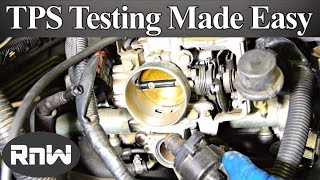
How to confirm: With the key on and engine off, use a multimeter to back-probe the TPS signal wire (often green). The voltage should be between 0.90V and 0.99V with the throttle closed and sweep smoothly to ~4.5V when fully opened. A reading that is stuck high (e.g., 5 volts) or jumps erratically indicates a bad sensor. 🎬 See a step-by-step guide on testing your TPS with a multimeter.
Typical fix: Replace the Throttle Position Sensor. It is mounted to the side of the throttle body with two screws. Using a genuine Motorcraft part is highly recommended.
Est. part cost: $25-$75 - Wiring or Connector Issue 🟡 Medium Probability Engine bay heat and vibrations can cause wiring insulation to become brittle or connectors to become corroded or loose. A common failure point is the plastic locking tab on the TPS connector breaking, allowing the connector to work itself loose over time.
How to confirm: Visually inspect the wiring harness and connector going to the TPS. Look for any signs of frayed wires, melting, green corrosion on the pins, or a loose connection. Wiggle the connector with the engine running to see if it affects idle. A short to a power source in the signal wire could also cause this code.
Typical fix: Clean the connector pins with electrical contact cleaner and apply dielectric grease. If the locking tab is broken, secure the connector with a zip tie 🎬 Watch this video to see the zip tie connector repair method. as a temporary measure. Repair or replace any damaged sections of the wiring harness.
Est. part cost: $5-$50 - Dirty or Binding Throttle Body ⚪ Low Probability → Shop Fuel Injection Throttle Body Carbon can build up in the throttle bore over time, preventing the throttle plate from closing completely at idle.
How to confirm: Remove the air intake tube and visually inspect the throttle plate and bore. If it is not fully closing at rest or moves with difficulty, it needs cleaning. This is less likely to cause a 'circuit high' code than a faulty sensor but can cause erratic readings.
Typical fix: Clean the throttle body and plate with a dedicated throttle body cleaner and a soft brush. Ensure the plate moves freely from fully closed to fully open.
Est. part cost: $10-$20
Rare But Worth Checking
- Faulty Powertrain Control Module (PCM): → Shop Engine Control Module (ECM) This is very rare. The PCM is the engine's main computer. Before condemning the PCM, all other possibilities, especially the sensor, its wiring, and its ground circuit provided by the PCM, must be exhaustively ruled out.
Diagnosis Steps
- Scan for Codes: Read the trouble codes with an OBD-II scanner to confirm P0123 is the primary code.
- Check Live Data: Use the scanner's live data function to view the TPS voltage (TP V) or percentage. At idle, it should be around 0.9-1.0V (or ~17-19%). If it's stuck at or near 5 volts, the problem is active.
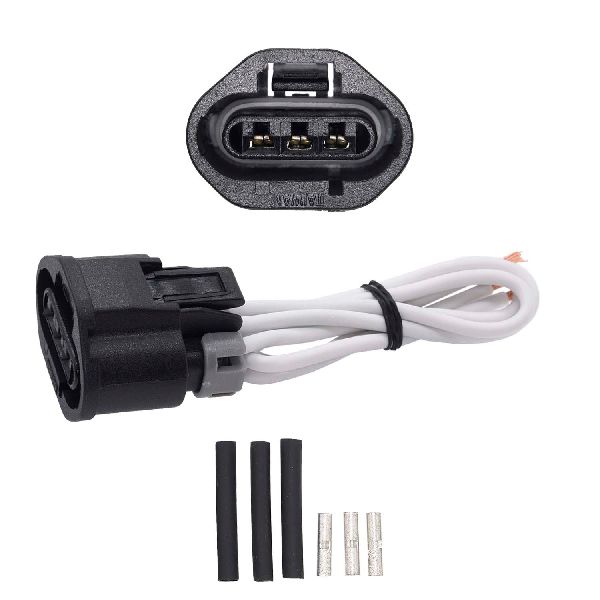
- Inspect the Connector: Turn the ignition off. Disconnect the TPS and inspect the 3-pin electrical connector for corrosion, bent pins, or moisture. Ensure the locking tab isn't broken.
- Inspect the Wiring: Follow the TPS wiring harness as far as you can, looking for any obvious signs of damage, chafing against brackets, or melting.
- Test Sensor Voltages (Key On, Engine Off): Back-probe the connector while it's connected. You can use straight pins to carefully pierce the insulation or slide them into the back of the connector. Check for: a) 5V reference power on the correct wire (check a diagram). b) A good ground. c) The signal wire voltage. It should be ~0.9-0.99V at closed throttle. Slowly open the throttle by hand. The voltage should rise smoothly to ~4.5V without any jumps or dropouts. Any deviation points to a bad TPS.
- Consider Adjusting the Sensor: If the closed-throttle voltage is slightly off but the sensor sweeps smoothly, you can loosen the two mounting screws and slightly rotate the TPS to get the voltage as close to 0.99V as possible without going over. Then, tighten the screws.
- Replace the TPS: If the sensor fails the test, replace it. The screws may have thread locker from the factory and can be tight.
- Clear Codes and Reset KAM: After the repair, disconnect the battery for 15 minutes to clear the Keep Alive Memory (KAM). This forces the PCM to relearn its adaptive strategy with the new sensor. Then, perform a test drive to ensure the engine and transmission are operating normally.
Parts You'll Likely Need
- Throttle Position Sensor (TPS)
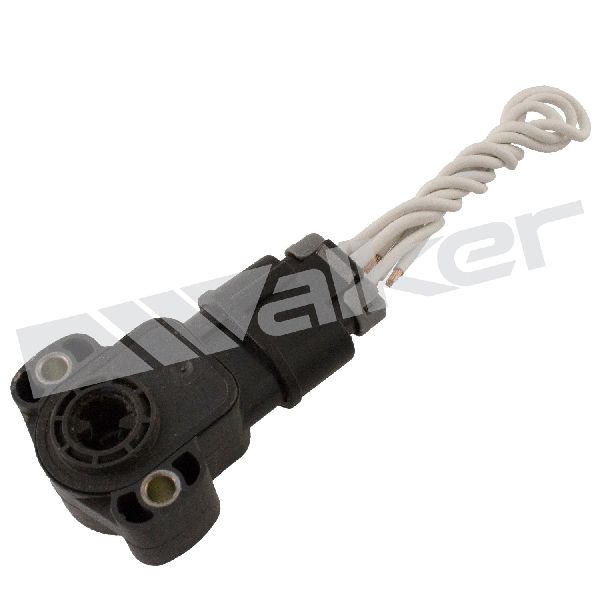
(OEM #Motorcraft Service #: DY-967, Ford Engineering #: F4SF-9B989-AB)— This is the most common failure point for code P0123. The internal electronics of the sensor wear out, causing it to send an incorrect high-voltage signal to the computer.
Trusted brands: Motorcraft (Highly Recommended), Delphi, Standard Motor Products (SMP), Walker, NGK
OEM price range: $50-$75
Aftermarket price range: $25-$50
Related Codes That Often Appear With This One
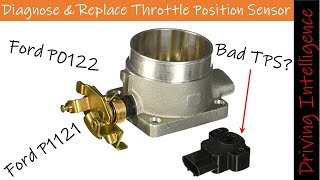
- P0121 — This code indicates a 'Throttle/Pedal Position Sensor/Switch 'A' Circuit Range/Performance' problem. It can appear alongside P0123 if the sensor's signal is erratic, not just stuck high.
- P0122 — This code is for 'Circuit Low' and would typically not appear with P0123, but if the sensor has an intermittent internal short to both ground and power, it's possible to see a history of both codes.
Technical Service Bulletins (TSBs) & Recalls
- TSB 04-24-11: While this TSB is for 2001-2003 F-Super Duty and Excursion models with the 7.3L diesel engine, it is relevant as it addresses a momentary return to idle during acceleration linked to a DTC P0123. The fix involves replacing the accelerator pedal assembly, showing a Ford precedent for this code being tied to pedal/throttle input component failure.
Platform-Specific Known Issues
- Real-World Repair Story: The Cheap Part Problem: In a thread on F150forum.com, a user with a '99 F-150 4.6L replaced their TPS to fix a P0123 code and sluggish shifting. They used a cheap 'Rockauto special' part which fixed their high idle but did not resolve the code or the shifting issue. After tracing wires back to the PCM with no luck, the community concluded the new sensor was likely defective out of the box, highlighting the importance of using quality OEM parts for critical sensors.
- Adjustment for Optimal Performance: While a new sensor will often work out of the box, experienced owners on F150online.com note that manually adjusting the sensor's position can make a world of difference in idle quality and throttle response. By loosening the screws and rotating the sensor to achieve a closed-throttle voltage of exactly 0.98-0.99V (without exceeding it), performance can be noticeably improved.
Mechanic-Grade Diagnostic Values
- TPS Resistance (unplugged) — expected: Closed Throttle: ~3,000-4,000 Ohms (3-4kΩ). Wide Open Throttle: ~350 Ohms.. Failure: Open circuit (OL), or readings significantly outside this range when testing between the signal and ground pins.
- TPS Signal Voltage (KOEO, back-probed) — expected: Closed Throttle: 0.90V - 0.99V. Wide Open Throttle: ~4.5V - 4.8V.. Failure: Voltage stuck high (near 5V), does not sweep smoothly, or has dead spots when opening the throttle.
- TPS Reference Voltage (KOEO, back-probed) — expected: 4.5V - 5.0V. Failure: No voltage or significantly lower voltage indicates a wiring or PCM issue.
- Scan Tool Live Data (TP %) — expected: At idle: ~19-20%. Failure: A reading significantly higher than 20% at idle, or a value that doesn't increase smoothly as the pedal is pressed.
Scan Tool Commands That Help
- Manual Procedure: Keep Alive Memory (KAM) Reset — After replacing the TPS, disconnecting the battery for 15 minutes forces the PCM to clear its adaptive learning tables and relearn idle and shift strategies with the new sensor's baseline readings.
Wiring & Ground Locations
- PCM Connector (2000-2001) — Located in the engine bay, typically on the passenger side firewall.. Provides exact pin locations for testing the TPS circuit directly at the computer. Pin 89 is TPS Signal (Gray/White wire), Pin 90 is 5V Reference (Brown/White wire), and Pin 91 is Signal Return/Sensor Ground (Gray/Red wire). This is the definitive test location to rule out wiring issues.
- Signal Return (Sensor Ground) — This is a dedicated wire running from the TPS connector directly back to Pin 91 of the PCM.. This is a critical detail. The TPS is NOT grounded to the chassis. A bad connection on this specific wire will cause a floating voltage and can trigger P0123. Technicians must test continuity between the TPS connector and PCM Pin 91, not just to a chassis ground.
- G101 — Rear of engine compartment, on the right (passenger) side of the cowl panel.. This is a primary engine bay ground point. While not the direct ground for the TPS sensor itself, a poor connection here can cause electrical noise and erratic behavior in multiple systems, potentially affecting the PCM's stability and sensor readings indirectly.
- G100 — Lower right rear of the engine, on a starter motor mounting bolt.. This is the main engine block to chassis ground. A poor connection here can cause a host of electrical issues, including charging problems and incorrect sensor readings across the board.
Real Owner Repair Stories
- F150forum.com user (1999 Ford F-150 4.6L) — P0123 code, sluggish shifting, high idle.
❌ Tried (didn't work) Tracing wires back to the PCM.
✅ What actually fixed it The initial fix attempt with a cheap aftermarket TPS from Rockauto resolved the high idle but did not fix the P0123 code or shifting problems. The forum consensus concluded the new, cheap sensor was likely defective out of the box, reinforcing the community wisdom to use a quality Motorcraft part.
OEM Part Supersession History
F4SF-9B989-AB (Engineering Number)→Motorcraft DY-967 (Service Part Number)— Standard Ford part numbering convention where an engineering number is superseded by a service part number for retail and repair.
Heads up: This part is specific to cable-actuated, engine-mounted throttle bodies on many Ford gasoline engines of the era. It is not compatible with the accelerator pedal assemblies found on diesel models or the later 'drive-by-wire' systems.
Model Year Variations Within This Range
- 1997-2003: While the fundamental cable-actuated throttle body and replaceable TPS remain consistent through this generation, wiring harness colors can vary. For example, some diagrams show Orange, Black, and Green wires, while later models (approx. 2000+) often use a Gray/White, Brown/White, and Gray/Red combination. Always verify function by testing voltage rather than relying solely on wire color.
Diagnostic Flowchart
Used vs. New Parts: Buying Guide for This Vehicle
When a used part is the smart pick: A used OEM Motorcraft TPS from a reputable salvage yard is a viable and often smarter choice than a new, non-OEM aftermarket sensor. Given the high failure rate of cheap new sensors reported by owners, a tested, low-mileage used original part can provide better reliability.
Donor-vehicle mileage cap: roughly under 100000 miles for the part to have meaningful remaining life.
What to inspect on the donor part:
- Check for a clean connector with no corrosion or bent pins.
- Ensure the plastic housing is not cracked or showing signs of heat damage.
- If possible, ask the salvage yard for the mileage of the donor vehicle.
- Bring a multimeter to the yard and test the resistance sweep if the part is already removed. Look for a smooth change in Ohms, not jumps or open circuits.
OEM-only on this vehicle (don't cheap out):
- Throttle Position Sensor (TPS)
Aftermarket brands forum-validated for this vehicle:
- Delphi
- Standard Motor Products (SMP)
- NGK/NTK
Brands owners have reported issues with on this vehicle:
- Unbranded or 'white-box' parts from online marketplaces are frequently reported as being defective on arrival or failing shortly after installation.
Real Owner Stories
Aggregated from forums and TSBs cited above. Mileages and costs reflect what owners reported in those sources.
1999 Ford F-150 4.6L
Symptoms: Had a P0123 code, sluggish shifting, and a high idle.
What fixed it: The initial attempt to fix it with a cheap 'Rockauto special' TPS failed to resolve the code or shifting issue, even though it fixed the high idle. The community concluded the new aftermarket sensor was defective out of the box, and a quality OEM part was needed.
Source hint: F150forum.com, as described in 'Real-World Repair Story: The Cheap Part Problem'
1997-2003 Ford F-150
Symptoms: Poor idle quality and throttle response.
What fixed it: Manually adjusting the Throttle Position Sensor's rotational position after installation. By loosening the screws and setting the closed-throttle voltage to exactly 0.98-0.99V, performance was noticeably improved.
Source hint: F150online.com, as described in 'Adjustment for Optimal Performance'
Related OBD-II Codes
Frequently Asked Questions
My 2001 F-150's transmission is shifting really hard and sometimes pops out of gear when I brake. Could a P0123 code be the cause?
I replaced the TPS on my F-150 with a cheap aftermarket part, but the P0123 code and shifting problems are still there. Is the new sensor bad?
What voltage should I see from the TPS on my F-150 when I test it?
Do I need to adjust the new TPS after I install it?
The plastic locking tab on my TPS connector is broken. What's the best way to fix it?
Is there a reset procedure I need to do after replacing the Throttle Position Sensor?
Helpful Videos
Used OEM Parts in Stock
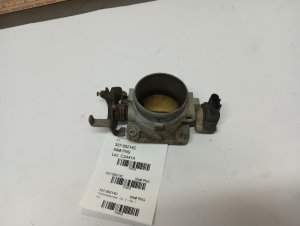
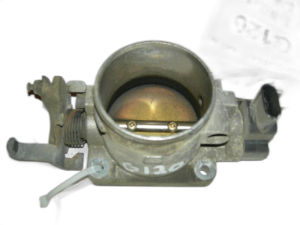
New Aftermarket Parts Available


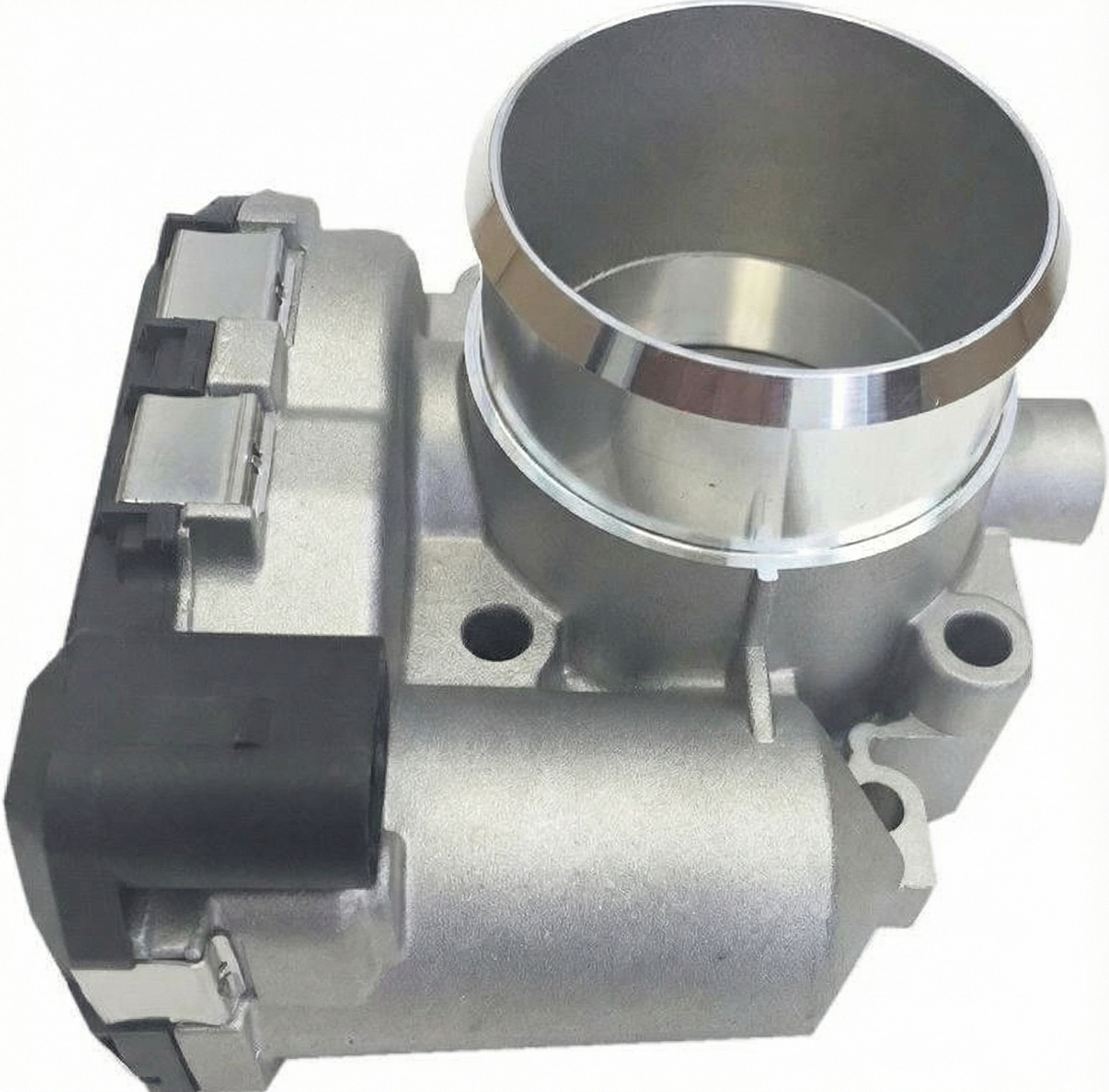
The information in this article is provided for general reference and educational purposes only. Vehicle specifications, procedures, and part compatibility can vary by production date, trim level, and region. Always consult your vehicle's factory service manual and verify part numbers before purchasing or performing repairs. Safety-critical components such as airbags, seat belts, and braking systems should be installed by a qualified professional.
- Ford F-150:
- 🧭 Diagnostic Flowchart
- 🎬 Helpful Videos
- 🛍️ Shop This Part
- What's Unique About the 1997-2003 Ford F-150
- Symptoms You May Notice
- Most Likely Causes
- Rare But Worth Checking
- Diagnosis Steps
- Parts You'll Likely Need
- Related Codes That Often Appear With This One
- Technical Service Bulletins (TSBs) & Recalls
- Platform-Specific Known Issues
- Mechanic-Grade Diagnostic Values
- Scan Tool Commands That Help
- Wiring & Ground Locations
- Real Owner Repair Stories
- OEM Part Supersession History
- Model Year Variations Within This Range
- Used vs. New Parts: Buying Guide for This Vehicle
- Real Owner Stories
- 1999 Ford F-150 4.6L
- 1997-2003 Ford F-150
- Related OBD-II Codes
- Frequently Asked Questions
- 🎟️ Get 5% Off