

P0123 on 2000-2007 Ford Focus 2.0L Zetec: Causes and Fixes for High Throttle Sensor Voltage
On a 2000-2007 Ford Focus with the 2.0L Zetec engine, code P0123 is almost always caused by a failed Throttle Position Sensor (TPS). This is a simple and inexpensive DIY fix, with a replacement sensor costing between $20 and $60. Before replacing, check for obvious wiring damage, but expect the sensor itself to be the culprit.
- P0123 on a 2000-2007 Focus almost always means you need a new Throttle Position Sensor (TPS).
- Symptoms include hesitation, stalling, and a check engine light.
- This is a very DIY-friendly repair that requires basic tools and about 20-30 minutes.
- Unlike newer cars, you only need to replace the small sensor, not the entire expensive throttle body assembly.
- Always check the wiring and connector for damage before replacing parts, but expect the sensor itself to be the culprit.
What's Unique About the 2000-2007 Ford Focus
The 2000-2007 Ford Focus with the 2.0L Zetec engine uses a simple, cable-actuated throttle body with a separate, replaceable TPS. Unlike later 'drive-by-wire' models where the sensor is integrated into the entire throttle body assembly, this generation allows for easy and cheap replacement of just the sensor itself. This makes troubleshooting and repair a very common and straightforward DIY job for Focus owners, avoiding the higher cost of a full throttle body replacement seen on newer vehicles.
Generation note: This guide covers the North American first-generation Ford Focus, which includes the initial Mk1 (2000-2004) and the facelifted Mk1.5 (2005-2007). The 2.0L Zetec engine and its cable-driven throttle body with a separate TPS are consistent across this entire period, so the causes and fixes are the same.
Symptoms You May Notice
- Check Engine Light is on
- Hesitation or stumbling during acceleration
- Bucking or jerking while driving
- Engine stalls, especially when coming to a stop
- Rough or inconsistent idle speed
- Hard starting
- Vehicle enters 'limp mode' with significantly reduced engine power
- Poor fuel economy
- Replacing the entire throttle body. On this generation of Focus, the sensor is separate and can be replaced on its own, which is much cheaper.
- Replacing spark plugs or fuel injectors. While these can cause performance issues, they will not directly cause a P0123 code.
- Cleaning the throttle body. While a dirty throttle body can cause idle issues, it will not cause the sensor's electrical circuit to report a constant high voltage.
Most Likely Causes
- Failed Throttle Position Sensor (TPS) 🔴 High Probability → Shop Fuel Injection Throttle Body The TPS is a potentiometer with a moving wiper that physically wears out over time and with use, leading to incorrect voltage signals. It is the most common point of failure for this code and a well-known issue on this platform.
How to confirm: With the key on and engine off, back-probe the TPS signal wire with a multimeter. The voltage should be stuck high (e.g., ~5V) regardless of throttle position. If you disconnect the sensor and the voltage on the harness signal wire drops to near 0V, the short-to-power is internal to the sensor, confirming it is bad. A good sensor should read ~0.9V at idle and sweep smoothly to ~4.5V at wide-open throttle.
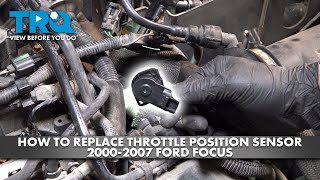
Typical fix: Replace the Throttle Position Sensor. It is mounted to the side of the throttle body with two screws.
Est. part cost: $20-$60 - Wiring Harness or Connector Issue 🟡 Medium Probability Engine vibration and heat can cause wires to chafe or break over time. The connector pins can also corrode or become loose, leading to poor electrical contact. A short-to-power in the signal wire will cause a P0123.
How to confirm: Visually inspect the wiring going to the TPS for any signs of damage, melting, or chafing against engine components. Check inside the connector for green/white corrosion or pushed-out pins. With the TPS unplugged, check for voltage on the signal wire pin in the harness connector; it should be 0V. If you read 5V or 12V, there is a short-to-power in the harness that must be traced and repaired.
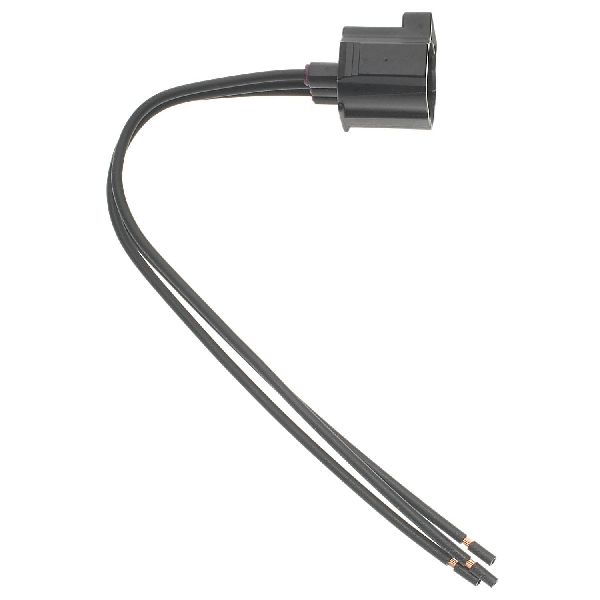
Typical fix: Repair the damaged section of wiring or clean the connector terminals with electrical contact cleaner. If the connector itself is damaged, it may need to be replaced with a pigtail connector.
Est. part cost: $5-$30
Rare But Worth Checking
- Damaged Powertrain Control Module (PCM): → Shop Engine Control Module (ECM) This is very rare. Before suspecting the PCM, you must exhaustively prove that the sensor and all wiring between the sensor and the PCM are in perfect condition. A PCM failure is a last resort diagnosis.
Diagnosis Steps
- Read the code with an OBD-II scanner to confirm P0123 is present. Note any other codes.
- Visually inspect the TPS, its electrical connector, and the surrounding wiring harness for obvious signs of damage, corrosion, or loose connections.
- Turn the ignition to the 'ON' position without starting the engine.
- Using a multimeter set to DC Volts, back-probe the TPS connector to measure the voltage on the signal wire (typically the center pin). It will likely read high, near 5 volts.
- Slowly open the throttle by hand and watch the voltage. It should not change if the sensor has failed in a 'high' state.
- To confirm a bad sensor, unplug the TPS connector. Re-measure the voltage on the signal wire in the harness-side connector. If the voltage drops to 0V, the short is internal to the sensor, and the sensor is bad.
- If the signal wire voltage remains high (near 5V) even with the sensor unplugged, there is a short-to-power in the wiring harness that must be located and repaired.
- As a final check, verify the 5V reference and ground circuits at the connector are functioning correctly. You should have ~5V on the reference wire and good continuity to ground on the ground wire.
Parts You'll Likely Need
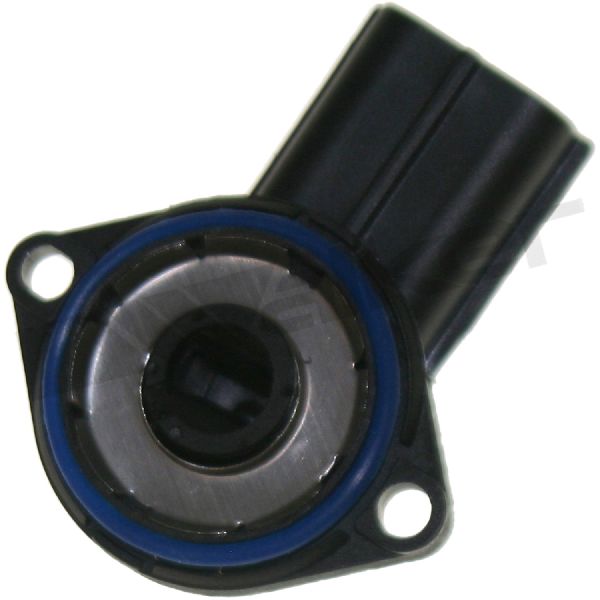
- Throttle Position Sensor (TPS)
(OEM #988F-9B989-BB)— This sensor is the direct cause of the P0123 code in the vast majority of cases on this vehicle. The Motorcraft service part number is often DY-967.
Trusted brands: Motorcraft, Bosch, Delphi, Standard Motor Products (SMP), Walker Products
OEM price range: $50-$75
Aftermarket price range: $20-$45
Related Codes That Often Appear With This One
- P0122 — P0122 is 'TPS Circuit Low Input'. A failing sensor can be erratic, sometimes sending a signal that is too high (P0123) and other times too low (P0122) as the internal components wear out and make intermittent contact.
Platform-Specific Known Issues
- Owner Experience: A common owner story on forums like FocusFanatics involves sudden stalling, bucking, and an inability to accelerate past a certain RPM. The fix is almost universally a quick TPS replacement, often done in a parking lot with basic tools.
- Repair Tip: The two screws holding the TPS can sometimes be difficult to access. A small ratchet with a Phillips head bit or a right-angle screwdriver can make the job much easier. Do not overtighten the new screws, as this can crack the plastic housing of the new sensor.
Mechanic-Grade Diagnostic Values
- TPS Signal Voltage (KOEO, Throttle Closed) — expected: 0.8V - 1.0V DC. Failure: Voltage is stuck high (near 5.0V) or does not start in this range.
- TPS Signal Voltage (KOEO, Wide-Open Throttle) — expected: 4.5V - 5.0V DC. Failure: Voltage does not reach this range or does not change from the closed-throttle reading.
- TPS Reference Voltage (KOEO, Sensor Unplugged) — expected: ~5.0V DC. Failure: No voltage or significantly lower voltage indicates a PCM or wiring issue.
- TPS Ground Circuit (KOEO, Sensor Unplugged) — expected: Good continuity to chassis ground (near 0 ohms).. Failure: High resistance indicates a bad ground connection.
- TPS Resistance (Sensor Unplugged, Throttle Closed) — expected: ~3k - 4k Ohms (between signal and ground return pins). Failure: Reading is open (infinite) or shorted (near zero).
- TPS Resistance (Sensor Unplugged, Wide-Open Throttle) — expected: ~350 Ohms (between signal and ground return pins). Failure: Resistance does not sweep smoothly down to this range.
Wiring & Ground Locations
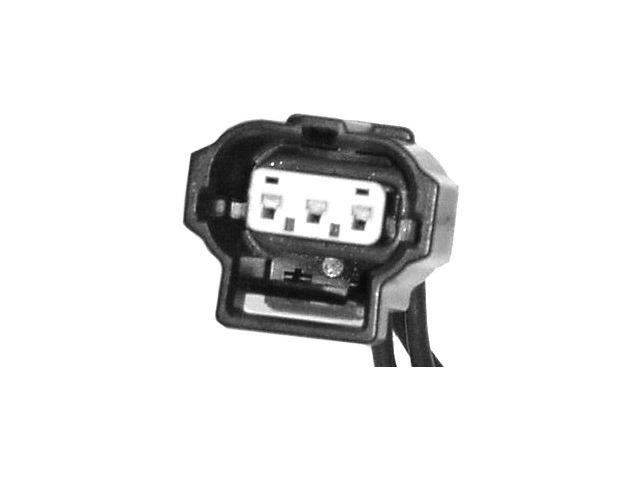
- TPS Connector Pin A — On the 3-pin connector for the Throttle Position Sensor.. This is the Sensor Ground wire provided by the PCM. A bad ground here can cause erratic or high voltage readings.
- TPS Connector Pin B (Center) — The middle pin on the 3-pin connector for the Throttle Position Sensor.. This is the Signal Return wire. The voltage on this wire, which should sweep from ~0.9V to ~4.5V, is what the PCM uses to determine throttle angle. A P0123 is set when this pin's voltage is stuck high.
- TPS Connector Pin C — On the 3-pin connector for the Throttle Position Sensor.. This is the 5-volt Reference wire from the PCM. If this voltage is missing, the sensor cannot operate. If it is shorted to battery voltage, it could cause a high signal reading.
Real Owner Repair Stories
- Reddit user /u/GMUSSTN in /r/Cartalk (1999 Dodge Stratus 2.5L V6 (Note: Not a Focus, but an identical P0123 diagnostic story)) — Idle going nuts, nearly stalling at stoplights, would stall when trying to accelerate from a stop.
❌ Tried (didn't work) Replacing the Throttle Position Sensor (TPS). The Check Engine Light went away, but the stalling issue returned after the car warmed up.
✅ What actually fixed it The user suspected an alternator or battery issue causing problems when the engine was warm, but the thread ended without a definitive final fix posted. This illustrates that even after replacing the primary failed part, underlying electrical issues can persist.
OEM Part Supersession History
988F-9B989-BB→Motorcraft DY-967— Service part number consolidation.
Heads up: While DY-967 is the correct service part for the 2.0L Zetec, be aware that this part number is also specified for other Ford applications (like some 7.3L diesel pedal assemblies) where it is physically similar but electronically incompatible or requires modification to work. For the 2000-2007 Focus Zetec, it is a direct fit.
Diagnostic Flowchart
Other Known Issues on This Vehicle
Issues unrelated to this code that are worth knowing about as an owner of this generation:
- Cracked Plastic Thermostat Housing 🔴 High — Very common failure, often occurring after 60,000-80,000 miles. Can lead to sudden coolant loss and overheating.
- Rear Subframe Rust/Corrosion 🔴 High — Common in regions with road salt. The rear subframe can rust severely, sometimes to the point of structural failure, affecting alignment and safety.
- Worn/Failed Motor Mounts 🟠 Medium — The passenger-side hydraulic motor mount is particularly prone to leaking and collapsing, causing excessive engine vibration and noise.
- Ignition Lock Cylinder Jamming 🟠 Medium — Primarily on 2000-2005 models, the key may fail to turn in the ignition, preventing the car from starting.
- Timing Belt Replacement Interval 🔴 High — The 2.0L Zetec is an interference engine. The timing belt has a recommended replacement interval of around 100,000-120,000 miles. Failure to replace it can result in catastrophic engine damage.
- Fuel Pump Driver Module Failure 🔴 High — The module, often mounted near the fuel tank, can corrode or fail, leading to a no-start condition or stalling while driving.
Used vs. New Parts: Buying Guide for This Vehicle
When a used part is the smart pick: For this repair, buying a used TPS from a junkyard is almost never a smart choice. The part is a low-cost wear item, and a used sensor may have very little life left or could be faulty from the start. The cost savings are minimal compared to the risk of having to do the job twice.
Donor-vehicle mileage cap: roughly under 50000 miles for the part to have meaningful remaining life.
What to inspect on the donor part:
- Look for a clean, corrosion-free connector.
- Avoid sensors with any cracks in the plastic housing.
- If possible, test the sensor's resistance sweep with a multimeter before purchase.
Aftermarket brands forum-validated for this vehicle:
- Motorcraft (OEM)
- Bosch
- Delphi
- Standard Motor Products (SMP)
- NTK
Brands owners have reported issues with on this vehicle:
- No-name, unbranded sensors from online marketplaces are a gamble. Forum users frequently report premature failure from ultra-cheap parts, leading to the same symptoms returning within months.
Real Owner Stories
Aggregated from forums and TSBs cited above. Mileages and costs reflect what owners reported in those sources.
2000-2007 Ford Focus 2.0L Zetec
Symptoms: Sudden stalling, bucking, and an inability to accelerate past a certain RPM.
What fixed it: A quick TPS replacement, often performed in a parking lot with basic tools.
Source hint: FocusFanatics.com
2000-2007 Ford Focus 2.0L Zetec
Symptoms: Drivability issues including stalling and hesitation.
What fixed it: Replacing the TPS with part number 988F-9B989-BB or Motorcraft DY-967.
Source hint: FocusFanatics.com
2000-2007 Ford Focus 2.0L Zetec
Symptoms: Symptoms of P0123 including hesitation and stalling on the Zetec engine.
What fixed it: TPS replacement as the primary solution.
Source hint: FocalJet.com
Related OBD-II Codes
Frequently Asked Questions
What specific Throttle Position Sensor part numbers should I look for when repairing my Ford Focus Zetec?
Are there any specific tools recommended for replacing the TPS on the 2.0L Zetec engine?
Which aftermarket brands are considered reliable for a P0123 fix on this vehicle?
Can I use a TPS from a Ford Escort ZX2 or a Ford Escape to fix my Focus?
Is it worth getting a used TPS from a junkyard to save money?
Could my P0123 code be related to the common thermostat housing issues on the Focus?
Helpful Videos
We Have This Part in Stock


The information in this article is provided for general reference and educational purposes only. Vehicle specifications, procedures, and part compatibility can vary by production date, trim level, and region. Always consult your vehicle's factory service manual and verify part numbers before purchasing or performing repairs. Safety-critical components such as airbags, seat belts, and braking systems should be installed by a qualified professional.
- Ford Focus:
- 🧭 Diagnostic Flowchart
- 🎬 Helpful Videos
- 🛍️ Shop This Part
- What's Unique About the 2000-2007 Ford Focus
- Symptoms You May Notice
- Most Likely Causes
- Rare But Worth Checking
- Diagnosis Steps
- Parts You'll Likely Need
- Related Codes That Often Appear With This One
- Platform-Specific Known Issues
- Mechanic-Grade Diagnostic Values
- Wiring & Ground Locations
- Real Owner Repair Stories
- OEM Part Supersession History
- Other Known Issues on This Vehicle
- Used vs. New Parts: Buying Guide for This Vehicle
- Real Owner Stories
- 2000-2007 Ford Focus 2.0L Zetec
- 2000-2007 Ford Focus 2.0L Zetec
- 2000-2007 Ford Focus 2.0L Zetec
- Related OBD-II Codes
- Frequently Asked Questions
- 🎟️ Get 5% Off